wayground logo

Free Printable Worksheets

Font size

S
M
L
XL
Worksheets

Question Bank for Spring ACP Review

Total questions: 204

Worksheet time: 4hrs 29mins

Name
Class
Date
1.
A _______________ is a current-carrying coil of wire with many loops
a)
electromagnet
b)
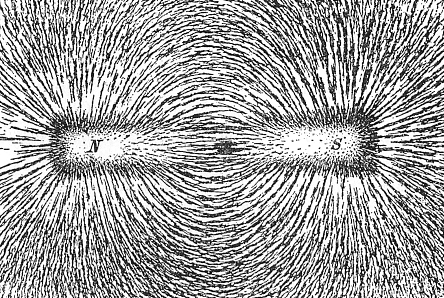
solenoid
c)
magnet
d)
compass
2.
The strength of a magnet can be changed by
a)
adding less loops to the coil.
b)
adding more loops to the coil.
3.
The strength of an electromagnet can be affected by
a)
changing the current in the wire
b)
changing the space between the wires
c)
all of the above
d)
none of the above
4.
An example of the best insulator is
a)
copper
b)
salt
c)
plastic
d)
sand
5.
An example of a good conductor is
a)
copper
b)
sand
c)
plastic
6.
Electrical insulators have _________ resistance to the movement of electrons.
a)
high
b)
low
c)
no
7.
The coil of current-carrying wire with an iron core is called a(n)
a)
ferromagnet
b)
electromagnet
c)
compass
d)
maglev
8.
An electromagnet is a solenoid with an __________ core.
a)
copper
b)
wire
c)
iron
9.
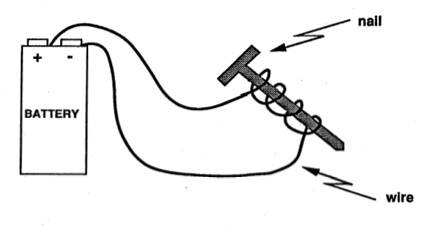
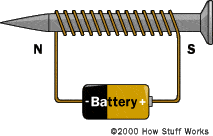
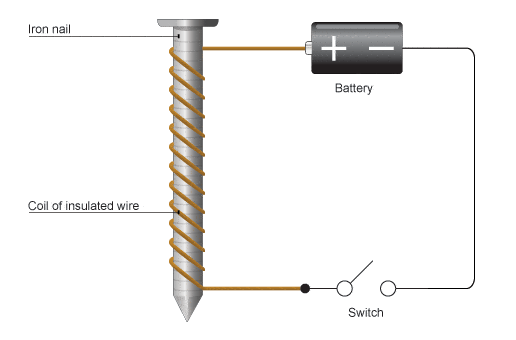
Which of the following best describes this picture?
a)
Pipes and stuff
b)
Magnet
c)
Electromagnet
d)
Resistor
10.
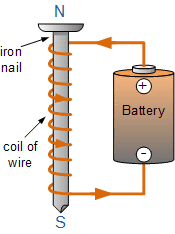
This is a picture of a simple electromagnet. How can the electromagnet be made stronger?
a)
Add more coils of wire to the nail.
b)
Use a smaller battery.
c)
Reverse the poles of the magnet.
d)
Remove all the coils and the nail.
11.
What effect will the south pole of one magnet have on the south pole of another magnet?
a)
Repulsive
b)
Attractive
c)
Combative
d)
No effect
12.
What kind of magnet can be turned on and off?
a)
refridgerator magnet
b)
electromagnet
c)
magnetite
d)
iron
13.
Surrounding every magnet is a __________  __________.
a)
magnetic field
b)
electrical current
c)
another magnet
d)
an enemy
14.
In order for an electromagnet to be formed, an __________ current must pass through a coil of __________ wrapped around an ________ core.
a)
wire, iron, electric
b)
electric, wire, iron
c)
iron, electric, wire
d)
excited, hair, apple
15.
What is most likely to happen when the switch is closed?
a)
A magnetic field should be produced
b)
The nail will rust
c)
The battery will explode
d)
The wire will catch on fire
16.
Why are paper clips attracted to magnets?
a)
They contain silver.
b)
They contain aluminum
c)
They contain tin.
d)
They contain iron. 
17.

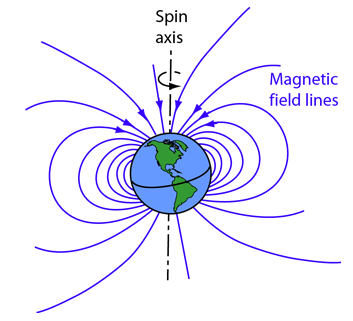
What is the shape of a magnetic field around the Earth?
a)
b)
c)
d)
18.

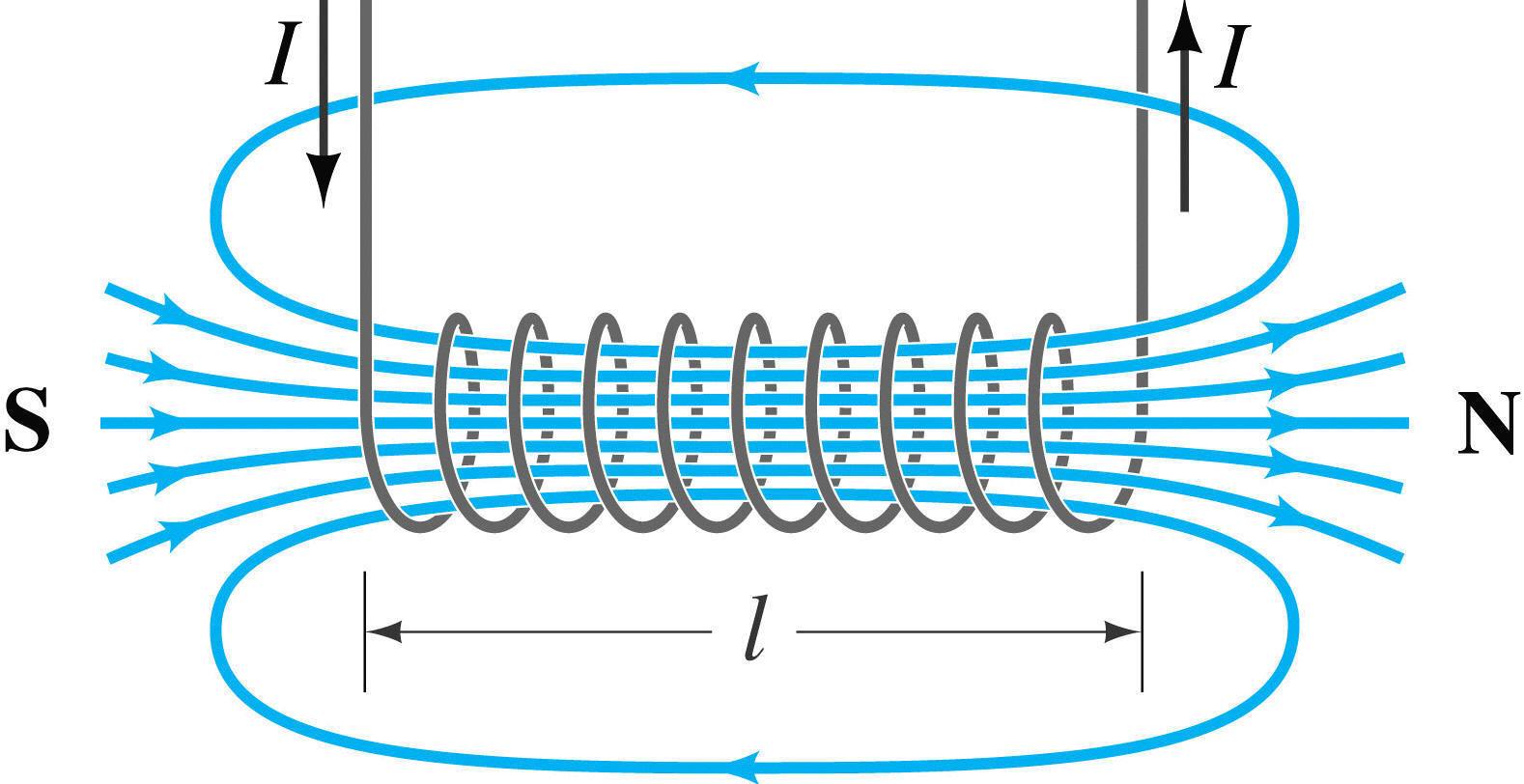
What is the shape of a magnetic field around a solenoid?

a)
b)
c)
d)
19.

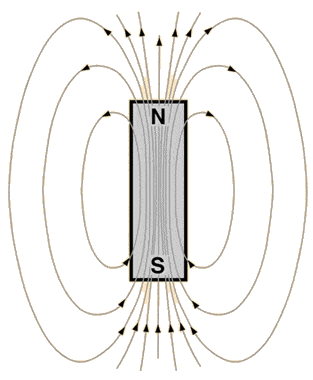
What is the shape of a magnetic field around a bar magnet?

a)
b)
c)
d)
20.

What is a solenoid?

a)

A coil of wire with current flowing through it

b)

A type of bar magnet

c)

A single straight wire

d)

One loop of a wire

21.

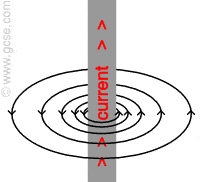
What is the shape of a magnetic field around a wire?
a)
b)
c)
d)
22.
What is the BEST example of a conductor? 
a)
A wooden block
b)
A ceramic mug
c)
A glass cup
d)
A metal bowl
23.
Which is NOT an insulator.
a)
Wool
b)
Plastic
c)
Iron
d)
Glass
24.
What is NOT an example of an insulator in the kitchen?
a)
an oven mitt
b)
pots and pans
c)
wooden spoons
d)
a plastic measuring cup
25.
Conductors are materials that...
a)
Allow heat to pass through
b)
Stop heat from passing through
c)
Allow cold to pass through
d)
Stop cold from passing through
26.
All of the following are conductors except _______.
a)
metal spoon
b)
wire
c)
iron nail
d)
plastic spoon
27.
Which of the following materials is an electrical insulator?
a)
aluminum
b)
gold
c)
rubber
d)
steel
28.
Why is electrical wiring usually covered with a layer of plastic?
a)
To help electricity flow along the wire
b)
To make it look pretty
c)
To make it safe
29.

A material that allows heat or an electric current to flow through easily

a)

Conductor

b)

Insulator

c)

Magnetism

d)

Electric Circuit

30.

A material that prevents heat or an electric current from flowing

a)

Conductor

b)

Insulator

c)

Magnetism

d)

Electric Circuit

31.

The flow of electricity through a circuit

a)

Closed Circuit

b)

Open Circuit

c)

Electric Current

d)

Magnetic

32.

An object that has loosly compacted electrons is an example of an:

a)

Insulator

b)

Conductor

c)

Semi-conductor

d)

Potato

33.

An Object that has tightly compacted electrons is an example of an:

a)

Insulator

b)

Conductor

c)

Semi-conductor

d)

Potato

34.
What size resistor would produce a 3 Amp current flow with a 12 Volt battery
a)
1 Ohm
b)
3 Ohms
c)
4 Ohms
d)
12 Ohms
35.
What is current measured in?
a)
Ω (Ohms)
b)
V (Volts)
c)
A (Amps)
d)
W (Watts)
36.
What is resistance measured in?
a)
Ω (Ohms)
b)
V (Volts)
c)
A (Amps)
d)
W (Watts)
37.
What is Resistance?
a)
The flow of electrons
b)
Electric potential difference
c)
A battery
d)
The ability to reduce the flow of electrons
38.
What is Resistance?
a)
The flow of electrons
b)
Electric potential difference
c)
A battery
d)
The ability to reduce the flow of electrons
39.
Electricity that flows in a closed path is called a
a)
path
b)
current
c)
circuit
d)
light
40.
What is the Voltage of a circuit that has a resistance of 5 Ω and a current of 2 A?
a)
25 V
b)
10 V
c)
2.5 V
d)
0.4 V
41.
The mathematical relationship among Voltage, Current, and Resistance
a)
Faraday's Law
b)
Tesla's Law
c)
Edison's Law
d)
Ohm's Law
42.
Current times Resistance equals
 (I X R)
a)
Power
b)
Voltage
c)
Amperage
d)
Ohm
43.

Voltage divided by Resistance

(V / R)

a)

Current

b)

Power

c)

Ohms

d)

Watts

44.
If the Voltage is increased and the resistance stays the same, Current will
a)
Increase
b)
Decrease
c)
Stay the same
d)
X
45.
If the Voltage stays the same and Resistance is increased, Current will 
a)
Increase
b)
Decrease
c)
Stay the same
d)
X
46.
How many Volts would we need to produce a current flow of 8 Amps through a 6 Ohm resistor
a)
12 volts
b)
24 volts
c)
1.3333
d)
48 volts
47.
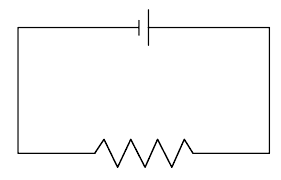
This circuit has a 24 volt battery and the resistor is 8 ohms. How many amps are running through the circuit?
a)
3 Amps
b)
192 Amps
c)
2 Amps
d)
4 Amps
48.
What word means how hard it is for electrons to flow through.
a)
Current
b)
Voltage
c)
Resistance
d)
Power
49.
To complete a circuit the switch must be
a)
unattached
b)
open
c)
closed
d)
It depends
50.
How many Volts would it take to push 1 Amp through a resistance of 1 Ohm
a)
10 volts
b)
1 volt
c)
48 volts
d)
5 volts
51.
What size resistor would produce a 3 Amp current flow with a 12 Volt battery
a)
1 Ohm
b)
3 Ohms
c)
4 Ohms
d)
12 Ohms
52.
What would the circuit resistance be if a 7.5 Amp draw was present with the engine running and the charging system producing 15 Volts
a)
15 Ohms
b)
4 Ohms
c)
0.3333 Ohms
d)
2 Ohms
53.

What is the formula for ohms law?

a)

1+2=3

b)

R X E = I

c)

E =I x R

d)

E= MC squared

54.
Momentum is a ____________________ quantity
a)
science
b)
scalar
c)
vector
d)
energy
55.

The momentum of an object depends upon the object's ___________&_____________.

a)

size and shape

b)

mass and speed

c)

mass and veloctiy

d)

mass and energy

56.
Determine the momentum of 1000-kg car moving northward at 20 m/s......... 
a)
20000 N
b)
20000 Joules
c)
20000 Kg * m/s
d)
20000 kg * m/s north
57.
A(n) _________________ causes and is equal to a change in momentum
a)
impulse
b)
force
c)
joule
d)
watt
58.
Cart A is pulled with a 2 Newton force for 2 seconds, and Cart B is pulled with a 1 Newton force for 3 seconds.  Which cart experiences the greatest impulse?
a)
Cart B
b)
Cart A
c)
they are the same
59.
The definition of momentum is
a)
Mass in Motion
b)
The size of an object
c)
The velocity of an object
d)
A comparison between two objects
60.
The equation to calculate momentum is
a)
p=mv
b)
p=1/2mv2
c)
p=mgh
d)
p=mg
61.
In any collision (crash) the ______ is ALWAYS constant
a)
Total Momentum
b)
total speed
c)
total Velocity
d)
Energy
62.
Which has more momentum: a car stopped at a red light or a bike moving at 15 mph?
a)
car
b)
bike
c)
they are equal
d)
cannot determine using the info provided
63.
A runner has a momentum of 720 kg m/s and is traveling at a velocity of 5 m/s. What is his mass?
a)
14.4 kg
b)
1400 kg
c)
144 kg
d)
360 kg
64.
A 2 kg cart has a momentum of 10 kg m/s. What is its velocity?
a)
22 m/s
b)
.2 m/s
c)
5.0 m/s
d)
20 m/s
65.
A 2.5 kg ball moving at 5 m/s collides with a 2.5 kg stationary ball in a perfectly elastic collision.  What is the velocity of the second ball after the collision? 
a)
5 m/s
b)
2.5 m/s
c)
10 m/s
d)
7.5 m/s
66.
A 2.5 kg ball moving at 5 m/s collides with a 2.5 kg stationary ball in a perfectly elastic collision.  What is the velocity of the second ball after the collision? 
a)
5 m/s
b)
2.5 m/s
c)
10 m/s
d)
7.5 m/s
67.
A 9 kg blob moving at 5 m/s collides and sticks to a second blob with a mass of 5 kg. If the two bobs stick together, what will the velocity of the two blobs move at?
a)
3.57 m/s
b)
3.2 m/s
c)
10.0  m/s
d)
9.0  m/s
68.
When the speed of an object is doubled, its momentum
a)
remains unchanged in accord with the conservation of momentum.
b)
doubles
c)
quadruples
d)
decreases
69.
In this type of collision, objects tend to "stick" together.
a)
elastic
b)
inelastic 
c)
They "stick" together in both types of collisions
70.
A big fish swims upon and swallows a small fish at rest. After lunch, the big fish has less
a)
momentum
b)
velocity
c)
mass
71.
The units for Impulse are
a)
N/s
b)
N*s
c)
N
d)
m/s
72.
The purpose of crumble zones on a car is to
a)
decrease time of impact.
b)
increase force of impact.
c)
increase the time of impact.
d)
decrease the impulse during impact.
73.
An egg is thrown at a wall and at a bed sheet. The force of impact will be
a)
Greater against the wall
b)
Greater against the sheet
c)
Force is equal
74.
When two objects collide, the Pbefore is ____________ the Pafter.
a)
more than 
b)
less than 
c)
equal to
d)
unrelated to
75.
Two objects of the same mass collide with each other.  The second object is at rest and the first is moving at 5 m/s North before the collision.  After the collision, the first mass is at rest and the second mass continues at 5 m/s North. 
The type of collision represented by these two masses is
a)
Inelastic
b)
Explosive
c)
Elastic
76.
What is "Entropy"?
a)
The tendency of objects to warm up
b)
The tendency of energy to spread out
c)
The tendency of energy to make heat
d)
The tendency of objects to do work
77.
In order for energy to be less concentrated what must be done?
a)
Heat released
b)
Reduce thermal energy
c)
Work
d)
Increase Radiation
78.
What do we call the relationship between thermal energy, heat and work?
a)
Closed System
b)
Entropy
c)
Conductors
d)
Thermodynamics
79.
Why can't a heat engine be 100% efficient?
a)
Heat must be constantly created
b)
No work can be done
c)
Entropy is lost
d)
Thermal energy decreases
80.
Which would have more entropy?
a)
Frozen ice cream
b)
Liquid Ice cream
81.
In which of the following systems is entropy increasing?
a)
Putting together a puzzle
b)
Putting books on a shelf
c)
Breaking a plate
d)
Filling a jar of salt
82.
How can energy be transferred from a cool object to a warm object?
a)
Work must be done
b)
Increase thermal energy
c)
Use convection
d)
Q=mTC
83.
What is the name of a device that converts thermal energy into work?
a)
Heating system
b)
Heat engine
c)
Entropy
d)
Power
84.
“When thermal energy is converted into work, some thermal energy is always transferred to the surroundings.”
a)
True
b)
False
85.
How does a refrigerator work?
a)
Moves heat from inside the fridge to the room
b)
Blows cold air into the fridge
c)
Uses convection cells
d)
It generates cold air
86.
A steady force pushes in the piston
of a well-insulated cylinder. In this
process, the temperature of the gas
a)
Increases
b)
Stays the same
c)
Decreases
d)
Not enough info
87.
Dragging an object across a rough surface makes it warm, or even hot. The temperature increase occurs because of
a)
Work
b)
Heat
c)
Thermal
d)
Both work and heat
88.
The Law of Conservation of Energy states:
a)
Energy can created or destroyed but not transformed 
b)
Energy cannot be created or destroyed, it can only transformed
c)
Energy can't be created, destroyed or transformed
89.
The measure of average kinetic energy of all the particles within an object is called ____________. 
a)
temperature
b)
conduction
c)
radiation
d)
heat 
90.
The energy transferred between the particles of two objects because of the temperature difference between the two objects is called ________________.
a)
heat
b)
insulator 
c)
conductor 
91.
Exothermic reactions...
a)
Absorb energy
b)
Release energy
c)
Release Color
d)
Absorb Color
92.
In an endothermic reaction, heat is ,,,
a)
taken in
b)
given out
93.
High temperature is connected to:
a)
Low kinetic energy.
b)
High kinetic energy.
c)
Zero net energy.
d)
Equal kinetic energies.
94.
The heat from a hot burner to a pot is transferred by ______.
a)
convection
b)
insulation
c)
radiation
d)
conduction
95.
Heat travels from the sun to the earth by the process of...
a)
conduction
b)
convection
c)
radiation
d)
insulation
96.
Warm air rises and the cool air sinks demonstrates this type of heat transfer. 
a)
conduction
b)
convection
c)
radiation
d)
Insolation 
97.
Stored energy that results from the position or shape of an object is called...
a)
Thermal
b)
Potential
c)
Kinetic
d)
Gravitational
98.
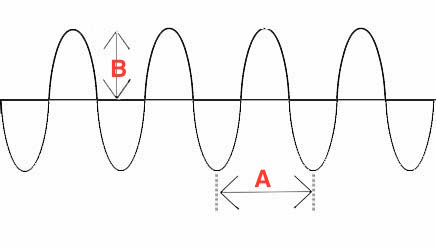
What property of this wave is represented by the letter "A"
a)
amplitude
b)
crest
c)
trough
d)
wavelength
99.
A mechanical wave cannot travel through...
a)
a vacuum(empty space).
b)
water.
c)
air. 
d)
Texas
100.
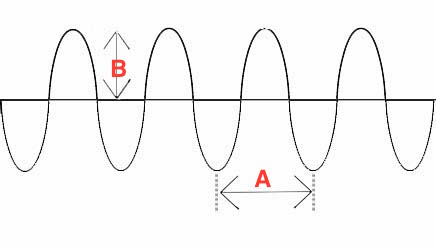
What property of the wave is represented by the letter "B"?
a)
amplitude
b)
crest
c)
trough
d)
wavelength
101.
The highest point on a wave is:
a)
the crest
b)
the trough
c)
the top
d)
the coast 
102.
The lowest point on a wave is the:
a)
Amplitude
b)
Crest
c)
Trough
d)
Wavelength
103.
The type of waves that require medium to pass:
a)
Mechanical Waves
b)
Electromagnetic Waves
c)
the waves in TR's hair
104.
Which vocabulary term is used to identify the distance between points C & G?
a)
Amplitude
b)
Crest
c)
Frequency
d)
Wavelength
105.
When the frequency of a wave increases, what happens to the wavelength?
a)
The wavelength is not directly affected by the frequency of a wave.
b)
The wavelength increases.
c)
The wavelength decreases.
d)
chicken of course
106.
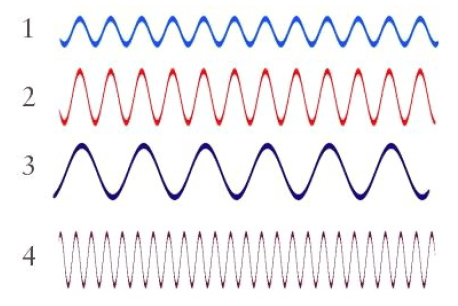
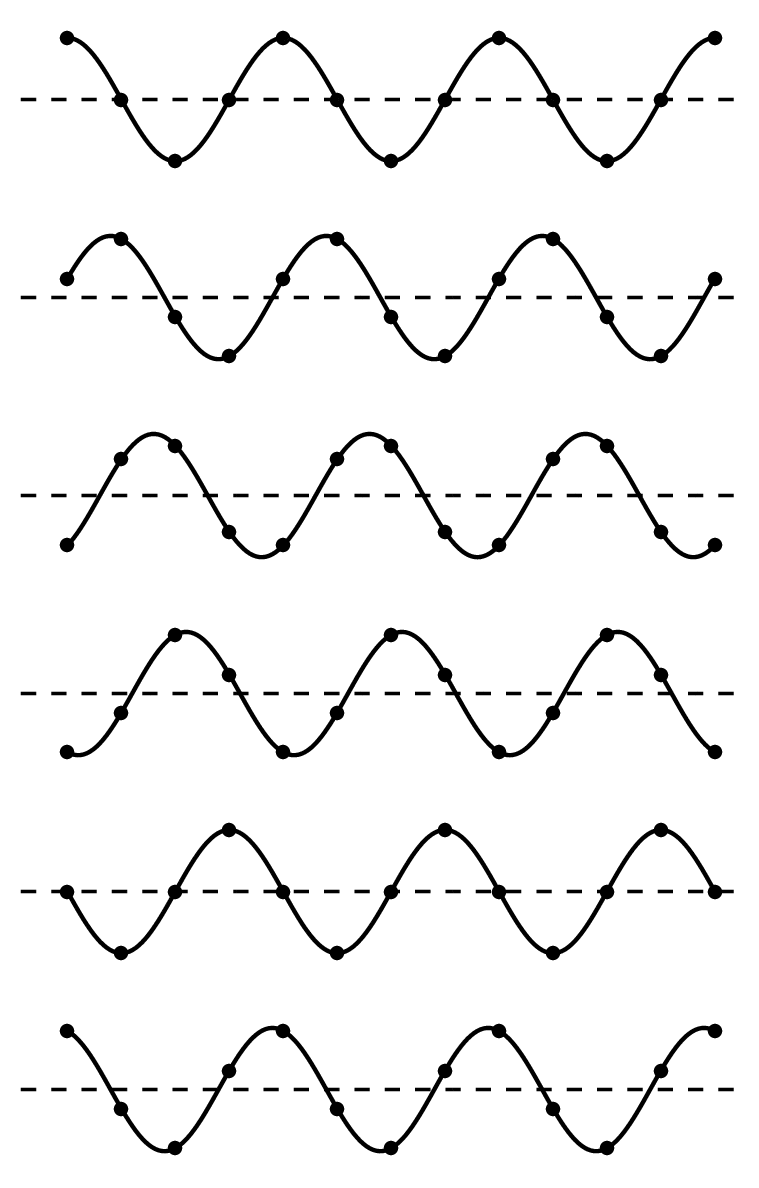
Which wave in the diagram has the greatest frequency?
a)
1
b)
2
c)
3
d)
4
107.
Which wave in the diagram has the greatest wavelength?
a)
1
b)
2
c)
3
d)
4
108.
Which of the following can sound travel through?
a)
solid
b)
liquid
c)
gas
d)
all of the above
109.
regular disturbances that carry energy through matter or space
a)
Lil Kim
b)
energy
c)
wave
d)
trough
110.
Amplitude reflects the amount of ____________________ in a wave.
a)
energy
b)
compression
c)
rarefaction
d)
speed
111.
A wave carries...?
a)
energy only
b)
matter only
c)
the matter carries the energy
d)
a lot of groceries
112.
Sound is caused by? 
a)
force
b)
vibrations
c)
potatoe
d)
medium
113.
How does a sound wave interact with a human ear?
a)
vibrates the ear drum
b)
they play Halo
c)
rotates the ear drum
d)
vibrates the ear canal
114.
The amplitude of a wave represents the amount of energy in the wave.  In a sound wave how would you experience this energy?
a)
volume/loudness
b)
speed of the sound
c)
pitch of the sound
d)
chicken
115.
Which of these is the best way to produce a longitudinal wave?
a)
heating a block of iron
b)
freezing a tray of water
c)
squeezing and releasing a metal spring
d)
shaking a rope up and down
116.
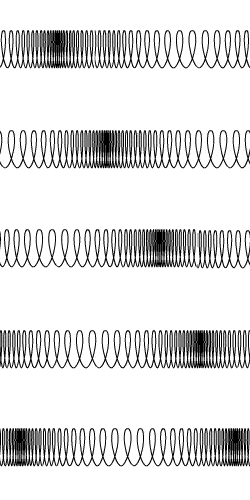
A stretched spring attached to two fixed points is compressed on one end and released, as shown in the picture. The resulting wave travels back and forth between the two fixed ends of the spring until it comes to a stop.  This mechanical wave is an example of a
a)
longitudinal wave
b)
transverse wave
c)
superpositioned wave
d)
refracted wave
117.
a)
amplitude
b)
frequency
c)
wavelength
d)
equilibrium
118.
What kind of wave is this?
a)
Transverse
b)
Longitudinal
119.
What kind of wave is this?
a)
Transverse Wave
b)
Longitudinal Wave
120.
A sound wave moving through the air is what kind of wave?
a)
a Longitudinal
b)
water wave
c)
a transverse wave
d)
hand wave
121.
Which direction does a Transverse wave travel
a)
parallel
b)
perpendicular
122.
Which direction does a compressional wave travel
a)
parallel
b)
perpendicular
123.
All waves carry
a)
energy
b)
light 
c)
matter
d)
particles
124.
What do we call the part of a compressional wave that is when the waves are squeezed together?
a)
compression
b)
rarefaction
c)
crest
d)
trough
125.

Which one is an example of a transverse wave

a)

Punching a bag

b)

Loud Music

c)

Sneezing

d)

Water Waves

126.
A wave that requires a medium through wave which to travel
a)
A. electromagnetic  wave
b)
B. longitudinal wave
c)
C. mechanical wave
d)
D. transverse wave
127.
A wave that does not require a medium
a)
A. electromagnetic  wave. 
b)
B. surface wave
c)
C. medium
d)
D. transverse wave
128.
A wave in which the particles of the medium move perpendicularly to the direction the wave is traveling
a)
A. surface wave
b)
B. transverse wave
c)
C. electromagnetic  wave
d)
D. longitudinal wave
129.
Which describes the amplitude of a wave?
a)
A wave is 5 meters long.
b)
A wave has a height of 5 meters.
c)
A wave has a frequency of 5 Hz.
d)
A wave takes 5 minutes to pass a point.
130.
Which statement can be made based on these data?
a)
Sound waves are slowest in liquids and fastest in gases.
b)
Sound waves are fastest in solids and slowest in gases.
c)
Speed of a sound wave increases from one medium to another.
d)
Speed of a sound wave decreases from one medium to another.
131.
What is represented by 1 on the diagram?
a)
wavelength
b)
amplitude
c)
frequency
d)
crest
132.
Determine the frequency of the model.
a)
4
b)
3
c)
2
d)
1
133.
In reference to mechanical waves, what is a medium?
a)
the size between small and large
b)
the air the waves travel in
c)
material through which a wave travels
d)
a model that waves travel through
134.
When is a mechanical wave created?
a)
when a source of energy causes a vibration to travel in a medium
b)
when you draw a wave model
c)
after an earthquake is over
d)
there is not a mechanical wave
135.
Name 3 mechanical waves.
a)
Longitudinal, Transverse, and Earthquake
b)
Surface, Longitudinal, and Latitudinal
c)
Longitude, Latitude, and Transverse
d)
Transverse, Longitudinal, and Surface
136.
What is the highest point of the wave above the rest position?
a)
amplitude
b)
trough
c)
crest
d)
wavelength
137.
A wave in which the vibration of the medium is parallel to the direction the wave travels is:
a)
Longitudinal
b)
Latitudinal
c)
Transverse
d)
Earthquake
138.
What is an area where the particles in a medium are spaced close together?
a)
Rarefaction
b)
Togetherness
c)
Expansion
d)
Compression
139.
How is wavelength measured for a transverse wave?
a)
Between the rest position and the crest or trough
b)
Between adjacent crests or between adjacent troughs
c)
Between one trough and one crest
d)
On top of the wave or at the bottom
140.
What does increasing the frequency of a wave do to its wavelength?
a)
The wavelength decreases
b)
The wavelength equals zero
c)
The wavelength increases
d)
The wavelength gets taller
141.
The more energy a wave has, the greater is its…
a)
wavelength
b)
crest
c)
trough
d)
amplitude
142.
What is reflection when referring to mechanical waves?
a)
When you look at yourself in the morning
b)
When a wave bounces off a surface it cannot pass through
c)
When a point is reflected across the y axis
d)
When a wave hits a surface
143.
Which example below only has longitudinal waves where compressions and rarefactions that travel through a medium?
a)
earthquake
b)
water wave
c)
sound wave
d)
noise wave
144.
If 3 complete wavelengths pass a fixed point in 2 seconds What is the frequency of the wave?
a)
3 Ha
b)
1.5 Hz
c)
3 Hz
d)
6 Hz
145.
In a transverse wave, the medium vibrates…
a)
parallel to the wave direction
b)
together with the wave direction
c)
perpendicular to the wave direction
d)
beside the wave direction
146.
Reflection does not change the speed or frequency of a wave, but the wave can be…
a)
thrown in a circle
b)
multiplied
c)
flipped upside down
d)
lengthened
147.
A mechanical wave moves through a medium, which can be…
a)
Gas, Liquid, Sliders
b)
Liquid, Solid, Gas
c)
Solid, Gas, Lipid
d)
Gas, Liquid, Gas
149.
A mechanical wave generally does NOT
a)
vibrate a medium
b)
carry the medium from one place to another
c)
transfer energy
d)
move through a medium
149.
A mechanical wave generally does NOT
a)
vibrate a medium
b)
carry the medium from one place to another
c)
transfer energy
d)
move through a medium
150.
Transverse and longitudinal waves both
a)
transfer energy through a mechanical wave
b)
transfer energy in a motor boat
c)
transfer energy through a medium
d)
transfer energy with the help of the Avengers
151.
What does the word "converging" mean?
a)
to separate
b)
to come together
c)
parallel 
d)
perpendicular
152.
A converging lens is also known as a ____ lens.
a)
convex
b)
concave
c)
double
d)
refracted
153.
When an object is placed on the focal point in front of a convex lens, the image produced is ___.
a)
real, reduced, and inverted
b)
real, enlarged, and inverted
c)
real, true, and inverted
d)
There is no image
154.
When an object is placed between the focal point and the convex lens, the image produced is ___.
a)
real, reduced, and inverted
b)
real, enlarged, and inverted
c)
virtual, enlarged, and upright
d)
virtual, reduced, and upright
155.
What does the word "diverging" mean?
a)
to spread apart
b)
to come together
c)
parallel
d)
perpendicular
156.
A diverging lens is also known as a ____lens.
a)
refracted
b)
diffracted
c)
convex
d)
concave
157.
___ is when light travels through a material and bends.
a)
Diffraction
b)
Dispersion
c)
Mirage
d)
Refraction
158.
The point where the rays meet is known as....
a)
Fire
b)
the focal point
c)
refraction
d)
Plane of the lens
159.
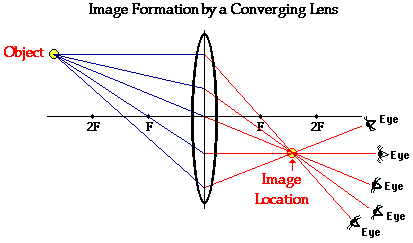
This image is.....
a)
inverted and smaller
b)
inverted and larger
c)
not inverted and smaller
d)
not inverted and larger
160.
This image is...
a)
Inverted and smaller
b)
inverted and bigger
c)
not inverted and smaller
d)
not inverted and bigger
161.
a real image...
a)
is produced by virtual rays and can be projected on a screen
b)
is produced by real rays and cannot be projected on a screen
c)
is produced by virtual images and cannot be projected on a screen
d)
is produced by real rays and can be projected on a screen
162.
Which describes a convex lens?
a)
triangular in shape
b)
more transparent in the middle
c)
thicker on the edges than in the middle
d)
thicker in the middle than on the edges
163.
Is a convex lens thicker or thinner in the middle?
a)
Thicker 
b)
Thinner 
164.
Is a convex lens thicker or thinner in the middle?
a)
Thicker 
b)
Thinner 
165.
What type of lens do humans have in their eyes? 
a)
Concave Lens 
b)
Convex Lens 
166.
What type of image is formed when rays of light actually intersect?
a)
real
b)
virtual
c)
projected
d)
curved
167.
If an object's distance from a convex lens were increased, the image would become which of the following?
a)
Larger and virtual
b)
Larger, only
c)
Smaller, only
d)
Smaller and virtual
168.
Is a concave lens thicker or thinner in the middle? 
a)
Thicker 
b)
Thinner 
169.
Light of a single wavelength is incident on a metal.  Electrons are released. The intensity of the light is then increased.
Which of the following changes occur?
a)
Rate of electron emission: increase.
Energy of electrons: increase.
b)
Rate of electron emission: decrease.
Energy of electrons: no change.
c)
Rate of electron emission: decrease.
Energy of electrons: increase.
d)
Rate of electron emission: increase.
Energy of electrons: no change.
170.
The photoelectric effect only occurs if the light shining on the metal is:
a)
coherent.
b)
above a minimum intensity.
c)
above a minimum frequency.
d)
above a minimum wavelength.
171.
The graph shows maximum kinetic energy of emitted electrons against frequency of incident light for a number of different metals.
Plank's constant is determined by:
a)
the x-intercept.
b)
the y-intercept.
c)
the gradient.
d)
the area under the graph.
172.
Which statement about the photoelectric effect is correct?
a)
Electrons are emitted instantaneously.
b)
Electrons are not emitted below a certain wavelength.
c)
You can change the energy of the electrons by changing the intensity.
d)
Electron energy is independent of frequency.
173.
The photoelectric effect is when:
a)
Electrons collide inside a metal to release photons.
b)
One incident metal electron releases one photon.
c)
One incident photon releases one electron from a metal.
d)
Photons are absorbed in to metal ions releasing electrons.
174.
Do the photons of violet light or the photons of red light, falling on a metal surface with the same intensity,cause emission of more electrons?
a)
 red light
b)
violet light
c)
same 
175.
The photoelectric effect helps us to understand
a)
the particle nature of light.
b)
diffraction pattern produced as light passes through a single slit.
c)
the wave behavior of light.
d)
spectroscopes.
176.
This image is an illustration of
a)
photoelectric effect
b)
Dalton's atomic theory
c)
Bohr model
d)
Quantum mechanical model
177.

Each element produces its own pattern of emission spectra lines because each element has its own distinct

a)

Speed of light

b)

Electron configuration

c)

Number of neutrons

d)

None of these

178.

The color of emitted light with the LONGEST wavelength is

a)

violet

b)

green

c)

red

d)

indigo

179.

The color of emitted light with the SHORTEST wavelength is

a)

violet

b)

green

c)

red

d)

indigo

180.

This device is a

a)

telescope

b)

spectrascope

c)

microscope

d)

prism

181.

The color of emitted light with the HIGHEST frequency is

a)

violet

b)

green

c)

red

d)

indigo

182.

The color of emitted light with the LOWEST frequency is

a)

violet

b)

green

c)

red

d)

indigo

183.

The unknown emissions spectra belongs to the element

a)

Hydrogen

b)

Mercury

c)

Neon

d)

Sodium

184.

Which is TRUE of light waves?

a)

They are not electromagnetic waves

b)

They need a medium to travel through

c)

The are made up compressions and rarefactions

d)

They are transverse waves

185.

A particle of light is called a...

a)

Photoelectron

b)

Photon

c)

Proton

d)

Electron

186.

A wave with a long wavelength will have a ______ frequency and _____ energy

a)

high, low

b)

high, high

c)

low, high

d)

low, low

187.
The wave-particle duality of light describes light as...
a)
a wave only
b)
a particle only
c)
both a wave and a particle
d)
neither a wave nor a particle
188.

What is the orbital with the least amount of energy?

a)

Excited state

b)

Ground state

c)

Orbital

d)

Bohr model

189.

What is the reaction involved if the electron moves from position 1 to 2?

a)

Light will be emitted

b)

Light will be absorbed

c)

The electron will become less excited

d)

The electron will decrease a quantum

190.

What happens when a high frequency light is emitted towards an atom?

a)

The electrons become excited and increase their energy state

b)

The electrons become excited and move towards the ground state

c)

The electrons emit light

d)

Cannot be determined

191.

Which position represents the highest energy state?

a)

1

b)

2

c)

3

d)

4

192.

The electron moves from position 1 to 2. How does the state of the electron shift during this reaction?

a)

The electron becomes less excited.

b)

The electron returns to the ground state.

c)

The electron becomes more excited.

d)

Light is emitted

193.

How much energy is equivalent to a stick of butter that is 0.1 kg?

a)

3 * 107 J

b)

3 * 1015 J

c)

9 * 107 J

d)

9 * 1015 J

194.

The Sun converts mass to energy at such a rate that it produces 3.9 * 1026 J of energy every second!


In order for this to occur, how much mass must be converted to energy every second?

a)

1.3 * 1018 kg

b)

1.17 * 1035 kg

c)

3.51 * 1043 kg

d)

4.33 * 109 kg

195.

An aspirin has a mass of 0.325 kg. If the mass of the aspirin could be completely converted to energy, how many joules of energy would be produced?

a)

9.75 * 107 J

b)

1.08 * 10-9 J

c)

9.23 * 108 J

d)

2.93 * 1016 J

196.

What does the "c" in E = mc2 stand for?

a)

Energy

b)

Mass

c)

The speed of light

d)

Continuum

197.

The total annual energy consumption of the United States is 1 * 1020 Joules.


If you were capable of converting mass to energy with 100% efficiency, how much mass would you need to produce this much energy?

a)

3.0 * 1028 kg

b)

9.0 * 1036 kg

c)

3.3 * 1011 kg

d)

1.1 * 103 kg

198.

Which of the following is true of fission?

a)

A heavy nucleus is combined with a smaller nucleus

b)

The sum of the two new nuclei is less than the mass of the original nucleus

c)

Mass is added during the reaction

d)

Energy is converted into mass

199.

Which of the following is equal to the speed of light squared (c2)?

a)

3 *108 m/s

b)

3 * 1016 m/s

c)

9 * 1016 m/s

d)

9 * 108 m/s

200.

Which scientist discovered that energy is equal to the mass of an object times the speed of light squared (E = mc2)?

a)

Niels Bohr

b)

Albert Einsteiin

c)

J.J. Thompson

d)

Ernest Rutherford

201.

Which type of nuclear reaction do we currently use in our Nuclear Power Plants here on Earth?

a)

Fission

b)

Fusion

202.

Which of the following is true of the E = mc2 equation?

a)

A small amount of mass can be turned into a large amount of energy

b)

A small amount of energy can be turned into a large amount of mass

c)

Objects can travel faster than the speed of light

d)

Mass can never be converted into energy, or vice versa

203.

Inside the sun, small hydrogen atoms are force together to become larger helium atoms. This is an example of a _________ reaction.

a)

Fission

b)

Fusion

204.

Which of the following requires that you begin with a large atomic nucleus?

a)

Fission

b)

Fusion

Similar Resources on Wayground