wayground logo

Free Printable Worksheets

Font size

S
M
L
XL
Worksheets

Midterm Review

Total questions: 200

Worksheet time: 3hrs 15mins

Name
Class
Date
1.
tend to be good conductors of heat and electricity
a)
Non  Metals
b)
Metals
c)
metalloids
d)
hydrogen 
2.

semiconductors

a)

metalloids

b)

non metals

c)

metals

d)

gallium

3.

are in group 18 (8A)

a)

noble gases

b)

halogens

c)

alkali metals

d)

alkaline earth metals

4.
are located in the center of the periodic table
a)
metals
b)
nonmetals
c)
transition metals 
d)
hydrogen 
5.

elements in the same family have ____________ properties

a)

different

b)

similar

c)

mixed

6.
are shiny
a)
nonmetals
b)
noble gases
c)
halogens 
d)
metals 
7.

Be is ______ reactive than C

a)

more

b)

less

c)

equal

8.
a groups elements react similarly because of their
a)
protons
b)
neutrons
c)
valence electrons
d)
non-valence electrons 
9.

most unreactive (stable)

a)

noble gases

b)

halogens

c)

alkali metals

d)

alkaline earth metals

10.
 is the noble gases
a)
Group 17 
b)
Group 18 
c)
Group 1 
d)
Group 2 
11.
silicon has properties of metals and nonmetals so it is a(n) _________________
a)
inception
b)
semiconductor 
c)
transition metal
d)
conductor 
12.
the modern periodic table is arranged by
a)
atomic number
b)
atomic mass 
c)
electron number
d)
neutron number
13.
exhibit properties of both metals and nonmetals
a)
metals
b)
semiconductors/metalloids
c)
copper
d)
titanium 
14.
elements in the same ____________ have similar appearances
a)
row
b)
period
c)
family 
d)
time zone 
15.
are located at the far left of the periodic table
a)
alkali metals
b)
alkaline earth metals 
c)
nonmetals
d)
metalloids
16.
states that when elements are arranged by atomic number, elements with similar properties occur at regular intervals
a)
Mendeleev 
b)
the periodic table
c)
atomic law 
d)
periodic law 
17.
similar valence electrons = similar _______________
a)
chemical properties
b)
physical families
c)
physical properties
d)
reactions 
18.
non metals are sometimes called this because they do not conduct heat or electricity well
a)
conductors
b)
metalloids 
c)
insulators 
d)
helium 
19.
a majority of elements on the periodic table are 
a)
metals
b)
nonmetals
c)
synthetic
d)
noble gases
20.

The order of elements in the periodic table is based on

a)

# of protons

b)

electric charge

c)

# of neutrons

d)

atomic mass

21.

Atoms of elements that are in the same group have the same number of

a)

protons

b)

neutrons

c)

valence electrons

d)

atomic mass

22.

Which of the following elements is an alkali metal?

a)

nitrogen

b)

carbon

c)

neon

d)

potassium

23.

Where are metals found in the periodic table?

a)

left side

b)

right side

c)

staircase

24.

Where are nonmetals found in the periodic table?

a)

left side

b)

right side

c)

staircase

25.

Where are metalloids found in the periodic table?

a)

left side

b)

right side

c)

staircase

26.

Why is Calcium located to the right of Potassium?

a)

fewer protons

b)

no neutrons

c)

no protons

d)

more protons

27.

Columns

a)

group

b)

period

c)

element

d)

isotope

28.

most elements are

a)

nonmetals

b)

metals

c)

metalloids

d)

poor conductors

29.

share properties of both metals and nonmetals

a)

metal

b)

nonmetal

c)

metalloid

d)

isotope

30.

What is a property of the highlighted family?

a)

extremely hard - cannot be cut

b)

very reactive

c)

they have very few uses

d)

must be stored in water

31.

How many valence electrons in the Bohr model?

a)

2

b)

3

c)

4

d)

6

32.

metals are _____ at room temperature

a)

solid

b)

liquid

c)

gas

33.

mercury is the only metal that is ________ at room temperature

a)

solid

b)

liquid

c)

gas

34.

nonmetals are _______ at room temperature

a)

solid

b)

liquid

c)

gas

35.

period 5, group 11

a)

boron

b)

argon

c)

neon

d)

silver

36.

period 7, group 2

a)

strontium

b)

barium

c)

radium

d)

silver

e)

helium

37.

in a group, the # of valence electrons...

a)

increase by 1

b)

stay the same

c)

decrease

38.

period 3, group 15

a)

phosphorus

b)

aluminum

c)

oxygen

d)

sulfur

39.
Which of the following is hydrogen (H)?
a)
Metal
b)
Nonmetal
c)
Metalloid
40.
Which of the following is helium (He)?
a)
Metal
b)
Nonmetal
c)
Metalloid
41.
Which of the following is helium (He)?
a)
Metal
b)
Nonmetal
c)
Metalloid
42.
Which of the following is Lithium (Li)?
a)
Metal
b)
Nonmetal
c)
Metalloid
43.
A covalent bond is a bond between a _____ and a ______
a)
metal, nonmetal
b)
metal, metal
c)
nonmetal, nonmetal
44.
A covalent bond is formed when two atoms ____ electrons
a)
share
b)
lose
c)
transfer
d)
gain
45.

What is it called when atoms share 2 electrons?

a)

A double bond

b)

A triple bond

c)

A quadruple bond

d)

A single bond

46.

What is it called when atoms share 4 electrons?

a)

A double bond

b)

A single bond

c)

A triple bond

d)

A quadruple bond

47.

What is it called when atoms share 6 electrons?

a)

A single bond

b)

A double bond

c)

A triple bond

d)

a quadruple bond

48.

What do the prefixes in front of an element name tell us about the compound?

a)

The number of that compound

b)

The number of atoms of each element

c)

The atomic number

d)

The atomic mass

49.
Which two elements is in the compound NaCl2?
a)
Carbon and Nitrogen
b)
Sodium and Chlorine
c)
Sodium and Carbon
d)
Nitrogen and Chlorine
50.
Which type of bond transfers electrons?
a)
Covalent bond
b)
Ionic bond
51.
What bond is formed between a nonmetal and a nonmetal?
a)
Covalent bond
b)
Ionic bond
52.
What bond is formed between a metal and a nonmetal?
a)
Covalent bond
b)
Ionic bond
53.
The prefix MONO means
a)
1
b)
2
c)
3
d)
4
54.

Potassium is a

a)

Metal

b)

Nonmetal

55.
How many valence electrons does Lithium have?
a)
1
b)
2
c)
3
d)
4
56.
How many valence electrons does Hydrogen have?
a)
1
b)
2
c)
3
d)
4
57.
How many valence electrons does Carbon have?
a)
4
b)
12
c)
6
d)
14
58.

Which of the following groups contain three elements with stable electron configuration?

a)

argon, neon, xenon

b)

argon, neon, barium

c)

xenon, neon, boron

d)

calcium, helium, neon

59.

When cations and anions join, they form what kind of bond?

a)

ionic

b)

metallic

c)

hydrogen

d)

covalent

60.

positive ion

a)

cation

b)

anion

61.

negative ion

a)

cation

b)

anion

62.

negative ion

a)

cation

b)

anion

63.

element symbols connected by a long dash (or a circle containing to electrons)

a)

ionic

b)

covalent

64.

element symbols using arrows

a)

ionic

b)

covalent

65.

what happens when sodium and bromine combine?

a)

an electron moves from bromine to sodium

b)

an electron moves from sodium to bromine

c)

an electron from bromine is shared with sodium

d)

an electron from sodium is shared with bromine

66.

Which of the following sets of elements will most likely form an ionic bond?

a)

Na, F

b)

Cl, F

c)

Na, K

d)

He, O

67.

Which of the following is formed when two or more elements are chemically combined?

a)

an atom

b)

a compound

c)

an electron

d)

a mixture

68.

Potassium donates an electron to sulfur. Sulfur takes the electron. What is formed?

a)

ionic bond

b)

covalent bond

c)

magnetic forces

d)

nuclear forces

69.

Which of the following statements best explains why atoms bond?

a)

Atoms bond to make new substances.

b)

Atoms bond to become less chemically stable.

c)

Atoms bond to become more chemically stable.

d)

Atoms bond to change from a liquid to a solid.

70.

which ones are involved in chemically bonding?

a)

protons

b)

neutrons

c)

valence electrons

d)

alpha particles

71.

which ones are involved in chemically bonding?

a)

protons

b)

neutrons

c)

valence electrons

d)

alpha particles

72.

why do atoms gain or lose electrons?

a)

for an exchange of energy

b)

to become ionized

c)

to become stable

d)

for vaporization

73.

What happens in an ionic bond?

a)

transfer of electrons

b)

sharing of electrons

74.

In the compound H2O, what does the subscript tell you?

a)

there are 2 hydrogen atoms for every oxygen atom

b)

there are 2 oxygen atoms for every hydrogen atom

c)

the hydrogen atom is twice the size of the oxygen atom

d)

hydrogen and oxygen form a double ionic bond

75.

Which statement correctly identifies the most stable element?

a)

Lithium is most stable because it has to lost only one electron to become stable

b)

Silicon is most stable because it can form four bonds

c)

Chlorine is most stable because it has to gain only one electron to become stable

d)

Helium is most stable because its highest occupied energy level is filled.

76.

What are three properties of noble gases?

a)

semiconductors, solid at room temperature, high reactivity

b)

high reactivity, conductors, gases at room temperature

c)

poor conductors, gases at room temperature, no reactivity

d)

poor conductors, solids at room temperature, high reactivity

77.

What are three properties of Halogens (group 7A)?

a)

semiconductors, solid at room temperature, high reactivity

b)

high reactivity, conductors, gases at room temperature

c)

poor conductors, gases at room temperature, high reactivity

d)

poor conductors, solids at room temperature, high reactivity

78.

What are three properties of Group 1A?

a)

semiconductors, solid at room temperature, high reactivity

b)

high reactivity, conductors, solids at room temperature

c)

poor conductors, gases at room temperature, high reactivity

d)

poor conductors, solids at room temperature, high reactivity

79.

A chemical change is different than a physical change because in a chemical change

a)

chemicals are used

b)

molecules do not physically touch

c)

a new substance is formed and in a physical no new substance is formed

d)

the change can be seen but in a physical change it cannot

80.

Which of the following 2 are chemical reactions?

a)

sugar dissolving in water

b)

water turning into steam

c)

burning wood

d)

mixing baking soda and vinegar

e)

tearing paper

81.

How many Carbons are present on the reactant side?

a)

1

b)

2

c)

3

d)

4

82.

How many Hydrogens are on the product side of this chemical equation?

a)

1

b)

2

c)

3

d)

4

83.

How many Oxygens are on the product side of this chemical equation?

a)

1

b)

2

c)

3

d)

4

84.

Why are chemical equations always balanced? Select ALL that apply.

a)

Matter cannot be created.

b)

Matter cannot be destroyed.

c)

Matter can only be rearranged/conserved.

d)

Matter doesn't matter.

85.

In a chemical reaction, if the reactants are heated, the reaction usually happens

a)

slower

b)

faster

c)

at the same rate

d)

in a smaller volume

86.

What does it mean for a reaction to be endothermic?

a)

When two substances react, the temperature of the mixture decreases.

b)

When two substances react, the temperature of the mixture increases.

87.

What does it mean for a reaction to be exothermic? Choose 2 of the following.

a)

When two substances react, the temperature of the mixture decreases.

b)

When two substances react, the temperature of the mixture increases.

88.

Is this chemical equation balanced?

a)

yes

b)

no

89.

Which of the following is a common sign that a chemical change has occurred?

a)

A chemical has turned a different color, bubbled, and/or changed temperature.

b)

A chemical has changed to a different state of matter, such as a liquid to a solid.

c)

A chemical has changed size.

d)

A chemical has become a different shape.

90.

Which of the following is a common sign that a chemical change has occurred?

a)

A chemical has turned a different color, bubbled, and/or changed temperature.

b)

A chemical has changed to a different state of matter, such as a liquid to a solid.

c)

A chemical has changed size.

d)

A chemical has become a different shape.

91.

What does it mean for a reaction to be endothermic?

a)

thermal energy is transferred from the surroundings to the system

b)

thermal energy is transferred from the system to the surroundings

92.

What does it mean for a reaction to be exothermic?

a)

thermal energy is transferred from the surroundings to the system

b)

thermal energy is transferred from the system to the surroundings

93.

What is a chemical reaction?

a)

a reaction in which two or more atoms/compounds combine and break/reform bonds to form new substances

b)

a reaction in which the substance changes state from a liquid to a gas

c)

a reaction in which two or more atoms/compounds are destroyed

d)

a reaction in which two or more atoms/compounds are created

94.

What happens to the atoms during a chemical reaction?

a)

they are destroyed

b)

they are created

c)

they are rearranged

d)

they disappear

95.

According to the Law of Conservation of Matter, what three things stay the same in a chemical reaction? Choose 3.

a)

total mass

b)

total number of atoms

c)

type of atoms

d)

the arrangement of atoms

96.

Law of Conservation of Matter states that

a)

matter cannot be created or destroyed

b)

atoms cannot be rearranged

c)

matter can only be created, not destroyed

d)

matter disappears in a chemical reaction

97.

a campfire is an example of a _______ reaction because it is releasing heat to its surroundings

a)

endothermic

b)

exothermic

98.

How can temperature affect the rate of a chemical reaction?

a)

increase temperature, increase rate

b)

decrease temperature, increase rate

c)

temperature does not affect the rate of reaction

99.

How can concentration affect the rate of a chemical reaction?

a)

increase concentration, increase rate

b)

decrease concentration, increase rate

c)

concentration does not affect the rate of reaction

100.

Which of the following is an example of a chemical reaction?

a)

dissolving sugar in water

b)

melting snow

c)

combining baking soda with vinegar

d)

ripping paper in half

101.

According to the law of conservation of mass, if 4 atoms of oxygen are used as a reactant, how many atoms must be part of the product?

a)

2

b)

4

c)

1

d)

0

102.

To burn a fallen tree faster, it is best to chop it up first. This shows that ______________ increases the rate of reaction.

a)

concentration

b)

temperature

c)

surface area

d)

presence of a catalyst

103.

What are the missing coefficients for the skeleton equation below?

a)

1,2,3

b)

2,3,3

c)

2,4,3

d)

1,1,2

104.

Which of the following is evidence that a chemical reaction has occurred? Choose all that apply.

a)

formation of a gas

b)

formation of a precipitate (solid)

c)

change in temperature

d)

release of heat, light, or sound

e)

all of the above

105.
The positive particles of an atom are 
a)
electrons 
b)
positrons 
c)
neutrons 
d)
protons 
106.
all matter is made of what 
a)
energy 
b)
atoms 
c)
electrons 
d)
compounds 
107.
the central region of an atom where its neutrons and protons are is its 
a)
nucleus 
b)
electron cloud
c)
core 
d)
center 
108.
an atom with atomic number 6 would have how many protons 
a)
6
b)
12
c)
3
d)
cannot be determined 
109.
Particles in an atom that are neutral and have no charge are 
a)
negatrons 
b)
electrons 
c)
neutrons 
d)
protons 
110.
An atoms overall charge is 
a)
positive 
b)
depends on its mood 
c)
neutral 
d)
negative 
111.
What is the atomic number for an element with three protons?
a)
2
b)
1
c)
3
d)
6
112.
An atom's mass number equals the number of...
a)
protons plus the number of electrons
b)
protons plus the number of neutrons
c)
protons
d)
neutrons
113.
Which statement about the atomic nucleus is correct?
a)
The nucleus is made of protons and neutrons and has a negative charge
b)
The nucleus is made of protons and neutrons and has a positive charge
c)
The nucleus is made of electrons and has a positive charge
d)
The nucleus is made of electrons and has a negative charge
114.
Atoms have no electric charge because they...
a)
have an equal number of charged and non charged particles
b)
have neutrons in their nuclei
c)
have an equal number of electrons and protons
d)
have an equal number of neutrons and protons
115.
What is the smallest?
a)
worm
b)
molecule
c)
galaxy
d)
atom
116.
What charge does an Electron have?
a)
Negative
b)
Positive
c)
Neutral
d)
Complicated
117.

What are the 3 subatomic particles of an atom?

a)

carbon atom, proton, electron

b)

quarks, neutrons, protons

c)

nucleus, protons, electrons

d)

protons, neutrons, electrons

118.
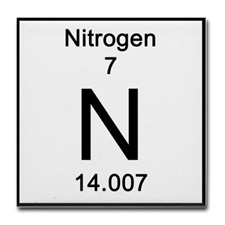
What is the number of protons that the element in this image contain?
a)
14
b)
7
c)
15
d)
18
119.
What is the atomic mass of "F"
a)
9
b)
18
c)
17
d)
19
120.
a)
2
b)
8
c)
3
d)
13
121.
a)
2
b)
6
c)
10
d)
16
122.
What subatomic particle(s) would be found orbiting the nucleus?
a)
Neutrons only
b)
Electrons only
c)
Protons and Neutrons
d)
Protons and Electrons
123.

Valence electrons are the number of

a)

protons in the atom

b)

electrons in the atom

c)

protons + neutrons in the nucleus

d)

electrons in the outside shell of the atom

124.
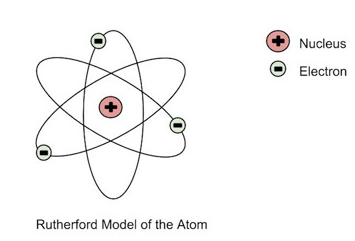
In an atom, electrons move in definite orbits around the nucleus.
a)
Thomson
b)
Rutherford
c)
Bohr
d)
Democritus
125.
What scientist is best known for his "Plum Pudding" model of the atom?
a)
J.J. Thomson
b)
Ernest Rutherford
c)
John Dalton
d)
Democritus
126.
What contribution did John Dalton make to atomic theory? 
a)
He discovered that every atom was positively charged. 
b)
He discovered that every element consisted of one type of atom that couldn't be divided. 
c)
He discovered that atoms had nuclei. 
d)
He discovered that atoms could be divided into smaller parts. 
127.
Rutherford's gold foil experiment provided evidence that...
a)
negative and positive charges are spread evenly throughout the atom.
b)
alpha particles have a positive charge.
c)
gold is not a dense as previously thought.
d)
there is a dense positively charged nucleus at the center of an atom.
128.
His atomic model was depicted similar to a planetary/solar system
a)
Niels Bohr
b)
Joseph Thomson
c)
Ernest Rutherford
d)
Democritus
129.
How did Thomson build upon Dalton's model? 
a)
His model was the same.
b)
He put electrons in orbitals.
c)
He discovered the nucleus.
d)
He discovere subatomic particles (electron).
130.
An experiment is performed on plants to see how different liquids affect plant growth. Each plant in the experiment is given a different liquid; water, apple juice, or milk. Each plant has the same amount of soil, sunlight, and listens to the same music. In this investigation, the independent variable is ...
a)
The type of plant
b)
The amount of sunlight
c)
The type of music
d)
The type of liquid
131.
Ms. S set up an experiment to see how the mass of a ball affects the distance it rolls off a ramp. What is the dependent variable?
a)
Distance traveled by the ball
b)
Height of the ramp
c)
Mass of the ball
d)
Where the experiment took place.
132.
Ms. S set up an experiment to see how the mass of a ball affects the distance it rolls off a ramp. Identify the independent variable.
a)
Distance traveled by the ball
b)
Height of the ramp
c)
Mass of the ball
d)
Who set up the experiment (Ms. S, etc)
133.
The independent variable is the ONE thing you _____.
a)
change
b)
keep the same
c)
experiment with
d)
investigate
134.
 In a controlled experiment, the variable that is changed to test the hypothesis is called the –
a)
Controlled Variable
b)
Responsive Variable
c)
Dependent Variable
d)
Independent Variable
135.
Walker is testing which fertilizer will grow the tallest grass.  The height of the grown grass is the __ variable.
a)
constant (same)
b)
independent (changes)
c)
dependent (measured)
136.
The variable that is measured throughout the experiment is the ________________
Hint: It may change as a result of your testing.
a)
Controlled Variable
b)
Responsive Variable
c)
Dependent Variable
d)
Independent Variable
137.

Chemical or Physical:

A characteristic of matter that can only be observed when matter is changed into a new kind of matter.

a)

Chemical

b)

Physical

138.

Chemical or Physical:

The words "blue", "large", and "soft" all describe __________ properties.

a)

Chemical

b)

Physical

139.

Chemical or Physical:

Color, shape, texture, and luster are all examples of _______________ properties of matter.

a)

Chemical

b)

Physical

140.

Chemical or Physical:

Mass, volume, or density of an object is a _______________ property of that object.

a)

Chemical

b)

Physical

141.

Chemical or Physical:

The ability to cook, burn, rust, tarnish, or explode is an example of a ___________ property.

a)

Chemical

b)

Physical

142.

Density

a)

Physical Property

b)

Chemical Property

143.

Flammability

a)

Physical Property

b)

Chemical Property

144.

Solubility

a)

Physical Property

b)

Chemical Property

145.

Melting point

a)

Physical Property

b)

Chemical Property

146.

Reacts with water

a)

Physical Property

b)

Chemical Property

147.

Boiling point

a)

Physical Property

b)

Chemical Property

148.

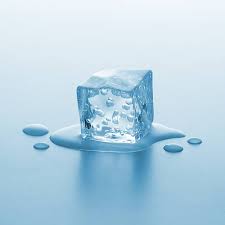
Ice melts

a)

Physical Change

b)

Chemical Change

149.

A piece of ice melts and reacts with sodium

a)

Physical Change

b)

Chemical Change

150.
A change in which NEW substances are formed.
a)
Chemical change
b)
Physical change
c)
Casual change
d)
Formal change
151.
Which of the following is NOT an example of chemical change?
a)
sour milk
b)
burning wood
c)
breaking a pencil
d)
rust
152.
Which of the following is NOT an example of a physical change?
a)
crumpled paper
b)
pencil sharpening
c)
shrunken clothing
d)
sour milk
153.
Which of the following IS a physical change?
a)
Getting a haircut
b)
Rusty metal
c)
sour milk
d)
A compound
154.
Is a rusting bicycle a chemical or physical change?
a)
chemcial
b)
physical
155.
Ripping up paper ...
a)
Chemical Change
b)
Physical Change
156.
A change in phase ...
a)
Chemical Change
b)
Physical Change
157.
Bubbles form when two or more substances are combined ...
a)
Chemical Change
b)
Physical Change
158.
Causes a change in temperature ...
a)
Chemical Reaction
b)
Physical Reaction
159.
Causes a change in odor ...
a)
Chemical Reaction 
b)
Physical Reaction
160.
A change in the size, shape, or state of matter.
a)
chemical change
b)
physical change
161.
When a substance melts, the kinetic energy _____________.
a)
decreases
b)
stays the same
c)
increases
d)
decreases then increases
162.
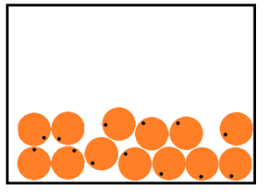
When molecules flow around each other, they are in this phase
a)
solid
b)
liquid
c)
gas
d)
plasma
163.
When molecules flow around each other, they are in this phase
a)
solid
b)
liquid
c)
gas
d)
plasma
164.
What takes place when a liquid changes to a gas?
a)
condensation
b)
melting
c)
evaporation
d)
freezing
165.
What takes place when a solid changes to a liquid?
a)
condensation
b)
melting
c)
evaporation
d)
freezing
166.
What takes place when a liquid changes to a solid?
a)
condensation
b)
melting
c)
evaporation
d)
freezing
167.
What takes place when a gas changes to a liquid?
a)
melting
b)
freezing
c)
evaporation
d)
condensation
168.
5. What is it called when a solid turns directly into a gas?
a)
Sublimation
b)
Condensation
c)
Liquid
169.
7. All phase changes (changing states) requires energy to be added or taken away.
a)
True
b)
False
170.
Boiling is ...
a)
liquid to gas
b)
gas to solid
c)
gas to liquid
d)
solid to liquid
171.

Which form of matter has a definite shape and takes up space (has definite volume)?

a)

liquid

b)

solid

c)

gas

d)

clay

172.
Which form of matter take the shape of a container like this juice?
a)
liquid
b)
solid
c)
glass
d)
gas
173.
Which form of matter does not take the shape of its container?
a)
liquid
b)
gas
c)
solid
d)
air
174.
Definite shape and definite volume
a)
solid
b)
liquid
c)
gas
d)
solid, liquid and gas
175.
No definite shape or volume
a)
solid
b)
liquid
c)
gas
d)
solid, liquid and gas
176.
Definite volume but not definite shape
a)
solid
b)
liquid
c)
gas
d)
solid, liquid and gas
177.
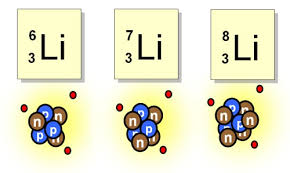
How many neutrons does the isotope of lithium have?
a)
8
b)
3
c)
4
d)
5
178.
What quantities vary between isotopes of an element?
a)
protons, electrons, and atomic mass
b)
protons, electrons, and atomic number
c)
neutrons and electrons
d)
neutrons and atomic mass
179.
which atom has  4 neutrons?
a)
Li-6
b)
Li-7
c)
Li-8
d)
they have the same # of neutrons
180.
How many neutrons in C-14?
a)
6
b)
7
c)
14
d)
8
181.
What is an isotope? 
a)
A charged atom
b)
An atom with different amounts of neutrons
c)
An atom with different amounts of protons
d)
A neutral atom
182.
Chocolate milk is an example of a
a)
homogeneous mixture
b)
heterogeneous mixture
183.
Salad is an example of a
a)
homogeneous mixture
b)
heterogeneous mixture
184.
Dishwasher soap is an example of a
a)
homogeneous mixture
b)
heterogeneous mixture
185.
Chicken noodle soup is an example of a
a)
homogeneous mixture
b)
heterogeneous mixture
186.
Is sugar (C12H22O11) an element or a compound?
a)
Element
b)
Compound
187.
Is water an element or a compound?
a)
Element
b)
Compound
188.
A compound consists of two or more elements bound together.
a)
True
b)
False
189.
Which of the following is not a compound?
a)
HCl
b)
Cl
c)
NaCl
d)
CO2
190.
Which of the following represents an element?
a)
H2O
b)
H2
c)
NaCl
d)
CaCO3
191.
What cannot be broken down into other substances?
a)
Compound
b)
Mixture
c)
Solids
d)
Element
192.
How many elements are represented in the compound?
Na2CO3
a)
1
b)
2
c)
3
d)
4
193.
What is the density of an object that has a volume of 30 mL and 120 grams?
a)
40 mL
b)
4 g/mL
c)
40 g/cm3
d)
4 g 3
194.
What two factors do you need to calculate density?
a)
matter and mass
b)
matter and volume
c)
mass and volume
d)
weight and volume
195.
What is the volume?
a)
 50.0 mL
b)
53.0 mL
c)
54.0 mL
196.
Read the volume to the nearest 0.1mL
a)
6.3 mL
b)
6.6 mL
c)
6.8 mL
d)
7.2 mL
197.
Convert from meters to cm:  9 meters
a)
900 cm
b)
90 cm
c)
0.9 cm
d)
0.09 cm
198.
Convert 8 kilometers to meters
a)
800 m
b)
80,000 m
c)
8,000 m
d)
.008 m
199.
Convert 5 cm to mm:
a)
5,000mm
b)
0.5 mm
c)
0.05 mm
d)
50 mm
200.
1000 grams = _____ kilograms
a)
0.0001
b)
1,000,000
c)
10
d)
1