wayground logo

Free Printable Worksheets

Font size

S
M
L
XL
Worksheets

IPC: Chemistry Final REVIEW

Total questions: 200

Worksheet time: 4hrs 55mins
Name
Class
Date
1.
What are the three states of matter?
a)
solid, volume, mass
b)
density, volume, mass
c)
solid, liquid, gas
d)
density, gas, volume
2.
Example for Physical Property
a)
Taste
b)
explodes
3.
Cutting an orange is a physical change.
a)
True
b)
False
4.
An example of a physical property is 
a)
flammability
b)
acidic
c)
color
d)
ability to rust
5.
Which change can occur when  you add heat energy to water?
a)
The water can change from a liquid to a solid
b)
The water can change from a gas to a liquid
c)
The water can change from a liquid to a gas
d)
The water can change from a solid to a liquid
6.
Water freezing to ice is an example of a:
a)
Physical change
b)
Chemical change
7.
A combination of 2 or more substances that cannot be easily separated is called- 
a)
a mixture
b)
a solution 
c)
a solute 
d)
a solvent 
8.
Water and Kool-Aid are mixed together. Hot water, coffee and sugar are mixed together. Which substance is the solvent in both?
a)
Water
b)
Coffee
c)
Kool-aid
d)
Sugar
9.
Salt has a chemical formula of NaCl.  Salt is a...
a)
Compound
b)
Element
c)
Mixture
d)
None of the Above
10.
A combination of substances that are not chemically combined is called a(n)____________. 
a)
mixture
b)
compound
c)
physical
11.
This diagram represents a _____.
a)
pure substance that is a compound
b)
mixture of elements
c)
pure substance that is an element
d)
mixture of compounds
12.
This diagram represents a _____.
a)
pure substance that is a compound
b)
mixture of elements
c)
pure substance that is an element
d)
mixture of compounds
13.
a)
1
b)
2
c)
3
d)
4
14.
Which of the following an element?
a)
Carbonic Acid
b)
Copper
c)
Iron and Copper
d)
Water
15.
What cannot be broken down into other substances?
a)
Compound
b)
Mixture
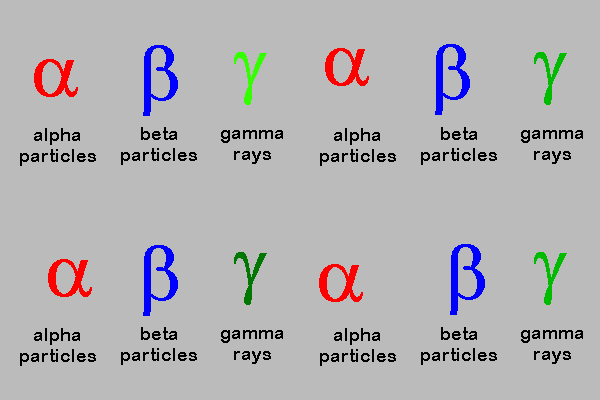
c)
Solids
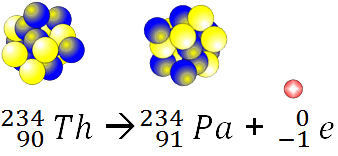
d)
Element
16.
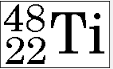
How many protons does this isotope of titanium have?
a)
48
b)
22
c)
26
d)
70
17.

How many neutrons does the isotope of 6430 Zn have?

a)

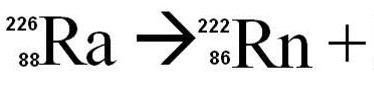
64

b)

30

c)

34

d)

104

18.
What do these isotopes of carbon all have in common?
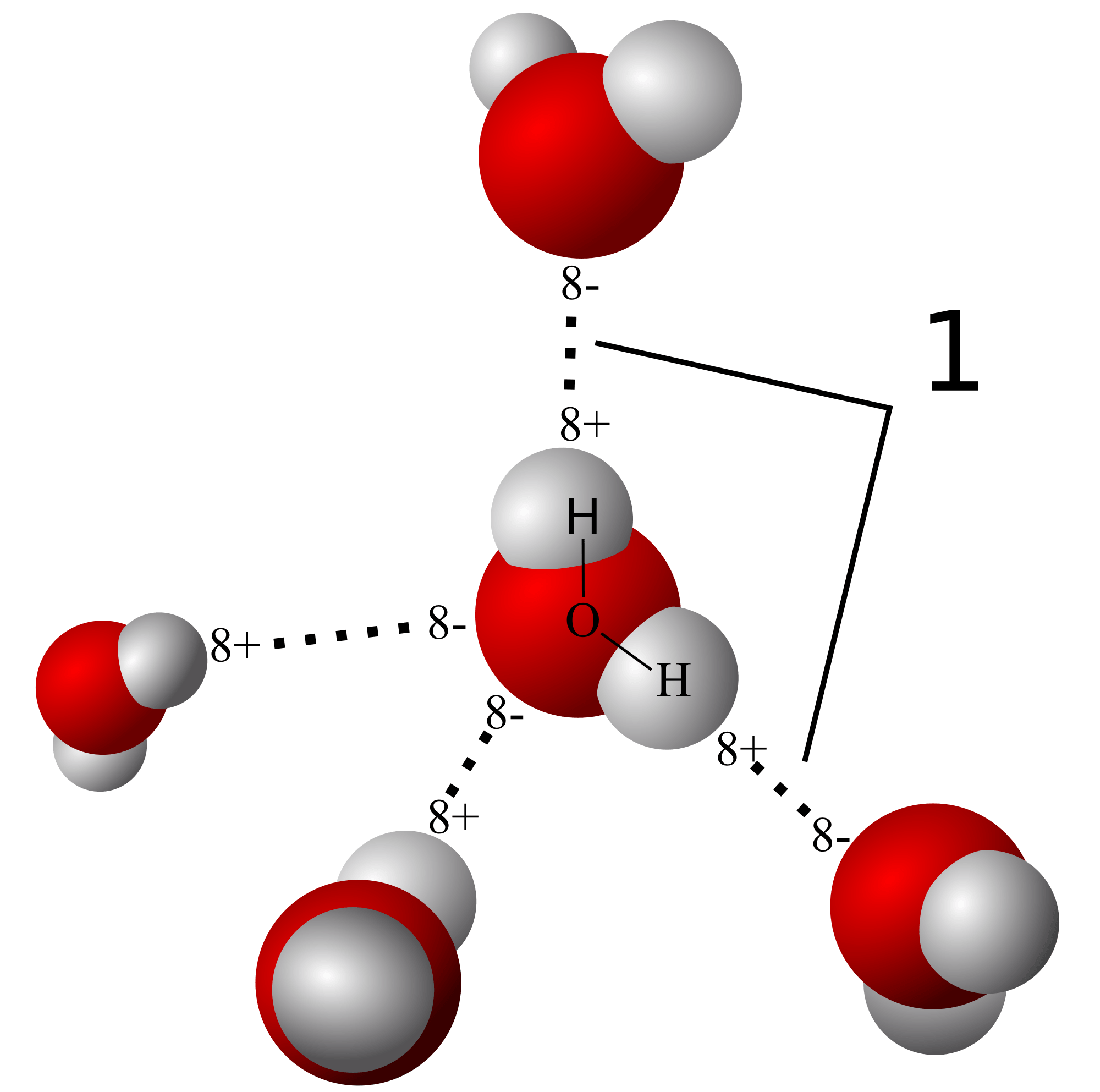
a)
neutrons & mass number
b)
atomic number and neutrons
c)
atomic number and electrons
d)
protons, atomic number, and mass number
19.

In a correctly written symbol (isotopic notation) what would be located in the "A" position?

a)

number of neutrons

b)

atomic number

c)

number of electrons

d)

mass number

20.

11p+, 11e- and 12n0


What element is this? What is the mass number of this atom?

a)

sodium, 23

b)

magnesium, 23

c)

magnesium, 12

d)

sodium, 11

21.

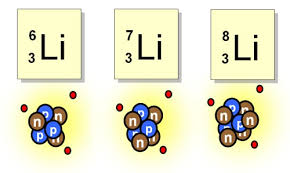
which atom has 4 neutrons?

a)

Lithium - 6

b)

Lithium - 7

c)

Lithium - 8

d)

they have the same # of neutrons

22.

which explanation of this notation is incorrect?

a)

12 is the number of protons

b)

There are 6 neutrons

c)

6 tells you there are 6 protons

d)

12 is the mass number

23.
If an atom has 12 positively charged subatomic particles, which of the following must it also have to be considered a neutral atom?
a)
12 neutrons
b)
12 electrons
c)
12 protons
d)
24 protons and neutrons
24.
An atom has 10 protons, 15 neutrons and 10 electrons what is its mass number.
a)
20
b)
10
c)
5
d)
25
25.
An element with a mass number of 11 and an atomic number of 5 has how many neutrons?
a)
11
b)
5
c)
6
d)
16
26.
The mass of one proton is greater than the mass of one...
a)
neutron
b)
electron
27.
Which letter represents an electron?
a)
A
b)
B
c)
C
d)
D
28.

What is the mass number of the atom pictured?

a)

9

b)

10

c)

18

d)

19

29.

What is the element name of the atom pictured?

a)

1910 F

b)

1910 Ne

c)

199 F

d)

1910 K

30.

What is the element name of the atom pictured?

a)

1910 F

b)

1910 Ne

c)

199 F

d)

1910 K

31.
The two subatomic particles that make up the mass of the atom are the _____ and the _____.
a)
proton, neutron
b)
proton, electron
c)
neutron, electron
d)
electron, energy levels
32.
Which statement best describes the locations of the subatomic particles?
a)
The protons and electrons are found in the nucleus, while neutrons are in the cloud outside the nucleus
b)
The neutrons are in the nucleus, while the protons and electrons are in the cloud outside the nucleus
c)
The protons and neutrons are in the nucleus, while the electrons are in the cloud outside the nucleus
d)
The electrons and neutrons are in the nucleus, while the protons are in the cloud outside the nucleus
33.
What is the subatomic particle for box A? 
a)
proton
b)
neutron
c)
electron
34.

Which scientist proposed a new model of the atom after the discovery of the electron in 1897? His model consisted of electrons embedded in a sea of positive charge like seeds in a watermelon.

a)

J.J. Thomson

b)

Ernest Rutherford

c)

Niels Bohr

d)

Albert Einstein

35.
The majority of an atom's mass exists where?
a)
In the nucleus
b)
In the electron cloud
c)
In the space between the nucleus and the electrons
d)
In the neutrons
36.

Which of the following is NOT true about a neutral atom of Lead- 208.

a)

It has 92 protons

b)

Mass Number is 208

c)

Protons equal Electrons

d)

It has 92 neutrons

37.

which statement is INCORRECT?

a)

Protons have the same mass as neutrons

b)

The atom is mostly empty space

c)

Most of the mass of an atom is in the electron cloud

d)

The atom is identify by the number of protons

38.

If X is the symbol for an element, which of the following two symbols represent isotopes of the same element?


I. 7735X


II. 7733X


III. 8137X


IV. 8135 X

a)

I and II

b)

III and IV

c)

I and IV

d)

I and III

39.

How many electrons are in a NEUTRAL atom that has an atomic number of 34, an atomic mass of 74?

a)

34

b)

36

c)

2

d)

40

40.
Which particle does not contribute mass to the atom?
a)
Proton
b)
Neutron
c)
Electron
d)
Nucleus
41.
Most of the elements on the periodic table are classified as _____.
a)
Metals
b)
Nonmetals
c)
Metalloids
d)
Periods
42.
How many Valance electrons does Iodine Have?
a)
6
b)
16
c)
7
d)
17
43.
An element's identity is determined by the number of
a)
electrons.
b)
protons.
c)
neutrons.
d)
valence.
44.
Group 18 elements are known as the _____ _____ and have full valence shells.
a)
royal gases.
b)
supreme solids.
c)
noble gases.
d)
legit liquids.
45.
Which elements have the most similar chemical properties?
a)
K and Na
b)
K and Ca
c)
K and Cl
d)
K and S
46.
Elements which are shiny, conduct electricity and heat are called
a)
metal
b)
nonmetal
c)
metalloid
d)
nonexistent
47.
Which element is not in the Alkali metal family?
a)
Li
b)
H
c)
Fr
d)
Cs 
48.
What is the name of the group that never reacts--ever ever they are stable with a full outermost ring!!!
a)
noble gases
b)
transition
c)
halogens
d)
borons
49.
Cations are
a)
positive
b)
negative
c)
on the right side of the periodi table.
d)
nonmetals
50.
Which of the following would produce an anion?
a)
Ca
b)
Al
c)
K
d)
F
51.
What will nitrogen's charge be as an ion?
a)
+3
b)
-3
c)
0
d)
-1
52.
Ions are: 
a)
atoms with a positive or negative charge
b)
atoms with no charge
c)
atoms with ONLY a positive charge
d)
atoms with ONLY a negative charge
53.
What is the charge does a sodium ion have?
a)
+2
b)
+1
c)
-1
d)
-2
54.
Which is most likely to form a negative ion?
a)
an element from group 17
b)
a metal
c)
an element from group 1
d)
an element with atoms that have eight valence electrons
55.
If an element has 3 valence electrons, what charge will likely form on its ion ?
a)
+3
b)
+5
c)
-3
d)
-5
56.
How many electrons does a Copper atom have?
a)
63
b)
29
c)
92
d)
34
57.

Which magnesium ion is represented in the model?

a)

Mg -1

b)

Mg -2

c)

Mg +1

d)

Mg +2

58.

Which element could X represent?

a)

iron

b)

Chlorine

c)

Silicon

d)

Oxygen

59.
What is the ionic symbol for Selenium?
a)
Se-2
b)
Se+2
c)
Se-3
d)
Se+3
60.

Which of the following is correct about the ion shown on the picture?

a)

17 protons, 19 neutrons and 17 electrons

b)

17 protons, 20 neutrons and 18 electrons

c)

17 protons, 36 neutrons and 17 electrons

d)

17 protons, 19 neutrons and 18 electrons

61.

Which of the following is FALSE about the Beryllium ion shown on the picture?

a)

It has 4 electrons

b)

It has 4 protons

c)

It lost 2 electrons

d)

It has 5 neutrons

62.

An unidentified element has similar characteristics as Bromine and chlorine but has a bigger atomic mass. The element is the identity of the atom?

a)

Oxygen

b)

Barium

c)

Iodine

d)

Fluorine

63.
Ionic Bonding involves...
a)
The transfer of protons
b)
The transfer of nuetrons 
c)
The transfer of electrons
d)
None Of the above
64.
What do atoms that form positive ions tend to do?
a)
Tend to lose electrons 
b)
Tend to lose protons
c)
Tend to gain electrons
d)
Tend to gain protons
65.
What usually forms the positive ion?
a)
Metal
b)
Non Metals
c)
None
66.
Covalent compounds
a)
Share electrons
b)
transfer electrons
c)
contain a sea of electrons
d)
conduct electricity
67.
What two types of atoms make a covalent bond?
a)
2 Nonmetals
b)
1 Nonmetal and 1 Metal
c)
2 Metals
d)
2 Noble Gases
68.
Predict the bond that will form between Be and F.
a)
Ionic
b)
Covalent
69.
Cr3N
a)
chromium nitride
b)
chromium (I) nitride
c)
chromium (II) nitride
d)
chromium (III) nitride
70.
chromium (III) nitrate
a)
Cr3N2
b)
Cr2N
c)
Cr2NO3
d)
Cr(NO3)3
71.
calcium oxide
a)
Ca2O2
b)
Ca2O
c)
CaO
d)
CaO2
72.
barium phosphide
a)
Ba3(PO4)2
b)
BaP
c)
Ba3P2
d)
Ba2P3
73.

What is the name of the compound RuS ?

a)

Ruthenium sulfate

b)

Ruthenium sulfite

c)

Ruthenium(II) sulfide

d)

Ruthenium sulfide

74.
AgOH
a)
silver hydroxide
b)
silver (I) hydroxide
c)
silver hydrogen oxide
d)
silver hydride
75.

SrCl

a)

strontium chloride

b)

selenium chloride

c)

strontium(I) chloride

d)

strontium carbon iodine

76.
Which of these is covalent?
a)
NaCl
b)
Pb(NO3)2
c)
CO2
d)
AlCl3
77.
AgNO2 is called...
a)
silver oxide
b)
silver nitrogen oxide
c)
silver nitrate
d)
silver nitrite
78.
The formula for magnesium cyanide is...
a)
Mg(CN)2
b)
MgCN2
c)
MgCN
d)
(Mg)2CN
79.
FeSO3
a)
iron (I) sulfate
b)
iron sulfite
c)
iron (III) sulfite
d)
iron (II) sulfite
80.
What is the ionic compound formed between K and F?
a)
KF
b)
K2F
c)
KF2
d)
K2F2
81.
Beryllium will ____ valence electrons when forming an ionic bond.
a)
lose 4
b)
gain 4
c)
lose 2
d)
gain 2
82.
The formula of sodium sulfate is Na2SO4. How many elements does it contain?
a)
2
b)
3
c)
4
d)
7
83.
What type of bond is formed between Aluminum and Chlorine?
a)
Ionic Bond
b)
Polar Covalent Bond
c)
Non Polar Covalent Bond
d)
Metallic Bond
84.
What type of bond is formed between Bromine and Bromine?
a)
Ionic Bond
b)
Polar Covalent Bond
c)
Non Polar Covalent Bond
d)
Metallic Bond
85.
What type of bond is formed between Oxygen and Potassium?
a)
Ionic Bond
b)
Polar Covalent Bond
c)
Non Polar Covalent Bond
d)
Metallic Bond
86.

Which of these are an ion?

a)

3 protons, 3 neutrons, 3 electrons.

b)

8 protons, 8 neutrons, 8 electrons

c)

2 protons, 3 neutrons, 2 electrons

d)

6 protons, 6 neutrons, 7 electrons

87.
Which of the following is not a property of an ionic compound?
a)
ability to dissolve in water
b)
high boiling point
c)
high melting point
d)
malleability
88.

A mystery substance is known to be a chemical compound. What can you infer about the substance?

a)

it has a fixed composition

b)

It is composed of two or more elements

c)

it consists of molecules

d)

it forms crystals

89.
What is the chemical name for the binary compound listed:
Na2O
a)
Sodium oxide
b)
Sodium (II) oxide
c)
Disodium monoxide
d)
Disodium oxide
90.
Which of the following gives the correct chemical formula for the compound created by the combination of Nitrogen and Calcium?
a)
Ca2N3
b)
CaN
c)
Ca3N2
d)
CaN2
91.

What is the charge on the anion on Aluminum chlorite ?

a)

+1

b)

-1

c)

+2

d)

+3

92.

What is the charge on the Cation Mg(NO3)2?

a)

+1

b)

-1

c)

+2

d)

+3

93.
What is the chemical name for the binary compound listed:
Fe3N2
a)
Iron nitride
b)
Iron (III) nitride
c)
Iron (II) nitride
d)
TriIron dinitride
94.
In chemical compounds, covalent bonds form when
a)
the electronegativity difference between two atoms is very large.
b)
electrons are completely transferred between two metals.
c)
pairs of electrons are shared between two nonmetal atoms.
d)
two nonmetal atoms are attracted to each other by opposite charges.
95.

A covalent molecule in which electrons are shared unequally is:

a)

polar

b)

a double bond

c)

ionic

d)

polyatomic

96.

The molecule shown (N2O2) has been called "laughing gas" and has been used in dentistry as a pain killer. What is its chemical name?

a)

Nitrogen oxide

b)

dinitrogen dioxide

c)

dinitrogen oxide

d)

nitrogen dioxide

97.
Which compound below would be nonpolar?
a)
HF
b)
H2O
c)
Br2
d)
HBr
98.
Give the formula for phosphorus trifluoride
a)
P3F
b)
PF
c)
PF3
d)
P3F3
99.

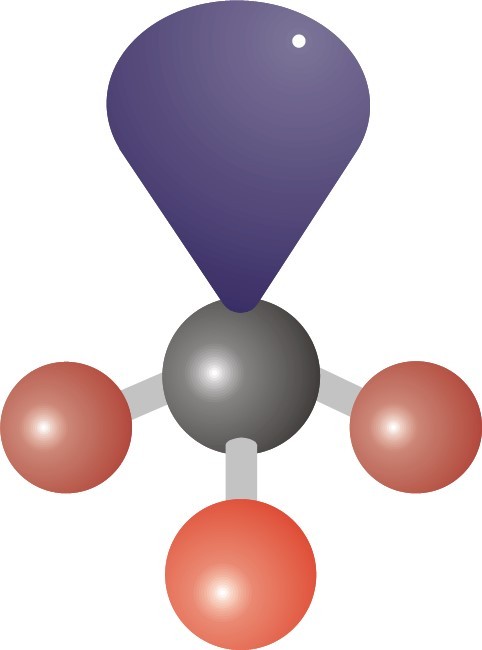
Which molecule could have a triangular pyramidal shape?

a)

H2O

b)

NH3

c)

CO2

d)

CH4

100.

What molecular shape for H2SiO?

a)

Trigonal Planar

b)

Trigonal Bipyramidal

c)

Tetrahedral

d)

Pyramidal

101.

BCl3 would have what structure?

a)

trigonal planar, 1 lone pair

b)

trigonal pyramidal, 1 lone pair

c)

trigonal planar, 0 lone pairs

d)

trigonal pyramidal, 0 lone pairs

102.
What geometry will this molecular structure have?: PH3
a)
bent
b)
tetrahedral
c)
linear
d)
trigonal pyramidal
103.
What geometry will this molecular structure have?: CH4
a)
bent
b)
tetrahedral
c)
linear
d)
trigonal pyramidal
104.
Will this molecule be polar or nonpolar? CCl4
a)
polar
b)
nonpolar
105.
Will this molecule be polar or nonpolar? H2S
a)
polar
b)
nonpolar
106.
Ionic or covalent?
NaBr
a)
Ionic
b)
Covalent
107.
A covalent bond in which electrons are not shared equally is called______________________
a)
Polar covalent bond
b)
Ionic bond
c)
Lopsided bond
d)
Unfair bond
108.
Ionic or covalent?
H2O
a)
Ionic
b)
Covalent
109.
What shape does CH2Br2 have?
a)
Tetrahedral
b)
Trigonal Planar
c)
Bent 
d)
Trigonal Pyramidal
110.
Phosphorous trichloride
a)
PCl3
b)
P3Cl
c)
P3Cl3
d)
PCL
111.
What is the formula for Tricarbon Octahydride?
a)
Ca3O
b)
C2H8
c)
C3H8
d)
Ca3H8
112.
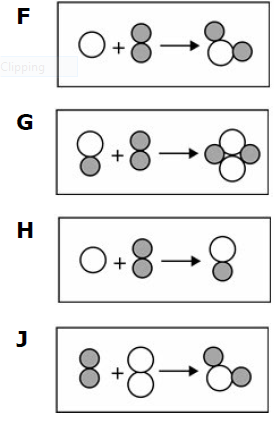
Which of the following models best demonstrates a balanced chemical equation?
a)
F
b)
G
c)
H
d)
J
113.
Coal contains carbon and other elements. Carbon dioxide forms when coal burns in the presence of oxygen. Which of these is the best evidence that a chemical reaction occurs when coal burns?
a)
The shape of the coal changes
b)
Oxygen is present
c)
A new substance is produced
d)
Coal is made up of more than one element
114.

Which of these is NOT a sign that a chemical change has occurred?

a)

some of the product evaporates

b)

An unexpected color change

c)

A temperature change

d)

The formation of a a new compound

115.

The Law of Conservation of Mass states

a)

that matter exists in all states and reacts the same

b)

that matter can only be changed into new substances by introducing a catalyst

c)

that matter exists in the same state throughout any chemical change

d)

that matter cannot be created or destroyed and that the mass of the products must equal the mass of the reactants

116.

How many Al atoms are in this compound? 4Al2O3

a)

2

b)

8

c)

6

d)

4

117.

How many F atoms are in this compound?

6MgF2

a)

2

b)

6

c)

8

d)

12

118.

___________________ are the elements or compounds that leave (are formed in) a chemical reaction.

a)

Polymers

b)

Bonds

c)

Reactants

d)

Products

119.

___________________ are the elements or compounds that leave (are formed in) a chemical reaction.

a)

Polymers

b)

Bonds

c)

Reactants

d)

Products

120.
What type of reaction occurs between an element and a compound?
Zn + 2HCl --> ZnCl2 + H2
a)
Synthesis
b)
Decomposition
c)
Single Replacement
d)
Double Replacement
121.
What kind of reaction is this:
2H2 + O2 --> 2H2O
a)
Synthesis
b)
Decomposition
c)
Single Replacement
d)
Double Replacement
122.
What kind of reaction is this:
4Fe  +  3O2 →   2Fe2O3 
a)
Synthesis
b)
Decomposition
c)
Single Replacement 
d)
Double Replacement
123.
What kind of reaction is this:
2C3H7OH +9O2 -> 6CO2 + 8H2O
a)
Double Replacement
b)
Combustion
c)
Single Replacement
d)
Decomposition
124.
What kind of reaction is this:
Fe + CuSO4 -> Cu + FeSO4
a)
Double Replacement
b)
Decompostion
c)
Single Replacement
d)
Combustion
125.
Which type of reaction takes place in the presence of oxygen and produces carbon dioxide and water?
a)
double replacement 
b)
decomposition 
c)
combustion 
d)
single replacement
126.
 Predict the product(s):  H2O -->
a)
H and O
b)
H2 and O2
c)
H and OH
127.
In the reaction of K + AgNO3 what will the products be?
a)
K and AgNO3
b)
Ag and KNO3
c)
NO3 and AgK
d)
No reaction
128.

What are the correct formulas and coefficients for the products of the following double-replacement reaction?

Rb+1 OH-1 H+1 PO4-3

RbOH + H3PO4

a)

Rb3PO4 + 3 H2O

b)

Rb(PO4)3 + H2O

c)

H3Rb + PO4OH

d)

RbPO4 + 2 H2O

129.

What are the correct formulas and coefficients for the products of the following single-replacement reaction?


Mg + Al(OH)3

a)

No Reaction

b)

Al + Mg(OH)3

c)

2 Al + 3 Mg(OH)2

d)

3 Al + MgOH3

130.
Predict the products for the this reaction:
Mg + CuCl2 --> 
a)
MgCl2 + Cu
b)
MgCl + Cu
c)
MgCu + Cl2
d)
CuMg + Cl2
131.
What are the products of this single replacement reaction: Mg + CuSO4
a)
Cu + MgSO4
b)
Cu + SO4Mg
c)
Cu + Mg(SO4)2
d)
No Reaction
132.

when calcium carbonate (Ca+2 CO3-2) reacts with silver sulfate(Ag+1 SO4-2), it produces calcium sulfate and silver carbonate . What is the correct balanced equation for this reaction

a)

Ca2CO3 + AgSO4 → CaSO4 + Ag2CO3

b)

CaCO3 + Ag2SO4 → Ca2SO4 + AgCO3

c)

CaCO3 + Ag2SO4 → CaSO4 + Ag2CO3

d)

Ca2CO3 + Ag2SO4 → Ca2SO4 + Ag2CO3

133.

in a reaction, aqueous barium chloride (Ba+2 Cl-1)reacts with aqueous potassium carbonate(K+1 CO3-2) to produce solid barium carbonate and aqueous potassium chloride. what is the correct balanced equation.

a)

Ba2Cl(aq) + KCO3(aq) --> BaCO3(s) + KCl(aq)

b)

BaCl2(aq) + K2CO3(aq) --> BaCO3(s) + 2KCl(aq)

c)

BaCl(aq) + K2CO3(aq) --> BaCO3(s) + K2Cl(aq)

d)

Ba2Cl2(aq) + KCO3(aq) --> Ba2CO3(s) + KCl2(aq)

134.
What is the main difference between synthesis and decomposition?
a)
One is negative and one is positive
b)
One is being combined into something and one is being broken down into something
c)
One deals with two or more substances and one deals with just one
d)
The both deal with two or more substances
135.

Why must chemical equations be balanced?

a)

So that the equation doesn't explode

b)

The reaction won't happen until it is balanced

c)

Matter cannot be created or destroyed in a chemical reaction.

d)

None of these

136.

What type of chemical reaction is this?

2AgNO3 + Cu → Cu(NO3)2 + 2Ag

a)

Synthesis

b)

Single Replacement

c)

Double Replacement

d)

Decomposition

137.

Two like atoms bonded together in a molecule.

a)

covalent bond

b)

diatomic molecule

c)

ionic bond

d)

polar bond

138.

Balance this equation: H2 + N2 → NH3

a)

H2 + 4N2 → NH3

b)

H2 + 3N2 → 2NH3

c)

3H2 + N2 → 2NH3

d)

2H2 + 2N2 → 2NH3

139.

Balance this reaction:

__ HCN + __ CuSO4 ---->__ H2SO4 + __ Cu(CN)2

a)

2,1,1,2

b)

2,1,1,1

c)

1,2,2,1

d)

1,2,1,1

140.

Balance this reaction: __ RbNO3 + __ BeF2 ----> __ Be(NO3)2 + __ RbF

a)

1,1,1,1

b)

1,2,1,1

c)

2,1,1,2

d)

2,1,2,1

141.

What are the coefficient used to balance the equation below?

__Ag2O →__ Ag +___O2

a)

2,4,1

b)

1,1,1

c)

2,1,2

d)

2,2,2

142.
What coefficients are needed to correctly balance the equation?
_Bi   +   _O2   →  _Bi2O3
a)
3,2,3
b)
2,3,2
c)
4,3,2
d)
none of these
143.
Balancing this reaction: ____ CH4 + ____ O2 ---> ____ CO2 + ____ H2O
a)
2,1,3,1
b)
1,2,1,2
c)
1,2,2,1
d)
2,1,1,2
144.
Balance this reaction: ____ Na3PO4 + ____ KOH ---> ____ NaOH + ____ K3PO4
a)
1,3,3,1
b)
1,3,2,1
c)
2,3,3,1
d)
1,1,3,1
145.
In order of most to least penetrating radiation we have
a)
Alpha , Beta,  Gamma
b)
Beta , Gamma , Alpha
c)
Gamma, Beta, Alpha
d)
Gamma, Alpha, Beta
146.
Gamma rays have a _____ charge
a)
0
b)
+1
c)
-1
d)
+2
147.
Which type of nuclear radiation is being emitted here?
a)
Alpha
b)
beta
c)
gamma 
d)
none
148.
In a nuclear reaction, a small amount of __________ is converted  to ______________.
a)
Energy, mass
b)
Mass, energy
c)
Mass, sound
d)
Heat, light
149.
The nuclear process occurring at a nuclear power plant.
a)
Nuclear fusion
b)
Nuclear fission
c)
Combustion
d)
Multiplication
150.
What is the change in atomic mass when an atom emits a beta particle?
a)
Decrease by 2
b)
Decrease by 1
c)
Remains the same
d)
Increased by 1
151.

If we start off with element 2450Cr after an alpha decay we we what other element?

a)

2250Ti

b)

2246Ti

c)

2048Ca

d)

2654Fe

152.

If we start off with element 2450Cr after an alpha decay we we what other element?

a)

2250Ti

b)

2246Ti

c)

2048Ca

d)

2654Fe

153.

Cesium-137 has a half-life of 30.0 years. The original sample had 300 mg. How many grams are left after 90 years?

a)

100 mg

b)

37.5 mg

c)

75 mg

d)

210 mg

154.
The splitting of a nucleus into smaller nuclei is
a)
fusion
b)
fission
c)
half-life
d)
gamma radiation
155.
Complete the nuclear equation and determine the type of decay that is occurring in this reaction. 
a)
alpha
b)
beta
c)
gamma
d)
none
156.
What type of decay is this?
7534Se + --> _____  + 7132 Zn
a)
Electron Capture
b)
Positron Emission
c)
Alpha Decay
d)
Beta Decay
157.
Which process do hydrogen atoms use to make the Sun's energy?
a)
nuclear fusion
b)
nuclear fission
c)
nuclear isotope
d)
nuclear meltdown
158.

Which of the following is a disadvantage of nuclear energy as a power source?

a)

Nuclear energy produces less energy than the burning coal

b)

Nuclear energy produces air pollution

c)

Nuclear waste must be safely stored

d)

The fuel source is very limited

159.
What is the missing isotope that will balance the following nuclear equation?
94Be  +  11H →  _____  +  42He
a)
105B
b)
105Ne
c)
63Li
d)
63C
160.

Which of the following best describe the reaction below?


7534Se + 0-1e --> 7533As

a)

Electron Capture

b)

Positron Emission

c)

Alpha Decay

d)

Beta Decay

161.
What is the missing isotope that will balance the following nuclear equation?
94Be  +  11H →  _____  +  42He
a)
105B
b)
105Ne
c)
63Li
d)
63C
162.
 For the following nuclear reaction, what was the beginning radionuclide (X)?
      X     86Rn222 + 2He
a)
Radium-222
b)
Radon-222
c)
Radon-226
d)
Radium-226
163.
When no more sugar will dissolve in a glass of water, the solution is
a)
unsaturated
b)
saturated
c)
supersaturated
d)
suspended
164.
You and your friend have a contest to see who can make iced tea the fastest. Which of the following would NOT help you win?
a)
Cooling the water
b)
Using smaller crystals
c)
Heating the water
d)
Stirring quickly
165.
Define solubility
a)
how much pressure is in an object has
b)
Surface Area per Temperature
c)
how much solute can dissolve in a solvent
d)
it is a made up word
166.

When 50 grams of KCl is dissolved in 100 grams of water at 40 ºC, the solution can be correctly described as:

a)

supersaturated

b)

saturated

c)

unsaturated

167.
A solution of potassium chlorate, KClO3, has 20 grams of the salt dissolved in 100 grams of water at 70 ºC. Approximately how many more grams of the salt can be added to the solution before reaching the saturation point?
a)
10 grams
b)
30 grams
c)
80 grams
d)
60 grams 
168.
When 20 grams of potassium chlorate, KClO3, is dissolved in 100 grams of water at 80 ºC, the solution can be correctly described as:
a)
supersaturated
b)
saturated
c)
unsaturated
169.
What will allow more solute to be dissolved in a solvent.
a)
adding more solute
b)
stiring
c)
cooling solution
d)
heat
170.

How does a solution become supersaturated?

a)

dissolve lots of solute in it.

b)

dissolve a little solute in it.

c)

dissolve more solute than you should be able to.

d)

dissolve a super amount of solvent in it.

171.

Capillary action is the result of adhesion. Which aspect of water is responsible for this?

a)

Nonpolar covalent bonds that enable water to dissolve other substances

b)

Polar covalent bonds that join molecules of water to other substances

c)

Hydrogen bonds between water and another substance
172.
Attractions between water molecules are called
a)
Covalent bonds
b)
Ionic bonds
c)
Polar bonds
d)
Hydrogen bonds
173.
Why does ice float?
a)
As water freezes, it expands and its density decreases.
b)
As water freezes, it takes up more hydrogen from the atmosphere, causing it to have a greater buoyancy.
c)
As water freezes, air becomes trapped between the hydrogen bonds of water molecules.
d)
As water freezes, it takes up more oxygen from the atmosphere, causing it to have a greater buoyancy.
174.

Which FALSE about the unique properties of water?

a)

Frozen water floats on liquid water.

b)

Water covers most of the Earth’s surface and retains a large amount of heat.

c)

Water molecules stick to each other through hydrogen bonds.

d)

Water cools very rapidly.

175.

A student pours mineral salts into a bottle of cold water. Which of the following best explains why shaking the bottle will affect the dissolving rate of the salt?

a)

Shaking equalizes the water temperature.

b)

Shaking exposes the salts to the solvent more quickly.

c)

Shaking helps more water to evaporate.

d)

Shaking causes more ions to precipitate out of solution.

176.

Water is polar because...

a)

The unequal sharing of electrons gives the water molecules positive and negative charges .

b)

The molecule has two poles, at which the it is colder than other regions of the molecule.

c)

The unequal sharing of electrons make the water molecule neutral.

d)

The water molecule is neutral.

177.
Which types of compounds dissolve easily in water?
a)
Polar and Nonpolar
b)
Polar and Ionic
c)
Nonpolar and Ionic
d)
Covalent and Nonpolar
178.

Water striders can walk across the surface of calm water. Their feet push the surface of the water down slightly, but they do not break the surface. Why?

a)

The insects are light enough so they do not break the hydrogen bonds holding the water molecules together

b)

The insects actually use their wings to hover slightly above the water’s surface and they only skim it with their feet.

c)

The insects are small enough to see the individual water molecules, so they are able to step carefully from one molecule to the next

179.

According to the picture above, which one is a nonelectrolyte?

a)

Ethanol - No Conductivity

b)

KCl - High Conductivity

c)

Acetic Acid Solution- Low conductivity

180.
molecule in which opposite ends have opposite electric charges
a)
cohesion
b)
polar molecule
c)
hydrogen bond
d)
solution
181.
KBr
a)
Soluble
b)
Insoluble
182.
State whether the following compound is soluble or insoluble.Potassium hydroxide KOH
a)
Soluble 
b)
Insoluble
183.
State whether the following compound is soluble or insoluble.Ammonium nitrate NH4NO3
a)
soluble
b)
insoluble
184.

What is a solvent

a)

A liquid that will dissolve a solid solute

b)

Another word for solution

c)

A thing that make drinks change colour

d)

Usually the solid about to be dissolved

185.

At what temperature does KClO3 and NaCl have the same solubility?

a)

82 ºC

b)

100 ºC

c)

18 ºC

d)

25 ºC

186.

According to the graph, which of the following is most likely a gas?

a)

NaCl

b)

KNO3

c)

Ce2(SO4)3

d)

CaCl2

187.
A gas
a)
has a definite shape but no definite volume
b)
has a definite volume but no definite shape
c)
has fast-moving particles
188.
A physical change is...
a)
a change that doesn't change the identity
b)
a change that makes something new.
c)
a chemical reaction
189.
What causes a change in the state of matter?
a)
physical properties
b)
chemical energy
c)
temperature
190.
This picture represents: 
a)
Element
b)
Compound
c)
Mixture of Elements
d)
Mixture of Compounds
191.
This picture represents: 
a)
Element
b)
Compound
c)
Mixture of Elements
d)
Mixture of Compounds
192.
This picture represents: 
a)
Element
b)
Compound
c)
Mixture of Elements
d)
Mixture of Compounds
193.
What is the volume of Object X?
a)
10.0 cm3
b)
15.0 cm3
c)
20.0 cm3
d)
25.0 cm3
194.
What is the volume of the fish?
a)
18.0 cm3
b)
6.0 cm
c)
38.0 cm3
195.
Chicken soup is an example of what kind of substance?
a)
homogenous mixture
b)
solution
c)
heterogeneous mixture
d)
compound
196.
Kool-Aid is a/an
a)
solution
b)
Element
c)
mechanical mixture
d)
Kool 'lit' juice
197.
This picture represents: 
a)
Element
b)
Compound
c)
Mixture of Elements
d)
Mixture of Compounds
198.
A combination that can be separated by physical processes is a .....
a)
Atom
b)
Compound
c)
Element
d)
Mixture
199.
What state of matter?
a)
solid
b)
liquid
c)
gas
200.
Which one of these pictures represents a pure substance? 
a)
1 and 2
b)
1 and 3
c)
2 and 3
d)
1, 2 and 3