
 Worksheets
Chemistry Final Exam
Total questions: 198
Worksheet time: 5hrs 13mins
If a covalent molecule has one end that is slightly more positive and one end that is slightly more negative, what type of molecule is it?
polar molecule
nonpolar molecule
Covalent bonds form when atoms share electrons.
true
false
When two nonmetals do not share electrons evenly, the resulting covalent bond will be
nonpolar
polar
ionic
metallic
Which category of elements usually form negative ions?
metals
nonmetals
metalloids
noble gases
What is a valence electron?
an electron that is found in the outermost shell of an atom.
an electron found in the innermost shell of an atom.
an electron found in the middle shell.


This atom in a water molecule has more of a negative charge
hydrogen
oxygen

The positive ions tend to _____________ electrons.
lose
gain
The negative ions tend to _____________ electrons.
lose
gain
When an atom loses an electron, it becomes a
positive ion
negative ion
neutral ion
neutral atom
Why do all bonds form?
so the number of protons equals the number of electrons
so an atom can become unstable
to fill the outermost energy level
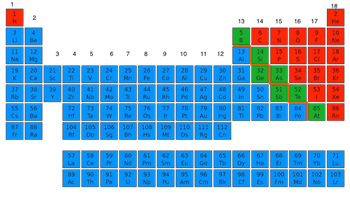
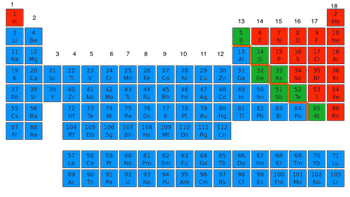

What type of elements form cations?
metals
nonmetals
metalloids?
How does calcium become an calcium ion?
it loses 2 electrons
it gains 2 electrons
Cations
Gain electrons, has an overall positive charge
Lose electrons, has an overall positive charge
Lose electrons, has an overall negative charge
Gain electrons, has an overall negative charge
How does magnesium become an magnesium ion?
it loses 2 electrons
it gains 2 electrons
How does oxygen become an oxide ion?
it loses 2 electrons
it gains 2 electrons

How many Aluminum atoms are in Al2O3?
3
5
2
1
What two types of atoms make a covalent bond?
2 nonmetals
2 metals
1 metal and 1 nonmetal`
How many valence electrons does Boron have?
1
2
3
4
Group numbers on the periodic table help us determine
number of valence electrons
state of the element (solid, liquid, gas)
Water is an example of what?
molecular compound (covalent compound)
ionic compound
Salt is an example of what?
ionic compound
covalent compound
An ionic bond will happen between
metal and nonmetal
nonmetal and nonmetal
metal and metal
Metals make _____ ions.
positive
negative
neutral
Nonmetals will make _____ions.
positive
negative
neutral
When an ionic bond is formed, electrons are _____.
gained
lost
shared
gained or lost
What part of the atom does bonding involve?
protons
neutrons
all electrons
valence electrons
How many valence electrons do MOST atoms need to be stable?
123
8
as many as there are protons
Which of the following is the correct ionic formula for calcium sulfide?
Ca2S2
CaS
S2Ca2
SCa
Aluminum will react spontaneously with oxygen in the air to form aluminum oxide. Write the formula for the compound that is produced in this reaction.
AlO
Al2O3
O3Al2
Al6O3
Name the compound from it's formula: BaI2
Iodine barium
Iodine bariumide
Barium iodine
Barium iodide
When magnesium burns in oxygen it produces MgO. Use the ionic formula to name the compound produced.
Magnesium oxygen
Oxygen magnesium
Magnesium oxide
Oxygen magnesiumide
A metallic bond is a bond between ________.
nonmetals
metals
transition metals
metalloids
Which of the following is NOT a property of metals?
Hard
Can conduct electricity
Very brittle (breaks easily)
Malleable (can bend without breaking)
What do electrons do in a metallic bond?
They stay on the metal atom.
They are transferred from atom to atom.
They form a covalent bond with another atom.
They float around freely.
What is meant by the term "sea of electrons"?
It's what we call all the free floating electrons in a metal.
It's what we call electrons that are floating in a liquid.
It's the total number of electrons in a metal atom.
It's the total number of electrons in the ocean.
Why are metals good conductors of electricity?
The electric current can easily travel along the surface of the metal because it is smooth.
A negative charge can easily push the sea of electrons in one direction, making a current.
Metals attract electricity.
Metals are malleable.
Why are metals malleable? (They can bend without breaking.)
Metals are very smooth.
Metals have a sea of electrons.
The sea of electrons form a strong metallic bond.
Even though the metal ions repel each other, the electron sea holds all the atoms in place.

What do we call electrons that move freely in a metallic bond?
sea of electrons
lone electrons
unpaired electrons
covalent electrons

What property of metals is the image describing?
malleable (bend without breaking)
ductile (stretched into a wire)
conductive (can conduct electricity)
shiny

What property of metals is being shown in figure 1(b) in the image?
malleable (bend without breaking)
ductile (stretched into a wire)
conductive (can conduct electricity)
shiny
What is the one thing responsible for a metal being malleable, ductile, and conductive?
metal atoms
its covalent bonds
its valence electrons
its sea of free-floating electrons
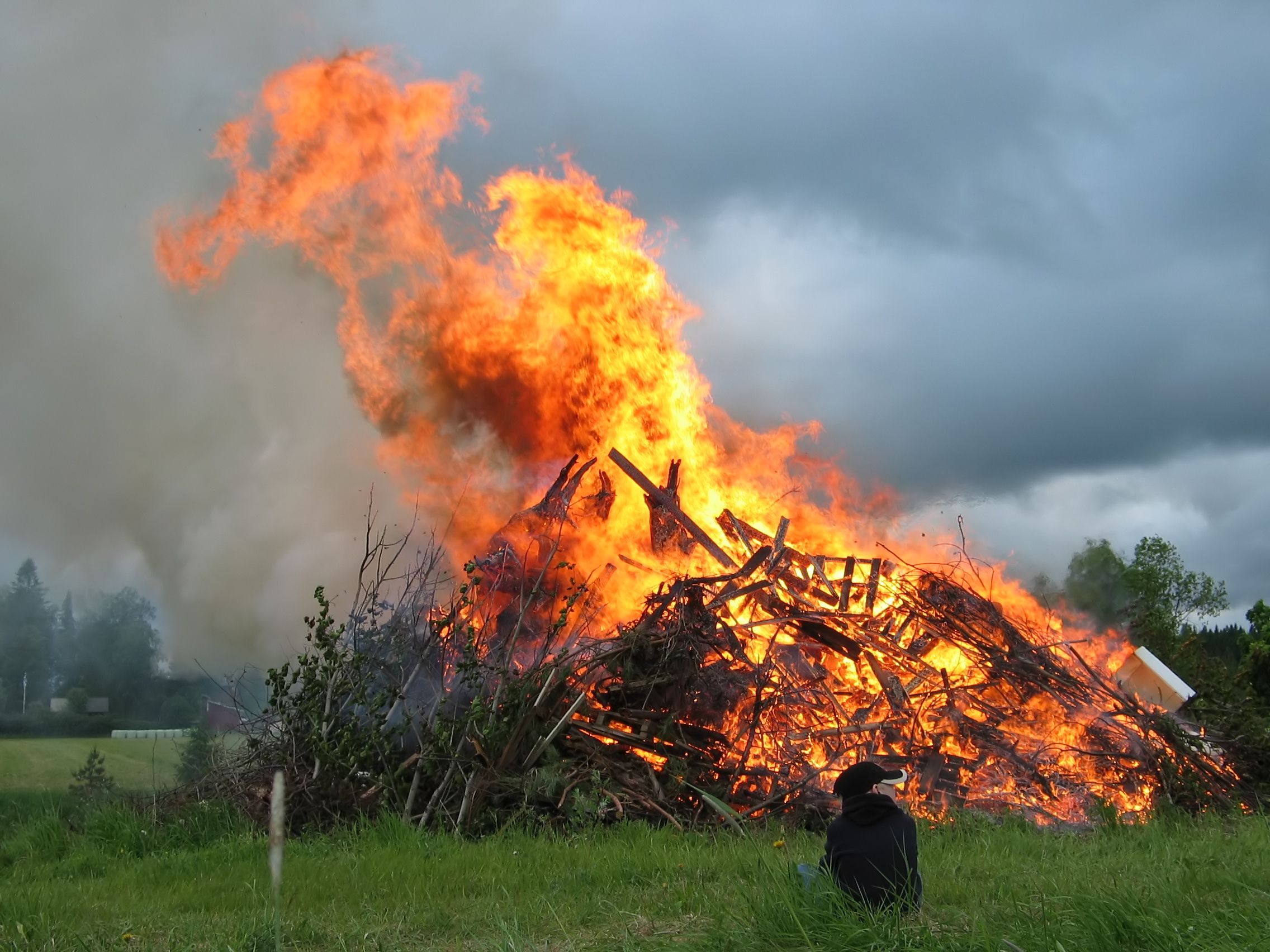
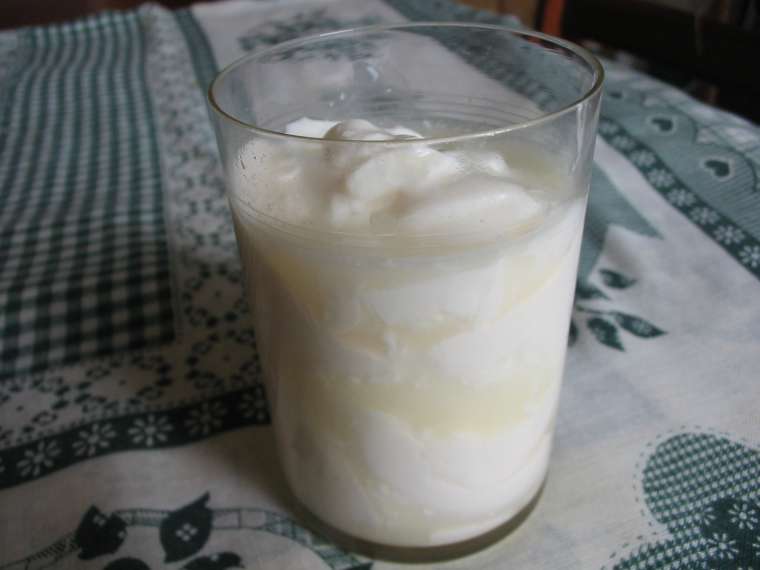


Which of the following is not a clue that a chemical reaction has taken place?
Changing size
Changing color
A gas being formed
Formation of a precipitate


A house made of toy blocks is weighed. It is taken apart and each block weighed separately. If the weight of all the blocks is added, what will it total?
A little less than the weight of the house.
The same as the house.
A little more than the weight of the house.
It would depend on how large the house was.
Water is boiled in a bottle with a balloon over the top. As the water heats, the balloon expands. What has happened to the weight of this bottle and balloon in this experiment?
It has increased as the balloon expands.
It has decreased as the water boiled away.
It has stayed the same.
It is unpredictable because the balloon is flexible.
5 grams of orange Kool Aid powder is added to 100 grams of water. What would you expect the new solution to weigh?
95 grams
100 grams
105 grams
500 grams
How do you know when something is a solid?
It will pour.
It takes the shape of its container.
It cannot be seen easily.
It will hold its shape.
What evidence shows that ice has a physical change when left out in a room?
It reacts with oxygen in the air.
It changes to water
It is hard and white.
It is cold to the touch.

Which of Mark’s observations would show that a burning candle is a chemical reaction?
Black smoke is given off; hot gases are rising.
The wax starts to melt.
The candle is white and made of wax and a wick.
Time passes one minute at a time.

Which of Mark’s observations would show that a burning candle has physical changes?
Black smoke is given off; hot gases are rising.
The wax starts to melt.
C. The flame glows red and orange.
D. Time passes one minute at a time.
How might reactions with burning be important in your daily life?
Food is grown by burning
Modern medicines depend on burning.
Most clean water is created by burning.
Burning fuel supplies heat for homes.

What phase change is happening to the picture?
freezing
melting
evaporation
condensation
It is a change from solid to gas.
condensation
evaporation
sublimation
melting
When heat is added to water, it turns into __________.
solid
liquid
water vapor
precipitate

What phase change is evident in the picture?
melting
freezing
evaporation
condensation
It is a phase change from liquid to gas.
melting
freezing
evaporation
condensation

What phase change must take place in order to make ice cubes?
melting
freezing
evaporation
condensation
The tiny water vapor in the air accumulates together as clouds. What phase change took place during the process?
melting
freezing
evaporation
condensation

What phase change is evident in the picture?
evaporation
condensation
melting
freezing
When dry ice gets smaller, the ice changes from _________.
solid to liquid
liquid to gas
gas to liquid
solid to gas
When clothes dry, water changes from ____________.
solid to liquid
liquid to gas
liquid to solid
solid to gas
Car air fresheners do not evaporate directly in the air.
TRUE
FALSE
Gulaman jelly changes from solid to liquid when stored inside the refrigerator for about an hour.
True
False
Melting is a change from solid to liquid when the temperature is ___________.
increased
lowered
constant
The following are examples of materials that undergo sublimation except for:
mothballs
dry ice
air freshener
soap
Which is not true about dry ice?
It is solidified carbon dioxide.
It is a cooking agent commonly used for packing frozen goods.
It becomes water when it melts.
It evaporates directly into the air.
It is a phase change from gas to liquid.
melting
freezing
condensation
evaporation
It is a phase change from solid to liquid.
melting
freezing
condensation
evaporation
It is a phase change from liquid to solid.
melting
freezing
condensation
evaporation

What is happening to the butter in the picture?
It changes from solid to gas.
It changes from liquid to solid.
It changes from liquid to gas.
It changes from solid to liquid.
What is the reason for the droplets of water on plants early in the morning?
The water vapor in the air condenses during the night.
The water content of the plant evaporates.
The plant changes from solid to liquid.
The water in the plants changes to solid.
Deposition is the phase change in which a gas turns straight into a ____________ without first turning into a liquid.
liquid
gas
solid
What phase change is occurring when substances like dry ice turn straight from a solid to a gas?
sublimation
deposition
evaporation
freezing
What phase change takes place when a liquid turns into a gas?
melting
sublimation
condensation
evaporation
What phase change takes place when a liquid turns into a solid?
melting
freezing
deposition
condensation
Walking outside on a hot day and having your solid popsicle turn into a liquid is an example of ______________ .
deposition
evaporation
freezing
melting
When you see drops of liquid water on your cold soda can caused by cooling of the water vapor in the air, ______________ has occurred.
freezing
condensation
sublimation
melting
When you boil water and it turns to steam, you are seeing an example of ________________ occur.
evaporation
melting
condensation
sublimation
Which of the following phase changes is a result of removing heat energy?
melting
evaporation
freezing
sublimation
When the temperature of matter increases, the particles...
speed up and move closer
speed up and move farther apart
slow down and move closer together
slow down and move farther apart
Which state of matter has NO definite shape and NO definite volume?
gas
liquid
solid
Which state of matter has a definite shape and a definite volume?
gas
liquid
solid
Which state of matter has NO definite shape, but does have a definite volume?
gas
liquid
solid
When the temperature of matter decreases, the particles...
speed up and move farther apart
speed up and move closer together
slow down and move farther apart
slow down and move closer together
A gas...
has a definite shape but no definite volume
has a definite volume but no definite shape
has fast-moving molecules
The phase opposite phase of melting is...
freezing
melting
condensation
evaporation
All changes in the state of matter of a substance requires...
vibration
water
permission
energy
In a solid, the molecules...
vibrate in place
slide past one another
move quickly all over the place
All phase changes requires energy to be added or taken away.
True
False
Molecules are closest together in a...
liquid
solid
gas

Which phase change of matter is occurring in this image?
freezing
melting
deposition
evaporation

Which phase change is occurring in this image?
melting
evaporation
condensation
freezing

What phase change is taking place in this image?
melting
freezing
condensation
evaporation

What phase change is taking place in this image?
evaporation
melting
condensation
freezing

The molecules in this state of matter are showing what phase?
solid
liquid
gas

The molecules in this state of matter are showing what phase?
solid
liquid
gas

The state of matter being demonstrated in this phase is a...
solid
liquid
gas
Matter is _______________________________.
The amount of matter in an object.
The amount of space an object occupies.
Anything that has mass and volume.
Mass is ________________________________.
The amount of matter in an object.
Anything that has Mass and volume.
The amount of space an object occupies.
Volume is _______________________.
the amount of matter an object has.
the amount of space an object occupies.
anything that mass and volume.
Watch this video. Which state of matter has the least amount of energy?
Solid
Liquid
Gas
Which postulate of the kinetic-molecular theory applies to the particles of a liquid?
They do not move freely but vibrate in a stationary position.
They can be compressed, which causes a large change in volume.
They have so much kinetic energy that their intermolecular forces are negligible.
They have enough kinetic energy to easily slide by each other.
Melting can be best described as a process in which molecules
lose kinetic energy and move slowly.
lose kinetic energy and remain stationary.
gain kinetic energy and escape into the atmosphere.
gain enough kinetic energy to get past each other.
Liquids and solids are referred to as “condensed phases” because the attractive forces
cause molecules to become stationary.
leave little space between the molecules.
create large spaces between the molecules.
that hold the molecules together are negligible.
Which process most likely takes place when the kinetic energy of molecules overcomes the intermolecular forces?
boiling
condensation
freezing
solidification
Valerie wants to examine the properties of a thick liquid but is finding it difficult to pour the liquid into a beaker. She needs to finish her investigation before the end of class. Which method will allow her to pour the liquid easily?
boiling the liquid vigorously
applying heat to the liquid
placing the liquid in the refrigerator
mixing the liquid with another solution
What is produced on the top of a pool of water by the mutual attraction between water molecules?
surfactant
surface tension
a much smaller volume
a much higher density
Which term best describes liquid behavior under pressure?
incompressible
compressed
immiscible
surfactant
What happens when a solid is dissolved into a liquid?
Solid particles float toward the surface layer of liquid particles.
Solid particles sink down toward the bottom layer of liquid particles.
Solid particles become evenly dispersed among liquid particles.
Solid particles become suspended in the middle of liquid particles.
Water can dissolve other substances. Which factor best contributes to this property of water?
Water is made up of ionic bonds.
Water has weak intermolecular forces.
Water is denser than most substances.
Water particles are not fixed in place.
Which term best describes the substances that cause oil and water molecules in salad dressing to interact and mix?
surfactants
miscible liquids
immiscible liquids
compressed molecules
What happens as a result of the kinetic energy of the particles in a liquid being comparable with the intermolecular attractions between the particles?
The particles do not move enough to change positions, so the liquid is not compressible.
The particles move enough that they separate from one another and take the shape of their container.
The particles do not move enough, so they are fixed in place, and the liquid has a fixed volume.
The particles move enough that they are not fixed in place, and the liquid can flow.
Which molecules would most likely cause a liquid to have the lowest viscosity?
large, polar molecules
small, nonpolar molecules
small, polar molecules
large, nonpolar molecules
Which low-energy state of condensed matter is characterized by structural rigidity and resistance to changes of shape or volume?
gas
liquid
solid
plasma
How does the motion of particles in the sun’s plasma compare to the motion of particles in a solid?
Particles in both the plasma and a solid move around to fill available space.
Particles in the plasma move randomly, but particles in a solid vibrate in one place.
Particles in the plasma have low kinetic energy, but particles in a solid have high kinetic energy.
Particles in both the plasma and a solid are made up of fast-moving electrons and cations.
Which state of matter is characterized by ionized particles, no definite shape or volume, and good electrical conductivity?
gas
liquid
plasma
solid
Substance X has a fixed volume, and the attraction between its particles is strong. Substance Y has widely spread out particles and can be compressed. What can most likely be concluded about these substances?
Substance X is a crystal, and substance Y is a liquid.
Substance X is a gas, and substance Y is a plasma.
Substance X is a plasma, and substance Y is a crystal.
Substance X is a solid, and substance Y is a plasma.
Which best explains why a crystal is incompressible?
Its molecules remain in position without vibrating.
The molecules of a crystal behave like those of a gas.
There is little, if any, space left between its adjacent molecules.
Its molecules switch positions when they are compressed.
Which reason best explains why plasmas are good conductors of electricity?
They have mobile charged particles.
They are at extremely high temperatures.
They are made up of particles in fixed positions.
They have slow-moving nuclei that carry electricity.
What are thermal plasmas?
plasmas that have particles that collide infrequently
plasmas that reach a temperature equal to their surroundings
plasmas that do not reach thermal equilibrium
plasmas that have only a few particles ionized at any given moment
Which is an example of plasmas in nature?
solar cells
plasma balls
auroras
clouds
Which is an example of a plasma that occurs in nature?
a burning tree
the radiant sun
a melting candle
an electric current
Which description best characterizes the motion of particles in a solid?
slow but able to move past one another
fast and widely spaced
not moving
vibrating around fixed positions
____________ is vaporization that takes place only on the surface of a liquid.
Condensation
Evaporation
Sublimation
melting
Boiling is vaporization that takes place both below and at the surface of a _______.
solid
liquid
gas
plasma
A liquid has a definite _______ but no shape of its own.
mass
volume
shape
weight
Surface tension an inward force or pull, among the molecules in a ______ that brings the molecules on the surface closer together
solid
gas
liquid
plasma
_________ is the change in state from a solid to a liquid.
Melting
Condensation
Evaporation
Sublimation
__________ is the change in state from a liquid to a solid
Melting
Freezing
Thawing
Condensation
Vaporization the change in state from a liquid to a ______.
solid
liquid
gas
plasma
A _______ has a definite shape and a definite volume.
solid
liquid
gas
plasma
The temperature at which a ________ boils is called its boiling point.
solid
liquid
gas
plasma
A liquid is also called a _________, meaning a “substance that flows.”
solid
viscosity
fluid
gas
In pure, crystalline ______, melting occurs at a specific temperature, called the melting point.
solids
liquids
gases
plasmas
Unlike a liquid a gas has neither a definite _______ nor a definite volume.
mass
weight
amount
shape
________________ is the change in state from a gas to a liquid.
Sublimation
Evaporation
Condensation
Melting
_____________ occurs when the surface particles of a solid gain enough energy that they form a gas.
Condensation
Evaporation
Melting
Sublimation
Another characteristic property of liquids is ___________, or a liquid’s resistance to flowing.
sublimation
condensation
viscosity
freezing

Is Plastic a Solid, Liquid, Gas, or Plasma?
Solid
Liquid
Gas
Plasma

Is Coke a Solid, Liquid, Gas, or Plasma?
Solid
Liquid
Gas
Plasma

Is Honey a Solid, Liquid, Gas, or Plasma?
Solid
Liquid
Gas
Plasma

Is Air a Solid, Liquid, Gas, or Plasma?
Solid
Liquid
Gas
Plasma

Is Lightning a Solid, Liquid, Gas, or Plasma?
Solid
Liquid
Gas
Plasma

Are leaves a Solid, Liquid, Gas, or Plasma?
Solid
Liquid
Gas
Plasma

Is the Helium in Balloons a Solid, Liquid, Gas, or Plasma?
Solid
Liquid
Gas
Plasma

Is Blood a Solid, Liquid, Gas, or Plasma?
Solid
Liquid
Gas
Plasma

Is Coffee a Solid, Liquid, Gas, or Plasma?
Solid
Liquid
Gas
Plasma

Is Gold a Solid, Liquid, Gas, or Plasma?
Solid
Liquid
Gas
Plasma

Is an Apple a Solid, Liquid, Gas, or Plasma?
Solid
Liquid
Gas
Plasma

Is Water Vapor a Solid, Liquid, Gas, or Plasma?
Solid
Liquid
Gas
Plasma

Are stars a Solid, Liquid, Gas, or Plasma?
Solid
Liquid
Gas
Plasma

Is the Tail Of A Comet a Solid, Liquid, Gas, or Plasma?
Solid
Liquid
Gas
Plasma

Is Wind a Solid, Liquid, Gas, or Plasma
Solid
Liquid
Gas
Plasma

Is a Fireball from a Nuclear Explosion a Solid, Liquid, Gas, or Plasma
Solid
Liquid
Gas
Plasma
Which One is a Solid?
Water
Tree
Dirt
Smoke
Which One is a Liquid?
Rubber
Diamond
Oxygen
Milk
Which one is a Gas?
Steam
Wool
Metal
Apple Juice
Which One is a Plasma?
Oil
Rock
The Sun
Leather

