wayground logo

Free Printable Worksheets

Font size

S
M
L
XL
Worksheets

Physical Science Chemistry Practice Final A

Total questions: 205

Worksheet time: 5hrs 10mins

Name
Class
Date
1.

the basic structural unit of matter

a)

atom

b)

matter

c)

element

d)

nucleus

2.
What is an ion?
a)
A Charged Atom
b)
A Large Atom
c)
A Small Atom
d)
A Cute Atom
3.
Barium atoms want to form...
a)
an anion
b)
a cation
c)
an onion
d)
a cuddly kitten friend
4.
An Arsenic atom wants to form...
a)
An anion
b)
A cation
c)
An onion
d)
A cuddly kitten friend
5.
Valence electrons are: 
a)
Electrons farthest away from the nucleus
b)
Electrons closest to the nucleus
c)
Electrons that just come and go - they don't stay with the atom
6.
Ions are: 
a)
atoms with a positive or negative charge
b)
atoms with no charge
c)
atoms with ONLY a positive charge
d)
atoms with ONLY a negative charge
7.

Na (sodium) forms an ion with a charge of _______

a)

+1

b)

+2

c)

-1

d)

-2

8.

Be (beryllium) forms an ion with a charge of ________.

a)

+1

b)

+2

c)

-1

d)

-2

9.

Sr (strontium) forms an ion with a charge of _________.

a)

+1

b)

+2

c)

-1

d)

-2

10.

P (phosphorus) ionizes to a charge of _______.

a)

+3

b)

-3

c)

+2

d)

-2

11.

O (oxygen) ionizes to a charge of ________.

a)

+1

b)

+2

c)

-1

d)

-2

12.

Se (selenium) ionizes to a charge of _____.

a)

-2

b)

-1

c)

+1

d)

+2

13.
Cations are
a)
positive
b)
negative
c)
on the right side of the periodic table.
d)
nonmetals
14.

What is an anion's charge?

a)

positive

b)

negative

c)

neutral

d)

depends on the element's charge

15.

Which of these is a calcium ion?


Use all the information in the Bohr model to help you! (Protons, total electrons, valence electrons)

a)
b)
c)
d)
16.

Which of these is an nitrogen ion?


Use all the information in the Bohr model to help you! (Protons, total electrons, valence electrons)

a)
b)
c)
d)
17.
Where are metals located on the periodic table?
a)
Blue
b)
Green
c)
Red
18.
Where are the nonmetals located on the periodic table? 
a)
Blue
b)
Red
c)
Green
19.

the positively charged subatomic particle contained in the nucleus of an atom

a)

proton

b)

neutron

c)

electron

d)

matter

20.

a subatomic particle, contained in the nucleus of an atom, having the same mass as a proton but no electrical charge

a)

proton

b)

neutron

c)

electron

d)

matter

21.

a negatively charged subatomic particle that orbits the nucleus of an atom

a)

proton

b)

neutron

c)

electron

d)

matter

22.
How many different elements are in this chemical formula: C2H2ClK3
a)
6
b)
8
c)
2
d)
4
23.
Which of the following atomic symbols for bromine is written correctly?
a)
bR
b)
BR
c)
Br
d)
br
24.
A neutron has a charge of
a)
+2
b)
No charge
c)
-1
d)
+1
25.
A proton is....
a)
A negatively charged subatomic particle
b)
A positively charged subatomic particle
c)
A neutrally charged subatomic particle
d)
The only subatomic particle located in the nucleus
26.

A subatomic particle that has a negative charge

a)

nobles gases

b)

protons

c)

electrons

d)

neutrons

27.

The periodic table is mostly comprised of what type of element?

a)

Metals

b)

Nonmetals

c)

Metalloids

28.

a negatively charged subatomic particle that orbits the nucleus of an atom

a)

proton

b)

neutron

c)

electron

d)

matter

29.
Which of the following has a full valence shell?
a)
Oxygen
b)
Neon
c)
Barium
d)
Carbon
30.
Which of the following has a full valence shell?
a)
Oxygen
b)
Neon
c)
Barium
d)
Carbon
31.
Which type of bond has an equal sharing of electrons?
a)
Polar Covalent 
b)
Non Polar Covalent
c)
Ionic
d)
Metallic
32.
An ionic bond forms when atoms ___________ electrons.
a)
gain
b)
share
c)
increase
d)
transfer
33.
Which type of bond has an unequal sharing of electrons?
a)
Polar Covalent 
b)
Non Polar Covalent
c)
Ionic
d)
Metallic
34.
Which type of bond has a transfer of an electron from on atom to another?
a)
Polar Covalent 
b)
Non Polar Covalent
c)
Ionic
d)
Metallic
35.
Chemical bonds form when atoms
a)
combined nuclei
b)
give up neutrons
c)
gain protons
d)
share or transfer electrons
36.
If an atom loses two electrons what charge will it have?
a)
+ 2
b)
 - 2
c)
+1
d)
-1
37.
If an atom gains one electron what charge will it have?
a)
-2
b)
-1
c)
+1
38.
Covalent compounds
a)
Share electrons
b)
transfer electrons
c)
contain a sea of electrons
d)
conduct electricity
39.
What is the number of valence electrons for Oxygen?
a)
8
b)
6
c)
2
d)
1
40.
How many valence electrons in this structure?
a)
6
b)
5
c)
4
d)
7
41.
H2O
a)
Ionic Bond
b)
Covalent Bond
c)
Both bonds
d)
Neither bond
42.
NaCl
a)
Ionic Bond
b)
Covalent Bond
c)
Both bonds
d)
Neither bond
43.
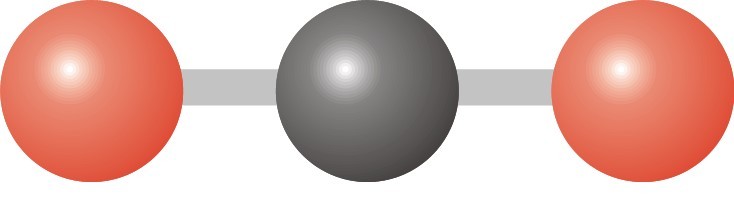
CO2
a)
Ionic Bond
b)
Covalent Bond
c)
Both bonds
d)
Neither bond
44.
This picture shows a...
a)
Ionic Bond
b)
Covalent Bond
c)
Both bonds
d)
Neither bond
45.
This picture shows a...
a)
Ionic Bond
b)
Covalent Bond
c)
Both bonds
d)
Neither bond
46.
Atoms want
a)
A full outer shell of electrons
b)
One electron short of a full shell
c)
kit kats
47.
The compound formed between lithium and chlorine is _________.
a)
ionic
b)
covalent
48.
Which of the following has a full valence shell?
a)
Oxygen
b)
Neon
c)
Barium
d)
Carbon
49.
What is the term for the → sign in a reaction?
a)
makes
b)
produces
c)
yields
d)
all are correct
50.
What reaction type is characterized by the reactant breaking down as the reaction progresses?
a)
Synthesis
b)
Decomposition
c)
Combustion
d)
Double Replacement
51.
The Law of Conservation of Mass states
a)
that matter exists in all states and reacts the same
b)
that matter can only be changed into new substances by introducing a catalyst
c)
that matter exists in the same state throughout any chemical change
d)
that matter cannot be created or destroyed and that the mass of the products must equal the mass of the reactants
52.
___________________ are the elements/compounds formed in a chemical reaction (on the right)
a)
Polymers
b)
Bonds
c)
Reactants
d)
Products
53.
What are the reactants in the chemical equation pictured?
a)
CH4 and CO2
b)
CH4 and O2
c)
CO2 and H2O
d)
O2 and H2O
54.
Is this balanced?...
Al + O2 --> 2Al2O3
a)
Yes!
b)
NO!
55.
Is this balanced?...
Fe + S --> FeS
a)
YES!
b)
NO!
56.
The red numbers in the image below represent ________
a)
subscripts
b)
coefficients
c)
I don't know, and don't want to try
d)
None of the answers are correct
57.
How many Al atoms are in this compound?         4Al2O3
a)
2
b)
8
c)
6
d)
4
58.
How many F atoms are in this compound?
6MgF2 
a)
2
b)
6
c)
8
d)
12
59.
In the equation,          2Mg + O2 ---> 2MgO, which are the reactants?
a)
Mg and O
b)
MgO
c)
Mg and MgO
d)
O and MgO
60.
What is the arrow in a chemical equation...
H2 + O --> H2O
a)
Reactants
b)
Products 
c)
Yields 
d)
Chemical Equation 
61.
The substances at the beginning of a chemical equation are called the ____
a)
product
b)
yield
c)
chemical symbol
d)
reactants
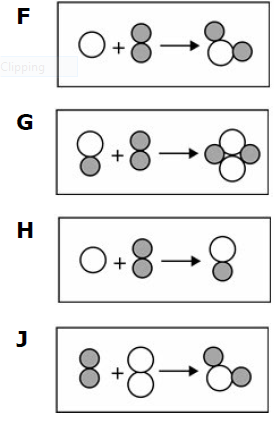
62.
Which of the following models best demonstrates a balanced chemical equation?
a)
F
b)
G
c)
H
d)
J
63.
What are Chemical Reactions?
a)
It's when you mix substances.
b)
a process in which atoms rearrange to form new substances
c)
When something bubbles.
d)
letter and numbers showing the types and number of atoms
64.
True or False
In a chemical reaction, no new atoms are created, and no atoms are destroyed. 
a)
true
b)
false
65.
The left side of the equation below is called
a)
Products
b)
Reactants
66.
The right side of the equation below is called the
a)
products
b)
reactants
67.
A number in front of a chemical formula in an equation that indicates how many molecules or atoms of each reactant and product are involved in a reaction.
a)
Coefficient
b)
reactant
c)
subscript
d)
product 
68.
What type of reaction is illustrated below?
2HI --> H2  +  I2
a)
synthesis
b)
decomposition
c)
single replacement
d)
double replacement
69.

What type of reaction is illustrated below?

Zn + H2S --> ZnS + H2

a)

synthesis

b)

decomposition

c)

single replacement

d)

double replacement

70.
What type of reaction is illustrated below?
FeS + Hal --> H2S + FeCl
a)
synthesis
b)
decomposition
c)
single replacement
d)
double replacement
71.

This is a correct dot diagram for neon (Ne)

a)

true

b)

false

72.
This is the correct dot diagram for nitrogen, group 15.
a)
true
b)
false
73.

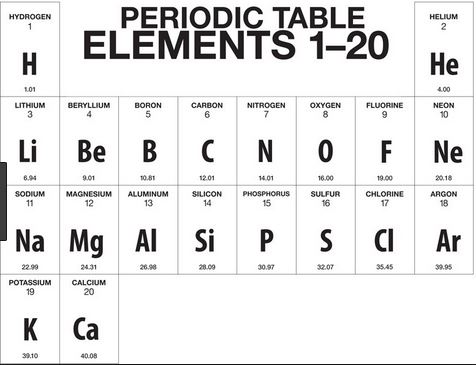
How many valence electrons does Aluminum Have?

a)

1 Valence electron

b)

2 Valence electron

c)

3 Valence electron

d)

4 Valence electron

e)

5 Valence electron

74.

How would you draw a Lewis dot diagram for Magnesium?

a)
b)
c)
d)
75.

This is a correct dot diagram for nitrogen (N)

a)

true

b)

false

76.

This is a correct dot diagram for carbon (C)

a)

true

b)

false

77.

Which of these is correct?

a)
b)
78.
This is a correct dot diagram for oxygen (O)
a)
true
b)
false
79.
Which of the following is the correct Lewis dot structure for the molecule fluorine (F2)?
a)
A
b)
B
c)
C
d)
D
80.
What is the correct formula for this molecule?
a)
NH
b)
N3H
c)
NH3
d)
NH4
81.

Which is the correct molecular structure for carbon dioxide CO2?

a)
b)
c)
d)
82.

What is the correct Lewis Dot Structure for ammonia NH3

a)
b)
c)
d)
83.
Which of the following is the correct Lewis structure for water?
a)
A
b)
B
c)
C
84.
In covalent bonds, atoms...
a)
share a pair of electrons
b)
share an electron
c)
transfer electrons
d)
have an electron sea
85.
Which type of atoms tend to form ionic bonds with each other?
a)
Metals only
b)
Metals and nonmetals
c)
Nonmetals only
d)
Noble Gases only
86.

Using a periodic table, how many protons does Copper have?

a)

29

b)

63

c)

64

d)

35

87.

Using a periodic table, how many neutrons are in Iron?

a)

26

b)

56

c)

30

d)

86

88.

Using a periodic table, how many electrons are in Sulfur

a)

16

b)

32

c)

32.066

d)

48

89.

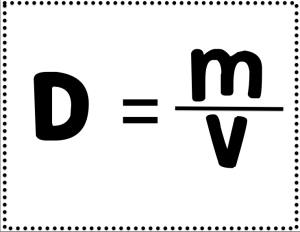
What is the correct equation for Density

a)

Density equals volume divided by mass

b)

Density equals mass divided by volume

c)

Volume is equal to mass multiplied by density

d)

Volume is equal to density multiplied by mass

90.

Calculate the density in g/mL of 30 mL of solution that weighs 120 grams

a)

4 g/ml

b)

4 ml/g

c)

.25 g/ml

d)

.25 ml/g

91.

Which of the following is a chemical change

a)

cut banana turn brown

b)

freezing water

c)

melting butter

d)

tear paper

92.

Which is a physical change

a)

Cutting a potato

b)

Acid reacting with metal

c)

Burning food

d)

food turning into energy

93.

Which of the following is a heterogeneous mixture

a)

Salad

b)

Tea

c)

Chocolate milk

d)

All answers are Homogeneous

94.

This type of mixture is homogeneous

a)

Salad

b)

Sand

c)

Tea

d)

Stir Fry at the Chinese restaurant

95.

This is a positive charged particle inside an atom

a)

Proton

b)

Neutron

c)

Electron

d)

Nucleus

96.

Electrons have this type of charge

a)

negative

b)

postive

c)

neutral

d)

no charge

97.

This is the largest category on the Periodic Table

a)

Metals

b)

Non Metals

c)

Metaloids

d)

Semi Metals

98.

The first group or family on the periodic table is known as Alkali Metals

a)

True

b)

False

c)

I have no idea because we were not taught this

d)

Could be, but maybe not. I am not sure one way or the other. But I know that this is not the correct answer.

99.

What determines the identity of an atom?

a)

number of protons

b)

number of electrons

c)

number of neutrons

d)

number of valence electrons

100.
What charge will an atom have if it loses 2 electrons?
a)
+2
b)
-2
c)
0
d)
+1
101.

Which element is in period 1, group 8?

a)

Helium

b)

Hydrogen

c)

Neon

d)

Lanthanum

102.

Which element is in period 3, group 4?

a)

Silicon

b)

Gallium

c)

Carbon

d)

Germanium

103.
What charge will magnesium have once it reaches an octet?
a)
+2
b)
-2
c)
+12
104.

What type of bond forms between nonmetals only?

a)

covalent

b)

ionic

c)

metallic

d)

metalloid

105.

Which of the following is a nonmetal?

a)

Na

b)

Pb

c)

S

d)

Al

106.

What type of bond forms between H and Br?

a)

metallic

b)

ionic

c)

covalent

d)

metalloid

107.

What type of bond forms between Na and O?

a)

ionic

b)

covalent

c)

metallic

d)

metalloid

108.

Rank the elements Mn, Ne, O, Si, and Sr from lowest to highest electronegativity.

a)

(low) Ne < Sr < Mn < Si < O (high)

b)

(low) Sr < Mn < Si < O < Ne (high)

c)

(low) O < Si < Mn < Sr < Ne (high)

d)

(low) Ne < O < Si < Mn < Sr (high)

109.

How many significant figures does the following measurement have: 0.002040 m?

a)

6

b)

4

c)

3

d)

2

110.

Gold is best described as...

a)

Element

b)

Compound

c)

Homogeneous Mixture

d)

Heterogeneous Mixture

111.
Is burning wood a chemical or physical change?
a)
chemical
b)
physical
112.
When you put peroxide on a cut, it bubbles up. This is an example of a ______.
a)
chemical reaction
b)
physical change
113.
What is the mass number?
a)
the number of protons
b)
the number of protons and neutrons
c)
the number of neutrons
d)
the number of protons and electrons
114.

How many atomic orbitals exist in a d orbtial?

a)

1

b)

7

c)

3

d)

5

115.

An atomic orbital can at most hold how many electrons, according to the Pauli Exclusion Principle?

a)

1 electron

b)

2 electrons

c)

3 electrons

d)

4 electrons

116.

What element has the electron configuration 1s2 2s2?

a)

Li

b)

Be

c)

He

d)

Mg

117.

Valence electrons are defined a the ...........

a)

Electrons farthest away from the nucleus

b)

Electrons closest to the nucleus

c)

Electrons that just come and go - they don't stay with the atom

118.
Each column in the periodic table is called a 
a)
period
b)
group
c)
cluster
d)
unit
119.
Which group of the periodic table is composed of inert (not reactive)  gases?
a)
alkali metals
b)
alkaline earth metals
c)
halogens
d)
noble gases
120.
A horizontal row of elements in the periodic table.
a)
column
b)
group
c)
period
121.
In the modern periodic table elements are arranged by:
a)
atomic mass
b)
atomic number
c)
valence electrons
d)
number of isotopes
122.
As you move left to right across a period, the atomic radius will ....
a)
decrease
b)
increase
c)
stay the same
123.
As you move from Aluminum to Gallium, the atomic radius will ....
a)
decrease
b)
increase
c)
stay the same
124.
As atoms of elements in group 16 are considered in order from top to bottom, the electronegativity of each successive element....
a)
decreases
b)
increases
c)
remains the same
d)
none of the above
125.
As you move down the periodic table atoms get bigger.  This is because ____________.
a)
The atoms have more mass.
b)
The atoms have more protons.
c)
The atoms have more energy levels
d)
The atoms have more nuetrons
126.
Cations are...
a)
Positive
b)
Negative
c)
Neutral
d)
Purring
127.
Anions are...
a)
Positive
b)
Negative
c)
Neutral
d)
Crying
128.
An atom becomes _________ when it gains electrons.
a)
Positive
b)
Negative
c)
Neutral
d)
Invinsible
129.
What is a Rubidium ion's symbol?
a)
Rb-
b)
Rb+
c)
Rb-2
d)
Rb+2
130.
What is the charge on a Hydrogen ion?
a)
+1
b)
1
c)
2
131.
What is the formula for magnesium phosphide?
a)
Mg3P2
b)
Mg2P3
c)
Mg2(PO4)3
d)
Mg3(PO4)2
132.

What is the formula for iron(III) chloride?

a)

FeCl

b)

Fe3Cl

c)

FeCl2

d)

FeCl3

133.
What is the VSEPR theory used to predict?
a)
Bond Strength
b)
Polarity
c)
Molecular Shape
d)
Electronegativity
134.
What is the measure of a tetrahedral bond angle?
a)
90 Degrees
b)
109.5 Degrees
c)
120 Degrees
d)
180 Degrees
135.
Which molecule would have this shape?
a)
BF3
b)
CH4
c)
PCl5
d)
CO2
136.
What molecule could this be? 
a)
BF3
b)
CH4
c)
H2O
d)
CO2
137.

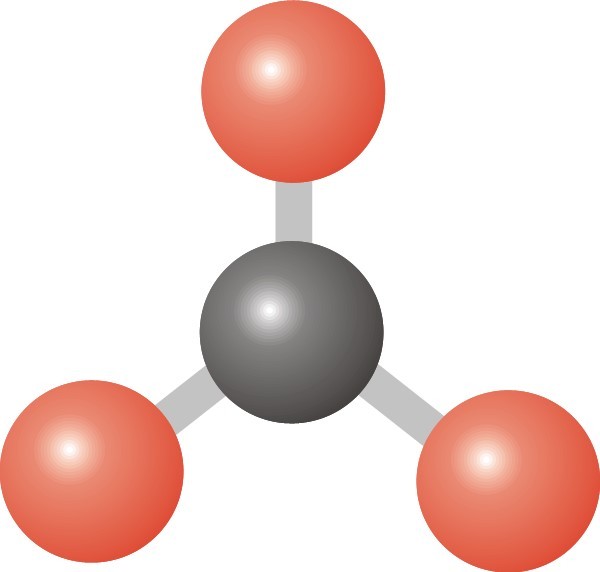
What shape would this have?

a)

Trigonal planar

b)

Pyramidal

c)

Tetrahedral

d)

Bent

138.

Which of the following is a polar molecule?

a)

CH4

b)

Xe

c)

H2S

d)

CO2

139.

How close a measurement is to the accepted value is called..

a)

Accuracy

b)

Precision

c)

Significant

d)

Estimate

140.
4.35% of all X atoms have a mass of 39.946 amu. 83.79% have a mass of 41.941 amu, 9.50% have a mass of 42.941 amu, and 2.36% have a mass of 43.939 amu. What is the average atomic mass of atom X?
a)
41.97 amu
b)
42.19 amu
c)
10.43 amu
d)
40.04 amu
141.
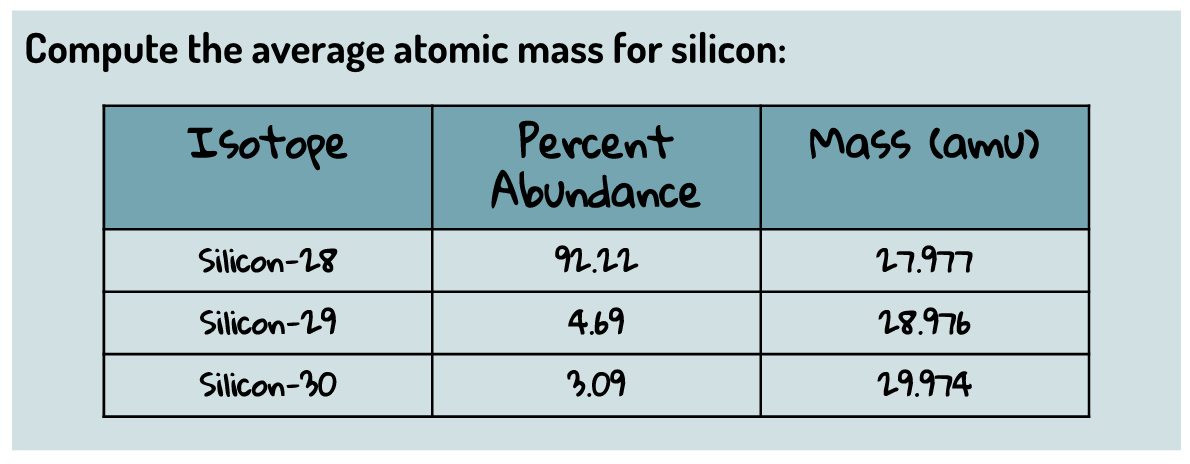
Compute the average atomic mass for silicon:
a)
27.977
b)
28.09
c)
28.976
d)
The average mass cannot be determined from provided information.
142.
How many significant figures: 1000 mL
a)
1
b)
2
c)
3
d)
4
143.
Calculate 1.23 m x 0.89 m and give your answer with the correct number of significant figures.
a)
1.0 m2
b)
1.1 m2
c)
1.0947 m2
d)
1.095 m2
144.
Trail mix can be best classified as a:
a)
pure substance
b)
element
c)
homogeneous mixture
d)
heterogeneous mixture
145.
Brass, a combination of copper and nickel, is used is many applications such as statues and instruments. What can brass be classified as?
a)
pure substance
b)
compound
c)
homogeneous mixture
d)
heterogeneous mixture
146.
Density is the mass of a substance per unit of volume. What is the density of an object with a mass of 20 grams and a volume of 5mL?
a)
.25 g/mL
b)
4 g/mL
c)
5 g/mL
d)
.20 g/mL
147.
When something evaporates (turns into a gas), such as water or alcohol, it is considered a chemical change. 
a)
True
b)
False
148.
What is the chemical formula for calcium carbonate? 
a)
CaCO3
b)
Ca2CO3
c)
Ca(CO3)2
d)
Ca3CO2
149.
Which of the following models best demonstrates a balanced chemical equation?
a)
F
b)
G
c)
H
d)
J
150.
The reactants are on the left side of the chemical equation.
a)
True
b)
False
151.

How many atoms in all are in a molecule of serotonin?

C10H12N2O

a)
22
b)
24
c)
25
d)
4
152.
What is the mass of H2O in the reaction above?
a)
70.01
b)
24.11
c)
21.44
d)
48.22
153.

The Law of Conservation of Mass states

a)

that matter exists in all states and reacts the same

b)

that matter can only be changed into new substances by introducing a catalyst

c)

that matter exists in the same state throughout any chemical change

d)

that matter cannot be created or destroyed and that the mass of the products must equal the mass of the reactants

154.
How would you write 4.3756 x 10in standard form?
a)
437,560,000
b)
0.00043756
c)
43,756
d)
4,3756
155.

How would you write 0.0005 in scientific notation?

a)

50 x 105

b)

5 x 10⁻⁴

c)

5 x 10³

d)

.5 x 103

156.
Express the following in scientific notation:
.000457
a)
457 x 106
b)
457 x 10-6
c)
4.57 x10⁴
d)
4.57 x 10⁻⁴
157.
Convert from meters to cm:  9 meters
a)
900 cm
b)
90 cm
c)
0.9 cm
d)
0.09 cm
158.
Convert 8 kilometers to meters
a)
800 m
b)
80,000 m
c)
8,000 m
d)
.008 m
159.
7,000 g = ____ kg
a)
70
b)
700
c)
7
d)
0.07
160.
What is a substance that is dissolved in another substance? 
a)
solution
b)
solute
c)
solvent
d)
compound
161.
What is a solvent?
a)
The substance that does the dissolving in a solution.
b)
The substance that is being dissolved in a solution.
c)
The mixing of different substances.
d)
The process in which neutral molecules lose or gain electrons
162.
The concentration of a mixture can be increased in which of the following ways?
a)
Heating the mixture
b)
Adding more water “solvent”
c)
Adding more powder “solute”
d)
Stirring the mixture
163.
air is a 
a)
compound
b)
element
c)
heterogeneous mixture
d)
solution
164.
Another name for a homogeneous mixture is 
a)
an element.
b)
a solution.
c)
a compound.
165.
Kool-Aid - Powder, sugar, and water
Identify the solvent 
a)
water
b)
powder
c)
sugar
d)
powder and sugar
166.
This type of mixture contains two or more substances that are visibly distinguishable. 
a)
homogeneous
b)
heterogeneous
c)
solution
d)
colloid
167.

Muddy water is a __ because it contains larger particles of soil or plant debris, but the will settle over time

a)

colloid

b)

solution

c)

suspension

168.

___ are mixtures, and look like solutions, but their particles are too small to settle to the bottom of their container over time.

a)

colloid

b)

solution

c)

suspension

169.
Find the molarity of 186.55 g of sucrose, C12H22O11 (MM = 342) in 250 mL of water.
a)
2.18 M
b)
0.746 M
c)
1.18 M
d)
0.545 M
170.
How many moles of NaCl are present in a solution with a molarity of 8.59 M and a volume of 125 mL?
a)
1074 mol
b)
0.069 mol
c)
1.07 mol
d)
62.7 mol
171.
What is 0.00 degrees Kelvin known as
a)
No such thing
b)
Very cold
c)
Freezing point of Water
d)
Absolute Zero
172.
Which is a quality that only gasses display
a)
Spread out to fill all available space
b)
Take the shape of their container
c)
Can't be compressed
d)
All of these
173.
What about gasses can be measured?
a)
Pressure and Volume
b)
Temperature, Volume, and Pressure
c)
Volume and Temperature
d)
Pressure, Temperature, Volume, and Moles
174.
Which of the following has the lowest density?
a)
Gasses
b)
Solids
c)
Liquids
d)
All mater is the same density
175.
What is the device that measures atmospheric pressure?
a)
Aerometer
b)
Annemeter
c)
Barometer
d)
Humidity Detector
176.
What law combines all 3 factors (pressure, temperature, and volume)
a)
Combined Gas Law
b)
Charle's Law
c)
Boyle's Law
d)
Avagadros Ideal Gas Law
177.

•If volume is decreased, then the pressure ____________

a)

decreases

b)

increases

c)

stays the same

d)

lowers

178.

If temperature goes up, then pressure

a)

goes up

b)

goes down

c)

stays the same

d)

goes down then up

179.

•Standard temperature is _____ degrees Celsius

a)

100

b)

90

c)

0

d)

273

180.

Standard pressure is _____ atm

a)

101.3

b)

2

c)

760

d)

1

181.

Is this a unit for P, V, n, or T? mmHg

a)

volume

b)

temperature

c)

moles

d)

pressure

182.

Which one, P, V, n, or T? mL

a)

pressure

b)

temperature

c)

volume

d)

moles

183.

Which one, P, V, n, or T? atm

a)

volume

b)

temp

c)

pressure

d)

moles

184.

Which is part of the Kinetic Molecular Theory?

a)

gas particles are in constant, random, motion

b)

the mass of reactants and products must be the same

c)

the larger the gas particle the quicker it will effuse

d)

particles of gases are very close together so they can only vibrate

185.

Which is part of the Kinetic Molecular Theory?

a)

particles of a gas are very far apart from each other based on their relative size

b)

particles of a gas are very close together based on their relative size

c)

gas particles stop moving from time to time

d)

gas particles have very heavy molar masses

186.
If an acid is combined with a base of equal strength, the result will most likely be
a)
a neutral solution.
b)
a stronger acid.
c)
impossible to tell without testing the pH.
d)
a stronger base
187.
Which of the following statements is correct?
a)
Blue litmus paper turns red when placed in a base.
b)
Red litmus paper turns blue when placed in a base.
c)
Blue litmus paper stays blue when placed in an acid.
d)
Red litmus paper stays red when placed in a base.
188.
The pH of a solution is tested, and it is found to be a basic solution. Of the following choices, what could the pH have been?
a)
3
b)
9
c)
7
d)
5
189.
Human blood has a pH between 7.35 and 7.45. Which of the following best describes human blood?
a)
strongly acidic
b)
slightly acidic
c)
strongly basic
d)
slightly basic
190.
Tastes bitter.
a)
Acids
b)
Bases
c)
Salts
d)
All
191.
Which food is the most acidic?
a)
bananas
b)
lemon juice
c)
orange juice
192.
Bleach is a strong base, what is the pH level of bleach?
a)
13
b)
14
c)
1
d)
2
193.
On the pH scale what numbers are bases?
a)
8-14
b)
0-7
c)
7
d)
1
194.
In a neutralization reaction, what are the products of a reaction between an acid and a base?
a)
Another acid and base
b)
Carbon dioxide and a salt
c)
Water and a salt
d)
Either two acids or two bases
195.
The pH scale measures...
a)
...the strength of an acid.
b)
...the strength of hydrogen ions.
c)
...the concentration of hydrogen ions.
d)
...the concentration of an acid
196.
What is Avogadro's Number? 
a)
6.02 x 10²³
b)
- 6.02 1023
c)
6.02 x 10²²
d)
6,020,000,000,000
197.
What is the molar mass of H2O?
a)
6.02 x 10²³
b)
16 grams
c)
18 grams
d)
15.99999 grams
198.
What is the following: Ag
a)
Atom
b)
Molecule
c)
Formula Unit
199.
What is the following: KCl
a)
Atom
b)
Molecule
c)
Formula Unit
200.
What is the following: NO2
a)
Atom
b)
Molecule
c)
Formula Unit
201.
What type of reaction occurs between an element and a compound?
Zn + 2HCl --> ZnCl2 + H2
a)
Synthesis
b)
Decomposition
c)
Single Replacement
d)
Double Replacement
202.
What kind of reaction is this:
2H2 + O2 --> 2H2O
a)
Synthesis
b)
Decomposition
c)
Single Replacement
d)
Double Replacement
203.
What kind of reaction is this:
2H2O2 →2 H2+ O2
a)
Synthesis
b)
Decomposition
c)
Single Replacement 
d)
Combustion
204.
What kind of reaction is this:
2C3H7OH +9O2 -> 6CO2 + 8H2O
a)
Double Replacement
b)
Combustion
c)
Single Replacement
d)
Decomposition
205.
The reaction below is an example of?
AgNO3 + NaCl 
→ AgCl + NaNO3
a)
Single Replacement
b)
Double Replacement
c)
Decomposition
d)
Combustion