wayground logo

Free Printable Worksheets

Font size

S
M
L
XL
Worksheets

Midterm Madness

Total questions: 195

Worksheet time: 2hrs 24mins

Name
Class
Date
1.
What model is where the earth is in the middle of our universe?
a)
Heliocentric Model
b)
Geocentric Model
c)
Moon phases
d)
Tidal Phases
2.
What Model is where the sun is the center of the universe?
a)
Geocentric
b)
Heliocentric
c)
Earth's rotations
d)
Earth's planets
3.
This image shows the:
a)
Geocentric Solar System
b)
Heliocentric Solar System
4.
How long does it take for the earth to make 1 rotation?
a)
One year
b)
One hour
c)
24 hours
d)
One minjute
5.
How long does it take the earth to make 1 revolution
a)
One year
b)
One day
c)
One hour
d)
One minute
6.
What causes day and night?
a)
A rotation
b)
A revolution
c)
A season
d)
One day
7.

Kepler's first law states that the orbits of the planets are in the shape of a/an...

a)

perfect circle

b)

ellipse

c)

spiral

8.
What did Isaac Newton discover ?
a)
The apples
b)
The law of Beer Lambert
c)
The Moon
d)
The law of gravitation
9.
What is Newton's First Law known as? The Law of
a)
Friction
b)
Mass
c)
Inertia
d)
Gravity
10.

What did Isaac Newton discover when the apple supposedly fell on his head?

a)

Gravity

b)

Electricty

c)

Hydrogen

d)

Plasma

11.
What did Galileo believe was the center of the universe?
a)
the sun
b)
the Earth
c)
the moon
d)
Venus
12.

Which scientific instrument did Galileo use to change the world?

a)

telescope

b)

spyglass

c)

mirror

d)

magnifying glass

13.
An ellipse is drawn around two points called
a)
aphelion
b)
perihelion
c)
foci
d)
axis
14.
When a planet orbits the Sun, one of the foci of the elliptical orbit is 
a)
the axis
b)
the perihelion
c)
the center
d)
the Sun
15.
Kepler's 2nd Law deals with 
a)
the shape of the planets' orbits
b)
the speed/area the planet travels 
c)
the length of time it takes the planet to orbit the sun
16.
A planet moves __________ when it is farthest from the sun.
a)
faster
b)
slower
17.
The farther away a planet is from the sun, the _______ it takes it to orbit the sun once. 
a)
longer
b)
shorter
18.
The path a planet travels around the sun is called its 
a)
orbit
b)
ellipse
c)
barycenter
d)
precession
19.
Two factors effecting the magnitude of the force of gravity between 2 objects are...
a)
mass and distance 
b)
mass and matter
c)
distance and weight 
d)
weight and mass
20.
Who created the Universal Law of Gravitation?
a)
Copernicus
b)
Newton
c)
Kepler
d)
Galileo
21.

True or False: All masses have a gravitational attraction to each other.

a)

True

b)

False

c)

None of the above

d)

There is not enough information

22.
Which is the correct order of the electromagnetic spectrum from highest frequency to lowest frequency?
a)
Gamma, X-ray, Ultraviolet, Visible, Infrared, Microwave, Radio
b)
Gamma, Ultraviolet, Visible, Infrared, X-ray, Microwave, Radio
c)
Ultraviolet, Microwave, Radio, Visible, X-ray, Gamma, Infrared
d)
Radio, Microwave, Infrared, Gamma, X-ray, Ultraviolet, Visible
23.
Which color light has the most energy?
a)
Red
b)
Blue
c)
Green
d)
Violet
24.
The color of stars and flames corresponds to the temperature of the heated gases.  Which color is the hottest?
a)
Red
b)
Blue
c)
White
d)
Yellow
25.
The color of stars and flames corresponds to the temperature of the heated gases.  Which color is the coolest?
a)
Red
b)
Blue
c)
White
d)
Yellow
26.
Use the image to identify the motion of the object relative to Earth.  Compare the absorption spectra of the star to what the star would look like if it were not moving at all relative to Earth.
a)
It is not moving relative to Earth
b)
It is moving away from Earth (Redshift)
c)
It is moving towards Earth (Blueshift)
d)
It is moving towards Earth (Redshift)
27.
Use the image to identify the motion of the object relative to Earth.  Compare the absorption spectra of the star to what the star would look like if it were not moving at all relative to Earth.
a)
It is not moving
b)
It is moving away from Earth (Redshift)
c)
It is moving towards Earth (Blueshift)
d)
It is moving towards Earth (Redshift)
28.
What best describes the doppler effect?
a)
An apparent change in frequency of a wave due to the relative motion between a wave source and an observer
b)
When sound changes pitch
c)
When light changes color
d)
An apparent change in the amplitude of a wave due to the relative motion between a wave source and an observer.
29.
If a star is being observed from Earth and it's light has shifted towards the blue side of the electromagnetic spectrum it would be...
a)
Moving towards the Earth
b)
Moving away from the Earth
c)
This is a trick question that cannot be answered
d)
It isn't a star, it is a very large blueberry.
30.
If a star is being observed from Earth and it's light has shifted towards the red side of the electromagnetic spectrum it would be...
a)
Moving towards the Earth
b)
Moving away from the Earth
c)
This is a trick question that cannot be answered
d)
It isn't a star, it is a very large blueberry.
31.
The vast majority of galaxies in our universe are moving away from us.  We know this because we observe __________ in the galaxies absorption spectra.
a)
Redshift
b)
Blueshift
c)
Turbulance
d)
Superposition
32.
An object that is moving VERY fast away from Earth would have ________ than an object that is moving very slow away from Earth.
a)
More Redshift
b)
More Blueshift
c)
Less Redshift
d)
Less Blueshift
33.
An object that is moving VERY fast towards the Earth would have ________ than an object that is moving very slow towards the Earth.
a)
More Redshift
b)
More Blueshift
c)
Less Redshift
d)
Less Blueshift
34.
Light Years are a measure of:
a)
time
b)
speed
c)
distance
d)
light
35.
A light year is...
a)
The speed light travels
b)
How long it takes light to get to you from the sun
c)
The distance light can travel in a year
d)
How many years it takes light to be emitted
36.
Proxima Centauri is the closest star to Earth after the Sun and is located 4.3 light years away from Earth. How long does it take light from Proxima Centauri to reach Earth?
a)
1 year
b)
4.3 years
c)
43 years
d)
10 trillion years
37.
The energy from the sun is created by a process called:
a)
nuclear fission
b)
nuclear fusion
c)
nuclear reaction
d)
nuclear core
38.
Energy is created in the core when two _____________ atoms join together to form a ______________ atom.
a)
helium, hydrogen
b)
carbon, hydrogen
c)
nitrogen, helium
d)
hydrogen, helium
39.
The middle layer of the sun's interior that contains very tightly packed gas is called the _____________.
a)
photosphere
b)
chromosphere
c)
radiation zone
d)
convection zone
40.
In which area of the sun does gas rise as it heats up, then fall back down as it cools?
a)
the core
b)
the radiation zone
c)
the convection zone
d)
the corona
41.
When we look at the sun, what layer are we viewing?
a)
photosphere
b)
chromosphere
c)
corona
d)
convection zone
42.
What layer gives the sun it's reddish color during a solar eclipse?
a)
convection zone
b)
corona
c)
chromosphere
d)
photosphere
43.
What layer of the sun's atmosphere gives the sun its "white halo" during a solar eclipse?
a)
chromosphere
b)
photosphere
c)
corona
d)
atmosphere
44.
The particles of the corona extends into space for millions of kilometers and spreads into streams of electrically charged particles called:
a)
coronal discharge
b)
solar flares
c)
coronal ejection
d)
solar winds
45.
Areas of gas on the sun's surface that are cooler than gases around them are called:
a)
corona
b)
prominences
c)
sunspots
d)
solarspots
46.
The number of sunspots on the sun varies in a cycle that is about how long?
a)
6-8 years
b)
10-11 years
c)
12-15 years
d)
365 days
47.
When prominences erupt into space releasing gas and energy we call this: 
a)
solar winds
b)
coronal outburst
c)
solar flares
d)
auroras
48.
The theory that explains the formation of the solar system is called ____.
a)
Nebulis Theory
b)
Nebular Theory
c)
Big Bang Theory
d)
Big Nebulan Theory
49.
What caused the nebula to collapse and start spinning?
a)
Supernova
b)
Asteroid collision
c)
Big Bang
d)
Nearby star exploded
50.
What is the period of rotation?
a)
How long it takes a planet to orbit the sun
b)
How fast a planet orbits the sun
c)
How fast a planet spins
d)
How elliptical a planet's orbit is
51.
What is  the period of revolution?
a)
How long it takes a planet to orbit the sun
b)
How long it takes a planet to spin around
c)
How fast a planet spins
d)
How elliptical a planet's orbit is
52.
The average distance between the Earth and the sun is a(n) ____.
a)
light year
b)
light minute
c)
astronomical year
d)
astronomical unit
53.
The __________ has planets, moons, comets, and asteroids.
a)
solar system
b)
earth
c)
rotation
d)
United States
54.
How long ago was our sun formed?
a)
10 million years ago
b)
5 million years ago
c)
4.5 billion years ago
d)
2 billion years ago
55.
What are stars?
a)
Huge spheres of hot gas that emits light and other radiation
b)
Bright spheres made of different types of rock and metals
c)
Large reflective objects in space
d)
Satellites that orbit around planets
56.
What is a nebula?
a)
A type of star
b)
A type of galaxy
c)
Clouds of asteroids
d)
Cloud of dust and gas
57.
A star begins to "die" when elements stop fusing in its core.
a)
True
b)
False
58.
Which is the correct order for star formation for all stars?
a)
Nebular, Protostar forms, Collapsing cloud fragment
b)
Collapsing cloud fragment, Protostar forms, Interstellar cloud
c)
Main sequence, Collapsing cloud fragment, Newborn star
d)
Protostar forms, Protostar evolves, Newborn star
59.
According to the Big Bang theory, all of the matter and energy in the universe was once contained in
a)
a galaxy
b)
a star
c)
an element
d)
a singularity
60.

What is one major piece of evidence that the Big Bang theory is correct?

a)

Astronomers have detected leftover radiation from the Big Bang

b)

Everything in the universe has remained in the same location for billions of years

c)

Astronomers have discovered that the universe is no longer expanding

d)

Astronomers have discovered evidence that the universe will soon begin contracting in a "Big Crunch"
61.
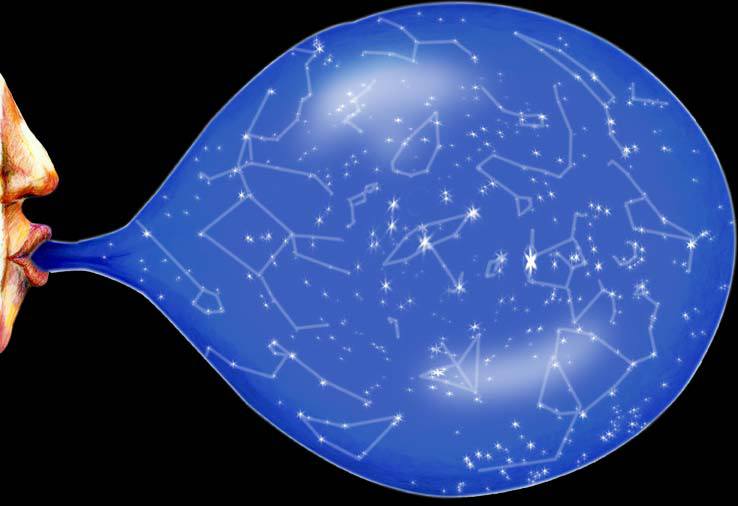
What does the Big Bang theory suggest?
a)
The universe was just there
b)
The Milky Way is the only solar system
c)
The universe is continually expanding
d)
The universe started as a point and is moving towards each other
62.
Right after the big bang, what happened to all the matter and energy?
a)
It spread out in all directions
b)
It evaporated
c)
it shot forward in a straight beam
d)
It oozed slowly along a flat plane
63.

In which list are celestial features correctly shown in order of increasing size?

a)

galaxy -- solar system -- universe -- planet

b)

solar system -- galaxy -- planet -- universe

c)

planet -- solar system -- galaxy -- universe

d)

universe -- galaxy -- solar system -- planet

64.
Black holes are formed when stars lose gas to burn, form a red super giant, cool down, then become so dense...
a)
the star flattens like a pancake.
b)
the matter of the star collapses on itself.
c)
the star turns into a giant ice ball.
d)
the star explodes.
65.
Can light escape a black hole?
a)
yes
b)
no
66.
Scientists theorize that a _____________________________ is at the center of every galaxy.
a)
stellar black hole
b)
cosmic black hole
c)
super massive black hole
d)
star
67.
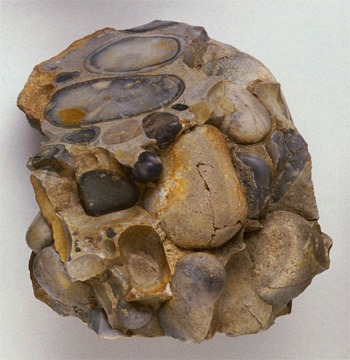
This rock formed when bits of other rocks became pressed into a solid. What type of rock is it?
a)
Sedimentary Rock
b)
Metamorphic Rock
c)
Igneous Rock
68.
This rock was formed when magma cooled very slowly inside the Earth. What specific type of rock is it?
a)
Intrusive Igneous Rock
b)
Extrusive Igneous Rock
c)
Foliated Metamorphic Rock
d)
Clastic Sedimentary Rock
69.
This rock formed when lava cooled very quickly on Earth's surface. What specific type of rock is it?
a)
Extrusive Igneous Rock
b)
Intrusive Igneous Rock
c)
Non-Foliated Metamorphic Rock
d)
Biochemical Sedimentary Rock
70.
When you watch a volcano erupt molten rock, you are seeing _____
a)
Lava
b)
Magma
c)
Mineral Crystals
d)
Igneous Rocks
71.
When you are describing the sizes of the mineral grains in a rock, you are detailing the rock's _____
a)
Texture
b)
Composition
c)
Sedimentation
d)
Igneous-ness
72.
What are the 3 major types of rocks?
a)
Igneous, Metamorphic, Sedimentary
b)
Metamorphic, Igneous, Cementation
c)
Brown, Red, Gray
d)
Streak, Hardness, Breakage
73.
Two ways to describe types of igneous rocks are _____
a)
Extrusive and Intrusive
b)
Foliated and Non-Foliated
c)
Clastic and Biochemical
d)
Black and Gray
74.
What process is used to form sedimentary rocks?
a)
Lava cools and hardens to form a rock.
b)
Weathering, Erosion, Deposition, Compaction, Cementation
c)
Extreme heat and pressure from inside the Earth turn rocks into new rocks.
d)
Magma trapped under the Earth's surface cools and solidifies.
75.
Which of the words below describe broken up rock?
a)
stalactites
b)
magmas
c)
metamorphs
d)
sediments
76.
This rock was formed by smaller pieces of rock that settled at the bottom of a lake millions of years ago. What type of rock is this?
a)
Sedimentary
b)
Igneous
c)
Metamorphic
77.
When sediments are pressed together tightly, this is called ____________.
a)
Compaction
b)
Cementation
c)
Weathering
d)
Erosion
78.
The process in which sediment are fused or glued together.
a)
compaction
b)
deposition
c)
organic rock
d)
cementation
79.
What is deposition?
a)
Dropping off sediment
b)
Movement of sediment
c)
Breaking down of sediment 
80.
The process when rocks break into smaller pieces due to exposure to natural elements is called
a)
erosion
b)
weathering
c)
sediments
d)
deposition
81.
The movement of weathered material (sediment) is called?
a)
weathering
b)
erosion
c)
deposition
d)
cementation
82.
Sedimentary rock that is made of fragments of rocks cemented together by a mineral are called...
a)
chemical
b)
organic
c)
clastic
83.
Sedimentary rock that is formed from water evaporating and minerals being left behind.
a)
clastic
b)
organic
c)
chemical
84.
Which type of rock is formed from INTENSE heat and pressure?
a)
igneous
b)
sedimentary
c)
metamorphic
85.
Is the following metamorphic rock foliated or non-foliated?
a)
Foliated
b)
Non-foliated
c)
Neither
86.
This type of weathering occurs when rock is physically broken down into smaller pieces of rock.
a)
mechanical weathering
b)
chemical weathering
c)
erosion weathering
d)
deposition
87.
This type of weathering occurs when rocks weaken then break down due to chemical changes in the composition of the rock.
a)
mechanical weathering
b)
chemical weathering
c)
erosion weathering
d)
deposition
88.
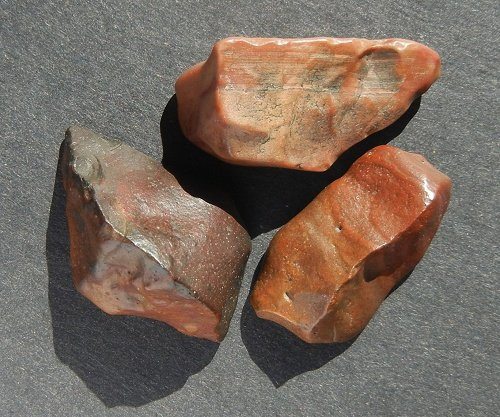
These rocks were made smooth by wind blowing smaller rock particles across their surface.  This is an example of:
a)
ice wedging
b)
chemical weathering
c)
acid rain
d)
abrasion
89.
These rocks were broken apart from the continuous freeze/thaw of water in the cracks of the rocks. This is an example of:
a)
ice wedging
b)
acid rain
c)
permeability
d)
abrasion
90.
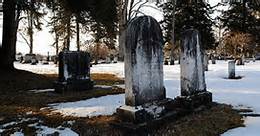
These gravestones have slowly broken down and turned a blackish color due to the action of:
a)
ice wedging
b)
abrasion
c)
acid rain
d)
mechanical weathering
91.
These gravestones have slowly broken down and turned a blackish color due to the action of:
a)
ice wedging
b)
abrasion
c)
acid rain
d)
mechanical weathering
92.
Weeds growing into the cracks in a sidewalk and the sidewalk begins to crumble is an example of:
a)
mechanical weathering
b)
chemical weathering
93.
Potholes forming in the road after a cold winter is an example of:
a)
mechanical weathering
b)
chemical weathering
94.
A metal statue slowly turning green after years of being outside is an example of:
a)
mechanical weathering
b)
chemical weathering
95.
The formation of stalactites and stalagmites in a cave as water mixed with carbon dioxide creates carbonic acid, which dissolves away the limestone, is an example of:
a)
mechanical weathering
b)
chemical weathering
96.
How do Intrusive Igneous rocks cool?
a)
quickly
b)
slowly
c)
really fast
97.
The process by which igneous rocks are formed...
a)
heat and pressure deep underneath earth's surface
b)
melting and cooling of magma
c)
compaction and cementation of sediments
98.
How are rocks classified? (Como son las rocas clasificadas?)
a)
Texture, mineral composition, crystal structure (Textura, composicion de minerales, estructura de crystal)
b)
Texture, grain, mineral composition 
c)
Texture, color, grain
d)
Color, Grain, color composition
99.
What are the two grain sizes? (Cuales son los dos tamanos de grano)
a)
Coarse and fine (grueso y fino)
b)
Small and large (pequeno y grande)
c)
big and little (grande y pequeno)
d)
tiny and huge (chico y enorme)
100.

In the diagram, what season is the Northern Hemisphere experiencing?

a)

summer

b)

fall

c)

winter

d)

spring

101.
Which term describes when the Earth spins on its axis.
a)
Rotation
b)
Revolution
c)
Kepler's Laws
d)
Precession
102.
The Earth's axis changes direction (but the angle does NOT change).
a)
Nutation
b)
Precession
c)
Barycenter
d)
Revolution
103.
Causes the stars to change direction in the sky (every 26,000 years)
a)
Nutation
b)
Precession
c)
Barycenter
d)
Revolution
104.
During precession, the Earth wobbles a little. This DOES change the angle of the axis.
a)
Nutation
b)
Precession
c)
Barycenter
d)
Revolution
105.
Earth’s _______________  causes the seasons.
a)
Tilted axis   
b)
Distance from the sun
c)
Atmospheric conditions
d)
Global warming
106.
The center point of the orbits of two revolving objects is called the
a)
focus
b)
barycenter
c)
nutation
d)
ellipse
107.
Which of the following is NOT one of the three types of soil?
a)
clay
b)
sand
c)
silt
d)
mud
108.
_______ is the type of soil used most often with plants and on farms. It is a mixture of clay, sand, and silt.
a)
loam
b)
humus
c)
soil
d)
dirt
109.
When plants, animals, and other organisms die, they break down and become part of the soil. What is this part of the soil called?
a)
sand
b)
silt
c)
clay
d)
humus
110.
Which type of soil can hold the greatest amount of water?
a)
sand
b)
silt
c)
clay
d)
loam
111.
Soil is made of
a)
weathered rocks and minerals
b)
dead plants and animals
c)
air and water
d)
all of the above
112.
Soil formation begins with the weathering of_______.
a)
Humas
b)
Subsoil
c)
Litter
d)
Rock
113.
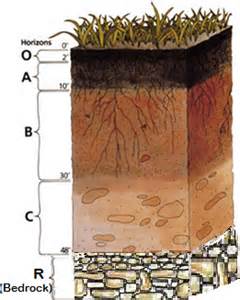
The layer of soil which the topsoil is found.
a)
Horizon A
b)
Horizon B
c)
Horizon C
d)
Horizon D or R
114.
The two main factors that determine the rate of weathering are the TYPE of rock and_____.
a)
Music
b)
Climate
c)
Size of rock
d)
Weight of rock
115.
Topsoil which contains the HUMUS is the soil layer best for growing plants.
a)
True
b)
False
116.
Which horizon is made up of partially weathered rocks?
a)
Horizon A
b)
Horizon B
c)
Horizon C
d)
Horizon D or R
117.
Soil layers are called horizons because...
a)
The layers are all different
b)
The layers are vertical
c)
The layers are horizontal
d)
The layers are above one another
118.
What does erosion move?
a)
sediments
b)
water only
c)
only organic matter
d)
only inorganic matter
119.
_________________happens when gravity moves sediment downhill.
a)
Weathering only
b)
Mass movement
c)
Erosion only
d)
Gravity
120.
What causes mass movement?
a)
water
b)
wind
c)
gravity
d)
weather
121.
Which is NOT a type of mass movement?
a)
landslide
b)
slump
c)
mudflow
d)
windstorm
122.
This is a picture of a ____________________
a)
slump
b)
creep
c)
windstorm
d)
mudflow
123.
This is a picture of a
a)
slump
b)
creep
c)
mudflow
d)
landslide
124.
The most DEADLY type of mass movement is a 
a)
landslide
b)
mudflow
c)
slump
d)
creep
125.
Rock & soil slides quickly down steep slope in a ______________________.
a)
slump
b)
windstorm
c)
landslide
d)
mudlfow
126.
This is a picture of 
a)
slumps
b)
creeps
c)
mudflows
d)
landslides
127.

Which of the following represents the force of gravity on a slope?

a)

Shear Strength

b)

Shear Stress

128.

Which of the following represents a slopes ability to resist gravity?

a)

Shear Strength

b)

Shear Stress

129.

Who first proposed the idea of Continental Drift?

a)

Harry Hess

b)

Alfred Wegener

c)

Albert Einstein

d)

Galileo Galilee

130.

What did Wegener name the large supercontinent where all the continents were joined together?

a)

Wegenerland

b)

Gondwanaland

c)

Laurasia

d)

Pangaea

131.

Most geologists rejected Wegener's idea of Continental Drift because _________.

a)

He used too many pieces of evidence to support the idea.

b)

He wanted to know what Earth looked like millions of years ago, which is impossible.

c)

He couldn't identify what would cause continents to move around.

d)

They were afraid of the new idea.

132.

What discovery revived Wegener's idea of Continental Drift and eventually led to the Theory of Plate Tectonics?

a)

discovery of new fossils on Africa and South America

b)

the discovery of mid-ocean ridges and seafloor spreading

c)

the discovery of radioactive isotopes

d)

none of the above

133.

Which of the following is evidence of seafloor spreading?

a)

matching fossils on either side of the mid-ocean ridge

b)

evidence of tropical plant fossils on the seafloor

c)

same rock types in both North America and Africa

d)

the magnetic striping on the seafloor on either side of the mid-ocean ridges

134.

Why was the evidence of seafloor spreading so important to the idea of Continental Drift?

a)

it answer the question for HOW continents could be moving

b)

it disproved Alfred Wegener's hypothesis of Continental Drift

c)

It shows how land bridges let prehistoric animals cross the oceans

d)

all of these are true

135.

Which of the following were peices of evidence used by Alfred Wegener to support his hypothesis of Continental Drift? (choose ALL that apply)

a)

fit of the continents

b)

matching rocks and mountains across continents

c)

matching fossils across continents

d)

evidence of glaciers in places now too warm

e)

magnetic striping on the seafloor showing seafloor spreading
136.
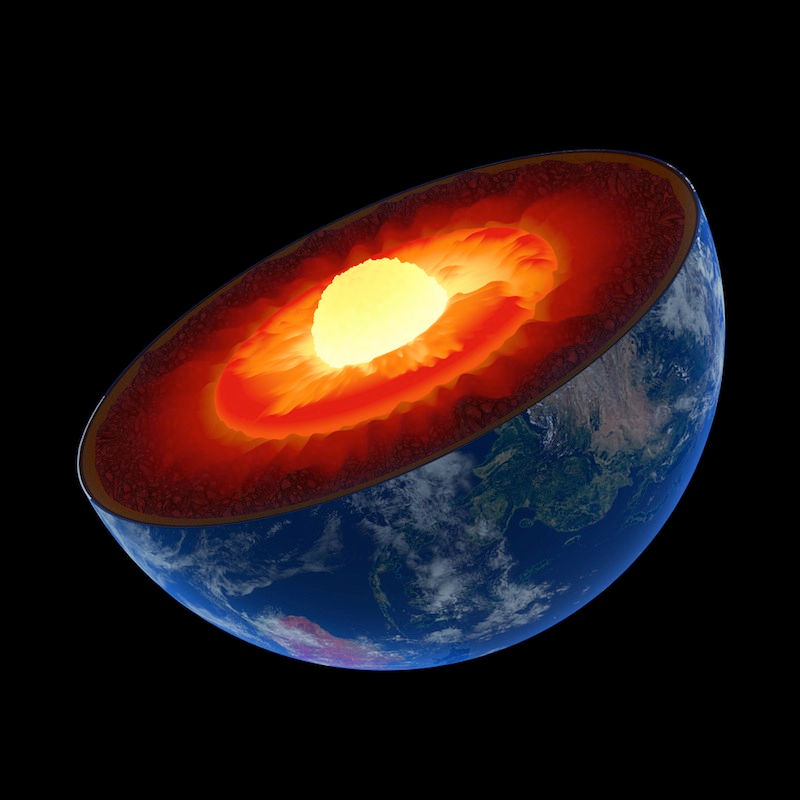
This layer contains the upper mantle and the crust.
a)
Mesosphere
b)
Asthenosphere
c)
Lithosphere
d)
Core
137.
You live, breathe, and eat on this layer.
a)
Outer Core
b)
Inner Core
c)
Mantle
d)
Crust
138.
The core is mostly made up mostly of which elements?
a)
Oxygen and Silicon
b)
Silicon and Magnesium
c)
Nickel and Iron
d)
Iron and Magnesium
139.
Which layer of the Earth is the only liquid layer?
a)
Outer Core
b)
Inner Core
c)
Mantle
d)
Lithosphere
140.
What are the two type of crust?
a)
Continental and Landforms
b)
Oceanic and Mountains
c)
Mountains and Landforms
d)
Oceanic and Continental
141.
Which layer(s) of the Earth make up the asthenosphere?
a)
Part of the upper mantle
b)
Crust, mantle, Core
c)
Crust and upper mantle
d)
Only the crust
142.
How are scientist able to estimate the thickness of each layer of the Earth?By studying __________
a)
 radio waves
b)
sonar waves
c)
laser waves
d)
seismic waves
143.
What mostly solid layer makes up the lower part of the mantle?
a)
Lithosphere
b)
Mesosphere
c)
Asthenosphere
d)
Inner Core
144.
Why is the inner core made of solid metal?
a)
Because it is so hot it turns from liquid to solid
b)
Because of the weight of the crust
c)
Because of it's temperature
d)
Because of the pressure of the other layers beating down on it
145.
Which layer is considered the thinnest layer?
a)
Mesosphere
b)
Core
c)
Mantle
d)
Crust
146.
This layer is divided into pieces called tectonic plates.
a)
Mesosphere
b)
Asthenosphere
c)
Mantle
d)
Lithosphere
147.
This is the plastic layer of the mantle on which pieces of the lithosphere move.
a)
Lithosphere
b)
Asthenosphere
c)
Mesosphere
d)
Crust
148.
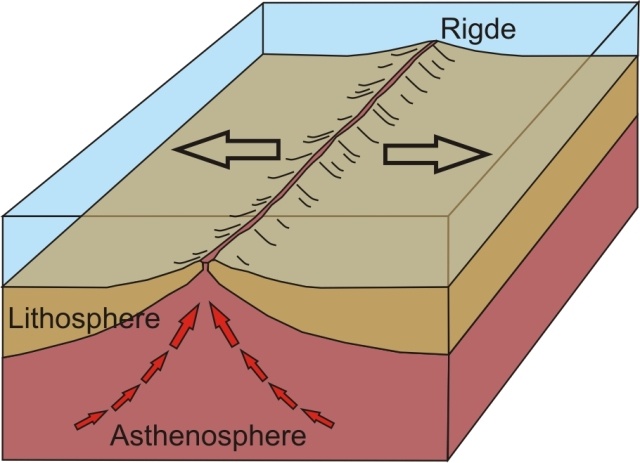
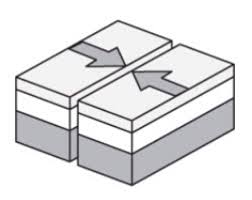
What kind of plate boundary is shown here?
a)
divergent
b)
convergent
c)
transform
d)
subducting
149.
What kind of plate boundary is shown here?
a)
divergent
b)
convergent
c)
transform
d)
submergent
150.
What kind of plate boundary is shown here?
a)
divergent
b)
convergent
c)
transform
d)
strike slip
151.
What geologic feature/event you be most likely to find at a transform boundary?
a)
Earthquakes
b)
Volcanoes
c)
Mountains
d)
Rift Valleys
152.
What geologic feature/event would you most likely to find at a divergent boundary between two pieces of oceanic crust?
a)
Rift Valley
b)
Mid-Ocean Ridge
c)
Island Arc
d)
Flat land
153.
What geologic feature/event would you most likely to find at a divergent boundary between two pieces of continental crust?
a)
Mid-Ocean Ridge
b)
Mountain
c)
Rift Valley
d)
Island Arc
154.
What geologic feature/event would you most likely to find at a convergent boundary between two pieces of continental crust?
a)
Volcano
b)
Mountain
c)
Rift
d)
Island Arc
155.
A subduction zone is formed...
a)
when one tectonic plate sinks below another
b)
at every type of convergent plate boundary
c)
at every type of divergent plate boundary
d)
at transform boundaries
156.
Name the boundary
a)
convergent boundary
b)
divergent boundary
c)
transform boundary
d)
sergent boundary
157.
What is the term for a heavier, denser plate sliding under a less dense plate?
a)
plate boundary
b)
submersion
c)
accretion
d)
subduction
158.
Which of the following causes Earth's tectonic plates to move?
a)
Energy from the Sun
b)
Magnetic Pole Reversal
c)
Convection currents in the mantle
d)
Faults in Mountain Ranges
159.
What is the shaking of the Earth’s crust caused by a release of energy?
a)
Earthquake
b)
Epicenter
c)
Fault
d)
Plate
160.
What is a break in the lithosphere along which movement in an earthquake has first occurred?
a)
Earthquake
b)
Epicenter
c)
Fault
d)
Focus
161.
Where is the point at which the first movement occurs during an earthquake?
a)
Epicenter
b)
Focus
c)
Fault
d)
Plate
162.
Where is the point on the Earth’s surface directly above the focus of an earthquake?
a)
Epicenter
b)
Fault
c)
Hypocenter
d)
Tremor
163.
Which type of wave is the first to arrive after an earthquake occurs?
a)
P Wave
b)
Rayleigh Wave
c)
S Wave
d)
Shear Wave
164.
What is another term for P Wave?
a)
Compression Wave
b)
Principal Wave
c)
Shear Wave
d)
Secondary Wave
165.
P Waves can move through which of the following?
a)
Gas
b)
Liquid
c)
Solid
d)
All of these
166.
S Waves can move through which of the following?
a)
Gas
b)
Liquid
c)
Solid
d)
All of these
167.
What is an instrument that detects and records waves produced by earthquakes? (This piece of equipment can measure the magnitude of an earthquake.)
a)
Epicenter
b)
Fault
c)
Seismogram
d)
Seismograph
168.
What is the measure of the amount of energy released in an earthquake?
a)
Earthquake
b)
Epicenter
c)
Magnitude
d)
Seismogram
169.
Which scale rates earthquakes based on the amount of damage done?
a)
Mercalli Scale
b)
Richter Scale
c)
Seismogram Scale
d)
Bernoulli Scale
170.
Which scale measures the intensity of the ground movement?
a)
Mercalli Scale
b)
Richter Scale
c)
Seismogram Scale
d)
Bernoulli Scale
171.
What is the temporary state in which loose soil and rock materials take on the property of a liquid?
a)
Aftershock
b)
Liquefaction
c)
Seismic Gap
d)
Tsunami
172.
What is a smaller earthquake that follows a larger earthquake?
a)
Aftershock
b)
Liquefaction
c)
Seismic Gap
d)
Tsunami
173.
What is a large ocean wave that results from an underwater earthquake, landslide, or volcanic eruption?
a)
Aftershock
b)
Liquefaction
c)
Seismic Gap
d)
Tsunami
174.

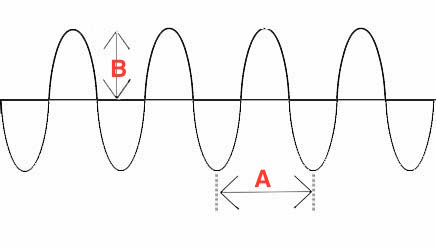
What property of this wave is represented by the letter "A"

a)

amplitude

b)

crest

c)

trough

d)

wavelength

175.
The highest point on a wave is:
a)
the crest
b)
the trough
c)
the top
d)
the coast 
176.
The lowest point on a wave is the:
a)
Amplitude
b)
Crest
c)
Trough
d)
Wavelength
177.
The number of wavelengths that pass a point each per second is:
a)
frequency
b)
period
c)
longitudinal 
d)
transverse wave 
178.
What is the opening that extends from the magma chamber to the top of the volcano called?
a)
magma
b)
lava
c)
vent 
d)
crater
179.
What is Magma when it reaches the surface of Earth?
a)
Lava
b)
Mafic Magma
c)
Felsic Magma
d)
None of these
180.
A volcano that has gentle sloping sides and is formed from runny lava
a)
Shield volcano
b)
Cinder cone
c)
Composite
d)
None of these
181.
When an explosive eruption  forms a mixture of hot rock, ash, and gas, this material is called a...?
a)
Land slide
b)
Lava
c)
Eruption trail
d)
Pyroclastic flow
182.
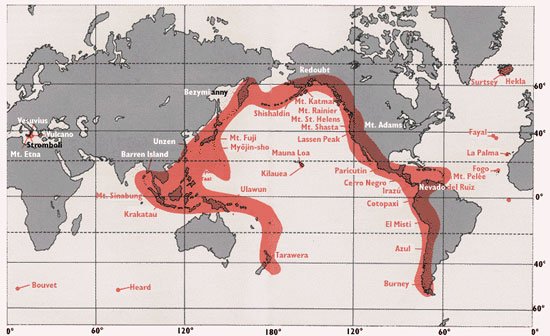
This is the name for the chain of volcanos around the edge of the Pacific Plate.
a)
Circle of Fire
b)
Ring of Lava
c)
Ring of Fire
d)
Circle of Magma
183.
A volcano that is made from layers of both runny lava and lava chunks is called 
a)
a shield volcano
b)
a cinder cone volcano
c)
a composite volcano
184.
A volcano that has steep sides and is formed from lava chunks is called
a)
a shield volcano
b)
a cinder cone volcano
c)
a composite volcano
185.
Dormant volcanoes might erupt in the future.
a)
True
b)
False
186.
Where is Mt. St Helens located?
a)
New Jersey
b)
Nebraska
c)
Washington state
d)
I didn't learn this so I give up 
187.
Volcanoes are found...
a)
on land
b)
under water
c)
on islands
d)
all of the above
188.
Why does magma tend to rise to the surface?
a)
It has large amounts of silica.
b)
It contains very little silica.
c)
It is denser than the surrounding material.
d)
It is less dense than the surrounding material.
189.
The volcanoes on the Hawaiian Islands form due to which of the following?
a)
Divergent Boundary
b)
Hot Spot
c)
Subduction Boundary
d)
Transform Boundary
190.
What is the principal ingredient to all types of magma?
a)
Iron
b)
Magnesium
c)
Silica
d)
Water
191.
What type of lava cools quickly and forms rock with jagged edges?
a)
Aa
b)
Magma
c)
Pahoehoe
d)
Pillow Lava
192.
What type of lava cools slowly and forms rock with smooth, ropelike features?
a)
Aa
b)
Magma
c)
Pahoehoe
d)
Pillow Lava
193.
What is the resistance of a liquid, such as lava, to flow?
a)
Elasticity
b)
Pyroclasticity
c)
Silica
d)
Viscosity
194.
What kind of magma produces violent volcanic eruptions?
a)
Magma low in silica
b)
Magma that is fluid, and runny
c)
Magma that is high in gas content
d)
Magma rich in iron
195.
Where do volcanoes come from?
a)
Places where plates move apart
b)
Places where plates are moving together
c)
Hot Spots
d)
All of these options