
 Worksheets
BIO Review for Semester 1 Final
Total questions: 190
Worksheet time: 48hrs 30mins
What are the two parts of photosynthesis? Select both answers
light-dependent reaction
glycolysis
Calvin cycle (light-independent reaction)
electron transport chain reaction
What two energy molecules are made by the light-dependent reaction? Select both answers.
NADPH
glucose
ATP
oxygen gas
Photosynthesis makes and uses NAPhD.
True
False
The oxygen gas we breathe comes from the splitting of carbon dioxide molecules during the light-dependant reaction.
True
False
What is the goal of the Calvin cycle?
make sugar (C6H12O6)
make oxygen gas (O2)
make ATP
make water (H2O)
The carbon dioxide is used by the plant during ________.
the light-dependent reaction
the Calvin cycle
Which molecule has more energy?
water
carbon dioxide
sugar

What are the reactants (what's needed) for photosynthesis?
glucose (C6H12O) and oxygen (O2)
light, water (H2O), and carbon dioxide (CO2)


What is the ultimate ORIGINAL source of energy for living things?
Sugar
Sun
Moon
Carbon Dioxide

What is produced as a result of photosynthesis?
Glucose and Chlorophyll
Glucose and Oxygen
Water and Light energy
Carbon dioxide and Water
When oxygen is released as a result of photosynthesis, it is a direct by-product of _________.
reducing NADP+
splitting water molecules
chemiosmosis
electron transfer in photosystem 1


Name the photosynthetic structure shown here.
photosystem I
photosystem II
thylakoid membrane
chloroplast

Name the photosynthetic structure shown here.
photosystem I
photosystem II
thylakoid membrane
chloroplast


What is the primary function of the light-dependent reactions of photosynthesis?
To produce glucose
To produce NADPH and ATP
To use ATP
To produce RuBP

What do you get at the end of glycolysis?
Pyruvic acid, NADH, and ATP
NAD, Oxygen, and ATP
Carbon Dioxide, Water, ATP
NAD, ATP, Pyruvic acid
Which is correct about fermentation?
is an anaerobic process
uses the ETC
occurs only in bacteria
is an aerobic process
Which molecule is the product of Glycolysis and the reactant of the Krebs Cycle?
pyruvic acid
carbon dioxide
water
oxygen
The Electron Transport Chain is a series of chemical reactions in which energy is transferred to form a large amount of what molecule?
glucose
oxygen
pyruvic acid
ATP
The two type of fermentation are ____________ and lactic acid fermentation.
lactic
sulfuric
hydrochloric
alcohol
Where does the Krebs Cycle take place?
matrix of the mitochondria
chloroplast
cytoplasm
inner membrane of the mitochondria
Where does Glycolysis occur inside the cell? (first step in the overall process)
Cytoplasm
Mitochondria
Chloroplast
Nucleus
Which stage of the cellular respiration process produces the most ATP?
Glycolysis
Acetyl CoA
Kreb's Cycle
Electron Transport Chain
The energy in ATP is stored
in the bond between the second and third phosphate
in the bond between the first and second phosphate
in the bond between the adenosine and the first phosphate
in the ribose
Which statement is true regarding cellular respiration?
The reactants of cellular respiration are identical to the reactants of photosynthesis.
The reactants of cellular respiration are obtained from the products of photosynthesis.
The products of cellular respiration are the same as the products of photosynthesis
Cellular respiration only occurs in autotrophs, photosynthesis occurs only in heterotrophs.
Where does the electron transport chain occur?
Matrix of the mitochondria
Vacuole
Inner membrane of the mitochondria
Nucleolus
In the electron transport chain, Oxygen acts as...
a carrier of electrons, passing electrons down the chain
a reducing agent
the final electron acceptor
a coenzyme
When protons are pumped outside the matrix, across the inner membrane...
water is made
a concentration gradient of H+ ions (protons) is created
NADH gets reduced
CO2 is produced
ATP synthesis by ATP synthase is driven by
H+ movement
electron movement
NADH movement
FADH2 movement
The final electron acceptor in cellular respiration is ______ that mixes with _______ to produce _______.
water : hydrogen : oxygen
hydrogen : oxygen : water
hydrogen : water : oxygen
oxygen : hydrogen : water
Which process is responsible for generating the most high energy electron carriers such as NADH and FADH2?
The Calvin Cycle
Glycolysis
Electron Transport Chain
The Krebs Cycle
Controls the cell's activities and contains the cell's DNA:
mitochondria
cell membrane
nucleus
golgi body


Organisms with cells that have a nucleus are called:
Archaea
Bacteria
Eukaryotes
Prokaryotes

The basic unit of structure and function in an organism is the:
Cell
Chloroplast
Lysosome
Ribosome

These organelles convert the energy in food molecules to a form the cell can use.
Chloroplasts
Mitochondria
Lysosomes
Ribosomes

These organelles in plants capture light energy and store it in glucose molecules to be used as food.
Chloroplasts
Mitochondria
Endoplasmic Reticulum
Vacuoles

This organelle is used for storage. Plants have one that is very large and filled with water.
Cell Wall
Chloroplast
Nucleus
Central Vacuole
Gel-like fluid portion of the cell outside the nucleus:
Cytoplasm
Cell Membrane
Vacuole
Golgi Body

With the process of diffusion, molecules prefer to move from
A low concentration to high concentration
A high concentration to low concentration
When the movement of molecules go against the concentration gradient, this is called:
passive transport
diffusion
active transport
Osmosis
Movement of very large particles out of the cell through the binding of vesicle to the plasma membrane.
Diffusion
Passive transport
Active transport
Exocytosis
Process by which very large particles are brought into the cell by the formation of vesicle.
Isotonic
Hypotonic
Exocytosis
Endocytosis

A _____ organism is made of many cells, each specialized to do certain jobs.
Eukaryotic
Multicellular
Prokaryotic
Unicellular


Homeostasis
allows for a wildly fluctuating internal environment
is impossible in vertebrates
is the maintenance of a relatively stable internal environment and often incorporates a form of feedback regulation
Scientists ask questions to make inferences and form ________.
observations
hypotheses
controlled experiments
ask questions
Scientists conduct controlled experiments which include a ________ to serve as a basis for comparison.
independent variable
control group
dependent variable
controlled experiments
Biologists have certain criteria that must be met if something is to be considered living. All living things are made up of cells and have ___________, which carries the genetic code.
metabolism
DNA
evolve
stimuli
homeostasis
the combination of chemical reactions through which an organism builds up or breaks down material
reproduction
metabolism
evolution
stimuli
homeostasis
relatively constant internal physical and chemical conditions that organisms maintain
reproduce
metabolism
evolve
stimuli
homeostasis
Living things can also change over time, or ___________.
reproduce
metabolism
evolve
stimuli
homeostasis
1 gram equals
100 mg
1000 mg
0,1 mg
0.01 mg
The freezing point of water is
0o C
32o C
100o C
212o C
A good scientist is open-minded and willing to change if need be, and does not let _______ or personal point of view influence them.
observe
evidence
hypotheses
bias
Identify the step, as either scientific inquiry or engineering design.
Brainstorming hypotheses and choosing one
scientific inquiry
engineering design
One goal of science is to provide natural and testable explanations for events in
the natural world
the supernatural world
both
neither
In science, a ________ applies to a well tested explanation that unifies a broad range of observations and hypotheses
leader
journal
theory
scientist
There is a(n) ________ when considering the "Circle of Life".
evolution
structure and function
interdependence in nature
science as a way of knowing
a logical interpretation based on prior knowledge and experience
hypothesis
inference
data
observance
Quantitative data are numbers obtained by counting or measuring.
False
True


Electrons orbit the nucleus of an atom that is composed of these two other particles:
Protons
Neutrons
Positrons
Photons
An ionic bond forms when
One or more electrons are transferred
One or more electrons are shared
A proton gains a negative charge
The atoms becomes exothermic and undergoes thermolysis
Water has these two physical properties that allow it to interact with other substances.
Cohesion
Adhesion
Non-polar
Ionically charged
Carbon is called the element of life because
It can bond with itself in different ways
It forms four covalent bonds
It is found in all living things
All of these answers are correct
Water's ability to dissolve many substances arises from:
Water molecules being polar
Water molecules being non-polar
Water's high heat capacity
Water being hydrophobic in nature
Enzymes function to speed up chemical reactions by
Lowering the activation energy
Adding energy to the substrate molecules
Changing the products into reactants
Making reactants more polar and hydrophobic
The location on an enzyme where substrate molecules bind is referred to as:
The active site
The monomeric colluder
The resonator
The synaptic cleft
Which of the following is likely an enzyme?
Glucose
Amylase
Sucrose
Polylactic Acid
In what form is carbon found in the atmosphere?
CO2
C6H12O6
H2O
ATP
What is a difference between starch and glycogen?
Starch stores energy, and glycogen provides structural support.
Starch is found in plants, and glycogen is found in animals.
Starch is composed of fructose, and glycogen is composed of glucose.
Starch is a monomer, and glycogen is a polymer.
What is the general term for any carbohydrate monomer?
glucose
polysaccharide
monosaccharide
fructose
Which carbohydrate can be used by the body as an immediate source of energy?
glucose
cellulose
chitin
glycogen
Why do phospholipids form a bilayer in water?
The phosphate portions repel each other.
The hydrophilic and hydrophobic parts attract each other.
The phosphate portions attract water, and the lipid portions repel water.
The lipid portions attract water, and the phosphate portions repel water.
Which is released during the formation of a peptide bond?
a five-carbon sugar
an amino group
an amino acid
a water molecule
Anything that takes up space and has mass
Matter
Compounds
Theories
Don't pick this one

A substance that consists of two or more elements and has a unique composition that is always the same is __________________________
a chemical compound
an element
an atom
an argument
The forces that holds molecules together are called
chemical bonds
forces
attractions
atoms
These organic molecules provide energy to cells, store energy, and form body structures of plants.
Carbohydrates
Fats
Lipids
Nucleic acids
These organic molecules store energy, form cell membranes, and carry messages
Lipids
Proteins
Carbohydrates
Nucleic Acids
These organic molecules contain instructions for proteins, pass instructions from parents to offspring, help cells to assemble proteins.
Nucleic Acids
Proteins
Lipids
Fats
These organic molecules help cells keep their shape, make up muscles, and speed up chemical reactions
Proteins
Fats
Lipids
Fatty Acids

What is the center of an atom called?
The headquarters
The centrometer
The hypothesis
The nucleus

Which subatomic particle does the GREEN( ) circle represent?
proton
neutron
electron
nucleus
Which subatomic particle does the YELLOW(-) circle represent?
proton
neutron
electron
nucleus
Which subatomic particle does the RED(+) circle represent?
proton
neutron
electron
nucleus


When water molecules stick to each other because of the polar attraction between hydrogen and oxygen atoms, it is called ______________.
adhesion
cohesion
specific heat index
properties of water

____________ is the part of Earth in which life exists including land, water and air or atomoshere.
Biosphere
Biota
Geosphere
Hydrosphere
__________ are the living things within the biosphere.
Biosphere
Biota
Geosphere
Hydrosphere
All of Earth’s water, ice, and water vapor make up the __________.
Biosphere
Biota
Geosphere
Hydrosphere
_____________ includes factors such as average conditions of temperature and precipitation over a long period of time.
Climate
Abiotic
Biotic
Weather
An assemblage of different populations that live together in a defined area is known as a(n) ____________.
population
ecosystem
community
ecosphere
A collection of organisms that make up a community as well as all of the nonliving aspects of the environment is known as a(n) ______________.
population
community
habitat
ecosystem
Which list contains only Abiotic factors?
water, sunlight, dirt, air
birds and plants
birds, water, dirt
plants, water
A group of individuals that belong to the same species living in the same area:
Community
Population
Organisms
Biosphere
Organisms that look similar and can produce fertile offspring:
Species
Fish
Community
Trees
_____________ changes from minute-to-minute, hour-to-hour, day-to-day.
Climate
Weather

The diagram represents solar energy that is absorbed by Earth's land and water surfaces and is changed into heat that radiates back into the atmosphere. What is this process called?
ozone
radiation
the greenhouse effect
evaporation
Without the Greenhouse Effect the Earth would be __________.
warm
cold
dead

The Tundra is characterized by low temperatures and low amounts of rainfall?
True
False
The Tropical Rain Forest, because of its climate, has the largest number of species of plants and animals?
True
False
One characteristic feature of tundra is that only the surface thaws in the summer and refreezes in the winter, leaving a layer of permanently frozen subsoil. This characteristic is known as:
glaciation
permafrost
crystallization
soilfrost
Which type of trees is found in a Temperate Forest?
deciduous
evergreen
ginko
palm
Deserts receive between 0 to 25 centimeters of rain per year, have extreme daily temperature changes between hot and cold, have poor soil, and are home to lizards, scorpions, and snakes?
True
False
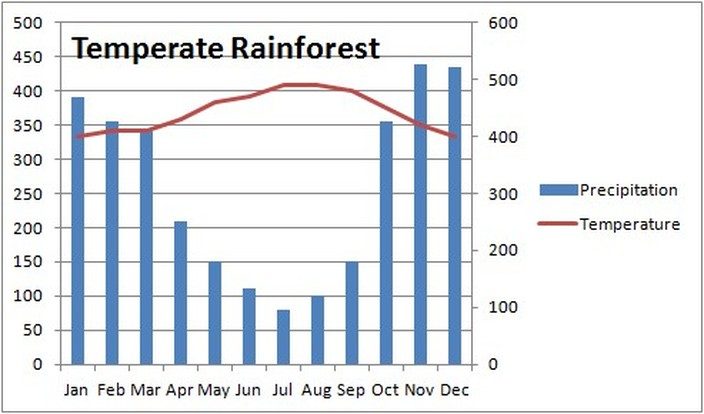
The most important abiotic factors when studying biomes are:
Food and Water
Water and Sunlight
Temperature and Oxygen
Water and Temperature
Areas that start beyond the coastal ocean:
Intertidal zones
Coral reefs
Continental shelves
Open oceans
An aphotic zone is a dark layer of the ocean below the photic zone where sunlight does not penetrate.
True
False
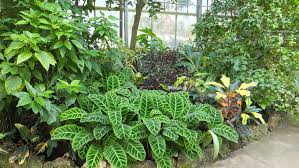


What is an abiotic factor?
A living condition or thing, that influences or affects an ecosystem and the organisms in it.
A non-living condition or thing, that does not affect an ecosystem and the organisms in it.
A non-living condition or thing, that influences or affects an ecosystem and the organisms in it.
A living condition or thing, that does not affect an ecosystem and the organisms in it.

What is a biotic factor?
Any non-living component that affects the population of another organism, or the environment.
Any living component that has a population.
Any living component that affects the population of another country.
Any living component that affects the population of another organism, or the environment.

