wayground logo

Free Printable Worksheets

Font size

S
M
L
XL
Worksheets

Bivens/Moeller BETA Fall Final 2025

Total questions: 195

Worksheet time: 4hrs 13mins

Name
Class
Date
1.

A distance vs. time graph is plotted for a car moving on a straight road. What does this graph show about the car's movement?

a)

The car's frame of reference

b)

The car's speed

c)

The car's acceleration

d)

The car's favorite food

2.

A car is moving on a straight road. The car's ____ and ____ determine its velocity. 

a)

speed , direction 

b)

direction, mass

c)

volume, density 

d)

direction, magnitude 

3.

What is the total distance traveled by a car that is traveling at 20 m/s for 3 minutes?

a)

4000 m

b)

3600 m

c)

60 m

d)

depends on the mass of the car

4.

What is the time required for a cart traveling at 12 m/s to travel 116 m?

a)

9.667 s

b)

6 s

c)

0.167 s

d)

depends on the mass of the cart

5.

John is driving from city A to city B. He wants to calculate his average speed. How should he do it?

a)

divide the total time he took to reach city B by the total distance between city A and city B

b)

multiply the total time he took to reach city B by the total distance between city A and city B

c)

divide the total distance between city A and city B by the total time he took to reach city B

d)

subtract the total time he took to reach city B from the total distance between city A and city B

6.

John is driving at 65mi/hr towards the South. This is an example of...

a)

Speed

b)

Velocity

c)

Acceleration

d)

Direction

7.

Km (kilometers) is a unit for...

a)

Speed

b)

Distance

c)

Time

d)

Direction

8.

Calculate the speed of a sprinter who ran 200 meters in 20 seconds.

a)

10m/s

b)

10km/s

c)

10m/hr

d)

10km/hr

9.

Tom Brady, a quarterback, starts at the 20 yard line during a Super Bowl game. He throws a pass 20 yards forward and his teammate, Gronkowski, catches it and runs an additional 10 yards forward. What is the total displacement?

a)

30 yards forward

b)

20 yards forward

c)

10 yards forward

d)

30 yards back

10.

Tom Brady, a quarterback, starts at the 20 yard line during a Super Bowl game. He throws a pass 5 yards forward to his teammate, but then the receiver runs it 10 yards backwards due to the opposing team's pressure. What is the displacement?

a)

5 yards forward

b)

15 yards forward

c)

5 yards back

d)

15 yards back

e)

15 total yards

11.

A quarterback starts at the 20 yard line. He throws a pass 5 yards forward, but then the receiver runs it 10 yards backwards. What is the distance?

a)

5 yards forward

b)

15 yards forward

c)

5 yards back

d)

15 yards back

e)

15 total yards

12.

John started his journey from his home. He drove 50 km towards the north to visit his friend, then 30 km towards the south to a grocery store. After that, he drove 20 km towards the east to a gas station, then 20 km towards the south to a restaurant and finally 20 km towards the west to return home. What is the total distance he covered?

a)

140 km

b)

50 km southwest

c)

120 km southwest

d)

0 km

13.

What is the difference in displacement and distance?

a)

the two are always the same

b)

the two are always different

c)

distance measures the total meters traveled, displacement measures how far from the beginning something is at the end

d)

displacement measures the total meters traveled, distance measures how far from the beginning something is at the end

14.

The vertical axis of a line graph is called the __________.

a)

slope

b)

line of best fit

c)

x-axis

d)

y-axis

15.

Which type of graph best represents data over a set period of time?

a)

line

b)

bar

c)

table

d)

circle

16.

Kalinda was trying to explain to her friend the difference between a theory and a law in science.  She used the theory of plate tectonics and the law of superposition as examples.  Kalinda explained the difference by using nonscientific language.  Which statement did Kalinda use to correctly describe the difference between a theory and a law in science?

a)

A theory describes a natural event, while a law explains it.

b)

A theory explains a natural event, while a law predicts it.

c)

A theory explains a natural event, while a law describes it.

d)

A theory predicts a natural event, while a law explains it.

17.

A scientific ____________ is a broad explanation for events that is widely accepted as true.

a)

law

b)

theory

c)

observation

d)

method

18.

Before a scientific theory is accepted and supported, it has

a)

been tested by only one scientist.

b)

been published in scientific journals.

c)

been tested many times by different scientists.

d)

been approved by the International Committee of Scientists.

19.

What will the slope look like if the person/object were Remaining at rest.-

a)
b)
c)
d)
20.

What will the slope look like if the object were in a positive constant motion?

a)
b)
c)
d)
21.

What will the slope look like if the object were in a negative constant motion?

a)
b)
c)
d)
22.

Which slope would indicate the person/object were moving at the Fastest velocity?

a)
b)
c)
d)
23.

From 5 to 6 seconds the average velocity of the person was ...

a)

1 m/s

b)

-1 m/s

c)

3 m/s

d)

-3 m/s

e)

0 m/s

24.
A scientific ____________ is a statement that describes what always happens under certain conditions in nature.
a)
law
b)
theory
c)
method
d)
variable
25.
A scientific ____________ is a broad explanation for events that is widely accepted as true.
a)
law
b)
theory
c)
observation
d)
method
26.
Laws tells us that it happens but doesn’t describe how or why.
a)
True
b)
False
27.
A possible explanation to a problem that has not yet been tested. 
a)
data
b)
theory
c)
hypothesis
d)
fact
28.

Force = mass x gravity

a)

Hypothesis

b)

Theory

c)

Law

29.
Another word for prediction or educated guess is: ________________
a)
hypothesis
b)
conclusion
c)
experiment
d)
data
30.

If other people are watching you, then you will be better behaved.

a)

Hypothesis

b)

Theory

c)

Law

31.

Germs cause diseases in living organisms.

a)

Hypothesis

b)

Theory

c)

Law

32.

Choose the correctly written hypothesis for "What is the effect of putting Pam Cooking Spray on the bottom of a sled?"

a)

I think the sled will slide faster.

b)

If I put Pam Cooking Spray on the bottom of my sled, then I will win the race."

c)

If I put Pam Cooking Spray on the bottom of my sled, then I will slide faster.

33.

A hypothesis is never wrong.

a)

True

b)

False

34.
Evolution is the widely held notion that all life is related and has descended from a common ancestor: the birds and the bananas, the fishes and the flowers
 -- all related That is, complex creatures evolve from more simplistic ancestors naturally over time.
a)
Fact
b)
Theory
c)
Law
35.

Theories answer the question...

a)

Where

b)

What

c)

Why

d)

When

36.

Which of the following is an observation about this picture?

a)
The boy has fallen off his bike.
b)
The boy is in a lot of pain.
c)
The boy has injuries to his knees
d)
The boy learned his lesson about wheelies
37.

Which of the following statements is an inference about the picture

a)
The vase is broken.
b)
The girls' bow is blue and purple.
c)
The girl broke the vase.
d)
The girl has blonde hair.
38.

Which of these statements is an inference about this picture?

a)
There is a red candle on the window sill.
b)
The moon is full.
c)
It is Christmas time.
d)
There's snow on the tree.
39.

Which of the following is an observation about the man in this picture:

a)
The man hates his purple shirt.
b)
The man has a purple shirt.
c)
The man is having a bad day.
d)
This man is upset because he's hungry
40.
Observations like the color or texture of an object are ________________ observations.
a)
quantitative
b)
qualitative
c)
operational
d)
scientific
41.
Observations like measurements are ____________ observations
a)

quantitative

b)
qualitative
c)
operational
d)
scientific
42.
It is raining outside
a)
observation
b)
inference
43.

I use rulers, scales and calculators to make these observations.

a)

qualitative data

b)

quantitative data

44.
The picture of the position vs. time graph shows an object that is...
a)
accelerating/speeding up
b)
moving at a constant speed 
c)
not moving 
d)
accelerating/slowing down. 
45.
Acceleration: is the rate of change in ___________.
a)
speed
b)
distance
c)
velocity 
d)
displacement 
46.
Acceleration only takes place when things speed up. 
a)
True
b)
False
47.
A drag racer accelerated from 0 m/s to 200 m/s in 5 s.  What was the acceleration?
a)
0 m/s
b)
40 m/s2
c)
-40 m/s2
d)
40 m/s
48.
A car accelerates from a standstill to 70 m/s in 10 seconds.  What is the acceleration?
a)
0.7m/s2
b)
7m/s2
c)
14m/s2
d)
none of the above
49.
When are you undergoing an acceleration in a car? 
a)
speed up
b)
slow down
c)
make turns
d)
All of the above 
50.
What kind of acceleration is shown here?
a)
positive
b)
negative
c)
none
d)
varies
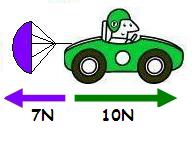
51.

What is the net force?

a)

3 N

b)

3 N, right

c)

17 N, right

d)

3 N, left

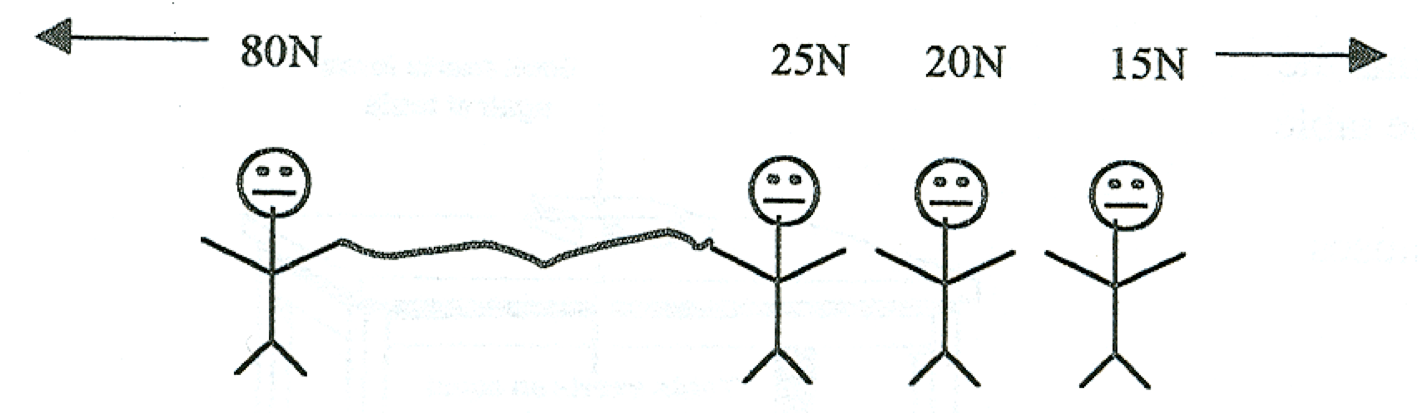
52.
Who wins the tug of war with what net force?
a)
The person on the left with 20 N
b)
The person on the left with 80 N
c)
The people on the right with 20 N
d)
The people on the right with 100 N
53.
What is the net force?
a)
20 N 
b)
0 N 
c)
400 N 
d)
40 N 
54.

What is the unit to MEASURE force?

a)

Kilogram

b)

Meter

c)

Pounds

d)

Newton

55.

A ____________ is a push or a pull on an object.

a)

friction

b)

force

c)

magnet

d)

gravity

56.
Balanced or unbalanced?
a)
balanced
b)
unbalanced
57.
The sum of all forces acting on an object.
a)
Contact Force
b)
Balanced Force
c)
Unbalanced Force
d)
Net Force
58.
What will cause an object to move?
a)
Applied forces
b)
Balanced forces
c)
Unbalanced forces
59.

When forces are going in the opposite direction of each other you should do what do find the net force

a)

Subtract

b)

Add

c)

Divide

d)

Multiply

60.
"For every action, there is an equal and opposite reaction."
a)
Newton's 1st Law
b)
Newton's 2nd Law
c)
Newton's 3rd Law
d)
Newton's 4th Law
61.
Force = Mass x Acceleration
a)
Newton's 1st Law
b)
Newton's 2nd Law
c)
Newton's 3rd Law
d)
Newton's 4th Law
62.
"An object in motion (or at rest) will to stay in motion (or at rest) until an outside force acts upon it."
a)
Newton's 1st Law
b)
Newton's 2nd Law
c)
Newton's 3rd Law
d)
Newton's 4th Law
63.
The tendency of an object to resist changes in its motion is...
a)
inertia
b)
force
c)
acceleration
d)
velocity
64.
The force that opposes motion between two surfaces in contact with each other.
a)
inertia
b)
friction
c)
momentum
d)
gravity
65.
Which of the following is the units for acceleration?
a)
kg*m/sec/sec
b)
kg*m/sec
c)
m/sec/sec
d)
m/sec
66.
Which of the following is the units for velocity?
a)
kg*m/sec/sec
b)
kg*m/sec
c)
m/sec/sec
d)
m/sec
67.
A cannonball with a mass of 0.5 kg is flying at an acceleration of 10 m/sec/sec. What is it's force?
a)
50 Newtons
b)
5 Newtons
c)
20 Newtons
d)
9.5 Newtons
68.
A cannonball with a mass of 10 kg is flying at an acceleration of 5 m/sec/sec. What is it's force?
a)
50 Newtons
b)
5 Newtons
c)
20 Newtons
d)
9.5 Newtons
69.
Calculate the acceleration of a 150 kg object that is moved with a force of 300N. 
a)
2
b)
150
c)
.5
d)
450
70.
What is the mass of an object that is accelerating 60 m/s2 when a force of 3000N is exerted? 
a)
5
b)
3060
c)
50
d)
180000
71.
If I push you, then you also will push me.
a)
1st Law
b)
2nd Law
c)
3rd Law
d)
Conservation of Momentum
72.

The momentum before and after a collision is the same.

a)

1st Law

b)

2nd Law

c)

3rd Law

d)

Conservation of Momentum

73.
kg x m / sec.  These are the units for...
a)
momentum
b)
force
c)
acceleration
d)
velocity
74.
A blue car of greater mass collides head on with a red car of less mass.  The two cars were initially traveling at the same speed before impact and stuck together after the collision.  Which scenario explains what would happen afterwards.
a)
The red and blue car would continue at the same speed in the direction of the blue car initially but at a slower speed.
b)
The red and blue car would continue at the same speed in the direction of the red car initially but at a slower speed.
c)
The red and blue car would continue at the same speed in the direction of the blue car initially but at a faster speed.
d)
The red and blue car would continue at the same speed in the direction of the red car initially but at a faster speed.
75.
A red car is sitting still and gets hit by a blue car of equal mass going at a speed of 30 m/s.  After the collision, which car has the greater change in velocity?
a)
red car
b)
blue car
c)
they will be equal
d)
It could be either depending on the type of collision.
76.
Forces always come in ....
a)
pairs
b)
sets of 3
c)
as waves
d)
individual amounts
77.
'p' before equals 'p' after.
a)
1st Law
b)
2nd Law
c)
3rd Law
d)
Law of Conservation of Momentum
78.
A biker with a mass of 75 kg moves along the path with a constant velocity of 5 m/s. What is the biker's momentum?
a)
25 m/s
b)
375 m/s
c)
25 kg m/s
d)
375 kg m/s
79.
A runner has a momentum of 670 kg m/s and is travelling at a velocity of 9 m/s. What is his mass?
a)
6030 kg
b)
0.0134 kg
c)
74.4 kg
d)
80 kg
80.
The purpose of crumble zones on a car is to
a)
decrease time of impact.
b)
increase force of impact.
c)
increase the time of impact.
d)
decrease the impulse during impact.
81.
A 0.250 kg cart moving at 0.400 m/s has how much momentum?
a)
0.1 kg-m/s
b)
1 kg-m/s
c)
10 kg-m/s
d)
100 kg-m/s
82.
The momentum of an object depends upon the object's ___________&_____________.  
a)
size and shape
b)
mass and speed
c)
mass and veloctiy
d)
mass and energy
83.
The equation to calculate momentum is
a)
p=mv
b)
p=1/2mv2
c)
p=mgh
d)
p=mg
84.
Which has more momentum: a car stopped at a red light or a bike moving at 15 mph?
a)
car
b)
bike
c)
they are equal
d)
cannot determine using the info provided
85.
A runner has a momentum of 720 kg m/s and is traveling at a velocity of 5 m/s. What is his mass?
a)
14.4 kg
b)
1400 kg
c)
144 kg
d)
360 kg
86.
A 2 kg cart has a momentum of 10 kg m/s. What is its velocity?
a)
22 m/s
b)
.2 m/s
c)
5.0 m/s
d)
20 m/s
87.
At which point is potential energy greatest?
a)
W
b)
X
c)
Y
d)
Z
88.
__________ is stored energy. 
a)
Potential
b)
Kinetic
c)
None of the above 
d)
All of the above 
89.
The faster an object moves, the ________ kinetic energy it has. 
a)
more
b)
less
c)
none of the above
d)
same
90.

What is the potential energy of a 50 kg rock that is resting 100 m high?

a)

49 J

b)

49,000 J

c)

4,900 J

d)

75 J

91.

How much kinetic energy is in a 100 kg object traveling at 20 m/s?

a)

20 J

b)

200 J

c)

20,000 J

d)

200,000 J

92.
What kind of energy is in a battery?
a)
Potential
b)
Kinetic
93.
Energy CAN BE __________.
a)
changed in form
b)
destroyed
c)
eliminated
d)
created
94.
Kinetic energy can be calculated using the formula   KE = 1/2mv2.  What is the kinetic energy of a bicycle that has a mass of 20 kg and is traveling at a velocity of 10 m/sec?  
a)
10 J
b)
100 J
c)
1000 J
d)
10,000 J
95.
Gravitational potential energy depends on the ________ and ________ of the object. 
a)
Height and mass
b)
Friction and movement
c)
Mass and Movement
d)
Height and Friction 
96.
The world record for pole vaulting is 6.15 m. If the pole vaulter's gravitational potential is 4942 J, what is his mass? 
a)
82 kg
b)
7875 kg
c)
803 kg
d)
.0012 kg
97.
In 1993, Cuban athlete Javier Sotomayor set the world record for the high jump.  The gravitational potential energy associated with Sotomayor’s jump was 1970J.  Sotomayor’s mass was 82kg.  How high did he jump?
a)
237.3 m
b)
15.83 km
c)
24 m
d)
2.45 m
98.
A cheetah can run briefly with a speed of 31m/s.  Suppose a cheetah with a mass of 47 kg runs at this speed.  What is the cheetah’s kinetic energy?
a)
22583.5 J
b)
728.5 J
c)
1457 J
d)
0.75 J
99.
When plants convert the sun's energy into food, which type of energy is it?
a)
kinetic
b)
chemical
c)
thermal
d)
radiant
100.
What kind of energy is represented in this picture?
a)
Thermal
b)
Potential
c)
Nuclear
d)
Mechanical
101.
What kind of energy does this device use?
a)
Chemical
b)
Electrical
c)
Thermal
d)
Chemical
102.
What kind of energy is represented in the picture?
a)
Thermal
b)
Chemical
c)
Sound
d)
Nuclear
103.
A battery converts what type of energy to another?
a)
sound to kinetic
b)
light to heat
c)
mechanical to electrical
d)
chemical to electrical
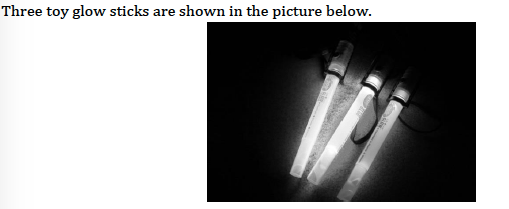
104.
The glow sticks produce light for a short amount of time. The light from the glow stick is a conversion from what to what?
a)
thermal to light
b)
gravitational to potential
c)
radiant to electrical
d)
chemical to light
105.
Wind turbines and windmills convert what energy to another?
a)
Kinetic to electric
b)
Gravitational potential to electric
c)
Mechanical to potential
d)
Thermal to sound
106.
On a roller coaster, where is maximum kinetic energy?
a)
At the bottom of a big hill
b)
When going around a corner
c)
When going upside down
d)
At the top of a big hill
107.
Energy caused by the movement in the particles of matter. It is a form of kinetic energy.
a)
Nuclear energy
b)
Sound energy
c)
Light energy
d)
Thermal energy
108.
Energy that comes from the nucleus of an atom. A form of potential energy.
a)
chemical energy
b)
Nuclear energy
c)
Sound energy
d)
Electrical energy
109.

What is the equation for calculating wavelength if I know frequency and wave speed?

a)

λ=fv

b)

λ=v/f

c)

λ=f/v

d)

λ=f-v

110.

What is the speed of a wave with a frequency of 12 Hz and a wavelength of 2m?

a)

6 m/s

b)

24 m/s

c)

3 m/s

d)

4 m/s

111.

What is a Hertz?

a)

Number of crests in a wave

b)

Number of troughs in a wave

c)

Number of waves per second

d)

Number of wavelengths

112.

What is the frequency of wave with a wavelength of 3m and a speed of 9m/s?

a)

18 Hz

b)

9 Hz

c)

27 Hz

d)

3 Hz

113.

What is the wavelength of a wave with a speed of 24 m/s and a frequency of 4 Hz?

a)

6 m

b)

6 m/s

c)

6 Hz

d)

6 λ

114.

If a wave travels 20 meters in 5 seconds, what is the speed of the wave?

a)

100 m/s

b)

20 m/s

c)

5 m/s

d)

4 m/s

115.

The distance in between two waves.

a)

wave speed

b)

frequency

c)

wavelength

116.

Frequency is always measured in _________

a)

kilometers

b)

Hertz

c)

centimeters

117.

This is a high frequency wave. Which part of the wave is "B"

a)

crest/peak

b)

wavelength

c)

trough

118.

Look at this wave. "A" is which part of a wave?

a)

Crest/Peak

b)

Wave Speed

c)

Resting Point

119.

What does a wave carry from place to place?

a)

energy

b)

matter

c)

people

120.

#1 refers to the

a)

wavelength

b)

amplitude

c)

crest

d)

trough

121.

#3 refers to the

a)

wavelength

b)

amplitude

c)

crest

d)

trough

122.

You can't hear sounds in outer space because there is no

a)

medium

b)

light

c)

energy

d)

heat

123.
In a longitudinal wave, the parts where the coils are close together are called what?
a)
longitudes
b)
rarefactions
c)
compressions
d)
contractions
124.
When the frequency of a wave increases, what happens to the wavelength?
a)
The wavelength is not directly affected by the frequency of a wave.
b)
The wavelength increases.
c)
The wavelength decreases.
d)
More specific information is needed to form a conclusion about the wavelength.
125.
This is the measure of cycles per second, or number of waves passing a point in a second
a)
frequency
b)
velocity
c)
wavelength
d)
momentum
126.
A wave with a wavelength of 0.8 m and a speed of 65 m/s has what frequency?
a)
81.25 Hz
b)
52 Hz
c)
0.037 Hz
d)
0.012 Hz
127.
A wave has a frequency of 540 Hz and is traveling at 340 m/s. What is its wavelength?
a)
0.63 m
b)
1.6 m
c)
183,600 m
d)
1,836 m
128.
A tennis coach paces back and forth along the sideline 10 times in 60 seconds.  The frequency of her pacing is:
a)
0.167 Hz
b)
6.0 Hz
c)
0.167 s
d)
6.0 s
129.

What unit is velocity/speed measured in?

a)

meters

b)

m/s

c)

Hz

130.

What unit is wavelength measured in?

a)

meters

b)

m/s

c)

Hz

131.

Which is an example of a longitudinal wave?

a)

x ray

b)

microwave

c)

sound wave

d)

water wave

132.
In longitudinal waves, the parts where the coils are spread apart are called what?
a)
rarefactions
b)
compressions
c)
mechanicals
d)
longitudes
133.

A wave in which the movement of the wave’s medium is perpendicular to the movement of the wave traveling through the medium

a)

Transverse waves

b)

Compression waves

c)

Nodular Waves

d)

Ocean Waves

134.
A wave in which the particles of the medium move perpendicularly to the direction the wave is traveling
a)
A. surface wave
b)
B. transverse wave
c)
C. electromagnetic  wave
d)
D. longitudinal wave
135.
A wave in which the particles of the medium vibrate parallel to the direction of the wave motion
a)
A. mechanical wave
b)
B. surface wave
c)
C. longitudinal wave
d)
D. wave
136.

The wavelength can be measured from (Hint: check ALL that apply)

a)

Two identical points of a wave.

b)

crest to crest

c)

top to bottom

d)

trough to trough

137.

Which electromagnetic waves have the longest wavelengths and lowest frequencies?

a)

infrared waves

b)

radio waves

c)

gamma rays

d)

ultraviolet rays

138.

The electromagnetic waves with the highest frequencies are called

a)

radio waves.

b)

gamma rays.

c)

X-rays.

d)

visible light.

139.

Electromagnetic waves can transfer energy without a(n)

a)

medium.

b)

electric field.

c)

magnetic field.

d)

change in either a magnetic or an electric field.

140.

In a vacuum, all electromagnetic waves have the same

a)

wavelength.

b)

speed.

c)

frequency.

d)

amplitude.

141.

A student asks a series of questions about a wave. The answer to which question will allow the student to determine whether the wave is electromagnetic or mechanical?

a)

Does it require a medium in order to travel?

b)

Can it pass through air and water?

c)

Does it have a measurable speed?

d)

Does it have a measurable frequency?

142.

What do radio waves, microwaves, X-rays, and gamma rays all have in common?

a)

They all have the same wavelength.

b)

They are electromagnetic waves.

c)

They are detected in the same way.

d)

They store the same amount of energy.

143.

A wave with a SHORTER wavelength has _________ energy than one with a longer wavelength.

a)

More

b)

Less

c)

The Same

144.

Which part of the electromagnetic spectrum has the LEAST amount of energy?

a)

Gamma Rays

b)

X-Rays

c)

Microwaves

d)

Radio Waves

145.

In an experiment, the thing that I change before the experiment is the:

a)

Independent variable

b)

Dependent variable

c)

variable control

d)

fibonacci variable

146.

In an experiment, the thing that changes during the experiment (and we measure) is the:

a)

Independent variable

b)

Dependent variable

c)

variable control

d)

fibonacci variable

147.

In a graph involving time, which axis would the time go on?

a)

x

b)

y

c)

z

d)

w

148.

This is the vertical axis

a)

y

b)

x

c)

v

d)

z

149.

What fuels a hurricane?

a)

warm water

b)

cold water

c)

wind

d)

waves

150.

This is the day with most daylight

a)

winter solstice

b)

summer solstice

c)

equinox

d)

sunfall

151.

When it's winter in Fayetteville, it's what season in Tokyo?

a)

summer

b)

spring

c)

fall

d)

winter

152.

What causes seasons on the Earth?

a)

tilt

b)

rotation

c)

distance from sun

d)

distance of moon

153.

What is an advantage of an analog signal vs. digital?

a)

can capture infinite detail

b)

more resistant to noise

c)

easily copied

d)

doesn't lose quality over time

154.

Digital encoding sends or stores information using quantities that

a)

can vary continuously.

b)

can only have specific values.

c)

have no numeric gaps between one another.

d)

create smooth curves inside a sound wave.

155.

Which of the following is NOT an analog device?

a)

a light knob that can adjust brightness between fully on and off

b)

a mouse connected to your computer controlling your cursor

c)

an FM radio tower broadcasting music

d)

a runner’s watch that can time to thousandth-second intervals

156.
Which of the following is an advantage of analog signals
a)
Less prone to interference
b)
Requires less power
c)
Travels Farther
d)
Carries more detailed information
157.

Identify a disadvantage of an analog signal:

a)

Requires low power

b)

Doesn't get interference

c)

When copied, quality goes down

d)

Hardware is usually small

158.

How would you write 0.0005 in scientific notation?

a)

50 x 10-5

b)

5 x 10⁻⁴

c)

5 x 10³

d)

.5 x 103

159.

How would you write -5.6 x 10⁻³ in standard form?

(a)  

160.

How do you write 8.317 x 10⁶ in standard form?

(a)  

161.

Express the following in scientific notation:


.000457

a)

457 x 106

b)

457 x 10-6

c)

4.57 x10⁴

d)

4.57 x 10⁻⁴

162.

Solve the expression and remember to pick the answer in Scientific Notation

41042.1106=4\cdot10^4\cdot2.1\cdot10^6=  


a)

6.110106.1\cdot10^{10}  

b)

8.410108.4\cdot10^{10}  

c)

8.410248.4\cdot10^{24}  

d)

6.110246.1\cdot10^{24}  

163.

Solve the expression and remember to pick the answer in Scientific Notation

2.51032104=2.5\cdot10^3\cdot2\cdot10^4=  

a)

4.51074.5\cdot10^7  

b)

51075\cdot10^7  

c)

510125\cdot10^{12}  

d)

4.510124.5\cdot10^{12}  

164.

Solve the expression and remember to pick the answer in Scientific Notation:

7.2106÷(4102)=7.2\cdot10^{-6}\div\left(4\cdot10^{-2}\right)=  

a)

1.81081.8\cdot10^{-8}  

b)

1.81041.8\cdot10^{-4}  

c)

1.8104-1.8\cdot10^{-4}  

d)

1.81031.8\cdot10^3  

165.

Solve the expression and remember to pick the answer in Scientific Notation:

6.91010÷(3104)=6.9\cdot10^{-10}\div\left(3\cdot10^{-4}\right)=  

a)

2.310142.3\cdot10^{-14}  

b)

2.31062.3\cdot10^{-6}  

c)

2.310402.3\cdot10^{40}  

d)

2.31062.3\cdot10^6  

166.

These lines runs east to west.

a)

Latitude

b)

Longitude

c)

Prime Meridian

d)

Eastern to Western Hemisphere

167.

These lines run north to south

a)

Latitude

b)

Longitude

c)

Equator

d)

Northern to Southern Hemisphere

168.

Which line measures at 0 degrees latitude?

a)

Equator

b)

Prime Meridian

c)

Longitude

d)

Capricorn

169.

In the northern hemisphere of the earth hurricanes circle __________.

a)

clockwise

b)

counter-clockwise

c)

up and down

d)

front to back

170.

In the southern hemisphere of the earth hurricanes circle __________.

a)

clockwise

b)

counter-clockwise

c)

up and down

d)

front to back

171.

The center of the hurricane is called the __________.

a)

bullseye

b)

point

c)

nose

d)

eye

172.
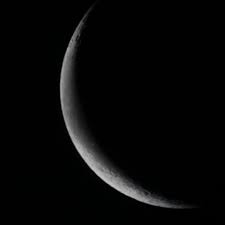
What is this phase?
a)

New Moon

b)

Crescent

c)

Quarter

d)

Gibbous

e)

Full Moon

173.

The image shows how the moon looks during the lunar cycle. The moon will look this way again in about -

a)

one week

b)

one month

c)

one year

d)

one century

174.

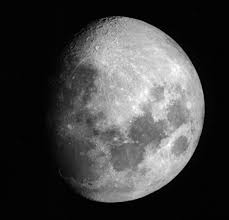
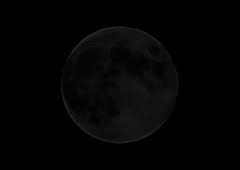
What moon phase is shown in the picture?

a)

first quarter

b)

new moon

c)

last quarter

d)

full moon

175.
What type of tides would this arrangement of earth-moon-sun create?
a)
neap tide
b)
spring tide
c)
new moon tide
d)
full moon tide
176.
What causes tides?
a)
gravity
b)
wind
c)
spring
d)
neap
177.
Why does the moon's gravitational pull have more of effect on tides than the sun's gravitational pull?
a)
they are the same
b)
the moon is larger than the sun
c)
tides are not caused by the moon
d)
the moon is closer to the Earth than the sun
178.

The partial or total blocking of one object in space by another is called a(n)

a)

Umbra

b)

Penumbra

c)

Eclipse

d)

Shadow

179.

Is this alignment for a solar or lunar eclipse?

a)

Solar

b)

Lunar

180.
Name the moon phase
a)
waning crescent
b)
waxing crescent
c)
waning gibbous
d)
waxing gibbous
181.
Name the moon phase
a)
waning crescent
b)
waxing crescent
c)
waning gibbous
d)
waxing gibbous
182.
Name the moon phase
a)
First Quarter
b)
Last Quarter
c)
New Moon
d)
Full Moon
183.
When the amount of light we see from the moon appears to be shrinking, it is 
a)
Waxing
b)
Waning
c)
Gibbous
d)
Crescent
184.
The term equinox means....
a)
equal amount of day light and equal amount of night
b)
Equal amount of winter and summer
c)
Equal amounts of hot dogs for everyone
d)
The longest day of the year
185.
Why can we see the moon in the sky?
a)
The moon emits its own light
b)
The moon is a star
c)
The moon absorbs light from the Sun
d)
The moon reflects light from the Sun
186.

choose 2 things that cause seasons

a)

Moon Phases

b)

Rotation

c)

Tilt of the Earth

d)

Revolution of the Earth around the sun

187.
How long does it take for the Earth to make one full orbit around the Sun?
a)
one day
b)
one week
c)
one month
d)
one year
188.
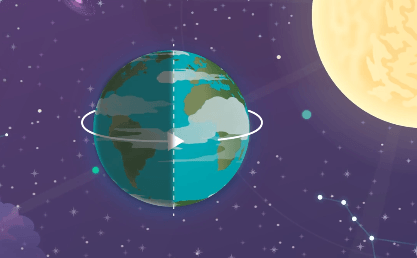
The Earth is rotating on its axis, creating _____
a)
the 12 months
b)
the years
c)
the seasons
d)
day and night
189.

Which is the correct alignment for a solar eclipse?

a)

sun - moon - Earth

b)

moon - sun - Earth

c)

Earth - sun - moon

d)

moon - Earth - sun

190.
What type of eclipse is this?
a)
Total lunar eclipse
b)
Total solar eclipse
c)
Partial lunar eclipse
d)
Partial solar eclipse
191.
The moon cycle (lunar cycle) takes approximately _______________ to complete.
a)
a year
b)
29.5 days/about one month
c)
1 day
d)
1 week
192.

What is it called when the sunlight reaches more of one hemisphere than the other?

a)

Solstice

b)

Equinox

c)

Day

d)

Year

193.

When it is summer in the Northern Hemisphere it is ____________ in the Southern Hemisphere?

a)

Summer

b)

Fall

c)

Winter

d)

Spring

194.

What is the angle of Earth's tilt on its axis?

a)

22.5

b)

25.3

c)

23.5

d)

25.2

195.

What is a Solstice?

a)

the time of year where the amount of sunlight is at its maximum in one hemisphere and minimum in the other hemisphere

b)

the time of year when the amount of sunlight is equal in both hemispheres

c)

the time of year where the amount of sunlight is at its maximum in the northern hemisphere and minimum in the southern hemisphere

d)

the time of year where the amount of sunlight is at its maximum in the southern hemisphere and minimum in the northern hemisphere