
 Worksheets
Quarter 3 Science Exam
Total questions: 200
Worksheet time: 17hrs 40mins

What Moon Phase is shown?
New Moon
Full Moon
First Quarter

What Moon Phase is shown?
New Moon
Full Moon
First Quarter

What Moon Phase is shown?
New Moon
Full Moon
First Quarter

What Moon Phase is shown?
New Moon
Full Moon
First Quarter

What Moon Phase is shown?
Waxing Crescent
Waxing Gibbous
Waning Crescent
Waning Gibbous

What Moon Phase is shown?
Waxing Crescent
Waxing Gibbous
Waning Crescent
Waning Gibbous

What Moon Phase is shown?
Waxing Crescent
Waxing Gibbous
Waning Crescent
Waning Gibbous

What Moon Phase is shown?
Waxing Crescent
Waxing Gibbous
Waning Crescent
Waning Gibbous

What moon phase comes AFTER a New Moon?
Waxing Crescent
First Quarter
Waxing Gibbous
Full Moon

What moon phase comes AFTER a Waxing Crescent?
New Moon
First Quarter
Waxing Gibbous
Full Moon

What moon phase comes AFTER a First Quarter?
Waxing Crescent
New Moon
Waxing Gibbous
Full Moon

What moon phase comes AFTER a Waxing Gibbous?
Waxing Crescent
New Moon
Waxing Gibbous
Full Moon

What moon phase comes AFTER a Full Moon?
Waning Gibbous
Third Quarter
Waning Crescent
New Moon

What moon phase comes AFTER a Waning Gibbous?
Full Moon
Third Quarter
Waning Crescent
New Moon

What moon phase comes AFTER a Third Quarter?
Full Moon
Waning Gibbous
Waning Crescent
New Moon

What moon phase comes AFTER a Waning Crescent?
Full Moon
Waning Gibbous
Waning Crescent
New Moon

_______are daily changes in ocean water.
Waters
Tides
Colors
Earths

Tides are caused by the difference in the gravitational force of the ________ and ________ across the ________.
earth, sun, moon
sun, mars, jupiter
sun, moon, earth
tide, water, sun
The tidal force exerted by the ______ is stronger that the tidal force exerted by the _______.
earth, ocean
sun, moon
moon, stars
moon, sun
The moon is mainly responsible for the tides on Earth because it is _________ _________.
much closer
far away
behind the sun

The bulges that occur in the Earth's oceans are called ______ _______.
low waters
low tides
high tides
big dips
____ ____ occur in the spaces between the high tides.
High tides
Medium tides
Low tides
Super tides

As the _____ revolves around the Earth and Earth rotates, the tidal bulge moves around the Earth.
sun
ocean
Earth
moon

The tidal bulge follows the movement of the _____.
moon
sun
Earth
ocean

Because the moon is so much closer than the sun, the moon's gravitational force is much stronger than that of the ___.
sun
earth
moon
sea

What is a high tide?
Sea pulled TOWARD the moon where Earth is CLOSEST to the moon
Sea pulled AWAY from the moon where Earth is FARTHEST to the moon
Sea pulled AWAY from the moon where Earth is CLOSEST to the moon
What causes spring tides to occur?
The alignment of the Earth, Moon, and Sun in a straight line
The Moon being at its farthest point from Earth
The Earth being closest to the Sun
The Moon being at its closest point to Earth
During which phase of the Moon do spring tides occur?
First Quarter
Full Moon
Last Quarter
New Moon
Explain why spring tides are higher than neap tides.
Because the gravitational forces of the Moon and Sun combine
Because the Earth rotates faster
Because the Moon is closer to the Earth
Because the Sun is closer to the Earth
What causes neap tides to occur?
The alignment of the Earth, Moon, and Sun in a straight line
The Moon being at its farthest point from Earth
The Earth, Moon, and Sun forming a right angle
The Moon being at its closest point to Earth
During which phase of the Moon do neap tides occur?
First Quarter
Full Moon
Last Quarter
New Moon
How do the positions of the Earth, Moon, and Sun affect the occurrence of neap tides?
They form a right angle
They are aligned in a straight line
The Moon is at its closest point to Earth
The Sun is at its closest point to Earth
What is the main difference between spring tides and neap tides?
Spring tides occur when the Moon is full, and neap tides occur when the Moon is new
Spring tides are higher and lower than normal tides, while neap tides are less extreme
Spring tides occur every day, while neap tides occur once a month
Spring tides are caused by the Sun, and neap tides are caused by the Moon
Which of the following statements is true about the gravitational pull during spring tides?
The gravitational pull of the Sun is stronger than that of the Moon
The gravitational pull of the Moon is stronger than that of the Sun
The gravitational pulls of the Sun and Moon combine to create higher tides
The gravitational pulls of the Sun and Moon cancel each other out
Which of the following statements is true about the gravitational pull during neap tides?
The gravitational pull of the Sun is stronger than that of the Moon
The gravitational pull of the Moon is stronger than that of the Sun
The gravitational pulls of the Sun and Moon combine to create higher tides
The gravitational pulls of the Sun and Moon partially cancel each other out
What is the effect of spring tides on coastal areas?
They cause lower high tides and higher low tides
They cause higher high tides and lower low tides
They have no effect on tides
They cause tides to occur more frequently
What is a spring tide?
A tide with the least difference between high and low tide
A tide that occurs only in the spring season
A tide with the greatest difference between high and low tide
A regular occurrence unrelated to the Moon's position
What is the primary difference between weather and climate?
Weather is the average atmospheric condition over decades, while climate changes daily.
Weather is short-term atmospheric conditions, while climate is the long-term average of weather patterns.
Weather refers only to temperature, while climate includes all atmospheric elements.
Weather and climate are the same and can be used interchangeably.
Which of the following is NOT one of the three main influences on weather and climate?
The Sun
Atmosphere
Earth’s Core
Hydrosphere
What type of heat transfer is responsible for setting the atmosphere and ocean into motion to create weather?
Conduction
Convection
Radiation
Reflection
What causes wind?
The Earth’s rotation
Differences in atmospheric air pressure
The movement of ocean currents
The position of the Sun at noon
Which factor is primarily responsible for determining an area's climate?
The type of vegetation present
The amount of direct sunlight a location gets
The number of thunderstorms per year
The presence of mountains
How do ocean currents influence weather?
They absorb energy from the Sun and distribute heat around the Earth.
They prevent precipitation from forming.
They block sunlight from reaching coastal areas.
They slow down atmospheric convection.
What is the primary role of greenhouse gases in the atmosphere?
They absorb and trap radiation from the Earth.
They reflect all sunlight away from Earth.
They stop the formation of precipitation.
They cool down the Earth’s atmosphere.
What is the term used to describe the reflectivity of a surface?
Humidity
Albedo
Altitude
Specific Heat
Why do coastal areas tend to have a more constant climate?
They receive less sunlight throughout the year.
Water has a high specific heat, which regulates temperature.
Ocean currents block extreme temperature changes.
Wind speeds are lower near water bodies.
What is air pressure?
The amount of humidity in the atmosphere
The movement of air caused by the Sun’s radiation
The weight of air molecules pressed down by gravity
The speed of wind in a specific location
Which of the following conditions is associated with low air pressure?
Cold temperatures
Hot temperatures
Increased snowfall
High humidity
How are clouds formed?
When cold air sinks and warms up near the surface
When warm air with water vapor rises and condenses on air particles
When wind speed increases and pushes water droplets together
When air pressure increases significantly
Which of the following statements about precipitation is TRUE?
It only occurs in tropical climates.
It is driven by energy from the Sun.
It does not occur in dry climates.
It is independent of the hydrosphere.
How does latitude influence climate?
It determines the type of clouds that form.
It influences the amount of precipitation a region receives.
It determines the angle of incoming sunlight, affecting temperature.
It has no impact on climate.
Why do equatorial regions generally have warmer climates year-round?
They are closer to the Sun.
They receive sunlight at a higher angle, leading to more direct heating.
They have more ocean currents than other regions.
They experience more cloud cover, which traps heat.
How does altitude affect climate?
Higher altitudes experience warmer temperatures.
Lower altitudes are colder due to increased air pressure.
Higher altitudes generally have colder temperatures.
Altitude has no impact on temperature.
What happens when there is more snow and ice on Earth’s surface?
The Earth absorbs more heat.
The Earth reflects more sunlight, leading to colder temperatures.
The greenhouse effect increases.
Precipitation levels rise significantly.
What is specific heat?
The amount of heat needed to change water from liquid to vapor
The measure of how much sunlight an object reflects
The amount of heat needed to raise the temperature of a substance by 1°C
The amount of energy stored in ocean currents
Why do coastal areas tend to be more humid?
They have lower air pressure.
More water evaporates into the air from nearby bodies of water.
They have fewer clouds to block moisture.
Wind speeds are higher, bringing moisture inland.
Weather is ______ term.
short
long
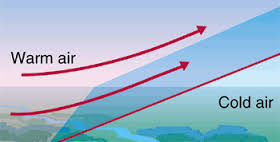


What type of front is shown?
Warm Front
Cold Front
Occluded Front
Stationary Front


This is the symbol for a _____________ weather front.
Cold
Warm
Stationary
Occluded

A _____________ weather front occurs when a cold air mass moves forward, pushing the warm air mass up.
Cold
Warm
Stationary
Occluded

A _____________ weather front occurs two cold air masses meet and push/force the warm air in the middle upwards.
Cold
Warm
Stationary
Occluded
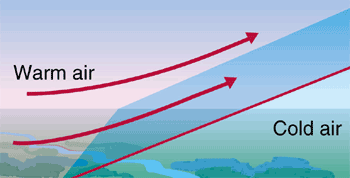
Why does warm air rise above cold air?
Warm air is less dense
Warm air is more dense
Cold air is stronger than warm air

Which type of weather front can produce foggy weather that can last for several days?
Cold
Warm
Stationary
Occluded

Which type of weather front can produce precipitation (rain or snow)?
Cold
Warm
Stationary
Occluded
All of the above
What type of weather will you see along a cold front?
Thunderstorms
Sunny skies
Gentle rain
No weather

What type of front is over Texas?
warm front
cold front
stationary front
occluded front
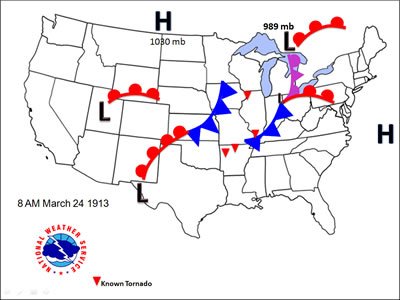
What type of front is over Ohio?
Warm front
Cold front
Occluded front
Stationary Front
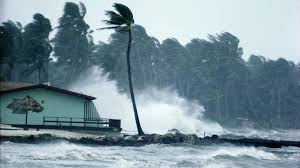
The name of the system that causes the winds to spin in a hurricane
The Coriolis Effect
The Corleone Affect
The Circular Wind Phenomenon
The East-West Effect

Who is the scientist who proposed Continental Drift Theory?

Alfred Wegener named his single supercontinent ____________, which means "all Earth" in ancient Greek.
Pandora
Gandowandaland
Pangea
Percia
The Theory of Pangea
The Theory of Moving Continents
The Theory of Continental Drift
The Theory of Techtonic Plates

What type of fossils were noticed by Wegener to be found on two different continents?

True or False: The continental plates move so quickly that we can feel them.
True
False

Most geologists think that the movement of Earth's tectonic plates is caused by
the rotation of the Earth.
the Earth's magnetic field.
subduction.
convection currents.

When plates collide we get ________.
crumbles
volcanos
trenches
mountain ranges


Which layer of Earth flows slowly and causes the crust to move?
Crust
Mantle
Inner Core
Outer core

What is the correct order (starting from the surface) of Earth’s layers?
crust, outer core, inner core, mantle
mantle, outer core, inner core, crust
crust, mantle, outer core, inner core
outer core, inner core, crust, mantle

When tectonic plates slide against each other causing the earth to move.

Subduction means.....
one plate goes under another plate
two plates slide past each other
two plate collide and form folded mountains

Sea-floor spreading explains how.....
new crust is created at a divergent boundary
volcanoes are formed on continents
deep sea trenches are formed
An opening on the Earth's crust through which hot molten rock flows out from deep inside the Earth.
Volcano
Fault line
Fold
Crater

Describe the most likely relationship between these mountains and nearby tectonic plates.
The mountains are probably formed by earthquakes
The mountains are probably formed by the movement of glaciers
The mountains are probably located near the edge of 2 tectonic plates.
The mountains are probably formed by running water.

Is there a pattern to the locations of earthquakes and volcanoes around the globe?
No, earthquakes and volcanoes are random.
Yes, earthquakes and volcanoes usually occur near the boundaries of tectonic plates.
yes, earthquakes and volcanoes usually occur in the middle of tectonic plates.
No, earthquakes and volcanoes usually occur under water.

Most earthquakes tend to occur at which location?
The central regions of very large continents
Groups of islands farthest from any continents
The boundaries between continents and oceans
The steep slopes of the very oldest mountains

A map is provided that presents information on a certain region of the Earth. Based on the information on the map, at which location are mountains most likely to form?
A
B
C
D

The Ring of Fire is an area where a large number of earthquakes and volcanic eruptions occur. What claim can be made about the Ring of Fire from this information?
It is the only place on Earth where earthquakes can happen.
The edges of the tectonic plates are moving in this area.
It represents the areas where tectonic plates are the thickest.
It has been getting larger since Earth first formed.
Tectonic plates:
can move towards each other
can move away from each other
can slide past each other
All of the above
What happens at a divergent boundary?
Crust is destroyed
Crust is created
Crust is neither created nor destroyed


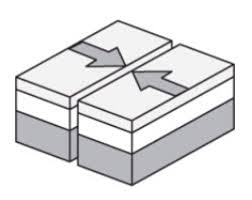

Water sinking into the Earth's surface
runoff
discharge
infiltration
capillary action
When water moves over the Earth's surface (streams/puddles)
runoff
permeability
infiltration
porosity
The land area that supplies water to a river system
Most incidents of pollution are deliberately caused by______.
humans
machines
animals
_____________________ is the contamination of air, land, and water.
Conservation
Ecology
Pollution

Sludge run off from factories and industries is an example of _______ pollution.
air
land
water
Exhaust from vehicles is one of the largest forms of air pollution. What can communities do to reduce air pollution from vehicles?
Fine people that own cars.
Encourage people to walk, ride a bike, or carpool.
Charge more money to buy a car.
Coral reefs are endangered by...
climate change
pollution
overfishing
all of the above
What causes coral bleaching?
oil spills
overfishing
warmer water temperatures
red tide
What causes coral bleaching?
oil spills
overfishing
warmer water temperatures
red tide
An algal bloom is the rapid growth of a population of
fungi
protozoans
algae

In general, algal blooms occur when
toxins accumulate in shellfish.
nutrients decrease in the water.
nutrients increase in the water.
Eutrophication is
too few nutrients in a body of water.
too many nutrients in a body of water.
high acid levels in a body of water.
high alkalinity levels in a body of water.
An area in the ocean that becomes contaminated with fertilizer, over grows algae, becomes oxygen depleted, and causes many marine life to die-
deadzone
end zone
gulf
runoff
The water that drains or flows off, such as rain that flows off from the land into streams and eventually the ocean...
runoff
overfishing
invasive species
marine algae

How do the oceans contribute to the amount of Oxygen in the Earth's atmosphere?
Fish in the ocean produce oxygen.
Phytoplankton in the ocean produce oxygen through the process of respiration.
Phytoplankton in the ocean produce oxygen through the process of phtosynthesis.
There is no oxygen production in the ocean.
Which of the following is NOT a source of pollution in the ocean?
Fertilizers used on land.
Sand drifting along the bottom of the ocean floor.
Oils found on city streets.
Emissions from gas-burning vehicles.

Review the graph showing marine fishing rates.If the fishing rate in Asia continues to grow, what will most likely happen as a result?
The fish population will continue to rise.
A wide range in ocean temperatures will be seen worldwide.
The U.S. human population will decline.
The overfishing will cause an imbalance in marine ecosystems.
What is one way humans are trying to positively impact the ocean?
Fishing
Drilling for oil and natural gas
Creating artificial reefs
Transporting goods in ocean vessels

An artificial reef is a man made structure that may mimic some of the characteristics of a natural reef.
True
False
Which process is responsible for carrying fertilizers that have been applied to crops into bodies of water, such as a river?
Runoff
Evaporation
Ocean Currents
Tectonic Plate Movement
What do we depend on the ocean for?
Food
Oxygen
Transportation
All of the above
What are some positive things that we can do to help ocean ecosystems?
Over-fishig
creating artificial reefs
Recycle
Both B and C
The process of taking fish out of the ocean before they have a chance to reproduce is called?
Invasive species
Over-fishing
Artificial reefs
Recycling
A species that enters an area from somewhere else and causes disruptions to the native ecosystem?
Over-fishing
Artificial reefs
Invasive species
Runoff
Humans depend on the ocean for:
Transportation
Oxygen
Food
Weather
All of the Above

Coral reefs are endangered by
climate change
overfishing
pollution
all of the above
Some areas of an ocean are known as dead zones. These zones form when excess organic material decomposes. This increased decomposition uses up the oxygen from the water.
Which human activity is most affected by the increasing number of dead zones in the ocean?
Offshore oil drilling, because water in dead zones is toxic
Commercial fishing, because fish cannot survive without oxygen
Commercial shipping, because dead zones change the course of ocean currents
Sand mining, because oxygen is not available to form the sands on ocean beaches
A costal area that once supported a thriving fishing industry is overfished. The number of species found living in the marine ecosystem decreases.
Building artificial reefs and limiting fishing activity
Introducing non-native species to fill unoccupied habitats and banning fishing
Building artificial reefs and increasing fishing activity
Eliminating non-native species and encouraging fishing for large predatory fish
Which of these human activities is most likely to cause the excessive growth of phytoplankton in the world's oceans?
The use of chemical fertilizers that are carried by runoff into rivers
The logging of old-growth forests, which results in erosion
The spraying of chemical herbicides that reduce carbon dioxide in the air
The mining of fossil fuels, which requires digging underground tunnels
Biotic factors are...
living things
non-living things
undead things
Abiotic factors are...
living things
non-living things
undead things
Some examples of biotic factors would be
trees
insects
bacteria
all of the above
Which of these is NOT an abiotic factor?
water
temperature
grass
soil
What might living organisms compete for?
shelter
food
water
all of the above
Which of the following is an abiotic factor that plants depend on?
seed-eating birds
insect pollinators
ants building their nests in trees
nutrients in the soil
Which of the following is a biotic factor?
humans
bridges
roads
water
Which of the following is an abiotic factor that could be used for shelter?
a tree
a bush
a bridge
a field of corn
What makes up an environment?
only biotic factors
only abiotic factors
both biotic and abiotic factors
neither biotic nor abiotic factors
Which choice is an example of a relationship between an abiotic factor and a biotic factor?
sun shining on a tree
bacteria infecting an organism
a lion eating a zebra
a bird eating seeds

In the food chain pictured, what type of organism is the bird? (a)
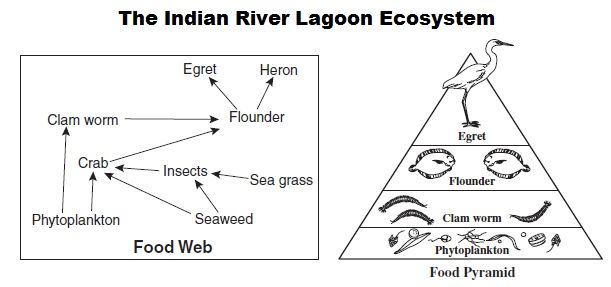
Which of the following has the largest population in the Indian River Lagoon system?
Crab
Egret
Flounder
Phytoplankton
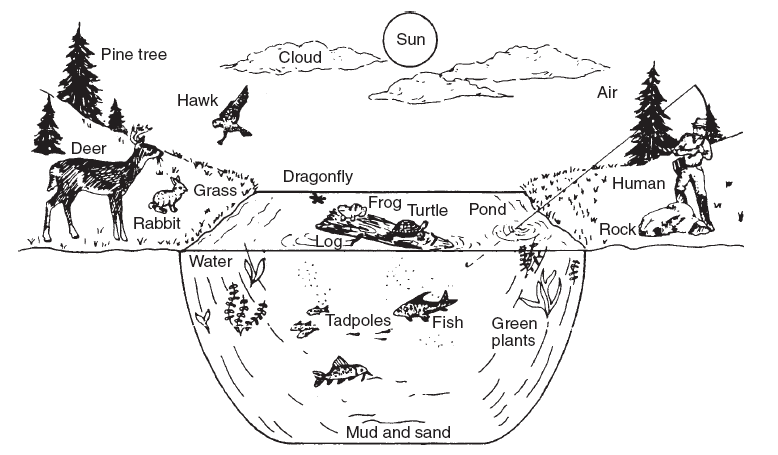
What is the primary source of energy for the ecosystem pictured above?
Grass and Green plants
Hawks and Deer
Tadpoles and Fish
Sun
How much energy is available to be passed on to the next level in a food web? (a)

The diagram below shows a desert food web.
How will a large decrease in the number of rats impact the food web shown above?
There will be an increase in the number of ants, tarantulas, and snakes.
There will be an increase in the number of snakes, coyotes, and hawks.
There will be a decrease in the number of snakes, coyotes, and hawks.
There will be a decrease in the number of cacti and sagebrush plants.

Analyze the food web above. Which animal receives the most energy originally produced by the plants in the food web?
rabbit
frog
owl
snake

Which of the following statements best describes the flow of energy in the energy pyramid above?
As you go higher in the pyramid, the amount of energy increases.
There is less energy in a producer level than a consumer level.
There is no energy above the level of producers in the system.
Each group receives only a small amount of the energy from the level below it.

Only (a) of energy is given to the next trophic level. (b) is eliminated as waste heat.
fly → frog → snake → alligator
The arrows indicate the direction of the flow of
energy.
water
oxygen
carbon dioxide


a
b
c
d
Which takes longer, primary or secondary succession?
Primary Succession
Secondary Succession
What are the species called that appear first during primary succession?
Pioneer Species
New Species
Alpha Species
Mature Species
True or false: humans can be the cause of secondary succession
True
False
After a volcano destroys the land, ________________ succession takes place.
Secondary
Primary
Tertiary
Important
A pattern of change after existing ecosystem is destroyed, such as clearing for farming.
Evolution
Secondary Succession
Primary Succession
Primary succession takes ____________ time than secondary succession.
More
Less
Same
A new island is formed after a volcano erupts.
What is the order that things would grow?
Tree, grass, moss
Lichen, Grass, Shrub, Tree
Lichen, Shrub, Moss, Tree
Shrub, grass, moss, tree
What type of organism would typically grow on bare rock?
Moss and lichen
Grass
Oak trees
Shrubs
Primary succession occurs in an area that has:
soil
no soil
some soil
none of these
___ are the first organisms to colonize an area and begin the process of ecological succession.
foundational organisms
introductory organisms
primary organisms
pioneer species
What is the main difference between primary and secondary ecological succession?
Primary begins WITHOUT soil; Secondary begins WITH soil
Primary is the first state and secondary is the second stage
Primary builds plant community; secondary builds animal community
Primary begins WITH soil; Secondary begins WITHOUT soil
What is an example of a disturbance that could bring about secondary succession?
Humans cut down many trees in a small region
A volcanic eruption covers a village in lava.

During a forest fire most vegetation (plants) burn. Which ecological succession will take place after a forest fire?
Primary
Secondary

When lichens die what happens to them?
They are blown away by the wind
They float down the river
They decompose adding small amounts of organic matter to the rock to make soil
They made flowers and animals


An ecosystem with a large number of individuals can have a low biodiversity.
True
False

Why is biodiversity in an ecosystem so important?
Because it can help humans where to determine good places to develop farm land.
Because places that have a healthy biodiversity are unaffected by major disturbances.
Because having a high biodiversity allows for fewer opportunities of competition for similar resources.
Because having a high biodiversity allows ecosystems to withstand disturbances (major changes).

When there is higher biodiversity...
more organisms are likely to die because they can't adapt to environmental changes.
there is more diversity and higher sustainability of life.
there is less diversity.
there is more diversity and lower sustainability of life

A small marine area has phytoplankton as its only producer. Should the marine biologist be concerned about this ecosystem?
No the fish do not need the phytoplankton. Since there are so many fish, there is high biodiversity.
Yes, this system has high biodiversity; however the fish can adapt and get food from another source.
Yes, this ecosystem has low biodiversity. Without a producer the herbivores will die out leaving no food.
Yes, the fish will overate to get all of the phytoplankton that is left, then they will die.

Which do you think has a higher species diversity biodiversity, a food chain or a food web?
Food Chain
Food Web

Which of the following terms describes an ecosystems ability to survive or rebound from a major change?
Disturbance
Adaptations
Resiliency
Biodiversity

Which of the following terms describes any major changes that may occur to an ecosystem?
Disturbance
Adaptations
Resiliency
Biodiversity

