
 Worksheets
PS CH 20,24 Review
Total questions: 195
Worksheet time: 4hrs 27mins
the ability of a material to be stretched into a wire
Elasticity
Solubility
Ductility
Malleability
a measure of how easily a material allows electrical current to flow through
Stiffness
Passivity
Toxicity
Conductivity
The tendency of a liquid to keep from flowing
Passivity
Toxicity
Slippery
Viscosity
A measure of a material's ability to damage or disrupt the metabolism of living tissue
Toxicity
Passivity
Elasticity
Resistivity
failure by sudden fracture, characteristic of ceramic materials
Brittleness
Hardness
Strength
Failure
the ability to absorb force and flex in different directions
Ductility
Viscosity
Elasticity
Density
The expansion of all materials when heated and contract when cooled.
Thermal expansion
Plastic deformation
Dielectric strength
Thermal conductivity
A material's ability to catch fire and burn; important for organic materials and reactive metals.
Thermal conductivity
Conductivity
Combustibility
Toxicity
A material's ability to withstand degradation from acids, solvents, water, or oxygen.
Chemical resistance
Toughness
Tensile strength
Biocompatibility
The temperature at which a liquid begins to form as a material is heated.
Melting point
Freezing point
Boiling point
Hollow point
The ability of a material to be reshaped in all directions without failure; sometimes called workability; an important characteristic of metals.
Brittleness
Flexible
Ductility
Malleability
The maximum strength, in tension (pulling), that can be absorbed without fracturing, breaking, or snapping.
Biocompatibility
Tensile strength
Flexural strength
Plastic deformation
Use in or on the human body without eliciting a rejection response from the surrounding body tissues.
Malleability
Resistivity
Toxicity
Biocompatibility
Assembly
the process of reusing nonrenewable materials
the process of putting parts together during the manufacturing process
the property that describes how much air or water a material will absorb.
the movement of light through a material or object
Composite
tiny, crystalline grains visible when looking at a fresh metal sample through a microscope
formed by combining two or more materials to make a new material with a different set of properties
objects made from clay or other combinations of minerals baked at high temperature
the property that describes how much air or water a material will absorb.
The process of reusing nonrenewable materials
Ductility
Shearing
Recycling
Chemical bond
Ceramics
Materials that undergo a permanent change in shape or size when subjected to a particular amount of stress
The property that describes how much air or water a material will absorb.
Describes a material's ability to return to its original shape after being stretched
Objects made from clay or other combinations of minerals baked at high temperature
Renewable
rough sketches, the first design step
the force that holds two atoms together
the process of reusing nonrenewable materials
A natural resource that can be replaced
Material made of a mixture of cooper and tin or aluminum
Silver
Nickel
Bronze
Gold
Expose a sample of material to heat in order to test it's ______ property
Optical
Elasticity
Ductile
Thermal
Which of these materials is a good conductor of heat?
Wood
Ceramic
Metal
What are the three classification of materials?
Metals, Ceramics and Polymers
Plastic, Rubber and Glass
Carbon, glass and foam
None of the above
Categorize all these type of primary bonds
one (1) or more electrons are transferred from one (1) atom to the other
produced from sharing of electrons between adjacent atoms
each atoms supplies one (1) or more electrons that drift throughout the entire metal
Produce from electrostatics force between ions of opposite charge (+ -)
at least one (1) atom donating one electron to be shared with adjacent atom.
formed in metals & their alloys
an atom which loses the electron becomes positively charge (cation)
bonding force produced from attraction between shared electron
valence electrons are not tied to any particular atoms
Organize these examples of materials around us.
Porcelain
Crucibles
Pottery
Wall tiles
Polyvinyl Chloride
Polypropylene
Polyvinylidene Flouride
Polytetrafluoroethylene
Which material is made by joining many smaller units together?
composite
metal
polymer
ceramic
You need to build a prototype of a design and need to choose a material that is strong and able to withstand the outdoor elements. You are not concerned about cost. Which type of material should you choose?
Plastic
Wood
Metal
The engineering materials known as plastics are more correctly called
polyvinyl chloride
polymers
polyethylene
mers
These materials must not produce toxic substances and must be compatible with body tissues. Choose the right answer for this materials.
Metal
Composites
Biomaterials
Semiconductor
Which term describes a material that fractures without plastic deformation first?
Elastic
Ductile
Brittle
Malleable
Material Science is the study of
atmospheric gases
liquids and gases
solids
plasma
Ceramics and glass are usually placed in the same general category because
of similar properties
they have the same structure
they are both transparent
they have metallic bonding
The four categories of materials science are metals, ceramics, __________, and composites.
nonmetals
plastics
wood
polymers
The primary component in glass is ________.
sodium
silicon dioxide
iron
copper oxide
A mixture of metals usually made by heating metals together is a(n) ________.
ore
ionic compound
slurry
alloy
A mixture of compounds in the earth in which metals are found are called __________.
ore
ionic compounds
slurry
alloy
What is an alloy
A mixture of metals and gas
A mixture of carbon and steel
A homogeneous mixture of metals and sometimes non metals
mixture of nonmetals
Why are metals alloyed?
To improve the appearance of a metal
To make them less likely to corrode
To reduce the amount of iron used
To change the properties of the metal

Applied scientists or engineers must make material choices. The following are the reasons for material selection EXCEPT
economics
in-service performance
prestige
deterioration
This type of material has good workability:
Metal
Ceramic
This type of material is generally pretty brittle (breaks easily)
Metal
Ceramic
Alloy

Which type of polymer is the image above showing?
Linear
Cross-Linked
Network
Branched

Which type of polymer is the illustrated above?
Cross-Linked
Network
Branched
Linear

Which type of polymer is shown on the image above?
Cross-Linked
Branched
Network
Linear

Which type of polymer is illustrated above?
Linear
Branched
Cross-Linked
Network
What is the process to make long polymer (plastic) chains?
Fractional Distillation
Curing
Fracking
Polymerization
A chain of repeating units (called monomers)
monomer
dimer
replicate
polymer
Clay products that have been fired for permanence.
Ceramic
Bisque
Greenware
Coiling
Why is it important to consider the type of material used for a design?
Affects the cost of the design
Affects the criteria of the design
Affects the strength/durability of the design
You need to build a prototype of a design and need to choose a material that is easy to machine. Which type of material should you choose?
Plastic
Wood
Metal
You need to build a prototype of a design and need to choose a material that is strong and able to withstand the outdoor elements. You are not concerned about cost. Which type of material should you choose?
Plastic
Wood
Metal
Which type of material allows you to create unique 3D shapes?
Plastic
Wood
Metal
Many monomers attached together is called?
Wood
Paper
Cotton
nylon
styrofoam
Plastic
What is a polymer?
A polymer is a large molecule composed of repeating units called monomers.
A polymer is a small molecule composed of repeating subunits called dimers.
What happens to the melting point as polymers get longer?
Monomers of ethene in thousand numbers react together in addition polymerization to produce
polyamides
polyesters
poly(ethene)
all of them
Which of these is an example of synthetic polymer?
cotton fibers
rubber
wool
polyvinyl chloride (PVC)
Which polymers occur naturally?
Starch and Nylon
Starch and Cellulose
Proteins and Nylon
Proteins and PVC
Materials which can conduct electricity better than insulator,but not as well as conductors. This is the definition of
diode
semiconductor
conductor
insulator
superconductor
What is the most common semiconductor material used for producing integrated circuits
Quartz
Silicon
Diamond
Tantalum
Steel generally speaking is made of
iron and carbon
copper and iron
tin and carbon
aluminum and nickel
Brass is an alloy made of
copper and zinc
copper and tin
copper and nickel
copper and aluminum
Bronze is an alloy made of
aluminum and magnesium
copper and tin
lead and tin
copper and nickel
Steel can become stainless when alloyed with _____.
chromium and nickel
copper and zinc
tin and lead
iron aand carbon
Steel can become stainless when alloyed with _____.
chromium and nickel
copper and zinc
tin and lead
iron aand carbon
Can be drawn into wires
Ductile
Sonorous
Malleable
Flexible
Can be beaten into thin sheets
Ductile
Sonorous
Malleable
Flexible
Which properties of metal makes it a good choice to make a cooking pot out of? Choose TWO
it has luster - it is shiny
it is a good conductor of heat
it is ductile - able to be made into a wire
it has a high melting point
Which of the following characteristics belong to pure metals?
I. Ductile
II. Malleable
III. Brittle
IV. Good conductor of electricity
I and II
I and IV
I, II and IV
I, II, III and IV
Which of the following properties does not belong to an alloy as compared to its pure metal?
Stronger
More corrosion resistant
Harder
More malleable
Made of coarse aggregate, sand, cement and water.
Concrete
Plywood
Robotic materials
Reinforced polymers
Fibre/Carbon/Glass

What is the most important type of composite for aerospace applications?
Carbon Fibre
Glass Fibre
Kevlar
Concrete
Name a specific application for Kevlar
Body protection and armour
F1 car bodies
Run flat tyres
Sails for windsurfing
Which type of composite material is commonly used in the construction of tennis rackets?
Carbon Fibre
Glass Fibre
Kevlar
Wood
What are the properties of Kevlar?
Heavy, incredible strength, low cost
Flexible, elastic, ductile
Waterproof, rigid, low cost
Vibration absorption, incredible strength, abrasion resistance
What are the two main categories of matrix material in composites?
Polymer and Glass
Ceramic and Metal
Polymer and Ceramic
Metal and Polymer
Name one advantage of using composite materials.
Heavy weight
Limited design flexibility
High strength-to-weight ratio
Low durability
Provide an example of an application of composite materials.
Construction industry
Automotive industry
Marine industry
Aerospace industry
What are some properties of composite materials?
Composite materials have properties such as high strength-to-weight ratio, corrosion resistance, and durability.
Composite materials have low strength-to-weight ratio
Composite materials are highly susceptible to corrosion
Composite materials are not durable
To create an alloy, pure metals are ______________ with other components.
broken down
cooled
mixed

Drill bits are attached to power drills to make holes. Drill bits are made of _____________ because they are hard and resist corrosion.
alloys
ceramics
composites

The handles of power drills are made of ________________ because this is a good insulator.
alloys
composites
plastic
Which item is brittle. It shatters into many pieces .
ceramic dish
metal skillet
plastic bin
Which of the following is NOT a polymer?
paper
plywood
nylon
plastic

Using oil and gas as starting materials, you can make _______________________.
ceramic
synthetic polymer
alloy
The bodies and handles of power drills are made of ________________ because they’re good insulators.
alloys
composites
plastics
ceramics
Check each each material that is a composite.
plywood
plastic
concrete
nylon
paper
What was one of the 1st composites created?
mud bricks (straw and mud)
plywood (wood pieces and glue)
fiberglass (glass fibers, woven material, and resin)
concrete (cement, water, and rock)
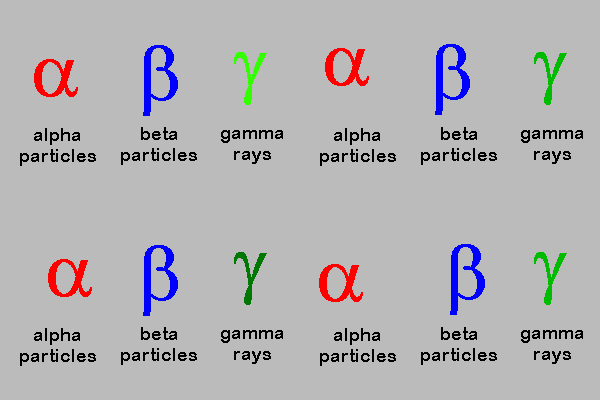
Which of these places radiation types in order from the most penetrating to least penetrating:
Alpha , Beta, Gamma
Beta , Gamma , Alpha
Gamma, Beta, Alpha
Gamma, Alpha, Beta
A nuclear reaction where an atomic nucleus splits into two smaller nuclei is called:
Fission
Fusion
Gamma decay
Beta decay
The number of electrons always reduces to zero
Usually nothing happens, unless the atom is radioactive
The atomic nucleus breaks down and decays
It becomes a completely different atom, with different properties

This picture is an example of:
Fission reaction
Fusion reaction
Decomposition reaction
Combustion
When atoms decay, massive amounts of _______ are released.
energy
photons
protons
oxygen
This type of radiation has the highest penetrating power. Even several inches thick of lead or several meters of concrete cannot stop all of it:
Alpha
Beta
Gamma
Delta
This type of radiation has the lowest penetrating power. Can only penetrate 0.05 mm into the body and can be stopped by a piece of paper or clothing.
Alpha
Beta
Gamma
Delta
Beta particles have a _____ charge.
+2
0
+1
-1
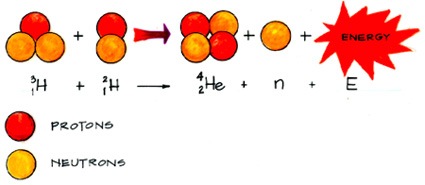

The nuclear process occurring at a nuclear power plant is:
Nuclear fusion
Nuclear fission
Combustion
Nuclear fishing
Decreases
Increases
Remains constant
Triples

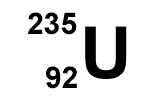
This type of decay releases high-energy photons emitted by a radioisotope:
positron decay
alpha decay
gamma decay
beta decay
What element is often used in nuclear reactions as the fuel?
Hydrogen
Uranium
Oxygen
Mercury
When hundreds of electrons are emitted causing a burst of intense electricity
When a nuclear fission reaction occurs, the protons emitted can strike other nuclei in the sample, and cause them to split
When a nuclear fission reaction occurs, the neutrons emitted can strike other nuclei in the sample, and cause them to split
When a nuclear fusion reaction occurs, the electrons emitted can strike other nuclei in the sample, and cause them to split
Inside a nuclear reactor, what object is able to absorb fast moving neutrons?
generator
moderator
control rods
sheilding
What is a huge advantage of nuclear energy?
Large amounts of radioactive waste
No CO2 air pollution
It uses renewable Uranium fuel
It is the safest way to make energy
Where is the majority of nuclear waste stored?
Buried deep under a landfill
On-site at the nuclear power plant
Under a large mountain in Montana
Underwater vaults in the Pacific Ocean
Which of the following is considered to be the worst nuclear disaster in history?
Fukushima
Three Mile Island
Chernobyl
Hiroshima
Approximately how much of US energy is produced by nuclear power?
40%
55%
10%
Less than 2%
Where does nuclear fusion occur naturally?
Underwater
On the gaseous planets
In the radioactive waste
In the Sun
The was the site of the worst nuclear accident in the United States:
Chernobyl
Three Mile Island
Fukushima
Cuyahoga
What was the original use of nuclear energy?
Nuclear energy was originally used to make weapons for war
Nuclear energy was originally planned to replace coal
Nuclear energy was originally used to provide heat for a community
Nuclear energy was originally used for electricity
Which subatomic particle is required to start a nuclear fission chain reaction?
Electron
Proton
Neutron
Atom
A major scientific concern over nuclear energy is how to--
store the waste products safely
reduce the high levels of carbon dioxide emitted into the air
deal with the large amounts of fossil fuels required
prevent the depletion of the ozone layer
When a nucleus undergoes gamma decay, the atomic number of the element....
remains the same
decreases by one.
increases by one.
increases by two.
What do these isotopes of carbon all have in common?
126C, 136C, 146C
they all have the same number of neutrons & mass number
they all have the same atomic number and neutrons
they all have the same atomic number and electrons
they all have the same number of protons, atomic number, and mass number

What can you learn about an organism by measuring the amount of carbon-14 in its remains?
How long ago it died.
What its diet consisted of.
Which biological kingdom it belonged to
Which living animals it's most closely related to.
Why can't Carbon-14 dating be used on dinosaur remains?
The remains of living creatures cannot be accurately dated with carbon-14
The carbon-14 isotope did not exist during the age of the dinosaurs.
Dinosaurs were reptiles who had no carbon-14 in their systems.
Carbon dating is only accurate to about 60,000 years ago
Carbon Dating can only be used on:
Non-living things
Things that were once living
Things that are over 10 million years old
Things that are at least 1 million years old
Which is a common isotope used in radioactive dating of organic matter?
Carbon-14
Uranium-235
Carbon-12
Iodine-43
Which characteristic of Carbon-14 dating helps scientist determine the approximate time a species became extinct?
Carbon-14 is not present in more recent fossils.
Carbon-14 increases at a constant rate over time
Carbon-14 decreases at a constant rate over time
Carbon-14 is not present in fossils
Isotopes of an element have the same Atomic Number, but different numbers of:
Protons
Neutrons
Electrons
Mass
Isotopes that are "unstable" are considered to be:
Charged
Radioactive
Extensive
Proactive
The isotopes of the atoms having an atomic number of _____ or higher are all Radioactive.
62
50
80
84
Another term for an unstable atom would be:
Actinide
Electronegativity
Radioisotope
Halogen
Damage to which molecule in the body is of greatest concern when people are exposed to ionizing radiation?
Proteins and DNA
H20
Fats
Carbohydrates
Combustion
Chemical Reaction
Radioactive Decay
Isotopic shedding

What type of radiation is released from a microwave?
Ionizing Radiation
Non Ionizing Radiation
No Radiation is released
Gamma Radiation
What is the proper scientific name for radiation that can effect other atoms and damage cells?
ionizing radiation
toxic radiation
non ionizing radiation
radioisorade
Which of the following types of radiation are Ionizing?
Infrared
Radio waves
Microwaves
Ultraviolet
X-Rays
Which of the following are symptoms of Acute Radiation Sickness?
Nausea
Vomiting
Dizziness
All of the these
Which of the following would do the MOST bodily damage if inhaled or swallowed?
Alpha particles
Beta particles
Delta particles
Gamma rays
Which of the following images correctly represents what nuclear waste actually looks like?


Which of the following responses best describes how a "Nuclear Meltdown" occurs?
When temperatures get too high in the summer, the sides of the reactor building begin to melt
The burning of gas inside the plant become too hot for the pipes and the pipe metal begins to liquify
The chain reaction of fission becomes uncontrolled and overheats the water in the reactor, which can melt the fuel rods
The chain reaction of fusion becomes uncontrolled and the control rods begin building high pressures until the propane fuel ignites
The disaster at the Chernobyl power plant occurred in the country of (a) in (b) of (c) .
Which type of fuel is most commonly used in nuclear power plants? (a)
The Three Mile Island Disaster occurred in which US state?
New York
Pennsylvania
Delaware
Massachusetts
What is one of the positive qualities of nuclear waste?
It usually dissolves completely within 2 years
It can be dumped into the ocean with no damage to the environment
It is only dangerous to humans who are very young or very old
It slowly becomes less dangerous over many years
146C --> 0-1e + ________

What type of decay is shown in this equation?
alpha decay
beta decay
gamma emission
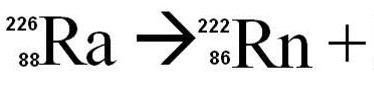
What particle completes this reaction?


85209At = ___ + 24He
614C = ___ + -10e

What type of decay type is shown by this generic equation?
alpha decay
beta decay
gamma emission
fission

What type of decay type is shown by this generic equation?
alpha decay
beta decay
gamma emission
fission

What type of decay type is shown by this generic equation?
alpha decay
beta decay
gamma emission
fission

6027Co = ___ + 0-1e
20985At = ___ + 42He
94Be + 11H → _____ + 42He

What particle completes this reaction?
42He
0-1 e
00Y
178O

What particle completes this reaction?
42He
0-1 e
00γ
178O

What particle completes this reaction?
42He
0-1 e
00Y
178O
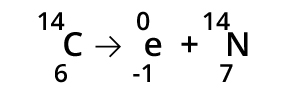
What type of nuclear equation is this?
fusion
fission
alpha decay
beta decay
The half-life of a radioactive isotope is 20.0 minutes. What is the total amount of a 1.00-gram sample of this isotope remaining after 1.00 hour?
0.500g
0.333g
0.250g
0.125g
Gamma rays have
no mass
a huge mass
a small mass
an average mass
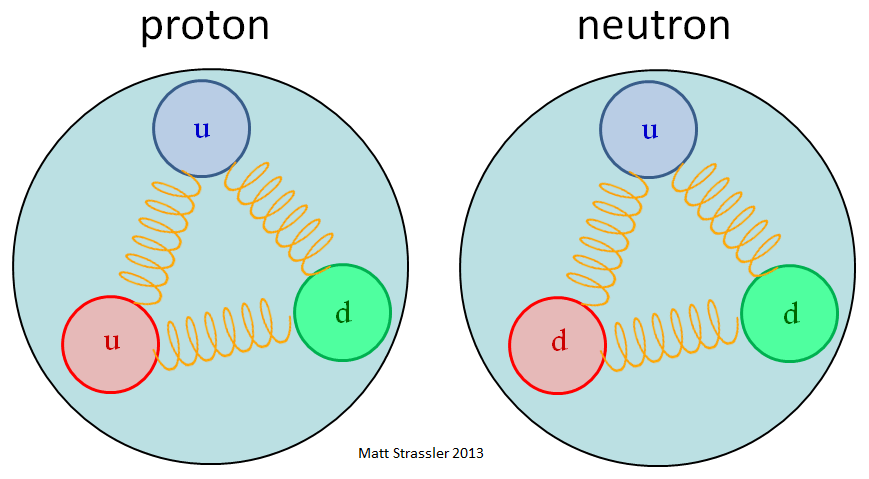
During beta-particle emission, a neutron splits into a____________________.
proton and electron
neutron and electron
neutron and proton
Has the lowest penetrating power. Can only penetrate 0.05 mm into the body and can be stopped by the skin.
Electron capture


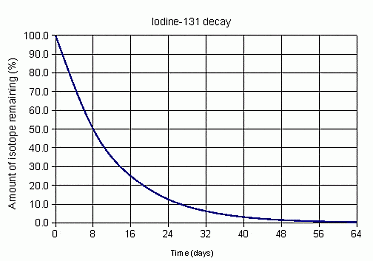
The % of the parent isotope remaining after 2 Half Lives.
50%
25%
12.5%
6.25%

