wayground logo

Free Printable Worksheets

Font size

S
M
L
XL
Worksheets

Just do the quiz

Total questions: 191

Worksheet time: 6hrs 28mins

Name
Class
Date
1.

What is Hydrogen and Oxygen combined in it's gas form

a)

H2O

b)

Nitrogen

c)

Water

d)

Water vapor

2.
How many protons does Carbon have?
a)
3
b)
4
c)
5
d)
6
3.
Density is...
a)
the amount of mass in an object
b)
the amount of space an object takes up
c)
the amount of mass in a given space
d)
the weight of an object
4.
Negatively charged part of an atom located in levels outside the nucleus
a)
Proton
b)
Neutron
c)
Electron
d)
Neutron
5.
How many ATOMS are in the following compound:  C2H4O2
a)
3
b)
8
c)
1
d)
6
6.

What instrument do you use to measure wind direction?

a)

Barometer

b)

Anemometer

c)

Wind Vane

d)

Thermometer

e)

Wind Sock

7.
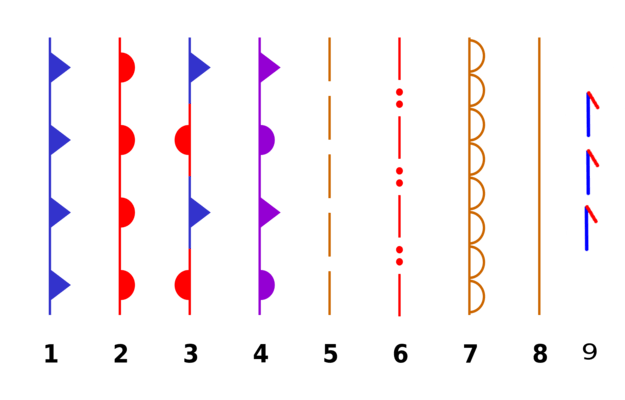
What does symbol # 3 mean?
a)
stationary front
b)
occluded front
c)
warm front
d)
cold front
8.
A front is
a)
where warm air is cooling at earth's surface
b)
a line where hot and cold air are separating
c)
a line where two different air masses meet
d)
where cold air is rising and forming rain clouds
9.
Which front leads to steady rain for several days?
a)
warm front
b)
cold front
c)
stationary front
d)
occluded front
10.
___________is the result of the weight of a column of air pushing on an area.
a)
air pressure
b)
density
c)
volume
d)
none of the above
11.
Heat transfer between two substances that are in contact with each other is called
a)
conduction
b)
convention
c)
convection
d)
radiation
12.
Pressure is the effect of
a)
the weight of all the air above pressing down
b)
water vapor in the atmosphere
c)
greenhouse gases
d)
solar radiation
13.
Which gas in our atmosphere is most abundant?
a)
Argon
b)
Oxygen
c)
Nitrogen
d)
Carbon Dioxide
14.
The air in the troposphere has a greater density than the air in any other layer of the atmosphere,
a)
True
b)
False
15.
What causes the temperature to increase in the stratosphere?
a)
Nitrogen
b)
Ozone
c)
Water Vapor
d)
carbon dioxide
16.
What decreases as you go up in the atmosphere?
a)
Altitude
b)
Atmosphere
c)
Meteors
d)
Air Pressure
17.
Where is the temperature the highest?
a)
1
b)
2
c)
3
d)
4
18.
Which of the following is NOT a reason why the atmosphere is important?
a)
It is made of many layers.
b)
It provides gases living things need.
c)
It provides warm temperatures.
d)
It protects us from UV rays and meteors.
19.

Why is the Thermosphere and Stratosphere different from the Troposphere and the Mesosphere?

a)

The troposphere and mesosphere help conduct our weather more than the Stratosphere and Thermosphere.

b)

The Troposphere and Stratosphere are hotter than the Troposphere and Mesosphere.

20.

THE ATMOSPHERE IS MADE OF

a)

GASES

b)

ROCKS

c)

LAVA

d)

METAL

21.

Two teams are playing tug of war and 1 team pulls with a net force of 300m to the left and the other team is pulling with 168m of force to the right.What is the net force?

a)

144m to the right

b)

132m to the left

22.

Which number in the ordered pair, (-4, 5) represents the x-value?

a)

-4

b)

5

23.

Which number in the ordered pair, (-4, 5) represents the x-value?

a)

-4

b)

5

24.
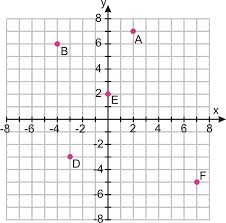
Where is point A located?
a)
( 7 , 2 )
b)
( 2 , 6 )
c)
( - 2 , 7 )
d)
( 2 , 7 )
25.
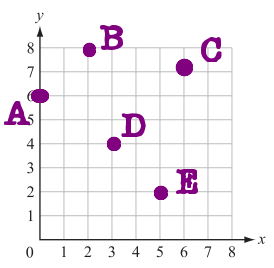
What is the ordered pair for C?
a)
(-6, 7)
b)
(2, -4)
c)
(-8, 2)
d)
(2, -8)
26.
When plotting the point, (-4, 3), which describes the movement along the x-axis and y-axis in the correct order? 
a)
4 units right then 3 units up
b)
4 units down then 3 units left
c)
4 units left then 3 units up
d)
4 units up then 4 units right
27.

Where is the point (-5,0) located?

a)

Quadrant II

b)

Quadrant III

c)

y axis

d)

x axis

28.

Point A is also located at the __________________.

a)

w-axis

b)

start

c)

origin

29.

Point C is located in which quadrant?

a)

Quadrant I

b)

Quadrant II

c)

Quadrant III

d)

Quadrant IV

30.

What are the ordered pair of Point C?

a)

(2,3)

b)

(0, 2)

c)

(2, 2)

31.

Point H is also located in which quadrant?

a)

Quadrant I

b)

Quadrant II

c)

Quadrant III

d)

Quadrant IV

32.

What is the ordered pair for point H?

a)

(3,4)

b)

(4,3)

c)

(4,-3)

33.

What is the distance between Point F and Point A?

a)

8 units

b)

5 units

c)

12 units

34.
On the coordinate plane, which line is the x-axis?
a)
Horizontal Line (Side to Side)
b)
Vertical Line (Up and Down)
35.
Ordered pair (0,0) is also known as the ___.
a)
y-axis
b)
x-axis
c)
origin
36.
Where is Point A on the coordinate plane?
a)
(7,4)
b)
(1,3)
c)
(9,3)
d)
(4,7)
37.
What is the ordered pair for the hat?
a)
(-1,-3)
b)
(3,1)
c)
(-3,-1) 
d)
(1,3) 
38.
a)
b)
c)
d)
39.

The equation y = 1.5x can be used to determine y, the number of cups of water needed to cook x cups of rice. Which table shows the relationship between x and y?

a)
b)
c)
d)
40.

Which graph correctly shows Robin's rule?

a)
b)
c)
d)
41.
What is coordinate R?
a)
(2,5)
b)
(0,1)
c)
(2,3)
d)
(1,0)
42.
What is the ordered pair of point E?
a)
(2,5)
b)
(5,2)
c)
(-5,2)
d)
(5,-2)
43.

Which graph best matches this input/output table?

a)
b)
c)
d)
44.

What is the main vertical line called on a Cartesian plane?

a)

x-axis

b)

y-axis

c)

z-axis

d)

North

45.
What type of energy do the bowling pins have?
a)
kinetic
b)
potential
c)
nuclear
d)
chemical
46.
If the man and the ball travels 90 m in 9 seconds, what is their average speed?
a)
10 m/s
b)
99 m/s
c)
180 m/s
d)
10 meters
47.
Which speed is the fastest?
a)
25 km/hr
b)
38 km/hr
c)
72 km/hr
d)
95 km/hr
48.
This game of tug of war is an example of _________ forces. 
a)
unbalanced
b)
balanced
c)
potential
d)
net zero
49.
What will the net force on the soccer ball be?
a)
50 N to the left
b)
50 N to the right
c)
200 N to the left
d)
200 N to the right
50.
The girls in this picture represent ________ forces. 
a)
kinetic
b)
balanced
c)
unbalanced
d)
chemical
51.
Person on the left = 45 N
Person on the right = 32 N
What is the net force?
a)
zero N
b)
10 N
c)
77 N
d)
13 N
52.
This motion graph represents:
a)
constant speed
b)
body at rest 
c)
acceleration
d)
slowing down
53.
This motion graph represents:
a)
constant speed
b)
acceleration
c)
body at rest
d)
slowing down
54.
What was Juan's average speed?
a)
0.3 mi/min
b)
3.25 mi/min
c)
4 mi/hr
d)
4 hours
55.
Which force produces a change in motion?
a)
unbalanced force
b)
balanced force
c)
gravitational force
d)
frictional force
56.

How do you calculate work

a)

Work/Time

b)

Force * Distance

c)

Work/distance

d)

Work/Force

57.

True or false

You do work when you mannequin pose with an object in your hand.

a)

true

b)

false

58.

Two factors that determine work are

a)

force

b)

acceleration

c)

mass

d)

distance

e)

velocity

59.

units of force are

a)

newtons

b)

grams

c)

joules

d)

meters

60.

units for work are

a)

newtons

b)

joules

c)

meters

d)

seconds

61.

if you push a cart with a force of 60 N for 2 m... how much work have you done

a)

120 J

b)

30 J

c)

120 N

d)

30 N

62.
work transfers
a)
sweat
b)
energy
c)
velocity
d)
effort
63.

Fred kicks a ball with a force of 20N to George, who is 5M away. How much work was done to the ball?

a)

25J

b)

100J

c)

4J

d)

75J

64.
Gravitational potential energy depends on the ________ and ________ of the object. 
a)
Height and mass
b)
Friction and movement
c)
Mass and Movement
d)
Height and Friction 
65.
At which point is kinetic energy greatest? 
a)
W
b)
X
c)
Y
d)
Z
66.
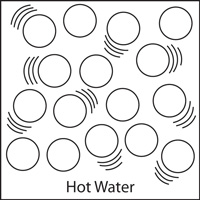
At higher temperatures
a)
particles in an object have less energy
b)
particles in an object move faster
c)
a gas contracts
67.
A gas
a)
has a definite shape but no definite volume
b)
has a definite volume but no definite shape
c)
has fast-moving particles
68.
Freezing
a)
Solid to gas
b)
Liquid to solid
c)
Gas to solid
d)
Liquid to gas
69.
Boiling
a)
liquid to gas
b)
gas to solid
c)
gas to liquid
d)
solid to liquid
70.
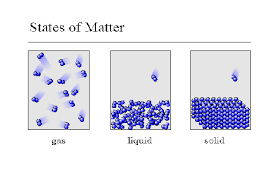
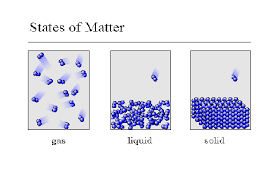
Which state of matter has tightly packed molecules?
a)
solid
b)
liquid
c)
gas
71.
Which state of matter has a definite shape?
a)
solid
b)
liquid
c)
gas
72.
What is happening when my ice cream changes from a solid to a liquid?
a)
freezing
b)
melting
c)
burning
d)
evaporation
73.
The state of matter that has no definite size or shape is
a)
Solid
b)
Liquid
c)
Gas
74.
Particles (molecules) in a ______________________ have more energy than the other states of matter.
a)
gas
b)
solid
c)
liquid
75.
Particles of a liquid
a)
are tightly packed together and stay in a fixed position.
b)
have no viscosity.
c)
decrease in volume with increasing temperature.
d)
are free to move around one another but still touch.
76.
The speed of the molecules determines the _____.
a)
volume
b)
density
c)
pressure
d)
temperature
77.
A physical change is...
a)
a change that doesn't change the identity
b)
a change that makes something new.
c)
a chemical reaction
78.
Which thing in this picture represents a gas? 
a)
ice cubes
b)
bubbles 
c)
soda
79.
What does this tool measure?
a)
time
b)
distance
c)
mass
80.
Which of the following changes liquid water into gas?
a)
boiling
b)
freezing 
c)
melting
81.
When a stick of butter melts it changes from a...
a)
solid to gas
b)
gas to solid
c)
solid to liquid
82.
What will happen when the thermometer is placed in hot water?
a)
The temperature will go higher
b)
The temperature will go lower
c)
The temperature will stay the same
83.
A chameleon can stretch his tongue more than 3 times the length of his body.
a)
True
b)
False
84.
How many muscles do you have in your body?
a)
650
b)
300
c)
425
d)
273
85.
Bats cannot walk.
a)
True
b)
False
86.
What is this called?
a)
Food Web
b)
Food Chain
c)
Abiotic Factors
87.
Examples of a producer
a)
frog
b)
algae
c)
worm
d)
mouse
88.
The way energy is passed from one organism to another
a)
food chain
b)
energy
c)
extinct
d)
habitat
89.
Animals hibernate in ______________.
a)
winter
b)
spring
c)
summer
d)
fall
90.
An animal can blend in with its surrounding by using __________________
a)
migration
b)
camouflage
c)
hibernation
d)
prey
91.
H is the chemical symbol for which element?
a)
Helium
b)
Hydrogen
c)
Mercury
92.
K is the chemical symbol for which element? 
a)
Krypton
b)
Potassium
c)
Knox
93.
Ca is the chemical symbol for which element? 
a)
Carbon
b)
Chlorine
c)
Calcium
94.
Fe is the chemical symbol for which element? 
a)
Freon
b)
Iron
c)
Flourine
95.
K is the chemical symbol for which element? 
a)
Krypton
b)
Potassium
c)
Knox
96.

A pure substance that can be broken down into two or more elements only through chemical means.

a)

compound

b)

element

c)

chemical formula

d)

atom

97.
He is the chemical symbol for which element? 
a)
Heehaw
b)
Helfion
c)
Helium
98.
Si is the chemical symbol for which element? 
a)
Silicon
b)
Sodium
c)
Sulfur
99.
O is the chemical symbol for which element? 
a)
Osmium
b)
Odell
c)
Oxygen
100.
N is the chemical symbol for which element? 
a)
Sodium
b)
Nitrogen
c)
Nickel
101.
What organelle directs cell activities?
a)
cell membrane
b)
cytoplasm
c)
lysosome
d)
nucleus
102.
What cell organelle transports proteins, and breaks down drugs in the cell but does not contain ribosomes?
a)
rough endoplasmic reticulum
b)
smooth endoplasmic reticulum
c)
golgi body
d)
mitochondria
103.
What cell organelle is the powerhouse of the cell and produces energy from sugar through chemical reactions (cellular respiration)?
a)
smooth endoplasmic reticulum
b)
rough endoplasmic reticulum
c)
mitochondria
d)
chloroplast
104.
What cell organelle is responsible for photosynthesis?
a)
mitochondria
b)
chloroplast
c)
nucleus
d)
cell membrane
105.
What is the process that happens in plants that uses sunlight to make oxygen and sugar for the plant?
a)
cellular respiration
b)
photosynthesis
c)
osmosis
d)
diffusion
106.
Which organelles are filled with enzymes that aid in intra-cellular digestion, breaking down wastes and old organelles?
a)
mitochondria
b)
Golgi body
c)
lysosomes
d)
ribosomes
107.
Tiny cell structures that carry out specific functions within the cell...
a)
membranes
b)
nucleus
c)
organelles
d)
animalicules
108.
This organelle controls what comes in or out of the cell (selectively permeability).
a)
nucleus
b)
cell wall
c)
cell membrane
d)
vacuole
109.
Function of this organelle?
a)
protein synthesis
b)
transport proteins
c)
modify, package, and ship proteins
d)
storage of water, food or wastes
110.
What compound is produced in this organelle?
a)
glucose
b)
oxygen
c)
DNA
d)
ATP
111.
Which organelle is shown?
a)
chloroplast
b)
mitochondrion
c)
endoplasmic reticulum
d)
Golgi body
112.

the body's use of molecules for energy and growth

a)

system

b)

starch

c)

metabolism

d)

protein

113.

Which is the definition for amino acids?

a)

a molecule that organisms get from the air or water around them and use to release energy

b)

molecules that are the building blocks of proteins

c)

a molecule that organisms can use to release energy, and that is made of carbon, hydrogen, and oxygen atoms

d)

a type of energy storage molecule made of many glucose molecules connected together

114.

Which is the definition for glucose?

a)

molecules that are the building blocks of proteins

b)

a set of interacting parts forming a complex whole

c)

the body's use of molecules for energy and growth

d)

a molecule that organisms can use to release energy, and that is made of carbon, hydrogen, and oxygen atoms

115.

the body system that takes in food and breaks it down

a)

stomach

b)

circulatory system

c)

digestive system

d)

respiratory system

116.

The job of the respiratory system is to...

a)

take in oxygen and release carbon dioxide

b)

take in food and break it down

c)

transport molecules to and from all cells of the body

d)

make things move or change

117.

a proposed answer to a question about the natural world

a)

evidence

b)

reasoning

c)

claim

d)

prediction

118.

information about the natural world that is used to support or go against (refute) a claim

a)

claim

b)

evidence

c)

reasoning

d)

prediction

119.

How do we get proteins and starch into our bodies?

a)

by drinking lots of water

b)

by eating certain foods

c)

by breathing in air

d)

by releasing energy

120.

Which molecules need to be broken down before entering the cell? Choose all that apply.

a)

starch

b)

amino acids

c)

glucose

d)

proteins

121.

What is blood doping?

a)

The practice of boosting the number of red blood cells in the blood stream through the storing of blood illegally.

b)

The practice of boosting the number of red blood cells in the blood system with high altitude training

122.

What are some side effects of blood doping

a)

Heart Disease

b)

Chickenpox

c)

Polio

d)

Stroke

e)

Cerebral embolism

123.
What body system protects your organs?
a)
Nervous System
b)
Cardiovascular System
c)
Respiratory System
d)
Skeletal System
124.
This system gets rid of waste.  What is it?
a)
Muscular System
b)
Urinary System
c)
Lymphatic System
d)
Endocrine System
125.
What system carries oxygen to the blood?  
a)
Cardiovascular System
b)
Respiratory System
c)
Nervous System
d)
Endocrine System
126.
Which is an example of a ball-and-socket joint?
a)
elbow
b)
knee
c)
wrist
d)
shoulder
127.
All of the following are examples of tissue except...
a)
organ
b)
muscle
c)
connective
d)
epithelial
128.
What picks up oxygen in the lungs and transports it through the body delivering it to the cells?
a)
epiglottis
b)
red blood cells
c)
white blood cells
d)
blood
129.
Which body system gives your body shape and protects most major organs?
a)
muscular
b)
cardiovascular
c)
skeletal
d)
muscular
130.
What is the function of the heart?
a)
Pump oxygen through out the body.
b)
Pump waste out of the body.
c)
Pump water to the kidneys.
d)
Pump blood through the body.
131.
The main purpose of the ____________ system is to break food particles into pieces that can be used.
a)
circulatory
b)
respiratory
c)
digestive
d)
skeletal
132.
What is the second step to the writing process?
a)
Publishing
b)
Drafting
c)
Proofreading
d)
Eating an apple
133.
What is the first step to the writing process?
a)
Finding ideas to write about
b)
Planning using a graphic organizer
c)
Getting a pencil and paper!
d)
All the above
134.

Which of the following is a complete sentence?

a)

Because night fell.

b)

Jim ate the sandwich.

c)

On a tree-lined path.

d)

In our neck of the woods.

135.

Which of the following sentences correctly uses a conjunction?

a)

I cannot play in the game until I practice more.

b)

I hid in the basement my brother was mad at me.

c)

Victor erased the answering machine message Nora would not find out.

d)

She scored a goal won the game.

136.

Which of the underlined words in the following sentence is an unnecessary qualifier or intensifier?


Many experts consider the stained glass in that church to be the very best.

a)

experts

b)

stained

c)

that

d)

very

137.

The following sentence pair can be revised into one better sentence.Choose the sentence that is the best revision.


The bicycle tire is flat.The bicycle tire is on the bike.

a)

The bicycle tire is on the bike, and the bicycle tire is flat.

b)

The flat bicycle tire is on the bike.

c)

On the bike,the bicycle tire there is flat.

d)

The bicycle tire on the bike is flat.

138.

Select the letter for the topic sentence in the following paragraph.


a. He was born in 1818. b. He was educated in the universities of Moscow and St. Petersburg. c. In 1852,he abandoned poetry and drama and devoted himself to fiction. d. Ivan Turgenev was a critically acclaimed Russian author.

a)

a

b)

b

c)

c

d)

d

139.

Which of the underlined words in the following sentence is considered transitional?


We did not catch any fish; as a result,we ate macaroni and cheese.

a)

did not

b)

any

c)

as a result

d)

and

140.

Identify the purpose of a composition with the following title:

“Good Reasons to Always Drive Safely”

a)

persuasive

b)

expository

c)

narrative

d)

descriptive

141.

Identify whether the following sentence is fact or opinion.


The voting age should be raised to 21.

a)

fact

b)

opinion

142.

Identify the correct word for the blank in the following sentence.


His black eye looked ____.

a)

bad

b)

badly

143.

Identify the correct words for the blanks in the following sentence.


We ____ put on our uniforms,but we still ____ late for the game.

a)

already, maybe

b)

already, may be

c)

all ready, maybe

d)

all ready, may be

144.

Which of the following sentences is punctuated correctly?

a)

All thirty two nine year old students carried twenty pound backpacks.

b)

All thirty-two nine year old students carried twenty-pound backpacks.

c)

All thirty two nine-year-old students carried twenty-pound-backpacks.

d)

All thirty-two nine-year-old students carried twenty-pound backpacks.

145.

Identify the correct words for the blank in the following sentence.


I would like to have the party ____ more ____ at a restaurant.

a)

hear, than

b)

hear, then

c)

here, than

d)

here, then

146.

Which of the following sentences is punctuated correctly?

a)

The professor asked, “Has anybody read ‘A Good Man Is Hard to Find’?”

b)

The professor asked “has anybody read ‘A Good Man Is Hard to Find’ ?”

c)

The professor asked, “Has anybody read “A Good Man Is Hard to Find” ?”

d)

The professor asked, “has anybody read ‘A Good Man Is Hard to Find?’ ”

147.

Which of the following sentences uses the active voice?

a)

Peter was given a laptop to use when he worked at home.

b)

The mountain was climbed by several of the bravest hikers in the group.

c)

The favors for the birthday party were provided by the restaurant.

d)

Randy and Thien won the egg toss at the state fair.

148.

Which of the following sentences correctly uses a conjunction?

a)

I cannot play in the game until I practice more.

b)

I hid in the basement my brother was mad at me.

c)

Victor erased the answering machine message Nora would not find out.

d)

She scored a goal won the game.

149.

Which word is spelled correctly?

a)

imperative

b)

impearative

c)

imapeartive

d)

immapearitives

150.

The cell membrane is mostly made of what?

a)

Membrane-spanning Proteins

b)

Surface Proteins

c)

Phospholipids

d)

Carbohydrates

151.

What are the two parts of a phospholipid?

a)

head

b)

enzyme

c)

tail

d)

hormone

152.

Cells need these molecules to be able to make energy effectively. Choose all the are needed.

a)

Amino acids

b)

Oxygen

c)

Glucose

d)

sucrose

153.

Why would it be a problem for your cells to make energy if your digestive system isn't working properly?

a)

Cells need to breathe.

b)

The molecules will not be broken down small enough to enter the cells.

c)

The amino acids would get lost.

d)

There would be oxygen loss.

154.

True or False. Cells need oxygen molecules and glucose molecules to react to make energy?

a)

True.

b)

False.

155.

Protein molecules breakdown into into ____________.

a)

glucose

b)

amino acids

c)

oxygen

d)

water

156.

Our respiratory system is responsible for delivering ________ molecules to the red blood cells.

a)

amino acid

b)

water

c)

oxygen

d)

glucose

157.

How do molecules change phase

a)

They change phase by adding or taking away kinetic energy.

b)

They change phase by shrinking the molecules.

158.
Condensation is the change of state from _______ to ______ as a result of losing heat energy.
a)
Solid, Liquid
b)
Solid, Gas
c)
Liquid, Gas
d)
Gas, LIquid
159.
Gas particles are...
a)
tightly packed.
b)
loosely bonded and flowing.
c)
free to fly in all directions.
d)
so hot that the electrons are removed from the nucleus.
160.
Which type of vaporization happens at the heat source (or the bottom)?
a)
Vaporization
b)
Boiling
c)
Evaporation
d)
Sublimation
161.
Solid particles have the _________ energy.
a)
most
b)
middle amount of
c)
least
162.
Solids have...
a)
a definite shape and volume
b)
a definite shape but no definite volume
c)
No definite shape but a definite volume
d)
no definite shape or volume
163.
Liquid particles are...
a)
tightly packed
b)
loosely bonded and flowing
c)
free to fly in all directions
d)
so hot that the electrons are removed from the nucleus.
164.
Liquids have...
a)
A definite shape and volume
b)
A definite shape but no definite volume
c)
No definite shape but a definite volume
d)
No definite shape or volume
165.
The _____ the viscosity the _____ the flow
a)
lower, slower
b)
higher, slower
c)
higher, faster
d)
lower, lazier
166.
Gas particles have the _______ energy.
a)
most
b)
middle amount of
c)
least
167.
Solids melt when solid particles _____ energy, liquids freeze when liquid particles _____ energy.
a)
absorb, release
b)
release, absorb
c)
absorb, absorb
d)
release, release
168.
When the particles in a solid are NOT arranged in a regular repeating pattern?
a)
Viscosity
b)
Amorphous
c)
Sublimation
d)
Crystalline
169.
When the volume increases, pressure of a gas will _________.
a)
increase.
b)
stay the same.
c)
decrease.
d)
explode.
170.
When temperature increases the pressure of a gas ________.
a)
increases
b)
decreases
c)
stays the same
d)
explodes
171.

Which of the following is true of solids. (You may pick more than one answer.)

a)

Atoms in a solid are tightly packed together.

b)

Atoms in a solid move very quickly.

c)

Atoms in a solid have little energy.

d)

Atoms in a solid do not move at all.

172.

What is true of freezing? (You may chose more than one answer.)

a)

Liquid turns to gas.

b)

Solid turns to liquid.

c)

Liquid turns to solid.

d)

Thermal energy is lost.

e)

Thermal energy is gained.

173.

Which of the following is true about gravity?

a)

Gravity attracts and repels.

b)

Gravity only attracts.

c)

Gravity only repels.

d)

Gravity always pulls everything down.

174.

Which of the following pictures shows the interaction of 2 charged objects? (You may chose more than one answer.)

a)
b)
c)
d)
175.

Which of the following is true?

a)

Objects that have higher temperatures have less kinetic energy.

b)

Objects that are cold have no kinetic energy.

c)

Objects that have higher temperatures have more kinetic energy.

d)

Objects that have lower temperatures have more kinetic energy.

176.

Which of the following is true about kinetic energy? (You may chose more than one answer.)

a)

An object with less mass will have more kinetic energy.

b)

An object with more mass will have more kinetic energy.

c)

An object with a faster speed will have more kinetic energy.

d)

An object with a slower speed will have more kinetic energy.

177.

How does the distance between objects affect the strength of the force?

a)

Distance does not affect the strength of the force.

b)

When distance increases, the strength of the force increases.

c)

When distance decreases, the strength of the force increases.

d)

Distance only affects the strength of magnetic force.

178.

Which of the following are true about conduction?

a)

The thermal energy flows in a current.

b)

A conductor is a material that passes thermal energy quickly and easily.

c)

An insulator is a material that passes thermal energy quickly and easily.

d)

Thermal energy is transferred when particles bump into each other.

179.

Which of the following are examples of convection?

a)

Roasting marshmallows near a fire

b)

Floating ice cubes cooling down an entire glass of lemonade

c)

A pot of boiling water

d)

Heating vents installed near the floor

e)

Warming up your hands by holding a mug of hot cocoa

180.
What happens when the motion of particles slows?
a)
The particles split.
b)
The particles move further apart.
c)
The particles move closer together
d)
The particles no longer move randomly.
181.
What causes surface tension?
a)
gaps between particles
b)
rapid movement of particles
c)
attractive forces between particles
d)
crystalline arrangement of particles
182.
A gas has a no definite shape and ________.
a)
a definite shape
b)
a definite volume
c)
no definite shape
d)
no definite volume
183.
A liquid has no definite shape and ________.
a)
a definite shape
b)
a definite volume
c)
no definite shape
d)
no definite volume
184.
A solid has ________ and a definite volume.
a)
a definite shape
b)
a definite volume
c)
no definite shape
d)
no definite volume
185.

Measure of the average kinetic energy of the particles in an object

a)

thermal energy

b)

temperature

c)

kinetic energy

186.

Changing from a liquid to a gas

a)

condensation

b)

vaporization

c)

sublimation

d)

melting

187.

Changing directly from a solid to a gas

a)

condensation

b)

vaporization

c)

sublimation

d)

melting

188.

Evaporation and boiling are two kinds of _______

a)

condensation

b)

vaporization

c)

sublimation

d)

melting

189.

Deposition is a change from a __________

a)

gas to a solid.

b)

solid to a gas.

c)

liquid to a gas.

d)

gas to a liquid.

190.

Deposition is a change from a __________

a)

gas to a solid.

b)

solid to a gas.

c)

liquid to a gas.

d)

gas to a liquid.

191.

Vaporization that occurs within a liquid is _________

a)

boiling.

b)

evaporation.

c)

sublimation.

d)

condensation.