wayground logo

Free Printable Worksheets

Font size

S
M
L
XL
Worksheets

Yr 10 Physical Science Revision Quiz

Total questions: 190

Worksheet time: 3hrs 6mins

Name
Class
Date
1.

A student turns on flashlight. What is the energy conservation that happen there?

a)

chemical - light - electrical

b)

electrical - chemical - light

c)

chemical - electrical - light

d)

light - chemical - electrical

2.

A person boils water by using electrical stove. What type of energy conservation there?

a)

heat - electrical

b)

electrical - heat

c)

sound - heat

d)

heat - light

3.

A box is pushed by 20 N force to the right and displace for 0.1 m. What is the work done?

a)

0.005 J

b)

0.1 J

c)

1 J

d)

2 J

4.

What is the formula of work?

a)

W = F / d

b)

W = F + d

c)

W = F x d

d)

W = F - d

5.

A car has speed 5 m/s and the mass of the car 1000 kg. What is the kinetic energy of the car?

a)

12500 J

b)

25000 J

c)

5000 J

d)

2500 J

6.

Which of the following variable is not affect the potential energy?

a)

height from ground

b)

gravitational acceleration

c)

mass

d)

temperature

7.

Initially, the box at rest. Then after applied by a force, it moves to 10 m/s. The mass of box is 5 kg. What is the work done of force?

a)

25 J

b)

250 J

c)

500 J

d)

750 J

8.

A marble is thrown upward with initial speed 20 m/s. The mass of marble is 0.01 kg. What is the maximum height reached by marble? (

g=10 ms2g=10\ \frac{m}{s^2}  )

a)

5 m

b)

10 m

c)

15 m

d)

20 m

9.

The transfer of energy through motion is....

a)

Work

b)

Energy Transfer

c)

Fuel

d)

Elastic

10.

The ability to cause change or the ability to do work is...

a)

Fuel

b)

Thermal

c)

Energy

d)

Joules

11.

Energy comes in two primary forms. These are...?

a)

endothermic, exothermic

b)

molecular, non-molecular

c)

thermal, mechanical

d)

potential, kinetic

12.

Energy that is stored is....

a)

Possible

b)

Potential

c)

Kinetic

d)

Latent

13.

This type of energy means the amount of energy an object has the opportunity to expel or release

a)

Gravitational

b)

Kinetic

c)

Elastic

d)

Potential

14.

This form of energy is energy that is in motion....

a)

kinetic

b)

force

c)

potential

d)

elastic

15.

Energy that is being used is.....

a)

Kinetic

b)

Potential

c)

Work

d)

Thermal

16.

Energy and Work are measured in....

a)

meters

b)

grams

c)

joules

d)

time

17.

Energy can be stored.

a)

True

b)

False

18.

Fill in the blank:

The formula for Work is....W = F x ___

a)

D, depends

b)

D, depth

c)

D, diameter

d)

D, distance

19.

The formula for Work is....W = F x D, what does F stand for?

a)

Fight

b)

Force

c)

Forward

d)

Foreign

20.

Calculate: A car weighs 800 kg and is travel at 35 m/s. What's it kinetic energy ?

a)

49,000 j

b)

490,000 j

c)

140,000 j

d)

980,000 j

21.

Energy that is stored by an object due to its position above the ground. Depends on weight and height

a)

Elastic Potential Energy

b)

Chemical Potential Energy

c)

Gravitational Potential Energy

22.

Ep = weight x height


Find the gravitational potential energy:

You notice a branch in your backyard is hanging precariously over your yard. It may fall in the next storm. you estimate it weighs 125N and will fall 5 meters.

a)

125 j

b)

545 j

c)

625 j

d)

16 j

23.

Name a source of chemical potential energy

a)

sun

b)

heater

c)

gasoline

d)

neon light

24.

You are moving a couch across the living room. The couch weighs 420 N and you need to move it 6 meters. Which formula are you going to use?

a)

work

b)

kinetic energy

c)

potential energy

25.

A coiled spring that is stretched out has....

a)

Chemical potential energy

b)

kinetic energy

c)

Elastic potential energy

d)

no energy

26.

A baseball player throws the ball from the outfield to 3rd base. The ball weigh 3 kgs and travels at 13 m/s. What formula should you use? Then calculate.

a)

Work, 39 j

b)

Kinetic, 253.5 j

c)

Elastic Potential Energy, 39 j

27.
3. Calculate the PE of a 2 kg cat perched 10 meters above the ground. 
a)
20 J
b)
200 J
c)
2.04 J
d)
200 W
28.
If height above the ground increases 4 times, how much does your potential energy (PE) change?
a)
16 times
b)
4 times
c)
2 times
d)
No change
29.

(a)   = mass x acceleration

30.

I the mass of an object is 10 kg. And the acceleration is 10 m/s2, what is the force on the object?

a)

1000 N

b)

20 N

c)

10 N

d)

100 N

31.

A (a)   is required to change the motion of an object

32.

Is friction a force?

a)

Yes

b)

No

33.
A change in velocity over time is called ___________.
a)
speed
b)
force
c)
acceleration
d)
direction
34.
A greater applied force is required to move an object with a greater mass than one with a smaller mass.
a)
True
b)
False
35.

If a force of 26 N is exerted on two balls, one with a mass of 0.52 kg and the other with a mass of 0.78 kg, which ball will have the greater acceleration? (F=ma)

a)

The one with a mass of .78 kg will have the greatest acceleration.

b)

The one with a mass of .52 kg will have the greatest acceleration.

c)

They will both accelerate at the same rate.

36.
According to Newton's second law, if you increase the force applied to an object :
a)
it accelerates more
b)
it doesn't move
c)
you get more inertia
d)
it decelerates
37.
Will it take more force to push an empty shopping cart or a shopping cart that is full?
a)
The empty shopping cart
b)
The full shopping cart
c)
They will take the same amount of force
38.

According to Newton’s second law of motion, if force remains the same but mass increases, then acceleration will

a)

increase

b)

decreases

c)

remain constant

39.

An object weighs 30N on earth. A second object weighs 30N on the moon. Which the greater mass? (Note: due to its size, the moon has less gravity than the earth.)

a)

Object on moon

b)

Object on earth

c)

same mass

40.
If a baseball and a cannonball are dropped from the same height at the same time, which ball will hit the ground first?
a)
the cannonball
b)
the baseball
c)
The balls land at the same time.
d)
the ball with the larger volume
41.
A crumpled piece of paper hits the ground before a flat sheet of paper because
a)
the acceleration of gravity is greater on the  crumpled paper.
b)
there is more air resistance against the flat paper.
c)
the crumpled paper is more massive
d)
the crumpled paper is less massive.
42.
Acceleration is caused by a force acting on a mass.
a)
Newton’s first law of motion
b)
Newton’s second law of motion
c)
Newton’s third law of motion
43.

A 20 kg bike accelerates at 10 m/s2. what was the force?

F = m x a

a)

25 Newtons

b)

20 Newtons

c)

200 Newtons

d)

10 Newtons

44.
A student pushes a box to right with a force of 10N while a young boy pushes the box to the left with a force of 8N. What is the sum of all forces on the box? 
a)
18N left
b)
18N right
c)
2N right
d)
2N left
45.
If net force acting on object is 0, then the force is considered to be..
a)
Balanced
b)
Unbalanced
c)
Equal in Direction
d)
Distance/Time
46.
Which type of force(s) will cause a change in an object's motion?
a)
gravity
b)
zero net force
c)
balanced forces
d)
unbalanced forces
47.
45 m/s2 is the... 
a)
Mass
b)
Force 
c)
Acceleration
d)
weight
48.
Unit of mass
a)
m/s 2
b)
m/s
c)
newtons
d)
kg
49.
The masses of four objects are given in this table. If all objects are struck with the same amount of force, which one will have the greatest acceleration?
a)
Object 1
b)
Object 2
c)
Object 3
d)
Object 4
50.
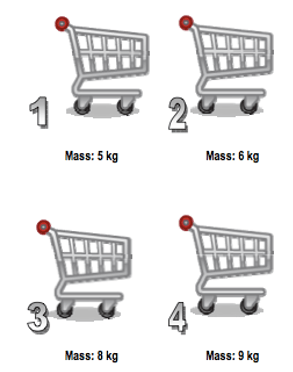
A force of 90N is applied to each cart below, which one will accelerate the fastest?
a)
Cart 1
b)
Cart 2
c)
Cart 3 
d)
Cart 4
51.
What is Newton's First Law known as? The Law of
a)
Friction
b)
Mass
c)
Inertia
d)
Gravity
52.
What is Newton's First Law
a)
F=ma
b)
Every action has an equal and opposite reaction
c)
An object at rest stays at rest, an object in motion stays in motion. 
d)
Friction 
53.
The tendency of an object to resist a change in its motion
a)
acceleration
b)
inertia
c)
mass
d)
frame of reference
54.
What kind(s) of objects have inertia?
a)
all objects with mass
b)
only objects at rest
c)
only objects in motion
d)
only objects whose motion is being changed
55.
If one object has twice as much mass as another object, it also has twice as much...
a)
inertia
b)
velocity
c)
acceleration due to gravity
d)
DO NOT PUSH ME
56.
Which type of force(s) will cause a change in an object's motion?
a)
gravity
b)
zero net force
c)
balanced forces
d)
unbalanced forces
57.
The law of inertia (Newton’s First Law) applies
a)
to both moving and nonmoving objects
b)
only to moving objects
c)
only to objects that are not moving
58.
You push on a car and it does not move.  What is true about the inertia?
a)
The inertia is changing
b)
The inertia of the car is too great 
c)
The inertia of the person is equal to the car
d)
There is not inertia because of no movement
59.
Why is the net force 0 in the image?
a)
Because the elephants are the same size
b)
Because they are both pulling the same amount of force in opposite directions
c)
Because they are elephants
d)
Because they are pulling away from each other.
60.

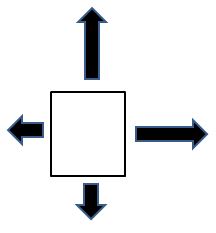
This object would be moving (pick all that are correct):

a)

up

b)

down

c)

left

d)

right

61.
What is the unit of measurement for force?
a)
kilograms
b)
newtons
c)
grams
d)
newt
62.
Which type of force(s) will cause a change in an object's motion?
a)
gravity
b)
zero net force
c)
balanced forces
d)
unbalanced forces
63.

What is inertia?

a)

the force that opposes motion

b)

the force of attraction between 2 objects

c)

an object's tendency to stay in its state of motion

d)

a change in an object's speed and/or direction

64.
According to Newton’s first law of motion, a moving object that is not acted on by an unbalanced force will
a)
remain in motion.
b)
eventually come to a stop.
c)
change its momentum.
d)
accelerate.
65.

What is the net force on an object?

a)

the sum of all the forces on an object

b)

the negative forces on an object

c)

the positive forces on an object

d)

the balanced forces on an object

66.

Why does an 18-wheeler truck have more inertia than a bicycle?

a)

it has more mass

b)

it has more volume

c)

it is not as aerodynamic

d)

It has more space

67.

When two equal forces act in opposite directions on an object, they are called ______________________.

a)

frictional forces

b)

balanced forces

c)

centripetal force

d)

gravitational force

68.
Without a force to stop or slow a coasting object, the object will coast forever in a ______ line. 
a)
blue
b)
red
c)
straight
d)
vertical 
69.
The ______of an object tends to make the object resist being set into motion.
a)
mass
b)
force
c)
motion
d)
unbalanced forces 
70.
With unbalanced forces, the object will move in the direction of the _______ force.
a)
larger 
b)
smaller 
c)
equal 
71.
If I slowly roll a ball down the hallway, why does it eventually stop?
a)
Because of Newton's First Law
b)
Friction and Air Resistance
c)
Inertia
d)
It wouldn't stop, it would keep going until it hits a wwall.
72.

Which of the following is the best example of Newton's First Law of Motion?

a)

Jessica's body flies forward after she hits the brakes

b)

Jessica drives a car

c)

Jessica is at a road crossing

d)

Jessica is sleeping

73.
What is the name for a push or pull?
a)
A movement
b)
A force
c)
Speed
d)
Density
74.
friction is a force that acts 
a)
in the same direction as the motion
b)
opposite to the direction of the motion
c)
opposite to the applied forces
d)
the same direction as the applied force
75.
After a cannonball is fired into frictionless space, the amount of force needed to keep it going equals
a)
twice the force with which it was fired
b)
the same amount of force with which it was fired
c)
1/2 the force with which it was fired
d)
zero, since no force is requires to keep it moving. 
76.
Which one needs a greater net force to move, a kilogram of feathers or a kilogram of iron? 
a)
feathers 
b)
iron
c)
same
d)
depends on their friction
77.

When you jump up, you push the earth downwards. Why can't you tell that the earth has moved?

a)

The force of you jumping up doesn't actually push the earth down.

b)

The earth has much more mass so it doesn't move at all

c)

The earth is firmly rooted

d)

The earth has much more mass so you can't tell that it moved

78.

When you hit a tennis ball with a racket...

a)

The ball exerts more force on the racket

b)

The ball and racket exert the same force on each other

c)

The racket exerts more force on the ball

d)

It depends on how hard you hit it

79.

Two students with different masses are sitting in roll-y chairs. The lighter one uses his feet to push the other

a)

The lighter student will move faster because he has less mass

b)

The heavier student will move more because he is being pushed

c)

They will move with the same speed

d)

The heavier student shouldn't move at all

80.

How is this an example of Newton’s Third law?

a)

Only the ball is using the head

b)

They are both exerting an equal force on each other

c)

Only the head is pushing the ball

81.
For every action, there is an equal and opposite reaction.
a)
Newton's
1st
Law of Motion
b)
Newton's
2nd
Law of Motion
c)
Newton's
3rd
Law of Motion
82.

Newton's Third Law is also known as...

a)

The Law of Inertia

b)

The Law of Acceleration

c)

The Law of Conservation of Momentum (Force Pairs)

83.
An archer shoots an arrow. The action force is the bowstring against the arrow, the reaction force is...
a)
Air resistance against the bow
b)
the arrow's push against the bowstring
c)
the grip of the archer's hand on the bow
84.
A rocket pushes exhaust 10, 000 N. Without any other forces acting on the rocket, how much force does the rocket go forward?
a)
15,000 N
b)
1,000 N
c)
10, 000 N
85.
What is the reaction force to a foot pushing down on the floor?
a)
The foot going through the floor
b)
The floor pushing back against the foot
c)
The floor breaking to the foot
86.

When you push a boat off from the dock, you are demonstrating Newton's 3rd Law of Motion. It simply states that for every action there is an equal and opposite _______________?

a)

Motion

b)

Reaction

c)

Change

d)

Push

87.

A fireman turns on his hose and is knocked backwards is an example of...

a)

Newton's 1st Law

b)

Newton's 2nd Law

c)

Newton's 3rd Law

d)

Newton's 4rth Law

88.
Newton's third law states that any action will have a(n) _______ and ______ reaction
a)
Equal and similar
b)
Equal and opposite
c)
Equal and different
d)
Greater and opposite
89.
Which of Newton's laws are illustrated with a rocket launch?
a)
1st Law, the Law of Inertia. 
b)
2nd Law, the Law of Acceleration.
c)
3rd Law, the Law of Action Reaction
d)
The Law of Conservation of Mass
90.

Newton's Third Law says that forces must always occur in _____.

a)

pairs

b)

groups of 20 or more

c)

individual circumstances

d)

friction

91.

A book pushes down on a table with a force of 5N, the table..

a)

Pushes back with a force of 5N

b)

Pushes back with a force less than 5N

c)

Pushes back with a forcec greater than 5N

d)

Does nothing. A table has no force.

92.

According to Newton’s Third Law, if someone jumps off a skateboard, the skateboard will roll backward because -

a)

the mass of the skateboard is the same as the mass of the person jumping off.

b)

the pull of gravity on the person is the same as on the skateboard, regardless of size.

c)

the air resistance on the person is great and the friction on the skateboard is small.

d)

for the force that sent the person forward, there is an equal force pushing back on the skateboard.

93.

A ball bat hits aball with a force of 100 Newtons. What is the force and direction exerted by the ball on the bat?

a)

100 Newtons, same direction

b)

100 Newtons, opposite direction

c)

200 Newtons, same direction

d)

200 Newtons, opposite direction

94.

According to Newton’s Third Law, when you lean on a wall, which force is greater?

a)

the wall's force

b)

your force

c)

the force of friction

d)

they are equal

95.

Which of Newton's Laws of Motion does this Newton's cradle demonstrate?

a)

Newton's 1st Law of Motion (interia)

b)

Newton's 2nd Law of Motion (F=m * a)

c)

Newton's 3rd Law of Motion (action-reaction)

96.

Which of the following is an example of Newton’s Third Law:

a)

You jump on a trampoline. It springs you back into the air.

b)

A swimmer pushes against a pool wall to begin swimming a lap.

c)

A rocket’s thrust pushes it out of Earth's atmosphere.

d)

All of the above

97.

Newton's are the unit used to measure...

a)

energy

b)

force

c)

weight

d)

mass

98.

All forces occur in pairs

a)

true

b)

false

99.

What force ultimately slows the roller coaster to a stop?

a)

Applied

b)

Normal

c)

Friction

d)

Gravitational

100.
What force holds the planets in motion around the sun?
a)
Magnetic
b)
Electrical
c)
Gravitational
d)
Air Resistance
101.

Rina’s mother asked her to help move some items from the hall closet to the garage. One item she wanted to move was a large box of old school books. Rina tried to lift the box, but could not pick it up. What force was Rina NOT able to overcome?

a)

frictional force

b)

gravitational force

c)

applied force

d)

normal force

102.

Leanna decided to rearrange her bedroom by moving her dresser to the opposite wall. She tried pushing it, but found that the dresser would not move. What force was Leanne NOT able to overcome?

a)

normal force

b)

gravitational force

c)

tension force

d)

frictional force

103.

Look at the illustration below of a block sitting on a table-top. The magnified view illustrates a force that exists between the two objects.

Which type of force is demonstrated in the magnified view?

a)

normal force

b)

applied force

c)

gravitational force

d)

frictional force

104.
Friction is a force that acts in an ___________ direction of movement.
a)
similar
b)
opposite
c)
parallel
d)
west
105.
How can friction be reduced?
a)
reduce the force acting between the 2 surfaces
b)
reduce the roughness of the 2 surfaces coming in contact
c)
use wax, grease or oil
d)
all of the above are ways of reducing friction
106.
A type of friction that occurs when air pushes against a moving object causing it to decelerate.
a)
surface area
b)
air resistance
c)
velocity
d)
gravity 
107.
How would the absence of friction affect a marble traveling on a long, straight path?
a)
The marble’s speed would decrease.
b)
The marble’s speed would increase.
c)
The marble would stop immediately. 
d)
The marble would remain at constant speed.
108.
The SI Unit of force is
a)
Pascal
b)
Meter/second
c)
Newton
d)
kg
109.

Force created between two touching forces is ______ force

a)

gravitational

b)

normal

c)

applied

d)

friction

110.

Force of attraction (pulling) between two objects. (Every object experiences this on earth)

a)

gravitational

b)

normal

c)

applied

d)

friction

111.

Force that resists motion between two surfaces.

a)

gravitational

b)

normal

c)

applied

d)

friction

112.

This arrow depicts which kind of force?

a)

gravitational

b)

normal

c)

applied

d)

friction

113.

This arrow depicts which kind of force?

a)

gravitational

b)

normal

c)

applied

d)

friction

114.

This arrow depicts which kind of force?

a)

gravitational

b)

normal

c)

applied

d)

friction

115.

This arrow depicts which kind of force?

a)

gravitational

b)

normal

c)

applied

d)

friction

116.

What force ultimately slows the roller coaster to a stop?

a)

Applied

b)

Normal

c)

Friction

d)

Gravitational

117.

what is a force?

a)

a push or a pull

b)

change in displacement

c)

change in direction

118.

which of these is an effect of force?(tick mark the correct answers)

a)

force can start a motion

b)

force can stop a motion

c)

force can change the direction of motion

d)

force can change the shape of an object

e)

force can change the speed a moving object

119.
A type of friction that occurs when air pushes against a moving object causing it to decelerate.
a)
surface area
b)
air resistance
c)
velocity
d)
gravity 
120.

what is the force acting in the ropes of the swing?

a)

tension

b)

normal reaction

c)

friction

d)

gravitation

121.
What type of force?
a)
Magnetic
b)
Gravitational
c)
Applied
d)
Normal
122.
What type of force is holding this balloon to the wall?
a)
Applied
b)
Gravitational
c)
Magnetic
d)
Electrical
123.
What force holds the planets in motion around the sun?
a)
Magnetic
b)
Electrical
c)
Gravitational
d)
Air Resistance
124.

An Orange falls off a tree and lands on the ground. What force caused the orange to fall?

a)

friction

b)

heat

c)

gravity

d)

wind

125.
Friction acts in a direction __________ to the direction of the object’s motion.   
a)
Side By Side
b)
Parallel Directions
c)
 Opposite
d)
The Same Direction
126.

The support force exerted upon an object that is in contact with another stable object.

a)

Gravity

b)

Electrical Force

c)

Normal Force

127.

A force exerted by a compressed or stretched spring upon any object that is attached to it.

a)

Spring Force

b)

Tension Force

c)

Elastic Force

128.

The repelling or attracting force between a magnet and a ferromagnetic material (like iron).

a)

Magnetic Force

b)

Electrical Force

c)

Gravity

129.

The force that is transmitted through a string, rope, cable or wire when it is pulled tight.

a)

Spring Force

b)

Tension Force

c)

Elastic Force

130.
Gravity affects which of the following?
a)
Mass
b)
Weight
c)
Density
d)
Mass and Weight
131.

A forces applied when the objects involved are in direct contact.

a)

Contact forces

b)

Normal forces

c)

Non-contact forces

132.

Which sentence below describes a contact force?

a)

A baseball bat hits a baseball

b)

A book falls to the floor

c)

A leaf floats in the air and falls to the ground.

d)

A magnetic force pulls a paper clip toward a magnet

133.

Which is the following is NOT a non-contact force?

a)

Applied force

b)

Gravitational force

c)

Electrical force

d)

Magnetic force

134.

A type of fictional force that acts upon objects as they travel through the air.

a)

Normal Force

b)

Applied Force

c)

Air Resistance Force

135.

What force is F1 (downward force)

a)

Friction force

b)

Gravitational Force

c)

Normal Force

d)

Applied force

136.

What force is F2 (rightward force)

a)

Friction force

b)

Gravitational Force

c)

Normal Force

d)

Applied force

137.

What force is F3 (upward force)

a)

Friction force

b)

Gravitational Force

c)

Normal Force

d)

Applied force

138.

What force is F4 (leftward force)

a)

Friction force

b)

Gravitational Force

c)

Normal Force

d)

Applied force

139.

A forces applied when the objects involved are in not in direct contact with each other.

a)

Contact forces

b)

Normal forces

c)

Non-contact forces

140.
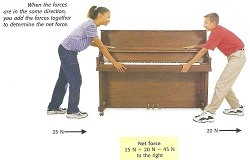
What is the net force?
a)
5 N
b)
45 N to the left
c)
5 N to the right
d)
45 N to the right
141.
What is a force?
a)
the PUSH or PULL on an object 
b)
The MOTION an object creates
c)
The objects HITTING one another
d)
Going REALLY FAST
142.
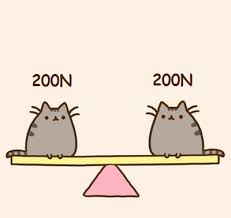
Which one is balanced?
a)
top
b)
bottom
c)
both
143.
Is it BALANCED? 
a)
Yes
b)
No
144.
What is the FORCE? 
a)
5 N
b)
10 N
c)
400 N
d)
0 N
145.
What is the unit for FORCE? 
a)
N (Newtons)
b)
lbs (pounds)
c)
g (grams)
d)
m/s (meters per second)
146.
If there are two forces going in the SAME direction, you would ...?
a)
(-) Subtract the forces
b)
(+) Add the forces
c)
Neither
d)
(x) Multiply
147.
Forces that have a force of Zero (0).
a)
Balanced force
b)
Unbalanced force
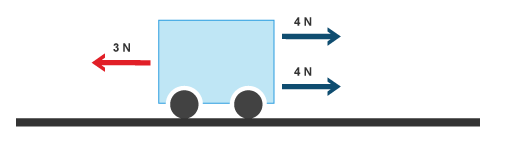
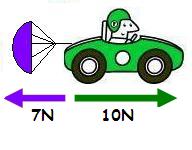
148.
If the net force is 0 the object will ... 
a)
CHANGES motion
b)
STAY the SAME, NOT Move
149.
This is an example of what kind of force?
a)
Balanced Force
b)
Pushing Force
c)
Gravity Force
d)
Unbalanced Force
150.
What is the net force?
a)
17 N Right
b)
3 N Right
c)
3 N Left
d)
17 N Left
151.
Calculate the net force of the object in the image shown.
a)
20N
b)
35N
c)
5N
d)
25N
152.
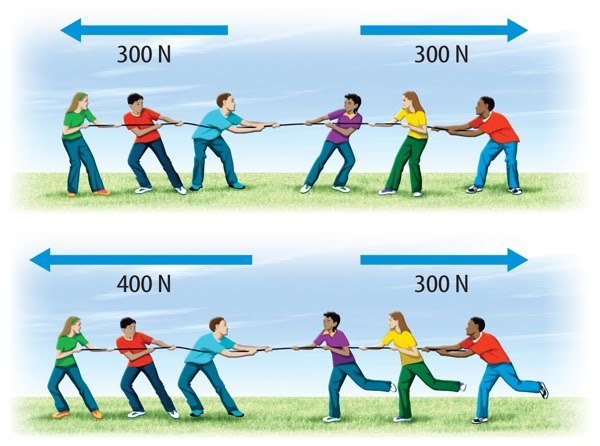
What is the net force?
a)
20 N 
b)
0 N 
c)
400 N 
d)
40 N 
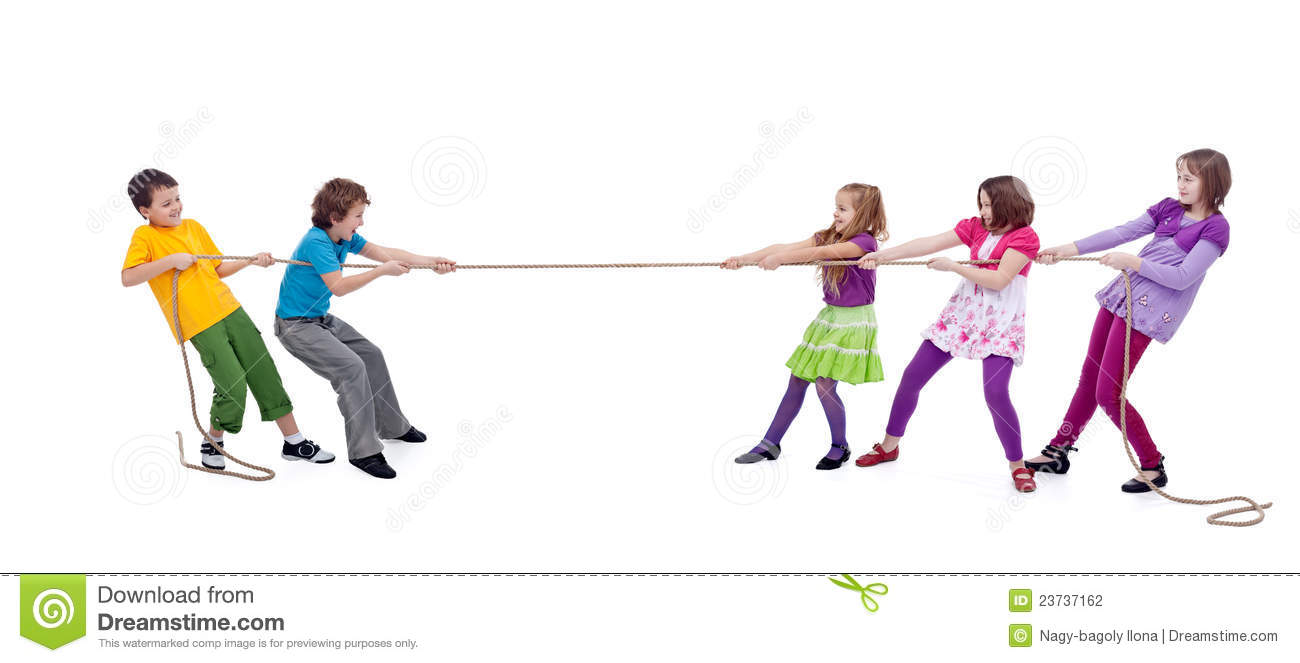
153.
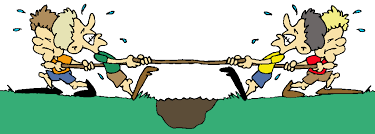
If these teams are pulling with the same amount of force what will happen?
a)
The boy in blue will win.
b)
They will not move at all.
c)
The boy in red will win.
d)
Both will fall down.
154.

Forces that have a net force of zero Newtons

a)

Balanced force

b)

Unbalanced force

155.
The sum of all forces acting on an object.
a)
Contact Force
b)
Balanced Force
c)
Unbalanced Force
d)
Net Force
156.
What will cause an object to move?
a)
Applied forces
b)
Balanced forces
c)
Unbalanced forces
157.
With unbalanced forces, the object will move in the direction of the _______ force.
a)
larger 
b)
smaller 
c)
equal 
158.
A force is a push or pull measured in what units? 
a)
Meters per second, squared
b)
Kilograms 
c)
Newtons 
159.
When the vectors (arrows) point in the same direction what function do you use? 
a)
Dividing 
b)
Multiplying 
c)
Subtracting 
d)
Adding 
160.
If an object is not moving the forces acting upon it are _____________
a)
unbalanced
b)
weak
c)
balanced
d)
Hulk Smash!
161.
Scott drives a Jeep 12 km east, then 4 km north, then finally 3 km west. He traveled a total distance of:
a)
5 km
b)
10 km
c)
13 km
d)
19 km
162.
A ping-pong ball rolls forward 6 meters, and bounces backward 3 meters. It traveled a total distance of:
a)
9 meters
b)
6 meters
c)
3 meters
d)
0 meters
163.
Liza is swimming laps from one end of a 50 meter pool to the other. Going from one end to the other is considered one lap. If she swims four complete laps, which statement is TRUE?
a)
Her distance and displacement are both zero.
b)
Her distance is zero, but her displacement is 200 meters.
c)
Her distance is 200 meters, but her displacement is zero.
d)
Her distance and displacement are both 200 meters.
164.
Ivan walks 10 meters west to the water fountain, then runs 2 meters east to his class to avoid a lockout. His displacement would be:
a)
8 meters
b)
8 meters, east
c)
8 meters, west
d)
12 meters
165.
During a game of dodgeball, Marina runs 2.45 meters forward to grab a dodgeball, then runs 1.25 meters backward to avoid a opponent's dodgeball. Her displacement would be:
a)
3.7 meters backwards
b)
1.2 meters backwards
c)
3.7 meters forwards
d)
1.2 meters forwards
166.
Ronaldo runs across a soccer field, moving 10 meters north, then 8 meters west. His displacement would be:
a)
10.2 m, NW
b)
12.8 m, NW
c)
15.4 m, NW
d)
18.0 m, NW
167.
Distance and direction of an object's change in position from a starting point
a)
displacement
b)
distance
c)
motion
d)
reference point
168.

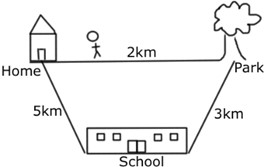
Jerry walked from home to school, then from the school to the park. What is his total displacement?

a)

2 km

b)

5 km

c)

8 km

d)

10 km

169.

Jerry walked from home to school, then from the school to the park. What is his total distance?

a)

2 km

b)

5 km

c)

8 km

d)

10 km

170.

How can you tell motion occurs?

a)

The object's speed decreases in regards to the reference point.

b)

The object and the reference point both move at the same speed.

c)

The object's speed increases in regards to a reference point.

d)

The object's position changes in regards to a reference point.

171.

This is how far you are from your starting point.

a)

displacement

b)

distance

c)

length

d)

meters

172.

Which of the following is correct?

a)

Initial Position = 0 m

Final Position = 6 m

Distance = 6 m

Displacement = 6 m

b)

Initial Position = 6 m

Final Position = 0 m

Distance = 6 m

Displacement = 6 m

c)

Initial Position = 6 m

Final Position = 6 m

Distance = 6 m

Displacement = 6 m

d)

Initial Position = 0 m

Final Position = 6 m

Distance = 0 m

Displacement = 6 m

e)

None are correct.

173.

An arrow represents a ______ quantity.

a)

scalar

b)

vector

c)

magnitude only

d)

direction only

174.

To tell that motion takes place, you must have a(n):

a)

reference point

b)

direction

c)

position

d)

speed

e)

velocity

175.

You walk outside and see a dog sitting next to a tree. You go inside to grab a jacket and when you return the dog is now standing at a mailbox 10 meters down the road from the tree and a bird is flying by. What is the reference point?

a)

your jacket

b)

the dog

c)

the bird

d)

you are the reference point

e)

the tree

176.

Where would the chicken end up if the chicken has a +2 displacement?

a)

+5 m

b)

+2 m

c)

0 m

d)

+3 m

177.

Two people walk across a parking lot. Their paths are shown in the image. Who traveled with a larger displacement?

a)

Person A

b)

Person B

c)

They both had the same displacement.

178.

Describe the motion in the graph:

a)

Constant Speed (positive slope)

b)

Stopped (at rest)

c)

Acceleration (increasing speed)

d)

Return Home (negative slope)

179.

Describe the motion in the graph:

a)

Constant Speed (positive slope)

b)

Stopped (at rest)

c)

Acceleration (increasing speed)

d)

Return Home (negative slope)

180.

Describe the motion in the graph:

a)

Constant Speed (positive slope)

b)

Stopped (at rest)

c)

Acceleration (increasing speed)

d)

Return Home (negative slope)

181.
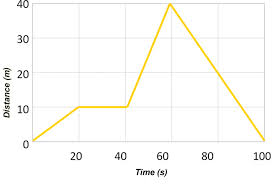
How long did it take this object to travel back to its reference/starting point?
a)
20 s
b)
30 s
c)
60 s
d)
100 s
182.
At 60 seconds, how far had this object traveled? 
a)
0 m
b)
10 m
c)
20 m
d)
40 m
183.
What is happening at D?
a)
Stationary
b)
Accelerating
c)
Fast steady speed; moving away from the starting position
d)
Slower steady speed; moving away from the starting position
184.
How long did it take this object to travel 10 m?
a)
0 s
b)
10 s
c)
15 s
d)
20 s
185.
Which runner had a head start?
a)
A
b)
B
c)
C
186.
What two measurements are necessary for calculating speed?
a)
Mass and time
b)
Temperature and mass
c)
Mass and distance
d)
Distance and time
187.
Can be measured in meters (m)
a)
Distance
b)
Time
c)
Speed
d)
Acceleration
188.

In which of the following graphs below are both runners moving at the same speed?

a)
b)
c)
d)
189.

Match the description to the graph:

"The car is coming back."

a)
b)
c)
d)
190.
What is the equation to calculate time?
a)
time = speed/distance
b)
time = distance/speed 
c)
time = speed x distance 
d)
time = distance x speed