
 Worksheets
Physics: Sound & Light
Total questions: 188
Worksheet time: 2hrs 20mins
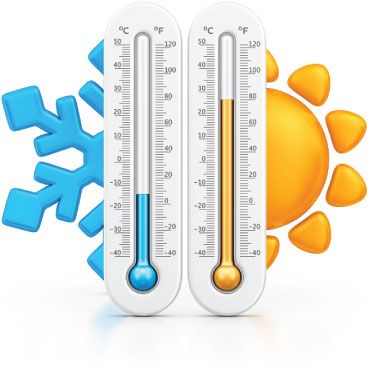
Sound travels FASTEST through which of these materials?
A type of gas, like helium
Empty space
A metal such as iron
Water


Ears help you keep your balance:
True
False
The ear does which of the following jobs:
Collects sound
Processes sound
Sends sound signals to the brain
All of the above
Which of the following is a good way to take care of your ears?
Wear earplugs at loud music concerts
Don’t poke your ears with cotton swabs
Keep the volume down on your music player
All of the above
What separates the outer ear from the middle ear?
Auricle
The ear wall
Eardrum
Cochlea


Sound travels FASTEST through which of these materials?
A type of gas, like helium
Empty space
A metal such as iron
Water
The distance light travels through a vacuum during one year.
ultrasonic
light-year
resonance
Light-year
Electromagnetic waves of frequencies lower than the red of visible light.
ultraviolet
infrared
ultrasonic
infrasonic
electromagnetic wave
Electromagnetic waves of frequencies higher than those of violet light.
ultraviolet
infrared
ultrasonic
infrasonic
electromagnetic wave
The range of electromagnetic waves extending from radio waves to gamma rays.
electromagnetic spectrum
infrared
ultrasonic
infrasonic
electromagnetic wave
Term applied to sound frequencies above 20,000 hertz, the normal upper limit of human hearing.
ultraviolet
infrared
ultrasonic
infrasonic
electromagnetic wave
A wave that is partly electric and partly magnetic and carries energy. Emitted by vibrating electric charges
ultraviolet
infrared
ultrasonic
Electromagnetic Spectrum
electromagnetic wave
In mechanics, the act of squeezing material and reducing its volume. In sound, a pulse of compressed air (or other matter)
compression
rarefaction
natural frequency
forced vibration
beats
A disturbance in air in which the pressure is lowered
compression
rarefaction
natural frequency
forced vibration
beats
Term applied to materials that allow light to pass through them in straight lines.
transparent
opaque
ray
shadow
penumbra
Term applied to materials that absorb light without remission, and consequently do not allow light through them.
transparent
opaque
ray
shadow
penumbra
A thin beam of light.
umbra
opaque
ray
shadow
penumbra
A shaded region that results when light falls on an object and thus cannot reach into the region on the far side of the object.
umbra
opaque
ray
shadow
penumbra
The darker part of a shadow where all light is blocked.
umbra
opaque
ray
shadow
penumbra
A partial shadow that appears where light from part of the source is blocked and light from another part of the source is blocked and light from another part of the source is not blocked.
umbra
opaque
ray
shadow
penumbra

Which letter(s) represent a wave's amplitude?
A
B
A & D
B & C
A & C
Which type of wave does not require a medium for a wave to propagate.
Mechanical
Electromagnetic
Transverse
Longitudinal
Which type of medium would a mechanical wave travel fastest in?
Solid
Liquid
Gas
Plasma
Which letter(s) represent a wave's wavelength?
A
B
A & D
B & C
A & C
Which aspect of a sound wave would change if the volume was increased?
Frequency
Period
Wavelength
Amplitude
Velocity
A wave has a period of 10s with a wavelength of 5m. How fast is the wave traveling?
50 m/s
0.5 m/s
2 m/s
5 m/s
Two sound waves are traveling underwater. The first has a frequency of 10,000 Hz while the second has a frequency of 30,000 Hz. Which wave will travel faster?
10,000 Hz Wave
30,000 Hz Wave
Both waves will travel at the same speed
Frequency and wavelength have a(n) ___________ relationship for a wave traveling through a medium.
Direct
Inverse
Inversely Direct
Constructive
Which wave behavior explains how waves are able to change direction based on the water's depth?
Refraction
Diffraction
Reflection
Interference
Which wave behavior explains how animals are able to use sound in order to "see" in the dark?
Refraction
Diffraction
Reflection
Interference
What will result in an echo?
Sound being bounced around a small room
Reflection of sound far from the reflecting surface
Sound being absorbed by objects in a large room
Reflection of sound very close to the reflecting surface
If you can hear someone in the next room very clearly through the wall, then much of the sound waves are being
transmitted
absorbed
reflected
reverberated

Two short tubes are set up in front of a board as shown in the picture. You would be able to hear the watch ticking because ..
reverberation
echo
law of reflection
transmission

The use of sound waves to detect things in a person's body is known as
echolocation
noise cancellation
ultrasound imaging
acoustics
The process animals like bats and dolphins use involving the reflection of high frequency waves to find food is called
Resonance
Echolocation
Ultrasound
Doppler effect
In which of the following media can sound travel through?
Glass of water
Balloon full of air
Iron bar
Vacuum
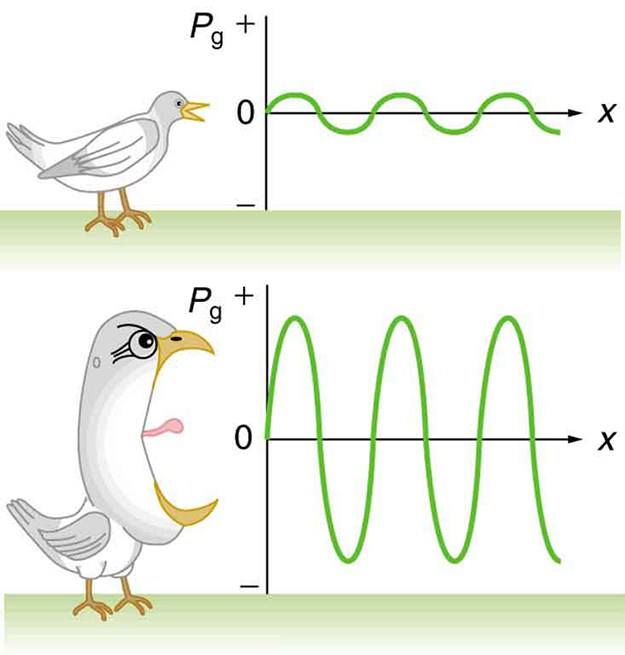
The sound wave with high frequency can be given by ______.


Which of the following shows a pleasant sound?


A shrill sound has a ____ pitch and a dull sound has a___ pitch.
high, high
low, low
low, high
high, low
In order to reduce the loudness of a sound, we have to _______.
decrease its frequency of vibration of the sound
increase its frequency of vibration of the sound
decrease its amplitude of vibration of the sound
increase its amplitude of vibration of the sound
Which of the following statements are correct?
(i) Sound is produced by vibrations.
(ii) Sound requires a medium for propagation.
(iii) Light and sound both require a medium for propagation.
(iv) Sound travels slower than light.
i & ii only
i, ii & iii only
ii, iii & iv only
i, ii & iv only
Sound is caused by...
vibrations of matter
noise
source of sound
particles
What is the unit of frequency?
m/s
second
dB
hertz
A place where no sound exists is...
in the air.
under water.
space.
all of the above
Why do we see lightning before we hear the thunder?
Our eyes trick us.
Light travels faster than sound.
they're two separate things.
When people speak their ________ vibrate.
Ear drums
Vocal chords
Ears
Tongue
lights travels in a ------------ line
in any own way
straight
curved
circular
the image that can be obtained on the screen is called
inverted
virtual
real
erect


Light travels in straight lines until reflected by another object. Which illustration best shows the light being reflected?


Transmit means___________
light goes through and bends
light bounces back
light gets taken in
light goes straight through
Absorb means______.
light bounces back
light goes through and bends
light gets taken in
light goes straight through

When looking through a window, light is _______.
reflected
transmitted
refracted
absorbed


A substance through which a wave travels.
Which of the following is a source of light
Eye
Mirror
Fire
the moon
When light bounces of a mirror,it is
Reflected
Corrected
Absorbed
Refracted
Latif wakes up one morning and sees that it is foggy outside.Whcih term best describe the fog he sees
Opaque
Reflective
Transparent
Translucent

What happen to the light as it passess from air to the transparent window
Light changes speed but not direction
All light is reflected
Light changes speed and direction
All light pass through
Example of a luminous object
Sun
Moon
Pencil
Wall

These are all colours of spectrum except
indigo
blue
purple
green
What type of light does sunblock actually block?
Radio waves
Ultraviolet
Visible Light
Infrared Light
If you see a green leaf on a tree, that means...
Green is the color being reflected off the leaf.
Green is the color being absorbed by the leaf.
All the colors are being reflected off the leaf.
All the colors are being absorbed by the leaf.


In the diagram, which letter represents the angle of incidence?
A
B
C
D

Which diagram represents specular reflection?
A
B

The diagram below represents a light ray reflecting from a plane mirror. The angle of reflection for this light rat is
20 degrees
70 degrees
140 degrees
160 degrees
When a ray of light strikes a mirror perpendicular to its surface, the angle of reflection is
0 degrees
45 degrees
60 degrees
90 degrees

In the diagram below a student stands at location B, 2 meters in front of a mirror. At which location does the student's image appear to be?
A
B
C
D

The diagram below represents a light ray being reflected from a plane mirror. From the data provided in the diagram, what is the angle of reflection?
10 degrees
40 degrees
50 degrees
100 degrees

Light refracts when:
It changes speed
It changes from a particle to a wave
Its density changes
It encounters a solid object


When light passes at an angle to the normal from one medium into another in which its speed is higher
it is bent toward the normal.
it always lies along the normal.
it is unaffected.
it is bent away from the normal.
When light passes at an angle to the normal from one medium into another in which its speed is lower
it is bent towards the normal.
it always lies along the normal.
it is unaffected.
it is bent away from the normal.

Based on the image, as light passes from medium 1 to medium 2
light speeds up and bends towards the normal
light speeds up and bends away from the normal
light slows down and bends towards the normal
light slows down and bends away from the normal
Which color of light is bent most during refraction by a prism?


A student placed a pencil in a cup of water. The pencil appears broken because light
always travels in a straight line.
slows down when it passes through water.
makes the water in the glass evaporate.
reflects the pencil on the water's surface.
Why is the component of colour in a rainbow can be seen when light passes through a glass prism?
phenomena of scattering of light
phenomena of dispersion of light
phenomena of reflection of light
phenomena of diffraction of light
How many components of white light?
5
6
7
8

Why is the spectrum of light seperated into its components of colour when white light is directed to a prism?
The different colours in the white light bend away from the normal line at different angles when entering prism
The different colours in the white light bend towards the normal line at different angles when entering prism
The different colours in the white light bend away from the normal at same speed to each other when entering prism
The different colours in the white light bend towards the normal at same speed to each other when entering prism

Look at the diagram given. This is the first prism. What happen if A SECOND inverted prism is placed behind the first prism?
the various colours pass through it and form brighter spectrum
the various colours pass through it and form a white light back
the various colours pass through it and form an opposite spectrum colours
nothing will happen
This is the example of dispersion of light
sky looks bright orange in the evening
shadow
Pool seems shallower
rainbow

Why is red light is at the top whileviolet at the bottom of the spectrum?
Violet light has the medium speed so it is refracted the least.
Violet light has the highest speed so it is refracted the least
Red light has the slowest speed so it is refracted the least
Red light has the highest speed so it is refracted the least.
Why is the spectrum of light separated into its components of color when white light is directed to a prism?
Because light reflects off the prism's surface
The incident white light refracts and separates into its constituent colors
The white light is absorbed by the prism, separating its colors
The light speeds up as it moves from air into the denser plastic material
Rainbow is formed due to
Natural dispersion
Sunlight passing through raindrops
Refraction of light
All of the above
The dispersion of light is the separation of white light into the spectrum of light, namely red, orange, yellow, green,blue,indigo and violet.
True
False
Violet light is refracted the most by a glass prism as the light travels the ................ through the glass prism.
slowest
fastest
Red light is refracted the least by a glass prism because red light travels the ............ through the glass prism
slowest
fastest
The substance in the sky which is involved in the formation of rainbow
Air particle
Dust
Raindrop
soot
Which of the following is NOT a source of light?
eyes
lit candle
sun
firefly
When is a rainbow mostly formed?
(Select all that apply)
mostly after rainfall
mostly after a bright rainy day
mostly when its a foggy day
mostly when it is a bright sunny day
Which processes are included when a rainbow forms?
Reflection
Refraction
Reflection, dispersion and refraction
Refraction and Reflection
After rainfall, a rainbow forms, ALWAYS or SOMETIMES or NEVER, Why?
Always, because the surface of the water droplet matters for the reflection, dispersion and refraction of the sun's white light.
Sometimes, because the surface of the water droplet matters for the reflection, dispersion and refraction of the sun's white light.
Never, because the surface of the water droplet matters for the reflection, dispersion and refraction of the sun's white light.
RED + BLUE =
MAGENTA
YELLOW
CYAN + MAGENTA =
RED
BLUE
GREEN + RED=
CYAN
YELLOW
CYAN + MAGENTA + YELLOW =
BLACK
WHITE
RED + GREEN + BLUE =
BLACK
WHITE
WHICH COLOR HAS THE LONGEST WAVELENGTH?
RED
VIOLET
WHAT HAPPENS TO THE FREQUENCY WHEN THE WAVELENGTH DECREASES?
DECREASES
INCREASES
WHICH COLOR HAS THE LOWEST FREQUENCY?
VIOLET
RED
WHAT HAPPENS TO THE WAVELENGTH WHEN THE FREQUENCY INCREASES?
DECREASES
INCREASES
WHICH COLOR HAS THE SHORTEST WAVELENGTH?
RED
VIOLET
Which of the following is NOT a primary color of light?
Red
Blue
Yellow
Green

How does light behave when hitting this shirt?
Yellow is absorbed; all other colors are reflected.
Yellow is reflected; all other colors are absorbed.
All colors are absorbed, but yellow is refracted.
Yellow is scattered and all other colors are absorbed.

Which color will transmit through the filter?
Red only
Blue and Violet
Green
All colors
Magenta light is a mix of which two colours?
red
green
blue
What colours is white light made from?
Orange, Green, Pink, Magenta, Peach, Rose, Lemon
Red, Orange Yellow, Green, Black, Indigo, Violet
Red, Orange, Yellow, Green, Blue, Indigo, Violet
Red, Orange, Yellow, Grey, Blue, Indigo, Violet
Which pair of colours do NOT combine to make the correct secondary colours?
Red + Blue = Magenta
Red + Green = Yellow
Blue + Green = Cyan
Red + Yellow = Green
The process of mixing primary coloured lights to produce secondary coloured lights.
This process related to
Dispersion of light
Addition of light
Subtraction of light
Refraction of light
The light which has the same colour as the colour of the opaque objects will reflected directly into our eyes, while the light of other colours will be absorbed by objects. This phenomenon is known as
Dispersion of light
Addition of light
Subtraction of light
Refraction of light

Diagram shows light colour addition. What colour is P?
Magenta
Yellow
Cyan
White
Diagram shows light colour addition. What colour is formed at X?
White
Black
Diagram shows light colour addition. What colour is Q?
Magenta
Yellow
Cyan
White
Diagram shows light colour addition. What colour is R?
Magenta
Yellow
Cyan
White
Only allow the light of the same colour to pass through, light of other colours are absorbed.
Primary colour filters
Secondary colour filters
White light is shined through a magenta filter. Which of the following will be BLOCKED by the filter? (choose all that apply)
Red
Blue
Green
Magenta
A white light is shined through a cyan filter, and then a magenta filter. What color will appear?
blue
green
red
black
A white light is shined through a cyan filter, and then a yellow filter. What color will appear?
blue
green
red
black
A white light shined through a red filter is shined toward a blank space. If a green light is also shined on that space, what color will result?
yellow
magenta
cyan
red
green
Which two filters could be combined to make a white light appear red?
blue
cyan
magenta
yellow
green
How does light behave when hitting this shirt?
Yellow is absorbed; all other colors are reflected.
Yellow is reflected; all other colors are absorbed.
All colors are absorbed, but yellow is refracted.
Yellow is scattered and all other colors are absorbed.

How will this object appear when looking at it through a blue filter?
Blue
Green
Black
Orange

Which color(s) does this filter transmit?
No colors are transmitted.
All colors but green
Only green
Which color will transmit through the filter?
Red only
Blue and Violet
Green
All colors
Magenta light is a mix of which two colours?
red
green
blue

Why does this the t-shirt appear red and the shorts appear blue? Choose the correct statements.
The t-shirt reflects red light.
The t-shirt reflects blue light
The shorts absorb yellow light
The shorts reflect blue light
Other colours are absorbed
Which pair of colours do NOT combine to make the correct secondary colours?
Red + Blue = Magenta
Red + Green = Yellow
Blue + Green = Cyan
Red + Yellow = Green
The process of mixing primary coloured lights to produce secondary coloured lights.
This process related to
Dispersion of light
Addition of light
Subtraction of light
Refraction of light
The light which has the same colour as the colour of the opaque objects will reflected directly into our eyes, while the light of other colours will be absorbed by objects. This phenomenon is known as
Dispersion of light
Addition of light
Subtraction of light
Refraction of light

