wayground logo

Free Printable Worksheets

Font size

S
M
L
XL
Worksheets

Winter Break Part 2 Major Quiz (Staar Biology Practice)

Total questions: 190

Worksheet time: 5hrs 13mins

Name
Class
Date
1.

Which is true of prokaryotic and eukaryotic cells?

a)

Prokaryotic cells are larger than eukaryotic cells.

b)

Eukaryotic cells do not have nuclei, and prokaryotic cells do have nuclei.

c)

Prokaryotic cells lack membrane-bound organelles, and eukaryotic cells contain membrane-bound organelles.

d)

Eukaryotic cells are simpler than prokaryotic cells.

2.
Name the phase
a)
metaphase
b)
Anaphase
c)
Telophase
d)
Prophase
3.
DNA is replicated during the ______ phase of the cell cycle.
a)
G1
b)
Synthesis
c)
G2
d)
G0
4.
Cattle egrets forage (feed) in fields among cattle. The egret gets easy access to flying insects stirred up by the cattle, and the cattle don't care if they are there or not.
a)
mutualism
b)
commensalism
c)
competition
d)
parasitism
5.
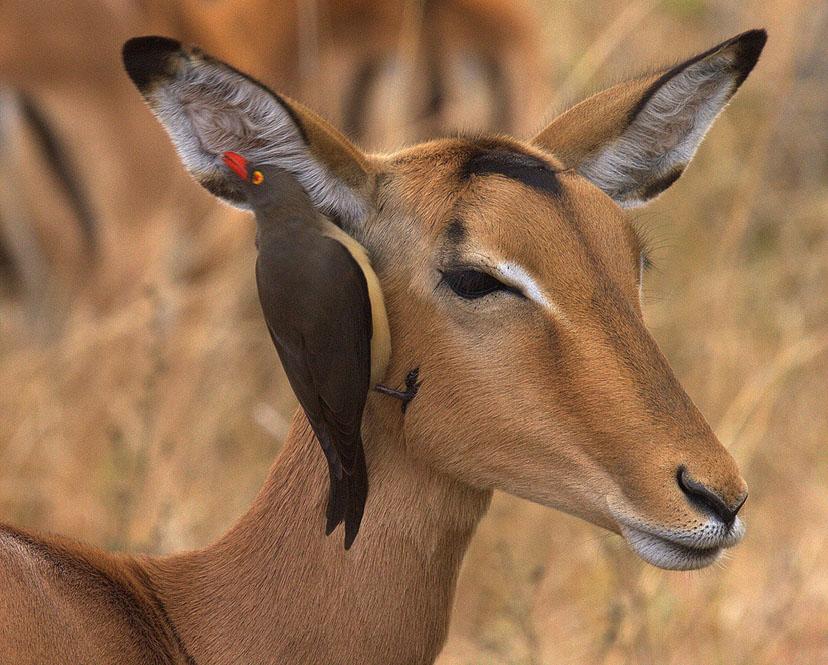
Red-billed oxpeckers are birds that often feed on parasites that infest impala.  This is an example of _______.
a)
commensalism
b)
mutualism
c)
neutralism
d)
competition
6.
The reactants of photosynthesis are
a)
sugar and water.
b)
sugar and oxygen.
c)
carbon dioxide and water.
d)
carbon dioxide and oxygen.
7.
What occurs after a disturbance that leaves soil intact?
a)
primary succession
b)
secondary succession
c)
pioneer species
d)
climax community
8.
How can you tell that Zebra Mussles are an invasive species from the graph shown?
a)
The population of rotifers goes up after zebra mussels they are introduced.
b)
The population of rotifers goes down after zebra mussels are introduced.
c)
The population of rotifers stays about the same after zebra mussels are introduced.
d)
The population of zebra mussels goes down after they are introduced.
9.
Cross Two Homozygous plants
(
RRYY x rryy)
R = round seeds, r  = wrinkled seeds Y = yellow seeds, y = green seeds
What percent will have Round and Yellow seeds? 
a)
0%
b)
25%
c)
50%
d)
100%
10.

How do enzymes speed up chemical reaction?

a)

Increasing activation energy

b)

Decreasing activation energy

c)

Increasing deactivation energy

d)

Decreasing deactivation energy

11.
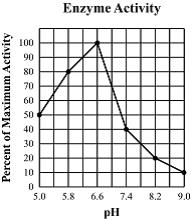
Which of the following conclusions can be drawn from this graph?
a)
The optimum pH of the enzyme is 6.6.
b)
The optimum pH of the enzyme is 5.8
c)
The enzyme’s activity increases as pH increases 5.0 to 9.0
d)
The enzyme’s activity is greater around pH of 8.0 .
12.

Influenza infects a cell and causes it to lyse immediately. What do they use the appendages on the outside of this picture for?

a)

Attachment

b)

Poison host

c)

Replicate dna

d)

Create a nucleus

13.

This diagram is demonstrating

a)

Mutation

b)

Non-random mating

c)

Gene Flow

d)

Genetic Drift

e)

Natural Selection

14.
Crossing over helps promote 
a)
male genotype
b)
genetic variation
c)
DNA replication
d)
mitosis
15.

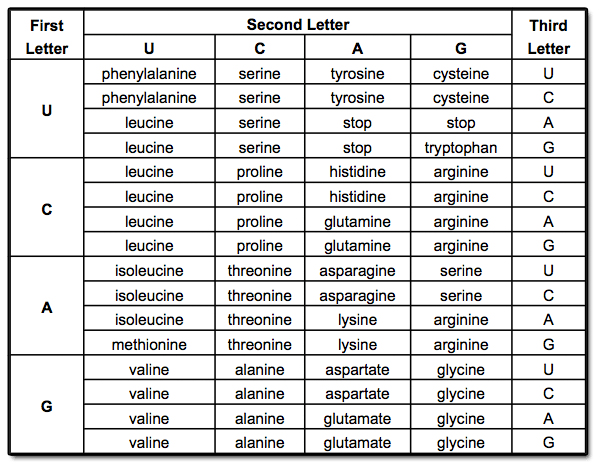
What amino acid is represented by the codon UAA?

a)

Phenylalanine

b)

Tyrosine

c)

Isoleucine

d)

Stop codon

16.
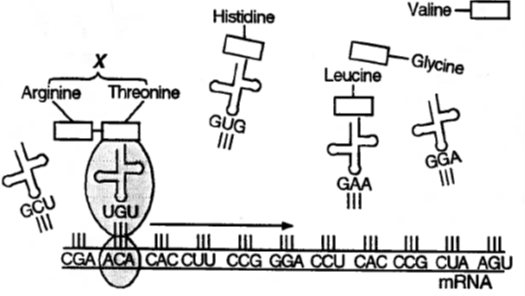
What process is going on in this photo? 
a)
Transcription 
b)
Translation 
c)
Replication 
d)
All the above 
17.

Which component of DNA determines the traits of an organism?

a)

Nitrogen Bases

b)

Phosphate

c)

Hydrogen bonds

d)

Deoxyribose Sugar

18.
Which of the following are monomers of proteins?
a)
monosaccharides
b)
nucleotides
c)
amino acids
d)
fatty acids
19.
a cell organelle composed of RNA and protein; the site of protein synthesis
a)
nucleotide
b)
protein
c)
ribosome
d)
RNA
20.
What process is occurring in the diagram?
a)
DNA replication
b)
Transcription
c)
Translation
d)
Protein synthesis
21.
Which sequence of DNA bases would pair with this partial strand
ATG TGA CAG
a)
ATG TGA CAG
b)
TAC ACT GTC
c)
GTA AGT GAC
d)
CAT TCA CTG
22.

What determines the code, or information, of a DNA molecule?

a)

the shape (structure) of the nitrogen bases

b)

the order of the nitrogen bases

c)

the color of the nitrogen bases

d)

the frequency (number) of nitrogen bases
23.
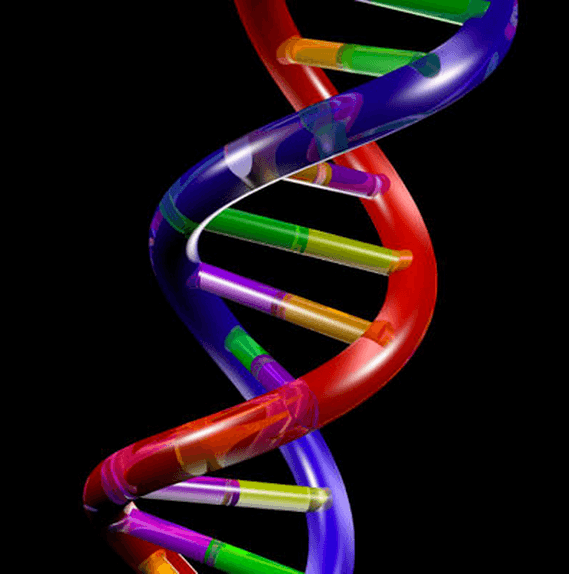
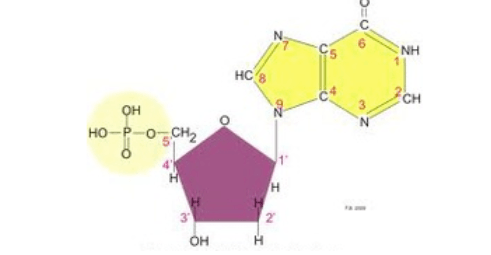
Which biomolecule is this a picture of?
a)
Protein
b)
Nucleic Acid
c)
Lipid
d)
Carbohydrate
24.

When levels go above or below a set point a hormone is released to return the body to set point. When the body is restored to set point no more hormone is released. This is an example of...

a)

a positive feedback loop

b)

a negative feedback loop

c)

a neutral feedback loop

d)

not maintaining homeostasis

25.
Endocrine glands produce __________ which maintain the body in homeostasis
a)
oils
b)
neurotransmitters 
c)
tears
d)
hormones
26.

The major organ of the integumentary system is

a)

Skin

b)

Heart

c)

Hormones

d)

Lungs

27.
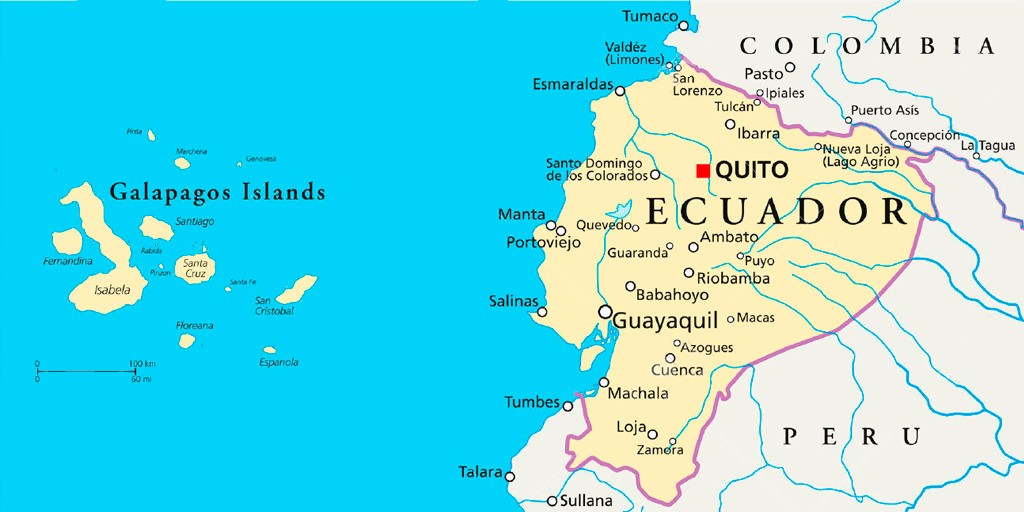
The Galapagos Islands, a small group of islands off the coast of Ecuador, is home to reptiles such as the giant tortoise and the iguana. The eastern islands are much older than the islands to the west.  Which statement about the origin of these reptiles is best supported by this information?
a)
The ancestor of each species came from different continents at different times.
b)
The common ancestors of the reptiles probably came from Equador.
c)
The common ancestor of each species evolved in Peru and came to the islands at the same time.
28.
The picture shows the members of the Camelidae family. The physical features and the geographical origin of these animals provide evidence that - 
a)
they live in the same type of environment.
b)
have slowly evolved to become herbivores.
c)
have a common ancestor.
d)
exchanged DNA in the past.
29.
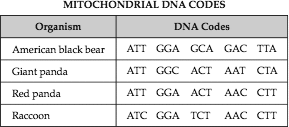
What conclusions can be made based on this table shown?
a)
the American black bear and the giant panda are most closely related
b)
the giant panda and the red panda are most closely related
c)
the red panda and the racoon are the most closely related
30.
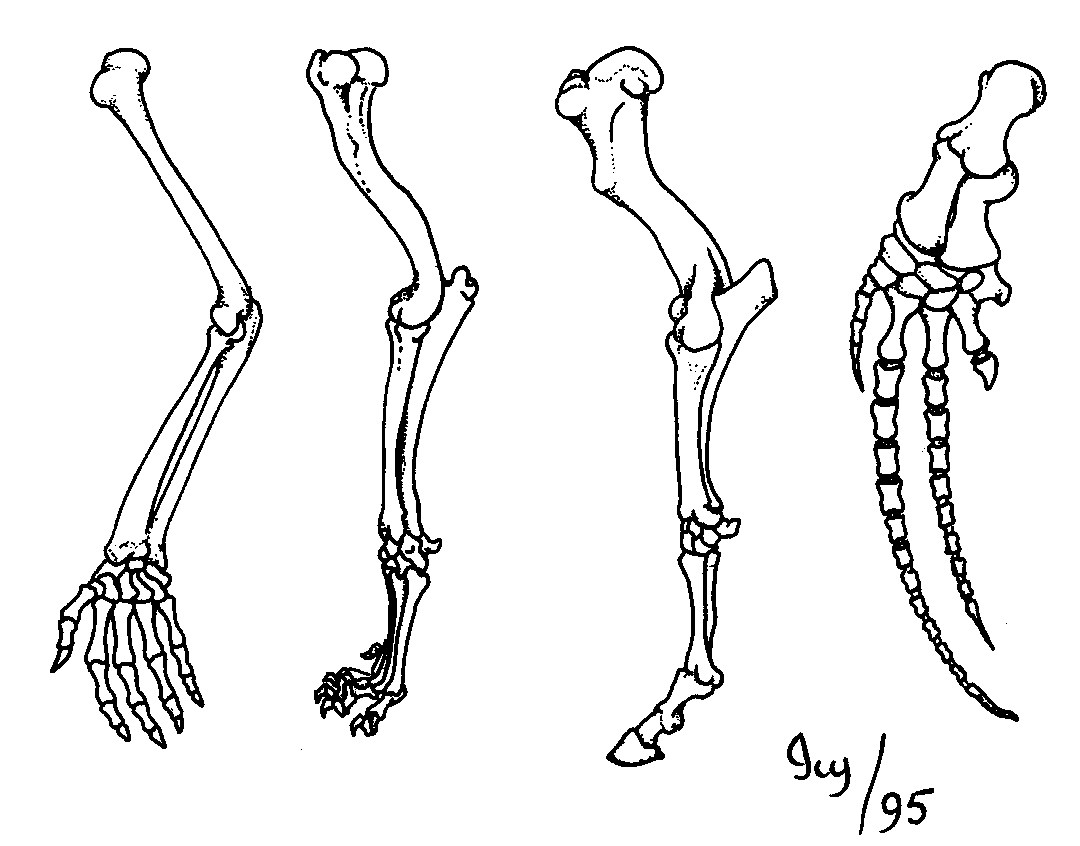
Scientists compare the limbs of organisms to look for evidence of common ancestry. These limbs provide evidence of common ancestry because they -
a)
perform the same function
b)
are the same size
c)
have the same basic structure
d)
are parts of the same animal
31.
Knowledge of which of the following would provide the best evidence regarding the evolutionary relationships of the species shown in the diagram?
a)
Neck Lengths
b)
Feeding patterns
c)
DNA sequences
d)
Common Predators
32.
The more similar the stages of embryonic development, the more likely that organisms share ____________
a)
a common ancestor.
b)
embryos.
c)
eggs.
d)
embryology.
33.
Structures with the same parts have different functions; suggests that organisms share a common ancestry
a)
vestigial structures
b)
homologous structures
c)
adaptive radiation
d)
fossil
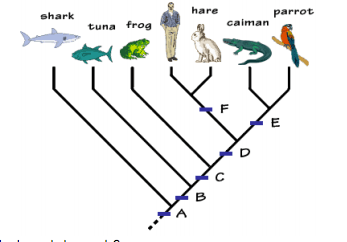
34.
On the cladogram, which organism is the closest relative of the human?
a)
Frog
b)
Hare
c)
Caiman
d)
Parrot
35.
Guppies are small fish that live in freshwater.  Most guppy species reproduce sexually, but some reproduce asexually.  There are two lakes in a particular region.  One lake contains a species of guppy that reproduces asexually.  The other lake contains a species of guppy that reproduces sexually.  A scientist studying these lakes predicts that the sexually reproducing guppies would survive better that the asexually reproducing guppies if a fungus was introduced in both lakes.  Which statement supports this hypothesis?
a)
The sexually reproducing guppies are identical to one another.
b)
The sexually reproducing guppies have a variation of inherited characteristics.
c)
The sexually reproducing guppies require only one individual for reproduction.
d)
The sexually reproducing guppies are carriers of recessive genes.
36.

A gene from organism A can be put into organism B and work because

a)

all organisms share the genetic code

b)

they have the exact same genome

c)

they lack a nucleus

d)

the eyes of texas are upon us

37.
Which phrase best describes cancer?
a)
absence of cyclins
b)
multiple gene mutations
c)
uncontrolled cell growth
d)
precesnce of genetic defects
38.
In what way is the DNA of a nerve cell different from the DNA of a muscle cell?
a)
The DNA is the same but each cell contains different genes
b)
The DNA is the same but different genes are turned on and turned off in each cell
c)
The DNA is different, but the same genes are turned on and off in each cell
d)
The DNA is different, but each cell contains the same genes
39.
Which of these is responsible for the different morphologies of these cells?
a)
Metabolism
b)
Replication
c)
Gene Expression
d)
None of these account for the different morphologies
40.

In turtles, the temperature of eggs during a certain period in their development is the deciding factor in determining the gender of the offspring. In the case of the European pond turtle, an incubation temperature of 23 degrees celcius results in all male baby turtles, while an incubation temperature of 30 degrees celcius results in all female baby turtles. What is a likely reason for such gender development in turtles?

a)

a change in temperature results in the mutation of a gene in the developing embryo

b)

a change in temperature causes a variation during cell division of the developing embryo

c)

a change in temperature causes a change in the expression of the genes determining sex

d)

a change in temperature reverses the expression of the dominant and recessive alleles

41.
Which organisms are closely related? 
a)
American badger and leopard
b)
coyote and gray wolf
c)
european otter and leopard
d)
coyote and american badger
42.

What is the importance of a standardized taxonomic system to the scientific community?

a)

To have many different common names for one species.

b)

To organize species' cells, tissues, organs, and organ systems

c)

To have a universal scientific naming system

d)

To analyze species genetic information

43.

Which of the following organisms are most closely related?

a)

organisms that share a domain

b)

organisms that share a family

c)

organisms that share a genus

d)

organisms that share a kingdom

44.

Which is the best prediction regarding the current classification system?

a)

The system may change as new information and organisms are discovered.

b)

Scientists will become bored with the current system and develop a new one.

c)

Over time, organisms will become extinct, so classification will become simpler.

d)

The system is set in stone and most likely will not change.

45.
I have cell walls
I am an autotroph
I am multicellular
What am I?
a)
Plant
b)
Animal
c)
Eubacteria
d)
Unicorn
46.
I have no cell walls
I am eukaryotic
I reproduce sexually
I am multicellular
What kingdom do I belong to?
a)
Plantae
b)
Animalia
c)
Protista
d)
Fungi
47.
I can be either a heterotroph or an autotroph-
I can be either multicellular or unicellular-
I can have cell walls or not-
The only thing for sure about me is that I have a nucleus in my cells...
I am Kingdom ____________ .
a)
Plantae
b)
Protista
c)
Animalia
d)
of Oz
48.
The mouse in this food web would be considered a:
a)
Primary Consumer
b)
Producer
c)
Tertiary Consumer
d)
Secondary Consumer
49.
Which of the following would be the most likely effect, if there were a sudden increase in the cricket population?
a)
There would be a decrease in the small bird population.
b)
There would be a decrease in the grass/flowers population.
c)
There would be a decrease in the mice population.
d)
There would be an increase in the grass/flowers population.
50.
If there is 1000 Kcal available in the producers in trophic level 1, how much energy is available in the herbivores in trophic level 2?
a)
10 Kcal
b)
1 Kcal
c)
100 Kcal
d)
1000 Kcal
51.
Which sequence correctly shoes the levels of increasing organisation of the human body?
a)
cell-tissue-organ-organ system-organism
b)
organism-organ system-organs-tissues-cells
c)
cells-organs-tissues-organ system-organism
d)
organism-cell-tissue-organs-organ system
52.
If you see cardinals, blue jays and owls in your back yard, this is an example of a 
a)
community
b)
population
c)
ecosystem
d)
species
53.
What are the 7 levels of classification, listed in order from most specific to least specific?
a)
a.  Kingdom, phylum, order, class, family, genus, species 
b)
Kingdom, phylum, class, order, family, genus, species 
c)
Species, genus, family, order, class, phylum, kingdom
d)
Species, genus, order, class, family, phylum, kingdom 
54.
Instructions found in the cells of an organism determine the characteristics or traits that the organism will have. This is an example of what life characteristic?
a)
Living things that reproduce
b)
Living things that obtain energy
c)
Living things that contain DNA
d)
Living things that contain cells
55.
Which part of the leaf allows gases to enter and exit the cell?
a)
mesophyll
b)
stomata
c)
cuticle 
d)
guard cells
56.
Thigmotropism is a plant's response to what stimuli?
a)
light
b)
touch
c)
water
d)
gravity
57.
Vascular Tissue that carries water and dissolved minerals  from the roots of a plant to its leaves
a)
Xylem
b)
Phloem
c)
Stem
d)
Stomata
58.
Small openings in the underside of a leave through which oxygen and carbon dioxide can enter and leave the plant
a)
Cuticle
b)
Stomata
c)
Phloem
d)
Xylem
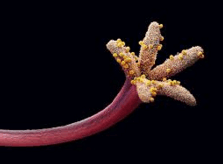
59.
The part of the flower on which the pollen grains land.
a)
pistil
b)
stamen
c)
style
d)
stigma
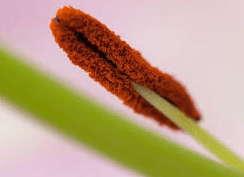
60.
The part of a flower that produces the male reproductive cells.
a)
anther
b)
style
c)
stigma
d)
filament
61.

What condition absolutely must be present in a population before evolution can act upon it?

a)

more females than males

b)

a source of new alleles

c)

genetic variation

d)

a harsh environment

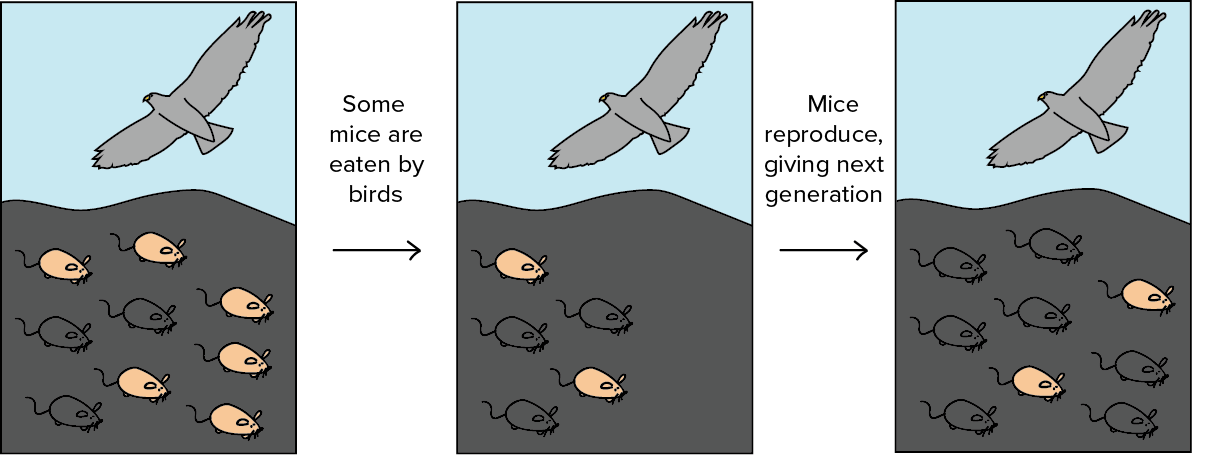
62.

Why is the mouse population changing over time?

a)

The light fur mice can reproduce more successfully than the dark fur mice

b)

The hawks eat more dark fur mice than light mice because they hunt by smell

c)

The hawks eat more light fur mice than dark fur mice because they can see the light fur mice more easily

d)

The hawks eat more dark fur mice than light mice because they can see the dark fur mice more easily

63.
Mutations are important because they bring about
a)
death of the organism in which they develop
b)
genetic variation needed for a population to evolve
c)
benefits for the individual, not for the population
d)
Hardey-Weinberg equilibrium within a population
64.
Which best describes the role of mutations in natural selection?
a)
Mutations help an organism to better survive in their environment
b)
An organism may acquire a helpful mutation by interacting with the environment
c)
A mutation may result in an adaptive trait that makes an organism more likely to survive and reproduce
d)
Organisms with certain traits are more likely to win competitions for mutations
65.
a)

F

b)

G

c)

H

d)

J

66.
a)

A

b)

B

c)

C

d)

D

67.
a)

A

b)

B

c)

C

d)

D

68.
a)

A

b)

B

c)

C

d)

D

69.
a)

A

b)

B

c)

C

d)

D

70.
a)

A

b)

B

c)

C

d)

D

71.
a)

F

b)

G

c)

H

d)

J

72.
a)

A

b)

B

c)

C

d)

D

73.
a)

F

b)

G

c)

H

d)

J

74.
a)

A

b)

B

c)

C

d)

D

75.
Name the phase:
a)
Anaphase
b)
Telophase
c)
Metaphase
d)
Prophase
76.

What process results in the division of 1 cell into 2 identical daughter cells?

a)

Mitosis

b)

Meiosis

c)

G1

d)

Cross-Over

77.

A mutation is defined as:

a)

A change in the cell's structure

b)

Anything that changes in an embryo

c)

Any change in the physical features of a human

d)

A change in the DNA sequence

78.
a)

F

b)

G

c)

H

d)

J

79.
a)

F

b)

G

c)

H

d)

J

80.
a)

F

b)

G

c)

H

d)

J

81.
a)

A

b)

B

c)

C

d)

D

82.
a)

A

b)

B

c)

C

d)

D

83.
a)

A

b)

B

c)

C

d)

D

84.
a)

F

b)

G

c)

H

d)

J

85.
a)

F

b)

G

c)

H

d)

J

86.
a)

F

b)

G

c)

H

d)

J

87.
a)

A

b)

B

c)

C

d)

D

88.
a)

F

b)

G

c)

H

d)

J

89.
a)

A

b)

B

c)

C

d)

D

90.
a)

A

b)

B

c)

C

d)

D

91.
a)

A

b)

B

c)

C

d)

D

92.
a)

F

b)

G

c)

H

d)

J

93.
a)

A

b)

B

c)

C

d)

D

94.
a)

A

b)

B

c)

C

d)

D

95.
a)

F

b)

G

c)

H

d)

J

96.
a)

A

b)

B

c)

C

d)

D

97.
a)

F

b)

G

c)

H

d)

J

98.

Homologous structures are defined as anatomical structures originating from the same structure in ancestral form. For instance, a bird's wing and the front flippers of a seal are examples of homologous structures. Which of the following does the presence of homologous structures in vertebrates suggest?

a)

All vertebrates developed at the same rate.

b)

All vertebrates developed internally.

c)

All vertebrates evolved from different animals.

d)

All vertebrates have a common ancestor.

99.

Each labeled area of this diagram represents organisms in a taxonomic level. In this diagram, level A represents marine mammals. The area of the diagram labeled B most likely represents which of the following taxonomic levels?

a)

fish

b)

mammals

c)

invertebrates

d)

primates

100.

Scientists compared the fossil remains of a species that lived 5,000 years ago to members of the same species living today. Scientists concluded that the species changed very little over this period of time. Which statement best accounts for this lack of change?

a)

The environment did not change significantly, and those offspring expressing new characteristics survived their natural enemies.

b)

The environment changed significantly, but the species had no natural enemies for a long period of time.

c)

The environment did not change significantly, and those offspring expressing new characteristics did not survive.

d)

The environment changed significantly, and those offspring without favorable characteristics did not survive.

101.

Scientists can determine relatedness among organisms by comparing partial amino acid sequences. The table shows four partial amino acid sequences from four organisms. Which organism is the LEAST related to the other three organisms?

a)

Organism 1

b)

Organism 2

c)

Organism 3

d)

Organism 4

102.

A student used a microscope to study four members of the phylum Ciliophora. Members of this phylum move when propelled by hundreds of tiny cilia. Although these organisms belong to the same phylum, they are classified as different —

a)

families

b)

species

c)

kingdoms

d)

orders

103.

Which list correctly identifies characteristics that protists share with animals?

a)

F

b)

G

c)

H

d)

J

104.

The diagram shows light- and dark-colored beetles that live on a tree. Which result is most likely to occur to the beetle population due to predation over time?

a)

The number of light-colored beetles in the population will increase.

b)

There will be more dark-colored beetles than light-colored beetles.

c)

The number of light-colored beetles will decrease.

d)

The dark-colored beetles will move to a different type of tree.

105.

The image shows part of the humerus bone in different genera of primates. Which statement is best supported by the observable structures of the different humerus

bones?

a)

The primates lived in similar environments

b)

The primates shared a common ancestor.

c)

The primates interbreed with similar organisms in a population.

d)

The primates had diets that consisted of similar types of foods.

106.
A cladogram is shown below.
All the animals to the right of the hagfish would have the common characteristic of -
a)
Fur
b)
claws or nails
c)
lungs
d)
jaws
107.
The scientific name for an organism is made from the:
a)
class and family name
b)
genus and species name
c)
domain and kingdom name
d)
kingdom and phylum name
108.
The 8 levels of classification, broadest to most specific.
a)
Domain, Genus, Family, Order, Class, Phylum, Kingdom, Species
b)
Domain, Species, Kingdom, Genus, Phylum, Family, Class, Order
c)
Domain, Kingdom, Phylum, Class, Order, Family, Genus, Species
d)
Order, Kingdom, Species, Domain, Phylum, Family, Class, Genus
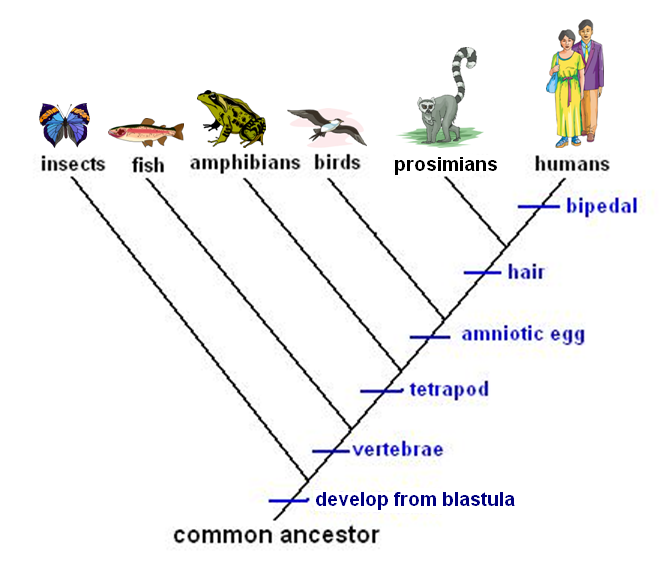
109.
Which organisms pictured on the cladogram have hair?
a)
prosimians only
b)
prosimians and humans
c)
humans only
d)
prosimians and birds
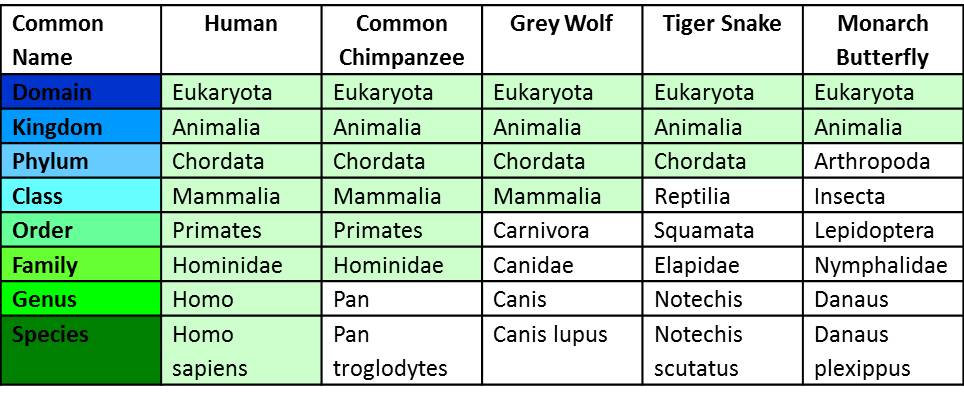
110.
Which organism in the table is least closely related to the chimpanzee?
a)
human
b)
grey wolf
c)
tiger snake
d)
monarch butterfly
111.
An illustration and a dichotomous key are given. What is the correct classification for this organism?
a)
Class Insecta
b)
Order Amblygygi
c)
Order Araneae
d)
Order Scorpiones
112.
Organisms in this smallest taxonomic group share many characteristics.
a)
domain
b)
kingdom
c)
species
d)
class
113.
This organism is multicellular, heterotroph, that has a cell wall made of chitin.  What kingdom does it belong in?
a)
fungi
b)
plantae
c)
animalia
d)
eubacteria
114.
Mutations are important because they bring about
a)
death of the organism in which they develop
b)
genetic variation needed for a population to evolve
c)
benefits for the individual, not for the population
d)
Hardey-Weinberg equilibrium within a population
115.
Some organisms that share a common ancestor have features that have different functions, but similar structures.  These are known as
a)
vestigial structures
b)
analogous structures
c)
homologous structures
d)
fossil structures
116.
Ostrich wings are examples of
a)
homologous structures
b)
vestigial structures
c)
adaptations
d)
traits
117.
What do scientists generally find when comparing the relationship of living things in different geographic areas?
a)
Species living further apart geographically typically share a more recent common ancestral species than those living closer together
b)
Species living closer geographically typically share a more recent common ancestral species than those living further apart
c)
The location of where an organism lives gives no insight into their evolutionary relationships to other species
d)
Their protein sequences depend on the protein intake from the local watering hole.
118.
Which of the following does NOT describe a beneficial use of fungi to humans?
a)
Fungi provide humans with oxygen during photosynthesis.
b)
Fungi are nature's "recyclers" and return nutrients to the environment.
c)
Fungi are used to create many medicines.
d)
Fungi are used for food for making certain foods.
119.
A living relationship between two species in which one organism is harmed is called...
a)
mutualism
b)
commensalism
c)
parasitism
d)
niche
120.
According to the food web, which of these supply energy for all the other organisms?     
a)
snakes
b)
insects
c)
grasses
d)
cougars
121.
Striped fish are affected by abiotic and biotic factors in the environment.  Which of these factors is biotic?
a)
water temperature
b)
mineral nutrients
c)
algae
d)
sediment
122.
A pond ecosystem is shown in the diagram below. Which statement describes an interaction that helps maintain the dynamic equilibrium of this ecosystem?
Which statement describes an interaction that helps maintain the dynamic equilibrium of this ecosystem?
a)
The frogs make energy available to this ecosystem through the process of photosynthesis.
b)
The algae directly provide food for both the rotifers and the catfish.
c)
The green-backed heron provides energy for the mosquito larvae.
d)
The catfish population helps control the populations of water boatman and waterfleas.
123.
Refer to the illustration above. Level “A” is composed of
a)
secondary consumers
b)
primary consumers
c)
producers
d)
predators
124.
The diagram represents a food chain. The arrows in the diagram indicate the  
a)

return of chemical substances to the
environment
b)
order of importance of the various organisms.  
c)
direction of energy flow through a series of organisms
d)
direction in which organisms move in the environment. 
125.
Deforestation by burning has been described as a "double whammy" to the environment, meaning it has 2 negative impacts. Why is this description accurate? 
a)
Forest burning releases CO2 while decreasing oxygen, which disrupts cycles
b)
Deforestation reduces the amount of oxygen in the atmosphere, which depletes the ozone layer
c)
Forest clearing is often followed by land development, which often leads to increased noise pollution
d)
Deforestation increases the number of plant and animal species by destroying habitat
126.
The amount of energy that usually transfers from one trophic level to the next...
a)
10%
b)
20%
c)
80%
d)
50%
127.
largest number of individuals of a population that the environment can support  
a)
carrying capacity
b)
primary succession 
c)
denitrification
d)
mutualism
128.
The number of species within a specific habitat.
a)
Conservation
b)
Sustainable development
c)
Biodiversity
d)
Preservation
129.
Grass>>>>>mouse>>>>>cat>>>>>coyote.  The coyote is a
a)
primary consumer
b)
producer
c)
second level consumer
d)
tertiary consumer
130.
All energy originates from ?
a)
food
b)
the sun
c)
mitochondria
d)
consumers
131.

Which will most likely cause an increase in the frequency of genetic mutations in humans?

a)

increased exposure to mold spores in the air

b)

increased exposure to the rising levels of atmospheric CO2

c)

increased exposure to bacteria in drinking water

d)

increased exposure to X-rays

132.

Line B in the graph represents the reaction with an enzyme added to the substrates.


How did the enzyme affect the reaction?

a)

Increased the activation energy

b)

Increase the energy change

c)

Lowered the energy change

d)

Lowered the activation energy

133.
Which of the following would be the most likely effect, if there were a sudden increase in the cricket population?
a)
There would be a decrease in the small bird population.
b)
There would be a decrease in the grass/flowers population.
c)
There would be a decrease in the mice population.
d)
There would be an increase in the grass/flowers population.
134.
Which of the following is true in a climax community?
a)
the community will constantly evolve and change
b)
if one species dies, a new species will fulfill the same role
c)
They are stable for a long time, with the same species maintaining their population
d)
it goes through a major change called "climax" every few hundred years
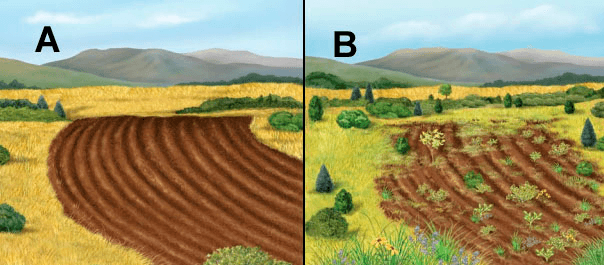
135.
What type of succession is shown going from figure A to figure B?
a)
primary succession
b)
ecological succession
c)
secondary succession
d)
intermediate
136.
In the mid-1980s an aggressive strain of algae known as Caulerpa was accidentally introduced into the Mediterranean Sea when a seaside aquarium cleaned out its tanks. The algae contains a toxin that prevents native herbivores from consuming it. Caulerpa quickly spread over the sea floor, crowding out many species including sponges, corals, sea fans, and lobsters. Which statement explains the most likely impact Caulerpa has had on the biodiversity in the Mediterranean Sea?
a)
The presence of Caulerpa within an ecosystem is an indicator of the ecosystem’s health.
b)
The spread of Caulerpa improved the habitat for many species of sea grasses, and increased the biodiversity.
c)
Caulerpa interbred with native species with the same adaptations within the ecosystem.
d)
Caulerpa became dominant within the ecosystem and reduced the biodiversity.
137.

Enchanted Rock State Natural Area is located in Central Texas. Enchanted Rock is a dome of granite. The area contains four easily identifiable communities. The table describes characteristics of each type of community in the area.

a)

Open oak woodland

b)

Mesquite grassland

c)

Floodplain

d)

Granite rock

138.

Scientists are studying the effects of climate change on the Baltic Sea. Some scientist predict that if current trends continue, the Baltic sea will become less salty, and it will contain less dissolved oxygen. As a result of theses changes, the Baltic Sea will have less biodiversity. The location of the Baltic Sea is shown on the map below. Which statement best explains why biodiversity in the Baltic Sea could decrease f these changes occur?

a)

Fewer types of plants and animals are found in warm water than in cool water.

b)

Plants and animals adapted for living in saltwater will grow more slowly in water that has less salt.

c)

Plants and animals adapted for living in saltier conditions will not be able to survive and reproduce.

d)

Animals adapted for living in warm water will eat all of the plants and animals adapted for living in cool water.

139.
a)

F

b)

G

c)

H

d)

J

140.
a)

A

b)

B

c)

C

d)

D

141.
a)

F

b)

G

c)

H

d)

J

142.
a)

A

b)

B

c)

C

d)

D

143.
a)

A

b)

B

c)

C

d)

D

144.
a)

A

b)

B

c)

C

d)

D

145.
a)

F

b)

G

c)

H

d)

J

146.
a)

F

b)

G

c)

H

d)

J

147.
a)

F

b)

G

c)

H

d)

J

148.
a)

A

b)

B

c)

C

d)

D

149.
a)

F

b)

G

c)

H

d)

J

150.
a)

F

b)

G

c)

H

d)

J

151.
a)

F

b)

G

c)

H

d)

J

152.
a)

A

b)

B

c)

C

d)

D

153.
a)

A

b)

B

c)

C

d)

D

154.
a)

A

b)

B

c)

C

d)

D

155.
a)

F

b)

G

c)

H

d)

J

156.
a)

A

b)

B

c)

C

d)

D

157.
a)

F

b)

G

c)

H

d)

J

158.
a)

F

b)

G

c)

H

d)

J

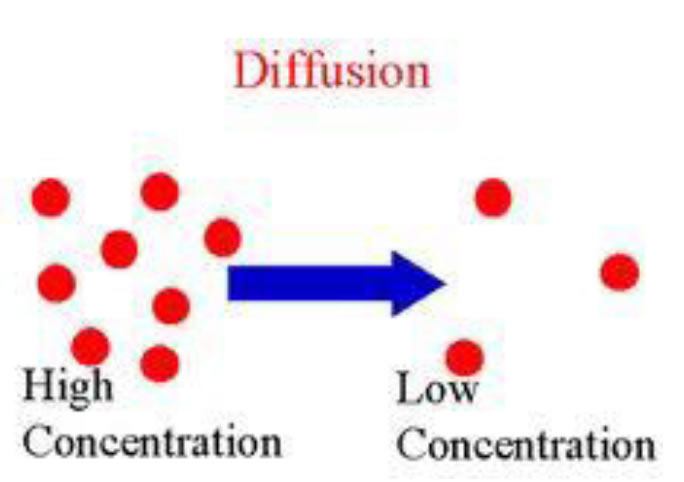
159.
Movement of particles from high to low concentration. 
a)
Passive Transport
b)
Active Transport
160.

Where does photosynthesis take place in the plant cell?

a)

Nucleus

b)

Chloroplast

c)

Cytoplasm

d)

Mitochondria

161.

What is one of the "ingredients" for photosynthesis?

a)

Sugar (Glucose)

b)

Carbon Dioxide

c)

Oxygen

d)

Yeast

162.

Photosynthesis creates what product(s)? Choose all that apply.

a)

Oxygen

b)

Carbon Dioxide

c)

Sugar

d)

Sunlight

e)

ATP

163.

Pigment in green plants that captures the energy in sunlight is called _______.

a)

Pigment

b)

Carotenoids

c)

Chlorophyll

d)

Chloroplast

164.

What is one of the products of cellular respiration?

a)

Sunlight

b)

Oxygen

c)

ATP

d)

Sugar (Glucose)

165.

Which of the following is the correct equation for PHOTOSYNTHESIS?

a)

CO2 + light + H2O --> O2 + C6H12O6

b)

CO2 + O2 + H2O --> Light + C6H12O6

c)

CO2 + C6H12O6 + H2O --> O2 + light

d)

O2 + light + H2O --> CO2 + C6H12O6

166.

Which of the following structure is where cellular respiration occurs in the cell?

a)

nucleus

b)

mitochondria

c)

chloroplast

d)

vacuoles

167.

Glucose is...

a)

A product of photosynthesis and cellular respiration.

b)

A product of photosynthesis and a reactant of cellular respiration.

c)

A reactant of photosynthesis and cellular respiration.

d)

A reactant of photosynthesis and a product of cellular respiration.

168.

The main source of energy for all life comes from ____.

a)

the Earth

b)

the Sun

c)

the food we eat/make

d)

glucose

169.

What gas is released by plants during photosynthesis?

a)

sulfur

b)

oxygen

c)

carbon dioxide

d)

hydrogen

170.

This is the chemical formula for a molecule of...

a)

Oxygen

b)

Carbon Dioxide

c)

Water

d)

Glucose

171.

What is another name for a producer?

a)

fermentation

b)

animal

c)

heterotroph

d)

autotroph

172.

The purpose of cellular respiration is to

a)

make water

b)

make ATP

c)

make glucose

d)

make oxygen

173.

Which product is "waste" and mostly released by the producer (plant)?

a)

oxygen

b)

carbon dioxide

c)

sugar

d)

glucose

174.

Which statement accurately describes an interaction between plants and animals?

a)

Animals release the CO2 required for photosynthesis.

b)

Animals release the O2 required for plant survival.

c)

Plants provide humans with atmospheric nitrogen.

d)

Plants provide humans with CO2 for respiration.

175.
Which of the following correctly describes viruses?
a)
non-living because they grow and develop
b)
living because they can use energy
c)
non-living because they cannot reproduce on their own
d)
living because they can maintain homeostasis
176.

Why do viruses have projections on the outside?

a)

To send signals to other viruses.

b)

To maintain their structure.

c)

To attach to the host cell.

d)

To reproduce.

177.
Viruses are...
a)
prokaryotic
b)
eukaryotic
c)
non-living
d)
endospores
178.
The chicken pox is spread via contact from person to person. In order to prevent getting the chicken pox, you can get a vaccination. Is chicken pox caused by a virus or a bacterium?
a)
Bacterium
b)
Virus
179.
Which of the following is a trait that a virus shares with a living organism?
a)
They use oxygen
b)
They have genetic material
c)
They grow
d)
They digest food
180.
Which of the following is something bacteria and viruses have in common?
a)
they are both living
b)
they are both cells
c)
they can both cause disease
d)
they are both non-living
181.
What do viruses need to reproduce?
a)
they need genetic material
b)
They need a host cell
c)
They need  bacteria
d)
They need insulin
182.
Viruses can reproduce on their own
a)
False
b)
True
183.
Reasons that viruses are considered to be nonliving is because
a)
They are not made of cells
b)
They cannot reproduce on their own
c)
They do not exchange gases
d)
all of the above
184.
When a virus invades a living cell, its _______
takes over the cell's functions.
a)
outer coat
b)
genetic material
c)
core
d)
cytoplasm
185.
Viruses are cells. 
a)
True 
b)
False
186.

A virus is considered non-living because...

a)

They do not have DNA

b)

It does not have all the characteristics of life

c)

They can't evolve

d)

They make you sick

187.

A virus needs a host cell in order to do which of the following?

a)

Grow

b)

Develop

c)

Reproduce

d)

Live

188.

Which of the following can be used to prevent a viral infection?

a)

Vaccine

b)

Antibiotic

c)

Probiotic

d)

Anti-inflammatory

189.

Which of the following statements is true?

a)

All cells are prokaryotes

b)

All eukaryotes have a nucleus

c)

All viruses are prokaryotes

d)

All viruses are living

190.

Which of the following is able to carry out all life functions?

a)

Viruses

b)

Cells

c)

Both cells and viruses

d)

Neither cells or viruses