
 Worksheets
Blue Packet Replacement
Total questions: 194
Worksheet time: 2hrs 46mins


Plants that convert energy from the sun are
Which of these would threaten the survival of an ecosystem?
population cycles
shrinking variety of organisms
competition among some consumers
Why is biodiversity important in an ecosystem?
so one species can dominate the community
so there is a greater chance of survival by adapting to changes
so there is a greater chance of extenction
If there is no variation in population then selective breeding occurs faster.
True
False, selective breeding will not occur
If an invasive species of snakes comes in and eats the native species, what will happen to that native species?
their population will decline and become extinct
the invasive species will have no effect on the native species

Using this food, who is a producer?
Coyote
Racoon
White-Footed Mouse
Berries, Fruits, Nuts
Using this food, who competes for the same food source?
Coyote & Racoon
Racoon & White-tailed deer
Whtie tailed deer & White-Footed Mouse
Berries, Fruits, Nuts
Using this food, who is a secondary consumer?
Coyote
Racoon
White-Footed Mouse
Berries, Fruits, Nuts
An organism was counted before a fire and there were 12 different species of them. After the fire there were 6 of these species. Which statement below supports this observation?
most of the species were unaffected by the fire
the biodiversity of the area increased after the fire
certain organism of that species are better adapted to survive a fire
Pond succession is caused by a long-term natural process.
True
False

If a polar bear is at the top of an energy pyramid, and is a carnivor, what will he most likely NOT eat on the energy pyramid?
Producers
Primary Consumers
Secondary Consumers
Both Primary and Secondary Consumers
Long term changes quickly affect a population over a short period of time.
True
False, they happen gradually
Short term changes immediately affect a population.
True
False

If the snake population were removed what would happen to the other populations. in the food web?
The mice and rabbits would increase
The mice and rabbits would decrease
The hawk poulation would increase
If a invasive pest invades an area and kills other organisms living in that areas what is likely to be true?
it has no natural enemeis to regulate it
it has become a tertiary consumer
it has become an autotrophic organism

Which of the following organisms DO NOT compete for the same food source?
grasshoppers and rabbits
hawks and blue jays
owls and hawks
caterpillars and rabbits

Which of the following organisms compete for the same food source?
grasshoppers and grains
rabbits and mice
mice and grasshoppers
foxes and owls
Which of these is an autotroph?
Consumer
Producer
Decomposer
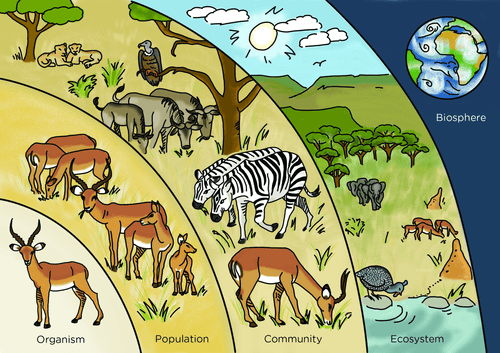
The living world is organized in levels. Biotic and abiotic factors also can be arranged into levels of biological organization. Put the words below in order from the least complex to the most complex
Community, Organism, Biome, Population, Biosphere, Ecosystem
Organism, Population, Community, Ecosystem, Biome, Biosphere
Organism, Biome, Population, Community Biosphere, Ecosystem
What can you tell about organisms that survive an immediate short term change?
They have adaptations to allow them to survive new coniditions
They will eventually die from the short term effects.
Pond succession is caused by a long-term natural process.
True
False
Omnivores eat producers and primary consumers. What type of consumer might they compete with?
Carnivores and producers
Herbivores and carnivores
Producers and decomposers
Decomposers and herbivores
If an environment change occurs and reduces a food for a consumer, how might this affect the consumer's population?
The consumer population would decrease because they would not have enough food
The consumer population would increase rapitdly because they would have enough food.
The consumer population would stay the same .

How many organisms only eat plants?
1
2
3
Decomposers at on the side of an energy pyramid becuase they breakdown all organisms which have died.
True
False, they only break down producers
Why does only a small amount of energy flow from one level of an energy pyramid to the next?
because energy is used for all life processes
because more energy is used by consumers
because more energy is used by producers
A large population of mosquitos are sprayed with insecticide, but several still survive and have become resistant to this spray. Why could this of happened?
They adapt no matter what the environment?
the environment has no effect on the organisms
the spray causes mutations that are passed on to the next generation
the mosquitos that survived had favorable adaptations
Over time penicillin/antibiotics are no longer working on bacterial infections, why might this be happening? (click all that apply)
bacteria use penicillin for food and energy
bacteria destroyed the penicillian
bacteria had mutations to prevent penicillin from affecting them
Some bacteria were resistant to the antibiotic and reproduced
How could plants who depend on bees to pollinate survive if the bees were to become extinct?
they could grow taller for the remaining bees to pollinate them
change their flower so the wind could pollinate them
the seeds stay alive for a long time
adapted to other insects that can pollinate them
In some New Zealand estruaries, shellfish-bed population have declined due to habitat changes and over harvesting. How will this affect the biodiversity of these ecosystems?
Biodiversity will increase along with number of shellfish
Biodiversity will decrease as well as the number of shellfish
Dark colored animals in a dark grass field survive better because
they are able to hide from their predators
because they are able to been seen easier for predators to find
because lighter colored organisms are able to reproduce more easily
If organisms in a coral reef were destroyed, what would happen to the coral reef?
other organisms would move in to the reef area
the reef would expand do to less living organism taking up space
the reef would be gin to deteriorate adn decrease without biodiversity to maintain stability
the temperature of the surrounding waters would decrease the number of organisms living in the reef
Which of these is most likely to cause a change in genetic traits in an population of ground-swelling lizard species?
mutations that are not passed onto the offspring
an unusually dry summer
introduction of an invasive predator that preys on bright colored-lizards
fast moving wildfire that burns the canopy of the trees in the ecosystem
How does camaflage help an organism adapt and survive? (choose the best answer)
helps them find a habitat
helps them resist disease
helps them avoid predators
helps them defend their offspring

Click on the picture to answer the question. What is true about a food web?
It is just 1 path of energy.
It is all possible energy paths.

According to the image, what is the producer?
plant
insect
mouse
snake

What level on the energy pyramid contains the most energy?
producer level
primary consumer level
secondary consumer level
tertiary consumer level

The word "primary" means "first."
If that's true, what does primary consumer mean?
Hint: look carefully at the food chain!
the first organism in a food chain
the first organism that consumes something else for energy

According to the image, what is the primary consumer in the food chain?
plant
insect
mouse
snake

According to the image, what is the secondary consumer?
plant
insect
mouse
snake

What kind of organisms are usually at the top of the food chain?
producers
herbivores
omnivores
carnivores
Which of the following is abiotic?
a tree
grass and other vegitation
a hawk
precipitation
Some limiting factors that affect populations include lack of food, lack of water, lack of living space, and the spread of disease.
True
False
Tell if the item is an abiotic factor or biotic.....
Water
Abiotic
Biotic
The living world is organized in levels. Biotic and abiotic factors also can be arranged into levels of biological organization. Put the words below in order from the least complex to the most complex
Community, Organism, Biome, Population, Biosphere, Ecosystem
Organism, Population, Community, Ecosystem, Biome, Biosphere
Organism, Biome, Population, Community Biosphere, Ecosystem
What do herbivores eat?
Animals
Plants and Animals
Plants
Dead Animals
What do omnivores eat?
Animals
Plants and Animals
Plants
Dead Animals
What is the hawk in the food web?
Producer
Primary consumer
Secondary consumer
Tertiary consumer
How much energy is transferred between trophic levels?
25%
20%
10%
90%
Which of these is an autotroph?
Consumer
Producer
Decomposer

The bar graph below shows the number of species in
four pond ecosystems.
Based on this information, which ecosystem is likely
to be the most stable?
A
B
C
D
Which of the following organisms compete for the same food source?
grasshoppers and grains
rabbits and mice
mice and grasshoppers
foxes and owls
Which of the following organisms DO NOT compete for the same food source?
grasshoppers and rabbits
hawks and blue jays
owls and hawks
caterpillars and rabbits
As a predator population increases what will happen to the prey population?
It will decrease
It will increase
It will remain the same
Why is it illegal to release non-native animals in the wild?
a non native can reduce the amount of food available for native animals
they are too tame to survive
there will be no food for it to eat
If a invasive pest invades an area and kills other organisms living in that areas what is likely to be true?
it has no natural enemeis to regulate it
it has become a tertiary consumer
it has become an autotrophic organism
If the snake population were removed what would happen to the other populations. in the food web?
The mice and rabbits would increase
The mice and rabbits would decrease
The hawk poulation would increase
Short term changes immediately affect a population.
True
False
Long term changes quickly affect a population over a short period of time.
True
False, they happen gradually
If a polar bear is at the top of an energy pyramid, and is a carnivor, what will he most likely NOT eat on the energy pyramid?
Producers
Primary Consumers
Secondary Consumers
Both Primary and Secondary Consumers
If a chemical spill affected the process of photosynthesis, then would it lead to a decrease in plant populations?
Yes
No
What can you tell about organisms that survive an immediate short term change?
They have adaptations to allow them to survive new coniditions
They will eventually die from the short term effects.

What do the deer eat most in this graph
Grass and feed
Weeds and shrubs
feed and crops
Pond succession is caused by a long-term natural process.
True
False

In the image above which area has more biodiversity?
Zone 1
Zone 2
Zone 3
Omnivores eat producers and primary consumers. What type of consumer might they compete with?
Carnivores and producers
Herbivores and carnivores
Producers and decomposers
Decomposers and herbivores
If an environment change occurs and reduces a food for a consumer, how might this affect the consumer's population?
The consumer population would decrease because they would not have enough food
The consumer population would increase rapitdly because they would have enough food.
The consumer population would stay the same .
In order for a plant to live in a freshwater and saltwater environment it would nedd to be able to filter excess salt.
True
False
How many organisms only eat plants?
1
2
3
What are the 3 reactants of photosynthesis? The reactants are the things needed for photosynthesis to occur.
oxygen, glucose, sunlight
sunlight, oxygen, water
water, oxygen, carbon dioxide
carbon dioxide, sunlight, water

What pigment captures/absorbs sunlight?
stomata
chlorophyll
chloroplast
phloem

What is the tiny openings that let in the carbon dioxide needed for photosynthesis?
stomata
xylem
phloem
chloroplast

How does water travel from the roots to the plan leaf? Name the structure that carries water.
stomata
phloem
chloroplast
xylem
What are the 2 products of photosynthesis? The products are the things made in the process of photosynthesis.
water, sunlight
glucose, carbon dioxide
oxygen, glucose
sunlight, oxygen
What is the main purpose of photosynthesis?
To make food
To create energy
To release oxygen
To absorb sunlight

Which product is "waste" and mostly released by the producer (plant)?
oxygen
carbon dioxide
sugar
glucose
Which of the following are TRUE statements? (Select ALL that apply)
Photosynthesis takes place in the chloroplasts of leaf cells
Photosynthesis means "making food using sun"
Photosynthesis can occur in the dark
All plants, plant-like protists, and some bacteria go through photosynthesis
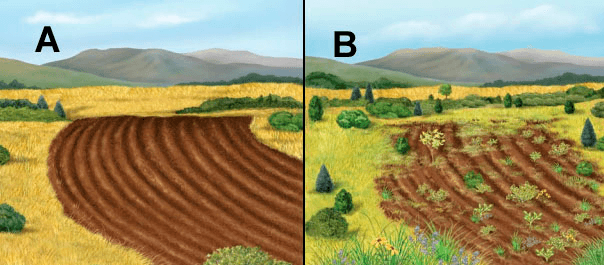
What type of succession is shown going from figure A to figure B?
primary succession
ecological succession
secondary succession
intermediate species

What is the role of the pioneer species in Primary Succession?
To kill any remaining organisms from before the disturbance
To break down rock and rebuild soil
To provide food for large animals
To put fresh oxygen into the air
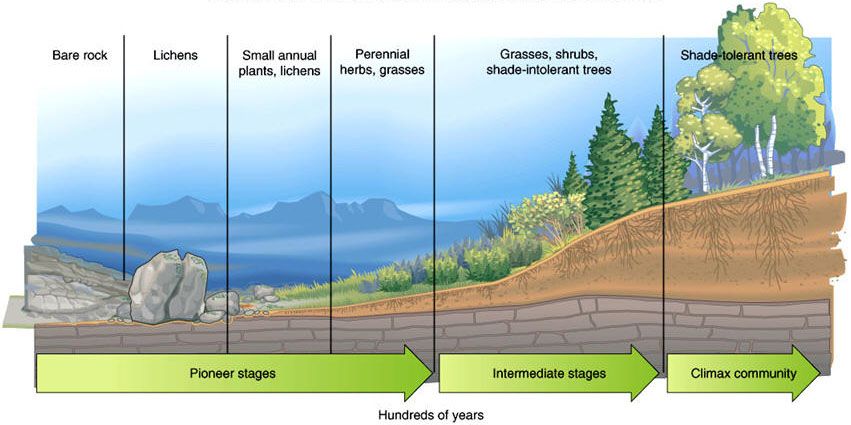
The picture shows what type of succession?
primary
secondary
tertiary
quadanary
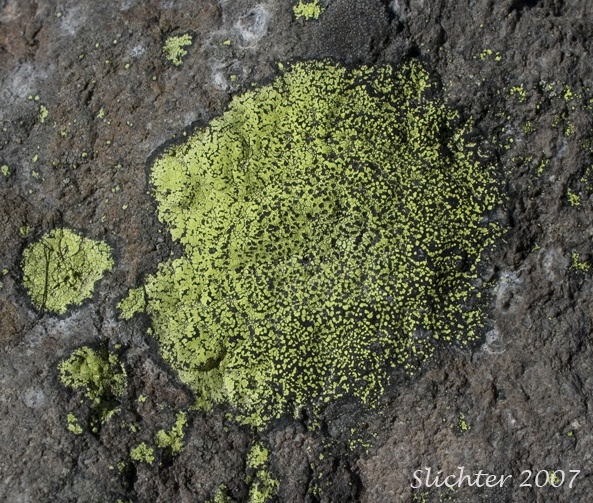
After a volcanic eruption, lava covers the land. What is the order that plants grow to repopulate the area?
Lichens → Shrubs → Grasses → Trees
Lichens → tree → shrubs→Grasses
Grasses → Lichens → Shrubs → Trees
Lichens → Grasses → Shrubs → Trees
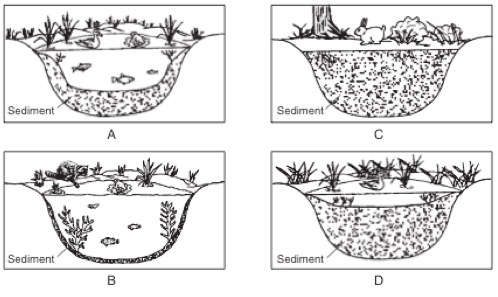
What is the correct order in this pond succession? (YOUNGEST to OLDEST)
A, B, C, D
D, C, B, A
B, A, D, C
C, D, A, B
Starts with BARE ROCK followed by lichen
primary succession
secondary succession
both types of succession
Which of these is an example of a climax community?


Take your time and read carefully!
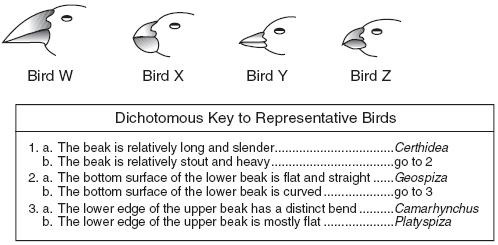
A student discovers an arachnid with a segmented abdomen, long legs, and a tail with no stinger. The student uses the dichotomous key below to identify it. Which arachnid has the student found?
Whip Scorpion
Wind Scorpion
Tick
Scorpion

Secondary succession begins in an area with:
Bare Rock
Soil
Stable, final stage of succession:
First Community
Climax Community
Pioneer Species
Intermediate Community
this type of succession happens after a fire, tornado or another catastrophic event:
Primary Succession
Secondary Succession
Which two body systems work together to allow the body to move? Click two
Nervous
Muscular
Digestive
Reproductive
skeletal
Which of the following shows tissue and cells?


What do muscle cells have in common that helps them perform functions?
different structure
Same structure
they loose strenth
they can only function once
Blood is a
organism
organ
tissue
What is the main function of our skin which is part of the integumentary system?
support
regulation
protection
What is the skin made of to be considered an organ?
cells
protective barrier
tissue
Which of these are functions of the circulatory system
moves nutrients to cells
protects vital organs and tissue
distributes oxygen in all parts of the body
aids in regulation of mood
aid in the removal of wastes from cells
Which of the following shows functions of the digestive system
(check all that apply)
distributes oxygen to all parts of the body
absorbes nutrients
mechanically and chenically breaks down food
converts food to energy
aids in regulation of mood

The image above shows a body system that does which of the following?
allows for exchange of oxygen and carbon dioxide
provides structure for movement
circuates blood throughout the body
What is the most basic structure that supports growth and survivial?
Cell
Tissue
Organ
Organ System
The integumentary system is similar to the
chloroplast
cell membrane
mitochondria
vacuole
Which body system transports nutrients, water and oxygen to the cells?


Which body system protects the vital organs from injury?
Protects the body from germs (click all that apply)
stomach
skin
hair
nails
Which two body systems eliminate wastes?
(Click two)
Integumentary
Respiratory
Skeletal
Muscular
Which organelle provides energy for muscles to contract and relax?
Vacuole
Chloroplast
Mitochondria
Nucleus
What takes place in the bone marrow of the skeletal system
protection or organs
production of blood cells
storage of calcium
structure and support
Which shows the correct order of levels of organization from smallest to largest?
cell, organ, tissue, organ system, organism
cell, tissue, organ, organ system, organism
organism, organ system, organ, tissue cell
Which of the following is part of the circuatory system?
Brain
Lungs
Heart
Liver
Bones

Correctly label R
Mouth
Lungs
Trachea
Diaphram

In the example image, the glass tube is the same as the ___________ in the respiratory system.
Mouth
Lungs
Trachea
Diaphram
In the example image, the baloons are the same as the ___________ in the respiratory system.
Mouth
Lungs
Trachea
Diaphram
In the example image, the rubber sheet is the same as the ___________ in the respiratory system.
Mouth
Lungs
Trachea
Diaphram
Which body system controls the movement of limbs and othe body parts?
Endocrine
Muscular
Skeletal
Circulatory
Which image below shows the parts of the digestive system?


Which image below shows the parts of the excretory system?
Which image below shows the parts of the nervous system?
What is chewing food?
Chemical Change
Physcial Change
Which of the body systems below breaks down food into nutrients that can be absorbed into the blood system?
Digestive
Endocrine
Excretory
Reproductive
Where does both mechanical and chemical digestion takes place?
(check all that apply)
Mouth
Stomach
Liver
Esophagus
What carries these nutrients from the digestive system to the other parts of the body?
Circulatory
Skeletal
Nervous
Where does chemical change begin in the digestive system?
Mouth
Esophegus
Stomach
Liver
The Kidney, Urethers and Blader are part of the excretory system. What does this system do?
Removes waste
regulates hormones
Circulates Blood
Protects the organs
Which body system supports the body, protect the organs, produce blood cells, and store calcium.
Skeletal
Muscular
Endocrine
Reproductive
Which body system regulates the composition of the body fluids by removing metabolic wastes and retaining balance of water, salt, and other nutrients.
Excretory
Muscular
Endocrine
Reproductive
Which body system regulates and maintains bodily functions by producing hormones and releasing them into the blood stream
Excretory
Muscular
Endocrine
Reproductive
Which body system enables the diffusion of oxygen into the bloodstream and the removal of carbon dioxide from the blood stream
Excretory
Muscular
Endocrine
Respiratory
Which body system alerts the muscles to react when you touch something hot?
Endocrine
Nervous
Reproductive
Muscular
Which body system’s primary function is the continuation of the species?
Respiratory
Reproductive
Digestive
Endocrine
The adrenal glands secrete a hormone that allow you to react or respond, what body system are they in?
Endocrine
Excretory
Reproductive
Repiratory
Which of the following methods of reproduction results in the greatest variation between parent and offspring?
Sexual
Asexual
Asexual reproduction (click all that apply)
Requires only one parent
Requires two parents
Reproduces quickly
Genetically identical offspring

The body system shown produces electrical signals to control the functions of other body systems, what is the name of this system?
Endocrine
Nervous
Circulatory
Exretory

This is an image of a nerve cell. What does this type of cell do?
pass electrical signals throughout an organism
Delivers oxygen to the red blood cells
produces hormones to regulate the body systems
Homeostasis is the maintenance of a stable environment inside the body.
True
False
Which image below shows the parts of the endocrine system?


This part of the cell produces energy
Mitochondria
Nucleus
Vacuole
Chloroplast
This part of the cell holds the other organelles in place and is a jelly like substance
Vacuole
Chloroplast
Cytoplasm
Nucleus
Photosynthesis happens in this organelle:
Vacuole
Nucleus
Cytoplasm
Chloroplast
Part of the cell that controls what substances can enter and leave the cell.
Cell Wall
Cell Membrane
Nucleus
Vacuole
Supports the structure of a plant cell and protects the cell
Cell Wall
Cell Membrane
Cytoplasm
Chloroplast
Which organelle tells you that you are looking at a eukariotic cell?
Nucleus
Cytoplasm
Chloroplast
Cell Wall
Only Eukariotic cells have a membrane bound nucleus.
True
False
Which organelle is known as the powerhouse of the cell?
Nucleus
MItochondria
Chloroplast
Cell theory states that all cells come from pre-existing cells.
True
False
Which organelles are only found in plant cells?
Nucleus and Chloroplast
Mitochondria and Chloroplast
Cell Wall and Chloroplast
Cell Wall and Cytoplasm

Which organelle tells you Cell A is a plant cell?
Cell Membrane
Cell Wall
Nucleus
Mitochondria

Which location shows a vacuole?
1
2
3
4
Which organelle stores water and other nutrients for a cell?
Nucleus
Mitchondria
Vacuole
Cell Membraine

Which organelle is at location 1?
Cell Wall
Cell Membrane
Cytoplasm
Vacuole

Which organelle is at location 2?
Cell Wall
Cell Membrane
Cytoplasm
Mitochondria

What is found at location 3?
Cell Membraine
Cell Wall
Cytoplasm
Mitochondrian

What is found at location 4?
Mitochondira - power house of energy
Nucleus - stores genetic material
Vacuole - water and food storage
Cell Membraines only provide structural support for the cell.
True
False

According to levels of organization what are you seeing in the image above?
cells and organs
cells and tissue
organs and tissue
tissue and organism
Plant cells and animal cells have large vacuoles that hold water and other nutrients.
True, of course it's true!
False, only large in plant cells
Animal cells have a cell wall.
True
False
Plant cells have large vacuoles and chloroplast, but animal cells do not
True
False
A single cell is the smallest unit that can perform all functions of life.
True
False
The nucleus stores genetic material called DNA.
True
False
Chloroplast converts energy in food for a cell using photosynthesis. It is only found in what type of cell?
Plant Cell
Animal Cell

Which organelle in this plant cells shows the chloroplast?
1
2
3
4

Which structures are at location 1 and 2?
Cell Wall and Cell Membraine
Vacuole and Nucleus
Mitochondria and Chloroplast
Which is the correct order of levels of organization.
Cell, organ, tissue, organism
Tissue, organ, cell, organism
Cell, tissue, organ, organism
Cells vary in size, but have the same shape.
True
False
All organisms are made of one or more cells.
True
False

Chromosomes are genes that are only found in the nucleus of the cell. What type of cell do they form in?
Plant Cells
Animal Cells
All Cells
Cytoplasm is found in all cells.
True
False
A living multicelluar that carries out all functions of life?
Cell
Tissue
Organ
Organism
A collection of organs that carry out a specific function
Tissue
Organ
Organ System
Organism
A cell is the basic unit of life.
True
False
A collection of specific tissues that carry out a specific function of life.
Cell
Tissue
Organ
Oranism

