
 Worksheets
G8 Q2 FINAL EXAM REVISION
Total questions: 189
Worksheet time: 4hrs 11mins
Displacement is the difference between your
reference point and reference direction
total distance traveled
starting position and your final position
average speed
An object's location or _______________ is the distance from a reference point.
distance
position
acceleration
displacement

Which line on the graph represents the fastest constant speed?
A
B
C
They are all moving at the same speed.
How do we find time?
distance x speed
speed - distance
distance ÷ speed
speed + distance
A toy car moved along a 1.2 km track in 0.1 hour. Find the speed of the toy car.
0.2 km/h
1.2 m/min
12 km/h
200 m/h
The location of a place or an object is called...
position
motion
speed
reference point
What is a reference point?
A place or object that is staying still, that is used to determine if something else is moving.
A place or spot where something is located
The action of moving or being moved
Shortest distance between starting position and ending position
To determine if an object has changed position, you need to know its position relative to another object. _______________
True
False
Velocity is speed with direction
True
False
20 km/hr is an example of
direction
velocity
speed
distance
300 km/hr North is an example of
Velocity
Speed
Direction
Reference point
You should NOT use a moving object as a reference point
True
False
If you leave home and travel a million miles around the world and stop back home, what is your displacement?
One million miles
0
two million miles
none of the above
You can find speed by
Distance / Time
Time/ Distance
Time/Time
7) If you ride your bike around the block, returning to the exact point where you started, your displacement is (a) m?
Units of Distance
Litres
Meters
Kilogram
Kilometers
Units of Speed
Kilogram
meter/second
Meter
Kilometer / Hour
Motion can be described through a change in _____.
temperature
distance
position
speed
Match the description to the graph:
"The car is traveling at a constant speed."


Distance divided by time
average speed
constant speed
instantaneous speed
Rate of change of position in which the same distance is traveled each second
constant speed
instantaneous speed
average speed
the starting point you choose to describe the location, or position, of an object
reference point
motion
displacement
position

This car moves at a (an) ............... speed.
constant
changing
When the body covers equal distances at unequal intervals of time, this means that the body moves at .................
changing speed
increasing acceleration
constant speed
decreasing acceleration
A moving bus covers a distance of 500 m in 25 sec., so its speed equals ...............
200 m/sec
20 m/sec.2
20 m/sec.
20 m
What two measurements (factors) are needed to calculate average speed?
Distance and Time
Volume and Mass
Mass and Time
Speed and Distance

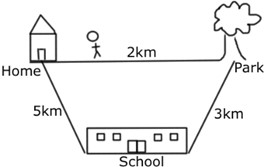
Jerry walked from home to school, then from the school to the park. What is his total displacement?
2 km
5 km
8 km
10 km
A quantity that consists of both a magnitude and a direction
displacement
vector
reference point
distance
What is the difference between Velocity and Speed ?
Velocity has distance which speed does not have
Velocity has time which speed does not have
Velocity has direction but speed does not have
both velocity and speed are the same
Velocity is measured in
m
m/s
m/s2
km/s
A plane flying with a speed of 3000 m/s west toward California is an example of...
Speed
Velocity
Acceleration
Direction
a force is best defined as ---
the application of weight
a push or pull that is exerted on matter
the flow of electric charges
a bond in which electrons are shared
Which law of motion predicts that a moving hockey puck will continue to move in the same direction at the same speed unless acted upon by another force?
Newton's First Law of Motion
Newton's Second Law of Motion
Newton's Third Law of Motion
Newton's Law of Universal Gravitation
The force of an object, with a certain mass accelerating at a certain rate, can be determined by using the equation below.
force = mass x acceleration
Which object would have the greatest force?
A 5 kg object accelerating at 10 m/s
A 5 kg object accelerating at 20 m/s
a 20 kg object accelerating at 4 m/s
a 20 kg object accelerating at 3 m/s

In the diagram below, a girl sits on a sled and slides down a hill of snow. Which arrow represents the force of friction opposing the motion of the sled down the hill?
Arrow A
Arrow B
Arrow C
Arrow D
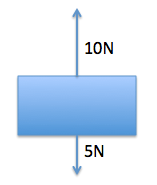
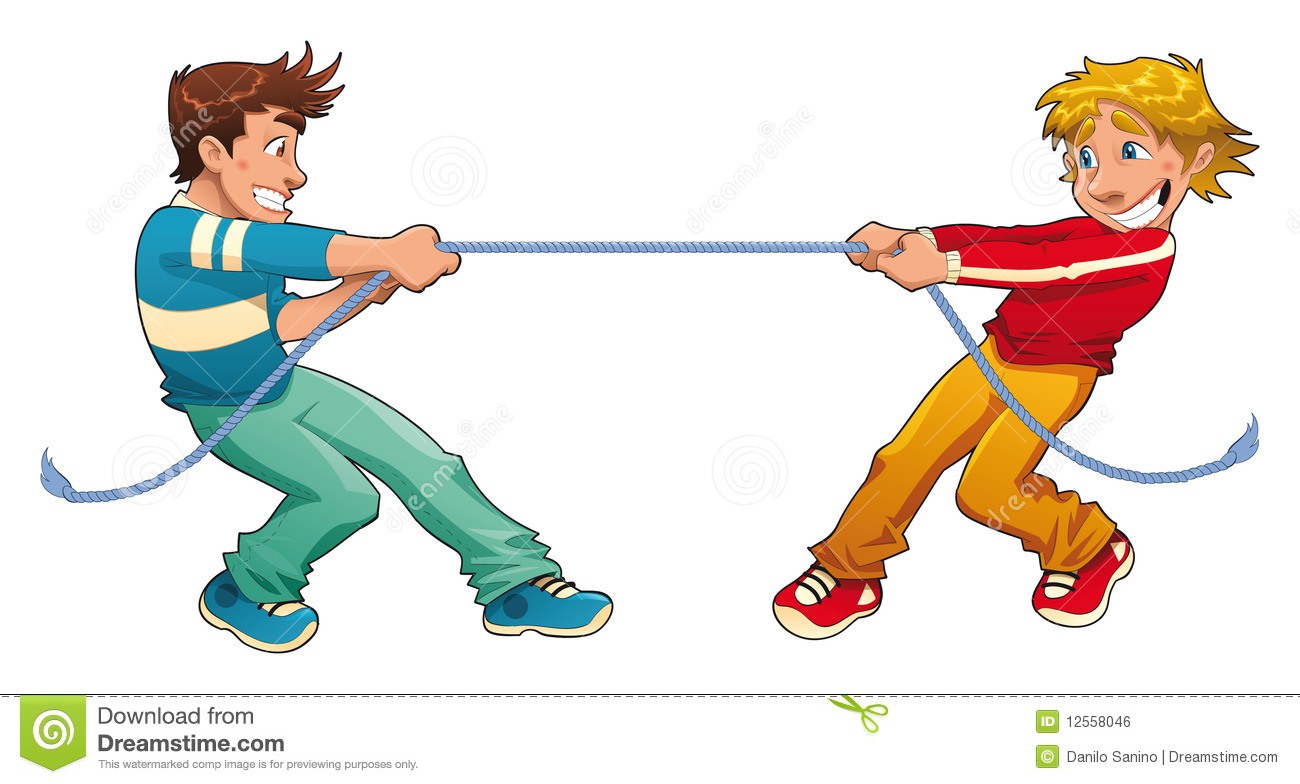
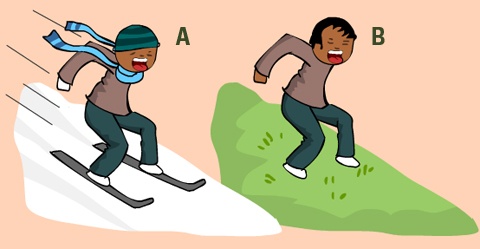
A force that opposes motion is
friction
inertia
acceleration
momentum
Newton's second law states.....
If there is more mass then there is more acceleration
An object at rest wants to be in motion
Force = Mass x Acceleration
The force exerted on an object is not related to mass or acceleration
A force of 40 N acts upon a 2 kg block. Calculate the acceleration of the object.
20 m/s2
20 m/s
80 m/s2
80 m/s
When an object is falling and the force of gravity is equal to the force of air resistance
Terminal Velocity
Top Speed
Parachute Level
Free Fall
The sum of all forces acting on an object.
Added forces
Net force
forcey force
Equation force
Which of the following is Stated by Newton’s second law of motion?
For every action force, there is a reaction force
Force usually exists as pairs
Force is directly proportional to mass and inversely proportional to acceleration
Acceleration is inversely proportional to mass and directly proportional to force
if the same force is applied to two objects: one 10 kg and the other 15 kg.
10 kg will accelerate more than 15 kg
True
False
The force that one surface exerts on another when the two rub against each other is called
a. c.
b.. d. .
friction.
inertia.
acceleration
gravity

Of the following, which are vector ?
Acclereation
Rough surfaces have _________ compared to smoother surfaces.
greater friction
less friction
the same level of friction
Without friction, an object in motion would never stop.
true
false
Friction is a
non - contact force
contact force
electrostatic force
magnetic force

In the figure a boy is seen pushing a box from right to left. The force of friction will act on the box
from right to left
from left to right
vertically downwards
vertically upwards

How is this an example of Newton’s Third law?
Only the ball is using the head
They are both exerting an equal force on each other
Only the head is pushing the ball
1st
Law of Motion
2nd
Law of Motion
3rd
Law of Motion

Force always come in________
waves
triplets
pairs
When a small car pushes a big truck, the truck applies an equal and opposite force on the car.
False
True
Action-reaction pairs can cause a change in motion.
True
False
Which of Newton's Laws gives the reason for why you can feel things that you touch?
second
third
first
all of the above

What law is best described
1st
2nd
3rd
law of motion


What is the sum of all forces acting on an object?
net force
motion
third law
collide
The forces two objects apply to each other?
force pair
friction
acceleration
vector
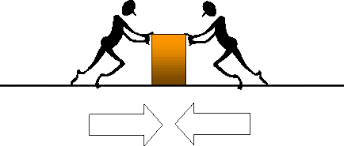
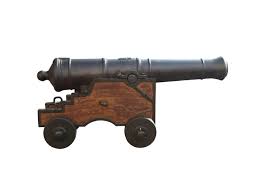

You push against a wall and the wall is pushing back on you.
Newton's 1st Law
Newton's 2nd Law
Newton's 3rd Law

Newton's 3rd Law of Motion is also known as the Law of _____.
inertia
acceleration
action and reaction
Action reaction forces never cancel each other out because
They act on different objects.
They act on the same objects
They do not act on objects.

The forces in a force pair are in _______ direction
opposite
same
The force that pushes perpendicular to the object's surface
normal force
contact force
net force
force pair
When colliding objects bounce off each other.
Elastic Collsion
Noncontact force
contact force
friction
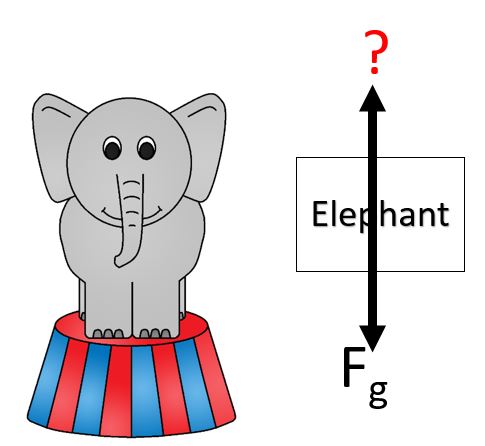
What is the name of the missing force?
gravity
normal force
applied force
frictional force

A book is at rest on a table. Check all the forces that act on it.
gravity
normal force
applied force
friction

The normal force on the tennis ball...
is always perpendicular
is always parallel
can be in any direction
is in the opposite direction

What type of collision is modeled?
elastic collision
inelastic collision

What does it mean that the normal force is 'perpendicular'?
90° angle
equal to
opposite direction
heavier than

How many objects are involved in an action-reaction force pair?
1
2
3
as many as possible
1
8
3
12

The swimmer pushes off of the wall of the pool and moves forward. What is the ACTION in this example?
Swimmer pushes off the wall of the pool
Swimmer moves forward
Wall pushes back against swimmer.
ACTION: The rocket engines ignite and push the gases downward
What is the reaction of the rocket?
The rocket moves upward
Mass of the rocket decreases
The gases cause a reduction in air resistance
The rocket moves downward
The force that keeps objects on top of surfaces instead of letting them sink into the surface is known as:
normal force
abnormal force
static force
inertia
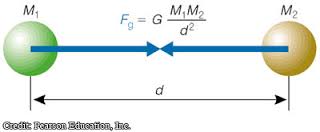
As the mass of an object increases, the gravitational force acting on it ......................
Increases
Decreases
Stays the same
Why do we have a stronger gravitational attraction with Earth than the sun?
we are closer to center of Earth
the Earth has a larger mass
we are closer to center of sun

The force of gravity (mass x gravity) is also known as...
mass
weight
distance
acceleration
Earth's gravitional .......................... is 9.8 m/s2
force
weight
acceleration
mass

...................... is the first one who discovered the Earth's gravitional force.
Einstein
Galileo
Darwin
Newton
What is the measuring unit used to measure gravity?
pounds
grams
newtons
friction
The gravitational force exerted by an object depends on its
volume
mass
weight

________is what makes up all things in the universe.
Weight
Mass

Gravitational force always ____________.
pulls
pushes
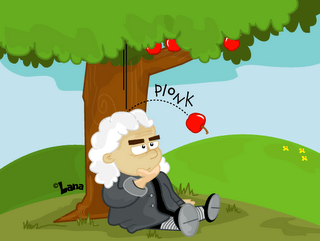
As the mass of an object increases, the pull of gravity
Increases
Decreases
Stays the same
The force of gravity (mass x gravity) is also known as...
mass
weight
distance
acceleration
Earth's gravity, 9.8 m/s2, is considered a/an...
force
weight
acceleration
mass
Mass and weight are the same thing.
True
False
The definition of gravitational field is
The region of space surrounding a body where other bodies will feel an attractive force due to it.
The region of space surrounding a body where other bodies will feel an repulsive force due to it.
The region of space surrounding a charge where other charges will feel an attractive force due to it.
The region of space surrounding a charge where other charges will feel an repulsive force due to it.
The force between two masses
gravitational force
force
mass
attract
Kinetic energy is
stored energy
energy at rest
energy in motion
stationary

What kind of energy does the picture show?
Potential Energy
Chemical Energy
Thermal Energy
Kinetic Energy

What kind of energy does the picture show?
Thermal Energy
Kinetic Energy
Sound Energy
Potential Energy

Which truck has more kinetic energy?
The truck going 40 mph
The truck going 90 mph
Both have the same amount of kinetic energy



Energy and work are measured in
kilograms
meters
Joules
m/s
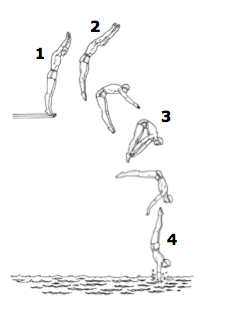
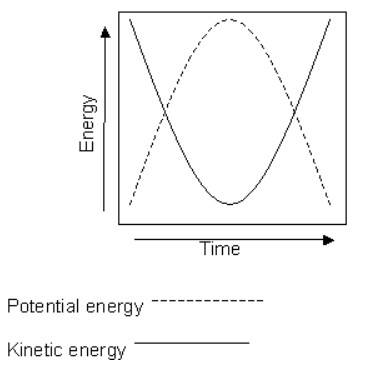
This graph depicts what type of relationship between kinetic and potential energy?
Non-Linear
Linear
Inverse
Poly-atomic
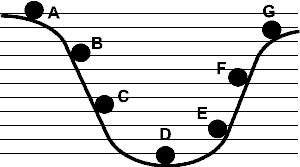
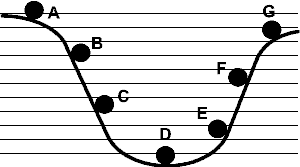
At which point does the ball has the greatest gravitational potential energy (GPE)?
A
G
D
C
G
Which would have the LEAST gravitational potential energy (GPE)?
A ball sitting on the ground
Moon viewed from the Earth
An airplane flying 30,000 feet above the ground
A rock sitting on top of Mt. Everest
Which of the following is an example of gravitational potential energy?
A moving bicycle
A stretched rubber band
A book on a high shelf
A charged battery
When a rock is at the top of a hill, what type of energy is at its maximum?
Kinetic energy
Elastic potential energy
Gravitational potential energy
Chemical potential energy

The sum of potential and kinetic energy
Mechanical Energy
Elastic Energy
Thermal Energy
Electrical Energy
What two factors affect an object's kinetic energy?
area and volume
mass and weight
weight and height
mass and speed

Where would this tossed baseball have the least amount of kinetic energy?
point W
point X
point y
point z
Where would this tossed baseball have the greatest amount of kinetic energy?
point W
point X
point y
point z
Increasing an object's mass will increase its kinetic energy.
true
false
Increasing an object's speed will increase its kinetic energy.
false
true
Which graph represents the relation between velocity and K.E?


Which graph represents the relation between mass and K.E


If the velocity is doubled, the K.E will
Increase by a factor of 4
Decrease by a factor of 4
Increase by a factor of 2
Decrease by a factor of 2
gravitational potential energy is due to interaction of objects in_______________
gravitational field
magnetic field
electric field
gravitational potential energy is effected by _____ ( select 2 answers)
mass of object
height of object
shape of object
color of object
when object height increases , gravitational potential energy________
increases
decreases
does not change
____________ is the ability to do work.
Energy
Force
Friction
Motion
When you are holding a book, energy is stored between the book and Earth; this type of energy is called ________ potential energy.
Kinetic Energy
Chemical Energy
Gravitational Potential Energy
Electric Energy
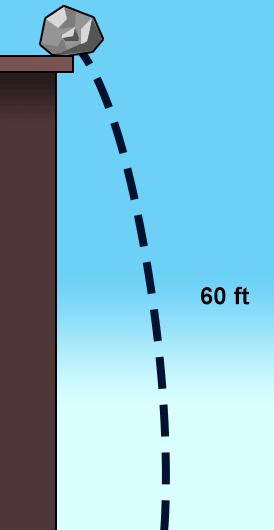
The rock in the picture is pushed over the edge and it begins to fall. Which type of energy conversion is taking place?
mechanical to heat
sound to mechanical
potential to kinetic
kinetic to potential
Energy can not be created nor destroyed: it can only be
What is the Law of Conservation of Energy?
(a)
when the kinetic energy of an object is 30 J and its potential energy is 50 J, so its mechanical energy is ................. J
100
20
1500
80
What are the two forms of energy that make up mechanical energy?
Chemical
Potential
Kinetic
Electrical


The graphs below show the potential and kinetic energy at different points along the rollercoaster. Which graph would be the correct graph for point A?


This is an example of what type of energy?
Kinetic
Potential
Electric
Thermal

What does the PE vs. KE graph look like at Point X?
Hint: pay close attention to the graphs so you don't get tricked 👀


If mass is doubled the K.E is
Halved
Doubled
Increased by a factor of 4
Decreased by a factor of 4
Friction converts kinetic energy into
potential energy.
thermal energy.

