
 Worksheets
EOC REVIEW
Total questions: 186
Worksheet time: 3hrs 48mins
An abnormal mass of cancer cells is called a
tumor
cyst
lesion
True or False: Environmental factors can increase the risk of cancer.
True
False
Cancer is
a premature stop in the cell cycle.
uncontrolled mitosis.
programmed cell death.
What contains all of the genetic information about the cell?
cell wall
cell membrane
cytoplasm
DNA
Which of the following are differences in the structure between RNA and DNA
DNA uses deoxyribose sugar, RNA uses sugar ribose
DNA pairs Adenine with Uracil, RNA pairs Adenine with Thymine
DNA is a double helix, RNA is a single helix
DNA pairs Adenine with Thymine, RNA pairs Adenine with Uracil
When these bond together, they form a protein
Amino Acids
Peptide Bonds
Ribose
Nucleotides
These building blocks consist of a sugar, phosphate, and nitrogen base.
Ribose
Nucleotide
Gene
Protein
Enzymes are an example of
Lipids
Carbohydrate
Protein
Nucleic Acid
5. Which biomolecules provide quick energy for the cell and also provide materials to build the cell membrane/wall?
Carbohydrates
Proteins
Lipids
Nucleic Acids
10. Your friend is feeling irritable, lightheaded and dizzy. They are also feeling a bit of confusion and brain fog. Which biomolecule would you recommend your friend consume?
Protein
Carbohydrates
Nucleic Acid
Lipid
2. Which biomolecules contains your genetic information?
Proteins
Lipids
Carbohydrates
Nucleic Acids
9. Amino Acids are the monomers of __________.
Nucleic Acids
Proteins
Carbohydrates
Lipids
3. Which biomolecules act as energy storage for the cell and also cushions and insulates organs?
Carbohyrdates
Lipids
Proteins
Nucleic Acids
8. The monomer of Nucleic Acids is known as _________.
Amino Acid
Fatty Acid
Nucleotide
Saccharide
1. The four most common elements found in biomolecules are __________.
Sulfur, Phosphorus, Carbon, Oxygen
Carbon, Oxygen, Nitrogen, Hydrogen
Sulfur, Nitrogen, Carbon, Iron
Carbon, Nitrogen, Hydrogen, Sulfur
Click on the two products of Cellular Respiration?
H2O
O2
CO2
C6 H12 O6
What do photosynthesis and cellular respiration have in common?
They both require Sun light.
Both are carried on by heterotrophs
They both create energy for an organism to use.
They both transform energy for an organism to use.
Which of the following is the symbol for Glucose?
O2
CO2
H20
C6 H12 O6
Which of the following statements best describes the term photosynthesis?
When plants absorb the energy from the sun.
How plants reproduce.
The process by which plants make their own food.
The process by which animals make their own food.

Which of the following is needed for the process of photosynthesis?
Water
Oxygen
Starch
Carbon dioxide

Chlorophyll is:
The substance that makes plants green.
Found inside the chloroplast cells.
Used to absorb energy from the sun.
All of the above.

The openings that are found in the leaves of plants are called:
Stomata
Chlorophyll
Xylem
Chloroplast

The tubes that carry water through the roots and stems are called:
Stomata
Chlorophyll
Xylem
Chloroplast
The process of photosynthesis takes place in the:
Leaves of the Plant.
Stem of the plant.
Roots of the plant.
All of the above.


Leaves are composed of vascular tissue that brings water in so that ground tissue can conduct photosynthesis. Based on this information, what level of organization describes leaves?
Tissue
Organ
Organ system
Organism
Plants are complex organisms that are composed of multiple layers of organization. Which of the following best represents the organization of the root system from most complex to least complex?
root system → root → phloem → cell
root system → cell → phloem → root
root system → phloem → root → cell
root system → root → cell → phloem

What internal stimulus would cause the plant to respond as depicted below?
Exposure to too much sunlight
Exposure to very little sunlight
An abundance of water in the stem
A lack of water in the stem
What mutation has occurred here?
T-G-A-C-C-A
T-G-A-G-C-A
Substitution
Deletion
Insertion
Frameshift
Which of the following would result in a frameshift mutation?
Insertions only
Substitution only
Deletion only
Insertions and Deletions
A mutation is defined as:
A change in the cell's structure
Anything that changes in an embryo
Any change in the physical features of a human
A change in the DNA sequence
ATTTGAGCC- Original
ATTGAGCC - Mutated
The example above is an example of a
Insertion- Frameshift
Deletion- Substitution
Deletion -Frameshift
All of the above
What mutation has occurred here?
T-G-A-C-C-A
T-G-A-G-C-A
Substitution
Deletion
Insertion
Frameshift
Why are insertion and deletion (frameshift) mutations so harmful?
They change all of the codons from the mutation on down the line, which changes the amino acid sequence
They insert things that an organism doesn't need.
They often delete things that organisms need.
Insertion and deletions are not any more harmful than substitution mutations.
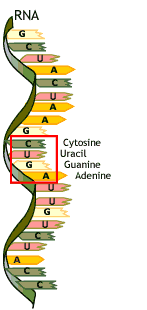
How many nucleotides code for 1 amino acid?
1
2
3
4
Which of the following is the complementary mRNA sequence to this DNA strand: AACTGAA
UUGACUU
TTGACTT
AACTGAA
AACUGAA

Which organelle is the location where protein is made?
Ribosome
Nucleus
Cytoplasm
Nucleotide
Match the DNA codon GCA to the correct mRNA codon
CCU
GCT
CGU
CGA

Use your codon chart to match the mRNA CUU to the correct amino acid
VAL
TYR
LEU
PHE

Use your codon chart to match the mRNA ACU to the correct amino acid.
Thr
Ala
Val
Gly
Amino Acids are built up to make_______
DNA
mRNA
Lipids
Proteins

Use your codon chart to find the amino acid that codes for AGU
Tyr
Gly
Arg
Ser


The trout is a source of food for the human and the eagle. When there are more than one organism vying for (trying to get) the same source we call this____?


A feature that allows an organism to better survive its environment
Variation
Natural Selection
Adaptation
Fitness
Adaptations can be:
camouflage
ability to survive cold weather
hunting skills
all of the above

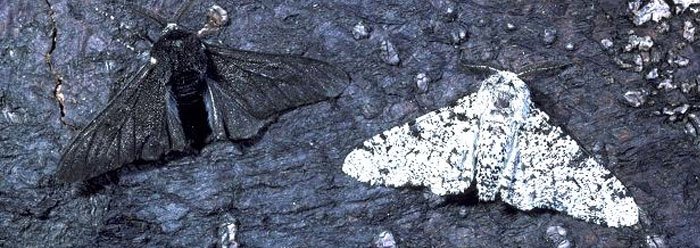
What is most likely to happen to moth populations in the picture shown?
Light moths--hunted easily, dark moths--population increase
Dark moths--hunted easily, dark moths--population increase
Light moths--hunted easily, light moths--population increase
Lights moths will change their color to match dark moths.
How do you "win" at natural selection?
survive
go extinct
survive & reproduce

Due to pollution, a pond becomes darker over time. Which trait variation became more common?
light fish
dark fish
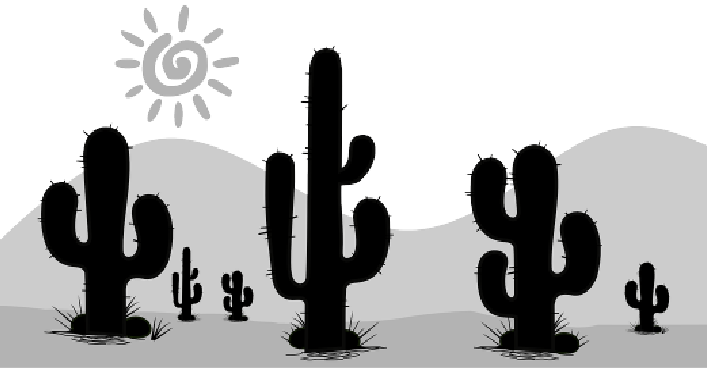
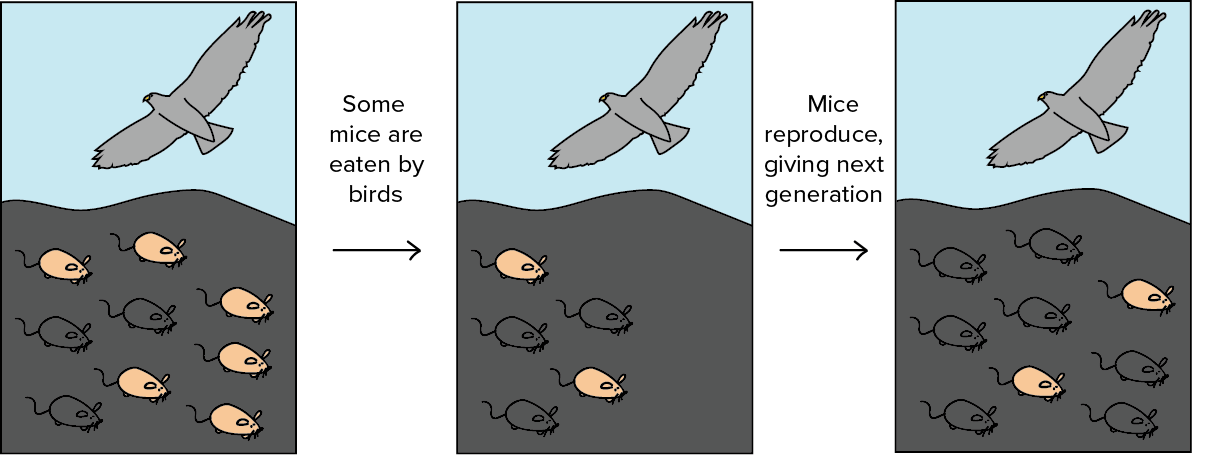
Natural Selection is driven by a change in the environment and survival of the
Earth
Fastest
Fittest
Biggest
Change in a population over time that descend from a common ancestor.
Natural Selection
Selective Breeding
Homeostasis
Evolution
I can be either a heterotroph or an autotroph-
I am mostly unicellular
I am the "Junk Drawer" kingdom
The only thing for sure about me is that I have a nucleus in my cells...
I am Kingdom ____________ .
Plantae
Protista
Animalia
Fungi
I am unicellular
I am prokaryotic
I am found in extreme environments
What kingdom do I belong to?
The Eubacteria
Kingdom Plantae
Kingdom Animalia
Kingdom Archaebacteria
Which level of taxonomy shows the closest relationship between 2 organisms?
kingdom
class
domain
species
There are many different species of big cats around the world. Why is having a scientific name for each species of an organism important?
to prevent existing named organisms from having their name changed as they become extinct
to keep the classification system from being altered as new organisms are discovered
to allow organisms to be placed in many classification levels at the same time
to standardize the naming and organization of organism to avoid confusion between scientist across the world
All living things are divided into three groups called 'domains'. They include, Domain Bacteria, Domain Archaea, and ____________.
Domain Animalia
Domain Eukarya
Domain Prokaryotic
Domain Protista

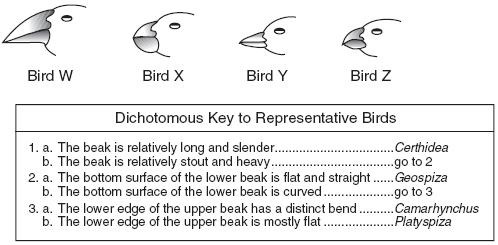

The three stages of the cell cycle are __________, mitosis, and
cytokinesis.
interphase
anaphase
metaphase
prophase
Identical cells formed during cell division are called:
daughter organelles
daughter cycles
daughter nucleus
daughter cells
____________ ensures that our bodies grow and repair
themselves.
The cell growth
The cell repair
The cell recycle
The cell cycle
The final stage of the cell cycle is called:
Interphase
mitosis
cytokinesis
daughter cells
What can the cell cycle also be called?
Cell growth
DNA Replication
Preparation for Mitosis
Cell Division
Centrioles pull the chromosomes apart towards the opposite sides of the cell describes:
Prophase
Metaphase
Telophase
Anaphase
Spindle fibers attach, centrioles line chromosomes in the center of the cell describes:
Prophase
Telophase
Metaphase
Anaphase

What stage of mitosis is depicted here
Prophase
Metaphase
Anaphase
Telophase

What stage of mitosis is depicted here
Prophase
Metaphase
Anaphase
Telophase

What stage of mitosis is depicted here
Prophase
Anaphase
Telophase
Metaphase
Which of the following best describes Specialized Cells?
They can divide rapidly
They are identical to all other cells in the organism
They have specific structures and functions
They are only found in cancerous cells
Cells differentiate to perform different functions because
all genes are turned on inside that cell
all genes are turned off inside that cell
different genes are turned on inside that cell
different genes are turned on or off inside that cell
During the process of differentiation
all sections of DNA are activated to determine the structure of a body cell
ONLY ONE section of DNA are deactivated to determine the structure of a body cell
only specific sections of DNA sequence are activated to determine the structure and functions of a body cell
Unspecialized cells in our body that has the ability to differentiate into different types of cells are called
specialized cells
differentiated cells
nerve cells
stem cells
Specialized cells such as muscle, blood, or nerve cells are caused by cell differentiation led by
Environmental Factors
nucleus
ribosomes
plasma membrane
Living cell that does not have a nucleus
Prokaryote
Eukaryote
Virus
Which of the following is a viral infection?
salmonella (food poisoning)
influenza (Flu)
strep throat (streptococcus)
What do viruses need to reproduce?
More viruses
A host cell
Bacteria
What do viruses need to reproduce?
More viruses
A host cell
Bacteria
Which of the following is a risk of overusing antibiotics to treat infections>
Bacteria may become resistant to antibiotics.
Antibiotics increase the rate of infection.
Antibiotics cause other diseases to develop.
A bacterium reproduces asexually by dividing to form two new bacterial cells. What is the name of the process by which bacteria reproduce?
meiosis
budding
binary fission
Which statement is true about viruses?
Viruses can eat and metabolize food.
Viruses can reproduce only using a host cell.
Viruses can reproduce on their own at any time.
I’m a real “powerhouse.”
That’s plain to see.
I break down food
To release energy.
Who am I?
mitochondria
golgi body
nucleus
ribosome


Vascular tissue (tubes) responsible for the transportation of water and minerals up from the roots and around the plant.
Stomata
Transpiration
Phloem
Xylem

What vascular tissue carries organic nutrients "sugar" throughout the plant?
Xylem
Phloem
Cones
Leafs
What 2 systems: Transports white blood cells throughout the body to fight disease
Excretory and nervous
Circulatory and immune
Respiratory and nervous
Digestive and immune
Which two systems interact so the kidneys filter cellular waste out of blood for removal?
circulatory and endocrine
respiratory and circulatory
digestive and respiratory
circulatory and excretory
increase the amount of sunlight plants absorb
roots
stems
leaves
What does xylem transport?
Water and minerals
Water only
Sugar
Food
Water and minerals move in which direction within the plant
Upward
Down
What does phloem transport?
Water
Minerals
Fruit
Sugar
What is the stomata in plants?
Large pores in the leaves
The green pigment
The chloroplast
Tiny pores in the leaves
The shoot system is the part of the plant that is ________________________________.
below the ground
above the ground
in the water
In the tree

low to high uses energy/ATP

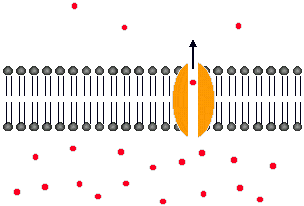
Need help from channel proteins. No energy required.

Uses energy.

Uses energy.

Doesn't need energy
low to high uses energy/ATP
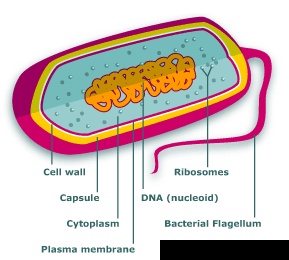

Prokaryotes do NOT have....
membrane bound organelles
DNA or RNA
Cell membrane
Life

You can find DNA ONLY in...
animals
all living cells
plants
bacteria
What is the backbone of DNA made of?
glucose and sucrose
amino acids and lipids
deoxyribose (sugar) and phosphate
carbon and helium
What are the 4 nitrogenous bases?
U T C G
A T C G
A C G R
A T C P
Adenine always binds with
adenine
thymine
cytocine
guanine
Cytosine always binds with
adenine
thymine
cytocine
guanine
The entire structure of DNA looks like a ladder twisted into a spiral. This shape is known as a
double helix
spun ladder
spiralled
DNA
The process in sexual reproduction where chromosomes can swap sections during cell division?
recombination
meiosis
mitosis
asexual reproduction
What cells does meiosis occur in?
egg and sperm (sex cells)
kidney cells
somatic cells (body cells)
skin cells
When DNA nucleotides are removed from a genetic sequence?
translocation
insertion
elimination
deletion
When nucleotides are added to a genetic sequence?
deletion
insertion
substitution
conversion

What type of dominance is shown in the picture?
Complete dominance
Incomplete dominance
Codominance
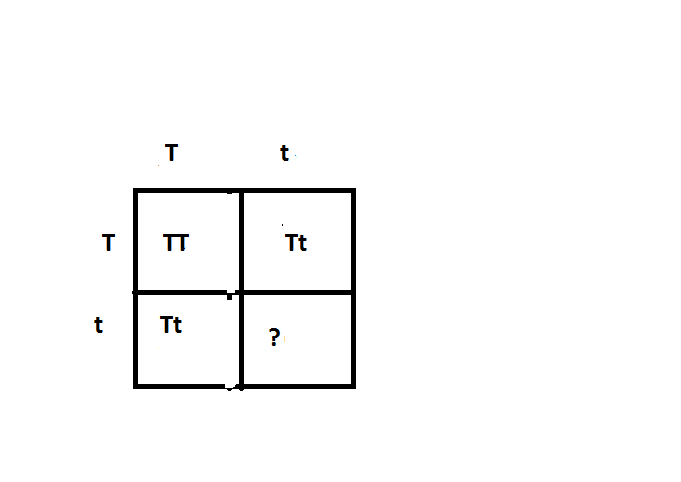
T - tall and t = short
In the punnett square below, what belongs in the missing square
tt
Tt
Bb
TT
B = brown eyes
b = blue eyes
One brother has genotype BB and the other brother has genotype Bb.
Which statement is true about these two brothers?
They have same phenotype and genotype
They have different phenotypes and genotypes
They have same phenotype, but different genotypes
They have different phenotypes, but the same genotype
The genotype Aa is called . . .
Homozygous recessive
Hybrid
Purebred
Homozygous dominant
Which of the following genotypes is Purebred? Select 2 answers.
aA
Aa
AA
aa
In a flowering plant species, red flower color (R) is dominant over white flower color (r). What is the genotype of any white-flowering plant resulting from this species?
rr
rR
RR
Rr

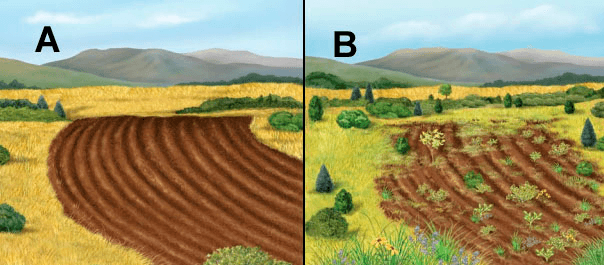
Which experiences the least change over time?
Pioneer Species
Primary Succession
Aquatic Succession
Climax Community
Primary succession occurs in areas with:
very little soil
lots of soil
no soil
soil that has been disturbed

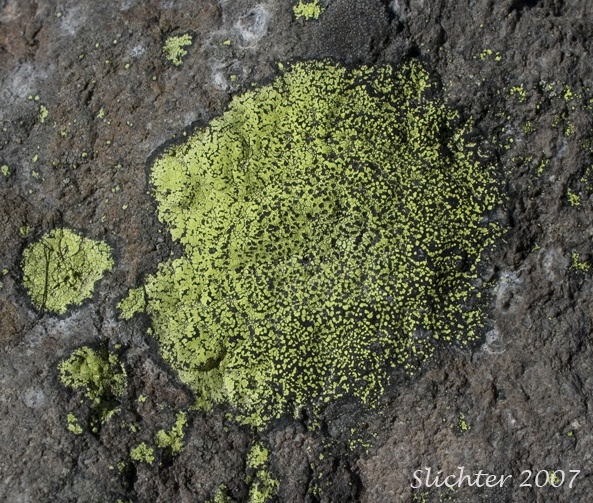

Heterotrophs cannot
make their own food
consumer other organisms
Heterotrophs are considered
producers
consumers
An autotroph can
not make its own food
make its own food
make plants
make certain bacteria
The greatest amount of ATP is produced during
fermentation
glycolysis
anaerobic respiration
aerobic respiration
What are the REACTANTS for cellular respiration?
oxygen and carbon dioxide
water and glucose
glucose and oxygen
What is cellular respiration?
the breakdown of glucose to release ATP
the breakdown of glucose to release FADH
the breakdown of glucose to release NADH
the breakdown of glucose to release carbon

