wayground logo

Free Printable Worksheets

Font size

S
M
L
XL
Worksheets

Science form1

Total questions: 182

Worksheet time: 2hrs 20mins

Name
Class
Date
1.
Every living organism is made up of one or more cells
a)
True
b)
False
2.
A cell is...
a)
the basic unit of structure and function in living organism
b)
an organism
c)
a basic part of everything that we see
d)
found only in animals, not plants
3.
Which of the following are NOT found in animal cells
a)
chloroplasts and cytoplasm
b)
chloroplasts and cell wall
c)
cell wall and cell membrane
d)
mitochondria and nucleus
4.
The nucleus is like the ____________ of the cell.
a)
foot
b)
hand
c)
stomach
d)
brain
5.

Which of the following converts food into energy for the cell?

a)

vacuole

b)

mitochondria

c)

cytoplasm

d)

cell membrane

6.

The fluid that surrounds the organelles is... (hint... "Try to pull a fast one and..."

a)

chloroplast

b)

cytoplasm

c)

vacuole

d)

cell wall

7.
What do vacuoles do? 
a)
They actually do not have an important role
b)
They protect the cell
c)
They are the brain of the cell
d)
storage area for cells; water storage in plants 
8.
If you were some bad guy trying to sneak into an animal cell, who would be there to stop you?
a)
nucleus
b)
mitochondria
c)
cell membrane
d)
cell wall
9.
Which of the following, found ONLY in plant cells, provides structure?
a)
cell wall
b)
chloroplast
c)
mitochondria
d)
vacuole
10.
This organelle creates the energy for the cell
a)
mitochondria
b)
cell membrane
c)
ribosome
d)
endoplasmic reticulum
11.
The ____________ regulates what enters and leaves the cell.
a)
mitochondria
b)
cell membrane
c)
golgi bodies
d)
cytoplasm
12.
What creates the protein for the cell?
a)
Cytoplasm
b)
Nucleus
c)
Golgi bodies
d)
Ribosomes
13.
_________ ship and package materials
a)
Golgi bodies
b)
Mitochondria
c)
Rough endoplasmic reticulum
d)
Smooth endoplasmic reticulim
14.
Animal cells have chloroplasts for photosynthesis
a)
True
b)
False
15.
What is the cell wall?
a)
Something in both animal and plant cells
b)
Only in animal cells
c)
Found in plant cells and it surrounds the cell membrane
16.
Rocks are not living because
a)
they never move
b)
they aren't needed for humans
c)
they are not made of cells
d)
they don't break down
17.
An organism made of one cell is called
a)
unicellular organism
b)
multicellular organism
18.
Which best describes the main job of most cells in multicellular organisms?
a)
Cells work to keep themselves alive.
b)
Cells work to keep the organism alive.
c)
Cells work to release needed materials.
d)
Cells work to store unneeded materials.
19.
Which organisms are capable of surviving as a single cell?
a)
bacteria
b)
humans
c)
plants
d)
fish
20.
Which best explains why humans are multicellular organisms?
a)
Human cells are too small to function alone.
b)
Human cells join together to form one large cell.
c)
Humans need many cells to carry out life processes.
d)
Humans have many systems that perform the same function.
21.
Which structures are found in every living cell?
a)
cell membrane and cytoplasm
b)
chloroplasts and mitochondria
c)
a cell wall and nucleus
d)
chloroplasts and cell wall
22.
What is the function of the cell nucleus found in both plant and animal cells?
a)
to produce energy
b)
to control cell activity
c)
to remove waste products
d)
to allow molecules to enter the cell
23.
What is one basic function of the vacuoles?
a)
circulating oxygen
b)
producing food
c)
controlling cell processes
d)
storing water
24.
What is the function of a cell wall?
a)
to protect and support the cell
b)
to perform different functions in each cell
c)
to prevent water from passing through it
d)
to prevent oxygen from entering the cell
25.
Who was the first  person to see cells under the microscope and give them their name?
a)
Mattias Schleiden
b)
Robert Hooke
c)
Theordor Schwann
d)
Anton van Leeuwenhoek
26.

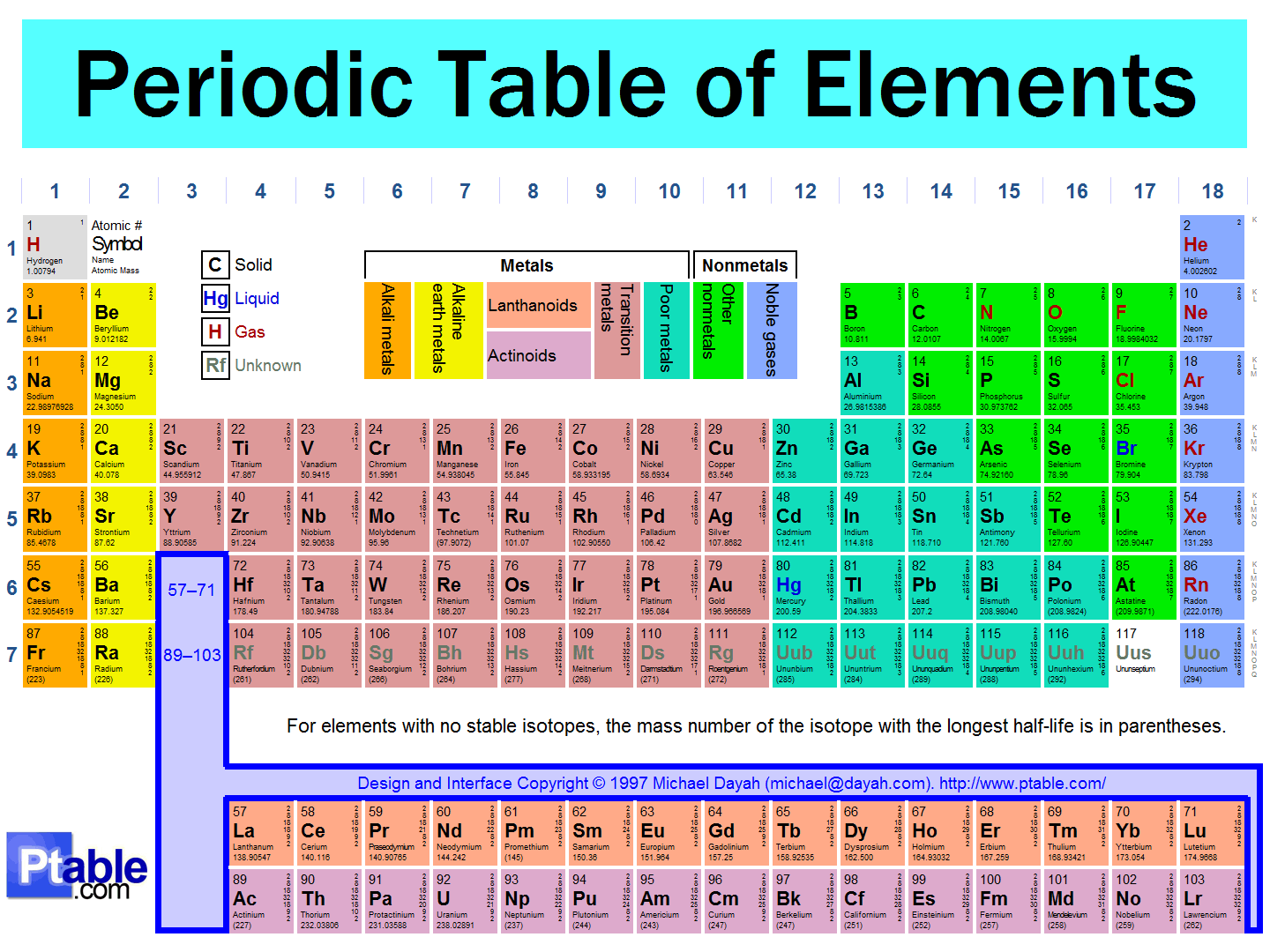
The vertical (up and down) columns in the Periodic Table are called

a)

groups

b)

towers

c)

periods

d)

atomic numbers

27.
The Modern Periodic Table of Elements is arranged by
a)
atomic mass
b)
atomic number
c)
valence electrons
d)
number of isotopes
28.
Sodium (Na) is found in period 
a)
3
b)
2
c)
4
d)
1
29.
The atomic number tells you what?  READ THE ANSWERS CAREFULLY
a)
only the number of electrons
b)
 only the number of protons
c)
only the number of neutrons
d)
the number of both electrons and protons in an atom.
30.
What does the atomic mass tell you? 
a)
Basically,the number of electrons and protons
b)
The number of neutrons
c)
Basically, the number of protons and neutrons
d)
The number of protons.
31.
The atoms we study in 6th grade are neutral, which means they have the same number of
a)
protons and electrons
b)
protons and neutrons
c)
electrons and neutrons
32.
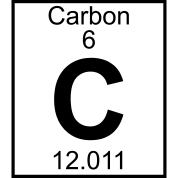
What does the 6 represent?
a)
atomic mass
b)
atomic number
c)
element name
d)
chemical symbol 
33.
What does the C represent?
a)
atomic mass
b)
atomic number
c)
element name
d)
chemical symbol 
34.
These are found on the Periodic Table.
a)
Compounds
b)
Elements
c)
Mixtures
35.

The horizontal (side to side) rows in the Periodic Table are called

a)

groups

b)

families

c)

periods

d)

atomic numbers

36.

the positively charged subatomic particle contained in the nucleus of an atom

a)

proton

b)

neutron

c)

electron

d)

matter

37.

one or two letters that represent the name of an element

a)

element name

b)

element symbol

c)

atomic number

d)

atomic mass

38.

a grouping of elements based on similar properties, arranged by columns in the periodic table; also known as a group

a)

family

b)

period

c)

row

d)

isotope

39.

the mass of an atom, calculated by adding the number of protons and neutrons in the nucleus of the atom

a)

element name

b)

element symbol

c)

atomic number

d)

atomic mass

40.
What is the force that causes objects to fall to Earth?
a)
Air resistance
b)
Gravity
c)
Water resistance
d)
Pressure
41.
Which of these is NOT a force?
a)
Friction
b)
Air resistance
c)
Water resistance
d)
Electrical resistance
42.
What is the name of the units that we measure force in?
a)
Einsteins 
b)
Newtons
c)
Kg
d)
Metres
43.
In which direction does gravity act?
a)
Downwards
b)
Upwards
c)
In all directions
d)
Towards the centre of the Earth
44.
Which is the correct definition of a 'force'?
a)
An influence, which cannot be measured, that causes something to move, stop moving or change direction.
b)
An influence, which can be measured, that causes something to move, stop moving or change direction.
c)
Something which has power.
d)
An influence, which can be measured, that causes something to move.
45.
What force does a parachute use to slow things down before hitting the ground?
a)
Friction
b)
Air resistance
c)
Water resistance
d)
Wind
46.
What type of force is air resistance?
a)
Contact
b)
Non-contact
47.
When two objects rub together, what force do they produce
a)
Gravity
b)
Air resistance
c)
Friction
d)
Water resistance
48.
What force does an aeroplane have to try to overcome so it is not slowed down too much?
a)
Gravity
b)
Air resistance
c)
Water resistance
d)
Friction
49.
What affect does water resistance have on a boat?
a)
Just slows it down
b)
Slows it down AND helps it keep afloat
c)
Makes it sink
d)
Just makes it float
50.
Which of these uses friction?
a)
A parachute
b)
A ball falling through the sky
c)
Brakes on a bike
d)
A wind turbine
51.
Which of these would you not find in a 'simple machine'?
a)
A lever
b)
A micochip
c)
A pulley
d)
A gear
52.
Simple machines allow...
a)
...a smaller force to have a greater effect
b)
....a bigger force to have a smaller effect
c)
... a force to be stopped
d)
...a force to be used in a useful way.
53.
What will cause an object to move?
a)
Applied forces
b)
Balanced forces
c)
Unbalanced forces
54.
(T or F?) A balanced force is only an object that is not moving. 
a)
True 
b)
False
55.
If an object is stationary (not moving) the forces acting upon it are _____________
a)
unbalanced
b)
weak
c)
balanced
d)
Hulk Smash!
56.
Which one is balanced?
a)
top
b)
bottom
c)
both
57.
At which letter is potential energy the highest?
a)
b
b)
c
c)
d)
58.
At which letter is kinetic energy the highest?
a)
a
b)
b
c)
c
d)
d
59.

A force is ____.

a)

a push or pull that can cause movement

b)

a magnet

c)

when someone does not work

60.

Work is _____.

a)

using force to move an object

b)

when a magnet attracts metals

c)

not doing homework

61.

A push is ____.

a)

a force to move something away

b)

a force to pull something towards you

c)

when a magnet attracts metals

62.

Magnetism is _____.

a)

a force that pulls metals towards a magnet

b)

when you look at a magnet

c)

a force that eats magnets

63.

Gravity is ____.

a)

a force that attracts objects towards each other

b)

a force that moves objects away

c)

a push or pull

64.

This is an example of ____.

a)

forces

b)

gravity

c)

magnetism

65.

This is an example of _____.

a)

magnetism

b)

gravity

c)

work

66.

This is an example of what force?

a)

pull

b)

push

c)

gravity

67.

This is an example of what force?

a)

push

b)

pull

c)

magnetism

68.
What is a Force?
a)
The distance
b)
Mass
c)
A push or pull
d)
Give me a  failing grade 
69.
The unit of force is
a)
m/s
b)
m/s^2
c)
newton
d)
kg
70.
Forces that have a net force of zero ( the object is still).
a)
Balanced force
b)
Unbalanced force
71.
What is the net force?
a)
5000 N right
b)
4000 N right
c)
40 N left
d)
4000 N left
72.
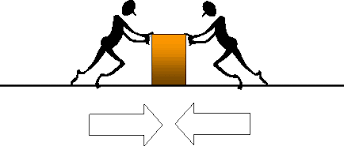
What is the net force in this picture?
a)
50 Newtons to the right
b)
950 Newtons to the right
c)
950 Newtons to the left
d)
50 Newtons to the left
73.
Which of the following is a true statement regarding springs?
a)
The higher the value of the spring constant, the stiffer the spring.  
b)
In Hooke's law, the force exerted by the spring acts in the same direction as displacement.  
c)
Springs are designed to provide unpredictable variations in force.  
d)
The force exerted by a spring has a quadratic relationship with the displacement form equilibrium.  
74.
Global warming has been linked to a decrease in 
a)
the size of the polar ice caps 
b)
the temperature of Earth 
c)
the rate of species extinction 
d)
the rate of carbon dioxide production
75.
Which human activity would preserve nonrenewable resources?
a)
deforestation
b)
removing carnivores from a forest 
c)
recycling
d)
heating homes with fossil fuels  
76.
Continued depletion of the ozone layer will most likely result in
a)
an increase in skin cancer among humans 
b)
a decrease in atmospheric pollutants 
c)
an increase in marine ecosystem stability 
d)
a decrease in climatic changes
77.
Increased industrialization will most likely
a)
decrease available habitats 
b)
increase environmental carrying capacity 
c)
increase the stability of ecosystems 
d)
decrease global warming
78.
Which human activity is correctly paired with its likely future consequence?
a)
overfishing in the Atlantic — increase in supply of flounder and salmon as food for people 
b)
development of electric cars or hybrid vehicles — increased rate of global warming 
c)
use of fossil fuels — depletion of underground coal, oil, and natural gas supplies 
d)
genetically engineering animals — less food available to feed the world’s population
79.
Which human activity would most likely deplete nonrenewable resources?
a)
use of natural enemies to eliminate insect pests
b)
development of wildlife refuges 
c)
governmental restriction of industrial pollution 
d)
increased use of fossil fuels
80.
Deforestation of areas considered to be rich sources of genetic material could limit future agricultural and medical advances due to
a)
the maintenance of dynamic equilibrium 
b)
the loss of biodiversity 
c)
an increase in the ecosystem’s carrying capacity
d)
the depletion of the ozone layer
81.
Approximately 75 percent of the Earth's surface is covered in water. So why is water considered such a precious resource?
a)
The greenhouse effect is causing most of the world's freshwater to be trapped in the atmosphere
b)
Only a small fraction of the Earth's water is freshwater available for drinking and irrigation
c)
Each year, more freshwater is being trapped in icecaps located at the North and South Poles
d)
Global warming caused by greenhouse gas emissions will likely cause Earth's oceans to evaporate
82.
Approximately 75 percent of the Earth's surface is covered in water. So why is water considered such a precious resource?
a)
The greenhouse effect is causing most of the world's freshwater to be trapped in the atmosphere
b)
Only a small fraction of the Earth's water is freshwater available for drinking and irrigation
c)
Each year, more freshwater is being trapped in icecaps located at the North and South Poles
d)
Global warming caused by greenhouse gas emissions will likely cause Earth's oceans to evaporate
83.
Many common products, such as wooden furniture, paper, and books, are made from trees. Which of the following is a likely consequence of humans cutting down a forest in order to make use of the natural resources there? 
a)
the decrease of chemical runoff into the oceans
b)
increased acid rain
c)
the increase of light pollution in cities
d)
the destruction of habitats
84.
What causes smog?
a)
The burning of particulates
b)
The formation of ozone
c)
Acid Rain
d)
the interaction of sunlight with pollutants produced by fossil fuels
85.
What are renewable resources?
a)
Resources that are used faster than they form
b)
a.  Resources that can replenish themselves over time
c)
a.  Resources that exist only in urban areas
d)
Resources that exist only in rural areas
86.
Which of the following is a renewable resource?
a)
coal
b)
solar energy
c)
natural gas
d)
oil
87.

What is matter?

a)

Anything that takes up space

b)

Anything that has mass

c)

Anything that has mass and takes up space

d)

I don't know Ms. Turner, I did not take notes

88.
The amount of space something takes up.
a)
matter
b)
mass
c)
volume
d)
element
89.
The state of matter in which a substance has a definite volume but no definite shape.
a)
gas
b)
liquid
c)
solid
d)
matter
90.
The state of matter in which a substance has a definite shape and definite volume.
a)
solid
b)
gas
c)
atom
d)
liquid
91.
The state of matter in which a substance does not have a definite shape or volume.
a)
element
b)
compound
c)
gas
d)
liquid
92.

The particles in a solid are...

a)

loose and have high energy

b)

tightly packed and have very little energy

c)

move freely and have lots of energy

d)

I dont know Ms. Turner, I didnt take notes
93.

The particles in a liquid are...

a)

loose and have high energy

b)

tightly packed and have very little energy

c)

move freely and have lots of energy

d)

I dont know Ms. Turner, I didnt take notes

94.

The particles in a gas are...

a)

loose and have high energy

b)

tightly packed and have very little energy

c)

move freely and have lots of energy

d)

I dont know Ms. Turner, I didnt take notes

95.
Color, flexibility, texture and shape are examples of 
a)
physical properties
b)
solids 
c)
gases
d)
mixtures 
96.
The 3 State of Matter are?
a)
Idaho, Texas, and Florida
b)
Matter, Mass, and Weight
c)
Solids, Liquids, and Gas
d)
Steel, Copper, and Brass
97.
A change in which the form or shape of a substance changes but the chemical makeup of the substance remains the same.
a)
chemical change
b)
reaction
c)
physical change
d)
solution
98.
A change in one or more substances, caused by a reaction, that forms new and different substances.
a)
mixture
b)
physical change
c)
element
d)
chemical change
99.
A combination of two or more different substances in which the substances keep their identities. 
a)
reaction
b)
mixture
c)
solution
d)
atom
100.
The process in which new substances are formed during  a chemical change.
a)
reaction
b)
solution
c)
matter
d)
volume
101.
A mixture that has the same composition throughout because all the parts are mixed evenly.
a)
reaction
b)
solution
c)
mixture
d)
atam
102.

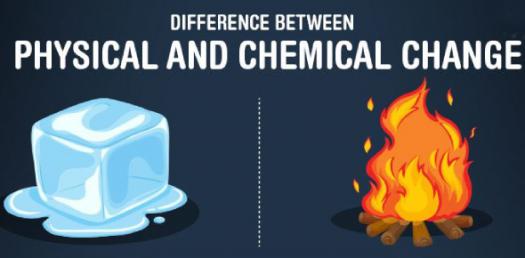
What is a sign of a physical change?

a)

Bubbles forming

b)

Color changing

c)

Stretching

d)

Producing heat

103.

What is a sign of a chemical change?

a)

Stretching

b)

Tearing

c)

Compressing

d)

Bubbles

104.

What happens to the atoms of a substance in a physical change?

a)

Atoms get bigger

b)

Atoms change their arrangement and motion

c)

Atoms get smaller

d)

Atoms bond together differently

105.

What happens to the atoms of a substance in a chemical change?

a)

Atoms get bigger

b)

Atoms change their arrangement and motion

c)

Atoms get smaller

d)

Atoms bond together differently

106.

Which of these observations would likely be an indication of a chemical change?

a)

A change in odor when two substances are mixed

b)

A change in temperature when a hot substance is left standing in air

c)

A change in volume as a substance is heated

d)

The disappearance of a liquid as it boils

107.
The beach ball is _____ dense than the water.
a)
more
b)
less
108.
Living things respond to heat, light, and sound.  This means they respond to:
a)
stimuli/ environment
b)
suction
c)
Dr. Suess
d)
digestion
109.
Plants get energy from the sun while animals get energy from
a)
condensation
b)
eating food
c)
photosynthesis
d)
sleeping
110.
All of the following are characteristics of all living things EXCEPT
a)
Respond to stimulus
b)
Grow and develop
c)
maintain homeostasis
d)
Movement
111.
Living things need energy to survive?
a)
True
b)
False
112.

The correct order for the organization of living things is

a)

cell -> tissue -> organ -> organ system -> organism

b)

cell -> atom -> organ system -> organism -> tissue

c)

cell -> atom -> molecule -> organism -> organ system

d)

tissue -> cell -> organism -> organ -> organ system

113.
Which of the following is NOT an organism?
a)
Kangaroo
b)
Mushroom
c)
Computer
d)
Oak tree
114.
The heart is an example of a(n) _________.
a)
Organ system
b)
Organ
c)
Organism
d)
Tissue
115.
The circulatory (cardiovascular) system is an example of a(n) _______.
a)
Organism
b)
Organ system
c)
Organ
d)
Cell
116.
Which of the following is an example of an organ system?
a)
Nervous sytem
b)
Computer system
c)
Intelligence system
d)
Healthcare system
117.
Tissues are made up of ________.
a)
organs
b)
organ systems
c)
organisms
d)
cells
118.
Where is there a low concentration of dye?
a)
at the bottom of cup
b)
in the color
c)
at the top of cup 
d)
no concenteraion gradient
119.
The picture below is an example of _________________.
a)
osmosis
b)
isotonic
c)
diffusion
d)
active transport
120.
Osmosis is the movement of _____ across a membrane.
a)
food
b)
energy
c)
oxygen
d)
water
121.
During osmosis
a)
water moves from high to low concentration
b)
large or oddly shaped molecules move across a cell membrane
c)
water moves when energy is used
d)
proteins are built
122.
Permeable means
a)
things can pass through
b)
the concentration levels are different
c)
it is permanent
d)
things are stuck
123.

The diffusion of WATER through a semi-permeable membrane is called?

a)

Osmosis

b)

Cell wall

c)

Diffusion

d)

Respiration

124.
Where is there a low concentration of perfume?
a)
in the bottle
b)
on the hand
c)
in the room
d)
in the top
125.
What is diffusion?
a)
when molecules move 
b)
when molecules move from a high concentration to a low.
c)
no movement 
d)
molecules move everywhere
126.
The term used to describe the diffusion of water.
a)
Diffusion
b)
Osmosis
c)
Selective Permeability
d)
Equilibrium
127.
The term used to describe when some molecules are able to pass through a membrane and others are not.
a)
Osmosis
b)
Diffusion
c)
Selective Permeability
d)
Equilibrium
128.
Molecules will move from an area of high concentration to an area of low concentration until they reach
a)
osmosis
b)
equilibrium
c)
selective permeability
d)
diffusion
129.
When both inside and outside of a cell have the same amount of water it is said that the cell has reached a state of
a)
Osmosis
b)
Diffusion
c)
Equilibrium
130.
A person would never have pure water put into their veins in a hospital because their cells would...
a)
Shrink/Dehydrate
b)
Expand
131.
A person should never drink salty water because their cells would
a)
shrink
b)
expand
132.
 An animal cell placed in a hypertonic (salty) solution will
a)
Stay the same
b)
Shrink- get smaller
c)
Swell- get bigger
133.
 An animal cell placed in a hypertonic (salty) solution will
a)
Stay the same
b)
Shrink- get smaller
c)
Swell- get bigger
134.

What is DIFFUSION?

a)
b)
c)
d)
135.

What happened to the CELL WALL and the CELL MEMBRANE in these plant cells?

a)

Both the CELL WALL and CELL MEMBRANE shrunk

b)

Only the CELL WALL shrunk, the CELL MEMBRANE stayed the same

c)

The CELL WALL stayed the same, only the CELL MEMBRANE shrunk

d)

Both the CELL WALL and CELL MEMBRANE stayed the same

136.

What is two or more substances that are together in the same place but their atoms are not chemically bonded.

a)

Mixture

b)

Solution

c)

Colloid

d)

Suspension

137.

___________________ is a measure of how much solute can dissolve in a given solvent at a given temperature.

a)

Solute

b)

Solvent

c)

Solubility

d)

Solution

138.

___________________ are mixtures that have a uniform or same appearance throughout it.

a)

Heterogenous mistures

b)

Homogenous mixtures

c)

Solution mixtures

d)

Pure mixtures

139.

In grape juice what is the solution?

a)

Sugar and other ingredients added

b)

Water added

c)

The Grape juice

d)

Water with the sugar added

140.

In grape juice what is the solvent?

a)

The Grape juice

b)

Water added

c)

Sugar and other ingredients added

d)

Water and sugar added

141.

A solution is made up 1 or more __________ and _____________.

a)

Suspension ; Solvent

b)

Mixture : Suspension

c)

Solvent : Solute

d)

Solute : Suspension

142.

What is Brownian motion?

a)

The movement of water molecules in a beaker

b)

The movement of air molecules

c)

The movement of solid molecules

d)

The movement of smoke particles in air

143.

Pollen grains suspended in water exhibit Brownian motion. How does a particle undergoing Brownian motion move?

a)

In smooth curves

b)

Randomly

c)

Orderly with a pattern

d)

In straight lines with no change of direction

144.

A student makes an observation using a microscope. He observed some particles which were moving in a zig-zag way. What particles could these NOT be?

a)

Smoke particles in air

b)

Dust particles in a room

c)

Pollen grains in water

d)

Molecules in a solid bar of steel

145.

Which of the following does NOT describe Brownian motion?

a)
b)
c)
d)
146.

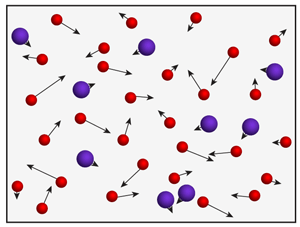
What evidence does Brownian motion provide about molecules of a gas or liquid?

a)

Molecules are close together

b)

Molecules are far apart

c)

Molecules move continously but randomly

d)

Molecules move continously and randomly

147.

Which of these is under greater pressure?

a)
b)
148.

Which of these under greater pressure?

a)
b)
149.
1. Which key term describes the random movement of particles?
a)
a) Diffusion
b)
b) Osmosis
c)
c) Brownian Motion
d)
d) Absolute zero �
150.
3. Identify the states of matter where Brownian Motion can occur.
a)
a) Solid, liquid, gas
b)
b) Liquid, gas
c)
c) Solid, gas
d)
d) Solid, liquid
151.
4. What is the major problem with trying to observe Brownian Motion?
a)
a) Molecules are moving too fast
b)
b) Molecules are moving too slow
c)
c) Molecules are too big to observe
d)
d) Molecules are too small to observe
152.
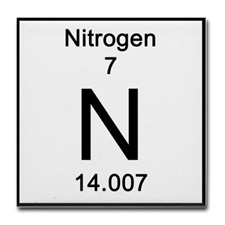
What is the number of protons that the element in this image contain?
a)
14
b)
7
c)
15
d)
18
153.
The positive particles of an atom are 
a)
Electrons 
b)
Positrons 
c)
Neutrons 
d)
Protons 
154.
The central region of an atom where its neutrons and protons are is its _______.
a)
Nucleus 
b)
Electron cloud
c)
Core 
d)
Center 
155.
An atom with atomic number 6 would have how many protons?
a)
6
b)
12
c)
3
d)
Cannot be determined 
156.
Particles in an atom that are neutral and have no charge are ______. 
a)
Negatrons 
b)
Electrons 
c)
Neutrons 
d)
Protons 
157.
An atoms overall charge is _____.
a)
Positive 
b)
Depends on its mood 
c)
Neutral 
d)
Negative 
158.
Which of the following is a negatively charged subatomic particle?
a)
Electron
b)
Proton
c)
Neutron
d)
Quark
159.
The particles that are found in the nucleus of an atom are _____.
a)
Neutrons and electrons
b)
Electrons only
c)
Protons and neutrons
d)
Protons and electrons
160.
The atomic number of an elements is the total number of which particles in the nucleus?
a)
Neutrons
b)
Protons
c)
Electrons
d)
Protons and electrons
161.
Most of the mass in an atom is concentrated in the _____.
a)
Electrons
b)
Nucleus
c)
Protons
d)
Empty space
162.
What are the 3 particles that make-up the atom?
a)
Protons, neutrons, and isotopes
b)
Neutrons, isotopes, and electrons
c)
Positives, negatives, and electrons
d)
Protons, neutrons, and electrons
163.
Which statement best describes an electron?
a)
Smaller mass than a proton and a negative charge
b)
Smaller mass than a proton and a positive charge
c)
Greater mass than a proton and a negative charge
d)
Greater mass than a proton and a positive charge
164.
True or False? Neutrons have a negative charge
a)
True
b)
False
165.
The part of the atom that is moving around the nucleus is called?
a)
electron
b)
neutron
c)
proton
166.
If the number of protons changes, does the atom change its identity?
a)
YES!
b)
NO!
167.

In the modern periodic table, elements are arranged by:

a)

atomic mass

b)

atomic number

c)

valence electrons

d)

number of isotopes

168.

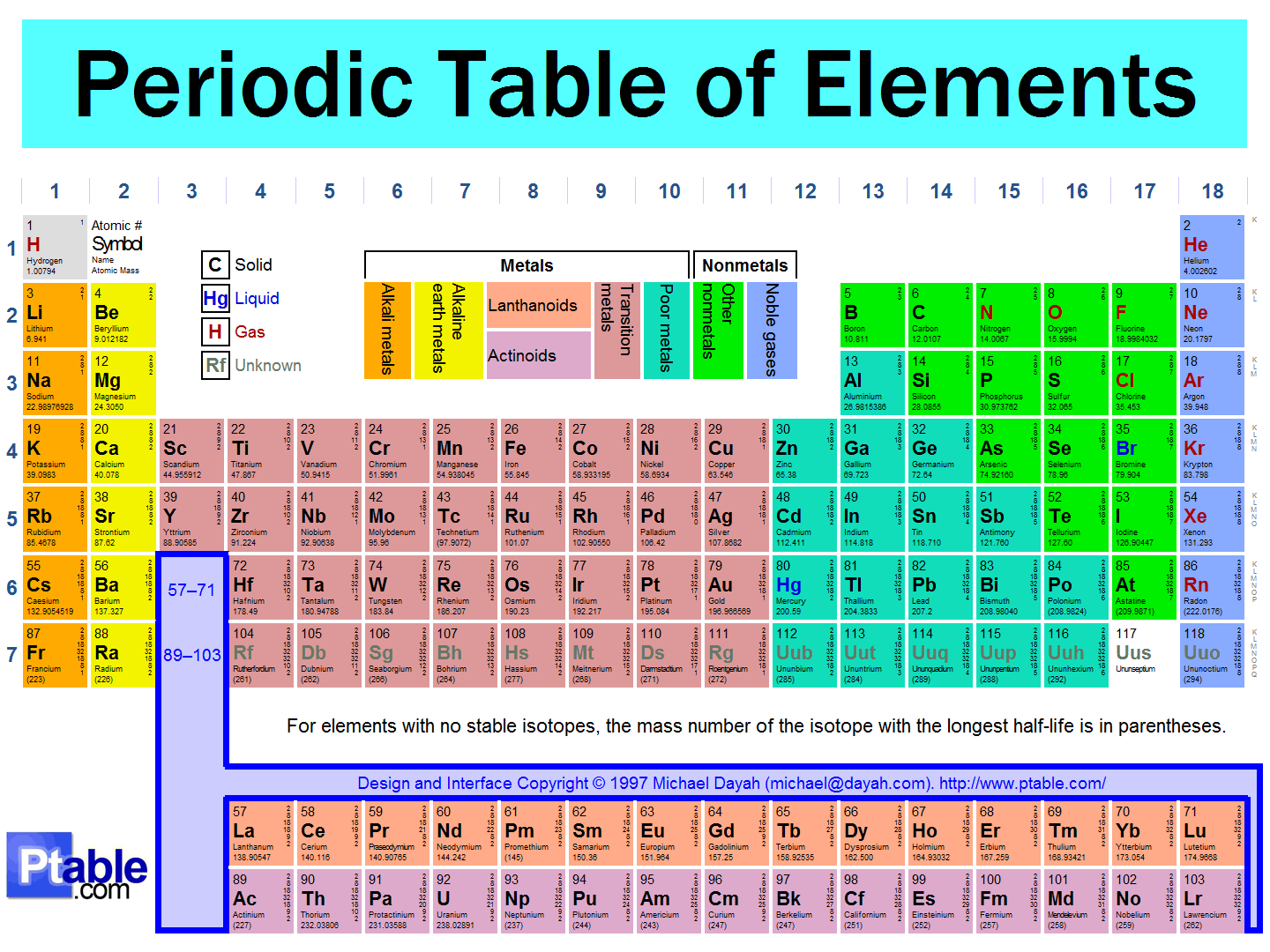
What does the 1.00794 stand for?

a)

Hydrogen

b)

atomic number

c)

atomic mass

d)

atomic explosion

169.

If an atom has 10 protons, 10 neutrons, and 10 electrons, what is the mass of the atom?

a)

10

b)

20

c)

30

170.

True/False: Compounds are made of two or more different elements.

a)

True

b)

False

171.

What particle uniquely identifies an element?

a)

Number of Valence Electrons

b)

Number of Protons

c)

Number of Electrons

d)

Atomic Mass

172.

Electrons are___________

a)

Extremely small even in comparison to protons.

b)

part of the nuclues.

c)

Super Positive, like cheerleaders!

d)

very large

173.

Atomic weight

a)

number of protons and neutrons inside the nucleus

b)

number or electrons or protons

c)

number of protons, neutrons and electrons

174.

Atomic number is

a)

Number of protons or electrons

b)

Number of protons and neutrons

c)

Your phone number

175.

What does the number 11 stand for in the Sodium block?

a)

atomic number

b)

atomic weight

c)

Stranger Things

176.

What does the K stand for in the Potassium block?

a)

Atomic number

b)

Atomic weight

c)

Symbol for the atom

177.

What does the 40.08 stand for in the Calcium block?

a)

Atomic number

b)

Atomic weight

c)

Atomic symbol

178.

Use a periodic table to help you determine the element in the image. (Hint: Use the # of protons.)

a)

lithium

b)

oxygen

c)

magnesium

d)

carbon

179.

Use a periodic table to help you determine the element in the image. (Hint: Use the # of protons.)

a)

carbon

b)

lithium

c)

beryllium

d)

nitrogen

180.

Use a periodic table to help you determine the element in the image. (Hint: Use the # of protons.)

a)

boron

b)

beryllium

c)

neon

d)

lithium

181.

How many protons does fluorine have?

a)

19

b)

1

c)

9

d)

10

182.

How many neutrons does nitrogen have?

a)

7

b)

14

c)

0

d)

6