wayground logo

Free Printable Worksheets

Font size

S
M
L
XL
Worksheets

1.5 Unit One Exam

Total questions: 192

Worksheet time: 3hrs 31mins

Name
Class
Date
1.

When it comes to glassware...

a)

don't use it if it's chipped/cracked

b)

don't pick it up if it breaks (let the teacher do it)

c)

dispose of it in the correct container

d)

all of the above

2.

Never work without...

a)

good music

b)

a buddy

c)

adult supervision

d)

a snack

3.

During lab, what do you do first?

a)

read all directions

b)

wash your hands

c)

gather your materials

d)

get the fire extinguisher

4.

Eating, drinking, or chewing gum in the experimental work area is...

a)

okay, as long as you share

b)

allowed once you've cleaned up

c)

encouraged

d)

forbidden

5.

Should make-up be applied during lab?

a)

No, the goggles cover your eyes anyway

b)

No, you should keep things away from your face, eyes, and mouth when using chemicals/specimens in lab

c)

Yes, when you look good, you feel good

d)

Yes, it's another barrier to protect you from chemicals

6.

When are you allowed to remove lab safety equipment?

a)

when your group is done

b)

when the goggles start fogging up

c)

when most of the groups are done

d)

when directed by the teacher

7.

Emergency equipment in our classroom includes:

a)

eyewash fountain

b)

safety shower

c)

fire extinguisher

d)

All of the above

8.

If there is an accident, injury, or close call, who should you tell immediately?

a)

your teacher

b)

your parents

c)

your lab partner

d)

no one

9.

When preparing for lab, you should...

a)

leave your long hair down

b)

wear baggy clothes

c)

wear closed-toe shoes

d)

watch the Marvel movies so you know what superpowers to expect if you mess anything up

10.

When observing chemicals...

a)

taste them

b)

waft odors toward you

c)

directly inhale them

d)

lick them

11.

Never leave ___ unattended.

a)

a dissected pig

b)

a test tube

c)

an active heat source

d)

a freshman

12.

Hot glassware (and many other lab materials) looks the same as...

a)

the sun

b)

mercury

c)

metal

d)

cold glassware

13.

If chemicals comes in contact with your skin or eyes, you should rinse the area water for ___________ minutes.

a)

10

b)

5

c)

15

d)

2

14.

If you do not understand a direction or part of a lab procedure, you should

a)

figure it out as you do the lab

b)

try several methods until something works

c)

ask the instructor before proceeding

d)

skip it and go on to the next part

15.

If an acid is splashed on your skin, wash at once with

a)

soap

b)

oil

c)

another, weaker acid

d)

plenty of water

16.

( Fill in the blank) Long hair should be ____________ in the laboratory.

a)

tied back

b)

cut

c)

down

d)

curled

17.

(True or False) Horse playing is allowed in the laboratory

a)

true

b)

false

18.
After completing an experiment, all chemical wastes should be
a)
dumped down sink
b)
taken home
c)
thrown in trash
d)
disposed of according to teacher's directions
19.
Keeping your work area neat and clean is important because:
a)
My teacher is a neat-freak
b)
I won't lose my supplies in the clutter.
c)
It keeps the room from looking messy.
d)
It helps prevent accidents.
20.
Part of lab safety includes reading the lab procedure...
a)
before doing the lab
b)
while doing the lab
c)
after doing the lab
d)
only if you think you really need it
21.
When should accidents be reported to the teacher?
a)
if the injury is minor, it doesn't need to be reported
b)
immediately, no matter how small
c)
at the end of class 
22.
Which of the following should never be worn around tools and machines?
a)
jewelry and loose fitting clothing
b)
blue jeans
c)
sneakers 
23.
This should be tied up when working with certain tools and materials
a)
shoe laces
b)
jackets
c)
hair
24.

Your safety is the responsibility of

a)

the teacher

b)

your classmates

c)

You and everyone

25.
True  or  False
Use only tools that are sharp and in good condition.
a)
true
b)
false
26.

What should be done with long hair in lab?

a)

Cut off.

b)

Combed nicely.

c)

Held back with both hands.

d)

Pulled away from the face with a rubber band.

27.

When in lab, all loose clothing and jewelry should be:

a)

Left on.

b)

Removed or secured.

c)

Made of non-flammable materials.

d)

Left hanging loose.

28.

If glass breaks in the lab, what should you do first?

a)

Tell the teacher.

b)

Clean it up at once.

c)

Keep working.

d)

Clean it up after class.

29.

If an acid gets on your skin, what should you wash it with?

a)

Water only.

b)

Soap only.

c)

Soap and water.

d)

A basic solution.

30.

Laboratory aprons are for:

a)

Tucking your hair back.

b)

Wiping your hands on.

c)

When you wear your best clothes.

d)

Protecting you and your clothes.

31.

To put out a fire on someone's clothes you would use a:

a)

Fire blanket

b)

Fire extinguisher

32.

Which type of shoes should be worn in lab?

a)

Shoes to match the season.

b)

Close toed shoes.

c)

Flip flops.

d)

Shoes with no back.

33.

Goggles are to be worn in lab to:

a)

Protect your eyes.

b)

Increase your vision.

c)

Make you look cool.

d)

Only protect eyes from flames.

34.

What should you do once the lab experiment is complete?

a)

Clean up your station.

b)

Put up materials.

c)

Wash your hands.

d)

All of the above.

35.

If using a test tube, the open end should point towards:

a)

Yourself

b)

No one.

c)

Your partner.

d)

The teacher.

36.

When smelling a liquid you should:

a)

Pour it on the table.

b)

Waft.

c)

Inhale deeply.

d)

Ask your partner to smell it.

37.

A broken beaker should be:

a)

Placed in glass disposal.

b)

Cleaned better.

c)

Left in the cabinet and not used.

d)

Used carefully.

38.
When in the lab...
a)
long sleeves and loose clothing should be rolled up
b)
closed toe shoes should be worn
c)
long hair should be pulled back
d)
all of the above
39.
 If you do not understand a direction or part of a lab procedure, you should 
a)
skip it and go on to the next part.
b)
ask the instructor before proceeding
c)
try several methods until something works
d)
figure it out as you do the lab
40.
You have been injured in the laboratory (cut, burn, etc.). First you should
a)
apply first aid yourself
b)
tell the science instructor at once
c)
see a doctor after school
d)
visit the school nurse after class
41.
Read all procedures thoroughly before entering the laboratory
a)
True
b)
False
42.
Chipped or cracked glassware is okay to use.
a)
True
b)
False
43.
All chemicals in the lab are to be considered dangerous
a)
True
b)
False
44.
 Horseplay or practical jokes in the laboratory are 
a)
okay if you are working alone
b)
not dangerous
c)
okay
d)
always against the rules
45.
In a laboratory, the following should not be worn. 
a)
all of the answers
b)
dangling jewelry
c)
sandals
d)
loose clothing
46.
You have accidentally broken a test tube and spilled a chemical on the table. Which of the following best explains what you should do?
a)
Quickly dispose of the glass, wipe up the spill with the nearest cloth, and hope nobody notices.
b)
Throw the glass into the nearest trash bin and let the spill air-dry.
c)
Use water and paper towels to clean up the spill; place the broken test tube in the disposal container specified for sharp objects.
d)
Caution your lab partners to avoid the area while you inform the teacher of the small accident.
47.
Eating in the lab is okay, as long as you clean up your mess.
a)
True
b)
False
48.
If the bell rings before you finish, it's not a problem if you leave everything. You can come back later and clean it up.
a)
True
b)
False
49.
When is it OK to eat or drink in the lab?
a)
Always
b)
Never
50.
 If you do not understand a direction or part of a lab procedure, you should 
a)
skip it and go on to the next part.
b)
ask the instructor before proceeding
c)
try several methods until something works
d)
figure it out as you do the lab
51.
 If a lab experiment is not completed, you should 
a)
make up some results
b)
come in during lunch and finish while eating lunch
c)
sneak in after school and work alone
d)
discuss the issue with your instructor
52.
When you finish working with chemicals, biological specimens, and other lab substances, always 
a)
wipe your hands on your clothes
b)
wipe your hands on a towel
c)
wash your hands thoroughly with soap and water
d)
treat your hands with skin lotion
53.
Laboratory work can be started immediately upon entering the laboratory even if the instructor is not yet present
a)
True
b)
False
54.

Science is:

a)

The study of natural phenomena

b)

A process of observation, measurement, and testing

c)

Based on opinion

d)

Can be used to predict outcomes

55.

Science can be based on models that are:

a)

physical

b)

mathematical

c)

Conceptual

d)

Emotional

56.

Scientific knowledge is fixed and unchanging (True/False)

(a)  

57.

Science should be: (2)

a)

Impartial

b)

Objective

c)

Subject to opinion

d)

Whatever you want it to be

58.

What is true of inductive reasoning?

a)

it moves from specific observation to broad generalization and theory

b)

It moves from broad generalization to specific observation

c)

It is also called a hypothesis

d)

It's a better method than deductive reasoning

59.

What is true of deductive reasoning?

a)

It works from general to specific

b)

It works from specific to general

c)

It is useless in a criminal setting

d)

It is better than inductive reasoning

60.

The process of creating a hypothesis and an experiment to test the hypothesis is called the:

(a)  

61.

The scientific method is:

a)

An established method of research and discovery

b)

A multi-step process to collect and evaluate information

c)

Not used in the criminal justice system

d)

Always right the first time

62.

Science is always linear and straightforward (T/F)

(a)  

63.

The scientific method sometimes skips or repeats steps, or proceeds out of order, especially in criminal cases. (T/F)

(a)  

64.

Experimental design is:

a)

The process of creating an experiment to test a hypothesis

b)

Deciding if a criminal is guilty or innocent by scientific methods

c)

Spontaneous

d)

Planned and detailed

65.

Managing variables is an important part of experimental design (T/F)

(a)  

66.

anything that can be changed or controlled in an experiment, and/or any changes that occur because of something else that changed

a)

Variable

b)

Hypothesis

c)

Data

d)

Observation

67.

anything that can be changed or controlled in an experiment, and/or any changes that occur because of something else that changed

(a)  

68.

The independent variable:

a)

Is the factor that changes between groups

b)

Answers a question

c)

Never changes

d)

Is changed by the dependent variable

69.

The independent variable:

a)

Is the factor is observed

b)

Causes something to change in the dependent variable

c)

Never changes

d)

Is changed by the dependent variable

70.

The dependent variable:

a)

Is the factor that is observed to see if it is affected by the independent variable

b)

Causes something to change in the independent variable

c)

Never changes

d)

depends on the constant variable

71.

The dependent variable:

a)

Is the data that is typically collected in an experiment

b)

Causes something to change in the independent variable

c)

Is unaffected by the independent variable

d)

depends on the constant variable

72.

Controlled variables are also called the:

a)

Constants

b)

Independent

c)

Dependent

d)

Hypothesis

73.

Unchanging variables are:

(a)  

74.

Recorded facts about what you see are:

a)

Observations

b)

Hypothesis

c)

Data

d)

Conclusions

75.

The two types of observations are:

a)

Questionable

b)

Quantitative

c)

Qualitative

d)

Quaint

76.

An observation that is measurable in a numerical form, with a unit, is:

a)

Questionable

b)

Quantitative

c)

Qualitative

d)

Quaint

77.

An observation that is recorded in a descriptive form is:

a)

Questionable

b)

Quantitative

c)

Qualitative

d)

Quaint

78.

An observation that is measurable in a numerical form, with a unit, is:

(a)  

79.

An observation that is recorded in a descriptive form is:

(a)  

80.

The conclusion comes before the data. (T/F)

(a)  

81.

Conclusions can prove or disprove the hypothesis. (T/F)

(a)  

82.

Scientists use the data and observations to form a/an:

a)

Answer

b)

Conclusion

c)

Verdict

d)

Decision

83.

If new data becomes available, it is possible and acceptable that conclusions may change. (T/F)

(a)  

84.

It's okay to refuse to change your conclusions if the information changes, as science does not need to be impartial. (T/F)

(a)  

85.
Using one or more of your senses to gather information is called
a)
observing
b)
classifying
c)
predicting
d)
inferring
86.
Series of steps scientists follow to solve problems
a)
Scientific method
b)
Investigation methods
c)
Experiment guidelines
d)
Standard procedures
87.
During an experiment, which factors must be controlled so that researchers can draw a logical conclusion from the experiment?
a)
variables
b)
inquiries
c)
theories
d)
operational definitions
88.
Making a forecast of what will happen in the future based on past experience or evidence is called
a)
observing
b)
classifying
c)
predicting
d)
inferring
89.
Observations that deal with a number or amount are called
a)
manipulated observations
b)
operational observations
c)
qualitative observations
d)
quantitative observations
90.
Which of the following is a valid reason why a scientist might reject a scientific theory?
a)
It covers too broad a topic
b)
New evidence contradicts it
c)
It is too old
d)
Some people disagree with it
91.
Observations that deal with descriptions that cannot be expressed in numbers are called
a)
quantitative observations
b)
qualitative observations
c)
manipulated observations
d)
operational observations
92.

What is the first step in the scientific method?

a)

draw conclusions

b)

ask a question/make an observation

c)

make a hypothesis

d)

test the experiment

93.

The following is NOT a step in the scientific method.

a)

collect data

b)

share conclusions with others

c)

make predictions

d)

take conclusions

94.

Which happens last?

a)

make a hypothesis

b)

ask a question/make an observation

c)

make a plan

d)

draw conclusions

95.

To make observations you use your _______.

a)

senses

b)

feet

c)

smile

d)

experience

96.

Performing a test or experiment allows you to test your ___________.

a)

draw conclusions

b)

hypothesis

c)

senses

d)

battery

97.
Should experiments be repeated over and over to see if the results are the same each time?
a)
yes
b)
no
98.
How many variables should be tested at a time?
a)
Three
b)
Zero
c)
Two
d)
One
99.
What is the first step in the scientific method?
a)
Make an observation --> Question
b)
Design and conduct an experiment
c)
Make an hypothesis
d)
Share your results
100.
Which of the following would be considered quantitative data?
a)
Color
b)
Smell
c)
6.84 cm
d)
texture
101.
Explaining the color of a chemical would be what kind of observation?
a)
Qualitative 
b)
Quanitative
102.
What do you do to test a hypothesis?
a)
Guess
b)
Design an experiment
c)
Create a spreadsheet with data
d)
Publish a scientific paper
103.

If John was wanted to see what color of light plants grow under the best which of these would be a variable in the experiment.

a)

The type of plant

b)

Height of the plant

c)

Color of the light the plant is in

d)

How much water you give it

e)

All of these answers

104.
The things that are kept the same to ensure the results are due to the experiment is called..
a)
Control
b)
Constant
c)
Independent Variable
d)
Dependent Variable
105.
The variable the is changed on purpose is..
a)
Constant
b)
Control
c)
Independent Variable
d)
Dependent Variable
106.

What is the DEPENDENT variable (effect) in this experiment?

"Does eating breakfast improve test score?"

a)

eating breakfast or not

b)

the grade you got on the test

c)

what time you get up in the morning

d)

how tasty the breakfast is

107.
What is the INDEPENDENT  variable (cause) is this experiment? 
"Which type of medium is best for plant growth?" 
a)
height of plant (cm)
b)
type of medium (soil vs. sand)
c)
amount of medium
d)
types of plant
108.
What is the DEPENDENT variable (effect) in this experiment?
"Do tall people jump further than short people?"
a)
height of the person
b)
weight of the person
c)
how fast the person runs
d)
how far the person jumps
109.
What is the INDEPENDENT variable (cause)in this experiment?
"Which type of metal, copper or aluminum, conducts heat faster?" 
a)
size of metal
b)
types of metal
c)
time it takes to heat up
d)
shape of the metal
110.
What is the INDEPENDENT variable (cause) in this experiment?
"Will fish school more if a predator is present?" 
a)
whether there is a predator or not
b)
number of fish school together
c)
type of predator
d)
type of fish
111.
An experiment is performed on plants to see how different liquids affect plant growth. Each plant in the experiment is given a different liquid; water, apple juice, or milk. Each plant has the same amount of soil, sunlight, and listens to the same music. In this investigation, the independent variable is ...
a)
The type of plant
b)
The amount of sunlight
c)
The type of music
d)
The type of liquid
112.
An experiment is performed on plants to see how different liquids affect plant growth. Each plant in the experiment is given a different liquid; water, apple juice, or milk. Each plant has the same amount of soil, sunlight, and listens to the same music. In this investigation, what is the dependent variable?
a)
Type of plant
b)
Water, apple juice, milk
c)
Plant growth
113.
A student is planning an experiment to find out how the height from which he drops a ball affects how high the ball bounces. The dependent variable is the _____.
a)
Diameter of the ball
b)
Force acting on the ball
c)
Height that the ball bounces
d)
Height from which the ball is dropped
114.
Mr. S set up an experiment to see how the mass of a ball affects the distance it rolls off a ramp. Identify the independent variable.
a)
Distance traveled by the ball
b)
Height of the ramp
c)
Mass of the ball
115.
Mr. S set up an experiment to see how the mass of a ball affects the distance it rolls off a ramp. What is the dependent variable?
a)
Distance traveled by the ball
b)
Height of the ramp
c)
Mass of the ball
116.
Lauren is convinced that book/movie combinations are better if you have read the book before watching the movie. Lauren's friend, Alyssa, thinks that movies are just as good even if you don't read the book. They got 40 of their classmates to help them solve their debate. 20 classmates read the book Divergent and 20 more classmates viewed the movie without reading the book. All participants went to see the movie on Friday at 6 p.m. They had their classmates do a survey (1-4 stars). Then, Alyssa and Lauren averaged the number of stars for both groups.
What is the independent variable?
a)
Watching the movie
b)
Reading the book
c)
Taking the survey
117.
Lauren is convinced that book/movie combinations are better if you have read the book before watching the movie. Lauren's friend, Alyssa, thinks that movies are just as good even if you don't read the book. They got 40 of their classmates to help them solve their debate. 20 classmates read the book Divergent and 20 more classmates viewed the movie without reading the book. All participants went to see the movie on Friday at 6 p.m. They had their classmates do a survey (1-4 stars). Then, Alyssa and Lauren averaged the number of stars for both groups.
What is the dependent variable?
a)
The length of the movie
b)
The time the movie starts
c)
The # of stars the movie gets
118.
"The plant is pretty"
This observation is...
a)
Subjective
b)
Objective
119.
"The coin weighs 2 grams"
This observation is...
a)
Subjective
b)
Objective
120.
If you increase the amount of spinach you eat, then you will increase the iron in your blood. 
What's the dependent variable?
a)
increase the amount of iron in your blood
b)
spinach you eat
121.
If you are testing the buoyancy of a cotton ball and you leave one plain, cover one half in oil, and cover the third in oil completely then place each in water, what is the variable?
a)
water
b)
cotton ball
c)
amount of oil
d)
time
122.
If you conduct an experiment where you place 5 of the same red candies in different types of soda, all in the same amount of liquid and same type cups the variable is what? 
a)
type of cup
b)
color of candy
c)
kind of soda
d)
amount of soda
123.
A good experiment will yield accurate results if it has:
a)
A really strong hypothesis
b)
Only one manipulated variable
c)
1 or 2 trials maximum
d)
Two separate responding variables.
124.

If I add sliced garlic to my aquarium water, then my fish will eat a lot. The IV in this hypothesis is:

a)

Adding garlic to the aquarium

b)

The fish eating a lot

125.
1 cm = ________mm
a)
1
b)
100
c)
10
d)
1000
126.
100 cm = ______m
a)
1
b)
10
c)
100
d)
1000
127.
13 kg = ___ g
a)
13,000 g
b)
1.3 g
c)
0.13 g
d)
1,300 g
128.
Convert 0.25 m to mm
a)
25
b)
2.5
c)
250
d)
0.025
129.

Convert 1800g to kg.

a)

18 kg

b)

1.8 kg

c)

180 kg

d)

0.18 kg

130.

Which unit would you use to measure the length of your classroom?

a)

metres

b)

centimetres

c)

kilometres

d)

millimetres

131.
1 minute = ____ seconds
a)
7
b)
24
c)
28
d)
60
132.
1 year = ____ months
a)
52
b)
24
c)
12
d)
365
133.

What is 4cm in mm?

a)

0.4

b)

4

c)

400

d)

40

134.

What is 4000g in kg?

a)

400

b)

40

c)

0.4

d)

4

135.
1 meter = _______ cm
a)
1
b)
1,000
c)
100
d)
400
136.
4 cm = ___mm
a)
400
b)
40
c)
4
d)
4,000
137.

190 km = ___m

a)

190

b)

190,000

c)

19

d)

19,000

138.
65g = ___mg
a)
650
b)
6,500
c)
65,000
d)
6
139.
12m = ___mm
a)
12,000
b)
120
c)
1,200
d)
120,000
140.
2000 mg = ________ g
a)
2,000,000 
b)
c)
20 
d)
200,000 
141.
5 L = ___________ mL
a)
5000
b)
0.005
c)
50
d)
0.5
142.
16 cm= _________ mm
a)
0.16
b)
1.6
c)
160 
d)
1600
143.
A possible explanation to a problem that has not yet been tested. 
a)
data
b)
theory
c)
hypothesis
d)
fact
144.
Which of the following is an observation of this creature?
a)
It is half horse, and half zebra
b)
It is a hybrid animal
c)
It eats grass
d)
It has stripes on parts of its body
145.
In which step of the scientific method do you test the hypothesis?
a)
Observe
b)
Experiment
c)
Analyze
d)
Conclude
146.
What quantitative data can you extrapolate (take out of) this image?
a)
The puppies are cute
b)
The puppies are young
c)
There are 6 puppies
d)
The puppies have fur 
147.
What qualitative data can you extrapolate (take away) from the image.  
a)
There are two animals
b)
The deer has two eyes
c)
The cat has 4 paws
d)
The grass is green
148.
Squidward found new reeds to tryout for his clarinet.  He used an APPLAUSOMETER to measure applause after playing  Under the Sea with each reed.  The results were put in the table.
What was the independent variable?
a)
The Song
b)
The Reed
c)
The Applause
149.
Squidward found new reeds to tryout for his clarinet.  He used an APPLAUSOMETER to measure applause after playing  Under the Sea with each reed.  The results were put in the table.
What was controlled?
a)
The Song
b)
The Reed
c)
The Applause
150.
Squidward found new reeds to tryout for his clarinet.  He used an APPLAUSOMETER to measure applause after playing  Under the Sea with each reed.  The results were put in the table.
What was the dependent variable?
a)
The Song
b)
The Reed
c)
The Applause
151.
This is the group that we will compare our experimental group to. This group stays "normal."
a)
Control Group
b)
Experimental Group
c)
 Normal Group
d)
Weird Group
152.

Which of the following is a testable hypothesis?

a)

A plant needs at least 5 hours of sunlight a day

b)

Roses are more beautiful that violets

c)

Science is the best subject ever

d)

Ice cream is delicious

153.

A hypothesis is a _____

a)

definite answer to a given problem.

b)

testable possible explanation of an observation.

c)

proven statement.

d)

concluding statement.

154.
Using deductive reasoning, which of the following completes the statement to form a valid conclusion?
If it is snowing heavily, then school will be canceled.
If school is canceled, the big test will not be given today.
It is snowing heavily, then...
a)
Look out for the snowplows while driving to school.
b)
The big test will not be given today.
c)
The roads will be hard to drive on.
d)
You should call the school to see if school is canceled.
155.
What conclusion can be drawn from the following statements?
If the stereo is on, then the volume is loud.  
If the volume of the stereo is loud, then the neighbors will complain.
a)
If the neighbors complain, then the stereo will be loud.
b)
If the stereo is on, then the neighbors will complain.
c)
If the stereo is volume is loud, then the stereo is on.
d)
If the stereo is on, then the volume is loud.
156.
What conclusion can be drawn from the following statements?
If the sun is shining, then it is a beautiful day.  
If it is a beautiful day, then we will have a picnic.
a)
If the sun is shining, then it is a beautiful day.
b)
If it is a beautiful day, then the sun is shining.
c)
If the sun is shining, then we will go on a picnic.
d)
If we go on a picnic, then the sun is shining.
157.
Which of the following statements is valid based on the given scenario?
If Jason plays basketball, then Steve sits on the bench.
 
If Steve sits on the bench, then Ronald starts at center.
  
a)
If Steve sits on the bench then Jason plays basketball.
b)
If Ronald starts at center then Jason plays basketball.
c)
If Steve sits the bench then Ronald does not start at center.
d)
If Jason plays basketball then Ronald starts at center.
158.

Determine if inductive or deductive reasoning is being used.


Blake knows that if there is a snow storm, then the roads will be slick.

The roads are slick.

Therefore, Blake concludes there was a snow storm.

a)

Inductive

b)

Deductive

159.

What is a conjecture?

a)

A statement that has been proven true.

b)

An unproven statement based on observations.

c)

A statement that has been proven false.

d)

An unproven statement that is assumed false.

160.

What can you conclude from this information?


"If you study, then you will pass the test. If you pass the test, then you will pass the course."

a)

You did not study.

b)

You did not pass the course.

c)

If you study, then you will pass the course.

d)

You passed the test.

161.

The Giants have lost their last seven games. Thus, they will probably lose their next game.


What type of reasoning was used?

a)

Inductive

b)

Deductive

162.

All students go to school. You are a student. Therefore you go to school.


What type of reasoning was used?

a)

Inductive

b)

Deductive

163.

You see the numbers 2, 4, .... and decide the next number must be a 6


What type of reasoning was used?

a)

Inductive

b)

Deductive

164.

In the first month of school, Ian is late every Monday so he will be late next Monday too.


What type of reasoning was used?

a)

Inductive

b)

Deductive

165.

You have two apples and two oranges. You then have a total of four fruits.


What type of reasoning is used?

a)

Inductive

b)

Deductive

166.

Since today is Friday, tomorrow will be Saturday.


What type of reasoning was used?

a)

Inductive

b)

Deductive

167.

Since it rained every christmas day for the past four years it will rain on christmas day this year.


What type of reasoning was used?

a)

Inductive

b)

Deductive

168.

A child examines ten tulips from a crop, all of them are red, and concludes that all tulips must be red.


What type of reasoning was used?

a)

Inductive

b)

Deductive

169.

Oviparous animals are animals that lay their eggs, Clarke has a platypus. Clarke went to clean up her platypus' nest this morning and saw a pair of eggs, so she concluded that a platypus is an oviparous animal.


What type of reasoning was used?

a)

Deductive

b)

Inductive

170.

Lee got A's on her first 6 math tests so she concludes she will always earn A's on math tests.


What type of reasoning was used?

a)

Inductive

b)

Deductive

171.

Brian wears green every day so green must be his favorite color.


What type of reasoning was used?

a)

Inductive

b)

Deductive

172.

Ms. Juana's birthday is on December 24th which means she was born in during a holiday.


What type of reasoning was used?

a)

Inductive

b)

Deductive

173.
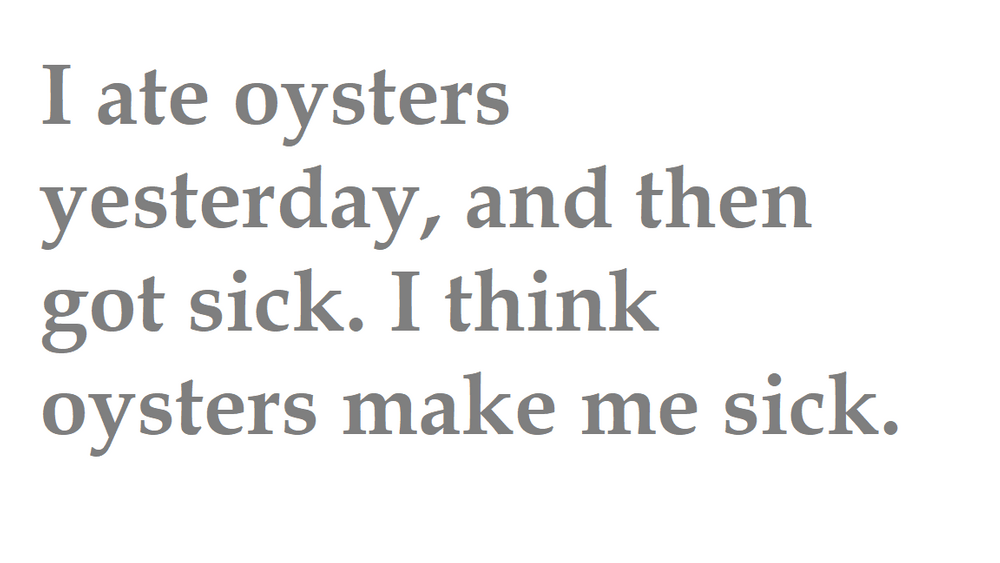
Using the statements:
If it is Friday, then I will get paid.
It is Friday.
What is the conclusion?
a)
It is not Friday
b)
It is Friday
c)
I will not get paid
d)
I will get paid
174.

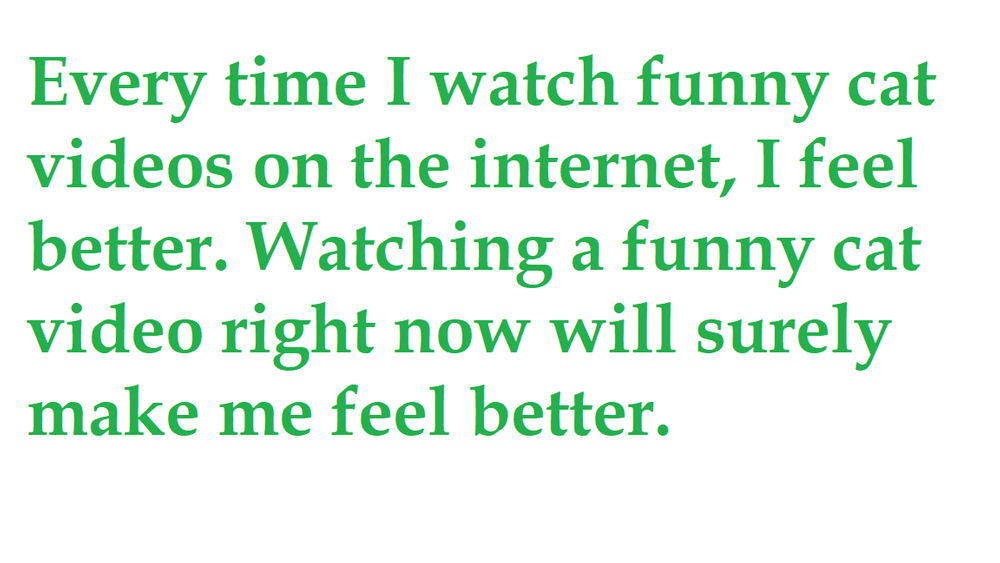
Inductive or Deductive?

a)

Inductive

b)

Deductive

175.

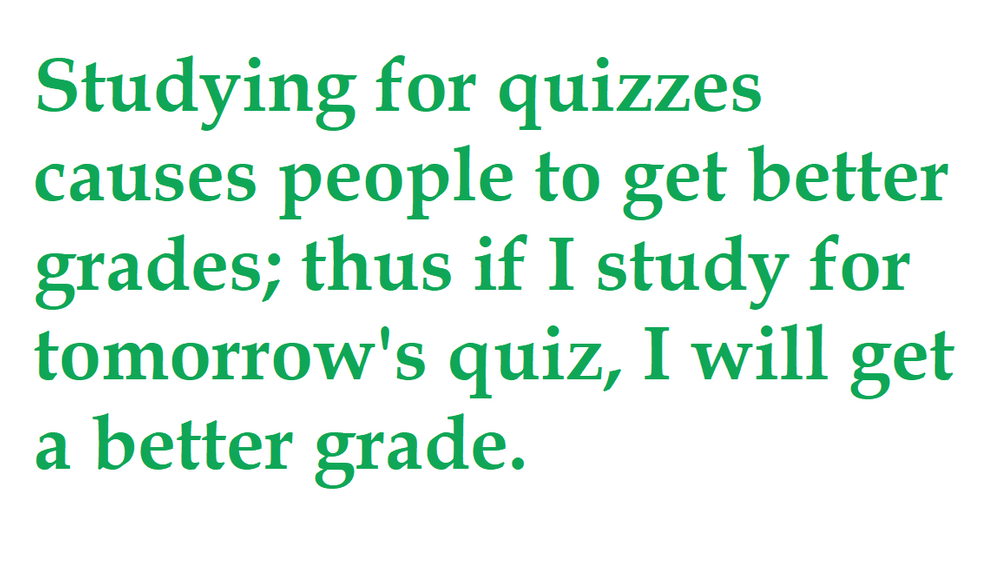
Is the reasoning Inductive or Deductive?

a)

Inductive

b)

Deductive

176.

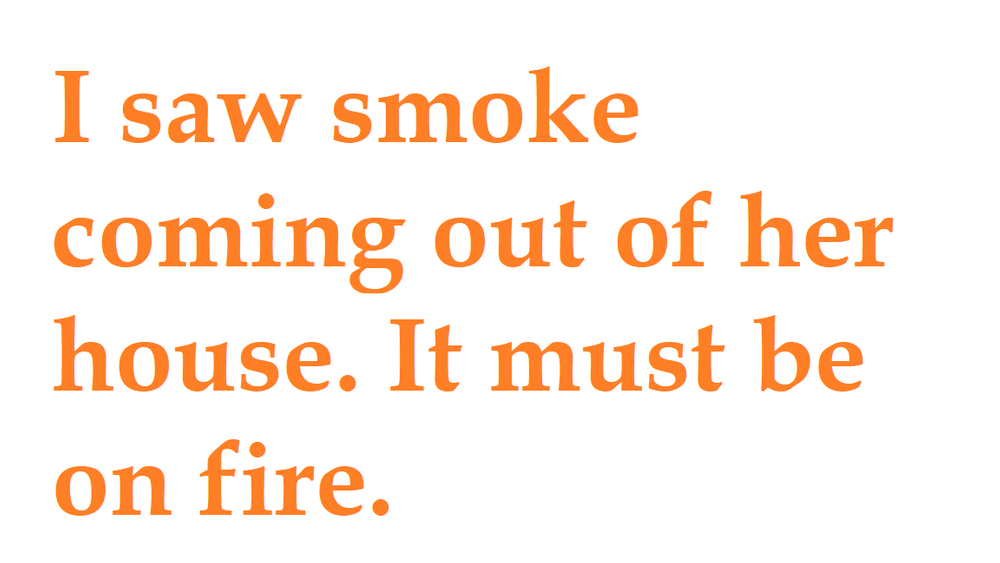
Inductive or Deductive?

a)

Inductive

b)

Deductive

177.

Is this Inductive or Deductive reasoning?

a)

Inductive

b)

Deductive

178.

Inductive or Deductive? You choose.

a)

Inductive

b)

Deductive

179.

Is this Inductive or Deductive reasoning?

a)

Inductive

b)

Deductive

180.

What does the Innocence Project use to exonerate falsely convicted individuals?

a)

DNA

b)

RNA

c)

DNA & RNA

d)

eyewitness testimony

181.

Stress can enhance the brain's ability to construct accurate memories.

a)

True

b)

False

182.

Expert witnesses in eyewitness identification can educate juries leading to a better and more fair evaluation of an eyewitness's testimony.

a)

True

b)

False

183.
What type of reasoning do scientists use when looking at problems?
a)
Inductive
b)
Deductive
c)
Inductive and deductive
d)
Operational
184.
What type of reasoning moves from specific observations to general theories?
a)
Inductive
b)
Deductive
c)
Scientific
d)
Operational
185.
What type of reasoning moves from general to specific?
a)
Inductive
b)
Deductive
c)
Scientific 
d)
Operational
186.
Why is it important for an experiment to contain a control?
a)
So that scientists can take measurements
b)
So that scientists can compare what has the effect in the experiment
c)
So that scientists can make observations
d)
So that scientists can hypothesize
187.
What is the condition being changed in an experiment called?
a)
Control
b)
Observation
c)
Variable
d)
Changer
188.
Observations that are in numeric form are called_______.
a)
Qualitative
b)
Quantitative
c)
Control
d)
Variable
189.
Observations that are in descriptive form are called_______.
a)
Qualitative
b)
Quantitative
c)
Control
d)
Variable
190.
Scientists use observations in order to formulate a __________.
a)
Conclustion
b)
Control
c)
Hypothesis
d)
Variable
191.
Which of the following would be considered a qualitative observation?
a)
10 ft long
b)
3.9 meters wide
c)
100C
d)
Bright purple
192.
Which of the following would be considered a quantitative observation?
a)
3.5 meters
b)
Bubbles vigorously
c)
Reacts with acid
d)
Forms a blue precipitate