
 Worksheets
World History Midterm 2026
Total questions: 200
Worksheet time: 2hrs 40mins
Where was the economic trading center of the world at the end of the 18th century?
China and India
America
Britain
Europe
Why were Europeans more interested in trading with China than the Chinese were in trading with Europe?
European markets were small compared to China
Chinese goods were better quality
Chinese people had never heard of Europe
China refused to speak with Europeans
Why was Portsmouth important?
It was a heavily fortified shipyard which was essential to trade in Britain
It was the only port in Europe
It was not important at all.
It was the trading center of the entire world
Why did Lord Macartney travel to China?
He wanted China to sell British goods in China
He wanted to bring Chinese goods to Britain
He wanted to escape the King of England
He was looking for Sound School and landed there by accident
What was the Enlightenment period known for?
Embracing traditional ideas
Supporting a belief in human reason
Rejecting scientific methods
Promoting monarchy
According to Thomas Hobbes, what are the characteristics of people?
Generous and kind
Greedy and selfish
Honest and trustworthy
Brave and noble
What type of government did John Locke reject?
Democracy
Absolute monarchy
Constitutional monarchy
Oligarchy
According to John Locke, what should people do if the government does not protect their natural rights?
Accept the situation
Overthrow the government
Move to another country
Write a petition
What are the three branches of government mentioned by Montesquieu?
Legislative, Executive, Judicial
Executive, Judicial, Military
Legislative, Military, Judicial
Executive, Legislative, Economic
Which practice did Voltaire detest, as mentioned in the text?
Censorship
War
Slave trade
Taxation
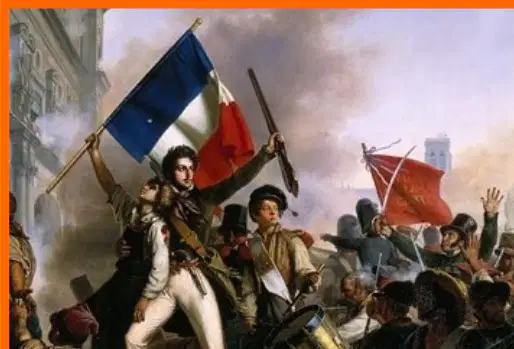
What did Rousseau's hatred of oppression inspire in the future?
Economic prosperity
Revolutionary movements
Political stability
Social isolation
What did Cesare Beccaria believe about capital punishment?
It should be used frequently
It should be abolished
It should be reserved for severe crimes
It should be decided by public vote
What did Beccaria conclude about the use of torture?
It should be used to extract confessions
It should be used only in extreme cases
It should never be used
It should be used to deter crime
Who wrote "A Vindication of the Rights of Women"?
Mary Wollstonecraft
Jane Austen
Virginia Woolf
Emily Dickinson
What did Smith believe was linked to all economic growth?
Government regulations
Market forces of supply and demand
Technological advancements
Labor unions
What was the form of government in England when John Locke was born?
Democracy
Republic
Absolute Monarchy
Constitutional Monarchy
What significant change occurred in England in 1689?
The Glorious Revolution
The English Civil War
The passing of the Bill of Rights
The signing of the Magna Carta
According to John Locke, what is the "state of nature"?
A state of war
A state of perfect freedom
A state of chaos
A state of government control
What does John Locke suggest about creatures of the same species and rank?
They should be in constant competition
They should be equal among one another
They should be subordinate to each other
They should be isolated from each other
According to Locke, what happens when the government is dissolved?
People lose all rights
People are at liberty to provide for themselves
Society becomes chaotic
A new king is appointed
What role did the English Parliament assume after 1689?
Less powerful than the king
Equal to the king
More powerful than the king
Subordinate to the king
What is the original right of society according to Locke?
To dissolve the government
To preserve itself
To appoint a new king
To create chaos
What does Locke believe about subordination among people?
It is necessary
It should be avoided
It is beneficial
It is inevitable
Which historical events did John Locke live through?
The American Revolution
The French Revolution
The English Civil War and the Glorious Revolution
The Industrial Revolution
What does Locke say about the execution of laws?
It should be biased
It should be fair and impartial
It should be strict and harsh
It should be lenient
What year was 'The Wealth of Nations' published?
1776
1789
1765
1791
What was the most common economic system in Europe during the 16th and 17th centuries?
Capitalism
Socialism
Mercantilism
Communism
What guides an individual to promote an end that was not part of his intention?
A visible hand
An invisible hand
A guiding principle
A societal rule
By pursuing his own interest, what does an individual frequently promote more effectively?
His own wealth
The interest of the ruler
The interest of the society
The interest of the state
What year was 'The Wealth of Nations' published?
1776
1789
1765
1791
What does Mary Wollstonecraft argue about the rights of women?
They should be limited
They should be equal to men's
They should be based on beauty
They should be ignored
What is the effect of freeing women from restraint, according to Wollstonecraft?
They will become dependent
They will become wise and virtuous
They will lose their rights
They will become emotional
What is the main goal of education, according to Mary Wollstonecraft in Chapter 2?
To make individuals dependent on others
To enable individuals to attain virtue and independence
To teach individuals to follow societal norms
To focus on emotional development
What does Mary Wollstonecraft argue is necessary for both sexes in Chapter 12?
To follow traditional roles
To be educated by different standards
To be educated by the same pursuits
To remain ignorant and low in desires
What does Mary Wollstonecraft believe is a farce in Chapter 2?
Calling someone virtuous without reason
Educating women
Allowing women to participate in society
Teaching men and women together
What does Mary Wollstonecraft suggest is the only method to lead women to fulfill their duties?
By keeping them restrained
By freeing them from all restraint
By teaching them to be dependent
By focusing on their emotional needs
What does Mary Wollstonecraft believe will happen if women are set free?
They will become dependent
They will become wise and virtuous
They will lose their virtue
They will become emotional
Who was Voltaire?
A French philosopher and writer
An English king
An Italian painter
A German composer
What was Voltaire's real name?
Francois-Marie Arouet
Jean-Jacques Rousseau
Charles-Louis Montesquieu
Denis Diderot
In which year was Voltaire born?
1694
1726
1778
1789
What did Voltaire become known for?
Composing poems, novels, essays, plays, and letters
Leading military campaigns
Painting famous artworks
Inventing scientific instruments
How many personal letters did Voltaire write?
Over 20,000
Over 10,000
Over 5,000
Over 1,000
What did Voltaire support?
Tolerance
War
Isolationism
Monarchy
In what year did Voltaire die?
1778
1726
1694
1789
What would happen if only one religion were allowed in England, according to Voltaire?
The government would become arbitrary
The economy would flourish
The population would increase
The arts would thrive
What best illustrates patriarchal control in colonial Latin America?
Church courts promoted gender equality
Husbands held legal authority over wives
Women voted in local cabildo elections
Equal inheritance rights for daughters
Sor Juana Inés de la Cruz’s experiences most strongly reveal which tension in colonial society?
Conflict between Creoles and peninsulares
Restriction of women’s intellectual pursuits
Decline of Catholicism among elites
Disputes over royal taxation policies
A quarter of people were of mixed race by 1800 in Latin America. What implication does this statistic have for the social structure during independence-era movements?
Pure racial groups dominated all institutions
Legal status depended only on economic wealth
Rigid hierarchies were challenged by mixed identities
Creoles rejected any interaction with peninsulares
Which leader launched the first major peasant uprising in New Spain that targeted the peninsulares?
Napoleon Bonaparte led a peasant revolt
Father Morelos led a peasant revolt
Padre Hidalgo led a peasant revolt
Agustín de Iturbide led a peasant revolt
Which leader is most associated with Venezuela’s independence movement and the push for a unified South America?
Miguel Hidalgo from Mexico
Bernardo O’Higgins from Chile
Simón Bolívar from Venezuela
José de San Martín from Argentina
Which pair correctly matches the leader and their national origin?
Simón Bolívar — Colombia
José de San Martín — Argentina
Bernardo O’Higgins — Peru
Miguel Hidalgo — Venezuela
Which statement best captures Bolívar’s legacy beyond his battlefield victories?
He cemented the idea of popular sovereignty
He created a lasting single South American nation
He reasserted European control over colonies
He abolished all regional identities
Which statement best describes patriarchy in Latin America after independence?
Patriarchy persisted despite women’s wartime roles
Patriarchy ended with revolutionary constitutions
Patriarchy weakened due to feminist movements
Patriarchy was limited to rural provinces only
Women in Mexico gained national voting rights in which decade?
1950s with federal enfranchisement
1930s during reform governments
1870s after liberal victories
1990s with constitutional changes
Which comparison highlights a key difference between European and Latin American revolutions regarding the church?
Both regions abolished established churches
Europe expanded church political control
Neither region altered religious authority
Latin America kept church influence strong
What were the three institutions that exercised control over the population in Latin America before the revolutions?
The Portuguese Crown, the Catholic Church, and the military
The Spanish Crown, the Catholic Church, and the military
The Spanish Crown, the Catholic Church, and patriarchy
Who was Sor Juana Inés de la Cruz and what were her contributions?
A poet and playwright who studied mathematics and natural science
A revolutionary leader who played a key role in the independence movements
A leading mind of the 17th century who was widely attacked for her work
What term was used to describe the blending of cultures in Latin America?
Transculturation
Colonization
Multiculturalism
Assimilation
What were the four basic racial categories in Latin America?
White, indigenous, mestizo, mulatto
White, black, indigenous, mestizo
White, black, mestizo, mulatto
White, indigenous, black, mulatto
Which country was ruled by Portugal and achieved independence without much bloodshed?
Brazil
Mexico
Argentina
Venezuela
Who led the peasant uprising in Mexico against the ruling peninsulares?
Father Morelos
Padre Hidalgo
Jose de San Martin
Simon Bolivar
What was the most revolutionary aspect of the Latin American independence movements?
The inclusion of women in the revolution
The overthrow of the social hierarchy
The weakening of the Catholic Church
The establishment of popular sovereignty
How was Paris in 1750 a "contradiction"?
The streets were full of mud but were the first to have lights
It was the bridge from medieval to the modern world
It was inferior to cities like London and Rome
While there were educated philosophers meeting and staying clean, most people were working-class poor
There were no monarchs who supported the creation of the encyclopedia.
True
False
Which political and national revolutions did the video connect to the philosophes and the creation of the encyclopedia?
social, political, transformation and the French Revolution
The American Revolution against England
The Italian Revolution
Why was the encyclopedia so controversial?
It challenged the authority of the church and the monarchy
Many people thought it was fake news
There was no way to validate the sources who contributed to it
It was too expensive and not available to everyone
What was the impact of civilian organizations taking over responsibilities traditionally held by the government?
Strengthened government support
Undermined support for the government
Led to military victories
Increased government efficiency
What did the members of the Duma establish themselves as after Nicholas abdicated?
A monarchy
A Provisional Government
A military dictatorship
A council of elders
What was the composition of the Provisional Government mentioned in the text?
Monarchists and conservatives
Socialists and liberals
A mix of monarchist, conservative, liberal, and socialist members
Only socialist members
What was the outcome of the protests in Petrograd?
The protests were quickly suppressed.
The protests spread throughout the empire.
The protests led to immediate peace.
The protests had no significant impact.
What did the competition for power on the home front coexist with during World War I?
General support for World War I
Economic prosperity
Political stability
Social harmony
Which local institutions did the Bolsheviks close?
Schools
Zemstvos
Churches
Factories
What was the reaction of the peasants to the Bolshevik army confiscating their grain?
Support
Indifference
Anger
Joy
What is 'Battleship Potemkin' about?
A royal family
A group of sailors rebelling
A scientific discovery
A political election
What was allowed to help boost productivity, according to the text?
Individual businesses
Government subsidies
Foreign investments
Agricultural reforms
What significant change did the Haitian Revolution bring about?
The introduction of new trade routes
The abolition of slavery
The creation of a new currency
The establishment of a new religion
What did the colonists believe was less expensive than creating better conditions for enslaved people?
Replenishing with new enslaved people
Building better housing
Providing medical care
Offering education
Which metaphor is used to describe the instability in Saint-Domingue?
Edge of a volcano
Calm before the storm
Tip of the iceberg
Eye of the hurricane
When did the Haitian Revolution officially begin?
August 1790
August 1791
August 1792
August 1793
What was the main strategy used by the revolutionaries to disrupt the slave economy?
Negotiating with planters
Setting fields on fire
Building new plantations
Importing goods
What significant action did the French National Assembly take in February 1794?
Declared war on Haiti
Abolished slavery
Sent more troops
Signed a peace treaty
What natural challenges helped Louverture's army?
Hurricanes
Mountainous geography
Earthquakes
Droughts
Which disease devastated the French, Spanish, and British troops?
Malaria
Yellow fever
Cholera
Smallpox
What was a major challenge for enslaved Africans in sharing news and ideas?
Lack of resources
Language barriers
Isolation
Radical political ideas
What was the world's reaction when Haiti declared independence?
Stunned
Indifferent
Supportive
Hostile
Which era is mentioned as a time when people discussed rights and equality?
Age of Enlightenment
Industrial Revolution
Renaissance
Middle Ages
What is one reason France did not immediately recognize Haitian independence?
Haiti had not paid France 150 million francs
Haiti was still a French colony
Haiti refused to negotiate
Haiti was under British control
What did the Haitian Revolution abolish?
Slavery
Monarchy
Trade tariffs
Colonial taxes
Who argued that the Haitian Revolution was part of a centuries-long war?
Some scholars
Jean-Jacques Dessalines
Charles the Tenth
Marlene Daut
One of the reasons France was in economic debt was because
they funded the American Revolution
they spent all their money on war with Spain
they spent all their money on enlightenment artists
they were not in debt at all
Why did the rulers of European nations such as Austria, Prussia, and Britain oppose the revolution?
Their leaders were monarchs and feared losing power
They feared France would refuse to pay back its debts
They feared the French would invade their countries next
The time period during the French Revolution when 16,000 people were put to death by guillotine
The Terror
The Killings
The Purdge
In what ways does John Green argue that the French Revolution was revolutionary?
While it did not bring democracy, it did spread Enlightenment ideas
It witnessed the death of a lot of anti-revolutionaries
He didn't actually believe it was revolutionary
What was the outside threat that faced the French revolutionaries in 1792 and 1793?
Prussia and Austria
Prussia
Austria
Spain
Who were the émigrés?
Army officers and aristocrats who fled to side with the enemies
The royalists
The church
The peasants
What was happening inside France that threatened the revolution?
counter revolution
the revolution
Why did some French peasants oppose the revolutionary government?
Because they tried to abolish Christianity
Because they tried to abolish Islam
Because they tried to abolish the monarchy
Who was the absolute monarch of France in 1789?
Louis XVI
Maximilien Robespierre
Napoleon
Marie Antoinette
What were three serious problems faced by Louis XVI in the 1780s?
War debt, high taxes, and famine
Political unrest, foreign invasion, and economic collapse
Religious conflicts, social inequality, and unemployment
Drought, disease, and inflation
In what year did the French Revolution begin?
1776
1783
1789
1793
What were the three words that became the rallying cry of the French Revolution?
Liberty, equality, and fraternity
Power, wealth, and authority
Justice, peace, and unity
Revolution, rebellion, and independence
Why were members of the French nobility and the French Catholic Church upset about the revolution?
They feared a loss of property and power
They supported the revolution's ideals
They wanted to overthrow the monarchy
They were influenced by foreign powers
Who became the leader of the radical wing of the revolutionary government?
Louis XVI
Maximilien Robespierre
Napoleon
Marie Antoinette
What was the Reign of Terror?
A period of political stability
A time of economic prosperity
A radical phase of the French Revolution
A peaceful transition of power
When did the Reign of Terror end?
1789
1793
1794
1799
Who was executed during the Reign of Terror?
Louis XVI and Marie Antoinette
Maximilien Robespierre and Napoleon
The French nobility and the Catholic Church
The common people and the peasants
What was the main goal of the French Revolution?
To establish a constitutional monarchy
To create a socialist society
To overthrow the Catholic Church
To achieve liberty and equality
What is the difference between Hispaniola and Saint-Domingue?
Hispaniola was the French colony that later became Haiti.
Hispaniola was the name given to the entire island.
Saint-Domingue was the French colony that later became Haiti.
Saint-Domingue was the name given to the entire island.
What evidence shows that Saint Domingue was an economically valuable colony?
Saint Domingue produced 40% of the world's sugar and over 50% of the world's coffee.
Saint Domingue produced 40% of the world's coffee and over 50% of the world's sugar.
The entire slave population of the United States in 1800 was about one million. What was the slave population of Saint-Domingue in 1789?
100,000 slaves
200,000 slaves
300,000 slaves
500,000 slaves
In 1789, three major groups inhabited Haiti: whites, free people of color, and black slaves. There were 32,000 whites and 25,000 free people of color. Given these numbers, what percentage of Haiti's population were slaves?
50%
60%
70%
90%
Why was Toussaint unable to celebrate the independence of Haiti?
Toussaint died in a French jail in 1803, a year before Haitian independence.
Toussaint was captured by the French in 1803, a year before Haitian independence.
Toussaint was assassinated in 1803, a year before Haitian independence.
Toussaint was exiled from Haiti in 1803, a year before Haitian independence.
What is the textile industry?
C. Automobile industry
D. Construction industry
B. Clothing industry
A. Food processing industry
When did the shift from cottage to factory occur in Japan?
C. 1880s
B. 1868
A. 1603
What was the reason for the late start of the Industrial Revolution in Japan?
C. Economic instability
B. Political reasons; did not want contact with America or Europe
A. Lack of technological advancements
D. Cultural beliefs
What was the contribution of Japanese women to the Industrial Revolution?
A. Minimal contribution
B. No contribution
C. Huge contribution in the textile industry
D. Negligible contribution
What was a positive aspect of young girls and women working in factories?
D. Lack of opportunities
C. Decreased wages
B. Independence and freedom
A. Increased poverty
What was the negative aspect of young women working in factories?
B. High wages and benefits
C. Comfortable working conditions
A. Overworked and underpaid
D. Equal pay as men
How many Japanese females were working in textile mills by 1902?
B. 250,000
D. 1,000,000
C. 500,000
A. 100,000
What pay did Japanese mill workers receive compared to mill workers in France and Italy?
A. Equal pay
B. Double the pay
C. Half the pay
D. Triple the pay
What was Portugal known for during the Age of Exploration?
Its large navy
Its prowess in exploration
Its wealth in gold
Its alliance with Spain
Which country had significant possessions that were later taken by Britain?
France
Spain
Portugal
Netherlands
What was the primary purpose of harnessing coal power, according to the text?
To create electricity for homes
To power steam engines
To heat buildings
To produce food
According to the text/mini-lesson, what does a capitalist aim to maximize?
Social welfare
Environmental sustainability
Return on capital
Employee satisfaction
What does a factory need to produce finished goods?
Raw materials
Finished goods
Military force
Limited markets
Which process is supercharged by technology and industrialization?
Raw material extraction
The central portion of production
Military expansion
Market limitation
What drives the desire for more raw materials and cheaper raw materials?
Technological stagnation
Outputs of industrialization
Limited markets
Cultural exchanges
What is the relationship between industrialization and the desire to sell goods?
Industrialization decreases the desire to sell goods
Industrialization has no effect on the desire to sell goods
Industrialization increases the desire to sell goods
Industrialization limits the markets for goods
What enabled countries to project power during the Industrial Revolution?
Advanced weaponry
Steamships, railroads, and the telegraph
Diplomatic treaties
Large armies
What was the main reason the British wanted to open Chinese markets?
To spread Christianity
To import Chinese labor
To trade British products
To establish colonies
What were the two main Chinese products in demand in Europe before the Opium War?
Tea and spices
Silk and porcelain
Jade and gold
Rice and tea
What was the main consequence of the trade imbalance between China and Europe?
European economic growth
Chinese cultural expansion
Balance of trade problem, because Europeans had to pay for Chinese goods with silver
Increase in European population
Who owned the British vessel Nemesis?
The Royal Navy
The British East India Company
The British Government
The Qing Dynasty
What was a major contributor to the long and bloody civil war in China?
Tea trade
Opium
Silk production
Gold mining
Who was a significant British Prime Minister at the end of the 19th century?
William Gladstone
Winston Churchill
Benjamin Disraeli
David Lloyd George
Who was described as an aggressive proponent of the Opium Wars?
The Prime Minister
The Foreign Minister
The Home Secretary
The Chancellor of the Exchequer
What was William Gladstone's personal experience with opium?
He was addicted to it
His sister became addicted to it
He used it for medical purposes
He traded it for profit
What did William Gladstone express dread about?
The judgments of God upon England
The loss of British colonies
The rise of industrialization
The decline of the monarchy
Which countries are examples of settler colonialism?
A) India and China
B) Australia and South Africa
C) Japan and Korea
D) Brazil and Argentina
What is the primary goal of economic colonialism?
A) To spread religion
B) To gain political power
C) To feed the needs of the Industrial Revolution
D) To establish military bases
What was one reason Japan closed its country to foreigners in the 19th century?
A) Fear of economic competition
B) Fear of Christian missionaries
C) Fear of military invasion
D) Fear of cultural exchange
What primarily motivated Japan's transformation from isolation to becoming an imperial power?
A) Economic needs
B) Military expansion
C) Cultural exchange
D) Religious influence
Which color represents the French stronghold in Indo-China and Southeast Asia in the 19th century?
Blue
Orange
Green
Red
What term is commonly used to refer to the First Opium War?
Trade Diplomacy
Gunboat Diplomacy
Peaceful Negotiation
Economic Sanctions
How much coal did Japan produce in 1875?
500,000 metric tons
600,000 metric tons
700,000 metric tons
800,000 metric tons
When did Japan's empire end?
When Japan won World War II
When Japan surrendered
When Japan invaded China
When Japan signed a peace treaty with Germany
Which country had the oil resources that Japan needed?
Indonesia
China
India
Australia
Who is the Regional Director of the Ghana Museums and Monuments Board?
Trevor Getz
Ato Ashun
Akosua Perbi
Wilhelmina Donkoh
What was the economic system in Ghana like before the Atlantic slave trade?
No commerce or industry
Sophisticated commercial system
No economic system
Fishing only
When did the Atlantic slave trade begin in Ghana?
18th century
17th century
16th century
15th century
How many people were held in each of the male compartments in the dungeon at Cape Coast Castle at one time?
300
100
200
400
What was the impact of the Atlantic slave trade on the Middle Belt of Ghana?
Only direct impact
Indirect and direct impact in the sense that they wanted European goods
No impact
Only indirect impact
What was the impact of the Atlantic slave trade in the north of Ghana?
Neutral impact
No impact
Positive impact
Devastating effect because most slaves came from the North
What do you think have been the long-term impacts of the Atlantic slave trade on Ghanaian society?
Positive social impact
Psychological trauma, social breakdowns, economic dislocation, and political decline
Economic growth
No long-term impacts
What is the Door of No Return at Cape Coast Castle?
Exit point for the African slaves to the ships
A tourist attraction
A historical artifact
Entrance to the castle
What is the main reason tourists visit Cape Coast Castle?
To relax and unwind
To experience the local culture
To enjoy the scenic beauty
To learn from the historical suffering
Which technological advancement had a dramatic impact in the 19th century?
The airplane
The steam engine
The steamboat
The telegraph
What was the impact of technological advancements in the 19th century on Africa?
Increased isolation
Increased motivation for colonization
Decline in trade
Rise in local governance
Which major powers were involved in the Berlin Conference?
Britain, Italy, Germany
Spain, Portugal, and Brazil
Russia and Austria
Who was notably absent from the Berlin Conference?
Asian leaders
African leaders
American leaders
Middle Eastern leaders
What was the result of the Berlin Conference?
A unified African nation
European imperialism in Africa and a patchwork of artificial borders
A new world order
A peace treaty
What systems were introduced to parts of Africa as a result of imperialism?
Healthcare systems
Infrastructure development and education
Political systems
Agricultural systems
What was a common result of forced labor in the Congo?
Economic growth
Social harmony
Horrific abuses, mass killings
Technological innovation
What does the text suggest about the impact of artificial borders created by imperialism?
They promote peace and unity
They continue to fuel conflicts within Africa
They enhance economic independence
They improve social cohesion
Which region's inspiring resistance is mentioned in the text?
South Africa
Kenya
Ethiopia
Nigeria
Which term describes the dramatic rise in living standards after 1800, shown by a long, flat trend followed by a sharp climb?
Demographic transition curve
Hockey stick growth pattern
Human capital accumulation line
U-shaped participation trend
Which pair correctly matches a fingerprint of development with its brief description?
Urbanization: people move to cities
U-shape: men leave farming later
Hockey stick: fertility steadily declines
Human capital: more muscle-based work
During the demographic transition, what typically happens to family size as countries become wealthier?
Family size collapses immediately
Family size remains unchanged
Family size peaks then declines
Family size steadily increases
What is human capital in the context of modern growth?
Military strength and power
Machines and factories
Natural resources owned
Education, skills, health
Which explanation connects the rise of urbanization, demographic transition, human capital, and the U-shaped female labor pattern?
Monarch-led reforms
Colonial extraction model
Unified growth theory
Mercantilist trade policy
Why does women’s labor force participation follow a U-shape across development?
Modern era rewards educated workers
Factory era rewards male brawn more
Early industry reduces home production
Agrarian work includes women equally
Which sequence best represents the three-stage family decision process in unified growth theory?
Quantity focus, quality focus, brawn focus
Quality-only, quantity-only, mixed
Quantity focus, mixed investment, quality focus
Mixed, quality focus, quantity focus
Which statement best describes Malthusian stagnation in economic history?
Industrialization quickly reallocates labor away from agriculture
Population growth offsets income gains, keeping living standards flat
Rapid technological progress steadily raises incomes for most people
Government policy guarantees high consumption across all social classes
Capital accumulation alone drives continuous per capita growth
Unified Growth Theory explains the transition to sustained growth. Which combination of factors most directly supports this transition?
Technological change with human capital accumulation and demographic shifts
Higher birth rates without changes in productivity or education
Agricultural expansion with unchanged urbanization patterns
Land redistribution with constant technology and fertility
Trade restrictions with increased subsistence farming
Many countries show a U-shaped pattern in female labor force participation over time. Which reasoning best accounts for this pattern?
Automation immediately creates widespread female employment from the start
Male wages fall over time, pushing continuous female workforce entry
Government bans on cottage industries permanently raise women’s employment
Persistent agrarian norms steadily increase women’s paid work across eras
Early industrialization reduces home-based work; later, education expands formal jobs
What was Mahatma Gandhi known for in his campaigns?
Military strategies
Civil disobedience centered around non-violence
Economic reforms
Political speeches
What nickname was given to Gandhi, meaning "great soul"?
Bapu
Mahatma
Guru
Swami
What was Gandhi asked to do in a Durban court?
Remove his shoes
Take off his turban
Sit in the back
Pay a fine
How long did Gandhi's campaign of nonviolent civil disobedience last?
5 years
10 years
7 years
3 years
What movement did Gandhi start against the British government in India?
Quit India Movement
Non-cooperation Movement
Home-rule Movement
Which two political parties were involved in negotiations for Indian independence?
Indian National Congress and the Muslim League
Indian National Congress and the Communist Party
Muslim League and the Socialist Party
Communist Party and the Socialist Party
Who emerged from the crowd and shot Gandhi?
Nathuram Godse
Jawaharlal Nehru
Subhas Chandra Bose
Bhagat Singh
What was Gandhi's lifelong pursuit?
Wealth
Non-violence
Political power
Fame
What do Gandhi's powerful words continue to inspire us to do?
Seek wealth
Change the world for the better
Pursue fame
Avoid responsibility
Which event directly led to the abdication of Tsar Nicholas II?
The outbreak of World War I
The signing of the Treaty of Brest-Litovsk
The spread of protests from Petrograd to other cities
The assassination of Rasputin
What was the main method used by Gandhi to challenge British rule?
Armed rebellion
Non-violent resistance and mass protests
Negotiation and diplomacy
Economic boycotts only
Which resource saw significant growth in Japan’s production during the late 19th century?
Coal
Gold
Rubber
Oil
Which technological innovation most helped European powers maintain control over distant colonies during the 19th century?
Handwritten letters
Horse-drawn carriages
Wind-powered ships
Telegraph lines
Which Latin American country gained independence from Spain after a long and violent struggle?
Chile
Mexico
Brazil
Peru
What was a major factor that led to the increase in female labor force participation in the early 20th century?
Expansion of education for women
Decline in industrial jobs
Strict enforcement of agrarian norms
Government restrictions on women’s employment
Which factor most contributed to the end of Malthusian stagnation in Europe?
Universal access to higher education
Strict government control of family size
Technological innovations in agriculture and industry
Rapid population decline
According to Montesquieu, why is the separation of powers important in government?
It ensures the king has absolute authority
It encourages economic growth
It allows the military to control the judiciary
It prevents any one branch from becoming too powerful
What was William Gladstone most concerned about regarding British society?
The moral decline and consequences for the nation
The expansion of the railway system
The popularity of new artistic movements
The increase in agricultural exports
Who is the director of Slumdog Millionaire?
Danny Boyle
Steven Spielberg
Richard Ayoade
Damien Chazelle
In the film Slumdog Millionaire, what are the names of the two main characters?
Javed and Prem
Prem and Salim
Jamal and Prem
Jamal and Salim
In the film Slumdog Millionaire, who is the key female character that grows up with the boys?
Lamika
Latika
Priya
Kariya
In the film Slumdog Millionaire, in which city was the film based?
Delhi
Mumbai
Chennai
Pune
In the film Slumdog Millionaire, where does the final dance scene take place?
In the slums
Taj Mahal
Train station
TV studio
In the film Slumdog Millionaire, who does Jamal live with at the beginning?
His brother and his mom
His Sister
His father
In the film Slumdog Millionaire, what are Salim's final words? What does this suggest about Salim’s character?
-‘God is great’ - Suggests that in all his efforts to make a living or make money, he has only resulted in harming the one thing he cared about, which was his brother, and he is redeeming himself before he dies.
Money alone triumphs, which suggests he dies just as he lived, corrupted by money and greed.

