
 Worksheets
Honors Review - Matter, Bonding, & LOCOMatter (SPS1, SPS2, SPS3)
Total questions: 192
Worksheet time: 4hrs 32mins
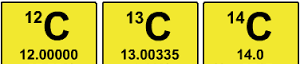
What do these isotopes of carbon all have in common?
neutrons and mass number
atomic number and neutrons
atomic number and electrons
protons, atomic number, and mass number

What are the names of the electrons in the outer shell called?
Outer electrons
Valence electrons
Orbital electrons
Outer valence orbital electrons

What is the charge on a lithium atom that loses one electron?
+1
0
-1
-2
Silicon is a semiconductor and has properties of both metals and nonmetals. What type of element is silicon?
Metal
Nonmetal
Metalloid
Pretty

What type of atom is Element C?
Normal atom
Cation
Isotope
Anion
Metals are found on this side of the Periodic Table:
Left side
Right side
On the stair-step line
Below

What is the formula to solve for the neutron?
Mass Number + Atomic Number = Neutrons
Mass Number x Atomic Number = Neutrons
Mass Number - Atomic Number = Neutrons
Mass Number + Number of Protons = Neutron

What is the mass number of this neon atom?
10
11
21
20

How many electrons does this magnesium ion have?
24
12
10
14

The electron cloud is divided in to energy levels or shells. The first level will hold _____ electrons and the second level will hold ______ electrons.
8, 2
2,8
1, 8
8,18
_____________ transfer electrons from a metal to a nonmetal.
Covalent Bonds
Ionic Bonds
James Bonds
Savings Bonds
___________ share electrons between nonmetals and nonmetals.
Ionic bonds
Covalent bonds
Polar covalent bonds
Diatomic bonds
Polar covalent is when the electrons are shared ___________
equally
unequally
between metals and nonmetals
in diatomic molecules

Which of these is covalent?
NaCl
KBr
CO2
AlCl3
Which of the following is NOT a property of ionic compounds?
They have very high melting points
They conduct electricity when in solution
They have high boiling points
They will not dissolve in water
Which of the following is NOT formed by a covalent bond?
K2S
H2O
I2
CO2

What is the correct name for this formula: BeI2?
beryllium (II) iodide
beryllium diiodide
beryllium iodine
beryllium iodide
Which structures conduct electricity as a liquid but not as a solid?
Metallic
Covalent
Ionic
All of the above

Name the following compound: AlCl3
Aluminum trichloride
Aluminum chloride
monoaluminum chloride
monoaluminum trichloride
What is the formula for lithium nitride
LiN
LiN3
Li3N
LiN2
What is the correct name for PCl3?
monophosphorus trichloride
triphosphorus monochloride
triphosphorus chloride
phosphorus trichloride
What is the correct formula for N2Br4?
dinitrogen tetrabromide
tetranitrogen dibromide
dineon tetrabromide
dinitrogen tetraboride
What is the correct formula for calcium nitride?
CaN
Ca3N2
Ca2N3
C3N2
What is the formula for disulfur heptafluoride?
SF
S7F2
S2F6
S2F7
In order for sulfur to reach an octet, sulfur will...
Gain 2 electrons
Lose 2 electrons
Gain 1 electron
Lose 1 electron

Is this ionic bond drawn correctly?
Yes
No
Maybe
Why are you asking ME?

A burning candle is covered by a jar as shown in the picture. The whole arrangement has a mass of 500g. What will be the approximate mass of the arrangement when the candle is completely burnt, after four minutes?
0g
50g
250g
500g
Which chemical equation shows that the total mass during a chemical reaction stays the same?
Mg + Cl2 → MgCl2
NaOH + MgCl2 → NaCl + MgOH
2Na + 2H2O → NaOH + H2
H2O + O2 → H2O

In the picture, which box on the right shows the correct products according to the Law of Conservation of Mass?
A
B
C
D
Which chemical equation is balanced?
CH₄ + O₂ → CO₂ + 2H₂O
H₂ + O₂ → 2H₂O₄
4Al + 3O₂ → 2Al₂O₃
None are balanced
Which of the following would provide the evidence that the number of atoms present before a chemical reaction is equal to the number of atoms present after the chemical reaction?
Bob puts 200 grams of ice into a pitcher with 900 grams of water. He gets distracted and comes back later to find that the ice has melted in the water. How many grams of water does Bob now have in the pitcher?
200 g
700 g
1,100 g
900 g
Is this balanced?
Al + O2 → 2Al2O3
Yes
No
Depends on the scale
Who knows?
In a reaction A + B ----> C, reactant A has a mass of 5g and product C has 9g. How many grams must reactant B have?
4g
5g
9g
14g
Valence electrons are found by looking at which __________ the atom is located in on the periodic table.
group
column
row
box

_________ are located to the right of the stair-step line.
Metals
Nonmetals
Metalloids
Black holes
Metals are _________ at room temperature with the exception of mercury.
solids
gas
liquid
invisible
Nonmetals are generally ________ at room temperature.
solids
liquids
gases
Adele fans
The _____ phase is one in which intermolecular forces hold the atoms or molecules loosely together but do not force them into a rigid structure.
solid
liquid
gas
plasma
In the ________ phase, atoms and molecules experience their greatest freedom. The forces attracting gas molecules are almost non-existent. As a result, these molecules are much farther apart and can move freely about.
Solid
Liquid
Gas
Plasma
_____________ are gases that have been so energized that their atoms have been stripped of some or all electrons. Solar flares are great examples of plasma. Solar flares eject extremely hot hydrogen ions (H+) away from the Sun and toward Earth.
Solids
Liquids
Gases
Plasmas

Usually starts with a hydrocarbon that reacts with oxygen and produces carbon dioxide and water.
Decomposition
Synthesis
Combustion
Single Replacement

This picture of a football is here for no reason.
Click CONTINUE to move on.
CONTINUE
I don't follow directions.
What if I don't like football?
Is this for a grade?
Which two of the following are chemical reactions?
sugar dissolving in water
water turning into steam
burning wood
mixing baking soda and vinegar
tearing paper

How many hydrogens are on the product side of this chemical equation?
1
2
3
4

How many carbons are present on the reactant side?
1
2
3
4

Why are chemical equations always balanced? Select ALL that apply.
Matter cannot be created.
Matter cannot be destroyed.
Matter can only be rearranged/conserved.
Matter doesn't matter.
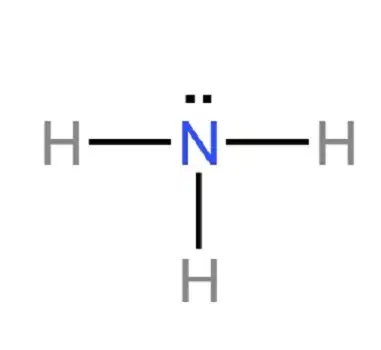
2NH3 states that there are how many of each atom?
2 Nitrogen and 3 Hydrogen
6 Nitrogen and 2 Hydrogen
2 Hydrogen and 6 Nitrogen
2 Nitrogen and 6 Hydrogen
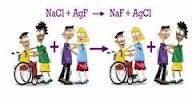
This pictures simulates which type of reaction?
Synthesis
Decomposition
Single Replacement
Double Replacement
Identify the type of reaction:
ZnCl2 + Mg → Zn + MgCl2
Synthesis
Single Replacement
Double Replacement
Decomposition
Identify the reaction type:
NaCl + KOH → KCl + NaOH
Double replacement
Combustion
Synthesis
Decomposition
Group 1 of the periodic table is called the...
Halogens
Noble Gases
Transition Metals
Alkali Metals
Group 17 of the periodic table is called the...
Halogens
Noble Gases
Transition Metals
Alkaline Earth Metals
Elements on the periodic table are arranged by...
relative atomic mass
date of discovery
atomic number
number of electrons
The group number tells you
the number of electron shells an element has
the number of electrons in the outer shell of an atom
the number of electrons needed to fill the outer electron shell
the ion that an atom will make
The period number tells you how many
outer electrons there are in an atom
electron shells an atom has
ions an atom can form
bonds an atom can make
Elements from group 2 will form with a charge of
+1
+2
-2
-1
Atoms from group 16 will generally form ions with a charge of
+1
+2
-2
-1
Isotopes of an element have the same atomic number but different mass numbers
True
False
What is the maximum number of electrons in the first shell?
8
4
6
2
What is the optimum number of electrons an atom likes in its outer shell?
2
6
4
8

What is the atomic number of nitrogen?
7
14.007
N
28

What is the atomic mass of nitrogen?
7
15
14.007
.007

The groups of a periodic table are the
Horizontal rows
Vertical columns

Periods in the periodic table are
rows
columns
An element is shiny, solid, but brittle.
Which element would that description best describe?
Na
Cl
Te
Cu
Where are electrons likely to be found on an atom?
Nucleus
Electron Clouds
Neutrons
Everywhere
Which of the following subatomic particles has the smallest Atomic Mass Unit or AMU?
Proton
Neutron
Electron
Nucleus
Which elements share similar chemical properties?
Na + Mg
Na + K
O + F
Na + F
Which of the following elements has a full outer energy level and is in the group identified as the Noble Gases?
Li
O
B
Ne
Which of the following is a property of Alkali Metals (Group 1)?
They are so hard they cannot be cut.
They are very, very reactive.
They are stored in water.
They have few uses.
When a Halogen (G17) reacts with an Alkali Metal (G1), what is formed?
Salt
Liquid
Nonmetal
Electron
The Atomic Number of an atom is the total number of what in the nucleus?
Protons + Electrons
Protons
Neutrons
Protons + Neutrons
Three elements are listed below:
Atom 1: 15 protons, 15 neutrons, 15 electrons
Atom 2: 23 protons, 23 neutrons, 23 electrons
Atom 3: 23 protons, 24 neutrons, 23 electrons.
Which two atoms are isotopes of the same element?
Atom 1
Atom 2
Atom 1
Atom 3
Atom 2
Atom 3
None
Which Group carries a +2 Ionic Charge?
Group 1
Group 2
Group 16
Group 17
What charge does an atom have when it GAINS electrons?
Positive
Negative
Neutral
What is the mass number of this Neon atom?
10
11
21
20
How many electrons does this magnesium ion have?
24
12
10
14
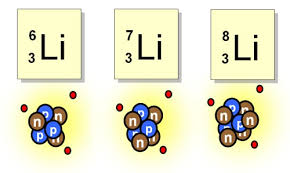
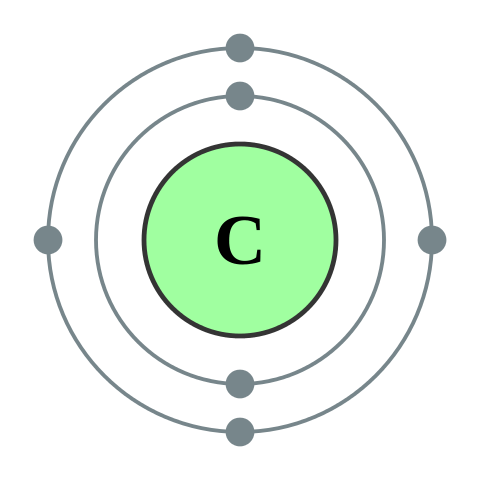
How many valence electrons does carbon have?
4
5
6
7
USE THE PERIODIC TABLE
How many valence electrons does Neon have?
18
8
10
2
Non-metals are located on the...
Right side of the periodic table
left side of the periodic table
top row of the dinner table
along the zig-zag line
Metals are found on this side of the Periodic Table:
Left side
Right side
On the stair-step line
Below
An anion will be a ____ ion.
negative
positive
neutral
synchronous
An atom that has become charged by gaining or losing electrons.
Ion
Isotope
Electron
Valence Electron
An atom's atomic mass comes from its
Electrons
Protons
Electron Cloud
Nucleus
A bond between a metal and a nonmetal is called a(n)
covalent bond
ionic bond
metallic bond
transfer bond
What type of bond involves the transfer of electrons between atoms?
covalent bond
ionic bond
metallic bond
transfer bond
Which of these is covalent?
NaCl
KBr
CO2
AlCl3
Which of the following is NOT formed by a covalent bond?
K2S
H2O
I2
CO2
Select all properties of METALS.
good conductors of heat and electricity
brittle
malleable and ductile
lustrous
semiconductor
Select all properties of NONMETALS.
good conductors of heat and eletricity
good insulators; poor conductors
brittle
malleable and ductile
form cations or no ions
Why is the atomic number important?
It tells you the mass of the element
It determines which isotope an atom is
It determines the properties and locatation of an element.
They are gained and lost to form ions.

Metals tend to be (a) at room temperature.
Nonmetals tend to be (a) at room temperature.
The only metal that is liquid at room temperature is (a) .
The only nonmetal that is liquid at room temperature is (a) .
What is the formula for calcium sulfide?
(a)
What is the formula for tetranitrogen decoxide?
(a)
What is the formula for lithium sulfide?
(a)
What is the formula for aluminum oxide?
(a)
What is the formula for dinitrogen pentachloride?
(a)
What is the forumula for dinitrogen pentoxide?
(a)
What is the name of CaCl2
(a)
What is the name of P2O5
(a)
What is the name of Li2O
(a)
What is the name of N2O
(a)
Identify the common substance that is very soluble in water.
Oil
Copper
Salt
Sand
If a substance has a high melting point, dissolves in water and conducts electricity, it is probably which type of compound?
Covalent
Ionic
Why do chemical bonds form?
to exchange protons
to be more stable
to share nuclei
to have 4 valence electrons
Identify the following compound as ionic or covalent: SO2
ionic
covalent
Identify the following compound as ionic or covalent: Ca(OH)2
ionic
covalent
Is the formula S4N4 an ionic or covalent compound?
ionic
covalent
an element from Group 7
Why do ionic bonds form?
so the number of protons equals the number of electrons
to fill the outermost energy level to make the atom stable
so an atom can become unstable
If an aluminum atom has 13 protons (+) and 10 electrons (-), what is it's charge?
Al+3
Al+13
Al+10
Al-10

Ca and Cl
Ionic
Covalent

C and S
Ionic
Covalent
Mg and F
Ionic
Covalent

Is this atom stable or unstable?
Stable
Unstable

How many valance electrons does this atom have?
1
2
5
8
Atoms involved in a covalent bond are not charged, while atoms involved in an ionic bond are charged (negative or positive)
true
false
Nitrogen, N, will form which of the following ions?
N
N-3
N-5
N+5
What will be the charge of a bromine ion?
+7
-7
-1
+1
Al3+ O2-
Which of the following is NOT a property of ionic compounds?
They conduct electricity when molten
They conduct electricity when in solution
They have high boiling points
They are insoluble in water

A polar bond will share it's electrons
twice.
equally.
unequally.
never.
Si + S8 →Si2S4
Synthesis
Decomposition
Single replacement
Double replacement
Pb(NO3)2 →PbO + NO2 + O2
Synthesis
Decomposition
Single replacement
Combustion
Cu + 2Ag(NO3) → 2Ag + Cu(NO3)
Synthesis Reaction
Decomposition Reaction
Single Replacement Reaction
Double Replacement Reaction

The Coefficient (3) in the Chemical Formula, 3H2O, tells you how many _____________ there are.
Atoms of Hydrogen
Atoms of Oxygen
Atoms of Water
Molecules of Water

2HgO → 2Hg + O2
Is this equation balanced or unbalanced?
CH4 + 2O2--> CO2+ 2H2O
balanced
unbalanced
H2 + O2 --> H2O

What are the reactants in the following chemical equation?
CH4 and 2O2
CO2 and 2H2O
What are the products in the following chemical equation?
CH4 and 2O2
CO2 and 2H2O

How many carbon atoms are on both sides of the equation?
1
2
3
Is the equation balanced?: 2H2O + O2 --> 4MgO + 3Fe
yes
no
Balance this equation:
___H2 +___ Cl2 --->___ HCl
It is balanced.
H2 + Cl2 ---> 2HCl
3H2 + Cl2 ---> 6HCl
H2 + 3Cl2 ---> 6HCl
Mg + __HCl ---> MgCl2 + H2
How does a balanced chemical equation satisfy the Law of Conservation of Mass?
During a chemical reaction, matter is destroyed.
During a chemical reaction, the total number of atoms increases.
During a chemical reaction, one or more new substances are formed.
During a chemical reaction, the total amount of matter stays the same.
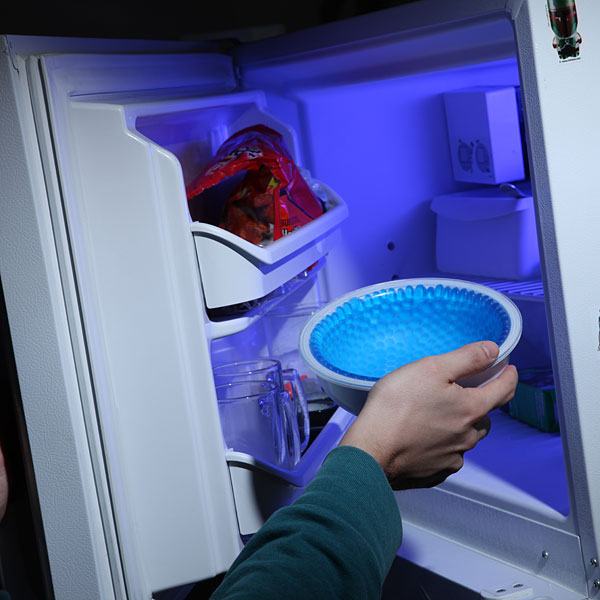

Mr. Brady did an experiment. He started with 15 grams of mass. At the end, he had 13 grams of mass. What happened?
His experiment was in an open system, so some mass escaped.
His experiment was in a closed system so the mass did not change.
How can the law of conservation of mass apply to a burning log, if all that remains of it is ash?
The ash has the same mass as the log, although a large percentage of it blows away.
The law of conservation of mass applies to changes of state but not to chemical reactions.
The law of conservation of mass applies to substitution and displacement reactions, but not to combustion reactions.
The masses of the gases released into the air plus the mass of ash equal the mass of the log before burning.
Look at the following chemical equation. 2As + 6NaOH → 2Na3 AsO3 + 2H2
Does this equation follow the law of conservation of matter?
Yes, because the mass of the reactants is equal to the mass of the products
No, because the reactants contain more oxygen (O) atoms than the products.
No, because the reactants contain more hydrogen (H) atoms than the products.
Yes, because the reactants contain the same number of arsenic (As) atoms as the products.
Chemical X has a mass of 5 grams, and chemical Y has a mass of 10 grams. If the two chemicals are mixed and a complete chemical reaction takes place, what is most likely the mass of the product?
5g
10g
15g
In a reaction A + B ----> C, reactant A has 5g and product C has 9g. How many grams does reactant B have?
4g
5g
9g
14g

