
 Worksheets
Astronomy Spring Semester Final Review
Total questions: 200
Worksheet time: 2hrs 10mins
What is the distance between the Sun and Earth?
10 million km
1 AU
400,000 km
50 million miles
How far is the Moon from Earth?
1 AU
1 million km
10 million miles
400,000 km

What season is it in the Northern Hemisphere at position A?
Summer
Fall
Winter
Spring

What season is it in the Southern Hemisphere at point D?
Summer
Fall
Winter
Spring

What eclipse is pictured?
Solar Eclipse
Lunar Eclipse
If measuring the distance between galaxies, the best unit to use is (a) .
If measuring the distance between stars, the best unit to use is (a) .
If measuring the distance between Neptune and the Sun, the best unit to use is (a) .
If measuring the distance between Mercury and Earth, the best unit to use is (a) .

Why do astronomers use light years as a measurement?
because miles & kilometers are sufficient
it's an easier way to describe huge distances
it's an easier way to describe large objects such as stars
because distances in space are extremely vast

Which statement best describes constellations?
indecipherable so-called "patterns" that kinda make sense
stars that are fairly close to each other
patterns of stars that resemble animals and/or other objects
pattern of stars in the night sky that reflects a culture

Polaris is also known as the "north star" and will remain so for the next 13,000 years.
True
False

Right ascension is a projection of ______ into space; declination is a projection of ______.
the north pole, the south pole
coordinates, azimuth
latitude, longitude
longitude, latitude

The solar day is measured from sunrise to sunrise - while the sidereal day is measured from
star rise to star rise.
day to night & then back again.
sunrise to sunset.
star rise to sunset.

Solstices occur when the Sun reaches the highest & lowest position in the sky. This occurs
about once a year.
around March 21st & Sept. 21st.
very rarely.
around June 21st & Dec. 21st.

Equinoxes occur (around March 21st & Sept. 21st) when the Sun appears to be directly
over the Tropic of Capricorn.
over the Tropic of Cancer.
over the Equator.
between the Earth & Moon.

Earth's seasons are caused by
the precession of Earth's axis.
its distance from the Sun.
wobbles in its orbit and axis of rotation.
its tilt; revolution around the Sun, and spherical shape.
Movement of Earth around the sun.
Rotation
Revolution
Spinning of Earth on its axis.
Rotation
Revolution

What is the name of the galaxy we live in?
Andromeda
Milky Way
Whirlpool
Occurs when Earth is positioned between the moon and the sun and when Earth's shadow crosses the lighted half of the moon.
Solar Eclipse
Eclipse
Lunar Eclipse
Perigee

What is the "lunar month" that spans from Full Moon phase to the next Full Moon phase called?
A Synodic Month
A Diurnal Month
A Sidereal Month
An Equinox

This 'lunar month' is described from the Earth's surface from a lunar phase until the time to reach the SAME lunar phase and it takes about 29.5 days.
Sidereal
Synodic
Syzygy
Conjunction
This 'lunar month' is described from the STARS as the time that an outsider (not on Earth) would view the Moon making one full orbit/revolution around the Earth.
Sidereal
Synodic
Syzygy
Conjunction

Why is the synodic month longer than the sidereal month?
After 27.3 days, the Moon must still move further to reach the lunar phase and it takes 2.2 days
After 29.5 days, the Moon must still move further to reach its next phase
After 27.3 days the Moon stops its orbit and reverses for 2.2 days

The time from one Vernal Equinox to the next is called:
Tropical Day
Sidereal Year
Tropical Year
Sidereal Day
The orbital period of one object (moon) around another object (Earth) measured with respect to the stars.
sidereal
magnitude
precession
synodic
Which of the following is true?
A sidereal day is about 4 minutes shorter than a solar day on the Earth
A sidereal day is about 4 minutes longer than a solar day on the Earth
A sidereal day is the same length as a solar day on Earth
A sidereal day is longer than a solar day on Earth
a slow conical motion of Earth's axis of rotation caused by the gravity of the moon and sun
sideral
precession
synodic
magnitude


perseus
ursa major
canis major
big dipper
__________ is a constellation in the far northern sky. Its name is Latin for dragon.
Draco
Pegasus
Ursa Major
Orion
What do you call constellations that can be seen year round?
Seasonal Constellations
Circumpolar Constellations
Minor Constellations
Draco's Constellations

The observation that everything moved across the night sky from east to west caused early astronomers like Aristotle to believe...
The sun was the center of the solar system.
The earth was the center of the solar system.
The earth was flat.
Ancient Greeks believed, the earth to be the centre of the universe. What do we call this model?
Copernican Model
Geocentric Universe
Heliocentric Universe
The Copernican revolution began when Copernicus suggested
a geocentric model.
a heliocentric model.
a new calendar.
a new constellation.
Tycho Brahe's biggest contribution to astronomy was...?
accurate observations of the stars and planets.
his new invention, the telescope.
his theory of a heliocentric universe.
his brass nose and bad temper.
Astronomer Johannes Kepler...
was made head astronomer for the Church.
invented the first Radio Telescope
showed that the planets have elliptical orbits.
Which African astronomer/librarian measured the circumference of the earth using sticks and shadows?
Aristotle
Ptolemy
Copernicus
Eratosthenes
Which astronomer of antiquity made elaborate models of an earth-centered universe, an idea which was to stick for over 1000 years?
Copernicus
Eratosthenes
Ptolemy
Tycho Brahe
Which astronomer of the Middle Ages first applied a telescope to astronomical observation?
Ptolemy
Galileo Galilei
Tycho Brahe
Copernicus
Galileo's discoveries
helped him invent the telescope.
provided evidence that the earth and the planets revolve around the sun.
convinced him the Earth was at the center.
helped him learn about the planets Neptune and Uranus.
A heliocentric view believes everything revolves around the:
sun
earth
universe
moon
Isaac Newton developed a __________ telescope that showed objects in sharper detail.
reflecting
satellite
radio
lense

Who came up with three laws explaining planetary motion?
Isaac Newton
Galileo Galilei
Tycho Brahe
Johannes Kepler
Why was the discovery of Jupiter’s moons so important?
It proved the theory of gravity
It supported the heliocentric model
It proved Kepler's Laws
It proved there could be multiple moons
Who discovered Jupiter's four moons?
Copernicus
Galileo
Brahe
Aristotle
Which of the following is NOT a reason that ancient civilizations studied astronomy?
time-keeping
navigation
science
culture & religion
contact aliens
Ptolemy
Copernicus
Newton
Galileo
Which bands of electromagnetic radiation are blocked from reaching Earth's surface by our atmosphere?
visible light
radio waves
x-ray
gamma rays

Which of these can solve the issue of atmospheric blurring?
polishing the lens
only using the telescope when it's a clear night
putting the telescope in space
putting the telescope underground
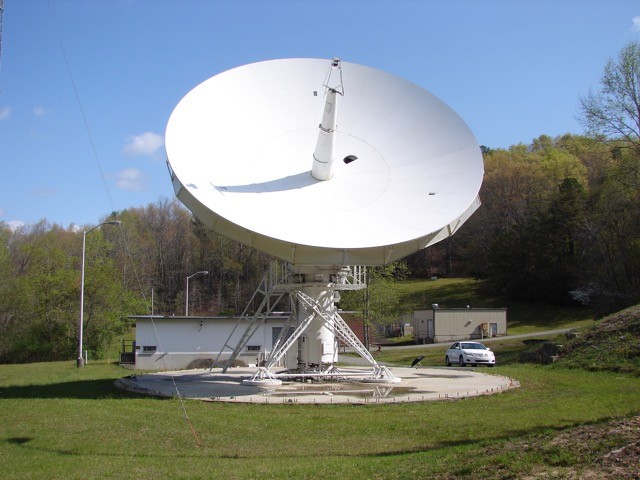
What type of telescope can work 24 hours a day and even be used in the rain?
Refracting Telescope
Radio Telescope
Newtonian Telescope
Solar Telescope


Modern telescopes are reflecting because: (Choose all that apply)
Lenses are difficult to manufacture
Lenses are heavy and fragile
lenses absorb light that passes through them
Lenses require only 1 perfect surface

One of the issues created by the air surrounding us is:
Interferometry
Reflection
Interference
Atmospheric blurring

What types of telescopes have to be placed in space? (Choose all that apply)
X-ray Telescopes
Gamma ray Telescopes
Infrared Telescopes
Radio Telescopes
When you look at a galaxy that is 2 billion light years away, you see the galaxy as it was ___________ years ago.
2 billion
2 million
zero
20 billion


An example of ______ would be if 2 stars were exactly the same but one was twice as far away it would appear dimmer.
apparent clarity
apparent visualization
apparent temperature
apparent brightness
If all stars were at exactly the same distance from you then the only difference in brightness would be caused by ______
Absolute temperature
Absoluteness
Absolute brightness
Absolute power
_______ shows us that when a star’s light is split into its spectrum (think rainbow) it will have distinct bright lines at specific frequencies (colors) based on its composition.
emission spectra
absorption spectra
evil specters
Spectra Obvicia
_______ shows us that when plain light passes through a star’s halo (or a planet’s atmosphere) it’s spectrum will be a full rainbow with distinct black lines where the halo (or planetary atmosphere) absorbed the light.
emission spectra
absorption spectra
evil specters
Spectra Obvicia
Hotter stars produce more ______.
synergy
planets
energy
nebulas
Hotter stars make more _____ light.
green
yellow
red
blue
Cooler stars make more _____ light.
green
yellow
red
blue


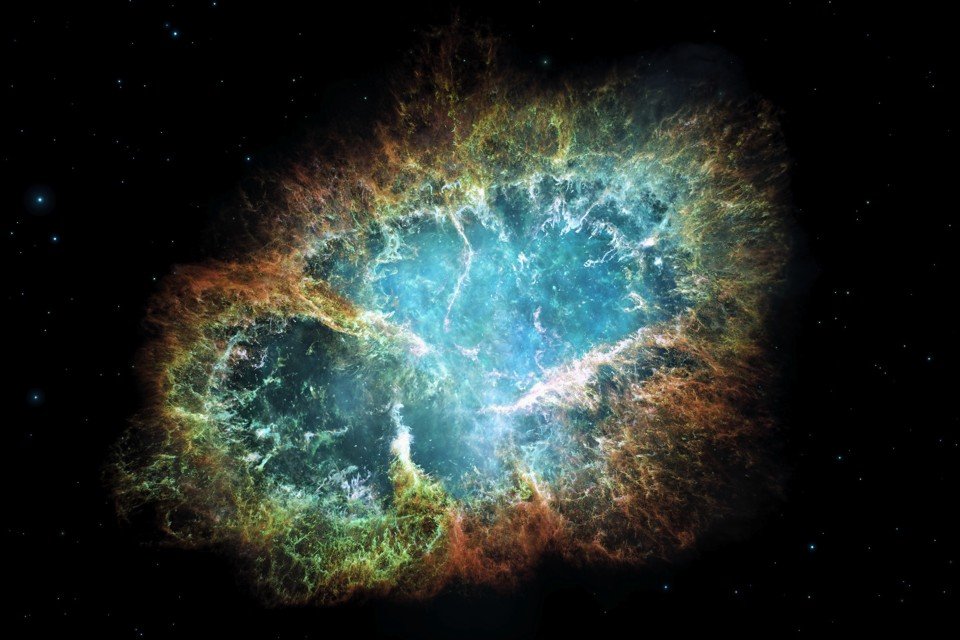

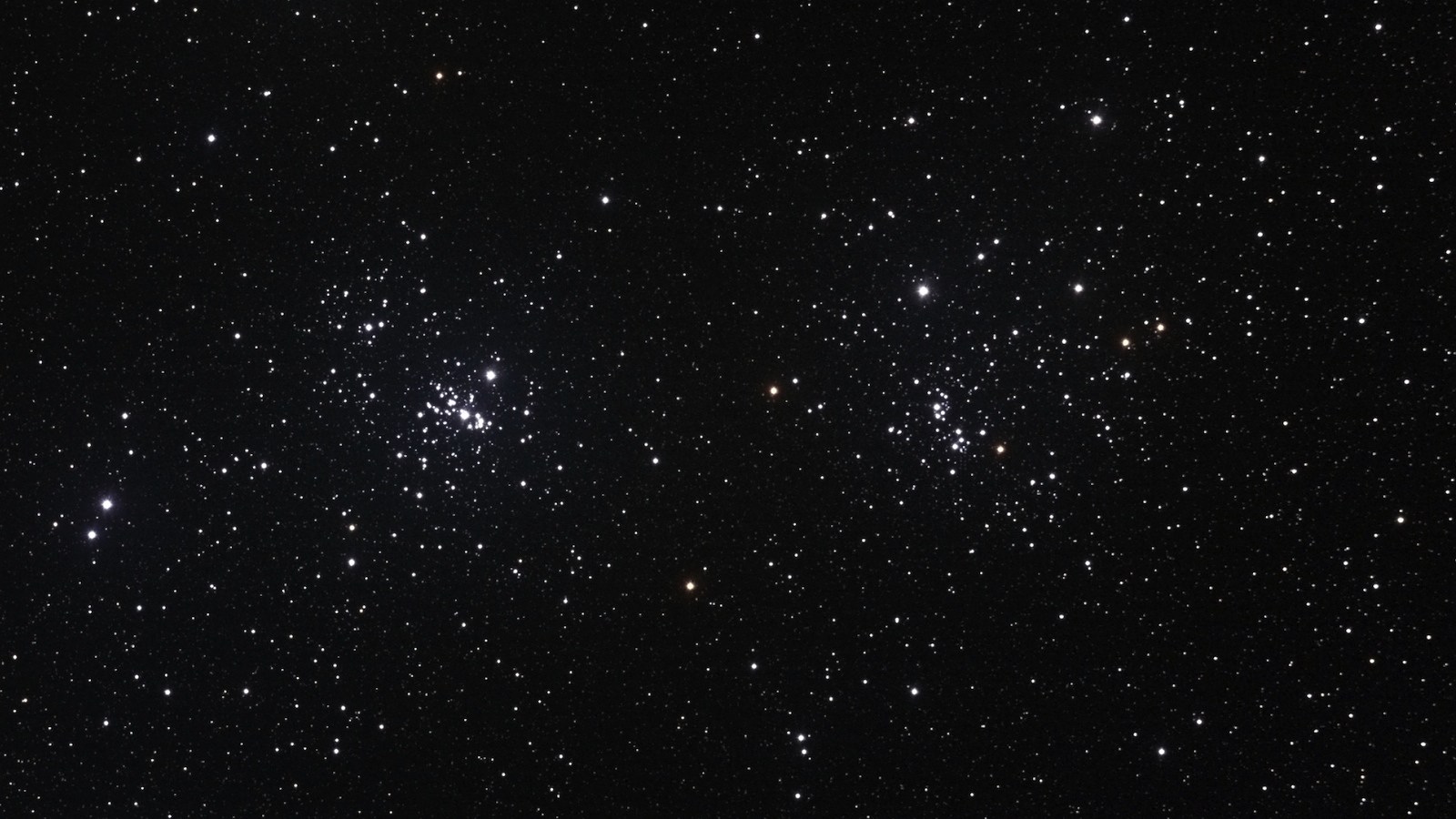


What will be the next stage in our star the sun's life cycle?
supernova
white dwarf
blackhole
red giant


The joining of nuclei to form a "heavier" nucleus is referred to as ______________
chemical reaction
fission
fusion
radiation
Which stage of the star life cycle does fusion occur and the star is most stable?
Birth - protostar(s)
Main Sequence - star
Old Age - red giant
Death - white dwarf
Which stage of the star's life cycle does gravity pull gas and dust together causing pressure and temperature to increase giving way to the formation a protostars?
Birth - protostar(s)
Main Sequence - star
Old Age - red giant
Death - white dwarf
Which stage of a star's life cycle does fusion stop, the core is crushed by gravity and it glows bright white?
Birth - protostar(s)
Main Sequence - star
Old Age - red giant
Death - white dwarf
Which stage of a star's life cycle does fusion slow down, the star expands and glows red?
Birth - protostar
Main Sequence - star
Old Age - red giant
Death - white dwarf
What spectacular event follows the red super giant phase for a large or massive star when it starts fusing iron in its core?
Big Bang
Supernova
Planetary Nebula
Nova

Which of the following is the fate that awaits our sun?
Suffer core collapse and explode in a type II supernova and become a neutron star
Collapse without exploding and become a black hole
Eject its outer layers and leave behind its core as a white dwarf
Explode as a type Ia supernova
What makes supernovas explode?
It can happen because a chicken nugget decides it wants some sauce and it falls into a nuclear reactor and creates a supernova.
It can happen from a Moon stealing mass from a companion star and then stealing so much it explodes into a million pickles.
It can also happen when two neighboring galaxies collide.
It can happen when a star comes to the end of its life and has no more nuclear energy and some mass flows to the core until it can’t withstand its own gravitational force and collapses in on itself and blows up
When massive stars go through supernova, they can leave behind a neutron star. These stars are so dense that a teaspoon of their material would weigh ____ million tons!
100
1,000
50
2
Some highly magnetized Neutron stars also rotate very rapidly, generating electromagnetic radiation from the poles. We call these ____.
quasars
pulsars
black holes
gamma ray bursts
Scientists theorize that a _____________________________ is at the center of every galaxy.
stellar black hole
cosmic black hole
supermassive black hole
star

What small, hot, faint objects are found at B?
neutron stars
black holes
white dwarfs
brown dwarfs

The H-R diagram classifies stars based on what factors?
Temperature and luminosity
Number of planets
What constellation they're in
Temperature and fusion

Compared to a red giant star, a blue supergiant is...
Hotter and brighter
Hotter and not as bright
Colder and brighter
Colder and not as bright

Compared to a white dwarf, a red supergiant is...
Hotter and brighter
Hotter and not as bright
Colder and brighter
Colder and not as bright
Which star has a longer life, a main sequence star or a blue giant?
Main sequence star
Blue giant
What kind of star has the longest lifespan?
A very massive star, like a blue giant
An average sized star, like our Sun
A star with low mass, like a red dwarf
Which planet is the closest planet to the sun?
Mercury
Venus
Mars
Pluto
Which planet's average temperature make it the hottest planet in the solar system?
Mercury
Venus
Earth
Mars
The "Great Red Spot" is a storm on which planet?
Earth
Mars
Jupiter
Saturn
Which planet rotates on its side?
Venus
Earth
Saturn
Uranus
Why is Venus's atmosphere yellow?
banannas
sulfer
nitrogen
iron
What do Mercury, Venus, Earth, and Mars all have in common?
They are all very cold planets.
They are considered terrestrial planets, that is rocky or have metals with hard surface.
They are about the same size.
They are considered gas giants
The four inner planets are rocky and small. Which description best fits the next four outer planets?
They are also rocky and small.
They are very large and has no moons
They are small and made of ice.
They are very large, made of gases with no solid surface
A cloud of gas and dust is called a....
Solar System
Nebula
Galaxy
Red Giant
What takes up 99.8% of the mass in the solar system?
The moon
The sun
Jupiter
Saturn
This marks the boundary of our solar system.
Asteroid Belt
Kuiper Belt
Comet Belt
Oort Cloud
The nebular hypothesis explains
why the planets are spherical in shape.
why the solar system is in a flattened disk.
how the sun and planets formed from a cloud of gas and dust.
all of the above.
Because Pluto has not cleared its orbital path of debris, it was reclassified from a planet to a . . .
asteroid.
meteor.
moon.
dwarf planet.

Which planet is closest to Earth in size?
Mercury
Uranus
Venus
Mars

How many moons does Mars have?
0
1
2
3
The largest of the terrestrial planets is
Jupiter
Earth
Mars
Uranus
According to scientists, the solar system formed from
colliding planetesimals.
rotating stars.
colliding nebulae.
a rotating disk of dust and gases.
What is the mass of Jupiter?
2.5 times the mass of Earth
twice the mass of all the terrestrial planets
about half the mass of all the Jovian planets
2.5 times the mass of all the other planets and their moons
The Kuiper Belt is a region beyond Neptune containing
comets with short orbit periods.
meteors smaller than 1 km across.
a dense collection of meteoroids.
comets with unusually large nuclei.
As the shape of the nebula changed, material began to concentrate and heat up near the __________.
sides.
top.
bottom.
center.
The concentrated, heated up material helped to form a "wannabe" star, or ____________.
protostar.
baby star.
junior star.
pre-star.
Heat and pressure in our protostar reached limits needed for the process of _______, in which hydrogen atoms smash together to form helium.
fission
engine
fusion
matter transport
As parts of what used to be a nebula cooled down, matter was able to condense and form distinct bodies called...
baby planets.
planetellas.
planetesimals.
pancakes.
Icey/gaseous planetesimals made largely of hydrogen would eventually become the ___________ planets.
Jovian
terrestrial
extra-terrestrial

A term used to the young/early planet in the solar system
PLIMNSAEEATSL
(a)
What happened to the nebula after it collapsed and started spinning?
It formed a sphere
It flattened into a disc
It evaporated into space
It exploded


Which planet has the shortest year?
Mars
Mercury
Earth
Venus
A day is longer than a year on this planet
Jupiter
Mars
Venus
Earth
Which planet is best known for its easily visible series of belts and zones?
Jupiter
Saturn
Uranus
Neptune
Which planet has the lowest density?
Jupiter
Saturn
Uranus
Neptune
Which of the Jovian planets is brightest in the night sky?
Jupiter
Saturn
Uranus
Neptune
Which two elements make up the majority of a Jovian planet's atmosphere?
Hydrogen and Methane
Hydrogen and Nitrogen
Oxygen and Nitrogen
Hydrogen and Helium
What is the name of Saturn's largest moon?
Hyperion
Titan
Ganymede
Hyperion
Which of these is responsible for the variable way that we see Saturn’s rings on Earth?
The Earth's relative position to the Sun.
The brightness of Jupiter's reflection
The tilt of Saturn on its axis.
Saturn's retrograde rotation

Titan has an extremely cold surface temperature (minus 290 oF). How can liquids exist there?
water can exist on the surface if it contains salt
liquids can only exist temporarily on the surface
methane & ethane gases which have a low liquidation point
only solids can exist at that temperature

What other unique feature of Titan make it such an unusual moon?
its proximity to Saturn itself
a thick atmosphere that is at least twice that of Earth's
a subsurface ocean of water ice
solid water/ice surface
A moon of Jupiter that has the potential to support alien life. It has geysers which means that it could have an underground liquid ocean that is salty.
Ganymede
Titan
Europa
Perseverance rover
The largest moon of Saturn and is the only moon in our solar system that has an atmosphere. It has rivers, lakes, seas, and may contain oceans (the liquid in these places is not water, but another type of liquid).
Ganymede
Titan
Europa
Perseverance rover
A moon of Jupiter. It is the largest moon in our solar system. It is the only moon to have a magnetic field (this would protect life from radiation). This moon could have ice and liquid water below its surface that could be an ocean.
Ganymede
Titan
Europa
Perseverance rover

