wayground logo

Free Printable Worksheets

Font size

S
M
L
XL
Worksheets

Sem. 1 Final Exam Review

Total questions: 205

Worksheet time: 6hrs 7mins

Name
Class
Date
1.
After drawing in your bonds, what do you do if you don't have enough electrons to get each atom to its octet?
a)
Place dots until everything has eight
b)
Place dots only around the terminal atoms
c)
Add a multiple bond
d)
Have eight only around the central atom
2.
In a Lewis structure, what do you do  with the total number of valence if your ion is 2- charged?
a)
Add 2 to the valence number
b)
Subtract 2 from the valence number
c)
Multiply the valence number by 2
d)
Divide the valence number by 2
3.
Which of the following describes covalent bonds?
a)
Bonds form because of opposite charges
b)
Bonds form to fill outer electron shells
c)
Electrons are transferred between atoms
d)
Covalent bonds are magical
4.
How many covalent bonds does carbon need to form in order to have a full octet?
a)
2
b)
3
c)
4
d)
5
5.
According to the octet rule most elements need _______ valence electrons.
a)
2
b)
8
c)
6
d)
18
6.
If electrons are shared unequally then the bond is....
a)
Non-polar covalent
b)
Ionic
c)
Non-polar ionic
d)
Polar covalent
7.
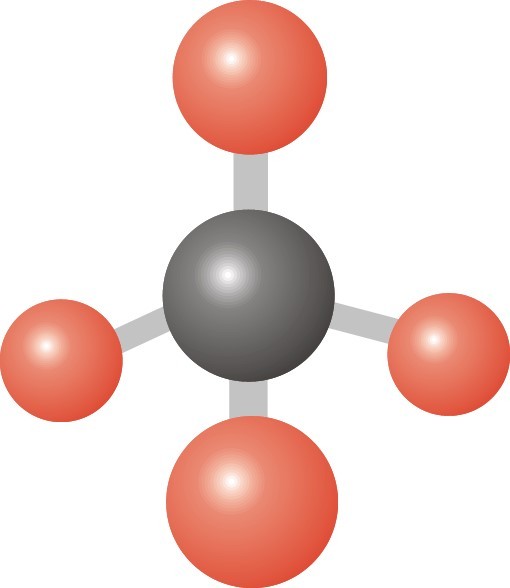
Choose the correct shape for this molecule:
a)
Trigonal planar
b)
Trigonal pyramidal
c)
Bent
d)
Tetrahedral
8.
According to VSEPR, molecules adjust their shapes to keep which of the following as far away as possible?
a)
Pairs of valence electrons
b)
Inner shell electrons
c)
Mobile Electrons
d)
Electrons closest to the nucleus
9.
What is the VSEPR theory used to predict?
a)
Bond Strength
b)
Polarity
c)
Molecular Shape
d)
Electronegativity
10.
Who could this molecule be?
a)
CH4
b)
CO2
c)
PCl5
d)
BF3
11.
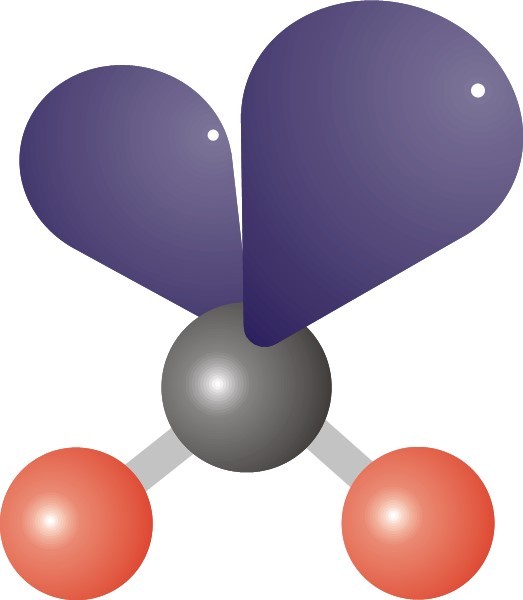
Who could this be? 
a)
CO2
b)
NH3
c)
H2S
d)
CH4
12.
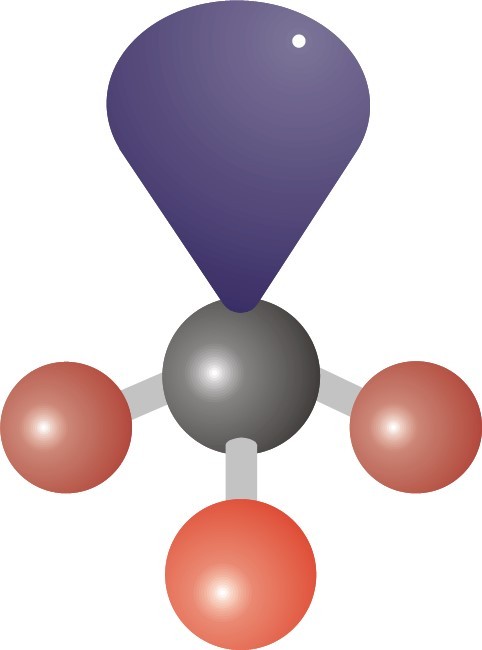
Who could this be?
a)
H2O
b)
NH3
c)
CO2
d)
CH4
13.
What is the correct formula for this molecule?
a)
NH
b)
N3H
c)
NH3
d)
NH4
14.
Which of the following is the correct Lewis dot structure for the molecule fluorine (F2)?
a)
A
b)
B
c)
C
d)
D
15.
Covalent compounds
a)
Share electrons
b)
transfer electrons
c)
contain a sea of electrons
d)
conduct electricity
16.
In the correct Lewis structure for water, how many unshared pairs of electrons will oxygen have?
a)
1
b)
4
c)
3
d)
2
17.
Which of the following is the correct Lewis structure for CH2O?
a)
Option A
b)
Option B
c)
Option C
d)
Option D
18.
Which LD Diagram is correct for chloromethane (CH3Cl)
a)
A
b)
B
c)
C
d)
D
19.
What is a double bond?
a)
a bond between two atoms
b)
one pair of electrons shared between two atoms
c)
two pairs of electrons shared between two atoms
d)
James Bond's brother
20.
Which molecule would have this molecular geometry?
a)
BF3
b)
CH4
c)
PCl5
d)
CO2
21.
Which of the following is the correct Lewis dot structure for the molecule fluorine (F2)?
a)
A
b)
B
c)
C
d)
D
22.
Hydrogen needs _____ electrons in its valence shell to be stable.
a)
4
b)
6
c)
8
d)
2
23.
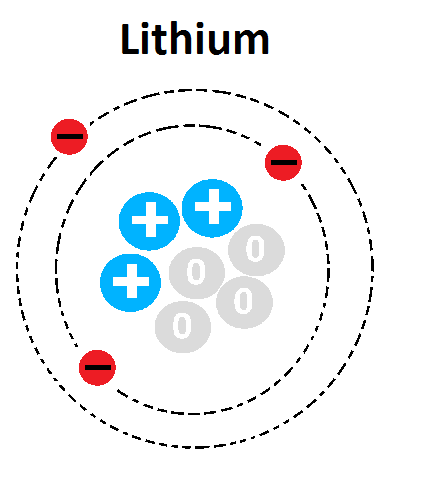
How many electrons should Lithium have around its Lewis dot model?
a)
1
b)
2
c)
3
d)
4
24.
What is the bond angle for this molecule?
a)
109.5
b)
120
c)
107
d)
90
25.

What shape would this have?

a)

Trigonal planar

b)

Pyramidal

c)

Tetrahedral

d)

Bent

26.

How many unshared pairs of electrons will a bent molecule have?

a)

0

b)

2

c)

3

d)

4

27.

NH3 has how many lone pairs?

a)

0

b)

1

c)

2

d)

3

28.

What molecular geometry would PH3 have?

a)

Trigonal Pyramidal

b)

Trigonal Bipyramidal

c)

Bent

d)

Linear

29.

Which is the correct structure for NH3?

Pictures correspond with a-d.

a)

Option A.

b)

Option B.

c)

Option C.

d)

Option D.

30.

Which of the following is the correct LD Diagram for Hydrogen Cyanide, HCN?

a)

A

b)

B

c)

C

d)

D

31.

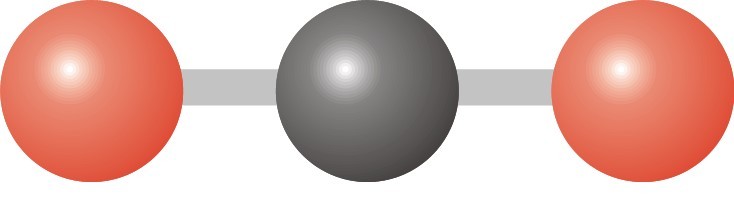
Which is the correct molecular structure for carbon dioxide CO2?

a)
b)
c)
d)
32.

What is the correct Lewis Dot Structure for NH3?

a)
b)
c)
d)
33.

The acronym VSEPR stand for

a)

very strong electron pair repulsion.

b)

varied symmetry electrostatic proton reaction.

c)

venomous snakes enjoy pink ribbons.

d)

valence shell electron pair repulsion.

34.

Which of the following molecular shapes would have a bond angle of 180 Degrees?

a)

Bent

b)

Trigonal Planar

c)

Tetrahedral

d)

Linear

35.

The bond angle for a trigonal planar molecule is

a)

90 Degrees

b)

109.5 Degrees

c)

120 Degrees

d)

180 Degrees

36.
What number is the metric system based?
a)
10
b)
20
c)
1
d)
100
37.
The base unit of metric length.
a)
Meter
b)
Liter 
c)
Kilogram
d)
milligram
38.
What number is the metric system based?
a)
10
b)
20
c)
1
d)
100
39.
The base unit of metric length.
a)
Meter
b)
Liter 
c)
Kilogram
d)
milligram
40.
The basic unit of metric volume is called a_____.
a)
Kilogram
b)
milligram
c)
Liter
d)
milliliter
41.
What is the length of the key?
a)
2 cm
b)
0 cm
c)
4 cm
d)
2 inches
42.
What is the correct volume of the blue liquid?
a)
5 ml
b)
15 ml
c)
20 ml
d)
25 ml
43.
A graduated cylinder is used to measure the __________ of a liquid.
a)
temperature
b)
mass
c)
volume
d)
length
44.
The amount of matter in an object is the
a)
mass
b)
volume
c)
length
d)
density
45.
What is the correct mass in grams?
a)
516.7
b)
516.6
c)
510.6
46.

A green powder is heated & a gas is given off while it turns to a black solid. This describes

a)

Physical Change

b)

Chemical Change

c)

Change in State

d)

Change in Temperature

47.

A Chemical Change is also known as what?

a)

Physical Change

b)

Physical Property

c)

Chemical Reaction

d)

Chemical Property

48.

Which of the following could indicate that a chemical change took place?

a)

Change in color

b)

Production of Energy

c)

Formation of Gas

d)

All are correct

49.

The formation of a solid when two liquids combine is called?

a)

Solidification

b)

Freezing

c)

Precipitate

d)

Solubility

50.

What does a chemical change result in?

a)

A change in state of the substance (ex. liquid to solid)

b)

A change in texture of the substance.

c)

A change in the way atoms are bonded to each other.

d)

A change in the appearance of the substance.

51.

Which type of change is most often easily reversed?

a)

Chemical

b)

Physical

c)

Both a physical and chemical change.

d)

Neither a physical or chemical change.

52.

Identify what type of change happening in the picture below...

a)

Chemical Change

b)

Physical Change

c)

Endothermic Reaction

d)

Exothermic Reaction

53.

Identify what type of change happening in the picture below...

a)

Chemical Change

b)

Physical Change

c)

Endothermic Reaction

d)

Exothermic Reaction

54.

Identify what type of change happening in the picture below...

a)

Chemical Reaction

b)

Physical Change

c)

Change in State

d)

Change in appearance only

55.

If the chemical properties of a substance remain unchanged & the appearance or shape of an substance changes it is a...

a)

Chemical Change

b)

Physical Change

c)

Both a physical and chemical change.

d)

Neither a physical or chemical change.

56.

Which of the following is an example of a physical change?

a)

A glass falling and shattering on the floor.

b)

Baking a birthday cake.

c)

Burning a piece of paper.

d)

Baking soda and vinegar mixing together.

57.

Which type of change are irreversible?

a)

Chemical Changes

b)

Physical Changes

c)

Changes in State

d)

Changes in Temperature

58.

Which lab experiments below describe a situation where a chemical change has occurred? Check all that apply.

a)

After adding zinc (Zn) to hydrochloric acid (HCl), a student observes bubbles forming in the solution and a thermometer registers a 10°10\degree  change in temperature.

b)

A student uses a mortar and pestle (a grinding stone) to break up large pieces of ammonium thiocyanate ( NH4SCNNH_4SCN  ) into smaller pieces.

c)

After combining Unknown A (a solid, white crystal) with Unknown B (a clear, odorless liquid), there is a strong smell produced and a thermometer registers a  15°15\degree  change in temperature.

d)

A student dissolves sugar ( C6H6O6C_6H_6O_6  ) into water ( H2OH_2O  ). The sugar crystals seem to disappear.

59.

A student combines two clear, colorless solutions shown here. When combined, the temperature changed from 25°25\degree  to  23°23\degree  and a white substance rapidly formed and settled at the bottom of the container. What most likely happened to produce these results?

a)

One of the original compounds came out of solution

b)

The solutions reacted chemically

c)

Some of the water froze into ice crystals

d)

Rapid evaporation of water occured, leaving a solid

60.

What evidence can you use to infer that a chemical reaction has occurred here?

a)

A dark solid formed on the zinc metal

b)

The zinc metal remained silver-colored and shiny

c)

The CuSO4CuSO_4 solution turned blue when the zinc metal was added

d)

None of these

61.

Observe the chemical equation shown here. What evidence of a chemical reaction is present when 2NO is added to  O2O_2  ?

a)

A gas is present

b)

The total number of atoms remains unchanged

c)

The state of matter remains the same

d)

A brown gas is produced

62.

Review the data in the chart provided. Which statement below is NOT supported by this data?

a)

A chemical reaction takes place between magnesium and hydrochloric acid.

b)

A gas is released in Test Tube 2.

c)

The substances in both test tubes are reactive.

d)

Energy is released in Test Tube 2.

63.
Convert from meters to cm:  9 meters
a)
900 cm
b)
90 cm
c)
0.9 cm
d)
0.09 cm
64.
1000 grams = _____ kilograms
a)
0.0001
b)
1,000,000
c)
10
d)
1
65.
7,000 g = ____ kg
a)
70
b)
700
c)
7
d)
0.07
66.

has mass (weight) and volume (takes up space)

a)

atom

b)

matter

c)

molecule

d)

energy

67.

C6H8O6 (vitamin C)

a)

element

b)

compound

c)

homogeneous mixture

d)

heterogeneous mixture

68.

substance made up of entirely the same molecules (or the same single atoms)

a)

atom

b)

mixture

c)

molecule

d)

pure substance

69.

All of these pictures are examples of

a)

elements

b)

compounds

c)

homogeneous mixtures

d)

heterogeneous mixtures

70.

the oxygen in a tank

a)

element

b)

compound

c)

homogeneous mixture

d)

heterogeneous mixture

71.

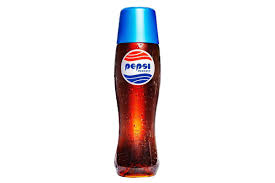
Pepsi

a)

element

b)

compound

c)

homogeneous mixture

d)

heterogeneous mixture

72.

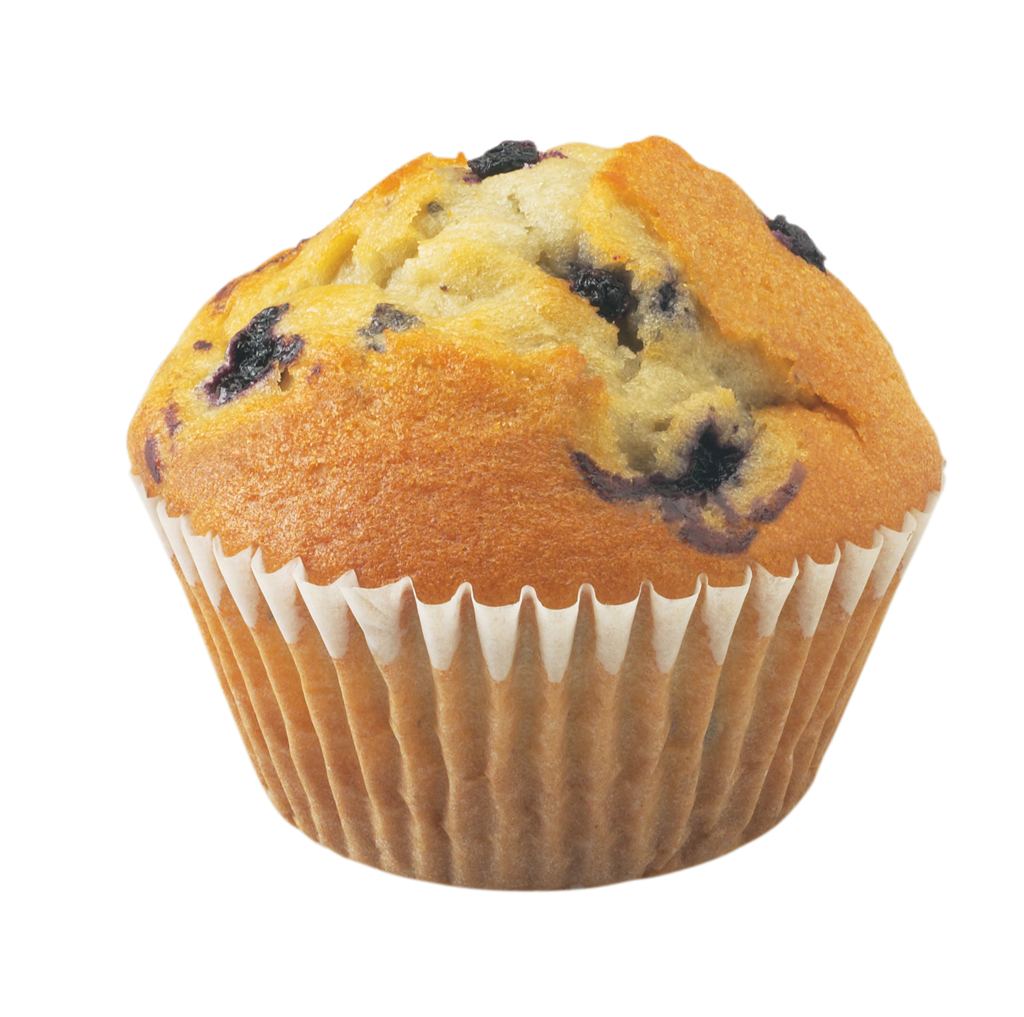
blueberry muffin

a)

element

b)

compound

c)

homogeneous mixture

d)

heterogeneous mixture

73.

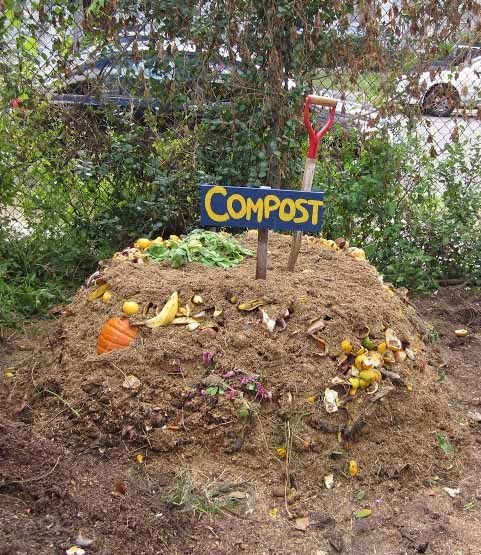
compost pile in the backyard for the garden

a)

element

b)

compound

c)

homogeneous mixture

d)

heterogeneous mixture

74.

Convert 3.5 gallons into cups. (1gal = 16cups)

a)

56 cups

b)

0.21875 cups

c)

19.5 cups

d)

48 cups

75.

You did a survey among 35 teenagers about their favorite sports. What graph should you use to represent the number of responses in each sport?

a)

bar graph

b)

line graph

76.

This variable in an experiment is the one being purposefully changed (or manipulated) by the scientist before the experiment is even conducted.

a)
dependent variable
b)
independent variable
77.
What is the independent variable?
a)

Total cost of mowing

b)
Moe's Mowing Service
c)
$18
d)
Mowing Time
78.

In a line graph you will find the independent variable on the ___ axis and the dependent variable on the ___ axis.

(the answer must be in the correct order as the missing blanks above)

a)

x , y

b)

y, x

c)

they can be switched

79.

During which month did Sam have a weight of 73 Kg?

a)

January

b)

February

c)

May

d)

March

80.
The x-axis shows
a)
time
b)
carbon dioxide concentration
c)
Mauna Loa volcano
d)
science
81.
The y-axis shows
a)
time
b)
carbon dioxide concentration
c)
Mauna Loa volcano
d)
science
82.

When should a bar graph be used?

a)

When comparing parts of a whole

b)

When showing change over time

c)

When comparing data between different groups of categories

d)

Whenever you want

83.

When should a line graph be used?

a)

When comparing parts of a whole

b)

When showing change over time

c)

When comparing data between different groups of categories

d)

Whenever you want

84.

What is a data table?

a)

Is a visual tool that uses that uses bars to compare data among categories

b)

Used to compare the parts of a whole

c)

Any display of information in tabular form, with rows and or columns named

d)

Is a visual tool that uses that uses lines to compare data among categories

85.
a)

The cooler the temperature, the louder the crickets chirp.

b)

The crickets cannot chirp at temperatures lower than 10 degrees C.

c)

The warmer the temperature, the more often crickets chirp.

d)

The temperature and the chirping of crickets are not related.

86.
What is this graph missing?
a)
Axes
b)
Title
c)
Categories
d)
None of these
87.

Which of these is necessary for a graph? Choose all correct answers

a)

The scale

b)

The title

c)

The x and y axis labels

d)

A key

88.

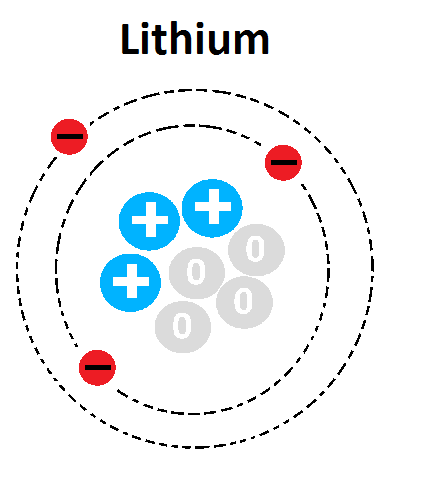
 What element is this an atom of?

a)
nitrogen
b)
lithium
c)
beryllium
d)
carbon
89.
The building blocks of matter
a)
Mass Number
b)
Atoms
c)
Nobel Gases
d)
Isotopes
90.
Positively Charged Particle
Mass: 1 amu
a)
Proton
b)
Neuton
c)
Electron
d)
Isotope
91.
Neutral Charged Particle
Mass: 1 Amu
a)
Proton
b)
Neutron
c)
Electron
d)
Isotope
92.
Negatively charged Particle
Mass:  Almost Nothing
a)
Protons
b)
Neutrons
c)
Electrons
d)
Isotopes
93.
The total number of Protons and Neutrons.
a)
Mass Number
b)
Atomic Number
c)
Matter
d)
Ion
94.
Number of protons in an atom.
a)
Atomic Number
b)
Mass Number
c)
Isotope
d)
Valence electrons
95.
Electrons in the outermost orbital.
a)
Protons
b)
Neutrons
c)
Valence Electrons
d)
Isotopes
96.
Atoms of the same element but with different numbers of neutrons.
a)
Ion
b)
Isotope
c)
Mass Number
d)
electron
97.
An atom that has become charged by gaining or losing electrons.
a)
Ion
b)
Isotope
c)
Electron
d)
Valence Electron
98.

What is the atomic number of this atom?

a)

1

b)

3

c)

4

d)

7

99.

What is the mass number of this atom?

a)

1

b)

3

c)

4

d)

7

100.
Most of the mass in an atom is made up of _____________________?
a)
protons and electrons
b)
protons and neutrons
c)
neutrons and electrons
d)
electrons and quarks
101.
In order for an atom to be neutral what has to be true?
a)
The atom has more protons than neutrons
b)
The atom has more neutrons than protons
c)
The atom has the same number of protons and neutrons
d)
The atom has the same number of protons and electrons
102.
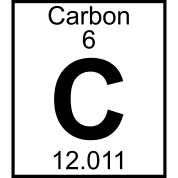
What does the C represent?
a)
atomic mass
b)
atomic number
c)
element name
d)
chemical symbol 
103.

What does the 6 represent?

a)

Atomic mass

b)

atomic number

c)

chemical symbol

d)

element name

104.
How is the number of neutrons in the nucleus of an atom calculated?
a)
Add the number of e- and p+ together
b)
Subtract the number of e- from p+
c)
Subtract the number of p+ from the mass number
d)
Add the mass number to the number of e-
105.
What subatomic particles would you find in the nucleus of an atom?
a)
Protons only
b)
Protons and Neutrons
c)
Neutrons and Electrons
d)
Protons and Electrons 
106.

An atom has 10 protons, 15 neutrons and 10 electrons what is its mass number.

a)

20

b)

10

c)

35

d)

25

107.

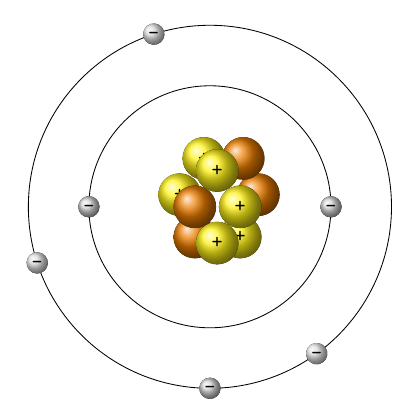
How many electrons does this atom have?

a)

2

b)

4

c)

6

d)

10

108.
The atomic number of an element that has 9 protons, 9 electrons, and 10 neutrons is _____.
a)
9
b)
10
c)
19
d)
28
109.
An element with a mass number of 11 and an atomic number of 5 has how many neutrons?
a)
11
b)
5
c)
6
d)
16
110.
An atom has an atomic number of 15 and a mass number of 31. How many protons are there in the atom?
a)
15
b)
31
c)
16
d)
47
111.

Which of the following determines the identity of an element?

a)

number of protons

b)

atomic mass

c)

number of neutrons

d)

number of shells

112.
What scientist is best known for his gold foil experiment?
a)
J.J. Tomson
b)
Ernest Rutherford
c)
John Dalton
d)
Democritus
113.
Who is the first scientist to think that the atom was the smallest unit of matter?
a)
J.J. Tomson
b)
Ernest Rutherford
c)
John Dalton
d)
Democritus
114.
What is the standard unit of mass at the atomic level?
a)
centimeters
b)
millimeters
c)
amu
d)
milligrams
115.
24.1% of all the isotopes of a an element have a mass of 75.23 amu, 48.7% have a mass of 74.61 amu, and 27.2% have a mass of 75.20 amu.
What is the average mass of this element?

a)
74.92 amu
b)
24.97 amu
c)
75.01 amu
d)
74.51 amu
116.
Calcium has three different isotopes. One has a mass of 35.00 amu; another has a mass of 41.00 amu; and another has a mass of 40.00 amu. Which isotope is the most abundant of the three?
a)
40.00 amu
b)
41.00 amu
c)
35.00 amu
d)
impossible to tell
117.
Calculate the average atomic mass of silver.
a)
106.38649amu
b)
111.91896amu
c)
107.8677amu
d)
121
118.
A nuclear reaction where a nucleus splits into two smaller nuclei is... 
a)
Fission
b)
Fusion
c)
Gamma decay
d)
Beta decay
119.
What happens when the number of protons in an atom changes? 
a)
The number of electrons changes too 
b)
Usually nothing happens, unless the atom is radioactive 
c)
The atomic nucleus explodes
d)
It becomes a completely different atom, with different properties 
120.
What element is the ?
a)
Ag-115
b)
Cd-115
c)
Pd-115
d)
Not Listed
121.
Which type of nuclear radiation is being emitted here?
a)
alpha
b)
beta
c)
gamma
d)
none
122.
Which type of nuclear radiation is being emitted here?
a)
Alpha
b)
beta
c)
gamma 
d)
none
123.
Balance the following equation:
146C --> 0-1e + ________
a)
145B
b)
146C
c)
147N
d)
42He
124.
Two or more nuclei combine to form one larger nucleus in the process of nuclear _____.
a)
Fusion
b)
Fission
c)
Tracing
d)
Decay
125.
This is an example of...
a)
Fission  reaction
b)
Fusion reaction
c)
Decomposition reaction
d)
Combustion
126.
When nuclei decay, massive amounts of __________ is released.
a)
energy
b)
jello
c)
protons
d)
neutrons
127.
What type of reaction is this?
a)
alpha
b)
beta
c)
gamma
d)
quiet
128.
Has the highest penetrating power.  Can penetrate our body.  Even several cm thick of lead or several meters thick of concrete cannot stop all of it.
a)
Alpha
b)
Beta
c)
Gamma
129.
Has the lowest penetrating power.  Can only penetrate 0.05 mm into the body and can be stopped by a piece of paper or clothing.
a)
Alpha
b)
Beta
c)
Gamma
130.
What type of nuclear reaction is this?
a)
alpha
b)
beta
c)
gamma
d)
hot
131.
The time needed for half of a radioactive sample to decay is called its __________.
a)
decay period
b)
period
c)
transmutation time
d)
half-life
132.
Arrange in order of increasing ability to penetrate matter.
a)
Beta, gamma, alpha
b)
Alpha, gamma, beta
c)
Gamma, beta, alpha
d)
Alpha, beta, gamma
133.
The half life of Thorium-234 is 24 days. What fraction of the element remains after 96 days
a)
1/2
b)
1/4
c)
1/8
d)
1/16
134.
Alpha particles have a _____ charge.
a)
+2
b)
0
c)
+1
d)
-1
135.
What does it mean when an element is radioactive?
a)
atom emits radiation
b)
nucei unstable due to uneven p to n ratio
c)
nuclei changes to become stable
d)
all of the above
136.
Which of the following is a disadvantage of nuclear energy as a power source?
a)
Nuclear energy produces less energy than the burning coal
b)
Nuclear energy produces air pollution
c)
Nuclear waste must be safely stored
d)
The fuel source is very limited
137.
The charge on a gamma particle is...
a)
-1
b)
0
c)
+1
d)
+2
138.
What fuel does the US typically use in fission reactors?
a)
Hydrogen
b)
Carbon
c)
Uranium
d)
Plutonium
139.
What is another name for an alpha particle?
a)
electron
b)
x-ray
c)
hydrogen nucleus
d)
helium nucleus
140.
What product of fission is necessary in order to establish a chain reaction?
a)
alpha particle
b)
two or more neutrons
c)
two or more protons
d)
gamma rays
141.
What is a beta particle?
a)
an emitted helium nucleus
b)
a high energy wave
c)
an energetic electron from a decomposed neutron
d)
none of the above
142.

A measure of the size of an atom, and is generally defined as the distance from the nucleus to the outermost electron orbit

a)

chemical reactivity

b)

atomic radius

c)

energy levels

d)

orbit

143.
The core of an atom where most of the mass of an atom exists; contains protons and neutrons
a)
nucleus
b)
electron shell
c)
proton
d)
electron
144.
The minimum energy required to remove an electron from the ground state of an atom
a)
electron configuration
b)
energy levels
c)
ionization energy
d)
ionic bond
145.
A negatively charged subatomic particle that exists in various energy levels outside the nucleus of an atom
a)
neutron
b)
electron
c)
proton
d)
subatomic particle
146.
The chart scientists use to organize and classify all the known elements
a)
elements chart
b)
the chart
c)
Periodic Table of the Elements
d)
Period table
147.
The tendency of an atom to attract electrons and acquire a negative charge
a)
electronegativity
b)
charge
c)
bonding ability
d)
electron configuration
148.
The energies of electrons as they orbit the nucleus of an atom
a)
energy levels
b)
orbits
c)
shells
d)
electron area
149.
Vertical columns of elements (families) on the periodic table with similar valence electron configurations and similar properties
a)
groups
b)
periods
c)
quadrants
d)
rows
150.
An electron that resides in the outermost shell, or principal quantum level, of an atom
a)
periodic trend
b)
electron shell
c)
ionic radius
d)
valence electron
151.
Which has the greater EN: 
Cl or Al?
a)
Cl
b)
Al
152.
Which has the greater EN: 
N or C?
a)
C
b)
N
153.
Which has the greater EN: 
H or F?
a)
H
b)
F
154.
Which of the following will have a larger radius than Zinc?
a)
Gallium
b)
Aluminum
c)
Magnesium
d)
Strontium
155.
Which of the following will have a higher electronegativity than arsenic (As)?
a)
Carbon (C)
b)
Neon (Ne)
c)
Antimony (Sb)
d)
Germanium (Ge)
156.
As atoms of elements in group 16 are considered in order from top to bottom, the electronegativity of each successive element....
a)
decreases
b)
increases
c)
remains the same
d)
none of the above
157.
Which atom has the largest atomic radius?
a)
potassium
b)
rubidium 
c)
francium
d)
cesium
158.
As you move down the periodic table atoms get bigger.  This is because ____________.
a)
The atoms have more mass.
b)
The atoms have more protons.
c)
The atoms have more energy levels
d)
The atoms have more nuetrons
159.
As you move across the periodic table atoms tend to get smaller because, ______________.
a)
the atoms have more mass.
b)
the atoms have less mass
c)
the atoms have more protons.
d)
the atoms have less electrons.
160.
Electronegativity is...
a)
how good an atom is at attracting electrons
b)
the ability of an atom to lose electrons
c)
the energy required to remove an electron from a specific atom
d)
how easy it is to make friends. 
161.
The atom with the largest atomic radius in Group 18 is - 
a)
Ar
b)
He
c)
Kr
d)
Rn
162.
The element with the largest electronegativity in the halogens is - 
a)
At
b)
F
c)
Cl
d)
Br
163.
The element with the lowest electronegativity in Period 3 is - 
a)
Na
b)
Cl
c)
Ar
d)
Mg
164.
Which periodic group has the smallest atomic radius?
a)
Alkali metals
b)
Halogens
c)
Noble Gases
d)
Transition metals
165.
Which orbital block corresponds to transition metals in the periodic table?
a)
s
b)
p
c)
d
d)
f
166.
Which of the following atoms would you expect  to have the largest atomic radius?
a)
Li
b)
K
c)
Ca
d)
Br
167.
A group of elements that includes the most active of the elements is the -
a)
halogens.
b)
noble gases.
c)
nitrogen group.
d)
alkaline earth metals.
168.
Put the following elements in order of decreasing ionization energy:
O, Te, Po, S.
a)
O, S, Po, Te
b)
O, S, Te, Po
c)
O, Te, Po, S
d)
O, Po, Te, S
169.
Which is larger:
Ca or Ca+2
a)
Ca
b)
Ca+2
c)
both are same size
170.
Which is larger:
P or P-3
a)
P
b)
P-3
c)
both are same size
171.
The atoms along the staircase are called 
a)
metals
b)
nonmetals
c)
metalloids
d)
noble gases
172.
For an electron to change from ground state to an excited stated it must...
a)
Absorb energy
b)
Release energy
173.
Which element is depicted from this orbital diagram
a)
Fluorine
b)
Neon
c)
Chlorine
d)
Argon
174.
This image is an illustration of
a)
photoelectric effect
b)
Dalton's atomic theory
c)
Bohr model
d)
Quantum mechanical model
175.
In the Bohr model, the orbit closest to the nucleus is
a)
called the ground state and is lowest in energy
b)
called the ground state and is highest in energy
c)
called the excited state and is lowest in energy
d)
called the excited state and is highest in energy
176.
The characteristic color bands that a hot, dilute gas emits are called...
a)
emission spectra
b)
absorption spectra
c)
continuous spectra
d)
black body radiation
177.
Which has the SHORTEST wavelength and, therefore, the highest frequency/most energy
a)
Radio waves
b)
Ultraviolet Rays
c)
Gamma Rays
d)
X-rays
178.
Which section of the spectrum is the ONLY one we can see?
a)
X-rays
b)
Visible Light
c)
Gamma Rays
d)
Ultraviolet Rays
179.
As the frequency of an electromagnetic wave increases, the amount of energy in that wave...
a)
increases.
b)
decreases.
c)
stays the same.
180.
Which color has the highest frequency?
a)
red
b)
orange
c)
green
d)
blue
181.
Which color has the least amount of energy?
a)
red
b)
orange
c)
green
d)
blue
182.
High frequency waves have _________ wavelengths.
a)
varying
b)
long
c)
the same
d)
short
183.
What atom matches this electron configuration?
1s22s22p63s2
a)
Neon
b)
Magnesium
c)
Aluminum
d)
Potassium
184.
"Electrons in the same orbital have opposite spin."
a)
Aufbau principle
b)
Hund's Rule
c)
Pauli Exclusion Principle
d)
Uncertainty Principle
185.
"Electrons fill lower energy orbitals before filling higher energy orbitals." 
a)
Aufbau principle
b)
Hund's Rule
c)
Pauli Exclusion Principle
d)
Uncertainty Principle
186.
"Electrons fill equal energy orbitals singly before pairing."
a)
Aufbau principle
b)
Hund's Rule
c)
Pauli Exclusion Principle
d)
Uncertainty Principle
187.
Emission of light from an atom occurs when an electron
a)
drops from a higher to a lower energy level.
b)
   jumps from a lower to a higher energy level.   
c)
   moves within its atomic orbital.
d)
falls into the nucleus.
188.
The _______________ determines the color of visible light. 
a)
wavelength
b)
speed
c)
amplitude
d)
light
189.
a)
helium and hydrogen
b)
helium and calcium
c)
hydrogen and calcium
d)
hydrogen and helium
190.
Maximum number of electrons that can be placed in an s orbital.  
a)
2
b)
6
c)
10
d)
14
191.
The maximum number of electrons that can be placed in an p orbital.  
a)
2
b)
6
c)
10
d)
14
192.
The maximum number of electrons that can be placed in an d  orbital.  
a)
2
b)
6
c)
10
d)
14
193.
The maximum number of electrons that can be placed in an f orbital.  
a)
2
b)
6
c)
10
d)
14
194.
Spherical orbital, also the lowest energy orbital. 
a)
s
b)
p
c)
d
d)
f
195.
In an orbital diagram,  an arrow represents: 
a)
an electron
b)
an orbital
c)
an element
196.
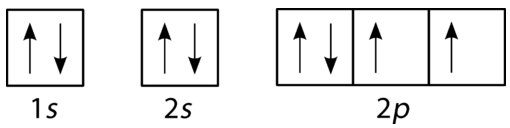
This orbital diagram represents:  
a)
C
b)
B
c)
N
d)
O
197.
This orbital diagram represents:  
a)
C
b)
B
c)
N
d)
O
198.
What is incorrect about this orbital diagram?
a)
Both arrows in the 2p box should be pointing up
b)
There is nothing incorrect with this diagram
c)
In the there should only be 1 orbital in the first 2p box and one in the 2nd 2p box
d)
All the arrows should be pointing up.
199.
Which is associated with the most energy? 
a)
2p
b)
2s
c)
3p
d)
1s
200.
Which has the LONGEST wavelength and, therefore, the lowest frequency/energy
a)
Gamma Rays
b)
Radio Waves
c)
Visible Light
d)
Infrared rays
201.
What electron configuration matches an oxygen ion?
a)
1s22s22p63s2, 3p64s23d104p5
b)
1s22s22p4
c)
1s22s22p6
d)
1s22s22p63s23p64s23d1
202.

The frequency of violet light is 7.5x10¹⁴ Hz. What is its wavelength?

a)

4.0x10⁻⁷ m

b)

4.0x10⁷ m

c)

2.25x10²³m

d)

2.25x10²³ Hz

203.

Red light has a wavelength of 6.75 x 10⁻⁷ m. What is its frequency?

a)

2.03x10¹¹ m

b)

4.44x10¹⁴ Hz

c)

4.44x10¹⁴ nm

d)

2.03x10¹¹ Hz

204.

What is the energy of a quantum of light with a frequency of 7.39 x 10¹⁴ Hz? (E=hv)

a)

4.88x10¹⁹ J

b)

4.88x10⁻¹⁹ J

c)

2.22x10²³ J

d)

2.22x10⁻²³ J

205.

The speed of electromagnetic radiation:

a)

depends on the form of radiation

b)

is always 3 x 10⁸ m/s, regardless of the type

c)

decreases as distance increases

d)

is 6.626 x 10⁻³⁴ J x s