wayground logo

Free Printable Worksheets

NEW

Font size

S
M
L
XL
Worksheets

EOC 2018-2019 Review

Total questions: 40

Worksheet time: 53mins

Name
Class
Date
1.
Jack has a rock. The rock has a mass of 14g and a volume of 2cm3. What is the density of the rock?
a)
7 mL
b)
7 g/cm3
c)
28 g/cm3
d)
1/7 g/cm3
2.
A block has a mass of 54g and a volume of 20cm3.  What is the density of the block?
a)
74 g/cm3
b)
1080 g/cm3
c)
34 g/cm3
d)
2.7 g/cm3
3.
Which property of matter is determined by dividing its mass by its volume?
a)
elasticity
b)
buoyancy
c)
density
d)
viscosity
4.

Which elements are found the most in Earth's crust?

a)

Ca, Na, K

b)

Al, O, Mg

c)

Fe, Al, O

d)

O, Si, Al

5.
Is sugar (C12H22O11) an element or a compound?
a)
Element
b)
Compound
6.
Is water an element or a compound?
a)
Element
b)
Compound
7.
Is Iron (Fe) an element or a compound?
a)
Element
b)
Compound
8.
Iron is a good conductor, malleable and magnetic. What type of element is Iron? 
a)
Metal
b)
Nonmetal
c)
Metalloid
d)
Pretty
9.
How would this element be classified?
a)
Metal
b)
Nonmetal
c)
Metalloid
d)
Metamorphic
10.
All of these properties describe metals except...
a)
malleable
b)
conductors
c)
brittle 
d)
shiny
11.
Which is NOT an insulator.
a)
Wool
b)
Plastic
c)
Copper
d)
Glass
12.
All of the following are conductors except _______.
a)
metal spoon
b)
wire
c)
iron nail
d)
plastic spoon
13.
A clear liquid from a flask is poured into another clear liquid in a beaker. Which of the following results of this procedure would indicate a new substance was formed?
a)
The level of the substance in the beaker is higher after the other liquid is added.
b)
A yellow solid forms and then settles to the bottom of the beaker.
c)
Small white crystals are left behind in the flask that held the first liquid.
14.
A student mixes two clear liquids together. After a few minutes, a white powdery solid can be seen settling on the bottom of the test tube. Which of the following is a conclusion that the student can draw based on these observations? The two clear liquids –
a)
were pure substances before they were mixed.
b)
are toxic and should be handled with extreme caution.
c)
have gone through a chemical change in which a new substance called a precipitate was produced.
d)
have been stored too long and are no longer good.
15.

What is the correct order (starting from the surface) of Earth's layers?

a)

lithosphere, outer core, inner core, asthenosphere

b)

asthenosphere, outer core, inner core, lithosphere

c)

lithosphere, asthenosphere, outer core, inner core

d)

outer core, inner core, lithosphere, asthenosphere

16.
Less dense materials rise to the top.
a)
True
b)
False
17.
Which layer of Earth has the GREATEST density?
a)
crust
b)
mantle
c)
outer core
d)
inner core
18.

Is there a pattern to the locations of earthquakes and volcanoes around the globe?

a)

No, earthquakes and volcanoes are random.

b)

Yes, earthquakes and volcanoes usually occur near the boundaries of tectonic plates.

c)

yes, earthquakes and volcanoes usually occur in the middle of tectonic plates.

d)

No, earthquakes and volcanoes usually occur under water.

19.

The Ring of Fire is an area where a large number of earthquakes and volcanic eruptions occur. What claim can be made about the Ring of Fire from this information?

a)

It is the only place on Earth where earthquakes can happen.

b)

The edges of the tectonic plates are moving in this area.

c)

It represents the areas where tectonic plates are the thickest.

d)

It has been getting larger since Earth first formed.
20.
Which of the following is associated with transform boundary?
a)
volcanoes
b)
mountains
c)
trenches
d)
earthquakes and fault line
21.
What type of boundary creates a new seafloor?
a)
convergent continental to continental
b)
convergent ocean to continental
c)
convergent ocean to ocean
d)
divergent 
22.
What geologic feature/event would you most likely to find at a divergent boundary between two pieces of oceanic crust?
a)
Rift Valley
b)
Mid-Ocean Ridge
c)
Island Arc
d)
Flat land
23.
What geologic feature/event you be most likely to find at a transform boundary?
a)
Earthquakes
b)
Volcanoes
c)
Mountains
d)
Rift Valleys
24.
The process by which igneous rocks are formed...
a)
heat and pressure
b)
melting and cooling
c)
weathering and erosion
25.
The process by which metamorphic rocks are formed...
a)
heat and pressure
b)
erosion and deposition
c)
melting and cooling
26.
Rock that forms when sediment from older rocks get pressed and cemented together.
a)
Sedimentary Rock
b)
Metamorphic Rock
c)
Igneous Rock
27.
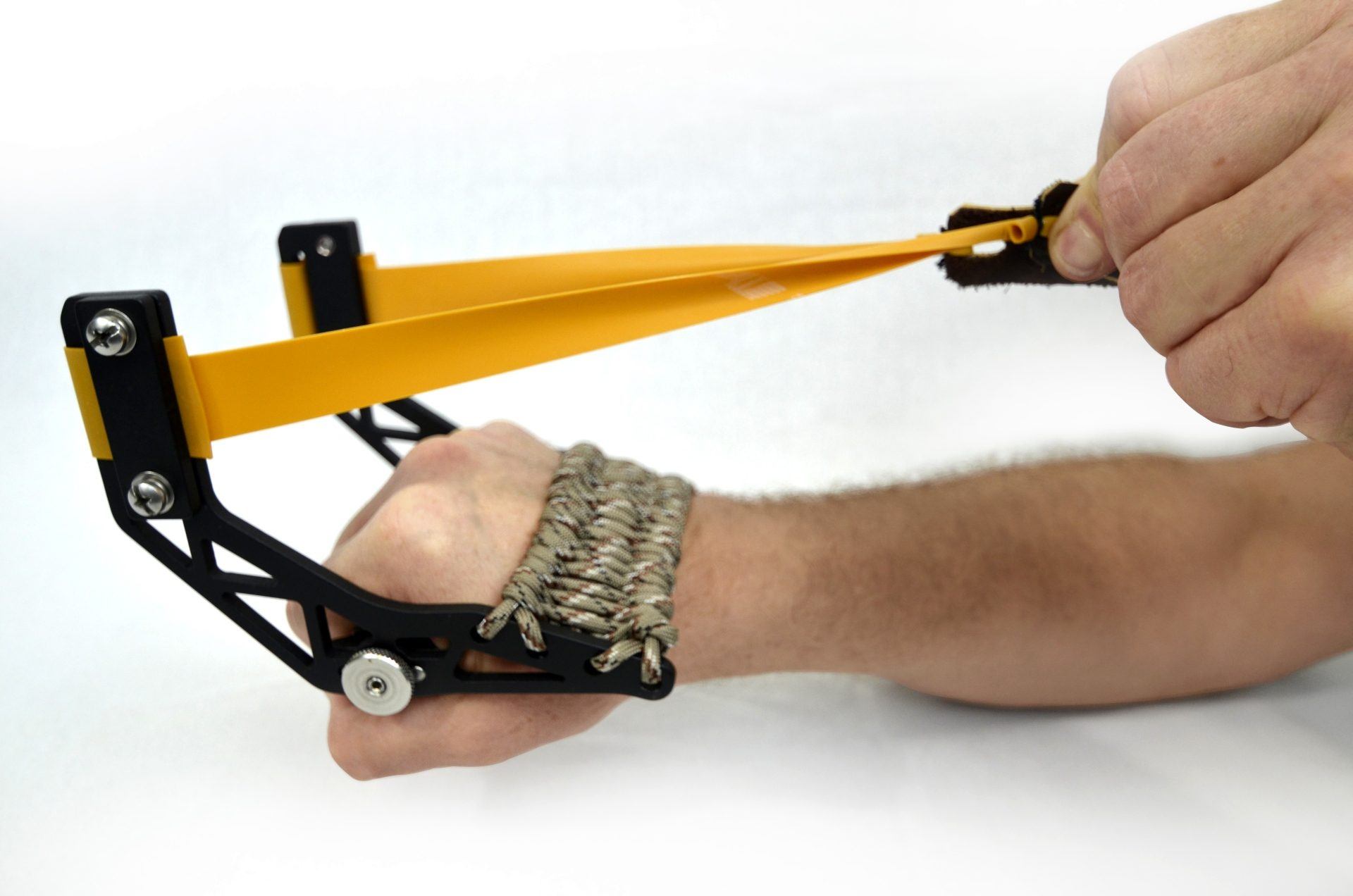
What type of energy is in this picture?
a)
Kinetic
b)
Potential
c)
Chemical
d)
Sound
28.

Energy can be classified into two main categories, kinetic energy and potential energy. Kinetic energy is when an object is:

a)

standing still

b)

actively doing something

c)

is sitting on top of a mountain

d)

objects do not have kinetic energy

29.

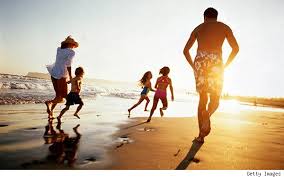
The sun shines down on this family as they play on the beach.

a)

conduction

b)

convection

c)

radiation

30.
Walking on the warm sand sand with your bare feet.
a)
conduction
b)
convection
c)
radiation
31.
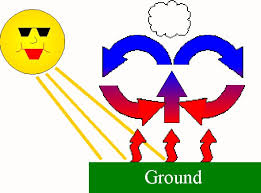
Warm air rises and the cool air sinks.
a)
conduction
b)
convection
c)
radiation
32.
Fossil fuels are classified as nonrenewable because they.......
a)
require expensive equipment
b)
take millions of years to replace
c)
can be found all over 
d)
provide all the energy we use
33.
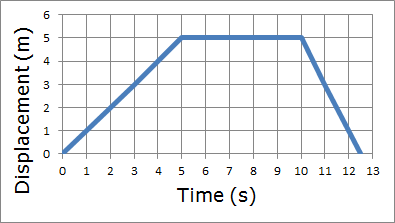
What is the speed of the object shown in the graph?
a)
A)2 m/s  
b)
B)4 m/s
c)
C)1 m/s
d)
 D)10 m 
34.
A toy car was used in an investigation about forces. During which of the following scenarios was the car experiencing balanced forces?
a)
The toy car speeds up as it rolls down a ramp.
b)
The toy car travels forward at a constant speed.
c)
The toy car slows down as it rolls up a hill.
d)
The toy car changes direction at a constant speed.
35.
What does this graph represent?
a)
Constant Speed
b)
Acceleration
c)
Not moving
36.
What is the person doing from 5 seconds to 10 seconds?
a)
Walking 
b)
Running
c)
Standing Still 
d)
Walking Fast
37.
Which one of Newton’s Laws of Motion best explains why the dishes do not move when the table cloth is removed?
a)
Newton's 1st Law
b)
Newton's 2nd Law 
c)
Newton's 3rd Law 
d)
Newton's Law of Biology
38.

Which of the following is an example of Newton’s 3rd Law?

a)

A full grocery cart requires more force to push than an empty cart

b)

Pushing backward in order to move forward while ice skating

c)

A cookie sitting on a plate

d)

None of the above

39.
How many times does this object STOP moving?
a)
None
b)
Once
c)
Twice
d)
Three times
40.
On the picture the balloon pushes the air right and the balloon goes left. Which of Newton's Laws is this?
a)
Newton's First Law
b)
Newton's Second Law
c)
Newton's Third Law