wayground logo

Free Printable Worksheets

NEW

Font size

S
M
L
XL
Worksheets

4th Nine Weeks Benchmark

Total questions: 75

Worksheet time: 1hrs 15mins

Name
Class
Date
1.
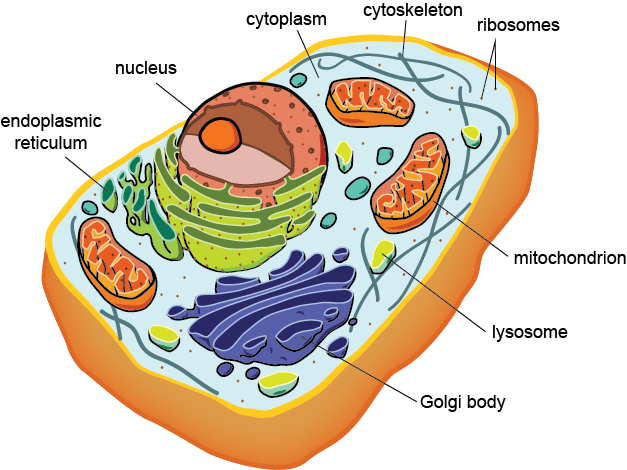
Which of the following is the smallest unit of life that can carry out all life functions?
a)
the mitochondria
b)
the vacuoles
c)
the nucleus
d)
the cell
2.
Which cell structure is found in plant and animals cells and controls what can come into or leave a cell?
a)
cell membrane
b)
cytoplasm
c)
nucleus
d)
vacuole
3.
A cell is...
a)
the basic unit of structure and function in living organism
b)
an organism
c)
a basic part of everything that we see
d)
found only in animals, not plants
4.
The nucleus is like the ____________ of the cell.
a)
foot
b)
hand
c)
stomach
d)
brain
5.
Robert Hooke, Anton van Leeuwenhoek, Theodor Schwann, Rudolf Virchow, and Matthias Schliden were all responsible for what theory?
a)
The Theory of Gravity
b)
The Theory of Relativity
c)
The Cell Theory
d)
The Theory of Continental Drift
6.
Which of the following statements is not part of the cell theory?
a)
Cells are the basic unit of structure and function in all living things.
b)
All cells are produced from other cells.
c)
Only animal cells are composed of cells.
d)
All living things are composed of cells.
7.
What kind of information can be sent through the nervous system?
a)
hearing a fire alarm
b)
feeling a sharp pencil tip
c)
smelling pancakes or bacon
d)
all of the above and much more
8.
What are some major parts of the digestive system?
a)
kidneys, liver, bladder, and skin
b)
brain, spinal cord, and nerves
c)
mouth, stomach, large intestine, small intestine
d)
heart, arteries, and veins
9.
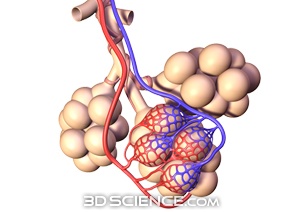
Which body system lets you breathe oxygen in and carbon dioxide out?
a)
respiratory system
b)
circulatory system
c)
excretory system
d)
none of the above
10.
Which body system helps you remove waste products from your body that you do not need?
a)
muscular system
b)
excretory system
c)
skeletal system
d)
none of the above
11.
What two systems work together to protect and support movement that the human body makes?
a)
nervous and skeletal system
b)
digestive and nervous system
c)
skeletal and muscular system
d)
muscular and digestive system
12.
______________ are attached to ______________ and begin and control movement.
a)
bones are attached to joints
b)
joints are attached to muscles
c)
eyes are attached to the orbital socket
d)
muscles are attached to bones
13.
Which of the following systems is the largest human organ that protects the body, regulates body temperature, and plays a role in sensory perception.
a)
Nervous system
b)
Endocrine system
c)
Integumentary system
d)
Skeletal system
14.
I transport oxygen and nutrients through out the body
a)
Muscular System
b)
Nervous System
c)
Digestive System
d)
Circulatory System
15.
How does the digestive system work with all other systems?
a)
The digestvie system transports blood to all the other systems
b)
The digestive system puts oxygen into the body
c)
The digestive system gives the body energy and nutrients
d)
The digestive system allows the body to move
16.
When you breathe, your lungs take in ___ and remove ___. 
a)
air/oxygen
b)
oxygen/carbon dioxide 
c)
carbon dioxide/waste 
d)
waste/air 
17.

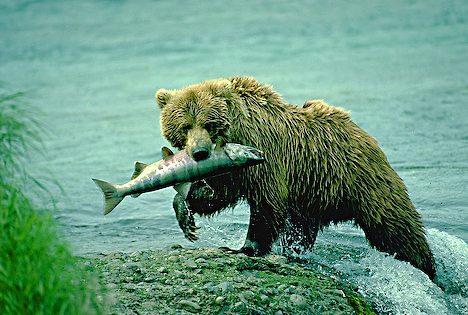
A grizzly bear survives because he is well-adapted to his environment. When he reproduces he passes on those traits to his offspring. this process is called

a)

Natural Selection

b)

Selective Breeding

c)

Random mutations

d)

Variations in a species

18.

The peppered moth's color camouflaged it on the light colored tree bark. It's color was an example of a/n

a)

Variation

b)

Dominant trait

c)

Recessive trait

d)

Adaptation

19.

What animal is camouflaged in this picture?

a)

Skunk

b)

Squirrel

c)

Owl

d)

Snake

20.

Changes in inherited characteristics can cause a species to change into a new one. This change over time is called?

a)

Graduation

b)

Selective Breeding

c)

Revolution

d)

Evolution

21.

Which beak is probably best suited to crack open nuts?

a)

1

b)

2

c)

3

d)

4

22.

Heredity is:

a)

Survival of the fittest

b)

The passing of genetic traits from parent to offspring

c)

Believing in false gods

d)

Unexplained

23.
Survival of the Fittest and Evolution were proposed by what scientist?
a)
Charles Darwin
b)
Albert Einstein
c)
Steven Hawking
d)
Isaac Newton
24.
Behavioral changes of individuals of a species that allow for better survival. (Acquired traits)
a)
Variation
b)
Adaptation
c)
Behavior
d)
Environment
25.
What are the most studied animals in the galapagos?
a)
Finches
b)
Tortoises
c)
Turtles
d)
Lizards
26.
What is the advantage of having different shaped beaks?
a)
To look different from other species.
b)
To be able to eat the food readily available in the environment.
c)
To protect itself against predators.
d)
To protect itself against prey.
27.
The theory of evolution by natural selection means that what is changing over time?
a)
The inherited traits of a population.
b)
The acquired traits of a population.
c)
Hair color and eye color
d)
Attractive features.
28.

What is a dichotomous key?

a)

A key that can be used to open doors but will mess up the door

b)

A dual key that can be used to answer all types of keys, but you have to get the right one to get it correct

c)

A tool that can't be used to identify things in a series of choices
d)

A tool that can be used to identify things in a series of choices
29.
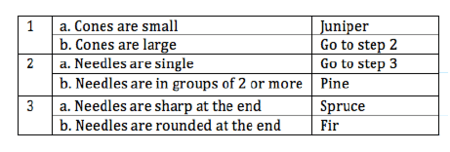
A dichotomous key for trees is provided. Hikers found a tree that has large brown cones and single sharp needles. What species of tree have the hikers found?
a)
Juniper
b)
Pine
c)
Spruce
d)
Fir
30.
The 8 levels of classification, most broad to most specific.
a)
Domain, Genus, Family, Order, Class, Phylum, Kingdom, Species
b)
Domain, Species, Kingdom, Genus, Phylum, Family, Class, Order
c)
Domain, Kingdom, Phylum, Class, Order, Family, Genus, Species
d)
Order, Kingdom, Species, Domain, Phylum, Family, Class, Genus
31.
Using this dichotomous key, identity the name of the circled fish.
a)
band-tail puffer
b)
spotted goat fish
c)
peacock flounder
d)
trumpet fish
32.
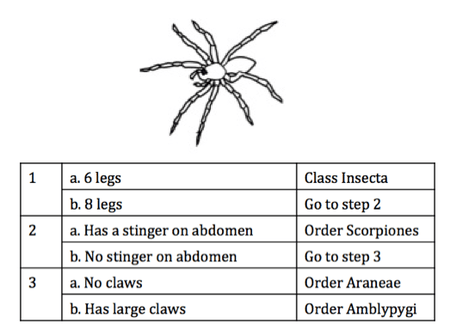
An illustration and a dichotomous key are given. What is the correct classification for this organism?
a)
Class Insecta
b)
Order Amblygygi
c)
Order Araneae
d)
Order Scorpiones
33.
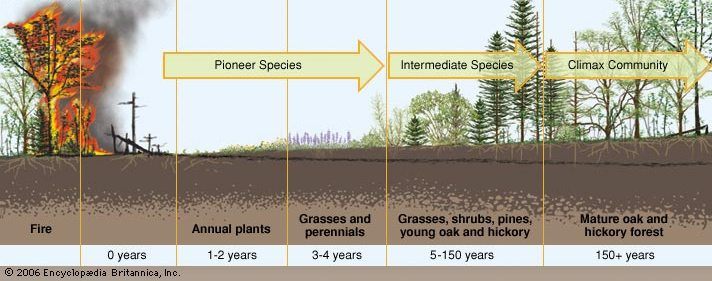
What is the order of succession shown in this figure?
a)
A, B, C, D
b)
B, A, D, C
c)
C, D, A, B
d)
D, A, B, C
34.
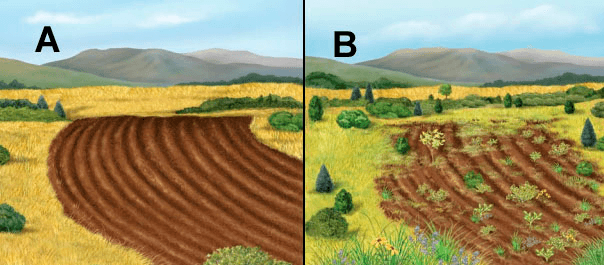
What type of succession is shown going from figure A to figure B?
a)
primary succession
b)
ecological succession
c)
secondary succession
d)
intermediate
35.
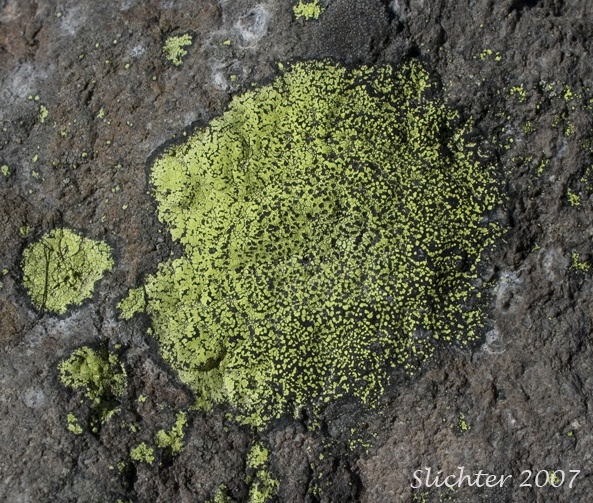
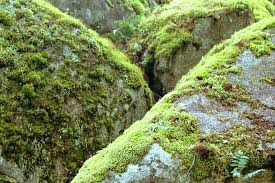
The picture shows what type of succession?
a)
primary
b)
secondary
c)
tertiary
d)
quadanary
36.
What is the name given to lichen or algae after a primary succession?
a)
pioneer species
b)
volunteer species
c)
founder species
d)
conqueror species
37.
What are examples of pioneer species in a primary succession?
a)
Bushes and Shrubs
b)
Oak trees
c)
Mossess and Lichens 
d)
A rose Bush
38.
After a volcanic eruption, lava covers the land. What is the order that plants grow to repopulate the area?
a)
Lichens → Shrubs → Grasses → Trees
b)
Lichens → tree → shrubs→Grasses
c)
Grasses → Lichens → Shrubs → Trees
d)
Lichens → Grasses → Shrubs → Trees
39.
Reaches a climax community quicker because soil is already present
a)
primary succession 
b)
secondary succession
c)
both types of succession
40.
Final illustration (#8) shows
a)
pioneer species
b)
climax community
c)
only biotic factors
d)
only abiotic factors
41.
What is a watershed?
a)
Water in an area
b)
Water that flows into a river or stream
c)
Land that water flows over and through
d)
Water that is salty
42.
When liquid water changes into gas called water vapor this called
a)
condensation
b)
evaporation
c)
precipatation
d)
runoff
43.
When water vapor gas begins to change back into a liquid this is called.
a)
evaporation
b)
condensation
c)
water  cycle
d)
precipatation
44.
Which shows examples of precipitation?
a)
sleet, hail, water
b)
run off, hail, snow
c)
heat, rain, snow
d)
hail, rain, snow
45.
Where does the water cycle begin?
a)
precipitation, condensation, evaporation, and runoff
b)
precipitation, condensation, evaportation, and runoff
c)
evaporation, condensation, precipitation, and runoff
d)
runoff, precipitation, condensation, and evaporation
46.
Many Utah towns use water from wells for drinking.  How does water get into wells? 
a)
it has to be poured into them from water tanks
b)
rain sinks down through the soil into them 
c)
it is pumped by large engines into the well
d)
it evaporates from inside the Earth
47.
What does groundwater do?
a)
It sends water to our buildings, houses, and water transplant places
b)
Goes to the sky
c)
Goes to the sun
d)
Provides rivers
48.
Characteristics that are passed from parents to their offspring are called 
a)
behaviors
b)
learned traits
c)
inherited traits
d)
functions
49.
A behavior that is developed by observing others or by being taught is a 
a)
learned behavior 
b)
inherited trait
c)
adaptation 
d)
function
50.
What is NOT an example of an inherited TRAIT?
a)
eye color
b)
tongue rolling
c)
height
d)
speaking a language
51.

Which biome is the driest? It receives less than 10 inches of rain a year.

a)

desert

b)

grassland

c)

deciduous forest

d)

tropical rain forest

52.

In which biome would you find giraffes and elephants?

a)

desert

b)

deciduous forest

c)

savanna

d)

tundra

53.

Which biome has the greatest amount of biodiversity? (the most different kinds of organisms)

a)

tundra

b)

grassland

c)

desert

d)

tropical rain forest

54.

Which biome is the coldest?

a)

tundra

b)

desert

c)

grassland

d)

savanna

55.
What is this called?
a)
Food Web
b)
Food Chain
c)
Abiotic Factors
56.
What is this called?
a)
Food Web
b)
Food Chain
c)
Abiotic Factors
57.
If a frog is the prey, what could be the predator?
a)
Grass
b)
Insect
c)
Snake
d)
Snail
58.
An organism that lives by breaking apart dead organic matter into simpler parts is...
a)
scavenger
b)
consumer
c)
decomposer
d)
carnivore
59.
An animal that eats other animals is a....
a)
carnivore
b)
omnivore
c)
herbivore
d)
decomposer
60.
What does a food web represent?
a)
All connections of energy flow throughout all organisms in a ecosystem.
b)
The specific ways that mutualism is carried out.
c)
A single pathway or energy flow between organisms. 
d)
How carnivores get their food. 
61.
Which of the following is a herbivore?
a)
cricket
b)
frog
c)
hawk
d)
shrew
62.
__________ is an organism that eats BOTH plants and animals for energy.
a)
Omnivore
b)
Darnivore
c)
Carnivore
d)
Herbiovre
63.
Bears eat fish, insects, plants, seeds, nuts and young elk. They are called __________.
a)
Franivore
b)
Carnivore
c)
Herbivore
d)
Omnivore
64.
If the grasshopper were to be removed completely from the food web, what organism would be most effected?
a)
The squirrel
b)
The shrew
c)
The deer
d)
The rabbit
65.
Which organism recieves the least amount of energy from the producer?
a)
Owl
b)
Grasshopper
c)
Lilypad
d)
Mouse
66.
Where do hurricanes develop?
a)
Land
b)
Ocean
c)
Rivers
67.
What is a flood?
a)
a large amount of water that overflowed from a lake or river
b)
a large amount of water from the ocean
c)
a deep lake
d)
a deep river
68.
Which natural disaster is a violent rotating column of air extending from a thunderstorm to the ground?
a)
Drought
b)
Tornado
c)
Earthquake
d)
Hurricane
69.
Which natural disaster is a long high sea wave caused by an earthquake, submarine landslide, or other disturbance?
a)
Hurricane
b)
Flood
c)
Wildfire 
d)
Tsunami 
70.
Which natural disaster is an overflowing of a large amount of water beyond its normal confines, especially over what is normally dry land?
a)
Tsunami 
b)
Drought
c)
Tornado
d)
Flooding
71.
Which natural disaster is a large, destructive fire that spreads quickly over woodland or brush?
a)
Wildfire
b)
Drought
c)
Tasunami
d)
Hurricane
72.

What is this?

a)

earthquake

b)

fire

c)

flooding

73.

What is weathering?

a)

The movement of sediment

b)

The breaking of sediment

c)

The dropping of sediment

74.

What is erosion?

a)

The movement of sediment

b)

The breaking of sediment

c)

The dropping of sediment

75.

What is deposition?

a)

The movement of sediment

b)

The breaking of sediment

c)

The dropping of sediment