
 Worksheets
IPC Spring Semester Review
Total questions: 50
Worksheet time: 50mins
Name
Class
Date
1.
What is the top of a wave?
a)
trough
b)
crest
2.
What is the bottom of a wave?
a)
trough
b)
crest
3.
What is the distance between crests or troughs?
a)
amplitude
b)
wavelength
4.
What is the height of a wave?
a)
amplitude
b)
wavelength
5.
How often a wave occurs is the wave's __________________
a)
crest
b)
frequency
c)
wavelength
d)
resting point
6.
The frequency of a wave is measured in __________________.
a)
inches
b)
hertz
c)
periods
d)
eras
7.

What number represents the wavelength?
a)
1
b)
2
c)
3
d)
4
8.

A very loud sound would have a(n):
a)
high frequency
b)
low frequency
c)
high amplitude
d)
low amplitude
9.

A very quiet sound would have a (n):
a)
high frequency
b)
low frequency
c)
high amplitude
d)
low amplitude
10.
Which is the correct equation for calculating the speed of a wave?
a)
T = 1/f
b)
Speed= Wavelength x Period
c)
Speed = Wavelength/Frequency
d)
Speed= Wavelength x Frequency
11.
1. A wave has frequency of 50 Hz and a wavelength of 10 m. What is the speed of the wave?
a)
500 m/s
b)
50 m/s
c)
5 m/s
d)
0.5 m/s
12.
1. A wave has frequency of 5 Hz and a speed of 25 m/s. What is the wavelength of the wave?
a)
25 m
b)
125 m
c)
5 m
d)
25 m/s
13.
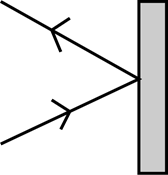
The illustration shows a light ray striking an object.
In the illustration, the light ray striking the object is-
In the illustration, the light ray striking the object is-
a)
absorbed
b)
stopped
c)
reflected
d)
refracted
14.
The bouncing off of light rays from the surface of an object such as a mirror or other shiny surface is called:
a)
mirror
b)
laser
c)
reflection
d)
refraction
15.

a)
Reflection
b)
Refraction
16.

a)
Reflection
b)
Refraction
17.

This is an example of a _______ circuit
a)
open
b)
series
c)
parallel
d)
square
18.
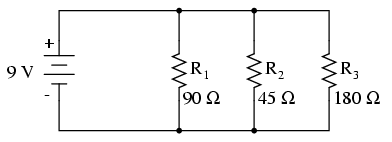
This is an example of a ______ circuit
a)
Series
b)
Parallel
c)
Open
d)
Dihexihedral
19.
wood is a _____?
a)
conductor
b)
insulator
20.
brass is a _____?
a)
insulator
b)
conductor
21.
A material in which electrons are able to move easily
a)
Circuit
b)
Insulator
c)
Resistance
d)
Conductor
22.
A material in which electrons are not able to move easily
a)
Circuit
b)
Insulator
c)
Resistance
d)
Conductor
23.
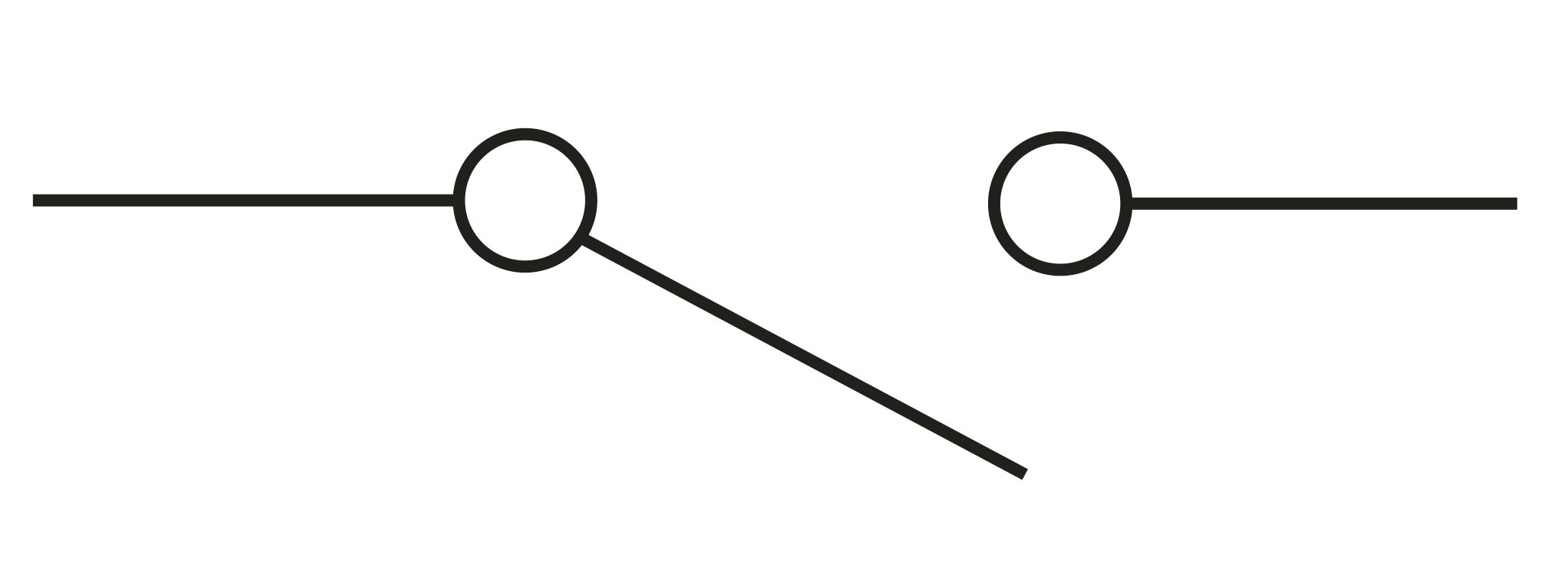
this is the symbol for a _____?
a)
switch
b)
light
c)
battery
d)
wires
24.
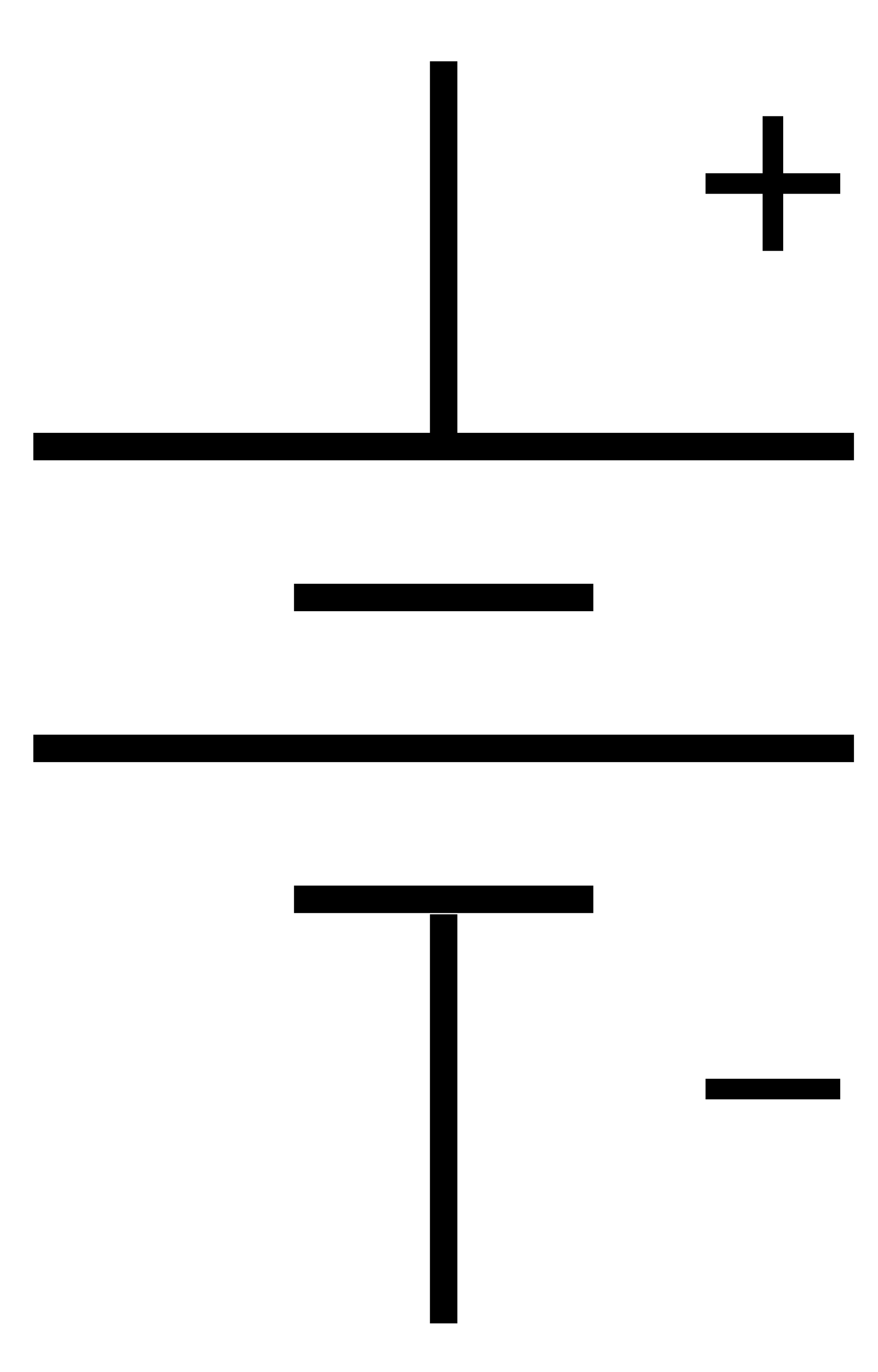
what is this symbol for?
a)
light bulb
b)
switch
c)
battery
d)
resistor
25.
What size resistor would produce a 3 Amp current flow with a 12 Volt battery
a)
1 Ohm
b)
3 Ohms
c)
4 Ohms
d)
12 Ohms
26.
What is current measured in?
a)
Ω (Ohms)
b)
V (Volts)
c)
A (Amps)
d)
W (Watts)
27.
What is resistance measured in?
a)
Ω (Ohms)
b)
V (Volts)
c)
A (Amps)
d)
W (Watts)
28.
How many Volts would we need to produce a current flow of 8 Amps through a 6 Ohm resistor
a)
12 volts
b)
24 volts
c)
1.3333
d)
48 volts
29.
Acceleration is produced when a force acts on a mass. The greater the mass (of the object being accelerated) the greater the amount of force needed (to accelerate the object).
a)
Newton's 1st Law
b)
Newton's 2nd Law
c)
Newton's 3rd Law
d)
None of them
30.
An object at rest will remain at rest unless acted on by an unbalanced force. An object in motion continues in motion with the same speed and in the same direction unless acted upon by an unbalanced force.
a)
Newton's 1st Law
b)
Newton's 2nd Law
c)
Newton's 3rd Law
d)
None of them
31.
This law is often called "the law of inertia."
a)
Newton's 1st Law
b)
Newton's 2nd Law
c)
Newton's 3rd Law
d)
None of them
32.
What is the equation for Newton's 2nd law?
a)
a = bc
b)
F = m/a
c)
F = ma
d)
a = b/c
33.
When mass is 10 kg, acceleration is 2 m/s/s, what is force?
F = ma
F = ma
a)
5 N
b)
20 N
c)
8 N
d)
12 N
34.
A force of 250 N is applied to an object that accelerates at a rate of 5 m/sec2. What is the mass of the object?
a)
100kg
b)
1,250kg
c)
50kg
d)
5kg
35.
What is a PUSH or PULL of an object?
a)
Motion
b)
Force
c)
Friction
d)
Gravity
36.
What is the equation to calculate speed?
a)
speed = distance/time
b)
speed = time/distance
c)
speed = time x distance
d)
speed = speed/time
37.
A car travels 30 miles/hr for 3 hours, calculate the distance it will travel
a)
90 miles
b)
10 miles
c)
600 miles
d)
90 km
38.
Velocity is both ____ and _____.
a)
speed , direction
b)
direction, mass
c)
volume, density
d)
direction, magnitude
39.

The shortest path between an object's starting and ending point is its:
a)
Distance
b)
Disturbance
c)
Disenfranchisement
d)
Displacement
40.
What is speed?
a)
how far you go
b)
how much distance is covered over a period of time
c)
how fast you accelerate
d)
the change in the location of a object
41.
What is the speed of an object that travels 60 meters in 4 seconds?
a)
240 m/s
b)
15 m/s
c)
0.067 m/s
d)
15 mph
42.

What two kinds of heat transfer are represented?
a)
stove→pot=radiation pot→egg=conduction
b)
stove→pot=conduction pot→egg=radiation
c)
stove→pot=convection pot→egg=conduction
d)
stove→pot=conduction pot→egg=convection
43.
Which of the following is an example of conduction?
a)
Solar energy warming a room.
b)
Heat rising from the coils of a stove.
c)
Hot air drying a wet towel.
d)
Heat moving from a clothes iron to a shirt.
44.
Conduction can only occur between two objects when –
a)
one object is less dense than the other.
b)
both objects are in physical contact with each other.
c)
one of the objects is made of a metal.
d)
both objects are exactly the same temperature.
45.
Heat transfer always goes from-
a)
Cold to Hot
b)
Hot to Cold
c)
Heat doesn't transfer
d)
Freezing to Cold
46.
What type of heat transfer takes place in liquids and gasses?
a)
Conduction
b)
Convection
c)
Radiation
d)
Thermal Equilibrium
47.
Which natural resource is a renewable energy resource?
a)
coal
b)
oil (petroleum)
c)
natural gas
d)
sun
48.
Which alternative energy resource can be harmful to birds?
a)
biomass energy
b)
geothermal energy
c)
wind energy
d)
solar energy
49.
Non-Renewable resources are also known as what?
a)
Fossil Fuels
b)
Renewable
c)
Scarce fuels
d)
Hydroelectric Energy
50.
What are the 3 main fossil fuels?
a)
A. Coal, oil, and vegetable oil.
b)
B. Coal, Oil, and Natural Gas
c)
C. Electricity, Gasoline, Petroleum
d)
D. Coal, Oil, Non-renewable Resources
100 %

