wayground logo

Free Printable Worksheets

Font size

S
M
L
XL
Worksheets

Semester II Final 2019

Total questions: 220

Worksheet time: 6hrs 24mins

Name
Class
Date
1.

What is the carrying capacity of the graph?

a)

1000

b)

8000

c)

800

d)

600

2.

What happens if a population grows past its carrying capacity?

a)

The population keeps growing

b)

The population starts to die off

c)

The entire species will go extinct

d)

The carrying capacity just increases

3.

Something that regulates the size of a population is called...

a)

a limiting measure

b)

a limiting factor

c)

carrying capacity

d)

biodiversity

4.
The largest number of individuals that an area can support is called its _______.
a)
limiting factor
b)
abiotic factor
c)
resource availability
d)
carrying capacity
5.
What type of growth is represented behind?
a)
exponential
b)
logistics
c)
a good kind
d)
representative
6.
What are the effects of deforestation ?
a)
loss of habitat
b)
increased green house gasses 
c)
soil erosion and flooding
d)
all of the above
7.
what is the leading cause of deforestation?
a)
Diseases 
b)
Housing market
c)
Agriculture and Farming
d)
Paper mill
8.
An area of land where all the water flows to one location, like a funnel. 
a)
Superfund Site
b)
Watershed
c)
Succession
d)
River
9.
Long-term loss of plant life and soil fertility.
a)
desalinization
b)
desertification
c)
erosion
d)
terraces
10.
Chemicals that kill crop-destroying organisms are called _____________.
a)
sediments
b)
fertilizers
c)
acid rain
d)
pesticides
11.
___________________ washes agricultural wastes, including animal wastes, fertilizers, and pesticides, into bodies of water, causing algae to grow.
a)
Runoff
b)
Peak flow
c)
Groundwater
d)
Municipal sewage
12.

Which of the following is NOT an example of point-source pollution?

a)

Oil escapes from a wrecked ship

b)

Heavy metals leak out of an abandoned mine

c)

Water runoff from a city full of fertilized lawns

d)

Untreated sewage accidentally released from a wastewater treatment plant
13.
Pollutants are introduced into surface or ground water without a specific location source.
a)
point source
b)
non-point source
c)
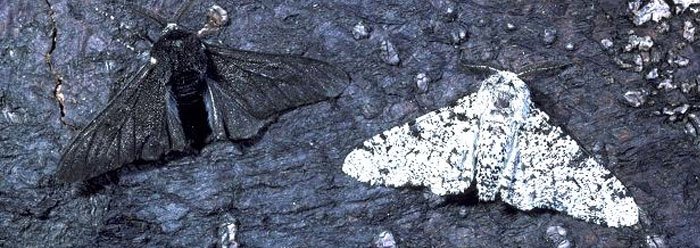
water pollution
d)
polluntants
14.
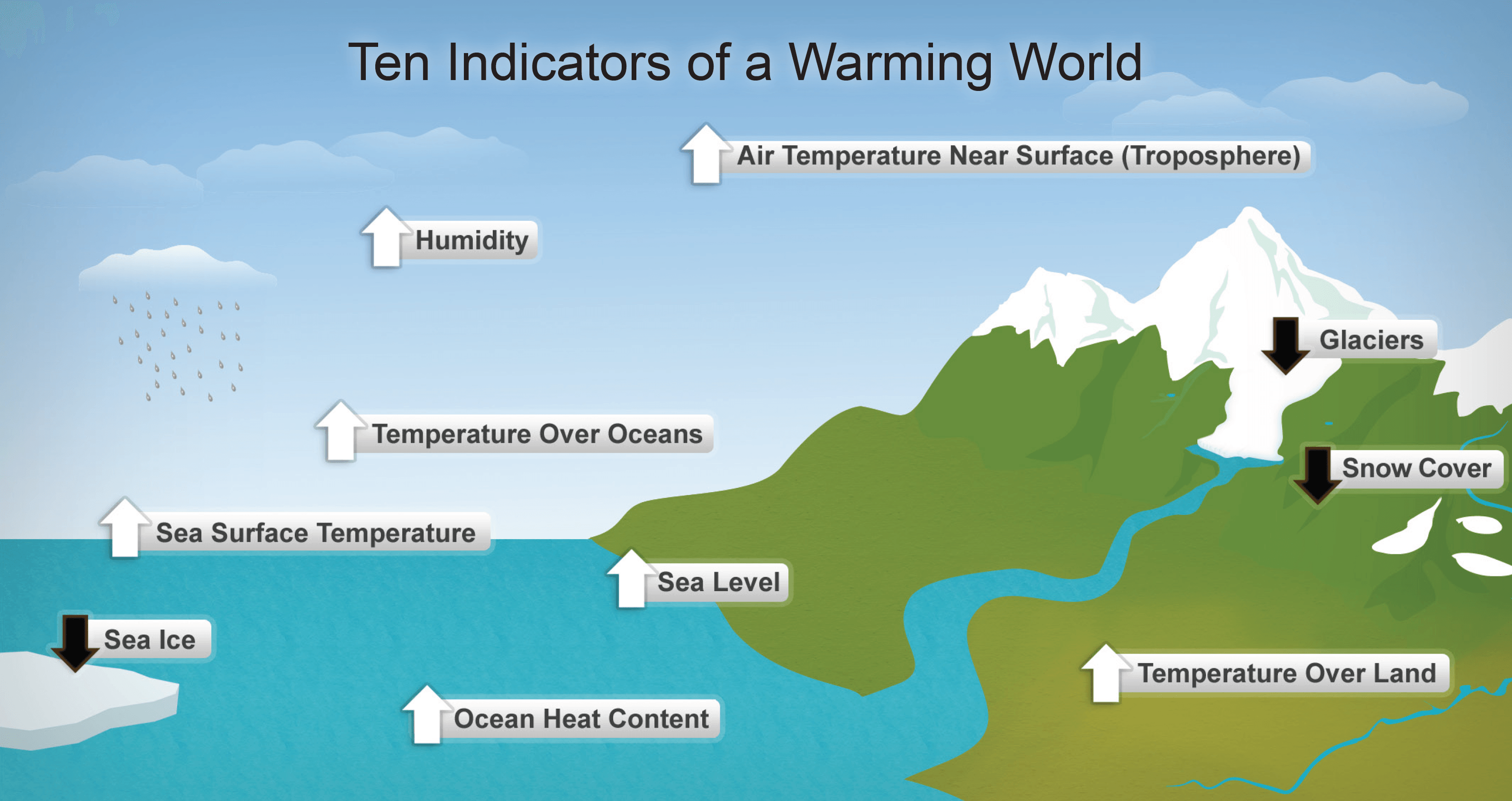
It was hot all week last week.  Is this a sign of climate change?
a)
Yes
b)
No
15.
Worldwide, temperatures have been increasing for more than 100 years.  Is this evidence of global warming?
a)
yes
b)
no
16.
The greenhouse gas having the greatest role in human-caused global warming is
a)
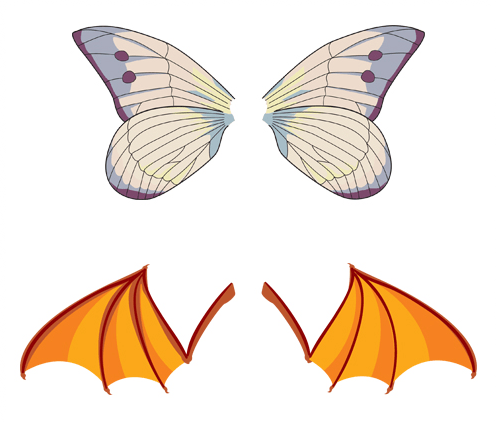
methane
b)
carbon dioxide
c)
CFCs (chlorofluorocarbons)
d)
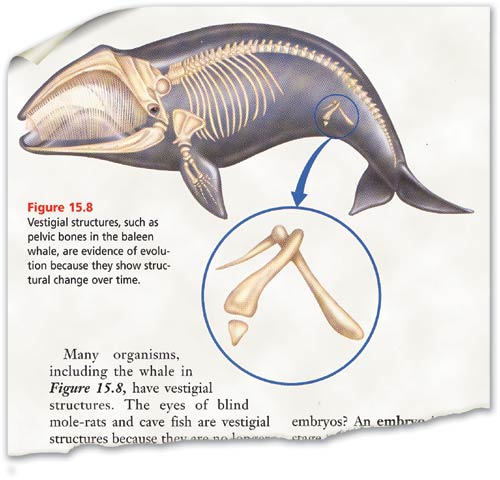
ozone
17.
Carbon is used by plants during which process?
a)
Respiration
b)
Transpiration
c)
Photosynthesis
d)
Transportation
18.
What is the greenhouse effect?
a)
warming of the earth due to gases in our atmosphere.
b)
cooling of the earth due to gases in our atmosphere
19.
What is this movie?
a)
Mulan
b)
Moana
c)
Pinocchico
d)
Frozen
20.
What is this movie?
a)
Pinocchino
b)
Aladdin
c)
Alice in the Wonderland
d)
Abu
21.
What is this movie?
a)
Finding Nemo
b)
Aladdin 
c)
Finding Marlin
d)
Finding Dory
22.
Do we need greenhouse gases on Earth?
a)
Yes - they keep the Earth warm
b)
Yes - they keep all the gases on our planet
c)
No - they only cause terrible climate change
d)
No - they only block some of the Sun's rays
23.
Which of the following are greenhouse gases?
a)
Carbon dioxide
b)
Methane
c)
Nitrous Oxide
d)
All answers are correct
24.
Which one of the choices below is NOT a  cause for global warming?
a)
Having too many cows
b)
Burning Fossil Fuels
c)
Planting new trees
25.
The gradual increase in the temperature of the atmosphere is known as ________________.
a)
Greenhouse Effect
b)
Global Warming
c)
Carbon Dioxide Gases
d)
Methane
26.
1. What is acid precipitation?
a)
When rain mixes with pollution making it more acidic.
b)
When rain mixes with pollution making it more basic.
27.
Sulfur and nitrogen oxide release into the atmosphere is most responsible for

a)
ozone depletion
b)
acid precipitation
c)
global warming   
d)
eutrophication 
28.

In 1970 the US government set air quality standards called the...

a)

Breath Easy Act

b)

Clean Air Act

29.

When sulfur dioxide and nitrogen oxides combine with moisture in the atmosphere and forms acid raid, acid snow or acid fog.

a)

Acid Precipitation

b)

Particulate Matter

c)

photochemical smog

d)

global warming

30.

Pollution that comes from a widespread area, from many sources rather than from a single, specific site. (ex. air pollution in a large city)

a)

point source pollution

b)

non-point source pollution

c)

Global warming

d)

pesticides

31.

Through the process of photosynthesis, plants pull CO2 from the air to make plant food for themselves.

a)

True

b)

False

32.

How do carbon emissions lead to global warming?

a)

By trapping the sun's heat in the atmosphere.

b)

By causing very hot volcanic eruptions.

c)

Rocks become richer in carbon as time goes by.

d)

By increasing the amount of carbon in the earth's crust

33.
When humans burn fossil fuels, most of the carbon quickly enters the                       as carbon dioxide.
a)
Water
b)
Atmosphere
c)
Sun
d)
Air
34.

What is a relationship between the carbon cycle and global warming?

a)

The Carbon Cycle is not a natural process and plants do not use carbon dioxide during photosynthesis. Plants use oxygen during photosynthesis. Burning fossil fuels releases carbon dioxide into the atmosphere in large amounts, over and above the release from natural processes. Because carbon dioxide is a greenhouse gas, this increases global warming.

b)

The Carbon Cycle is a natural process where plants use carbon dioxide during photosynthesis, and carbon is returned to the atmosphere as plants decay. Burning fossil fuels releases carbon dioxide into the atmosphere in large amounts, over and above the release from natural processes. Because carbon dioxide is a greenhouse gas, this increases global warming.

c)

The Carbon Cycle is a natural process where plants use Oxygen during photosynthesis, and Lead is returned to the atmosphere as plants decay. Burning fossil fuels does not release carbon dioxide into the atmosphere in large amounts. In fact, scientists suggest that we should burn more fossil fuels to improve our atmosphere and cut down greenhouse gasses.
35.

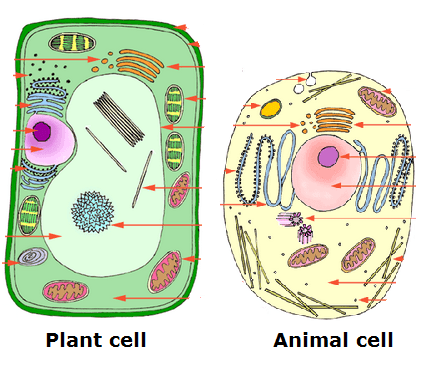
What distinguishes a plant cell from an animal cell? (How do you tell them apart) Hint: There's 3 ways (Check all 3)

a)

Central Vacuole

b)

Mitochondria

c)

Cell Wall

d)

Ribosomes

e)

Chloroplasts

36.
All living things are made up of...
a)
cells
b)
cell tissues
c)
organ
d)
organ systems
37.
What is the basic structural and functional unit of all living things? 
a)
atom
b)
cell
c)
molecule
d)
human
38.

A human body (somatic) cell usually has how many chromosomes?

a)

6

b)

22

c)

4

d)

46

39.
The process of crossing over occurs in what phase of meiosis?
a)
anaphase 1
b)
prophase 1
c)
prophase 2
d)
telophase 1
40.
The cells produced via meiosis are called:
a)
sex cells
b)
somatic cells
c)
body cells
d)
skin cells
41.
The result of meiosis is:
a)
two diploid cells
b)
two haploid cells
c)
four diploid cells
d)
four haploid cells
42.

The chromosomes that pair up during meiosis, are called __________ chromosomes.

a)

heterozygous

b)

asexual

c)

homologous pairs

d)

genes

43.
How many daughter cells are produced at the end of meiosis?
a)
1
b)
2
c)
3
d)
4
44.
What phase is represented?
a)
metaphase 1
b)
metaphase 2
c)
anaphase 1
d)
anaphase 2
45.
What phase is represented?
a)
metaphase 1
b)
metaphase 2
c)
anaphase 1
d)
anaphase 2
46.
What process, and which type of resulting cells are represented?
a)
mitosis, gametes
b)
mitosis, body cells
c)
meiosis, gametes
d)
meiosis, body cells
47.

Which of the following will only show if two alleles are present?

a)

a dominant trait

b)

heterozygous

c)

a recessive trait

d)

hybrid

48.
Which of the following produces identical nuclei in cells?
a)
fertilization
b)
osmosis
c)
mitosis
d)
pollution
49.
Which of the following cell types is formed by meiosis?
a)
skin cells
b)
sperm cells
c)
blood cells
d)
muscle cells
50.
Based only on the sex chromosomes in a human egg and sperm cells at fertilization, the probability of producing a female is 
a)
25%
b)
50%
c)
75% 
d)
90%
51.
During which phase of meiosis does the nuclear membrane reappear around chromosomes?
a)
Prophase I
b)
Metaphase II
c)
Anaphase I
d)
Telophase II
52.
During which phase of the cell cycle does DNA replicate (double)?
a)
Interphase
b)
Prophase
c)
Metaphase
d)
Telophase
53.
a)
Metaphase I
b)
Metaphase II
c)
Anaphase I
d)
Anaphase II
54.
a)
Metaphase I
b)
Metaphase II
c)
Anaphase I
d)
Anaphase II
55.
a)
Prophase I
b)
Prophase II
c)
Telophase I
d)
Telophase II
56.
a)
Prophase I
b)
Prophase II
c)
Telophase I
d)
Telophase II
57.
a)
Metaphase I
b)
Metaphase II
c)
Anaphase I
d)
Anaphase II
58.

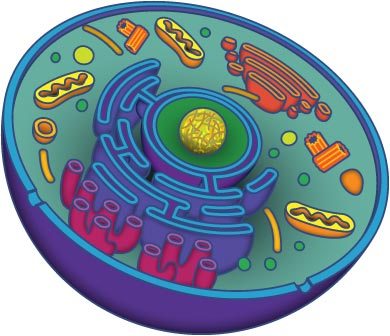
Which type of cell is this?

a)

Prokaryote

b)

Eukaryote

59.
What type of cell has a nucleus? 
a)
eukaryotic
b)
prokaryotic 
60.
Plants and animal cells are examples of ___ cells 
a)
prokaryotic cells 
b)
eukaryotic cells 
61.
Which is true of prokaryotic and eukaryotic cells?
a)
Prokaryotic cells are larger than eukaryotic cells.
b)
Eukaryotic cells do not have nuclei, and prokaryotic cells do have nuclei.
c)
Prokaryotic cells lack membrane-bound organelles, and eukaryotic cells contain membrane-bound organelles.
d)
Eukaryotic cells are simpler than prokaryotic cells.
62.

All of the following contain a cell wall except:

a)

prokaryotes

b)

animal cells

c)

plant cells

d)

bacteria

63.

Which do BOTH prokaryotes and eukaryotes contain?

a)

nucleus

b)

mitochondria

c)

ribosomes

d)

cell wall

64.

Which does only eukaryotic cells contain?

a)

nucleus

b)

DNA

c)

cell membrane

d)

ribosomes

65.

Which organelle is photosynthetic?

a)

cell wall

b)

chloroplast

c)

mitochondria

d)

vesicle

66.

Prokaryotic cells do not have…….

a)

membrane bound organelles

b)

cell membrane

c)

DNA or RNA

d)

life

67.
All living things are made of...
a)
atoms 
b)
cells 
c)
bacteria 
d)
plants 
68.
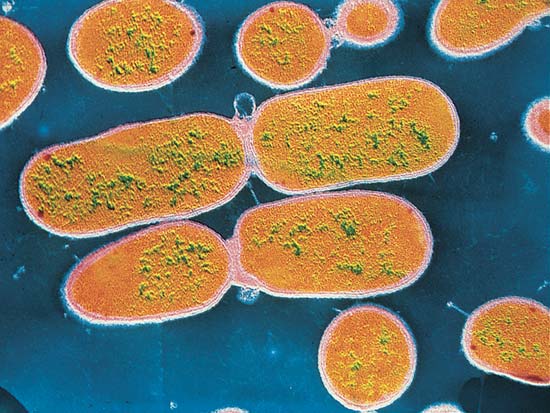
This is a picture of:
a)
Prokaryote
b)
Eukaryote
69.
Which of these is not true about all organisms?
a)
all living things have many cells
b)
all living things need water
c)
all living things respond to stimuli
d)
all living things reproduce
70.
What is another way of saying organism?
a)
living thing
b)
organ system
c)
tissue team
d)
critter
71.
When a baby kitten becomes an adult cat, this is an example of...
a)
energy metabolism
b)
growth and development
c)
response to stimuli
d)
having cells
72.
Which kind of living things have DNA in their cells?
a)
producers
b)
consumers
c)
decomposers
d)
Trick question! All living things have DNA in their cells 
73.
A baby goat looks just like its parents. This is because of the concept of...
a)
homeostasis
b)
heredity
c)
energy metabolism
d)
cellular organization
74.
What organelle surrounds and supports plant cells?

a)
Cell Membrane
b)
Cell Wall
c)
Nucleus
d)
Golgi Complex
75.
What organelle helps with cell digestion?
a)
Lysosomes
b)
Ribosomes
c)
Golgi Complex
d)
ER
76.
What is the gel-like substance inside of cells called?

a)
photoplasm
b)
photosynthesis
c)
cytoskeleton
d)
cytoplasm
77.
What organelle stores waste and water in both plant and animal cells?
a)
Lysosomes
b)
Golgi Complex
c)
Vacuoles
d)
Endoplasmic Reticulum
78.
What is the difference between rough and smooth ER?
a)
There is no difference.
b)
Plants have rough ER, animals have smooth ER.
c)
What type of injuries the Doctors treat.
d)
Rough has ribosomes, smooth does not.
79.
I am a protein packaging and shipping machine! Who am I?
a)
vacuole
b)
ribosome
c)
endoplasmic reticulum
d)
golgi apparatus
80.
The "power plant" of the cell that produces energy. 
a)
Mitochondria
b)
Cytoplasm
c)
Centrioles
d)
Lysosomes
81.
Sexual reproduction requires _____ parents and asexual reproduction requires ___ parents
a)
1,1
b)
2,2
c)
2,1
d)
1,2 
82.

Reproducing asexually will produce offspring ...

a)

genetically different from each other

b)

genetically identical to the parent

83.

Penguins lay 1-2 fertilized eggs that the male and female take turns incubating on their feet. What type of reproduction does this example represent?

a)

Sexual reproduction

b)

Asexual reproduction

84.
Which of the following describes the main advantages of sexual reproduction
a)
requires lots of time/energy
b)
no new gene combos can arise 
c)
diversity
d)
looks identical to the parent
85.
 A general name for a sex cell (egg or sperm) is a: 
a)
zygote
b)
gene
c)
offspring
d)
gamete
86.
Which reproduction requires a mate?
a)
asexual
b)
sexual
c)
neither
87.
Passes genetic information
onto future generations
a)
sexual reproduction
b)
asexual reproduction
c)
both
88.
Prokaryotes reproduce asexually through -
a)
Spore formation
b)
Vegetative propagation
c)
Binary fission
89.
What are some of the facts about asexual reproduction?
a)
Takes only one mate to reproduce and takes a longer time to reproduce
b)
Takes a shorter amount of time to reproduce and it takes two mates to reproduce
c)
Reproduces diverse offspring and takes a longer time to reproduce
d)
Takes only one mate to reproduce and takes a shorter time to reproduce
90.
What are some of the facts about sexual reproduction?
a)
Takes two mates to reproduce and takes a longer time to reproduce
b)
Takes one mate to reproduce and takes a shorter amount of time to reproduce
c)
Takes two mates to reproduce and takes a shorter amount of time to reproduce
d)
Takes one mate to reproduce and takes a shorter amount of time to reproduce
91.
In asexual reproduction, all of the offspring are:
a)
Physically Identical
b)
Genetically Identical
c)
Physically and Genetically Identical
d)
Not Identical
92.
The offspring from asexually reproduced organisms are?
a)
Different than their parents
b)
Identical to parents
c)
Like a combination from both parents
d)
A different species
93.

Some advantages of sexual reproduction include: (select all that apply)

a)

genetic variation

b)

improves chances of adapting to the environment

c)

helps species survive catastrophes

d)

it doesn't take as much energy as asexual reproduction

94.

What are some disadvantages to sexual reproduction? (select all that apply)

a)

it takes a lot of energy to find a mate

b)

you don't need another mate

c)

it requires a male and a female

d)

more genetic errors can occur

95.

What are some advantages of asexual reproduction are: (select all that apply)

a)

it only requires one organism

b)

it takes less energy than sexual reproduction

c)

offspring are already well-adapted for the environment

d)

there is a lot of genetic variety

96.
after mitosis, how many daughter cell are present
a)
1
b)
2
c)
3
d)
4
97.
after meiosis, there are _______daughter cells.
a)
1
b)
2
c)
3
d)
4
98.
in meiosis, the daughter cells have _____the number of chromosomes compared to the parent cell
a)
1/3
b)
1/2
c)
6/6
d)
2/2
99.
In mitosis there will be __________daughter cells and they will be ________to the parent cell
a)
four, with 1/2 # of chromosomes
b)
two, identical
100.
During meiosis, the __________daughter cells have _________the number of chromosomes compared to the parent cells.
a)
2, exact
b)
four, 1/2 
101.
A hydra reproduces when an outgrowth, or bud, forms and continues to develop until if falls off of the parent. This is an example of:
a)
Binary Fission
b)
Sporulation
c)
Budding
d)
Vegetative Propagation
102.
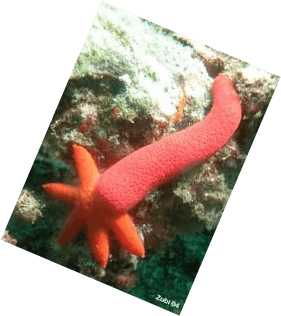
What type of asexual reproduction is taking place?
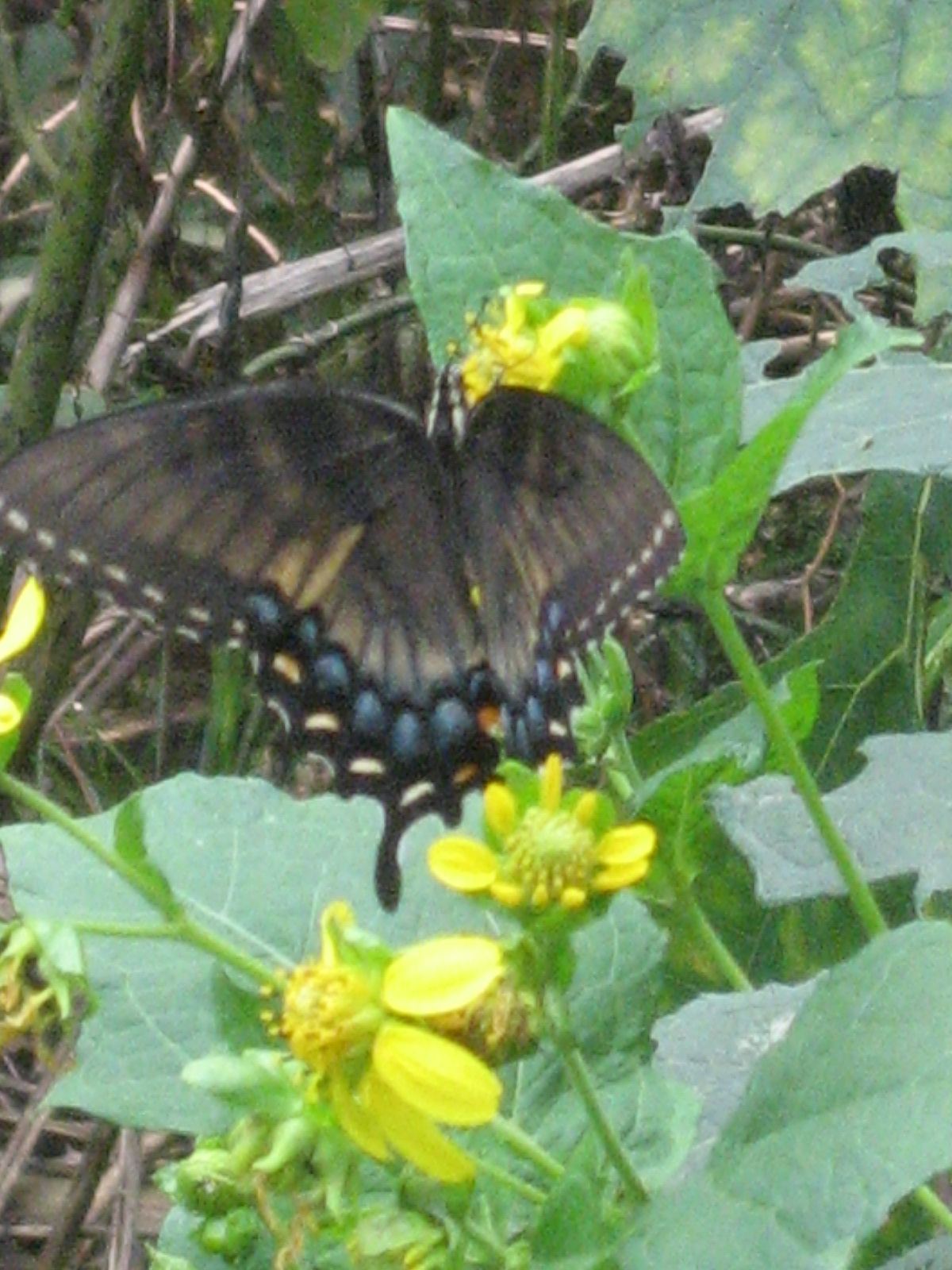
Fishermen work hard to catch and remove all the starfish that get into their favorite shell fishing beds and the “underwater farms” where they raise clams and oysters. In the past, they put the starfish into their boats, cut them up with knives, and then throw the pieces of starfish overboard. They thought this would kill the starfish. What they did not know was that each piece of starfish will grow into a whole new animal.
a)
Regeneration
b)
Vegetative propagation
c)
Budding
d)
Fission
103.
What is organized DNA called?
a)
Genes
b)
Deoxyribonucleic Acid
c)
Chromosomes
d)
Nucleus
104.
What parts of the chromosomes code for traits?
a)
Genes
b)
Deoxyribonucleic Acid
c)
Chromosomes
d)
Nucleus
105.
Where is all the genetic material inside a cell?
a)
nucleus
b)
vacuole
c)
cell membrane
d)
ribosome
106.
Which of the following organisms are LEAST closely related?
a)
organisms that share a domain
b)
organisms that share a family 
c)
organisms that share a genus 
d)
organisms that share a species 
107.
The scientific name for an organism is made from the:
a)
class and family name
b)
genus and species name
c)
domain and kingdom name
d)
kingdom and phylum name
108.
The 8 levels of classification, most broad to most specific.
a)
Domain, Genus, Family, Order, Class, Phylum, Kingdom, Species
b)
Domain, Species, Kingdom, Genus, Phylum, Family, Class, Order
c)
Domain, Kingdom, Phylum, Class, Order, Family, Genus, Species
d)
Order, Kingdom, Species, Domain, Phylum, Family, Class, Genus
109.
In pea plants, the tall allele is dominant to the short allele. What key would demonstrate this?
a)
Tall = T
Short = S
b)
Tall = T
Short = t
c)
Tall = t
Short = T
d)
Tall = TT
Short = tt
110.
A heterozygous long-tusked elephant is crossed with a homozygous recessive short-tusked elephant. What is the probability of the offspring having short tusks?
a)
0%
b)
25%
c)
50%
d)
75%
111.
Identify the homozygous dominant genotype:
a)
FF
b)
Ff
c)
ff
112.
Bob the abominable snowman lives in the snowy Andes mountains. He has white fur, which blends in nicely. He is therefore dismayed when his mate keeps having red-furred babies. What is Bob's likely genotype?
a)
Homozygous Dominant
b)
Heterozygous
c)
Homozygous Recessive
113.
What phenotype would result from crossing a homozygous dominant purple-flowered pea plant with a homozygous recessive white-flowered pea plant?
a)
Pp
b)
Purple
c)
White
d)
PP and pp
114.
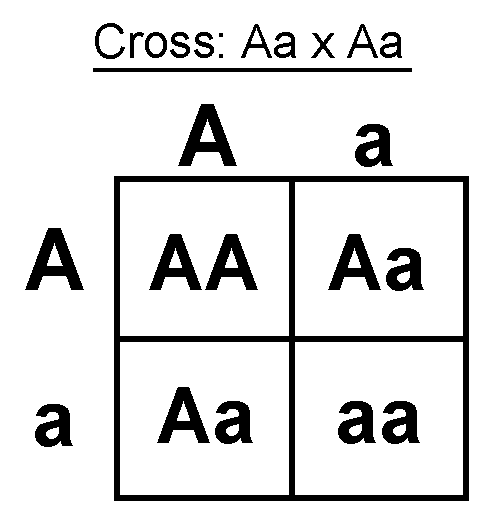
Each one of the boxes on the Punnett Square represents what probability of an offsprings' genotype?
a)
25%
b)
1%
c)
10%
d)
0%
115.
In a punnet square where are the parent alleles written?
a)
Top and inside the boxes
b)
Only on the left and right side of the boxes. 
c)
outside of the boxes (top and left side)
d)
All on the top side of the boxes
116.
Aa, DD, bB, yy are all examples of
a)
genotypes
b)
phenotypes
117.
AA and Aa always show up as
a)
dominant
b)
recessive
118.
aa always shows up as
a)
dominant
b)
recessive
119.
What is the phenotype of the offspring? (A-Brown hair; a-blond hair) 
a)
50 % Brown Hair and 50% Blond Hair 
b)
25 % Brown Hair and 75% Blond Hair 
c)
75 % Brown Hair and 25% Blond Hair 
d)
0% Brown Hair and 100% Blond Hair 
120.
How many alleles (letters) do each person carry for a trait?
a)
1
b)
2
c)
3
d)
4
121.
Aa is
a)
homozygous
b)
heterozygous
122.

What do we call the result of the genotype (for example, the color of the peas)?

a)

Visible traits

b)

Physiotrait

c)

Genotype 2

d)

Phenotype

123.

What do we call the table used to calculate the probability of an offspring's genotype?

a)

Punnett Square

b)

Venn Diagram

c)

Avogadro's Graph

d)

Circle of Life

124.

Who is the "father of genetics"?

a)

Hargobind Khurana

b)

Robert Hooke

c)

Gregor Mendel

d)

None of the above

125.

Why did Mendel study pea plants?

a)

because he could control the mating between plants

b)

because they have easily identifiable traits

c)

because both self-pollination and cross-pollination is possible

d)

all of the above

126.

Gregor Mendel's breeding experiments with this plant led him to formulate basic laws of heredity.

a)

garden tomato

b)

garden bean

c)

garden pea

d)

garden strawberry

127.

The trait that will be expressed only if two copies of the allele are present.

a)

recessive

b)

dominant

c)

co-dominant

128.

The information that is passed from parent to offspring:

a)

cell

b)

gene

c)

trait

d)

nucleus

129.

Genes come in pairs because we get one copy from mom and one copy from dad.

a)

True

b)

False

130.

Black hair (H) is a dominant gene in guinea pigs and black yellow (h) is recessive. What color hair would a guinea pig have if it got a recessive gene (h) from mom and a dominant gene (H) from dad?

a)

Black hair

b)

Yellow hair

c)

Can't tell

131.

A child has blue eyes, but both of her parents have brown eyes. What are the genes for each person?

a)

She's adopted; a child can't have a different trait from their parent

b)

Child = BB; Mom = BB; Dad = BB

c)

Child = bb; Mom = BB; Dad = Bb

d)

Child = bb; Mom = Bb; Dad = Bb

e)

Child = BB; Mom = Bb; Dad = Bb

132.

In llamas, a long neck (L) is dominant and a short neck is recessive (l). If 2 long neck llamas (Ll) have a baby llama, what are the chances the baby llama will have a long neck?

a)

0/4

b)

1/4

c)

2/4

d)

3/4

e)

4/4

133.
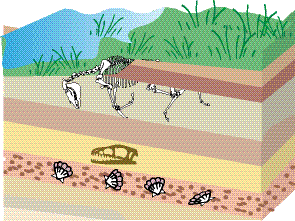
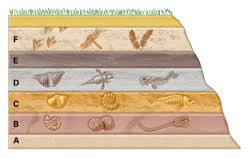
The diagram shows layers of sedimentary rock and examples of the fossils each layer contains, Which layer contains the oldest fossils? 
a)
A. Layer 2
b)
B. Layer 4
c)
C. Layer 1
d)
D. Layer 3
134.
Where are most fossils found?
a)
A. In sand dunes
b)
B. In volcanoes
c)
C. In igneous rocks 
d)
D. In sedimentary rocks 
135.
Which fossil layer is the youngest? 
a)
A. Layer A
b)
B. Layer B
c)
C. Layer C
d)
D. Layer D
136.
How are fossils created?
a)
A. Traces of organisms harden like rock. 
b)
B. Dead organisms are quickly buried for millions of years.
c)
C. Animals get trapped.
d)
D. All of the above
137.
Which layer is oldest?
a)
A
b)
W
c)
G
d)
Z
138.
According to the law of superposition, the oldest fossils are found 
a)
At the top of the rock layers
b)
Near the bottom of the rock layers
c)
In the middle of the rock layers
d)
Somewhat near the surface
139.
Which rock layer contains the newest fossils?
a)
F
b)
E
c)
B
d)
C
140.

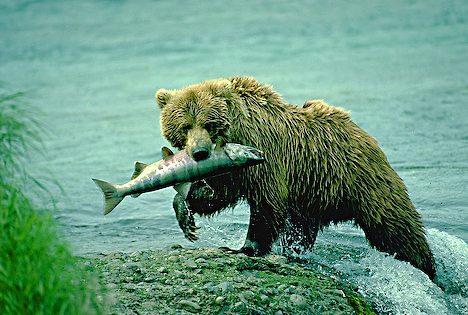
A grizzly bear survives because he is well-adapted to his environment. When he reproduces he passes on those traits to his offspring. this process is called

a)

Natural Selection

b)

Selective Breeding

c)

Random mutations

d)

Variations in a species

141.

The peppered moth's color camouflaged it on the light colored tree bark. It's color was an example of a/n

a)

Variation

b)

Dominant trait

c)

Recessive trait

d)

Adaptation

142.

What animal is camouflaged in this picture?

a)

Skunk

b)

Squirrel

c)

Owl

d)

Snake

143.
What was the name of the scientist who had the theory of evolution?
a)
Lamarck
b)
Einstein
c)
Washington
d)
Darwin
144.
All rabbits living in a particular area would be an example of a(n)
a)
population
b)
species
c)
fossil
d)
individual organism
145.
Modern whales developed their traits through natural selection.  What occurs during the process of natural selection?
a)
Organisms choose mates from other species to create new species
b)
Breeders selectively cross organisms with desired traits
c)
Only the fittest organisms can survive and reproduce
d)
Organisms remain exactly the same over time.
146.
Why are advantageous traits more likely to be passed onto offspring?
a)
Because they are more likely to survive and reproduce.
b)
Because they come from dominant alleles.
c)
Because they come from recessive alleles.
d)
Because the trait is an acquired phenotype.
147.
The difference in the physical traits of an individual from those of other individuals in a group is called a(n)
a)
change
b)
adaption
c)
species
d)
variation
148.
The ability of an organism to survive and reproduce is known as...
a)
Adaptation
b)
Trait
c)
Fitness
d)
Variation
149.
Any variation that can help a species survive in a given environment is called...
a)
an adapatation
b)
a characteristic
c)
a homologous structure
d)
a vestigial structure
150.
When every organism of a species has died.
a)
Evolution
b)
Natural Selection
c)
Extinction
d)
Artificial Selection
151.
Which organisms are most likely to survive?
a)
the best adapted
b)
the fastest
c)
the strongest
d)
the most domesticated (tamed)
152.
The trees these moths used to live on were white, but have been covered in soot from coal factories. Which moth will be more successful in this environment?
a)
Dark moth
b)
Light moth
c)
Both will be equally successful
d)
Neither will be successful
153.
Which is not an example of an adaptation?
a)
A bird's beak allows it to crack open hard nuts.
b)
A zebra's stripes allow it to confuse its predators.
c)
A frog's large hind legs allow it to jump from danger.
d)
A cat sleeps on the sofa to avoid the vacuum cleaner.
154.
What is the advantage of having different shaped beaks?
a)
To look different from other species.
b)
To be able to eat different types of food.
c)
To fly faster.
d)
To confuse scientists. 
155.
A species lives in a particular environment.  What is TRUE about the environment that the species lives in and about how the species will look over thousands of years?
a)
The environment will stay the same, and the traits of the species will stay the same.
b)
There will be changes to the environment, but the traits of the species will stay the same.
c)
There will be changes to the environment that could lead to changes in the traits of the species.
d)
There will be changes to the environment, and the traits of the species will change, but the changes in the environment could never lead to changes in the traits of species.
156.
What was the name of the ship Darwin traveled the world on?
a)
HMS Beagle
b)
SS Beagle
c)
HMS Bugle
d)
SS Bugle
157.
Mutations are a change in what?
a)
DNA
b)
tRNA
c)
genotype
d)
phenotype
158.
The example of the peppered (brown) moths living near English industrial cities demonstrates that
a)
A change in an environment can result in the evolution of species living there
b)
Evolution occurs so slowly that is it not possible to determine that it has happened in less than a million years
c)
The environment near these cities has always favored dark colored moths
159.
Bird wings and butterfly wings are an example of
a)
Homologous structure
b)
Analogous structure
c)
Mimicry
d)
Camoflague
160.
Shark fins and dolphin fins are examples of analogous structures.
a)
True
b)
False
161.
Which of the following pieces of evolution evidence deals with comparing similar structures in various species?
a)
fossil record
b)
comparing embryology
c)
comparing biochemistry
d)
comparing anatomy
162.
Which of the following pieces of evolution evidence deals with structures common in embryos that form differently or for different purposes in adult form?
a)
fossil record
b)
comparing embryology
c)
comparing biochemistry
d)
comparing anatomy
163.
Which of the following pieces of evolution evidence contain both homologous and vestigial structures?
a)
fossil record
b)
comparing embryology
c)
comparing biochemistry
d)
comparing anatomy
164.
Some organisms that share a common ancestor have features that have different functions, but similar structures.  These are known as
a)
vestigial structures
b)
analogous structures
c)
homologous structures
d)
fossil structures
165.
The hind leg bones in a whale are examples of
a)
homologous structures
b)
analogous structures
c)
fossils
d)
vestigal structures
166.
How would you describe this evolution?
a)
Homologous structure
b)
Analogous structure
c)
Structural adaption
d)
Functional adaption
167.
The structures shown are_________
a)
homologous
b)
heterologous
c)
analogous
d)
vestigial
168.
Polar bears have compact ears, a small tail, and thick fur to keep themselves warm. Are these examples of physical (structural) or behavioural adaptations?
a)
Physical
b)
Behavioural
169.
Which type of behavior is most likely to occur due to a seasonal change stimulus?
a)
migration
b)
estivation
c)
reproduction
d)
social grooming
170.

Structural adaptation

a)

are physical features of an organism like the bill on a bird or the fur on a bear

b)

Mental adaptation, of the thinking of the animal

171.

A squid will squirt black ink at predators when frightened.

a)

physical adaptation

b)

behavioral adaptation

172.

A black bear hibernates during the winter months.

a)

physical adaptation

b)

behavioral adaptation

173.

An owl is mostly nocturnal, it hunts and is active at night.

a)

physical adaptation

b)

behavioral adaptation

174.

Parrots have special feet, with two toes on the front and on the back, to help them cling onto branches.

a)

physical adaptation

b)

behavioral adaptation

175.

Adaptation that refers to how an organism behaves and how interacts with other.

a)

adaptations

b)

mimicry

c)

behavioral

d)

camouflage

176.
Bacteria are prokaryotes which means they
a)
have a nucleus on their capsule
b)
do not contain a nucleus
c)
can live in environments with and without oxygen
177.
Name this bacteria shape
a)
coccus
b)
spirillum
c)
bacillus
178.
Name this bacteria shape
a)
bacillus
b)
coccus
c)
spirillum
179.
Name this bacteria shape
a)
coccus
b)
bacillus
c)
spirillum
180.
A disease causing organism
a)
pathogen
b)
poison
c)
vaccine
181.
Strep throat is caused by 
a)
bacteria
b)
virus
182.
The flu is caused by
a)
bacteria
b)
virus
183.
Live bacteria are found in milk, cheese and yogurt
a)
True
b)
False
184.
How do bacteria move?
a)
flagella
b)
cilia
c)
they don't
185.
All bacteria are
a)
unicellular
b)
multicellular
c)
eukaryotic
186.
A structure that can help bacteria survive harsh conditions.
a)
capsids
b)
endospores
c)
pili
d)
DNA
187.
Bacteria exchange genetic information during 
a)
asexual reproduction
b)
binary fission
c)
conjugation
d)
photosynthesis
188.

This organelle is where proteins are made

a)

Capsule

b)

Nucleoid

c)

Ribosomes

d)

Cell Wall

189.

Which of the following is a way in which bacteria is NOT helpful?

a)

Digestion

b)

Clean up oil

c)

Causes tooth decay (cavities)

d)

Used to make food

190.

Which is NOT a characteristic of bacteria?

a)

single-celled

b)

prokaryotic (no nucleus)

c)

decomposer

d)

multi-celled

191.

The chemicals to fight off bacteria that a doctor may give you are called....

a)

steroids

b)

vaccines

c)

antibiotics

192.
Bacteria reproduce by binary fission.
a)
true
b)
false
193.
Bacteria are smaller then viruses.
a)
True
b)
False
194.

Bacteria and Archaebacteria are both prokaryotes. How do they differ to each other?

a)

Bacteria inhabit extreme environment while Archaebacteria inhabit diverse environment.

b)

Bacteria inhabit diverse environment while Archaebacteria inhabit extreme environment.

c)

Both inhabit diverse environment.

d)

Both inhabit extreme environment.

195.

All answers listed below are true about bacteria except

a)

all are prokaryotes

b)

all are harmful

c)

all are unicellular

d)

they do not have nucleus

196.
Needs host cell to reproduce.
a)
Virus
b)
Bacteria
c)
Fungus
d)
Protozoan
197.
Is a virus alive?
a)
Yes
b)
Sure is
c)
Most Def'
d)
Naw, son...
198.
Viruses multiply: 
a)
By conjungation
b)
By taking over a cell's functions
c)
By binary fission
d)
Both sexually and asexually
199.
Which pathogen can be cured by antibiotics?
a)
Virus
b)
Bacteria
c)
Protist
d)
Fungi
200.
TRUE or FALSE: Viruses can be killed with an antibiotic. 
a)
TRUE
b)
FALSE
201.
Is all bacteria bad? 
a)
No, most is good or harmless
b)
Yes, most will get you sick
c)
Most bacteria is actually not very well known. 
202.
Reasons that viruses are considered to be nonliving is because
a)
They are not cellular
b)
They cannot reproduce on their own
c)
They cannot make proteins
d)
all of the above
203.
Vaccines 
a)
Prevent people from coming in contact with viruses
b)
give the immune system a preview of the virus 
c)
Prevent all viral infections
d)
Only work on small children
204.
Which of the following occurs after a virus attaches to a host cell
a)
The host cell dies
b)
The virus dies
c)
The virus inserts its genetic information into the host cell
d)
the virus eats the cell
205.
Which of the following is one important difference between a virus and a bacterial cell?
a)
a virus is much larger in size than a bacterial cell
b)
a virus always causes more severe disease than a bacterial cell
c)
a virus can never reproduce on its own, but a bacterial cell can
d)
a virus does not contain genetic material, but a bacterial cell does
206.

Who would end up ruling the world?

a)

Mrs. Lott

b)

Mrs. Hadley

c)

Mrs. Koontz

d)

Ms. Aitken

207.

What are the five Infinity Stones?

a)

Reality, Time, Soul, Mind, Power

b)

Life, Time, Strength, Body, Brain

c)

Reality, Soul, Brain, Strength, Domination

208.
Where is Black Panther from?
a)
Azgard
b)
Atlanta
c)
Wakonda
d)
Ivory Coast
209.
What's Batman's true identity?
a)
Bruce Wayne
b)
Oliver Queen
c)
Tony Stark 
d)
Dick Grayson
210.
What is Superman's weakness?
a)
Jello
b)
Ritz Crackers
c)
Kyptonite
211.
What is the Hulk's powers?
a)
He's sweetness
b)
His cuteness
c)
He's anger when someone hits a cupcake out his hand
d)
Hulk's strength increases proportionally with his level of great emotional stress, anger in particular
212.
What is the name of the long sheet of plastic that water is sprayed on to so that kids can ride and slide on it?
a)
Slippery Slider
b)
Slip n Slide
c)
Slip Away
d)
Slide N Slip
213.
What imaginary line of latitude circles the middle of Earth?
a)
Prime Meridian
b)
Tropic of Cancer
c)
Tropic of Capricorn
d)
Equator
214.

Seen on the sunscreen bottles, what does the term SPF stand for?

a)

Skin Protection Factor

b)

Sun Protection Fair

c)

Sun Protection Factor

d)

Skin Preservation Factor

215.

Walt Disney, the creator of Mickey Mouse, had which phobia?

a)

Arachnophobia

b)

Socialphobia

c)

Musophobia

d)

Claustrophobia

216.

A cow gives enough milk to make how many gallons of ice cream a day?

a)

8

b)

2

c)

5

d)

6

217.

The science final is on which day of the week?

a)

Monday

b)

Tuesday

c)

Wednesday

d)

Thursday

218.

How can you study for the science final?

a)

Reread chapters

b)

Complete all study guides

c)

Make flashcards on key concepts and vocab

d)

Have someone quiz you using your notes

219.

Why shouldn’t you give Elsa a balloon?

a)

Because she'll pop-freeze it.

b)

Because she'll blast freeze it.

c)

Because she'll poppit.

d)

Because she’ll ”let it go”.

220.

Who made this quizizz?

a)

Ms. Aken

b)

Ms. Aitken

c)

Ms. Aikens

d)

Mrs. Aiken