
 Worksheets
KS5 - Unit 1 - BTEC L3 ICT
Total questions: 85
Worksheet time: 1hrs 13mins
What is bandwidth?
Rate of data transfer over a network
Used to compress files
How long a piece of cable is
How long a band can play for
Venus
Which of the following is an accessibility device?
Printer
Fax Machine
Speakers
Braille Embosser
Which of the following is an example of a PAN connection?
Cat5
Bluetooth
USB
What is VOIP?
Video Order Information Programme
Voice Out Inwards Piece
Voice Over Internet Protocol
Select the limitation of Cat5 cabling.
Very expensive
Specialist required to install
Cumbersome cabling
Only useful over shorter distances
What is a LAN?
Computer network that covers a single building or site
Creates a secure connection over a public network
Computer network that covers a large geographical area
The Internet
What is a server?
A powerful computer that provides services to other computers
A computer for gaming
A device designed to perform multiple functions
An online service
What does TCP stand for?
Telecommunications Computer Programme
Telephone Control Point
Transmission Control Protocol
What does the File Transfer Protocol do?
Ensures networks are kept safe
Secure version of HTTP
Used to retrieve emails from a mail server
Used to transfer files over a network
What is cloud storage?
Files are kept on a personal computer
Data is stored on remote servers
Files are kept on a cloud in the sky
Select a characteristic of a Hard Disk Drive.
Faster than SSDs
Portable
Very reliable and large storage capacity
What is latency?
Rate of data transfer over a network
Data removed during compression
The time delay for packets to transfer to its destination
Loss of quality
What is a peripheral device?
Used to mark exam scripts
A device that has many specialist functions
Device with limited capacity
Accurately records electricity usage
What does a VPN do?
Software used to remotely fix computers
A computer company
Allows computers to connect to a network
Ensures a secure connection to a network
What is lossy compression?
Original data can be accessed when uncompressed
Used to compress and decompress files
Data removed during compression is permanently lost
Loss of quality
What does a firewall do?
Monitors traffic to prevent unauthorised access
Reduces the file size
Means data cannot be read
What is malware?
Email that pretends to be from a company
Software designed to cause harm to an IT system
Stolen personal information
What is EPOS?
Electronic Point of Sale
Email Positioning over Social Media
Email Protocol of Safety
Electronic Picture of System
What is backup and recovery?
Access is restricted to those who need it
Ensures data can be recovered following any loss of data
Secure data transfer using encryption key
Prevents unauthorised access
What is a PAN (Personal Area Network)?
Connects network devices wirelessly within a short range
Connects devices through a wire
Connects devices wirelessly over a large distance
What is a biometric reader?
Reads fingerprints, iris, or handprints
Used in stock taking
Reads lines of different thickness and converts them
Records electricity and gas usage
What is a codec?
Amount of data lost
Creates a secure connection
Program used to compress and decompress files
Uses a code to encrypt data
Which of these is an input device?
Fax Machine
Projector
Webcam
Plotter
What is a Multi-User Operating System?
Inputs are processed and responded to instantaneously
Many users can use the system at the same time and run applications
One user, one application
One user, but multiple applications can run at the same time
Which of these is a video file type?
XLS
DOC
PNG
MP4
What is a data capture and collection system?
Uses software to provide location data
Sends and receives analogue data
Collects and inputs data through automated systems
Which of the following is NOT a role of the Data Protection Act 1988?
Main UK legislation for the protection of personal data
Protects the privacy of individuals' data
Covers threats such as hacking
Gives individuals rights regarding what data is collected
What is TCP used for?
Routes packets to its destination
Ensures transactions are kept safe
Creates packets and reassembles them at the end
Which of the following is a limitation of using a USB for transferring video footage?
Low power consumption
Very reliable
Low storage capacity
Finite number of writes
Which of these is an advantage of Graphical Line Interface?
Quicker to complete tasks than CLI
Need to learn commands
Simple, intuitive method
Which factor does NOT affect performance?
Limited RAM
Limited CPU Speed
Malware
Bandwidth
What is a primary source of data?
Data that already exists from previous research
Data gathered directly from the source
Data in a predefined format
What is an SSD?
Flash memory used as primary storage in portable devices
Used in digital cameras and smartphones
Primary storage but not external
What does accurate data reliability mean?
Data must be guessed
Data is used to gather information
Data must be truthful
Data must be truthful and accurate
What is a Real-Time Operating System?
Processed and responded to immediately
One user, many applications
One user, one application at a time
What are System Profilers?
Gives a detailed display of hardware and software
Designed cleaners to remove redundant registry entries
Prevents viruses
What is proprietary software?
Source code is owned privately by a software company
Source code is available to read
Source code is available to read and modify
The indirect costs for support and training
Select the advantage of fibre optic.
Versatile and widely available
Capable of 8K
Improved security as cable cannot be tapped
What is Satellite Broadband?
For connecting devices to remote displays
Provides connectivity to remote areas
Allows point-to-point LAN connections
What is IP used for?
Creates packets
Used to reassemble packets
To ensure secure transmission
Routes packets to its intended destinations
Which of these is a WAN connection?
Internet
Fibre Optic
Bluetooth
USB
Which of the following is a characteristic of magnetic tape?
Extremely reliable
Slower than SSDs
Very large storage capacity
What is encryption?
Conversion of data into an unreadable code
Detects and removes viruses
Ensures access is restricted to those who need it
What is transactional data?
Data collected through questionnaires
Data collected from transactions made by customers
Ensures a document is kept up to date
What is Data Modelling?
Ensures that a database is correctly structured
A system to help analyze and predict data
How the data is presented (Graph)
What is WAN?
Network that covers a small network
Network that covers a large geographical area
Used to connect devices wirelessly within short range
What is globalisation?
Describes acceptable behavior on the internet
The process of a country becoming increasingly interconnected
Not everyone has equal access
What is coaxial cabling?
Cabling commonly used for TV cabling
Connects equipment such as printers and scanners
Digital connection from device to display
What is a microwave/laser connection?
Connects devices to displays
Provides connectivity to remote areas
Provides internet while on the move
Point-to-point LAN connections between locations
What is POP3?
Used to retrieve emails from a mail server
Used to transfer mail between mail servers
Used to create, control, and end VOIP connections
Designed to transfer audio and video
What is lossless compression?
Original data can be recovered when uncompressed
Original data is lost and cannot be recovered
What is version control?
Allows only one file to be open at a time
Means a user knows which is the most up-to-date version
Plans a workforce
What is the maximum sentence for a breach of Health and Safety Regulations?
2 years imprisonment
5 years imprisonment
£50,000
Up to two years and unlimited fines
Which of the following is an issue with an unsupported OS?
Security patches
It won't work
Connecting to other devices
Which of the following are benefits of an open source OS?
Direct source code access
Less features compared to proprietary OS
Need specialised software alternatives
Ongoing support from other users
When disposing of an old IT system, what must be ensured?
Data deletion from all devices
All data must be backed up
Some computers must be given to charity
You have to pay a large fee for disposal
Which of the following options represent "the internet" in diagrams?

A Cloud

A Square

A PC

Writing "Internet"
Which of the following is an example of an EPOS?
Telephone
Cash Register/Contactless Card Reader
Security Camera
Circle the server in this diagram

What is an entertainment system?
Devices for watching TV, films, and playing games or music
Powerful computers that provide services
Designed to give internet and computer access on the go
A device that performs multiple functions
Which of the following is an example of an output device?
Keyboard
Monitor
Microphone
Scanner
What is the main function of RAM in a computer?
Backing up files to the cloud
Processing graphics
Temporary data storage for active processes
Permanent data storage
Which protocol is commonly used to secure data transmission over the internet?
FTP
SMTP
HTTP
HTTPS
An AI-driven customer service team proposes 24/7 chatbots. Which evaluation best balances the benefits and disadvantages?
Energy increase ignored due to personalization gains
Cost reduction with ethical review and displacement plan
Immediate deployment without workforce consultation
Fraud detection added but privacy assessments removed
A school wants AI to personalize study recommendations. What is the best plan to minimize filter bubbles?
Ban non-personalized content entirely
Remove human oversight from suggestion logic
Lock recommendations to past clicks only
Rotate diverse sources and allow student overrides
Your team must choose between manual analysis and AI for massive datasets. Which justification is the most defensible?
Manual review ensures zero errors and no energy use
Manual methods are superior because they are traditional
AI can process large volumes faster and optimize workflows
AI guarantees perfect decisions without training data
A startup estimates AI implementation costs. Which plan best accounts for performance implications?
Budget for compute, training data, and energy
Delay costs until after full deployment
Ignore compute and forecast savings only
Assume deep learning needs minimal resources
A startup expects unpredictable spikes in user traffic and wants to minimize upfront hardware costs. Which cloud characteristic best supports planning for this scenario?
Fixed-capacity provisioning with annual contracts
Manual scaling using local server upgrades
On-demand scalability managed by providers
Prepaid licenses installed on client devices

A school needs to run custom applications and use a vendor’s email platform. Which deployment strategy most effectively balances control and flexibility?
Hybrid cloud combining private and public
Public cloud only for everything
Private cloud only for all workloads
On-premises servers with no cloud
A hospital must store patient records under strict compliance and maintain full control, but wants predictable performance. Which cloud model best fits and why?
Private cloud for maximum control and compliance needs
Community cloud for pooling data with other hospitals
Public cloud due to shared resources and low costs
Hybrid cloud to split sensitive and non-sensitive records
A startup with minimal capital wants rapid scalability and no responsibility for updates or security patches. Which option is most appropriate?
Hybrid cloud combining private and public systems
Public cloud managed by third-party providers
Private cloud with on-premises hardware investment
Colocation in a third-party data center
An enterprise keeps customer financial data private while bursting to a scalable environment for seasonal traffic. Which rationale supports this choice?
Public cloud improves compliance for sensitive records
Private cloud ensures vendor lock-in during spikes
Hybrid cloud balances privacy with public scalability
Edge computing eliminates migration and integration
Which trade-off most accurately contrasts organizational disadvantages between private and public clouds?
Private: performance variability; Public: predictable performance
Private: automatic updates; Public: responsibility for patches
Private: vendor lock-in risk; Public: high upfront capital costs
Private: limited scalability; Public: less control over data
A company plans a gradual migration to cloud services while complying with regulations and avoiding large upfront CapEx. Which approach aligns best?
Deploy a private cloud with significant hardware purchases
Adopt a public cloud for all workloads immediately
Use a hybrid cloud for staged migration and compliance
Delay migration until on-premises systems are fully depreciated

A startup plans to rapidly prototype a web app without managing servers, OS patches, or databases. Which cloud model best aligns with this goal, and why?
PaaS because the provider offers tools, frameworks, and middleware
SaaS because users access finished applications via a browser
IaaS because it minimizes IT overhead and auto-updates apps
IaaS because teams control virtual machines and storage
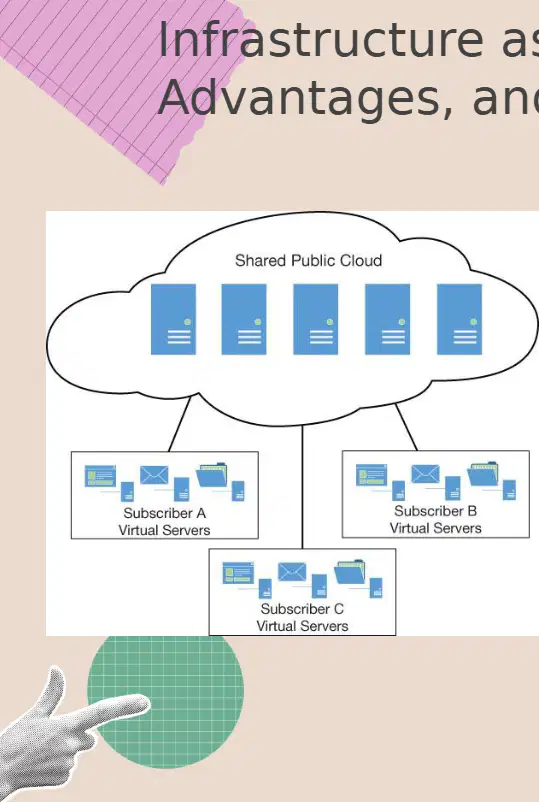
An organization wants maximum flexibility to choose operating systems and deeply tune network settings, accepting higher management effort. Which model fits, and what trade-off is implied?
SaaS with minimal IT overhead and limited customization
SaaS with automatic updates and scalable user licensing
PaaS with faster development but vendor lock-in risk
IaaS with high control but requires IT expertise to manage
A school adopts email and document editing for staff with minimal setup, automatic security patches, and access from any device. Which model matches, and what is a likely downside?
IaaS with complex OS maintenance requirements
SaaS with subscription costs accumulating over time
PaaS with limited development tools availability
IaaS with scalable licensing for end users

A team faces variable workloads and wants cost-effective scaling while remaining responsible for security configurations on their virtual machines. Which model and responsibility pattern applies?
SaaS with users managing patches and backups themselves
PaaS with provider handling infrastructure and tooling
IaaS with shared responsibility for security management
SaaS where provider manages app security entirely
You are building a highly specialized application that requires unique runtime components not supported by the provider’s technology stack. Which choice minimizes constraints?
Choose IaaS to install custom OS, tools, and runtimes
Choose PaaS to rely on automatic updates and patches
Choose SaaS to avoid any platform dependencies
Choose PaaS to leverage built-in middleware constraints
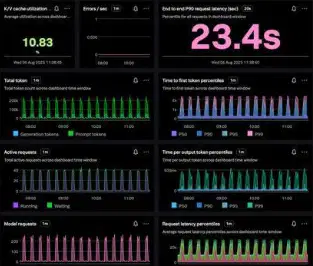
A streaming app experiences latency spikes during peak hours after moving to a public cloud. Which plan best reduces user-visible delays while balancing costs?
Enable autoscaling with target response-time thresholds
Disable caching layers to simplify the architecture
Increase instance sizes permanently across all regions
Migrate entirely to private cloud hardware overnight
An e-commerce site expects unpredictable traffic surges. Which deployment choice most strategically supports rapid growth without constant manual effort?
On-prem PaaS requiring weekly performance tuning
Single-region SaaS with fixed resource allocations
Hybrid cloud with automated scaling policies enabled
Manual capacity expansion in a private data center
A healthcare provider adopts SaaS for patient scheduling. Which action best addresses security and compliance responsibilities in this model?
Assess provider controls and verify regulatory compliance alignment
Rely solely on vendor uptime guarantees for compliance
Disable encryption to improve scheduling performance
Shift all data protection duties to the SaaS provider entirely
Which of the following best describes secondary data?
Data collected directly from experiments
Data obtained from existing sources such as reports or publications
Data that is always in digital format
What is the main purpose of a data backup?
To increase network speed
To ensure data can be restored after accidental loss
To compress files for storage
Which device is commonly used to improve accessibility for visually impaired users?
Projector
Braille Display
Scanner

