wayground logo

Free Printable Worksheets

Font size

S
M
L
XL
Worksheets

Final Review

Total questions: 100

Worksheet time: 2hrs 56mins

Name
Class
Date
1.
Which Constitutional principle states that no one is above the law and the government only has powers listed in the Constitution?
a)
Limited Government
b)
Individual Liberties
c)
Federalism
d)
Republicanism
2.
Which of the following explains the Constitutional principle called republicanism?
a)
Power is divided between state and federal government
b)
Power is divided into 3 government branches
c)
Elected representatives make and enforce laws
d)
Individuals have guaranteed liberties
3.
Many of our individual liberties are protected by which document?
a)
The Articles of Confederation
b)
The Declaration of Independence
c)
The Bill of Rights
d)
The Fundamental Orders 
4.
Which president was also called the Father of the Constitution?
a)
George Washington
b)
Thomas Jefferson
c)
Alexander Hamilton
d)
James Madison
5.
What is the name for a change or addition to the Constitution?
a)
Amendment
b)
Preamble
c)
Ratification
d)
Compromise
6.
Which Constitutional principle states that the power of government comes from the people?
a)
Federalism
b)
Republicanism
c)
Checks and Balances
d)
Popular Sovereignty
7.
Which branch of government interprets laws?
a)
Judicial (courts)
b)
Executive (president)
c)
Legislative (Congress)
8.
Which group wanted to keep the Articles of Confederation and give more power to the states?
a)
Federalists
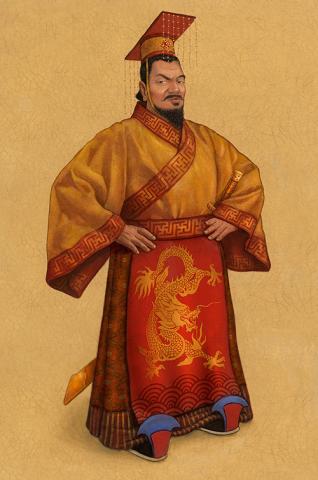
b)
Anti-Federalists
c)
Judiciary
d)
Legislature
9.
Central and national are two words that mean the same thing as - 
a)
state
b)
federal
c)
local
d)
regional
10.
What was the name for the essays written in support of ratification of the Constitution?
a)
Letters from a Pennsylvania Farmer
b)
The Anti-Federalist Essays
c)
The Federalist Papers
d)
The Fundamental Orders
11.
Which compromise concerned how many representatives different sized states would have in Congress?
a)
The Great Compromise
b)
The 3/5 Compromise
c)
The Commerce Compromise
d)
The Intolerable Compromise
12.
Who is the head of the executive branch?
a)
The Supreme Court
b)
The Senate
c)
The President
d)
The Cabinet
13.
Which of the following is a system that allows each branch of government to limit the powers of the other branches in order to prevent abuse of power?
a)
Tyranny
b)
Checks and balances
c)
Federalism
d)
Ratification
14.
Which amendment in the Bill of Rights prohibits cruel and unusual punishment and excessive fines?
a)
3
b)
4
c)
6
d)
8
15.
Which Constitutional principle divides government power between the states and the federal government?
a)
Republicanism
b)
Popular sovereignty
c)
States rights
d)
Federalism
16.
What year was the Constitution written in?
a)
1776
b)
1787
c)
1803
d)
1861
17.

The Legislative Branch is the _______________ branch of the federal government.

a)

Lawmaking

b)

Law enforcing

c)

Law ignoring

d)

Court

18.

How many TOTAL Senators do we have?

a)

2

b)

100

c)

435

d)

535

19.

Which house requires you be at least 25 years old, a U.S. citizen for at least 7 years and live in the state and district you represent?

a)

Senate

b)

House of Representatives

20.

Which section of the Constitution talks about the Legislative Branch?

a)

Article I

b)

Article II

c)

Article III

d)

Article IV

21.

How many total Representatives are there?

a)

50

b)

100

c)

435

d)

535

22.

A tax bill must start in which house?

a)

Senate

b)

House of Representatives

23.

Who is the President of the Senate?

a)

Majority Leader

b)

Minority Leader

c)

Vice President

d)

President

24.

Who is the leader of the House of Representatives?

a)

Vice President

b)

President

c)

Speaker of the House

d)

Majority Leader

25.

Congress can pass bills over a presidential veto with ______ vote.

a)

1/2

b)

2/3

c)

3/4

d)

5/6

26.

The powers that are listed in the Constitution that belong to Congress are called

a)

implied powers.

b)

enumerated powers.

c)

congressional powers.

d)

powerful powers.

27.

Bicameral means

a)

1 house.

b)

2 houses.

c)

3 houses.

d)

4 houses.

28.

Must be 30 or older, a citizen for 9 years and live in the state they represent

a)

Senate

b)

House of Representatives

29.
Which article in the Constitution deals with the Executive Branch?
a)
l
b)
ll
c)
lll
d)
llll
30.
What does the executive branch do?
a)
elect the president
b)
make the laws
c)
enforces the laws
d)
count the votes
31.
.  Which amendment addresses the order of succession to the Presidency if the President dies or resigns?
a)
20
b)
25
c)
22
d)
23
32.
.  Who has the expressed power to declare war?  
a)
President
b)
Congress
c)
House
d)
Senate
33.
What role gives the President the ability to host the first pitch in a baseball game in the World Seriess?
a)
 Commander in Chief
b)
Chief of Foreign Policy
c)
Chief of State
d)
Chief Executive
34.
What role gives the President the ability to rule as head of all the branches of the military?  
a)
Chief of State
b)
Chief Diplomat
c)
Chief Citizen
d)
Commander in Chief
35.
To be president you must be 
a)
a citizen for 7 years
b)
a citizen for 9 years
c)
a natural born citizen
d)
a citizen for 14 years
36.
To be President you must be at least ____ years old
a)
25
b)
30
c)
35
d)
40
37.

In the federal system, a district court has the power to

a)

retry a case that was first decided by a State court.

b)

exercise original jurisdiction over a federal case.

c)

apply appellate jurisdiction to a federal case.

d)

determine if a lower court made an unconstitutional ruling on a case.

38.

What argument was the author of this statement, John Marshall, making about how the Federal Government should function?


“It is emphatically the province and duty of the Judicial Department to say what the law is.”

John Marshall, Marbury v. Madison, Opinion of the Court

a)

The judicial branch of the Federal Government should have the power to make laws.

b)

The judicial branch of the Federal Government should have power to interpret laws.

c)

The judicial branch has the sole authority to establish a federal court system.

d)

Only the laws created by the Federal Government, and approved by the Court, have any authority in the federal system.

39.

When a Supreme Court justice agrees with the decision reached by the Court in a case, but not with the reasons why the Court made that decision, he or she may choose to write a

a)

concurring opinion.

b)

dissenting opinion.

c)

majority opinion.

d)

unanimous opinion.

40.

Which of the following is an example of the principle of judicial review being exercised?

a)

The Senate first examines, and then rejects a Supreme Court candidate.

b)

The President appoints a candidate to serve on the Supreme Court.

c)

The Supreme Court declares a State law unconstitutional.

d)

Congress decides to impeach a federal judge for failure to uphold the law.

41.

What is the difference between original jurisdiction and appellate jurisdiction?

a)

Original jurisdiction refers to a case being heard in a Federal court; appellate jurisdiction refers to a case being heard in a State Court.

b)

Original Jurisdiction refers to a criminal or civil cases; appellate jurisdiction refers to a case being heard in a State court.

c)

Original jurisdiction refers to a case that could be heard in a Federal or a State court; appellate jurisdiction refers to a case that must be heard in a federal court.

d)

Original jurisdiction refers to a court where a case is first heard; appellate jurisdiction refers to a case being heard after it was tried in a lower court.

42.

The type of jurisdiction shared by both Federal and State, missing from the middle section of this diagram, is known as

a)

Appellate

b)

Concurrent

c)

Exclusive

d)

Original

43.

Before the Supreme Court will review a case, ____ justices must vote to add the case to the docket.

a)

3

b)

4

c)

5

d)

9

44.

The authority to hear certain cases is called:

a)

judicial review.

b)

litigation of the court.

c)

writ of certiorari.

d)

jurisdiction of the court.

45.

The celebrated decision in this case gave the Supreme Court judicial review:

a)

Slaughterhouse Case

b)

McCulloch v. Maryland

c)

Marbury v. Madison

d)

Plessy v. Ferguson

46.

How are federal judges selected?

a)

The person is named to the bench by the President and confirmed by the Senate.

b)

The person is named to the bench by the President and does not need to be confirmed.

c)

The person is publicly elected to the bench and confirmed by the Senate.

d)

The person is nominated by the Senate and chosen by the President.

47.

The outcome of Brown v. Board of Education, which desegregated schools, supports the judicial concept of___________.

a)

Judicial Activism

b)

Judicial Restraint

c)

Constitutional Originalism

d)

Strict Constructionalism

48.
How many states had to pass the Constitution before it became law?
a)
7
b)
9
c)
11
d)
13
49.
Reserved Powers are powers for the 
a)
Federal Government
b)
Both Federal & State
c)
State Governments
d)
Counties
50.
Concurrent Powers are given to
a)
The states
b)
Both the state and the federal government
c)
The federal government 
d)
Local government
51.
Which Article has the Supremacy Clause?
a)
Article I
b)
Article VII (7)
c)
Article VI (6)
d)
Article V (5)
52.
Under the Articles of Confederation the United States did not have one of these
a)
president
b)
congress
c)
military
d)
government
53.
In the Constitution, the implied powers of Congress come from the 
a)
Necessary and Proper Clause
b)
Supremacy Clause
c)
Relative Clause
d)
Santa Clause
54.
An organized group of people who share similar political views and work to influence government.
a)
political party
b)
party platform
c)
public policy
d)
majority party
55.
Which of the following is a country with a two-party system?
a)
United States of America
b)
Japan
c)
Canada
d)
Cuba
56.
Which of the following is the main event at a national convention?
a)
nominating a candidate for president
b)
raising money for the national election
c)
preparing TV and radio advertisements
57.
There is nothing in the Constitution about political parties.
a)
True
b)
False
58.

Which statement best explains how third parties can have a positive effect on national politics?

a)

Third parties often bring attention to topics that are unpopular or unknown

b)

Third parties shift voters’ attention away from major ­party candidate

c)

Third parties promote the concerns of special interest groups

d)

Third parties help bridge the gap between state and federal legislators

59.

How has the Internet helped elected officials to communicate with American citizens?

a)

by eliminating the need for traditional media outlets

b)

by restricting citizen access to political information

c)

by increasing campaign costs to pay for print advertising

d)

by reaching wider audiences through new technologies

60.

The Libertarian Party is an example of a ...

a)

major party

b)

third party

c)

civic responsibility

d)

civic duty

61.

One purpose of political parties is to..

a)

Cast electoral votes

b)

Administer election tests

c)

Set the age for voting

d)

Recruit and nominate candidates

62.
Which did the Federalists believe was the best way to protect individual rights?
a)
have a strong national government
b)
have strong state governments
c)
constitutional amendments
63.
The phenomenon of people leaving government to take jobs in the economic sector that they regulated is called: 
a)
The revolving door
b)
The glass ceiling
c)
The silver lining
d)
The golden parachute
64.
Paid representatives of interest groups who make direct contact with senators and representatives
a)
Lobbyists
b)
Con artist
c)
Salesmen
d)
Shady characters
65.
An interest group would use grassroots lobbying on all of the following issues EXCEPT: 
a)
Abortion
b)
Medicare
c)
Social Security 
d)
Complex tax legislation affecting a few people
66.
the funding mechanism of an interest group
a)
501 (c) (3)
b)
electioneering
c)
PAC
d)
501 (c) (4)
67.
"Free riders" occur when interest groups fight for benefits to the public as a whole, such as consumer protection. How can interest groups prevent the free-rider problem?
a)
By ensuring that the benefits they seek will help only their members
b)
By providing people an incentive to join the interest group, such as a subscription to a magazine
c)
By lobbying members of Congress only in the district where the interest group operates 
d)
There is no practical way for interest groups to prevent the "free-rider" problem 
68.
The AFL-CIO is an example of a(n) _________ which seeks to help union members
a)
Agricultural groups
b)
Labor groups
c)
Public-Interest groups
d)
Professional groups 
69.

The first form of Mass Media was the

a)

snap chat

b)

photography

c)

printing press

d)

telephone

70.

Which form of mass media came to be in the 1930s?

a)

Radio

b)

Televison

c)

Film

d)

Internet

71.

A notice or announcement in a public medium, such as a newspaper or magazine, that promotes a product, service or event is

a)

Hype

b)

Advertisment

c)

Infomercial

d)

Product placement

72.

8.1 - Which of the following is the best definition for public opinion?

a)

What the public wants

b)

The issue that the public agrees upon

c)

The complex collection of opinions of many different people

d)

None of the above

73.

8.1 / 8.3 - What is the following a definition of... "communication that is widely dispersed" ?

a)

Social Media

b)

Newspapers

c)

Mass Media

d)

Electronic Media

74.

8.3 - What is the most common form of mass media today?

a)

Internet

b)

Radio

c)

Newspaper

d)

TV

75.

8.2 - Private organizations whose members share views/objectives are known as? (check all that apply)

a)

Interest Groups

b)

Special Interest Groups

c)

Pressure Groups

d)

Political Parties

76.
The ideological gap between men and women is evident at the polls, where women are more likely than men to cast their ballots for which type of candidate?
a)
Democratic candidates who support higher levels of spending on the military as opposed to spending on social services
b)
Republican candidates who support higher levels of spending on the military as opposed to spending on social services
c)
Democratic candidates who support higher levels of spending on social services as opposed to spending on the military
d)
Republican candidates who support higher levels of spending on social services as opposed to spending on the military
77.
It is 2050. You are interested in how large the U.S. population is, the number of resident legal aliens in the country, membership in non-Protestant religious denominations, party affiliation, and similar demographic facts. What tool should you use?
a)
tax records
b)
the census
c)
congressional reapportionment data
d)
telephone directories
78.
Which of the following statements about the influence of education on political attitudes and behavior is false?
a)
better-educated citizens are more likely to vote than less-educated citizens
b)
less-educated citizens are less tolerant of radical opinions than better-educated citizens
c)
less-educated citizens are more likely to vote than better-educated citizens
d)
better-educated citizens exhibit more knowledge about public policy than less-educated citizens
79.
What technique is the key to the accuracy of public opinion polls?
a)
indexing
b)
question format
c)
random sampling
d)
sample size
80.
What type of propaganda makes you want to jump in and follow everyone else?
a)
bandwagon
b)
testimonial
c)
plain folks
d)
transfer
81.
How often is the Census taken?
a)
2 years
b)
4 years
c)
10 years
d)
20 years
82.
Why is the United States refereed to as the Melting Pot?
a)
The mast majority of the population has roots from another country
b)
People love food here
c)
We have the biggest and best pots
d)
It is so hot that cheese melts on sidewalks
83.
Which two groups have the strongest impact on political socialization in the United States?
a)
mass media/family
b)
schools/family
c)
income/family
d)
race/schools
84.

Today the term __________________________ refers to an ideology that supports social and political reform, greater economic equality, and expansion of government social services.

a)

libertarianism

b)

liberalism

c)

conservatism

d)

egalitarianism

e)

authoritarianism

85.

Which statement best describes the relationship between public opinion and government policy?

a)

Public opinion almost never influences government policy

b)

The relationship between government policy and public opinion is dynamic, wherein government policy responds to public opinion but public opinion also shifts based on new government policies

c)

Government policy almost never influences public opinion

d)

Public opinion always influences government policy because lawmakers are legally bound to enact the majorities preferences

e)

Government policy never influences public opinion because most Americans pay very little attention to politics

86.
The citizens in the U.S. choose leaders to make decisions on our behalf. Which type of government does the U.S. have?
a)
Direct Democracy
b)
United Democracy
c)
Republic Democracy
d)
Representative Democracy
87.
Why do the individual voters have more power in a democracy than they do in an autocracy or an oligarchy?
a)
kings are always poor rulers
b)
the voters get to choose people that make the laws
c)
a small group of people is in charge instead of one
d)
representavies elect themselves to lead the citizens 
88.
What type of government is ruled by force? 
a)
Theocracy 
b)
Democarcy
c)
Dictatorship 
d)
Monarchy 
89.
What do an absolute monarchy, dictatorship, and oligarchy have in common?
a)
The head of state is chosen by Parliament.
b)
Their citizens decide public issues for themselves.
c)
Political power is exercised by representatives elected by people.
d)
A single individual or small group exercises control over the government. 
90.
According to Hobbes, people agreed to give up some __________________ in exchange for __________________ as part of the social contract.
a)
rights and power / protection
b)
food and shelter / weapons
c)
security and protection / freedom
d)
money / goods and services
91.
Hobbes believed that a single __________, or ruler, should have complete authority over the people.
a)
emperor
b)
magnate
c)
overlord
d)
sovereign
92.
John Locke's thinking influenced what American founder?
a)
George Washington
b)
Benjamin Franklin
c)
Alexander Hamilton
d)
Thomas Jefferson
93.
According to Locke, all humans share a set of __________.
a)
 internal organs
b)
natural rights
c)
hopes and dreams
d)
traits and motivations
94.
Which Enlightenment philosopher believed government works best when there is separation of powers?
a)
Hobbes
b)
Locke
c)
Montesquieu
d)
Rousseau
95.
Which Enlightenment philosopher believed in checks and balances?
a)
Hobbes
b)
Locke
c)
Montesquieu
d)
Rousseau
96.

French political thinker and historian who came to the US to study our political and social nature. Identified 5 characteristics that sets Americans apart: liberty, egalitarianism, individualism, populism, laissez-faire.

a)

Alexis de Tocqueville

b)

WEB DuBois

c)

Upton Sinclair

d)

Estee Lauder

97.

What does ratify mean?

a)

To make a change

b)

To deny a change

c)

To approve a change.

d)

To take away a law.

98.

If a lawmaker wanted to make a change to a law it document, what we need.

a)

To ratify the Constitution

b)

A warrant to make change

c)

To seize the Bill of Rights

d)

An amendment to bring change.

99.

What right describes one's freedom of religion, speech, press, petition, & assembly?

a)

Third Amendment rights

b)

Second Amendment Rights

c)

These are not part of our rights.

d)

First Amendment Rights

100.

Current Governor of CA

a)

Chris Cuomo

b)

Don Lemon

c)

Raul Ruiz

d)

Gavin Newsom