wayground logo

Free Printable Worksheets

Font size

S
M
L
XL
Worksheets

Spring D.A. Review

Total questions: 40

Worksheet time: 40mins

Name
Class
Date
1.
What does the digestive system do?
a)
Breaks down and handles food

b)
Pumps blood throughout the body
c)
Helps you breathe
d)
Helps your arms and legs move
2.
The two major organs of the respiratory system where the gas exchange takes place are called ______.
a)
stomachs
b)
brains
c)
lungs
d)
nerves
3.
With circulation, the heart provides your body with which of the following? Choose the best answer. 
a)
oxygen
b)
nutrients
c)
a way to get rid of waste
d)
all of the above
4.
Urine is stored in this organ.
a)
kidney
b)
bladder
c)
peeing bag
d)
intestines
5.
This system controls everything you do.
a)
nervous system
b)
olfactory system
c)
digestive system
d)
circulatory system
6.
Which of the following is an example of homeostasis?
a)
taking out the trash
b)
drinking water
c)
sweating on a hot day
d)
taking a shower
7.
Which body system gets oxygen from the environment and removes carbon dioxide and other wastes from the body?
a)
Circulatory
b)
Respiratory
c)
Digestive
d)
Skeletal
8.
What system moves the body?
a)
Endocrine System
b)
Muscular System
c)
Cardiovascular System
d)
Skeletal System
9.

A change in matter that creates a new substance or substances is called a

a)

Physical change

b)

Chemical change

10.
During chemical digestion 
a)
only changes in size and shape occur
b)
food is chemically changed by acid, bases and enzymes
11.
Which organelle from the plant cell is primarily responsible for converting sunlight to energy?
a)
Mitochonria
b)
Nucleus
c)
Vacuole
d)
Chloroplast
12.
What major energy transformation occurs during photosynthesis?
a)
Thermal --> Chemical
b)
Kinetic --> Radiant
c)
Chemical --> Radiant
d)
Radiant --> Chemical
13.
A mode of reproduction in which an organism arises from two organisms and inherits half of its DNA from each parent
a)
Sexual Reproduction
b)
Asexual Reproduction
c)
Cloning
d)
Fragmentation
14.
What is a characteristic of sexual reproduction?
a)
diverse offspring
b)
identical offspring
c)
faster than asexual reproduction
d)
requires no energy
15.
All of the offspring of an organism have the same genetic material, which is identical to the parent organism?
a)
makes its own food
b)
goes away
c)
live in a marine habitat
d)
reproduces asexually
16.
A mode of reproduction by which an organism arises from a single organism and inherit the identical genes of that parent
a)
Asexual Reproduction
b)
Sexual Reproduction
c)
Genetic Variation
d)
Alleles
17.
Characteristics can also be called
a)
heredity
b)
traits
c)
gene 
d)
alleles
18.
The factors that control a trait
a)
genetics
b)
trait
c)
gene
d)
alleles
19.
The passing of DNA from parents to offspring
a)
Generation
b)
Heredity
c)
Inheritance
d)
Traits
20.

What energy transformation occurs as as an elephant walks through the savanna?

a)

Thermal --> Chemical + Mechanical

b)

Mechanical --> Chemical + Thermal

c)

Radiant --> Chemical + Mechanical

d)

Chemical --> Mechanical + Thermal

21.

What energy transformation occurs as a mouse produces body heat?

a)

Chemical --> Thermal

b)

Thermal --> Chemical

c)

Electrical --> Thermal

d)

Thermal --> Mechanical

22.
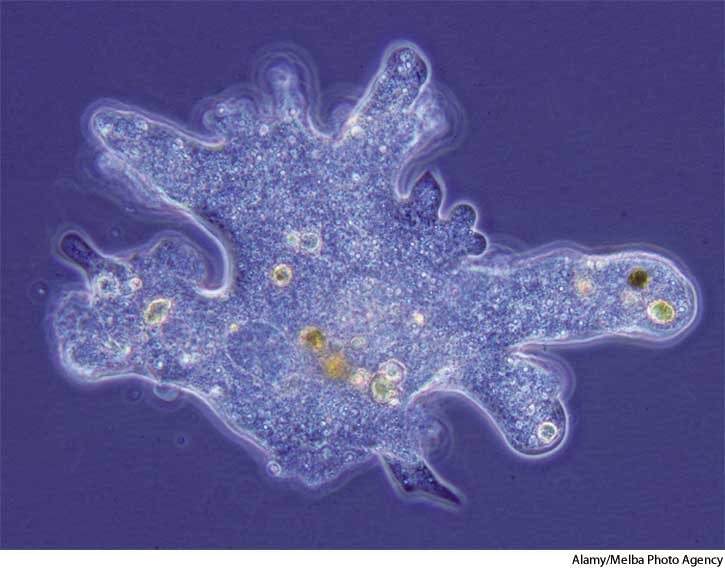
An Amoeba is a unicellular, animal-like protist that lives in ponds and streams. According to cell theory, where did this cell come from?
a)
another pre-existing amoeba cell.
b)
energy from sun that allowed the protist to reproduce.
c)
a multicellular organism.
d)
the nonliving environment.
23.
All living things are made up of...
a)
cells
b)
cell tissues
c)
organ
d)
organ systems
24.

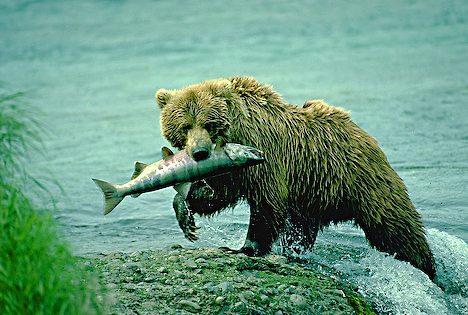
A grizzly bear survives because he is well-adapted to his environment. When he reproduces he passes on those traits to his offspring. this process is called

a)

Natural Selection

b)

Selective Breeding

c)

Random mutations

d)

Variations in a species

25.

Genetic mutations are the direct cause of which of the following?

a)

Aliens

b)

Super heroes

c)

Variations

d)

8th grade behaviors

26.

The peppered moth's color camouflaged it on the light colored tree bark. It's color was an example of a/n

a)

Variation

b)

Dominant trait

c)

Recessive trait

d)

Adaptation

27.

Where are hereditary traits stored in all organisms?

a)

In the blood

b)

In the brain

c)

In the DNA

d)

In the heart

28.

Why might it be helpful for a species to have a lot of variations?

a)

They can't be seen by predators

b)

If the environment changes, they might be better able to adapt

c)

It is helpful in asexual reproduction

d)

They don't recognize each other

29.
How can migration enhance the survival of organisms?
a)
Migration causes adaptations to occur more frequently.
b)
Migration helps organisms to avoid predators.
c)
Migration requires organisms to exert a lot of energy.
d)
Migration makes finding necessary resources more likely.
30.
An inactive state during which normal body activities slow. 
a)
instinct
b)
camouflage
c)
migration
d)
hibernation
31.
Some lizards have different size legs.  Lizards with longer legs are able to better access food. Over time, lizards with short legs became less common.
What is the successful adaptation?
a)
Lizards
b)
Long legs
c)
Food
d)
Leg sizes
32.
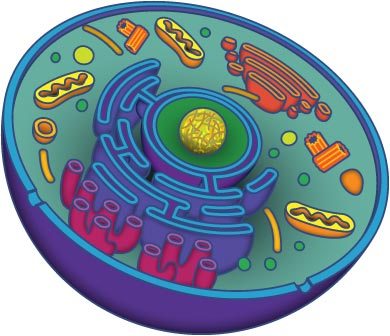
Which structures are found in every living cell?
a)
cell membrane and cytoplasm
b)
chloroplasts and mitochondria
c)
a cell wall and nucleus
d)
chloroplasts and cell wall
33.

Which structures are unique only to plant cells?

a)

Cell Membrane

b)

Cell Wall

c)

Mitochondria

d)

Chloroplast

34.

What is the function of a chloroplast?

a)

Control center of the cell

b)

Makes food (sugar) from sunlight

c)

Protects the cell

d)

Makes ribosomes

35.
The traits of an organism are passed to its offspring on small coded strands of DNA material called
a)
meiosis
b)
recessive traits
c)
genes
d)
heredity
36.

Where in the cell is DNA found?

a)

Nucleus

b)

Cytoplasm

c)

Chloroplast

d)

Cell Membrane

37.
In asexual reproduction, all of the offspring are:
a)
Physically Identical
b)
Genetically Identical
c)
Physically and Genetically Identical
d)
Not Identical
38.
A single piece of coiled DNA found in the cells; contains genes that encode traits.
a)
gene
b)
chromosome
c)
trait
d)
DNA
39.
Why is a space suit insulated?
a)
regulate temperature- protect against hot/cold
b)
to keep the astronaut from dehydrating
c)
so they can use the bathroom in space
d)
so they can breathe
40.
An astronaut returns from six months on the space station. The astronaut’s muscles are weak, requiring the astronaut to be helped from the spacecraft once back on Earth. Which of the following accommodations on the space station would help prevent this problem? 
a)
Provide food that provides astronauts with more energy. 
b)
Outfit the space station with exercise equipment. 
c)
Increase the oxygen levels inside the space station. 
d)
Design spacesuits that are lighter and easier to wear.