
 Worksheets
6th SS Final Exam Review
Total questions: 70
Worksheet time: 39mins
The reasons that European countries wanted to explore and conquer the Americas were:
gold
god
glory
all of the above


The name of the capital of the Aztec Empire was
Chinampas
Valley of Mexico
Death Valley
Tenochtitlan
What factors helped the Spanish defeat the Aztec and Inca?
The Black Death and bows and arrows
Scarlet Fever and axes
Smallpox and guns
Measles and the tank

Where did the Inca live?
Yucatan Peninsula
South America, specifically mostly modern Peru
Central Mexico
Cutting flat steps into the side of a mountain to have more land to farm is known as
tribute
quechua
terrace farming
chinampas farming
Which proves the Maya were successful mathematicians and astronomers?
They built a pyramid
They played a complicated ball game
They created a 365 day calendar
all of the above

Sumer

Sumer

Sumer

Sumer

- Nile River
- Hieroglyphics
- Pyramids
Sumer

- Tigris and Euphrates
- Cuneiform
- City-States
Sumer

- Indus River
- Harappa
- Mohenjo Daro
Sumer

- Huang He (Yellow) River
- Calligraphy writing
- Paper and Silk
Sumer

5. Which civilization developed the first democratic form of government?
China
Rome
Egypt
Greece

-polytheistic
-republic then empire
-senators
-Colosseum
Which ancient civilization is best described by the above list?
ancient Egypt
ancient Rome
ancient Greece
ancient China
The Code of Hammurabi, the 12 Tables, and the Justinian Code are similar because -
They allowed for a belief in one God
They established written legal standards
They provided records of economic activity
They legalized democratic government
Why did the Roman Empire fall? *Select all that apply*
The empire became too large
Corrupt government
Outside invaders
Natural disaster

Which Roman achievements are still used today? SELECT ALL THAT APPLY.
Concrete, Aqueducts, Roads
Arches, Dome, Columns
Citizen's Rights, Laws
Only the wealthy can wear purple
King of Macedonia who conquered Greece, Egypt, and Persia
Alexander
Socrates
Plato
Aristotle
The belief in one god.
Polytheism
Deity
Monotheism
Believe that Jesus Christ is the Savior, the Son of God, who was sent to Earth and died on the cross to save humanity.
Buddhism
Christianity
Islam
Judaism
-Monotheistic
-Abraham, Moses
-10 Commandments
Islam
Judaism
Buddhism
Hinduism
A shrine built to blend into it's natural surroundings would have been associated with what religion?
Confucianism
Buddhism
Taoism
Shinto
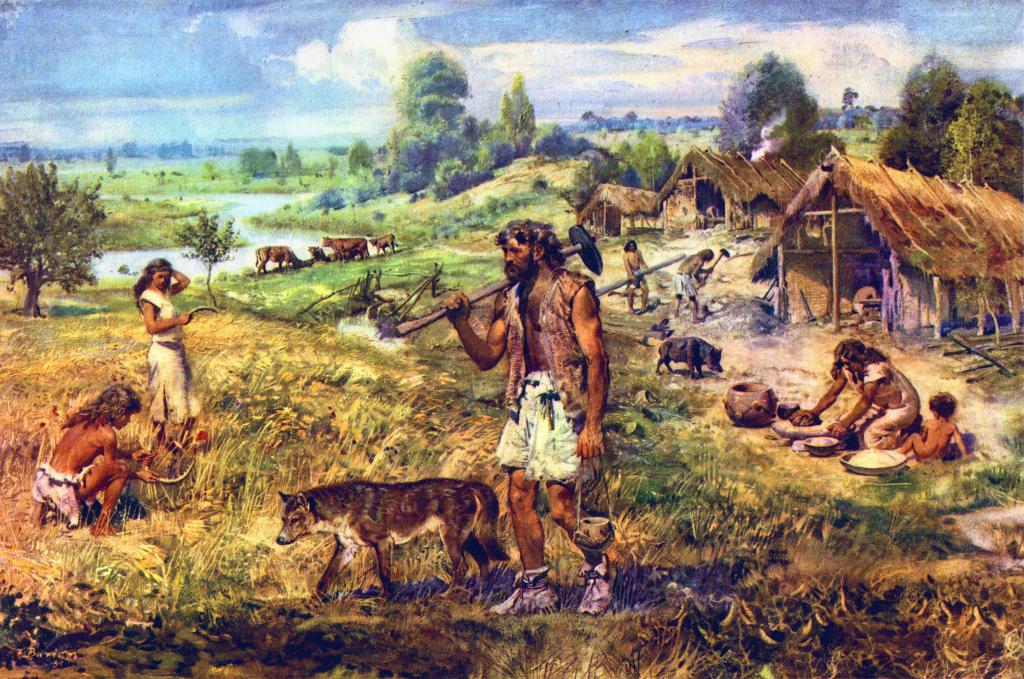
What change marked the beginning of the Agricultural (Neolithic) Revolution?
beginning of hunting and gathering
man learned to write
man began farming
man built towns and cities
Political system used during Middle Ages where land was exchanged for loyalty and service.
Fief
Kingdom
Feudalism
Monarch

The Middle Ages occurred
Before the fall of Rome.
between the fall of the Roman Empire and the Renaissance.
During the Neolithic period.
After the Renaissance.

In Feudalism, what is a Serf?
Peasant laborer bound by law to the lands of a noble
A piece of land, given by a king in exchange for loyalties and protection
A noble who held land from and served a higher-raking lord, and in return was given protection
Who conquered most of Europe after the fall of the Roman Empire, uniting much of Europe during the Middle Ages?
William the Conqueror
the Pope
Charlemagne
King Henry VIII
What was one human activity that contributed to the spread of the Bubonic Plague to Europe?
keeping mice as pets
eating rotten food
bathing too often
trading with Asia
In feudal Japan, a samurai was a
cook
warrior
ruler
animal
Who was the supreme military commander of Feudal Japan?
Shogun
Emperor
Vassal
Bushido
In which Indian dynasty did math, astronomy, science and religion knowledge increase?
Sharma
Gupta
Mauryan
Shang
Where did the Renaissance begin?
Paris, France
Florence, Italy
Athens, Greece
London, England
Leonardo da Vinci is remembered for which great works of art?
The Mona Lisa and the Last Supper
David and Moses
The leaning tower of Pisa
The Council of Trent
The Renaissance is considered a time of great change or rebirth in what areas?
weaponry and warfare
world and space exploration
population and agricultural increase
learning, art, and invention
Italian trader who traveled to China and later wrote about his trip. During his time in China he served as government official in Kublai Kahn's court
Martin Luther
Johann Gutenberg
Michelangelo
Marco Polo
Italian writer and politician who wrote The Prince in which he advised leaders on how to rule. He said "the end justifies the means."
Desiderius Erasmus
Niccolo Machiavelli
Albrecht Durer
Jesuits
Italian Renaissance artist who designed buildings, wrote poetry, and created sculptures and paintings including the ceiling of the Sistine Chapel
William Shakespear
John Calvin
Miguel de Cervantes
Michelangelo
German priest credited with starting the Reformation; he nailed a list of complaints about the Catholic Church to a church door in Wittenberg, Germany.
Desiderius Erasmus
John Calvin
William Shakespeare
Martin Luther
Christian reformer who taught about predestination, living good lives, and obeying God's law.
John Calvin
Martin Luther
Marco Polo
William Shakespeare
What event is considered to be the starting point of the Protestant Reformation?
A. the invention of the printing press
B. the reopening of the Silk Road
C. the crucifixion of Jesus Christ
D. the nailing of the 95 Theses
How did movable block printing and the printing press affect the Renaissance and the Reformation?
It allowed the artistic works of the Renaissance to be copied
It led to the development of newspapers
It allowed Martin Luther's 95 Theses and Renaissance ideas to be spread

He was a polish mathematician and astronomer who was first to determine that the sun was the center of the solar system.
Galilieo
Humes
Copernicus
Descartes

English king whose want for a male heir led him to break with the Catholic Church over his need to divorce and marry again. Father of Elizabeth I and Bloody Mary.
Henry the 7th
Henry the 8th
Louis the 14th
Louis the 16th
The Silk Road was important because ________.
it helped the Han empire control the Mediterranean region
it extended a thousand miles across Asia
it linked Asian and European cultures through trade
it connected the Han and Egyptian empires

Which body of water separates Europe and Africa, was important to many ancient civilizations for trade, and is still important to Europe for trading?
Dead Sea
Pacific Ocean
Mediterranean Sea
Indian Ocean

