
 Worksheets
Final exam review 2023
Total questions: 47
Worksheet time: 59mins
A train travels 6 meters in the first second of travel, 6 meters again during the second second of travel, 6 meters again during the third second. It's acceleration is __ m/s2?
0
6
12
18


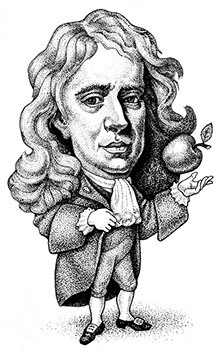

If you are pushing a 1000 kg car at 0.5 m/s2, how many newtons would that be?


Force exerted on an object that causes it to move
power
work
magnetism
friction
rate at which work is done
acceleration
force
power
chemical energy
the energy an object has due to its motion
force
kinetic energy
magnetism
work
energy cannot be created or destroyed but it can change form.
conservation of energy
gravity
position
motion


For a bouncing ball Which point has greatest kinetic energy?

Energy Conservation in Rollercoasters
When a rollercoaster car is at the top of a hill, it has a large amount of gravitational potential energy due to its height above the ground. This potential energy is converted into kinetic energy as the car descends down the hill. The law of conservation of energy states that energy cannot be created or destroyed, so the total amount of energy in the system remains constant. However, some of the energy is lost to heat and sound due to friction and air resistance, resulting in a decrease in the total mechanical energy of the rollercoaster system.
As the rollercoaster car gains speed and moves along the track, its kinetic energy increases while its gravitational potential energy decreases. This transfer of energy between potential and kinetic forms demonstrates the principle of energy conservation. Despite the energy lost to non-mechanical forms, the total amount of energy in the system remains the same, highlighting the fundamental concept of energy conservation in physics.
Energy conservation plays a crucial role in the design and operation of rollercoasters, ensuring that the ride is both thrilling and safe. By understanding how energy is transferred and transformed within the system, engineers can optimize the design to minimize energy losses and maintain the excitement of the ride. This application of energy conservation principles in rollercoaster dynamics showcases the practical significance of this fundamental concept in the field of physics.
What causes a decrease in the total mechanical energy of a rollercoaster system?
Friction and air resistance
Gravity
Centripetal force
Magnetic attraction
What does the law of conservation of energy state?
Energy cannot be created or destroyed
Energy can only be transferred from one form to another
The total amount of energy in a system remains constant
Energy can be completely lost in a closed system
How does the transfer of energy between potential and kinetic forms demonstrate the principle of energy conservation in rollercoasters?
Energy conservation plays a crucial role in the design and operation of rollercoasters, ensuring that the ride is both thrilling and (a)
What type of energy is converted into kinetic energy as the rollercoaster car descends down the hill?
Mechanical energy
Potential energy
Thermal energy
Electrical energy
Conservation of Energy in Physics of a Rollercoaster
In physics, the conservation of energy is a fundamental principle that applies to rollercoasters. Rollercoasters demonstrate the interplay between gravitational potential energy and kinetic energy as they move along their tracks. Gravitational potential energy is the energy an object possesses due to its position in a gravitational field, while kinetic energy is the energy of motion. The conservation of energy principle states that the total mechanical energy of a system remains constant as long as only conservative forces are acting on it.
When calculating the gravitational potential energy of a rollercoaster, the formula PE = mgh is used, where PE represents potential energy, m is the mass of the object, g is the acceleration due to gravity, and h is the height of the object above a chosen reference point. At the highest point of the rollercoaster, it has the maximum potential energy, as it is at its greatest height and has the most potential to do work. As the rollercoaster descends, this potential energy is converted into kinetic energy, resulting in an increase in speed.
However, energy loss due to friction can occur as the rollercoaster moves along the track. Friction between the wheels of the rollercoaster and the track, as well as air resistance, can lead to a decrease in the total mechanical energy of the system. This loss of energy is often why rollercoasters do not return to the same height as their initial drop. Despite this loss, the conservation of energy principle still holds true, as the total energy of the system is conserved, even if it is transformed from potential to kinetic energy and some energy is lost to non-conservative forces.
What type of energy do rollercoasters demonstrate as they move along their tracks?
Mechanical energy
Thermal energy
Electrical energy
Nuclear energy
Friction between the wheels of the rollercoaster and the track, as well as air resistance, can lead to a decrease in the total mechanical energy of the system.
(a)
Where does a rollercoaster have the maximum potential energy?
At the highest point
At the lowest point
In the middle of the track
At the starting point
According to the conservation of energy principle, what remains constant in a system with only conservative forces?
Total mechanical energy
Kinetic energy
Potential energy
Frictional force
How does friction affect the total mechanical energy of a rollercoaster system?
increases total energy
decreases total energy
decreases KE
increases GPE

