Wayground logo

Free Printable Worksheets

Font size

S
M
L
XL
Worksheets

Yr 11 Biology Pre Examination Quiz

Total questions: 207

Worksheet time: 3hrs 31mins

Name
Class
Date
1.
A cell is the smallest unit that carry on all of the processes of life.
a)
True
b)
false
2.
The observations of Schleiden, Schwann, and Virchow were combined to form the basic theory about the cellular nature of life.
a)
True
b)
false
3.
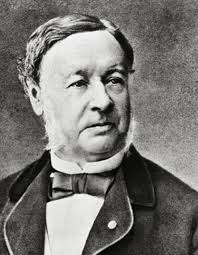
Which of the following scientists concluded that all animals are made of cells?
a)
Rudolf Virchow
b)
Matthais Schleiden
c)
Robert Hooke
d)
Theodor Schwann
4.
Which of the following scientists was the first to observe bacteria?
a)
Anton van Leuwenhoek
b)
Matthais Schleiden
c)
Robert Hooke
d)
Theodor Schwann
5.
The invention of the microscope made it possible for people to discover and learn about
a)
Plants
b)
Skin 
c)
Animals 
d)
Cells
6.
Which type of cell?
a)
Prokaryote
b)
Eukaryote
c)
Mixed
7.
Plants and animal cells are examples of ___ cells 
a)
prokaryotic cells 
b)
eukaryotic cells 
8.
A single-celled organism that lacks a membrane-bound nucleus, mitochondria, or any other membrane -bound organelle .
a)
Prokaryote
b)
Eukaryote
c)
Nucleus
d)
Single-celled organism
9.
Find the total magnification: 
Eyepiece = 10X 
Objective lens = 55X
 
a)
10x
b)
55x
c)
65x
d)
550x
10.
What is number 14?
a)
stage clips
b)
stage
c)
diaphragm
d)
light source
11.
What is number 15?
a)
light source
b)
base
c)
coarse adjustment
d)
fine adjustment
12.
When looking at a specimen on your slide, you should always start with the
a)
low objective lens
b)
medium objective lens
c)
high objective lens
d)
super extra high power lens
13.
What power do you start with when using a microscope?
a)
High power
b)
Medium power
c)
Low power
d)
Extra high power
14.
This organelle acts like a gatekeeper, allowing some materials to pass through it, but not others. 
a)
Cytoplasm
b)
Cell Membrane
c)
Mitochondria
d)
Vacuole
15.
This organelle is a gel-like fluid that takes up most of the space inside the cell. 
a)
Cytoplasm
b)
Cell Membrane
c)
Vacuole
d)
Golgi Body
16.
Where is the genetic material found in the cell? 
a)
Nucleolus
b)
Cytoplasm
c)
Nucleus
d)
Chloroplast
17.
In many cells, this is the structure that controls the cell's activities.
a)
Cell membrane
b)
Organelle
c)
Nucleolus
d)
Nucleus
18.
What distinguishes a eukaryotic cell from a prokaryotic cell is the presence of 
a)
A cell wall
b)
A nucleus
c)
DNA
d)
Ribosomes
19.
In eukaryotic cells, chromosomes carrying genetic information are found in the
a)
Ribosomes
b)
Lysosomes
c)
Nucleus
d)
Cell Membrane
20.
Which one of the following is not part of the cell theory?
a)
all living things are made of cells
b)
cells are the basic units of structure and function of living things
c)
new cells are produced from existing cells
d)
cells never die
21.
What structure is responsible for making proteins?
a)
Nucleus
b)
Mitochondria
c)
Golgi Apparatus
d)
Ribosome
22.
This organelle moves materials throughout the cell. 
a)
Endoplasmic Reticulum
b)
Ribosomes
c)
FedEx
d)
Golgi Complex
23.
What is the difference between rough and smooth Endoplasmic Reticulum?
a)
There is no difference.
b)
Plants have rough ER, animals have smooth ER.
c)
What type of injuries the Doctors treat.
d)
Rough has ribosomes, smooth does not.
24.
What kind of transport does not require energy?
a)
Active 
b)
Vacuole 
c)
Passive 
d)
Na/K Pump 
25.
What structure of the cell forms a frame that holds the cell up in the cytoplasm?
a)
centrioles 
b)
cell wall 
c)
flagella 
d)
cytoskeleton 
26.
What is facilitated diffusion?
a)
Transport that uses proteins to help move molecules across the membrane. 
b)
Movements of substances through a membrane. 
c)
When molecules spread from High to Low concentration on their own. 
d)
When pressure pushes something through a membrane. 
27.
What macromolecules help to make the cell membrane? 
a)
Proteins 
b)
Carbohydrates 
c)
Phospholipids 
d)
All of the above 
28.
Which of the following is the best example of osmosis? 
a)
NA/K Pump 
b)
Water moving though the cell membrane 
c)
Kidneys 
d)
Photosynthesis 
29.
What is the significance of the cell membrane? 
a)
Provides protection 
b)
Maintains homeostasis 
c)
Give a cell hydrophobic ends
d)
Provides cholesterol 
30.
Movement of materials through a vesicle into the cell that requires energy is 
a)
exocytosis
b)
endocytosis 
c)
osmosis 
d)
simple diffusion 
31.
What are the 2 parts of a phospholipid? 
a)
Hydrophobic head, hydrophilic tails 
b)
Hydrophobic heads, hydrophobic tails 
c)
Hydrophilic heads, hydrophobic tails 
d)
Hydrophilic heads, hydrophilic tails 
32.
Which of the following is correct about the Golgi? 
a)
Digests waste materials 
b)
Protection and Support 
c)
Modifies and packages molecules 
d)
cellular movement 
33.
Molecules using simple diffusion move from 
a)
high to low concentrations 
b)
low to high concentrations 
c)
no concentrations  
d)
both concentrations  
34.
How does a cell maintain homeostasis?
a)
Regulates what enters and leaves the cell
b)
Flexibility
c)
Protective barrier
d)
Structure and support
35.
What is another term for "selectively permeable"?
a)
Porous
b)
Acts like a switch
c)
Permanent
d)
Semipermeable
36.
What is another term for "selectively permeable"?
a)
Porous
b)
Acts like a switch
c)
Permanent
d)
Semipermeable
37.
Which of the following is responsible for getting complex molecules across the cell membrane?
a)
Lipids
b)
Carbs
c)
Proteins
d)
Nucleic Acids
38.
Something is ___________ ____________
when some molecules can cross the membrane while others cannot. 
a)
Selectively (or Semi) Permeable 
b)
Totally Transparent
c)
Liquid Licorice 
d)
Heavily Patrolled 
39.
This is a picture of which type of receptor? 
a)
Intracellular
b)
Extracellular
40.
This is a picture of which type of receptor?
a)
Intracellular
b)
Extracellular
41.
Hydrophobic region of the cell membrane?
a)
E
b)
B
c)
C
d)
A 
42.
Part of the plasma membrane responsible for cell recognition... 
a)
C
b)
E
c)
B
d)
D
43.
What do the brown structures represent?
a)
Phospholipids
b)
Cholesterol Proteins
c)
Channel Proteins 
d)
Cytoskeleton Filaments
44.
The picture is an example of...
a)
active transport
b)
passive transport
c)
diffusion
d)
osmosis
45.
What does a cell need to transport particles by active transport?
a)
Sun
b)
Wind
c)
Energy
d)
Channels
46.
Osmosis uses a channel protein called AQUAPORIN.  What type of transport is this? *Think!
a)
Diffusion
b)
Facilitated Diffusion
c)
Active Transport
d)
Endocytosis
47.
Small, non-polar molecules like CO2 and O2 and NO can pass through the cell membrane using what type of transport?
a)
Diffusion
b)
Osmosis
c)
Facilitated Diffusion
d)
Endocytosis
48.
____________________ provides the energy necessary for photosynthesis.
a)
water
b)
sunlight
c)
glucose
d)
soil
49.
The ____________ is the most photosynthetic part of a plant.
a)
leaf
b)
flower
c)
roots
d)
stem
50.
Glucose is a ...
a)
sugar
b)
carbohydrate
c)
source of quick energy
d)
all are correct
51.
A leaf is the broadest part of the plant and this is good for photosynthesis because, the broad leaf....
a)
curls up when touched
b)
increases surface area
c)
catches rain water
d)
stores lipids for the plants
52.
The formula for glucose is...
a)
C12 H22 O11
b)
NaCl
c)
NaOH
d)
C6 H12 O6
53.
The leaf structure that allows carbon dioxide to enter the leaf and Oxygen to exit the leaf is...
a)
phloem
b)
stomata
c)
vein
d)
stem
54.
Chlorophyll absorbs ________ light.
a)
red - blue
b)
yellow
c)
green
d)
light greens
55.
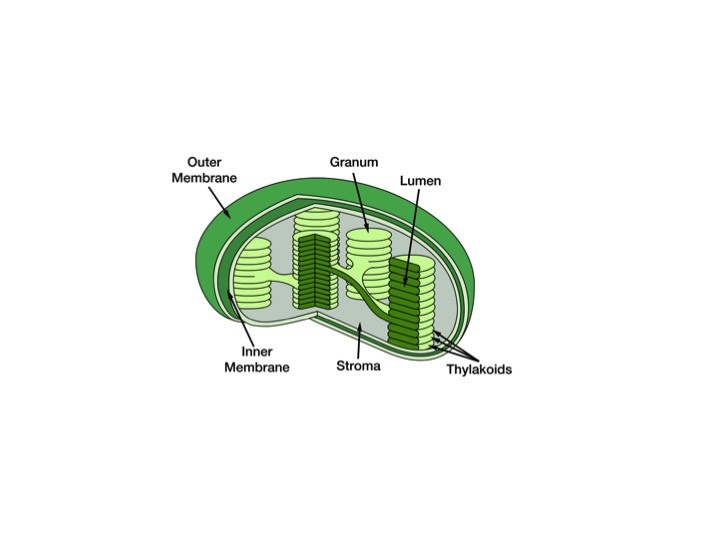
The chloroplast has stacked membranes, what is the purpose of the stacked membranes in doing photosynthesis?
a)
water absorption for photosynthesis
b)
increased CO2 absorption
c)
increase surface area
d)
support of the plant
56.
This is ...
a)
mitochondria
b)
chloroplast
c)
cell
d)
phloem
57.
What part of the leaf allows Carbon dioxide in and oxygen out of the leaf?
a)
xylem
b)
phloem
c)
cuticle
d)
stomata
58.
What opens and close the stomata?
a)
guard cells
b)
xylem
c)
phloem
d)
cuticle
59.
Which of the following is an example of an AUTOTROPH?
a)
Appletree
b)
Dog
c)
Mushroom
d)
Human
60.
Which of the following is an example of a HETEROTROPH?
a)
Grass
b)
Algae
c)
Lemon Tree
d)
Bear
61.
Which of the following is an example of a HETEROTROPH?
a)
Grass
b)
Algae
c)
Lemon Tree
d)
Bear
63.
What are the products of photosynthesis?
a)
water and carbon dioxide
b)
oxygen and glucose
c)
oxygen and carbon dioxide
d)
oxygen and water
63.
What are the products of photosynthesis?
a)
water and carbon dioxide
b)
oxygen and glucose
c)
oxygen and carbon dioxide
d)
oxygen and water
64.

Chloroplasts are...

a)

Structures of animal cells to produce ATP

b)

Organelles where lipids are elaborated

c)

Specialized structures of plants where glucose is made

d)

Waste organelle of plants

65.
Which organelle from the plant cell is primarily responsible for converting sunlight to energy?
a)
Mitochonria
b)
Nucleus
c)
Vacuole
d)
Chloroplast
66.

Which of the following is the correct equation for PHOTOSYNTHESIS?

a)

Light and 6CO2 + 6H20 --> C6H12O6 + 6O2

b)

6CO2 + C6H12O6 + 6H2O --> 6O2 + light

c)

Light and 6O2 +6H2O --> 6CO2 + C6H12O6

d)

6CO2 + 6O2 + 6H2O --> Light+ C6H12O6

67.
Which organisms perform Photosynthesis?
a)
Only Autotrophs
b)
Only Heterotrophs
c)
Autotrophs and Heterotrophs
69.
______________ produces the most ATP.
a)
photosnthesis
b)
aerobic respiration
c)
anaerobic respiration
d)
glycolysis
69.
______________ produces the most ATP.
a)
photosnthesis
b)
aerobic respiration
c)
anaerobic respiration
d)
glycolysis
70.
______________ produces the most ATP.
a)
photosnthesis
b)
aerobic respiration
c)
anaerobic respiration
d)
glycolysis
71.
The mitochondria is responsible for ...
a)
photosynthesis
b)
anaerobic respiration
c)
aerobic respiration
d)
fermentation
72.
What is the correct equation for cellular respiration?
a)
6O2 + C6H12O6 -> 6CO2 + 6H2O + Energy
b)
6O2 + C6H12O6 + Energy -> 6CO2 + 6H2O
c)
6CO2 + 6H2O -> 6O2 + C6H12O6 + Energy
d)
6CO2 + 6H2O + Energy -> 6O2 + C6H12O6
73.
The energy carrier that the cell uses to power its day to day activities is 
a)
ATP
b)
NADH
c)
FADH2
d)
glucose
74.
What are the PRODUCTS for cellular respiration?
a)
oxygen and ATP (energy)
b)
water and glucose and ATP (energy)
c)
carbon dioxide and water and ATP (energy)
d)
glucose and oxygen
75.
What are the REACTANTS for cellular respiration?
a)
oxygen and carbon dioxide
b)
water and glucose
c)
carbon dioxide and water
d)
glucose and oxygen
76.

What products of photosynthesis and reactants for respiration belong in the box at the top to complete the cycle?

a)

Glucose and oxygen

b)

Water and CO2

c)

Glucose and ATP

d)

Proteins and amino acids

77.
In which way are photosynthesis and cellular respiration different?
a)
Cellular respiration stores ATP, while photosynthesis releases ATP
b)
Cellular respiration produces oxygen, while photosynthesis uses oxygen
c)
Photosynthesis release energy, while cellular respiration stores energy.
d)
Photosynthesis uses carbon dioxide, while cellular respiration produces carbon dioxide.
78.
What is the correct order of organization
a)
tissues-cells-organs-organ systems-organism
b)
cell-tissue-organs-organ systems-organism
c)
organism-cells-tissues-organ systems-organism
d)
tissues-cells-organs-organ sytems-organism
79.

What is cell specialization?

a)

a thing with cells

b)

biology problems

c)

the differentiation of cells as they develop

d)

the development that occurs depending on their location

80.

Embryonic stem cells are

a)

cells that grow uncontrollably

b)

cells present early in development that can form into any type of cell

c)

not able to go through cell division

d)

found within the tissues of a fully developed human

81.
The diagram shows the process of cell specialization from a single stem cell. Which of the following statements is true about the process of specialization.
a)
Specilized cells (blood, skin, nervous etc) cannot be produced from a single stem cell
b)
Specilized cells are produced immediately following fertilization
c)
Even though all the cells in an organism come from one single cell, they can specialize into different cell types
d)
Sincce all the cells in an organism come from one single cell, they must all have the same structure and function
82.
Do plant cells communicate using hormones?
a)
yes
b)
no
83.

A tissue that covers a surface, is one cell layer thick, and is composed of flat cells is

a)

simple squamous epithelium

b)

simple cubodial epithelium

c)

simple columnar epithelium

d)

stratified squamous epithelium

e)

transitional epithelium

84.
The nervous tissue that is found in the brain, spinal cord and peripheral nerves that conduct electrical signals.
a)
blood
b)
neurons
c)
adipose
d)
cardiac
85.
Which of the following is a type of muscle tissue.
a)
Blood
b)
Skin
c)
Cardic
d)
Bone
86.
Which of the following is a type of muscle tissue.
a)
Blood
b)
Skin
c)
Cardic
d)
Bone
87.
This types of connective tissue connects bone to bone.
a)
Blood
b)
Ligament
c)
Cartilage
d)
Adipose
88.
In our lungs, _________ is removed and ________ is absorbed. 
a)
oxygen ... carbon dioxide 
b)
carbon dioxide ... oxygen
c)
oxygen ... nitrogen 
d)
carbon dioxide ... nitrogen
89.
What transports oxygen from our lungs to other parts of the body? 
a)
air tubes
b)
gills
c)
blood 
d)
stomata
90.
Gills take in oxygen from the water while lungs take in oxygen from the air.
a)
True
b)
False
91.
The body systems that work together to take in oxygen to all parts of the body are ______ systems .
a)
digestive and circulatory 
b)
digestive and muscular 
c)
circulatory and respiratory
d)
circulatory and muscular
92.
Most stomata are usually found in underside of leaves.  Why?
a)
conserve water
b)
get more CO2
c)
prevent infection
d)
none
93.
Phloem is made from living cells called
a)
sieve tube elements
b)
vascular bundles
c)
paranchema
d)
collenchyma
94.
Most chloroplast are found in the
a)
palisade mesophyll
b)
spongy mesophyll
c)
epidermis
d)
xylem
95.
The pores on  leaves are called
a)
stomata
b)
guard cells
c)
collenchyma
d)
phloem
96.
Xylem vessel elements are strengthened by
a)
lignin
b)
cellulose
c)
melanin
d)
pericycle
97.
Water travels through
a)
phloem
b)
xylem
c)
veins
d)
tubes
98.
transpiration powers the movement of water 
a)
down a concentration gradient
b)
up a concentration gradient
c)
up & down concentration gradients
d)
all of the answers
99.
An increase in wind or temperature will ________________ transpiration
a)
increase
b)
decrease
c)
no change
d)
none
100.
guard cells change shape and open the stomata as they become
a)
flacid
b)
turgid
c)
larger
d)
smaller
101.
Waxy covering of leaves
a)
cuticle
b)
epidermis
c)
endodermis
d)
pericycle
102.

What is the purpose of root hairs?

a)

To improve the plants structure

b)

To keep the roots warm

c)

To increase surface area for water absorption

d)

To open the stoma

103.

What process moves water into the root hair cells?

a)

Diffusion

b)

Active Transport

c)

Osmosis

d)

Magic

104.

What is the plant vessel responsible for transporting water?

a)

Xylem

b)

Phloem

105.

What is the plant vessel responsible for transporting sugar?

a)

Xylem

b)

Phloem

106.

Which cell provides energy for phloem?

a)

Lignin Cell

b)

Starch Cell

c)

Companion Cell

d)

Guard Cell

107.

Which of the following statements is true?

a)

Xylem transports water up and down the plant

b)

Phloem transports water up and down the plant

c)

Phloem transports sugar up and down the plant

d)

Xylem transports sugar up the plant

108.

Which of the following conditions would result in open stomata?

a)

High levels of water in the plant

b)

Low levels of water in the plant

109.

Which of the following conditions would result in closed stomata?

a)

High levels of water in the plant

b)

Low levels of water in the plant

110.

What is the name given to the movement of water through a plant system?

a)

Photosynthesis

b)

Translation

c)

Transpiration

d)

Osmosis

111.

How does an increase in temperature affect the rate of transpiration?

a)

Increases transpiration rate

b)

Decreases transpiration rate

112.

How does a decrease in light intensity affect the rate of transpiration?

a)

Increases transpiration rate

b)

Decreases transpiration rate

113.
The respiratory system is the body system in which _______ exchange takes place.
a)
blood
b)
gas
c)
nutrients
d)
waste
114.
Which is the correct pathway that blood takes as it leaves the heart, circulates throughout the body, and returns to the heart?
a)
arterioles, arteries, venules, veins, capillaries
b)
veins, venules, capillaries, arteries, arterioles
c)
arterioles, arteries, capillaries, veins, venules
d)
arteries, arterioles, capillaries, venules, veins
115.
This is an image of the alveoli in the lungs.
a)
True
b)
False
116.
Which is the correct pathway of air into the respiratory system?
a)
nose and mouth, pharynx, trachea, bronchi, bronchioles, alveoli
b)
nose and mouth, bronchi, trachea, pharynx, bronchioles, alveoli
c)
alveoli, bronchioles, bronchi, trachea, pharynx, nose and mouth
d)
pharynx, nose and mouth, bronchioles, bronchi, trachea, alveoli
117.
In which structure of the respiratory system does gas exchange take place?
a)
trachea
b)
bronchioles
c)
pharynx
d)
alveoli
118.

What transports lymph fluid back to the circulatory system?

a)

Lymph

b)

Lymph Vessels

c)

Lymph Nodes

d)

Lymph Glands

119.

The largest lymphatic structure is the _____.

a)

thymus

b)

lymph node

c)

spleen

d)

tonsils

120.
I am the 'liquid' portion of blood.
a)
Erythrocytes
b)
Thrombocytes
c)
Leukocytes
d)
Plasma
121.
I am the 'liquid' portion of blood.
a)
Erythrocytes
b)
Thrombocytes
c)
Leukocytes
d)
Plasma
122.
What is the function of the lymphatic system?
a)
Drains tissue fluids, waste products & flights against infection.
b)
Prevent swelling
c)
Removes toxins & waste 
d)
Fights against infection 
124.
Which of the following is NOT a function of the lymphatic system?
a)
removes excess fluid from around organs
b)
absorbs/transports fats
c)
circulates blood
d)
produces white blood cells
124.
Which of the following is NOT a function of the lymphatic system?
a)
removes excess fluid from around organs
b)
absorbs/transports fats
c)
circulates blood
d)
produces white blood cells
125.
Which word best describes the relationship between the lymphatic system and the circulatory system?
a)
antagonistic
b)
complementary
c)
independent
d)
redundant
126.

The following structures are all part of which body system?

Vena Cava, Aorta, Pulmonary Artery

a)

Excretory

b)

Lymphatic

c)

Respiratory

d)

Circulatory

127.
Which body system does your cardiovascular system work with to oxygenate the blood?
a)
Muscular
b)
Skeletal
c)
Lymphatic
d)
Respiratory
128.
These carry blood to the heart:
a)
arteries
b)
veins
c)
capillaries
d)
arterioles
129.
Gas, nutrient, and waste exchange occur between the __________ and the tissues of the body. 
a)
veins
b)
arteries
c)
capillaries
d)
legs
130.

Interstitial fluid is collected by.........

a)

Blood capillaries

b)

Lymphatic capillaries

c)

Nerve cells

d)

The thymus

131.
The aorta is the largest artery in the body. The blood leaving the aorta is full of?
a)
Oxygen 
b)
Carbon Dioxide 
c)
White blood Cells 
d)
Potassium 
132.
What is pulmonary circulation?
a)
Blood travelling to and from the lungs
b)
Blood travelling to and from the body
c)
A blood clot in the lungs
d)
The vessel that brings blood to the lungs
133.

Which of the following is NOT part of the alimentary canal?

a)

small intestine

b)

esophagus

c)

stomach

d)

pancreas

134.

Which organ releases digestive enzymes into the small intestine?

a)

pancreas

b)

small intestine

c)

esophagus

d)

salivary glands

135.

What organ is responsible for the majority of the absoption that occurs in the digestive system?

a)

large intestine

b)

small intestine

c)

stomach

d)

oral cavity

136.

The involuntary propulsion of foodstuff is accomplished by circular muscle fibers that squeeze along the alimentary canal. That way food is moved involuntarity. What is the name of this process?

a)

swallowing

b)

peristalsis

c)

defecation

d)

absorption

137.

The small intestine is the longest of the digestive organs. What benefit to body is it that this organ is so long?

a)

It allows the organ to secrete bile which in turn breaks down food

b)

It allows more time for the food to be in the organ which allows more absoption to take place.

c)

It provides more surface area for mucus which helps digested food move more smoothly.

138.

Which organ makes bile?

a)

liver

b)

gallbladder

c)

pancreas

139.
Which organ of the excretory system stores urine until the body is ready to eliminate it?
a)
ureters
b)
urethra
c)
urinary bladder
d)
urea
140.
Which organ of the excretory system stores urine until the body is ready to eliminate it?
a)
ureters
b)
urethra
c)
urinary bladder
d)
urea
141.
Under normal conditions, which of the following substances is found in urine?
a)
blood cells
b)
protein
c)
glucose
d)
urea
142.
What function do the kidneys perform?
a)
eliminate carbon dioxide
b)
supply oxygen to body cells
c)
remove urea and excess water
d)
play a role in gas exchange
143.
What is #2?
a)
Kidney
b)
Ureters
c)
Bladder
d)
Urethra
144.

What are the filtering units of the kidneys?

a)

nephrons

b)

ureters

c)

nuerons

d)

alveloi

145.
The part of the nephron where fluid is absorbed from the circulatory system is the:
a)
Ascending Loop of Henle
b)
Descending Loop of Henle
c)
Bowman's Capsule
d)
Malphigian Tubule
146.
The primary enzyme released when blood pressure drops is:
a)
Renin
b)
Angiotensin
c)
Aldosterone
d)
ADH
147.
The high pressure capillary network that pushes fluid out of the bloodstream is the:
a)
Proximal Tubule
b)
Distal Tubule
c)
Loop of Henle
d)
Glomerulus
148.
Water and Salt re-absorption into the circulatory system is mostly done by:
a)
Proximal Tubule
b)
Distal Tubule
c)
Loop of Henle
d)
Glomerulus
149.

Which statement best describes a change that usually takes place in the human body when the heart rate increases as a result of exercise?

a)

(1) More oxygen is delivered to muscle cells.

b)

(2) Blood cells are excreted at a faster rate.

c)

(3) The rate of digestion increases.

d)

(4) No hormones are produced.

150.

Which substance can enter a cell by diffusion without having to be digested?

a)

(1) water

b)

(2) protein

c)

(3) starch

d)

(4) fat

151.

Which substance can enter a cell by diffusion without having to be digested?

a)

(1) water

b)

(2) protein

c)

(3) starch

d)

(4) fat

152.

Sweating is a process that helps cool the body during strenuous exercise. This is an example of

a)

(1) recycling of gases

b)

(2) cellular respiration

c)

(3) gene malfunction

d)

(4) a feedback mechanism

153.

Which condition is necessary for enzymes and hormones to function properly in the human body?

a)

(1) Body temperature must be above 40°C.

b)

(2) These chemicals must be able to replicate.

c)

(3) These chemicals must have a specific shape.

d)

(4) Body pH must be above 10.

154.
The parathyroid gland is involved in regulating blood glucose levels of __.
a)
glucose
b)
iodine
c)
calcium
d)
cholesterol
155.
All of the following are produced by the thyroid gland except ___.
a)
calcitonin
b)
thyroxine
c)
T3
d)
thyrotropin
156.
Many steroid hormones, including testosterone and estrogen, are synthesized from this precursor.  
a)
cholesterol
b)
phospholipids
c)
tyrosine
d)
glucose
157.
Many steroid hormones, including testosterone and estrogen, are synthesized from this precursor.  
a)
cholesterol
b)
phospholipids
c)
tyrosine
d)
glucose
158.
The hormone that stimulates the growth of ovarian follicles in females and the
production of sperm in males
a)
ACTH
b)
TSH
c)
FSH
d)
LH
159.
This hormone controls the growth and development of the thyroid gland
a)
ACTH
b)
TSH
c)
FSH
d)
LH
160.
Insulin is this type of hormone
a)
peptide
b)
steroid
c)
amine
161.
Produces oxytocin
a)
anterior pituitary
b)
posterior pituitary
c)
hypothalamus
d)
pancreas
162.
Produces insulin
a)
pancreas
b)
adrenal gland
c)
liver
d)
anterior pituitary
163.
What does the hormone melatonin do?
a)
increases metabolism
b)
decreases metabolism
c)
regulates sleep cycles
d)
makes your skin darker
164.
Which gland secretes human Growth Hormone?
a)
Anterior Pituitary
b)
Posterior Pituitary
c)
Thyroid
d)
Parathyroid 
165.
Which gland secretes human Growth Hormone?
a)
Anterior Pituitary
b)
Posterior Pituitary
c)
Thyroid
d)
Parathyroid 
166.
released when blood sugar is to high
a)
adrenaline
b)
thyroxine
c)
insulin
d)
glucagon
167.
regulates metabolic rates in the body
a)
growth hormone
b)
adrenaline
c)
cortisol
d)
thyroxine
168.
fight or flight response
a)
glucagon
b)
noradrenaline
c)
adrenaline
d)
insulin
169.
released when sugar is to low
a)
growth hormone
b)
noradrenaline
c)
glucagon
d)
oxytocin
170.
functions of the endocrine system
a)
growth
b)
maturation
c)
homeostatisis
d)
all of the above
171.

A trait that helps a living thing survive.

a)

instinct

b)

mimicry

c)

camouflage

d)

adaptation

172.
Which feature helps an animal hide from other animals?
a)
looking like a dangerous animal
b)
being the same color as the place it lives (camoflauge)
c)
having sharp claws or a strong shel
d)
having only a few young and caring for them
173.
Ducks have webbed feet
a)
behavioral adaptations
b)
structural adaptations
174.
The Scarlet King snake and the Coral snake look similar, but only the Coral snake is poisonous. What adaptation is the Scarlet King snake exhibiting?
a)
structural
b)
mimicry
c)
movement
d)
scary
175.
bears hibernate
a)
behavioral adaptations
b)
structural adaptations
176.

Which of an eagle’s structures helps it fly and survive in its environment?

a)

legs

b)

eyes

c)

wings

d)

head

177.
Why are advantageous traits more likely to be passed onto offspring?
a)
Because they are more likely to survive and reproduce.
b)
Because they come from dominant alleles.
c)
Because they come from recessive alleles.
d)
Because the trait is an acquired phenotype.
178.

Which of the following is a structural adaptation for the underlined animal?

a)

A butterfly has bright colors to warn predators that it is poisonous.

b)

A hognose snake rolls over, slows its breathing, and hangs its tongue out to play dead.

c)

A herd of buffalo encircle their young to protect them from a pack of wolves.

d)

A dung beetle rolls a piece of dung across the desert.

179.

Which of the following is a structural adaptation for the underlined animal?

a)

A butterfly has bright colors to warn predators that it is poisonous.

b)

A hognose snake rolls over, slows its breathing, and hangs its tongue out to play dead.

c)

A herd of buffalo encircle their young to protect them from a pack of wolves.

d)

A dung beetle rolls a piece of dung across the desert.

180.

adjustment in an organisms behavior are...

a)

protective coloration

b)

behavioral adaptations

c)

structural adaptations

181.

What represents a structural adaptation?

a)

When pufferfish are threatened, they fill their bodies with air or water. Spines are pushed out to protect them from predators.

b)

Elephants travel in herds to protect their young from predators and other danger.

182.
Birds migrate (move to) a warmer place during winter.
a)
Structural
b)
Behavioural
183.
Which of the following is NOT a behavioural adaptation?
a)
Making a nest in the crevices of buildings
b)
Hunting at night
c)
Collecting food from trash cans
d)
Having large eyes that can see well in the dark
184.
 In a controlled experiment, the variable that is changed to test the hypothesis is called the –
a)
Controlled Variable
b)
Responsive Variable
c)
Dependent Variable
d)
Independent Variable
185.
The measurable factor in an experiment is known as the: 
a)
Control
b)
Independent Variable
c)
Constant
d)
Dependent Variable
186.
What is the science of organizing, classifying and naming living things?
a)
taxonomy
b)
taxadermy
c)
taxicab
d)
toxicology
187.
In a properly written scientific name, which part is lowercase?
a)
species
b)
genus
c)
phylum
d)
family
188.
In the 8 levels of classification which level is the broadest category? 
a)
Kingdom
b)
Family
c)
Species
d)
Domain
189.
In the 8 levels of classification which level is the broadest category? 
a)
Kingdom
b)
Family
c)
Species
d)
Domain
190.
Things that are classified together ___________.
a)
are not related to each other.
b)
share a similar evolutionary history.
c)
are larger organisms.
d)
have a different evolutionary history
191.
Which organism is MOST closely related to the common chimpanzee?
a)
grey wolf
b)
human
c)
monarch butterfly
d)
tiger snake
192.
Who organized living things based on shared characteristics and created a system for assigning scientific names?
a)
Carolus Linnaeus
b)
Robert Hooke
c)
Anton van Leeuwenhoek
d)
James Watson
193.
What are the 8 levels of classification of living things from most general to most specific?
a)
domain, kingdom, phylum, class, order, family, genus, species
b)
domain, kingdom, class, phylum, order, family, genius, species
c)
domain, kingdom, family, class, order, family, genus, species
d)
domain, king, phillip, class, order, family, genus, species
194.
Organisms that belong to the same _________ share the MOST DNA.
a)
family
b)
kingdom
c)
genus
d)
species
195.
What animal is most closely related to the American badger?
a)
Coyote
b)
European otter
c)
Gray wolf
d)
Leopard
196.
To what specific taxon would you assign this organism?
a)
Class Insecta
b)
Order Scorpiones
c)
Order Araneae
d)
Order Amblypygi
197.
Who is the closest relative to the birds?
a)
crocodiles
b)
sharks
c)
fish
d)
amphibians
198.
Who is the closest relative to the sharks?
a)
crocodiles
b)
sharks
c)
ray-finned fish
d)
amphibians
199.
A team of ecologists observed feeding patterns of several populations in the desert. The energy pyramid shown below depicts the feeding patterns the ecologist observed. Which of the following best explains the difference in the amount of available energy in the trophic levels of the desert ecosystem?
a)
There is less energy available in the producers because their tissues are less dense than those at higher trophic levels.
b)
There is more energy available in the second trophic level because less energy is needed for hunting compared to the higher trophic levels. 
c)
There is more available energy in the birds of prey because they have greater muscle mass for storing energy than organisms in lower trophic levels have. 
d)
There is less available energy in the fourth trophic level because of the loss of energy through metabolism in each of the lower trophic levels.
200.
A diagram of a food web is shown below.Which organism receives the least amount of energy from the producers?
a)
Hawk
b)
Rabbit
c)
Grasshopper
d)
Mouse
201.
The diagram shows the cycling of nutrients in an ecosystem. The removal of which of the following groups would cause an immediate decrease in the amount of energy flowing through the system? 
a)
Producers
b)
Consumers
c)
Decomposers
d)
Inorganic nutrients
202.
Which of these organisms would most likely be found at the top of an energy pyramid? 
a)
clams - a primary consumer
b)
sardines - a primary consumer
c)
sharks - a secondary consumer
d)
 kelp - a primary producer
203.
Which of these organisms would most likely be found at the top of an energy pyramid? 
a)
clams - a primary consumer
b)
sardines - a primary consumer
c)
sharks - a secondary consumer
d)
 kelp - a primary producer
204.
The diagram shows the flow of carbon in a terrestrial ecosystem. Which will most likely happen if the decomposers are removed from the carbon cycle? 
a)
 The amount of carbon dioxide in the atmosphere will increase.
b)
The amount of carbon dioxide in the atmosphere will decrease.
c)
The amount of carbon dioxide used by producers will increase.
d)
The amount of carbon dioxide needed by consumers will decrease.
205.
What is the primary source of energy in a food chain?
a)
A producer
b)
The sun
c)
A decomposer
d)
A consumer
206.
Which is the correct order of tropic levels? 
a)
Primary Consumer, Producer, Secondary Consumer, Tertiary Consumer
b)
Tertiary Consumer, Primary Consumer, Secondary Consumer, Producer 
c)
Producer, Primary Consumer, Secondary Consumer, Tertiary Consumer
d)
Quaternary Consumer, Tertiary Consumer, Secondary Consumer, Producer  
207.
A community of living and abiotic factors in an area
a)
Population
b)
Community
c)
Ecosystem