Wayground logo

Free Printable Worksheets

Font size

S
M
L
XL
Worksheets

Evolution

Total questions: 37

Worksheet time: 28mins

Name
Class
Date
1.

Evolution is best defined as:

a)

the process which organisms die.

b)

the process which organisms change over time.

c)

the process which organisms that are extinct become revived.

d)

the process which non-living things fossilize.

2.

The solidified remain or imprint of a once living thing are called:

a)

Fossils

b)

Homologous Structures

c)

Vestigial Structures

d)

DNA

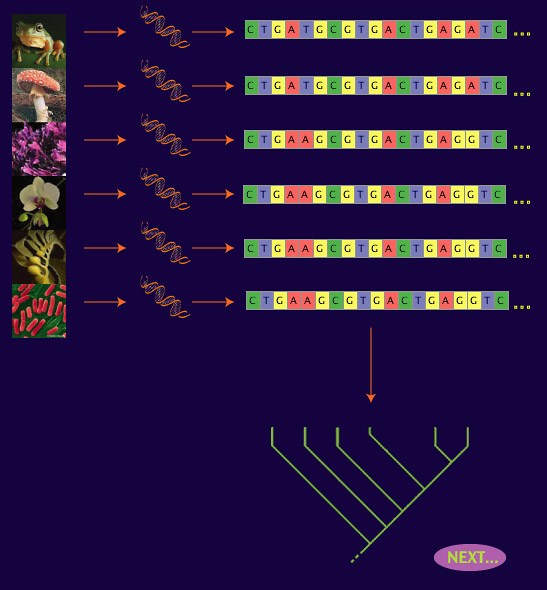
3.

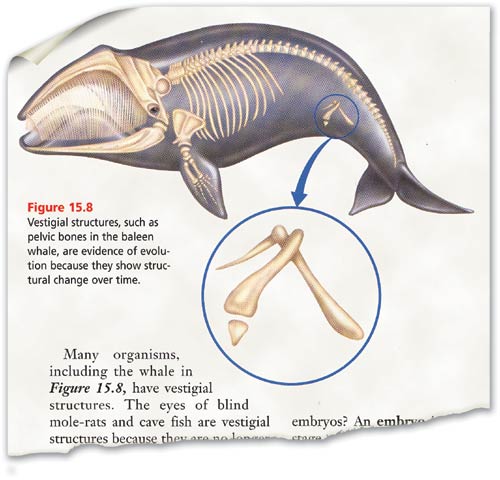
What type of evidence is represented in the picture above:

a)

Fossils

b)

Vestigial Structures

c)

DNA

d)

Homologous Structures

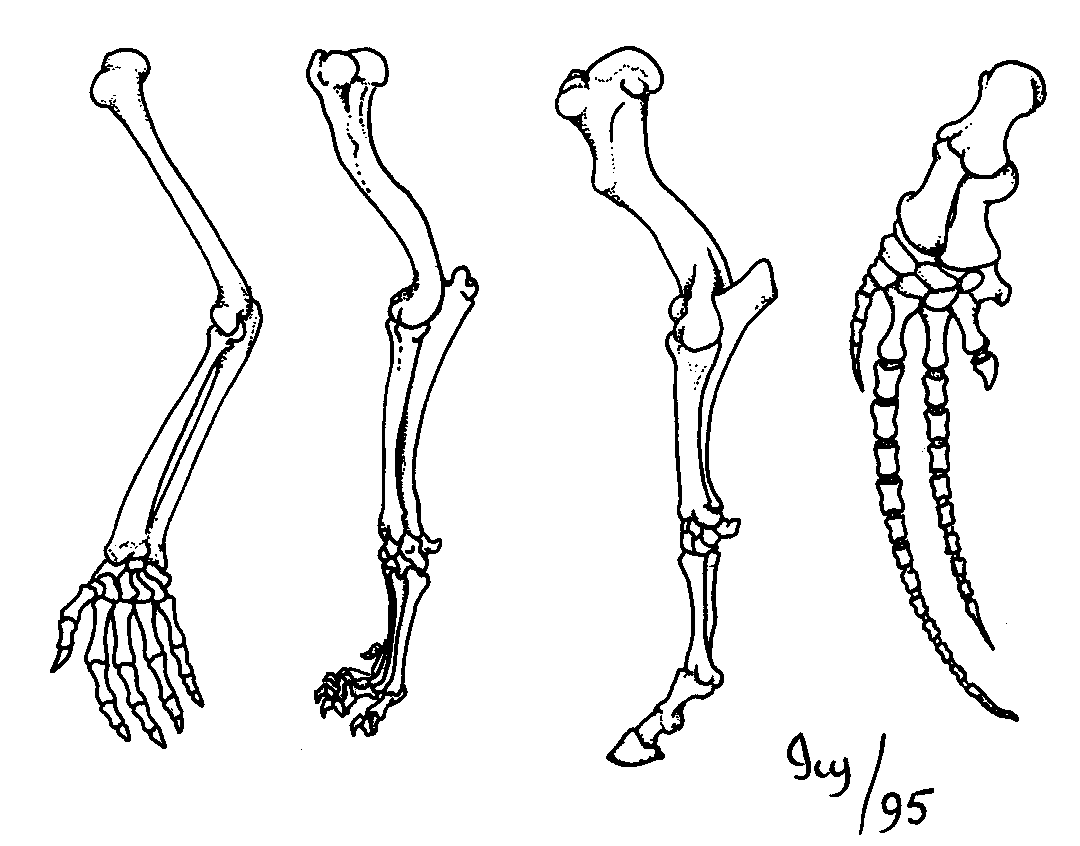
4.

What type of evidence is shown in the image above?

a)

Fossils

b)

Vestigial structures

c)

Homologous Structures

d)

DNA

5.

What type of evidence are shown in the picture above?

a)

Fossils

b)

Embryology

c)

Homologous Structures

d)

Vestigial Structures

6.

Adaptations are:

a)

physical or behavioral tendencies.

b)

physical or behavioral characteristics that help an organisms survive and reproduce.

c)

physical or behavioral characteristics that do not help the organism in any way.

d)

genetic mutations that have gone wrong.

7.
The diagram shows fossils in different rock layers. Which of these statements about the age of these fossils is most likely correct?
a)
Fossil A and C are the same age
b)
Fossil B is older than fossil C
c)
Fossils A is older than fossil B
d)
Fossil D is older than fossil C
8.

Which scientist is known for his work that he did on the Galapagos Islands to develop his theory of natural selection?

a)

Gregor Mendel

b)

Charles Darwin

c)

Anton Van Leewenhoek

d)

Robert Brown

9.

The process by which two populations of the same species become so different that they can no longer interbreed.

a)

natural selection

b)

artificial selection

c)

speciation

d)

fossilization

10.

A species is defined as:

a)

a group of organisms that are extremely different.

b)

a group of organisms that have similar characteristics and always live in the same place.

c)

a group of organisms with similar characteristics and can reproduce to make fertile offspring.

d)

any two organisms to make a hybrid.
11.
What characteristic did Darwin observe about the finches on the Galapagos Islands?
a)
Their feathers 
b)
Genotypes 
c)
Their beaks
d)
Their body sizes
12.
Scientist find dinosaur fossils in the bottom of a cliff and mammals fossils in the middle layer, what can be inferred?
a)
dinosaurs ate plants
b)
dinosaurs were eaten by the mammals
c)
they lived at the same time
d)
dinosaurs lived before the mammals
13.
What is embryology?
a)
the age of organisms
b)
the oldest stage of development
c)
the life span of an organism
d)
the earliest growth stage of development
14.
Who was Charles Darwin?
a)
A naturalist who came up with the theory of evolution
b)
A scientist who studied plants
c)
A geologist who looked at rocks and fossils
d)
A paleontologist who studied dinosaurs
15.
Structures that have the same evolutionary origin even though they may now have different structures or functions are said to be
a)
endemic
b)
homologous
c)
analogous
d)
genetic
16.
What is embryology?
a)
         Adaptation.
b)
The study of fetus and embryo development, and fertilization.
c)
           Evolution.
d)
 The study of fossils.
17.
How does embryology support the Theory of Evolution?
a)
It shows that they have a common ancestor because of their similarities.
b)
         I'm not sure.
c)
Animals change over time. 
18.
Which of the following is a term for a group of similar organisms that can reproduce fertile offspring?
a)
individual
b)
population
c)
species
d)
fossil
19.
Mutations are important because they bring about
a)
death of the organism in which they develop
b)
genetic variation needed for a population to evolve
c)
benefits for the individual, not for the population
d)
Hardey-Weinberg equilibrium within a population
20.
Finches on the Galapagos Islands had different beaks in order to help them do what?
a)
Build nests
b)
Fight off predators
c)
Collect food sources
d)
Compete with rivals
21.
This scientist came up with the idea of natural selection.
a)
Jean Baptiste Lamarck
b)
Gregor Mendel
c)
Charles Darwin
d)
Thomas Malthus
22.
A remnant or trace of an organism from the past is called a _______.
a)
Ancestor
b)
Skeleton
c)
Fossil
d)
Imprints
23.
Inherited trait that helps an organism survive is a(n) __________.
a)
Fossil
b)
Adaptation
c)
Ancestor
d)
Natural selection
24.
Survival of the fittest or when favorable adaptations reproduce faster is called what?
a)
Evolution
b)
Adaptation
c)
Natural selection
d)
Fossilization
25.
Magda is a tall, 11 year old drummer. She has a scar on her right cheek. She is good at swimming. Which of her traits did Magda most likely inherit?
a)
height
b)
the scar
c)
ability to swim
d)
ability to play drums
26.
According to the diagram, which organism is older?
a)
ammonite
b)
coral
c)
gastropod
d)
trilobite
27.
Structures with the same parts have different functions; suggests that organisms share a common ancestry
a)
vestigial structures
b)
homologous structures
c)
adaptive radiation
d)
fossil
28.
Which of the following is an example of a vestigial structure?
a)
the wings of a red-tailed hawk
b)
the hind limbs of a house cat
c)
the fins of sharks
d)
the tailbone of a human
29.
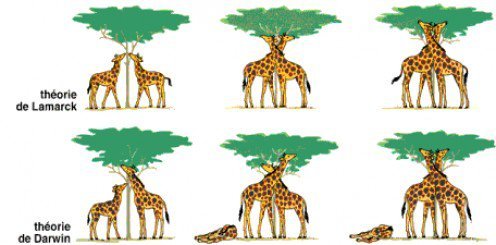
What would happen if the Giraffes never evolve?
a)
they would survive
b)
They would thrive
c)
They would become extinct
d)
They will find another source of food
30.
The ability of an organism to survive and reproduce in its specific environment 
a)
diversity.
b)
evolution
c)
adaptation
d)
 fitness
31.
Why are advantageous traits more likely to be passed onto offspring?
a)
Because they are more likely to survive and reproduce.
b)
Because they come from dominant alleles.
c)
Because they come from recessive alleles.
d)
Because the trait is an acquired phenotype.
32.
Farmers breed cows to produce high amounts of milk. This is an example of...
a)
Natural Selection 
b)
Variations in a species 
c)
Selective Breeding 
d)
inbreeding
33.
Darwin wrote that organisms with traits that are best suited to the environment will ________________
a)
increase in number
b)
become extinct
34.
Another word for adapt is ____________.
a)
change
b)
create
35.
Which species’ DNA is most similar to the DNA of the toothed whale? 
a)
Hippopotamus 
b)
Baleen Whale
c)
Grazing Mammals
d)
Camels
36.
When an organism completely dies out, it is called.....
a)
Adaption
b)
Extinction
c)
Fossilization
d)
Mutation
37.
Two organisms that are closely related would have
a)
very similar DNA sequence
b)
exactly the same DNA sequences
c)
no proteins in common
d)
completely different DNA sequence