
 Worksheets
Respiratory System Physiology
Total questions: 17
Worksheet time: 8mins
Name
Class
Date
1.

What is the volume that remains in the lungs even after a forceful exhale
a)
expiratory reserve
b)
residual volume
c)
inspiratory reserve
d)
total lung capacity
2.
What muscles are used in breathing in and breathing out?
a)
diaphragm and intercostals
b)
diaphragm and lungs
c)
lungs and ribs
d)
lungs and diaphragm
3.

The volume of a normal breath
a)
3000mL
b)
2400mL
c)
1200mL
d)
500mL
4.

What is the volume of one breath called?
a)
minute ventilation
b)
inspiratory capacity
c)
tidal volume
d)
vital capacity
5.

The amount of air you can force out after a normal breath out
a)
Expiratory Reserve
b)
Functional Residual Capacity
c)
Vital Capacity
d)
Inspiratory Capacity
6.

The amount of air you can still inhale after a normal breath in
a)
Vital Capacity
b)
Inspiratory Reserve
c)
Functional Residual Capacity
d)
Inspiratory Capacity
7.

The Maximum Volume of air that you can get in and out of your lungs
a)
6000mL
b)
4800mL
c)
3600mL
d)
500mL
8.
Which of the following lung capacities is the volume of air that can be maximally exhaled after a maximum inhalation?
a)
inspiratory capacity
b)
functional residual capacity
c)
vital capacity
d)
total lung capacity
9.

What is Tidal volume
a)
The volume of air breathed in and out during one breath
b)
The maximal amount of air a person can expel
c)
The amount of blood pumped from the heart
d)
The additional air that can be forcibly inhaled after normal inspiration
10.
When the diaphragm contracts...
a)
the volume of the thoracic cavity increases and the pressure decreases, causing air to rush into the lungs.
b)
the volume of the thoracic cavity decreases and the pressure increases causing air to rush out of the lungs.
11.

Name the structure labeled 8
a)
lungs
b)
trachea
c)
diaphragm
d)
alveoli
12.

Name the organ label # 6.
a)
alveoli
b)
bronchi
c)
trachea
d)
lungs
13.
What is the main bone structure that protects the lungs
a)
Vertebrae
b)
Rib cage
c)
Skull
d)
Pelvis
14.
Where in the respiratory tract does the exchange of oxygen and carbon dioxide take place?
a)
Larynx
b)
Bronchi
c)
Trachea
d)
Alveoli
15.
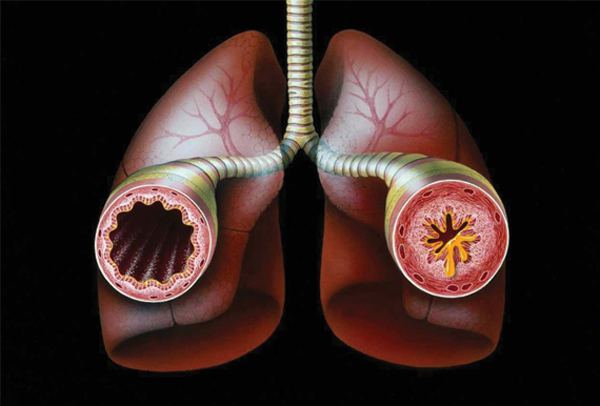
A disorder of the lungs called ____ causes the bronchi to become restricted (get smaller) so air can't get to the lungs.
a)
asthma
b)
cold
c)
influenza
d)
bronchitis
16.
Given the following structures:
1. larynx
2. nasal cavity
3. pharynx
4. trachea
Which of the following is the correct order that air would flow during inhalation.
1. larynx
2. nasal cavity
3. pharynx
4. trachea
Which of the following is the correct order that air would flow during inhalation.
a)
1,2,3,4
b)
2,3,1,4
c)
2,1,3,4
d)
4,2,3,1
17.
Check off which things happen when you inhale (there are two!)
a)
Chest cavity expands
b)
Chest cavity gets smaller
c)
Diaphragm contracts
d)
Diaphragm relaxes
100 %

