wayground logo

Free Printable Worksheets

Font size

S
M
L
XL
Worksheets

2.7/2.8 Review/Cumulative

Total questions: 175

Worksheet time: 6hrs 13mins

Name
Class
Date
1.

Which one is NOT a biome?

a)

stratosphere

b)

temporate forest

c)

ocean

d)

savanna

2.

The system that contains all living things on Earth.

a)

Biosphere

b)

Atmoshpere

c)

Hydrosphere

d)

Geosphere

3.

The effects of people and their actions on the biosphere is called

a)

human impact

b)

biome

c)

environmental change

4.

Regions of the planet with similar types of life and climates are called

a)

biomes

b)

kingdoms

c)

spheres

d)

systems

5.

Lush tropical region that receives lots of rainfall and supports a wide variety of life.

a)

rainforest

b)

desert

c)

tundra

d)

temperate forest

6.

Humans have an impact on ALL the spheres.

a)

true

b)

false

7.

The biosphere includes plants and animals that live

a)

on land

b)

on land and in the water

c)

on land, in water, and in the air

d)

in water

8.

"Bio-" means

a)

life

b)

water

c)

Earth

d)

air

9.

Which of the following is an example of a human impact on the biosphere?

a)

Hunting

b)

Rain falling from the clouds

c)

a volcano erupting

d)

an earthquake

10.

Which of the following areas would support the MOST life?

a)
b)
c)
d)
11.

A community of organisms and their abiotic environment.

a)

Environment

b)

Biosphere

c)

Ecosystem

d)

Community

12.

All the non-living things in an environment

a)

Biotic

b)

Biome

c)

Abiotic

d)

Biosphere

13.

The prefix a- means?

a)

adjective former

b)

land, earth

c)

record, writing

d)

not, without, lacking, deficient

14.

All living things in an environment

a)

Biotic

b)

abiotic

c)

geographic

d)

community

15.

A living thing (one thing) that carry out life processes independently.

a)

organism

b)

abiotic

c)

community

d)

biosphere

16.

Two or more different species interacting and living in an area.

a)

Biodiversity

b)

Habitat

c)

Community

d)

Microhanitat

17.

The number and VARIETY of organisms in a given area during a specific period of time.

a)

Biosphere

b)

Population

c)

Community

d)

Biodiversity

18.

Which is a way to limit deforestation?

a)

use more wood products

b)

plant and harvest trees on tree farms

c)

increase carbon dioxide levels

d)

fertilize the soil

19.

Which is a way to limit deforestation?

a)

use more wood products

b)

plant and harvest trees on tree farms

c)

increase carbon dioxide levels

d)

fertilize the soil

20.

The sulfur and nitrogen compounds in smog combine with water to form

a)

ozone.

b)

ammonia.

c)

acid rain.

d)

chloroflurocarbons.

21.

An example of a sustainable-use practice is the use of beneficial insects like ladybugs to

a)

harm natural resources

b)

pollinate plants

c)

control unwanted pests

d)

eat/destroy unwanted plants

22.

As DDT moves up the trophic levels in food chains, its concentration

a)

stays the same.

b)

decreases.

c)

increases.

d)

is eliminated.

23.

Some scientists think that global warming is

a)

a natural variation in climate.

b)

a result of human activity

c)

melting the polar ice caps.

d)

all of the above

24.

The major cause of ozone depletion is

a)

nitric acid.

b)

sulfuric acid.

c)

chlorofluorocarbons.

d)

ultraviolet light.

25.

Sweet potatoes grow best in sandy, well-drained soil. In which North Carolina ecological region would you MOST likely grow sweet potatoes?

a)

Piedmont

b)

Tidewater

c)

Coastal Plains

d)

Mountain

26.

Which is a biotic factor that could affect an ecosystem?

a)

dust storms moving through an ecosystem

b)

bacteria harming the health of organisms in an ecosystem

c)

large amounts of acid rain precipitation seeping into the soil in an ecosystem

d)

high levels of carbon dioxide entering the atmosphere within an ecosystem

27.

Leafcutter ants tend fungus gardens within their colony to feed to their larvae. The ants keep the fungus alive by feeding it fresh plant material. How does a leafcutter ant colony help to support the tropical rain forest biome?

a)

The colony recycles nutrients back to the soil for plants to use.

b)

The colony removes dead leaves from trees and other plants.

c)

The colony clears the forest floor of living plant material.

d)

The colony removes fungi from trees and the forest floor.

28.

Which of these is a threat to the survival of an ecosystem?

a)

predator-prey population cycles

b)

less biomass at higher levels of the food web

c)

a shrinking variety of animal and plant species

d)

competition among some consumer populations

29.

Nonnative flathead catfish that prey on smaller fish were accidentally introduced into the Yadkin River in North Carolina. What is the MOST likely effect these catfish could have on the ecology of the Yadkin River?

a)

They could increase pollution in the water.

b)

They could damage streambeds and shoreline.

c)

They could decrease water flow in the river.

d)

They could reduce native fish populations.

30.

Scientific experts have recommended a number of management practices to protect the Waccamaw Drainage System. Which one of these recommendations would reduce stream bank erosion?

a)

encourage no-till agriculture near waterways

b)

remove downed trees from river channels

c)

dredge certain segments of the river

d)

plant shoreline buffer zones

31.

Nitrogen is a nutrient needed by plants for growth. Nitrogen is naturally cycled into the soil where it is rapidly absorbed by plants. What would a farmer MOST likely do to replenish nitrogen that was depleted from the soil?

a)

use water that is enhanced with phosphates

b)

add fertilizer to the soil to provide a source of nitrogen

c)

use genetically altered crops that fix their own nitrogen

d)

add bacteria to the soil in order for the crop to grow stronger roots

32.

The Great Miami Aquifer is a large underground water supply that lies under much of southwest Ohio. The water level of the aquifer could be reduced over time by too much ________.

a)

rainfall

b)

pollution

c)

irrigation

d)

evaporation

33.

Can Earth’s human population increase indefinitely?

a)

yes, even though resources are finite

b)

yes, because resources are infinite

c)

no, even though resources are infinite

d)

no, because resources are finite

34.

What will MOST likely happen to a stable ecosystem when a population of animals exceeds the ecosystem’s carrying capacity?

a)

The ecosystem will improve

b)

The ecosystem will degrade.

c)

The ecosystem will change type.

d)

The ecosystem will remain unchanged.

35.
Cougars are predators that often eat weakened or diseased animals. This is a description of the _____ of cougars.
a)
habitat
b)
community
c)
niche
d)
none of these
36.
In the energy pyramid shown, which level has the smallest number of organisms?
a)
fox
b)
birds
c)
grasshoppers
d)
grass
37.
Which of the following is the ultimate source of energy for the pyramid in Figure 2-3?
a)
Grass
b)
Heat
c)
Sunlight
d)
Water
38.
The organism shown is involved in what type of symbiosis?
a)
mutualism
b)
commensalism
c)
parasitism
d)
predation
39.
How long are food chains?
a)
four steps long
b)
three steps long
c)
it varies with day length
d)
it varies with ecosystem
40.
Which of the following allows the flow of energy through an ecosystem to happen?
a)
abiotic factors
b)
cycling of nutrients
c)
evaporation
d)
predator/prey interactions
41.
If the global warming trend continues and permafrost under the tundra melts, what biome would you predict would replace it?
a)
taiga (boreal forest)
b)
temperate forest
c)
temperate grassland
d)
desert
42.
If you were dropped off on the North American continent at a latitude of 40 degrees North (EX: Denver, Colorado/Indianapolis, Indiana/Philadelphia, Pennsylvania), which of the following climate zones would you discover there?
a)
polar
b)
tropical
c)
temperate
d)
arctic
43.
On ten acres of native forest there are eight white-tailed deer, seven coyotes, forty five armadillos, and two hundred thirty one loblolly pine trees. Which population has the highest density?
a)
white-tailed deer
b)
coyotes
c)
armadillos
d)
loblolly pine trees
44.
Which of the following statements is correct?
a)
population size of predators increases when their prey is scarce
b)
Competition for resources is very high when food and resources are plentiful
c)
As resources become limited, members of the population will start to die off
d)
Predator and prey populations remain in constant numbers through the years
45.
From the table, which species has the highest average population size?
a)
Species W
Species W
b)
Species X
c)
Species Y
d)
Species Z
46.
If the four areas of the table were the only places in the world to find these organisms, which species most likely faces the greatest chance of extinction?
a)
Species U
b)
Species X
c)
Species Y
d)
Species Z
47.
Which area of the table has the greatest biodiversity?
a)
Area A
b)
Area B
c)
Area C
d)
Area D
48.
Examine the food web. What would most likely happen to the organisms in this food web if the robin began to disappear?
a)
The hawk would be forced to start eating the dragonfly
b)
Most of the organisms in the ecosystem would starve and die
c)
The terrestrial organisms would starve, but the aquatic organisms would survive
d)
There would be an overpopulation of caterpillars, which would kill many elm trees.
49.
Examine the food web. Suppose an herbicide is used to kill some of the algae in this ecosystem. The herbicide does not break down in the environment. Inside the cells of which organism would you expect to find the highest amount of herbicide?
a)
algae
b)
cougar
c)
elm tree
d)
minnow
50.
Examine the food web. The disappearance of which of the following pair of species would result in the total collapse of the food web?
a)
algae and dragonflies
b)
algae and elm trees
c)
dragonflies and foxes
d)
elm trees and bass
51.
When organizing life, what answer shows the correct levels of organization (biggest to smallest; left to right)?
a)
Biosphere-Population-Community-Ecosystem-Organism
b)
Organism-Ecosystem-Community-Population-Biosphere
c)
Biosphere-Ecosystem-Community-Population-Organism
d)
Organism-Population-Community-Ecosystem-Biosphere
52.
What is the biome with the following characteristics: coldest of all the biomes, soil is permanently frozen, lowest amount of plant biodiversity.
a)
Taiga
b)
Tundra
c)
Deciduous Forest
d)
Tropical Rainforest
53.
What is the biome with the following characteristics: coldest of all the biomes, soil is permanently frozen, lowest amount of plant biodiversity.
a)
Taiga
b)
Tundra
c)
Deciduous Forest
d)
Tropical Rainforest
54.
_________ is a form of energy generated by the conversion of free-falling water to electricity.
a)
Geothermal energy
b)
Hydroelectric Power
c)
Nuclear Fission
d)
Photovoltaic cell
55.
Solar energy is converted into electric energy through the use of _________.
a)
Geothermal energy
b)
Hydroelectric Power
c)
Nuclear Fission
d)
Photovoltaic Cell
56.
Molecules with hydrogen and carbon bonds are called _______
a)
Biomass fuels
b)
Fossil fuels
c)
Fuels
d)
Hydrocarbons
57.
Which is one reason nuclear power plants are not widespread?
a)
Nuclear power is not energy efficient
b)
Nuclear reactors emit greenhouse gases
c)
Nuclear reactions occur only on the Sun
d)
Negative public perception of nuclear power
58.
Which form of energy commonly coincides with tectonic plate boundaries?
a)
fossil fuels
b)
geothermal energy
c)
wind energy
d)
biomass fuels
59.
Which is not derived from living things?
a)
petroleum
b)
coal
c)
peat
d)
nuclear power
60.
When a consumer eats a producer, from where are they gaining energy?
a)
Earth
b)
the plant
c)
the Sun
d)
the ground
61.
Which is the primary source of Energy on Earth?
a)
oil
b)
coal
c)
the Sun
d)
wood
62.
_____  ______ results in a release of a large amount of energy.
a)
Nuclear friction
b)
Nuclear fission
c)
Nuclear freon
d)
Nuclear fracture
63.
Global management of Earth's natural resources to meet human needs will allow people to have ________  ________.
a)
sustainable energy
b)
energy efficiency
c)
cogeneration
d)
biomass fuel
64.
A type of air pollution that forms from car exhaust in the presence of sunlight is called ________.
a)
Acid precipitation
b)
Ozone hole
c)
photochemical smog
d)
nonpoint source
65.
The _____  _______ is the total number of organisms that an environment can support.
a)
carrying capacity
b)
density-independent factor
c)
density-dependent factor
d)
exponential growth
66.
The removal of trees from a forested area without adequate replanting is called __________.
a)
Bioremediation
b)
Deforestation
c)
Pesticide
d)
Reclamation
67.
Which is most likely to cause groundwater pollution?
a)
leaking underground storage tank
b)
acid precipitation
c)
deforestation
d)
particulate matter
68.
_____ is the most abundant of all the fossil fuels.
a)
Natural gas
b)
Petroleum
c)
Coal
d)
Peat
69.

Which is an example of a population?

a)

Elephants, Giraffes, and Lions all living in the Sahara Desert

b)

Canis Lupus Familiaris- Scientific Name for a Bulldog

c)

A school of Clown Fish swimming in the ocean

d)

The world and everything in it.

70.

Sustainability is making sure that the planet and its resources can continue to provide life.

a)

True

b)

False

71.

Which of these problems could happen if we don't look after the resources we have?

a)

Loss of animal homes

b)

Climate change

c)

Increase in pollution

d)

All of the above

72.
Your Ecological or Carbon Footprint is the ratio of 
a)
the amount of resources you use to the amount of resources available
b)
how many people there are on earth to how much space we have on earth
c)
people to cars
d)
robots available to robots needed
73.
Which is NOT a way to decrease your ecological footprint?
a)
Eating less meat and processed foods
b)
Walking or biking to school
c)
Turning off electricity and water when you're not using it. 
d)
Driving a large car around for fun.
74.
What are our basic needs?
a)
clothing, water, air
b)
food, air, clothing
c)
food, water, shelter
d)
Music, money, interpetative dance
75.
What is NOT a sustainable practice?
a)
recycling
b)
reducing
c)
reusing
d)
buying 
76.
What has happened to resource consumption in the last several hundred years?
a)
it has remained at the same level
b)
it has decreased dramatically
c)
it has decreased only slightly
d)
it has increased dramatically
77.
A set of moral principles or values held by a person or a society is called
a)
ethics
b)
culture
c)
justice
d)
biocentrism
78.
The “Three Rs” are “Reduce, Reuse, Renewables”
a)
True
b)
False
79.
Which has the least negative impact on wildlife habitat?
a)
agriculture
b)
development
c)
deforestation
d)
recreation
80.
Movement of Earth around the sun.
a)
Rotation
b)
Revolution
81.
Spinning of Earth on its axis.
a)
Rotation
b)
Revolution
82.

Occurs when Earth is positioned between the moon and the sun and when Earth's shadow crosses the lighted half of the moon.

a)

Solar Eclipse

b)

Eclipse

c)

Lunar Eclipse

d)

Perigee

83.
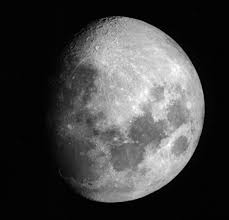
Name the moon phase
a)
waning crescent
b)
waxing crescent
c)
waning gibbous
d)
waxing gibbous
84.
Which moon phase is shown in this diagram?
a)
new moon
b)
first quarter
c)
full moon
d)
last quarter/3rd quarter
85.
Tides are caused by ___________
a)
wind
b)
gravitational pull of moon
c)
waves gravitation toward land
d)
rain
86.
Which planet is closest to the sun?
a)
Uranus
b)
Mercury
c)
Neptune
d)
Earth
87.
Which planet is farthest from the sun?
a)
Neptune
b)
Pluto
c)
Earth
d)
Uranus
88.
Which planet is farthest from the sun?
a)
Neptune
b)
Pluto
c)
Earth
d)
Uranus
89.
The __________ has planets, moons, comets, and asteroids.
a)
solar system
b)
earth
c)
rotation
d)
United States
90.
The GAS GIANTS or Outer planets are:
a)
Mercury, Earth, Jupiter, Saturn
b)
Saturn, Neptune, Pluto, Mars
c)
Saturn, Jupiter, Uranus, Neptune
d)
Earth, Mars, Saturn, Neptune
91.

Which model of the solar system has the sun in the center with all of the planets orbiting it?

a)

heliocentric

b)

geocentric

92.

Which two element make up most of the sun?

a)

helium and hydrogen

b)

ammonia and methane

c)

hydrogen and oxygen

d)

oxygen and helium

93.
How was the moon formed?
a)
It formed when the Earth was formed
b)
Planetary body smashed Earth, piece broke off and became the moon
94.
One complete revolution of the Earth around the sun takes about
a)
one rotation
b)
half a year
c)
one year
d)
one season
95.
The Earth takes about __________________ hours to complete one rotation of its axis.  
a)
12
b)
24
c)
14
d)
28
96.
As the Earth travels around the sun, this tilt causes different areas of the Earth’s surface to get different amounts of daylight at different times of the year. The angle of the Sun’s rays to the surface also causes areas to have more or less of the Sun’s energy. This causes the ________.
a)
months
b)
day and night
c)
seasons
d)
years
97.
A body that orbits a planet is a...
a)
Meteor
b)
Asteroid
c)
Satellite
d)
Comet
98.
Which MOST affects the ocean's tides?
a)
the rotation of Earth
b)
the gravitational pull of the Moon
c)
the revolution of Earth around the Sun
d)
the water cycle
99.

The Big Bang is said to have occurred

a)

4.6 billion years ago

b)

13.8 million years ago

c)

100 thousand years ago

d)

13.8 billion years ago

100.

What is the definition of fusion?

a)

production of gas

b)

The way a planet produces energy

c)

The way a star produces energy

d)

The combination of two planets to make one planet.

101.

Why is there no new water on Earth

a)

it rarely rains in some places, such as deserts

b)

water moves in a cycle, which is repeated over and over again

c)

water leaves the atmosphere

d)

the moon soaks up all the new water

102.
____________ air rises because it is ____________dense.
a)
Cool, Less
b)
Warm, Less
c)
Cold, More
d)
Warm, More
103.
What type of weather is associated with low pressure? 
a)
cool and dry
b)
warm and moist
c)
cool and moist
d)
warm and dry
104.
Which instrument measures wind speed?
a)
Rain gauge
b)
Wind vane
c)
Anemometer
d)
Barometer
105.
Which list correctly matches each instrument with the weather variable it measures?
a)
wind vane—wind speed
thermometer—temperature
precipitation gauge—relative humidity
b)
wind vane—wind direction
thermometer—dewpoint
psychrometer—air pressure
c)
barometer—relative humidity
anemometer—cloud cover
precipitation gauge—probability of precipitation
d)
barometer—air pressure
anemometer—wind speed
psychrometer—relative humidity
106.
Earth’s surface winds generally blow from regions of higher
a)
air temperature toward regions of lower air temperature
b)
air pressure toward regions of lower air pressure
c)
latitudes toward regions of lower latitudes
d)
elevations toward regions of lower elevations
107.
The weather characteristics of air masses result primarily from their
a)
geographic origin
b)
size and shape
c)
rate of movement
d)
direction of movement
108.
What type of front is shown in the picture?
a)
Warm Front
b)
Cold Front
c)
Stationary Front
d)
Occluded Front
109.
Clouds most likely form as a result of
a)
moist air rising, compressing, and warming
b)
moist air rising, expanding, and cooling
c)
dry air rising, compressing, and warming
d)
dry air rising, expanding, and cooling
110.
Click to read the question
a)
A
b)
B
c)
C
d)
D
111.
Which type of pressure system is pictured?
a)
high
b)
low
c)
medium
d)
none
112.
What type of weather would you expect from the pressure system pictured?
a)
clear
b)
cloudy
c)
hot
d)
stormy
113.
Which absorbs heat faster?
a)
land
b)
water
c)
they heat up at the same rate
114.
As you go higher in the troposphere, the temperature _______________.
a)
decreases
b)
increases
c)
stays the same
d)
gets very hot
115.
Wind is caused mainly by air-pressure differences that result from
a)
uneven heating of Earth's atmosphere
b)
absorption of ultraviolet radiation by Earth's land masses
c)
radiation of heat from Earth's land masses to water bodies
d)
rotation of Earth on its axis
116.
T8 - What two factors are primarily used to describe climate?
a)
temperature and density
b)
temperature and precipitation
c)
precipitation and density
d)
winds and humidity
117.
T8 - As altitude _____________ temperature ___________. 
a)
decreases, decreases
b)
increases, increases
c)
increases, decreases
d)
decreases, increases
118.
T9 - What is the angle of the Earth's tilt?
a)
24°
b)
23.5°
c)
23°
d)
22.5°
119.
T11 - Which Climograph is from a tropical location?
a)
A
b)
B
c)
C
120.

Approximately how much of Earth’s surface is covered by water?

a)

50 percent

b)

30 percent

c)

70 percent

d)

40 percent

121.

In addition to salinity, what factor affects the density of seawater?

a)

depth

b)

latitude

c)

temperature

d)

salt content

122.

The energy that drives surface ocean currents comes from ____.

a)

salinity variations

b)

wind

c)

temperature differences

d)

wave action

123.

What causes surface ocean currents to be deflected?

a)

deep currents

b)

the Coriolis effect

c)

Earth’s revolution

d)

global winds

124.

The rising of cold water from deeper layers to replace warmer surface water is called ____.

a)

the Coriolis effect

b)

a surface current

c)

upwelling

d)

reflection

125.
What is the name for the event in the equatorial pacific ocean that results in temporary slowing or reversal surface currents and in turn disrupts normal world wide weather patterns?
a)
Monsoons
b)
Volcanic eruptions
c)
El Nino
d)
La nina
126.
Ocean tides are primarily caused by 
a)
Earth's revolution around the sun
b)
The changing phases of the moon
c)
Gravitational attraction between the moon and the Earth
d)
Seasonal changes in the location of the sunrise
127.
Spring tides occur during which 2 phases of the moon?
a)
full and new
b)
first and third quarter
c)
new and third quarter
d)
full and first quarter
128.

Most freshwater is located where on the Earth?

a)

in glaciers

b)

in lakes

c)

in the air

d)

in the oceans

129.

A drainage basin is ____.

a)

the channel of a stream

b)

the land covered by floodwaters

c)

the land area that contributes water to a stream

d)

all streams that flow directly into an ocean

130.

Groundwater is found underground in the zone of ____.

a)

aeration

b)

soil

c)

saturation

d)

sediment

131.

Which of the following is a measure of a material’s ability to transmit fluids through interconnected pore spaces?

a)

capacity

b)

competence

c)

permeability

d)

porosity

132.

Permeable rock layers or sediments that transmit groundwater freely are called ____.

a)

aquifers

b)

aquitards

c)

caverns

d)

springs

133.

The percentage of the total volume of rock or sediment that consists of pore spaces is called ____.

a)

permeability

b)

an aquifer

c)

the zone of saturation

d)

porosity

134.
__________ rock results from the cooling of melted rock.  
a)
sedimentary
b)
metamorphic
c)
igneous
d)
lava
135.
____________ rock are deposited in layers and are found on land and in the water.  
a)
Igneous
b)
Metamorphic
c)
Lava
d)
Sedimentary
136.
Lava which cools on Earth's surface forms an
a)
metamorphic rock
b)
intrusive igneous rock
c)
extrusive igneous rock
d)
foliated metamorphic rock
137.
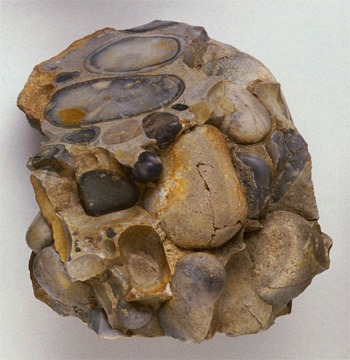
This rock was formed by smaller pieces of rock that settled at the bottom of a lake millions of years ago. What type of rock is this?
a)
Sedimentary
b)
Igneous
c)
Metamorphic
138.
This rock was another type of rock that was heated and compressed over time. What type of rock is this?
a)
Sedimentary
b)
Igneous
c)
Metamorphic
139.

what are the different layers of soil called?

a)

horizons

b)

profiles

c)

litter

d)

humus

140.

unloading, frost action, animals burrowing into the ground, plants by their roots, and ice wedging are examples of

a)

mechanical weathering

b)

chemical weathering

c)

erosion

d)

landforms

141.

sediments/soil slowly slip downhill over many years from temperature or water

a)

mudslide

b)

landslide

c)

slump

d)

creep

142.

movement that occurs when material moves down a curved slope

a)

creep

b)

slump

c)

landslide

d)

mudslide

143.
Who proposed the idea of continental drift?
a)
Alfred Wegener
b)
Thomas Edison
c)
Aristotle
d)
Albert Einstein
144.
The process by which plate tectonics produces new oceanic lithosphere is called ___
a)
subduction
b)
divergence
c)
sea floor spreading
d)
mountain building
145.
At what type of boundary is a subduction zone formed?
a)
transform
b)
convergent
c)
divergent
d)
strike-slip
146.
A rising plume of mantle material that occurs in the middle of oceanic plates is called ___
a)
volcano
b)
convection current
c)
subduction zone
d)
hot spot
147.
In what type of major fault does the hanging wall slide down the foot wall (due to tension)?
a)
normal
b)
reverse
c)
thrust
d)
strike-slip
148.
How does fossil evidence support Wegener's hypothesis of continental drift?
a)
Similar fossils are found along continental margins that appear to join together.
b)
Fossils are found in areas where the present-day climate could not have supported the organisms that made the fossils.
c)
Similar fossils of giant, land-dwelling dinosaurs are found on continents separated by oceans.
d)
all of the above
149.
If a volcano's magma is high in silicia, the volcano will probably
a)
erupt quietly
b)
remain dormant
c)
erupt explosively
d)
produce dark color lava
150.
The Great Rift Valley in Africa and the Mid-Ocean Ridge were all created by this boundary
a)
Divergent
b)
Convergent
c)
Reform
d)
Transform
151.
line of volcanic activity that surrounds the Pacific Ocean basin is the 
a)
Ring of Fire
b)
Aleutian Islands
c)
Hawaiian Islands
d)
Caribbean Islands
152.
How thick something is or the ability of a fluid or liquid to flow is its 
a)
viscosity
b)
density
c)
velocity 
d)
flowability 
153.
A vibration of Earth caused by a rapid release of energy is an earthquake and occurs at a ____
a)
fault
b)
fracture
c)
anticline
d)
subduction zone
154.
What may happen when a lake ecosystem becomes polluted with fertilizers or pesticides?
a)
increase in dissolved oxygen
b)
eutrophication
c)
.  increased rate of decomposition by detritivores
d)
increase in carrying capacity of the ecosystem
155.
What is biomass energy?
a)
any organic matter that can be used as an energy source
b)
radiant energy emitted by the sun
c)
is the heat from the Earth
d)
is a form of solar energy
156.
Which of these problems can be caused by air pollution?
a)
Respiratory problems
b)
Reduced food sources for humans
c)
Increased disease for humans
d)
Decrease in global temperatures
157.
Acid rain can damage
a)
Drinking water sources
b)
Aquatic life
c)
Architecture/buildings
d)
All options are correct
158.
Water pollution that comes from many sources is considered...
a)
point source pollution
b)
nonpoint source pollution
c)
thermal pollution
d)
ocean pollution
159.
Water pollution that comes from a single source is considered...
a)
point source pollution
b)
nonpoint source pollution
c)
thermal pollution
d)
ocean pollution
160.
The largest number of individuals in a species that an environment can support long term
a)
carrying capacity
b)
emigration
c)
immigration
d)
population density
161.
Which change would best aid a farmer in making the transition from conventional farming techniques to more sustainable farming techniques?
a)
reduce the ratio of essential elements in the fertilizer
b)
irrigate crops using well water
c)
rotate the types of crops grown
d)
plant only genetically modified crops 
162.
Which is an effect of lower levels of solar radiation striking Earth?
a)
increased incidences of skin cancer
b)
decreased rates of photosynthesis
c)
increased phytoplankton activity
d)
decreased carbon dioxide levels 
163.
How could the introduction of a nonnative species of plant affect an ecosystem in North Carolina?
a)
It could pollinate the native plant species, producing a disease-resistant  species
b)
It could reduce the competition for space and light with native plant species
c)
It could take over the habitats of the native plant species
d)
It could cause some insect species to destroy native plant species
164.
Why is it important to conserve the biodiversity of Earth?
a)
to decrease the amount of global predator populations
b)
to decrease the stability of major global ocean currents
c)
to increase the stability of ecosystems during environmental changes
d)
to increase the amount of nonrenewable resources located in the lithosphere 
165.
In Figure 3-1, what type of rock should occur in the part of the rock cycle labeled B?
a)
  sedimentary


b)
lava
c)
igneous
d)
metamorphic
166.
What are the proportions of clay, silt, and sand shown at point A in Figure 5-1?
a)
clay: 70 percent; silt: 20 percent; sand: 10 percent
b)
clay: 60 percent; silt: 20 percent; sand: 20 percent
c)
clay: 40 percent; silt: 40 percent; sand: 20 percent
d)
clay: 80 percent; silt: 10 percent; sand: 10 percent
167.
How does the tilt of the Earth’s axis affect the seasons? 
a)
by changing the amount of direct solar energy reaching the surface of Earth
b)
by influencing the rate of chemical reactions occurring in the atmosphere
c)
by deflecting the harmful rays of radiation emitted by the sun
d)
by changing the speed of the rotation of Earth 
168.
What feature is labeled B in Figure 9-1?
a)
trench
b)
ocean ridge
c)
Volcanic Island Arc
d)
Continental Volcanic Arc
169.
Wegener’s continental drift hypothesis stated that all the continents once joined together to form ____. 
a)
    two major supercontinents and three smaller continents
b)
two major supercontinents
c)
one major supercontinent
d)
three major supercontinents
170.
What is true about an ocean current that is moving toward the polar regions? 
a)
It is fast
b)
It is cold
c)
It is slow
d)
It is warm
171.
On a weather map, which type of front is shown by a line with triangular points on one side?
a)
warm
b)
stationary
c)
occluded
d)
cold
172.
What factor commonly triggers mass movements?
a)
earthquakes
b)
saturation of surface materials with water
c)
removal of vegetation
d)
all are correct
173.
As the speed of cooling of igneous rocks increases, the size of the crystals that form ____.
a)
is not affected
b)
cannot be determined
c)
increases
d)
decreases
174.
In Figure 3-1, what process or processes would be occurring in the part of the rock cycle labeled E?
a)
melting
b)
weathering and erosion
c)
cooling
d)
compaction and cementation
175.
Which of the following is NOT a major component of soil?
a)
earthworms
b)
humus
c)
mineral matter
d)
air