wayground logo

Free Printable Worksheets

Font size

S
M
L
XL
Worksheets

Earth Science Spring Review

Total questions: 100

Worksheet time: 2hrs 47mins

Name
Class
Date
1.

What is the first layer in the atmosphere?

a)

Thermosphere

b)

Troposphere

c)

Mesosphere

d)

Exosphere

2.

Which layer do airplanes and jet fly in?

a)

Mesosphere

b)

Stratosphere

c)

Thermosphere

d)

Troposphere

3.

Which layer is the farthest from Earth and can still be affected by Earth´s gravity.

a)

Exosphere

b)

Troposphere

c)

Mesosphere

d)

Ionosphere

4.

Which layer lies at the top of the Mesosphere and the bottom of the Thermosphere

a)

Mesosphere

b)

Troposphere

c)

Ionosphere

d)

Thermosphere

5.
The most common gas in the atmosphere (78%).
a)
Nitrogen
b)
Oxygen
c)
Carbon Dioxide
d)
Trace gases
6.

Which order is correct from the space to Earth?

a)

thermosphere

troposphere

exosphere

mesosphere

stratosphere

ionosphere

b)

thermosphere

troposphere

stratosphere

exosphere

mesosphere

ionosphere

c)

exosphere

ionosphere

thermosphere

mesosphere

stratosphere

troposphere

d)

troposphere

thermosphere

troposphere

stratosphere

exosphere

mesosphere

7.

What is the function of the Ozone layer?

a)

to allow UV rays to get to Earth

b)

to block UV rays from getting to Earth

c)

To keep oxygen in

d)

to allow meteors to get to Earth

8.

Which is a main source of energy that drives the Earth's systems?

a)

energy of moving water

b)

oil from inside earth

c)

gases in the atmosphere

d)

heat from the sun

9.

This is the coldest layer, where the majority meteors burn up

a)

Troposphere

b)

Stratosphere

c)

Mesosphere

d)

Thermosphere

10.
As you go higher in the troposphere, the temperature _______________.
a)
decreases
b)
increases
c)
stays the same
d)
gets very hot
11.
What happens to the density (thickness)/ air pressure of the air as you increase in altitude?
a)
density increases
b)
density decreases
c)
density stays the same
d)
density disappears
12.

This is the layer where weather occurs

a)

Stratosphere

b)

Thermosphere

c)

Troposphere

d)

Mesosphere

13.
What is our atmosphere made of?
a)
All nitrogen
b)
All oxygen
c)
A mix of gases
d)
Water and air
14.

This layer has very high temperatures (hottest layer), but doesn't feel hot- because it has the lowest air pressure

a)

Troposphere

b)

Stratosphere

c)

Mesosphere

d)

Thermosphere

15.
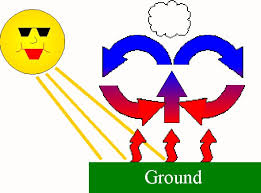
Warm air rises and the cool air sinks demonstrates this type of heat transfer. 
a)
conduction
b)
convection
c)
radiation
d)
Insolation 
16.
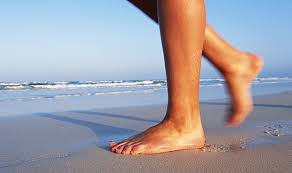
Walking on the warm sand sand with your bare feet demonstrates this type of heat transfer. 
a)
conduction
b)
convection
c)
radiation
17.
What is the definition of CONDUCTION?
a)
When heat is transferred from objects like rays of light or electromagnetically.
b)
a  hot liquid or air that  expands, becomes less dense, and rises or becomes more dense, and sinks.
c)
When heat transfers from objects that are touching.
d)
When heat transfers through the heater or AC in your house.
18.
A group of friends gather around a fire to stay warm.
a)
conduction
b)
convection
c)
radiation
19.

In heat transfer, heat always flows from the _______________ substance to the _______________ substance.

a)

Hotter to colder

b)

Colder to hotter

c)

Hotter to hotter

d)

Colder to colder

20.

The handle of a metal spoon warms up when it is placed in a hot bowl of soup because of

a)

Convection

b)

Conduction

c)

Radiation

d)

insulation.

21.

You get sunburned due to __________ from the sun.

a)

conduction

b)

convection

c)

radiation

22.

Which statement correctly defines wind?

a)

The movement of air from areas of low pressure to areas of high pressure

b)

The movement of air to a colder area in the atmosphere.

c)

The movement of air from areas of high pressure to areas of low pressure.

d)

The movement of air pushed around and bouncing off Earth's surface.

23.

What is the initial source for global winds and convection in the atmosphere?

a)

heat from the Earth's core

b)

the rotation of the Earth

c)

Moon's gravity

d)

unequal heating of the Earth by the sun

24.

The Coriolis effect causes ___________.

a)

the Earth to rotate on its axis

b)

earthquakes

c)

global winds to move in a curved path instead of a straight line

d)

the Earth to revolve around the sun

25.
Near the top of the troposphere is a narrow band of high speed winds called the______.
a)
westerlies
b)
jet stream
c)
trade winds
d)
local winds
26.
What kind of breeze is this and when would it form?
a)
Land breeze - daytime
b)
Land breeze - nighttime
c)
Sea breeze - daytime
d)
Sea breeze - nighttime
27.
In which direction do prevailing westerlies flow?
a)
from east to west
b)
from west to east
c)
from north to south
d)
from south to north
28.
Which global winds are found at the poles? 
a)
Polar Westerlies
b)
Prevailing Easterlies
c)
Polar Easterlies
d)
Trade Winds
29.
Which global winds directly effect weather in the U.S.?
a)
Trade Winds
b)
Prevailing Westerlies
c)
Polar Easterlies
d)
Doldrums
30.
The tropical winds running from 0 to 30 degrees latitude are called:
a)
subtropical westerlies
b)
polar westerlies
c)
trade winds
d)
polar winds
31.
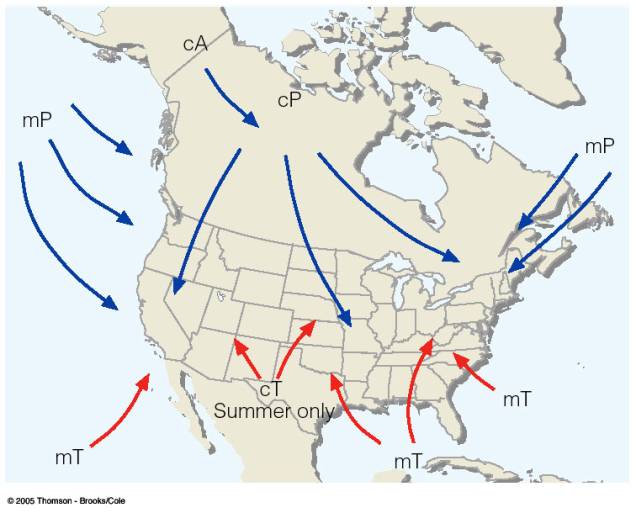
How do we name air masses?
a)
Water and temperature
b)
Air pressure
c)
Humidity and temperature
d)
Cold and warm
32.
How do we characterize an air mass that forms over the ocean?
a)
Dry
b)
Wet
c)
Cold
d)
Warm
33.
How do we characterize an air mass that forms over land?
a)
Dry
b)
Wet
c)
Cold
d)
Warm
34.
How do we characterize an air mass that forms over near the equator?
a)
Dry
b)
Wet
c)
Cold
d)
Warm
35.
How do we characterize an air mass that forms near the poles?
a)
Dry
b)
Wet
c)
Warm
d)
Cold
36.
What types of air masses form over oceans?
a)
Maritime
b)
Continental
c)
Polar
d)
Tropical
37.
Which abbreviation of an air mass can be identified as dry and hot?
a)
cP
b)
mP
c)
cT
d)
mT
38.
Which abbreviation of an air mass can be identified as cold and moist?
a)
cP
b)
mP
c)
cT
d)
mT
39.
What kind of breeze is this & what time of day/night would it form?
a)
Land breeze - daytime
b)
Land breeze - nighttime
c)
Sea breeze - daytime
d)
Sea breeze - nighttime
40.

This instruments measures the direction of

a)

Humidity

b)

Wind

c)

Air pressure

d)

Temperature

41.

A weather instrument called a _______________ measures air pressure.

a)

anemometer

b)

barometer

c)

wind vane

d)

thermometer

42.

A weather instrument called an ____________________ measures wind speed.

a)

wind vane

b)

anemometer

c)

barometer

d)

thermometer

43.
What does this symbol indicate on a weather map? 
a)
High pressure system
b)
Low pressure system
c)
Cold front
d)
Warm front
44.
What does this symbol on a weather map indicate? 
a)
High pressure system
b)
Low pressure system
c)
Cold front
d)
Warm front
45.
The boundary  between two air masses is known as:
a)
front
b)
storm
c)
climate
d)
flood
46.
What kind of weather is usually associated with a high pressure system?
a)
Sunny weather
b)
Precipitation (rain, snow, etc.)
47.
Which condition usually means cloudy, stormy weather?
a)
high pressure
b)
low pressure
48.

What type of front is shown?

a)

Warm Front

b)

Cold Front

c)

Occluded Front

d)

Stationary Front

49.

What type of front is shown?

a)

Warm Front

b)

Cold Front

c)

Occluded Front

d)

Stationary Front

50.

What type of front is shown?

a)

Warm Front

b)

Cold Front

c)

Occluded Front

d)

Stationary Front

51.

What type of front is shown?

a)

Warm Front

b)

Cold Front

c)

Occluded Front

d)

Stationary Front

52.

(select all) Weather is . . .

a)

Short Term

b)

Long Term

c)

Certain Place

d)

Certain Time

53.
Rain, snow, sleet, and hail are all forms of _____.
a)
precipitation
b)
condensation
c)
evaporation
d)
climate
54.
What part of the illustration shows Evaporation? 
a)
1
b)
2
c)
3
d)
4
55.
Which number illustrates Condensation?
a)
1
b)
2
c)
3
d)
4
56.

If the temperature is ___________ zero degrees, dew forms. If the temperature is ___________ zero degrees, ice crystals, or frost, form.

a)

above; below

b)

below;above

57.
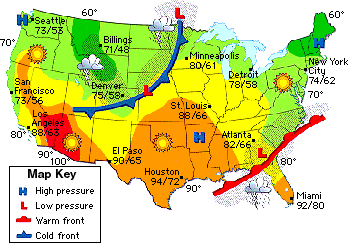
A cold front is approaching Minneapolis. What will happen to the air temperature?
a)
stay the same
b)
increase
c)
decrease
58.
A low pressure system is located over Georgia. What type of weather will they have?
a)
clear, sunny skies
b)
cloudy and rainy
59.
A high pressure system is located north of New York City. What type of weather will be experienced there?
a)
clear, sunny skies
b)
cloudy and rainy
60.
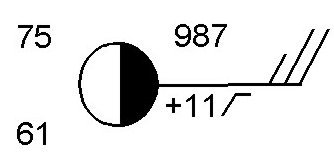
What is the temperature at this station
a)
75 degrees
b)
61 degrees
c)
987 degrees
d)
11 degrees
61.
What is the wind speed at this station
a)
3 knots
b)
15 knots
c)
25 knots
d)
30 knots
62.

What is the wind direction

a)

Northeast

b)

Northwest

c)

Southeast

d)

Southwest

63.
The two main factors that determine the climate of a region are _____________ and ______________.
a)
altitude and pressure
b)
pressure and temperature
c)
temperature and precipitation
d)
altitude and pressure
64.
Because Earth's axis is _________________, the hemispheres receive different amounts of solar energy at different times.
a)
straight
b)
titled
c)
bent
d)
not there
65.
Increased carbon dioxide may cause global warming by trapping more ____________ in the atmosphere.
a)
water
b)
gases
c)
heat
d)
water vapor
66.
During cold periods called _____________________, large parts of Earth's surface was covered with sheets of ice.
a)
glaciers
b)
Ice Ages
67.
The gradual increase in the temperature of the atmosphere is known as ___________________.
a)
sunspots
b)
global warming
c)
ice ages
d)
arid
68.

The most abundant greenhouse gas in the atmosphere is ___________________.

a)

oxygen

b)

nitrogen

c)

carbon dioxide

d)

argon

69.

Which zones are polar zones?

a)

Zones A and B

b)

Zones A and E

c)

Zones E and D

d)

Zones A, E, and C

70.

Which zones are temperate zones?

a)

Zones B and C

b)

Zones B, C, and D

c)

Zones, D and C

d)

Zones D and B

71.

Which zone is the tropical zone?

a)

Zone B

b)

Zone C

c)

Zone D

d)

Zone E

72.

Possible human solutions for limiting global warming and climate change are...

a)

being more energy-efficient

b)

using renewable sources of energy

c)

removing carbon from fossil fuel emissions

d)

all of the above

73.
Which of the following is the best conclusion that can be made from this graph?
a)
atmospheric carbon dioxide levels have been decreasing since 1960
b)
Hawaii has a lot of carbon dioxide
c)
humans have been working hard to decrease carbon dioxide levels
d)
atmospheric carbon dioxide levels have increased steadily since 1960
74.

The main human activity that releases greenhouse gases is

a)

using public transportation and there by reduce the affects of greenhouse gases.

b)

burning fossil fuels

c)

texting on cellphones

d)

eating meat

75.

Which of the following is contributing to an INCREASE in carbon dioxide in the atmosphere?

a)

deforestation

b)

photosynthesis

c)

oceans

d)

all of the above

e)

the loss of animal species

76.
T/F: Some greenhouse gases are naturally present in the Earth's atmosphere
a)
True
b)
False
77.
Which of these is one cause of deforestation?
a)
Urbanization
b)
Buying a chirstmas tree during the holidays
c)
Overbreeding birds in the wild
d)
Cutting down the tree in your backyard
78.
What is deforestation?
a)
Clearing Earth's forests on a massive scale
b)
Eating too much vegetables
c)
Going to a forest and pulling weeds
d)
Clearing the five trees in my backyard
79.
What does deforestation effect?
a)
Plants and animals
b)
Our biosphere
c)
Humans
d)
All of the above
80.

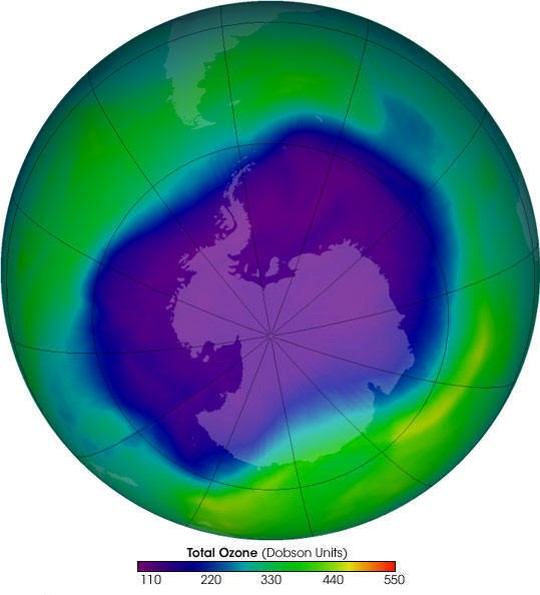
Location of the large whole in the ozone.

a)

Antarctica

b)

Artic

c)

Iceland

d)

Africa

81.
The moon is growing/getting bigger and light is on the right.
a)
Waxing
b)
Waning
82.
The moon is shrinking/getting smaller and light is on the left.
a)
Waxing
b)
Waning
83.
When the entire moon is visible happen half way through the lunar cycle only lasting 1 day
a)
Full Moon
b)
New Moon
84.
First phase of the lunar cycle; not visible and it's often represented by a black circle. (only lasts 1 day)
a)
Full Moon
b)
New Moon
85.
Light on the right; you can see 1/2 of the light. (Lasts 1 day)
a)
First Quarter
b)
Last Quarter
86.
Light on the left ; you can see 1/2 of the light. (Lasts 1 day)
a)
First Quarter
b)
Last Quarter
87.
Rising and falling of Earth's sea levels due to the gravitational pull of the moon and sun on earth as it rotates.
a)
Moon Phases
b)
Tides
c)
Seasons
88.
The lunar cycle takes 29.5 days
a)
True
b)
False
89.

What country is number two?

a)

Canada

b)

Mexico

c)

United States of America

d)

Brazil

90.

What country is number one?

a)

Canada

b)

Mexico

c)

United States of America

d)

Brazil

91.

What country is number three?

a)

Canada

b)

Mexico

c)

United States of America

d)

Brazil

92.
Which ocean is #2?
a)
Atlantic Ocean
b)
Pacific Ocean
c)
Arctic Ocean
d)
Indian Ocean
93.
Which ocean is #1?
a)
Atlantic Ocean
b)
Pacific Ocean
c)
Arctic Ocean
d)
Indian Ocean
94.
a)
Africa
b)
Antarctica
c)
Australia
d)
Asia
95.
a)
South America
b)
Europe
c)
Asia
d)
North America
96.
a)
Asia
b)
Europe
c)
Africa
d)
North America
97.
a)
North America
b)
Australia
c)
South America
d)
Antarctica
98.
a)
Africa
b)
Asia
c)
Australia
d)
South America
99.
a)
Australia
b)
Europe
c)
Antarctica
d)
Asia
100.
a)
Australia
b)
Africa
c)
Antarctica
d)
Asia