
 Worksheets
#6 Progressive Era
Total questions: 100
Worksheet time: 3hrs 19mins
Which is associated with the Direct election of senators, Federal income tax
and National woman's suffrage?
Progressive Era Constitutional Amendments
Steps to Promote Civil Rights
Municipal and State Actions
Changes During World War I
Which government action is most closely associated with the efforts of muckrakers?
ratification of the woman's suffrage amendment
approval of the graduated income tax
creation of the National Forest Service
passage of the Meat Inspection Act
What was a major result of Prohibition in the United States during the 1920s?
restriction of immigration
growth of communism
destruction of family values
increase in organized crime
If I could get a practical application of the Constitution it would protect me and all women in the enjoyment of perfect equality of rights everywhere under the shadow of the American flag....
—Susan B. Anthony, Speech to the Senate Judiciary Committee, January 23, 1880
The basic problem identified in this speech was addressed in 1920 by
a constitutional amendment granting suffrage to women
an executive order allowing women to serve in the military
a Supreme Court decision granting women additional privacy rights
a law allowing women to petition the government
In the early 1900s, the muckrakers provided a service to the American public by
calling for a strong military buildup
lobbying for less government regulation of business
exposing abuses in government and industry
encouraging states to resist federal government authority
Which situation was the immediate cause of the United States entry into World War I in 1917?
The League of Nations requested help.
The Maine was blown up in Havana Harbor
Nazi tyranny threatened Western democracy.
German submarines sank United States merchant ships.
The "clear and present danger" test that resulted from the Supreme Court decision in Schenck v. United States placed limits on the
free speech protections granted by the first amendment
powers of Congress under the elastic clause
rights of the accused in criminal cases
powers of the President during wartime
Why did the Senate reject the Versailles Treaty (1919)?
to keep the United States free from foreign entanglements
to express opposition to the harsh sanctions imposed on Germany
to avoid the dues for membership in the League of Nations
to reduce United States military forces in Europe
What was a primary reason for the great migration of African Americans to northern cities during World War I?
Job opportunities were available in northern factories
Jim Crow laws in the South had been repealed
Voting rights laws had been passed in northern states
The federal government had guaranteed an end to discrimination
Speaker A: It is disgraceful that we allow children in this country to work long hours in unsanitary, unsafe conditions. The government must step in and protect our children.
Speaker B: We must allow businesses to compete freely without government intervention. The best will survive.
Speaker C: Monopolies and trusts make it impossible for small businesses to compete. Monopolies lower their prices to eliminate competition, and then they charge consumers even higher prices.
Speaker D: Big business is good for the country. It increases the nation's wealth, provides jobs, and strengthens the country.
Which two speakers represent the beliefs of many reformers during the Progressive Era?
A and B
A and C
B and C
B and D
Which Progressive Era muckraker's book led to the passage of the Meat Inspection Act?
Jacob Riis's How the Other Half Lives
Lincoln Steffens's The Shame of the Cities
Upton Sinclair's The Jungle
Frank Norris's The Octopus
Which movement's primary goal was the ratification of a constitutional amendment authorizing Prohibition?
abolitionist
Populist
temperance
settlement house
A goal that was established at the Seneca Falls Convention of 1848 was achieved in 1920 by the
creation of a free public education system
passage of legislation to end child labor
adoption of national woman's suffrage
ratification of an amendment requiring national Prohibition
During the Progressive Era, muckrakers published articles and novels primarily to
advance their own political careers
make Americans aware of problems in society
help the federal government become more efficient
provide entertainment for readers
Prior to entering World War I, the United States protested Germany's use of submarine warfare primarily because it
violated the Monroe Doctrine
discouraged immigration to the United States
posed a direct threat to American cities
violated the principle of freedom of the seas
Which principle was dealt with in the Supreme Court decisions in Schenck v. United States (1919) and Tinker v. Des Moines (1969)?
States rights
voting rights
freedom of speech
freedom of assembly
The United States Senate refused to ratify the Treaty of Versailles after World War I because many senators believed
President Woodrow Wilson was too ill to sign the treaty
most Americans had sympathized with Germany during the war
the treaty would not require reparations from Germany
the League of Nations could draw the United States into future wars
"Public Ignores Prohibition Restrictions"
"Evolution and Creation Debated in Scopes Trial"
"Women Bring Change to the Industrial Workforce"
What do headlines such as these from the 1920s illustrate?
conflict between traditional and modern values
trend toward mass consumption of consumer goods
hostility of certain groups toward ethnic minorities
debate over the role of government in the economy
African-American leaders Booker T. Washington and W.E.B. Du Bois differed most in their
proposed methods for achieving racial equality
attitudes toward the implementation of the 15th Amendment
interpretations of the "separate but equal" ruling of the Supreme Court
views on the ultimate goal of civil rights efforts
Which development was a result of the Progressive movement?
Government increased its regulation of business practices
Women become less active in public life
The influence of the national government was reduced
Congress failed to balance the federal budget
Which term is most closely associated with the start of the Spanish-American War?
socialism
populism
yellow journalism
isolationism
In the late 1800s, the major goal of United States policy in both the annexation of Hawaii and the acquisition of the Philippines was to
obtain coaling stations and seaports for United States ships
expand United States fishing rights in international waters
limit the spread of Japanese influence
protect the area around the Panama Canal
“Income Tax Amendment Passes”
“Congress Enacts Federal Reserve Act”
“Pure Food and Drug Act Passed by Congress”
Which reform movement supported the actions described by these headlines?
Progressive
Prohibition
labor
conservation
In his war message to Congress, President Woodrow Wilson urged the United States to enter World War I in order to
protect the empires of European countries
create a new world government
make the world safe for democracy
stop a British attack on the United States
Between 1900 and 1930, United States relations with Latin America were characterized by repeated United States efforts to
encourage the redistribution of land to the poor
deny economic aid to developing nations
limit the influence of communist dictators
control the internal affairs of many nations in
the region
President Theodore Roosevelt earned a reputation as a trustbuster because he
favored the conservation of natural resources
used court actions to break up business monopolies
sided with labor unions against big business
opposed the efforts of consumer advocates
One way in which Ida Tarbell, Upton Sinclair, and Jacob Riis were similar is that each sought to
end racial discrimination
control illegal immigration
limit government regulations
expose economic and social abuses
The purpose of the initiative, referendum, and recall was to
eliminate the two-party system
limit participation in state elections
increase citizen influence in government
strengthen the power of political machines

Which conclusion is most clearly supported by this photograph?
Textile manufacturing was not important to the national economy.
State and federal governments did not adequately regulate child labor.
American factories were less productive than factories in other countries.
Strict federal safety standards were enforced in factories across the nation.
During the Progressive Era, voters were given more opportunities to select political party candidates through
direct election of senators
term limits on elected officials
initiative and recall
public funding of elections
Theodore Roosevelt’s Square Deal and Woodrow Wilson’s New Freedom shared the goal of
achieving equal rights for minority groups
protecting the interests of big business
strengthening federal regulatory power over
large corporations
instituting laissez-faire policies
The Federal Reserve System was created in 1913 to
balance the budget
control the money supply
insure savings account deposits
regulate the stock market
Which event was a result of the Spanish- American War?
Cuba was divided into spheres of influence.
Puerto Rico became a possession of the
United States
The Philippines became a Spanish colony.
The United States lost control of the Panama
Canal.
• Chinese Exclusion Act (1882)
• Gentlemen’s Agreement (1907)
• Emergency Quota Act (1921)
These federal actions demonstrate that Americans have
supported the principle of open immigration
provided immigrants equal access to jobs
and social programs
forced immigrants to settle in designated
areas
favored limiting immigration at different
times in the nation’s history
Between 1880 and 1920, the majority of the “new” immigrants to the United States came from
northern and western Europe
southern and eastern Europe
Canada and Latin America
China and Southeast Asia
Which factor is most closely associated with the decision of the United States to declare war on Spain in 1898?
isolationist policy
labor union pressure
yellow journalism
unrestricted submarine warfare
A major purpose of President Woodrow Wilson’s Fourteen Points (1918) was to
ask Congress to enter World War I
set goals for achieving peace after World War I
provide an aid program for rebuilding
war-torn nations
retaliate for the sinking of the Lusitania
The “clear and present danger” doctrine established in Schenck v. United States (1919) concerned the issue of
freedom of speech
the right to bear arms
the right to an attorney
separation of church and state

The cartoon illustrates the actions of President Theodore Roosevelt in
securing the land to build the Panama Canal
leading troops in the Spanish-American War
ending the war between Russia and Japan
improving diplomatic relations with Latin American nations

Critics of the actions shown in this cartoon claimed President Theodore Roosevelt was
causing environmental damage
following a policy of imperialism
requiring massive tax increases
producing major trade deficits with China
A major reason the United States entered World War I was to
maintain freedom of the seas
stop impressment of United States sailors
protect United States cities from foreign
attacks
counter a German invasion of Latin America
Isolationists in the Senate objected to the United States joining the League of Nations because they opposed
creation of the Security Council
colonialism in Africa and Asia
membership in the League by Germany
involvement in future foreign wars
Jacob Riis, Ida Tarbell, and Margaret Sanger are best known for their efforts to
create awareness about social problems
gain support for the women’s movement
expand the rights of Native American Indians
win equal treatment for African Americans
The Progressive movement supported the idea that the federal government should
regulate big business
reduce immigration
build an overseas empire
reduce the number of farms
Which event most influenced President Woodrow Wilson’s decision to enter World War I?
defeat of Russia by Germany
assassination of Archduke Franz Ferdinand
raids by Mexico on the southwestern United
States
renewal of unrestricted submarine warfare by
Germany
Yellow journalism contributed to the start of the Spanish-American War (1898) by
portraying William McKinley as a pro-war
president
inciting public outrage over conditions in
Cuba
showing the need to acquire colonies in the
Pacific
demanding the repeal of the Gentlemen’s
Agreement
A goal set at the Seneca Falls Convention (1848) was achieved during the Progressive Era by the
formation of the federal Food and Drug
Administration
creation of the League of Nations
adoption of a national income tax
ratification of the woman’s suffrage amendment
Books such as The Octopus by Frank Norris, How the Other Half Lives by Jacob Riis, and The
Jungle by Upton Sinclair exposed problems associated with
naturalization of immigrants
westward expansion
rapid industrialization
environmental conservation
Many of the business trusts created in the late 1800s were eventually declared illegal primarily because they
eliminated competition by forming monopolies
combined companies that manufactured different products
donated large sums of money to political
candidates
allowed children to work under unsafe
conditions
Upton Sinclair, Frank Norris, and Ida Tarbell made their greatest contributions to the Progressive movement by
working to end political corruption in cities
speaking out for the equal rights of Hispanic Americans
supporting legislation to improve tenement
housing
publishing books and articles to expose the
problems of society
Which action was a result of the other three?
Germany’s policy of unrestricted submarine
warfare
United States entry into World War I
interception of the Zimmermann Note
United States loans to Allied nations
The vote by the United States Senate on the Treaty of Versailles (1919) demonstrated
an unwillingness to join the League of
Nations
a commitment to collective security
a belief that the nation required a stronger
military
a rejection of colonialism
Which argument was used by Progressive Era reformers to support the use of a graduated income tax?
Imports should be taxed to make foreign
goods more expensive than domestic goods.
Taxes on corporations should be reduced so
jobs can be created.
People who earn more money should pay taxes at higher rates.
All citizens should be taxed at the same rate
to treat all people equally.

This telegram was part of an effort to
form an alliance between Germany and the
United States
convince several western states to secede
from the United States
bring Mexico into World War I on the side of Great Britain and France
enlist Mexican support for Germany if the
United States declared war

Publication of this telegram in United States newspapers helped to
reelect Woodrow Wilson as president
convince the American public to support entrance into World War I
encourage Congress to pass neutrality
legislation
grant statehood to Arizona and New Mexico
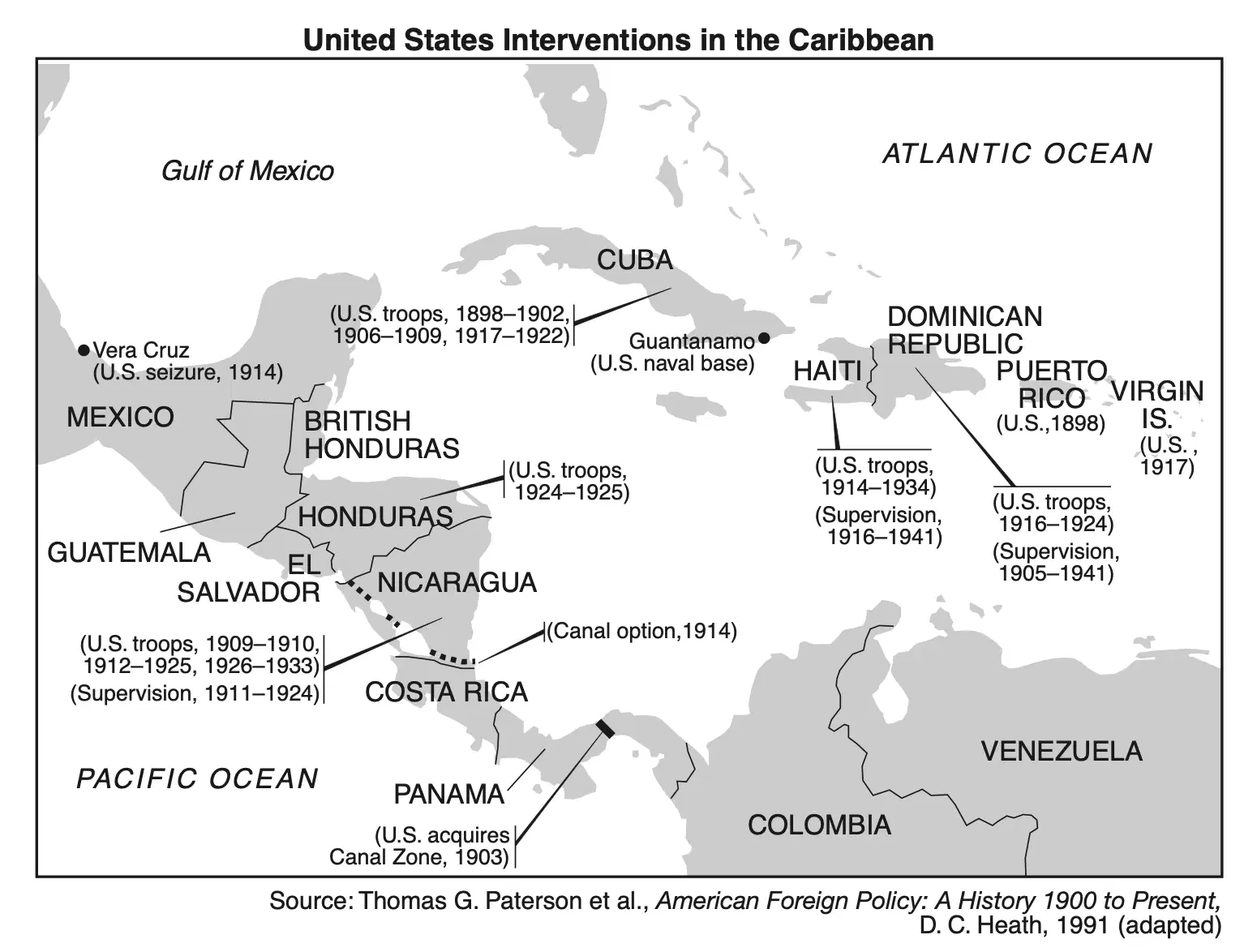
Which conclusion is most clearly supported by information on the map?
The United States respected the sovereignty of Latin American nations.
United States military action was used to protect American interests.
The United States rarely used its armed forces in Latin America before World War II.
United States military action in Latin America supported European colonies.

Which United States foreign policy was most often used to carry out the actions shown on the map?
Roosevelt Corollary to the Monroe Doctrine
Wilson’s Fourteen Points
Kellogg-Briand Pact
Open Door

This statement reflects President Theodore Roosevelt’s position that the federal government should
leave regulation of big business to the states
cease regulation of business activities
regulate abusive business practices
seize control of all trusts
The Jungle, The Octopus, and The Shame of the Cities are all books that were written to
support the formation of a new political party
promote environmental conservation
encourage reform in business and government
express opinions concerning imperialism
The Federal Reserve System was created in 1913 to
regulate the money supply
operate mints to coin money
collect tax revenues
protect deposits in savings banks
During World War I, President Woodrow Wilson used his wartime powers to
win passage of quota acts
grant all women the right to vote
expand freedom of the press
increase government control of the economy
The Senate’s opposition to United States membership in the League of Nations was based
mainly on the
cost of membership dues
failure to give the United States veto power
fear of being drawn into future wars
concern that United States businesses would
be damaged
The Meat Inspection Act (1906) and the Pure Food and Drug Act (1906) were efforts by the federal government to
protect public health and safety
support business monopolies
restrict foreign competition
regulate child labor
President Theodore Roosevelt’s Corollary to the Monroe Doctrine primarily affected Latin America by
guaranteeing human rights throughout the
Western Hemisphere
supporting independence movements in
many countries
encouraging immigration to the United States
increasing United States intervention in the region
“United States Senate Criticized as ‘Millionaire’s Club’”
Which action addressed the problem suggested by this Progressive Era headline?
instituting the direct election of senators
increasing the number of senators from each
state
decreasing the length of term of office for a
senator
establishing voting rights for eighteen-year-old citizens

This poster was used during the administration of President Woodrow Wilson to
convince men to enlist in the military services
help finance the war effort
support membership in the League of Nations
emphasize the goals of the Fourteen Points

Information in the cartoon most clearly supports the conclusion that by 1914
states along the East Coast had granted full voting rights to women
women could vote only in state elections
most states had approved at least some voting rights for women
complete national suffrage for women had been achieved
The actions of muckrakers in the late 19th century and early 20th century resulted in
Supreme Court decisions that expanded the
right to vote
government regulation of unfair business
practices
increases in the power of monopolies
reduction of the president’s power to manage
the economy
The United States Senate refused to ratify the Treaty of Versailles after World War I because many senators believed
President Woodrow Wilson was too ill to sign the treaty
most Americans had sympathized with
Germany during the war
the treaty would not require reparations from Germany
the League of Nations could draw the United
States into future wars
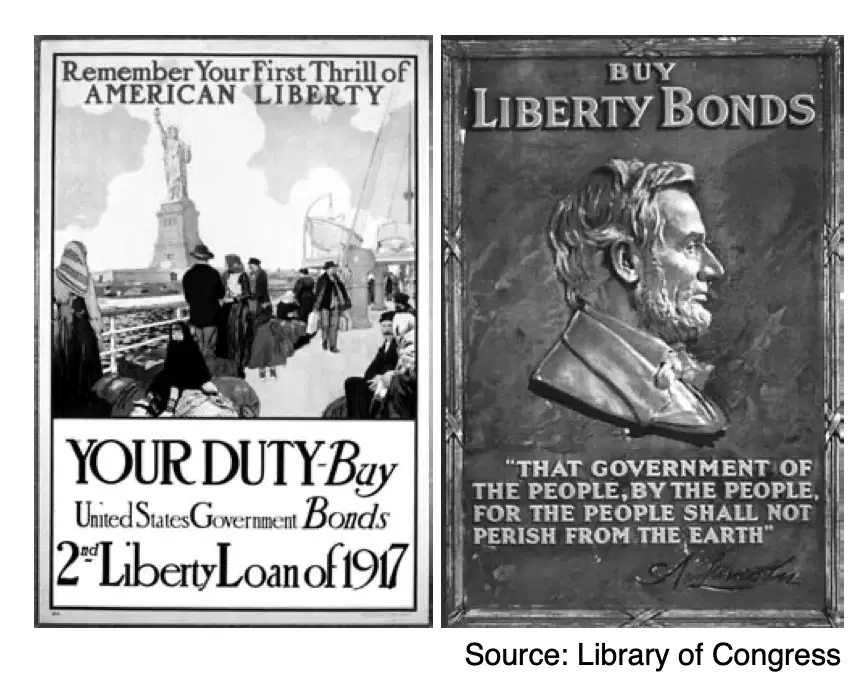
The United States government published these
World War I posters to encourage Americans to
increase military enlistments
reduce the use of consumer goods
invest in the war effort
conserve scarce resources for the military

This cartoon is expressing support for
the Populist crusade
national Prohibition
woman’s suffrage
protective tariffs
The Roosevelt Corollary (1904) to the Monroe Doctrine proclaimed the right of the United States to
intervene in the internal affairs of Latin
American nations
impose trade restrictions on European imports
promote democracy in Africa
determine the border between Alaska and
Canada
In the early 20th century, muckrakers were able to influence American society mainly by
organizing demonstrations in large cities
contributing to presidential election campaigns
lobbying members of Congress
exposing corruption in business and
government
Which statement about President Theodore Roosevelt’s Square Deal is an opinion rather than a fact?
The Square Deal included policies to
increase railroad regulation.
Consumer protection was an element of the
Square Deal.
Square Deal policy made distinctions between good and bad trusts.
The Square Deal was superior to any other
president’s program.

These headlines are all examples of Progressive
Era reforms designed to
place more power in the hands of the voters
strengthen the power of state legislatures
decrease States rights and increase federal
power
exclude specific ethnic groups from the
political process
During World War I, what was President Woodrow Wilson’s purpose in outlining the Fourteen Points?
asking Congress for additional funding for the war effort
suggesting a peace plan to prevent future wars
proposing war crimes trials for leaders of
enemy nations
calling for military alliances against aggressor
nations
A major reason for the creation of the Federal Reserve System (1913) was to
regulate the supply of money in the economy
lend money directly to consumers at low
interest rates
finance public works projects
invest government money in private
industries
The “clear and present danger” principle stated by the Supreme Court in Schenck v. United States (1919) had the effect of
prohibiting the president from implementing
a military draft
preventing the wartime internment of
citizens
restricting the formation of defense alliances
limiting freedom of speech during wartime

These 1898 headlines are best understood as an example of
political advertising
public opinion polling
yellow journalism
isolationist policies

The purpose of these headlines was to build public support for
efforts to defend the Panama Canal
an end to the policy of imperialism
the annexation of Cuba
the war against Spain
The term muckraker was used during the Progressive Era to describe
dissatisfied workers who went on strike
Northerners who went South following the
Civil War
investigative journalists who exposed societal
problems
women who supported the Prohibition
movement
Progressive Era reformers tried to reduce the gap in wealth between the rich and the poor by
creating the Federal Reserve System
giving voters the power of referendum and recall
implementing a graduated income tax
establishing the Federal Trade Commission

Which statement most accurately represents the point of view of this cartoonist?
President Roosevelt supported logging in
national parks.
President Roosevelt refused to involve the
attorney general in regulating monopolies.
President Roosevelt opposed regulation of big business.
President Roosevelt must use the full force of the law to end the power of trusts.

What law is this cartoonist referring to?
Pacific Railway Act
Chinese Exclusion Act
Sherman Antitrust Act
Dawes Act

In his 1902 message to Congress, President
Theodore Roosevelt expressed support for the
creation of a permanent United States military
European colonization of Latin America
traditional United States foreign policy of
isolationism
expansion of the United States as a world power

Which action was most consistent with the ideas
expressed in this message?
United States construction of the Panama Canal
opposition to the Open Door policy
signing consumer protection legislation
creation of the National Park Service

Which conclusion is best supported by these
documents?
Immigration to Texas and the Southwest
outpaced other regions.
Agriculture was the dominant occupation for most immigrants in the Midwest.
Northeastern cities became a refuge for
immigrant families in the early 20th century.
The steel and petroleum industries grew near
the Great Lakes because of rail transportation.

Which constitutional principle is the focus of this cartoon?
federalism
the unwritten constitution
executive privilege
checks and balances
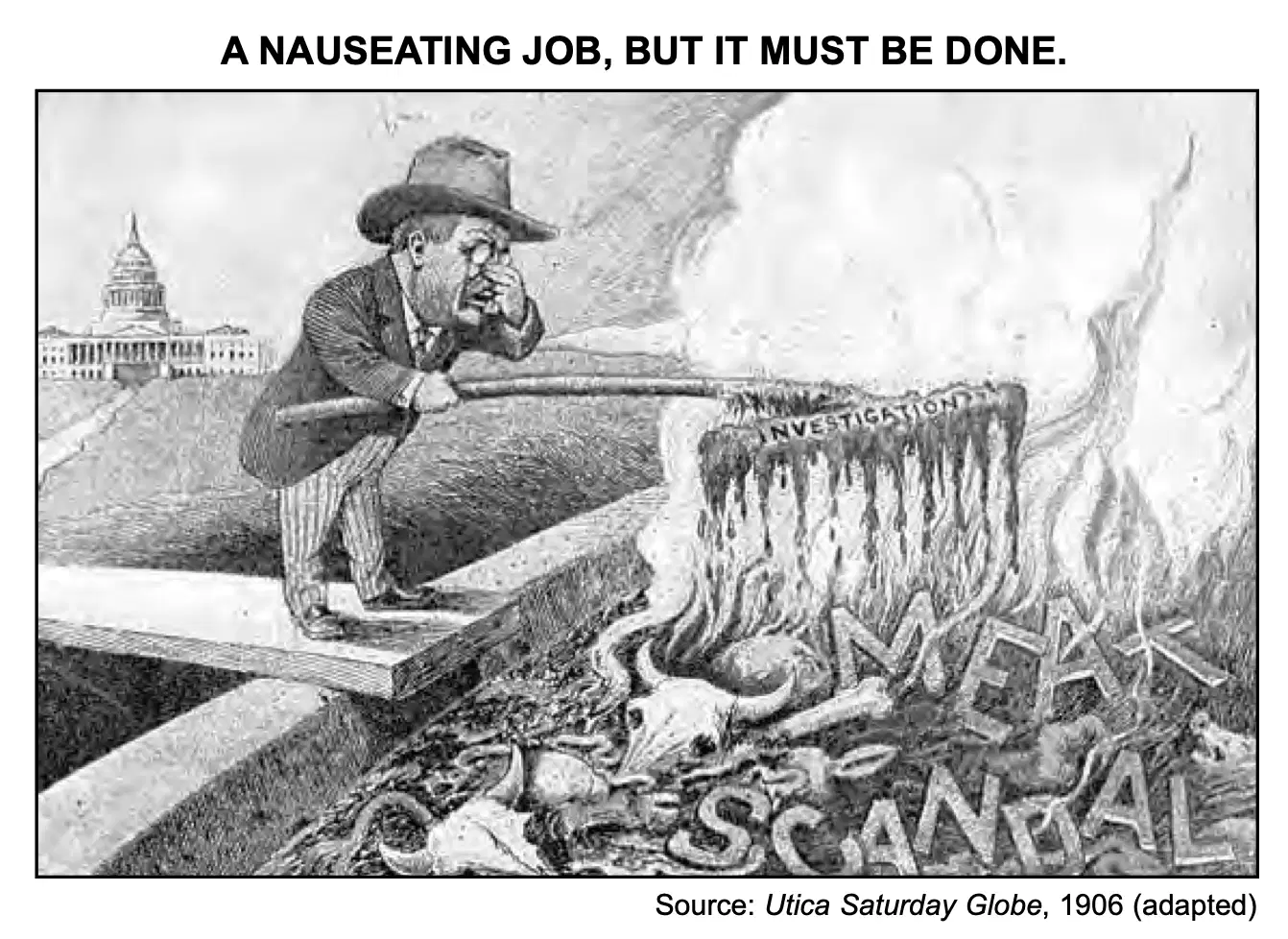
Which book highlighted the problem shown in this cartoon?
How the Other Half Lives
The Octopus
The Jungle
The Shame of the Cities

What is one justification President Woodrow Wilson gives for a declaration of war?
acquisition of overseas colonies
compensation for property lost at sea
increased immigration from Europe
self-government for all nations

What did President Wilson propose to support
the ideals expressed in this message?
establishment of the Federal Reserve System
creation of the League of Nations
passage of a higher protective tariff
decreasing aid to Europe

Which federal action was taken in response to
conditions similar to those illustrated in this
cartoon?
the passage of the Interstate Commerce Act
the passage of the Pure Food and Drug Act
increased regulation of banks
increased efforts in the area of conservation

Which section of the Bill of Rights protects the actions shown in this photograph?
“the right of the people to keep and bear
arms, shall not be infringed”
“no warrants shall issue, but upon probable
cause"
“nor shall any person be subject for the same
offense to be twice put in jeopardy”
“the right of the people peaceably to assemble”

What was the primary goal of the protest shown in this photograph?
to disagree with American involvement in World War I
to promote the ratification of the Treaty of
Versailles
to gain support for a national woman’s suffrage
amendment
to oppose restrictive immigration legislation

What was the primary reason for the problem described by New York City Mayor Fiorello LaGuardia?
Tax revenues increased as a result of Prohibition.
Many Americans refused to accept that consuming alcohol was wrong.
Americans discovered that imported alcohol was superior to domestic alcohol.
Bootleggers drove up prices by restricting the supply of alcohol.

The main goal of the women’s rights movement in the early 20th century was to achieve
political equality
equal pay for equal work
improvements in living conditions
better job opportunities

Which statement best represents a reason why this protest was considered controversial?
The Senate had already repealed the
Prohibition amendment.
President Wilson did not include women’s
demands in his Fourteen Points.
The country was dealing with public outrage
over government corruption.
Suffragists were picketing while German
submarines were attacking American ships.

This cartoon reflects the foreign policy belief that the United States should
oppose independence movements in Latin
America
remain neutral in the affairs of Latin America
become the protector of the Western
Hemisphere
annex the countries of the Western
Hemisphere

A historian would most likely use this document
to investigate events leading up to the
annexation of Alaska
war with Spain
Open Door policy
invasion of Mexico

How did United States foreign policy change in the years immediately following this event?
The United States entered a period of overseas expansion.
The United States pursued a policy of
containment.
The United States became more isolated.
The United States rejected the goal of
Manifest Destiny.

