
 Worksheets
Semester 2 Final Review
Total questions: 100
Worksheet time: 1hrs 3mins
During the era of the lord–vassal (Feudalism) society in Japan, which group of people actually ruled Japan and truly held power?
the emperors
the samurais
the shoguns
the artisans
What is the time period known as between the fall of Rome and the Renaissance?
Middle Ages
Golden Ages
Age of Discovery
Tech Age
Which of the following accurately describes the Mongol Empire’s role in facilitating trans-Eurasian trade?
It imposed Mongol religious beliefs and practices on conquered peoples.
It reestablished the Silk Roads between East Asia and Europe.
It created a self-contained economic system by banning non-Mongol merchants from its territories.
It developed a sophisticated bureaucracy staffed by talented Mongols.
Which of the following best describes Middle Eastern trade in the period 1000 to 1450 ?
A unified Islamic Empire eliminated all internal tariffs and encouraged trade.
The area was engaged in regular trade with China, India, and sub-Saharan Africa.
The Ottoman Empire drained the resources of the area in the Empire’s war with India.
The area ceased trading with Europe but continued trading with sub-Saharan Africa.
What is the problem with relying on trade to build your economy on as a country?
You won't make any money
You are vulnerable to the highs and lows of the global economy
You have too many enemies trying to compete
You don't have enough land for the merchandise

a reform movement against the Roman Catholic Church that began in 1517; it resulted in the creation of Protestant churches
Reformation
Indulgence
Purgatory
Protestant


Reopening of the "Silk Road" trade routes to Europe primarily allowed which of the following events to occur in the 1300's?
When did the Renaissance occur?
1300s–1600s
1300s–1500s
1200s–1600s
none of these
What was the Columbian Exchange?
Columbus' first voyage
the exchange of goods between Europe and North America
Triangular Trade
Atlantic Slave Trade
Which plant became a major crop in the Caribbean islands after the Columbian Exchange?
apple trees
Sugar cane
pineapples
What killed a large percentage of the indigenous population as a result of the Columbian Exchange?
Wild cattle
Diseases
War
What was the Columbian Exchange?
The exchange of money
The widespread transfer of plants, animals, culture, human populations, technology, diseases, and ideas between the Americas and the Old world.
Colombian exchange program.

What is one significance of the Columbian Exchange?
It brought many new ways of life to the Old and New Worlds
The plants brought to the Old World didn't survive there
Many Native Americans would move to Europe for a better way of life
Native Americans became very wealthy off the trade with Europeans
The rights of life, liberty, and property are called:
Unalienable Rights
Essential Rights
Natural Rights
Original Rights
Which three continents were involved in the Triangular Trade Route?
North America, South America and Africa
North America, Africa and Europe
North America, South America and Europe
North America, Africa, and Asia
What was sent from North America to Europe in the Triangular Trade?
Manufactured Goods
Gold and Slaves
Raw Materials
Iron Products such as guns
What was sent from Africa to West Indies in the Triangular Trade?
Manufactured Goods
Gold and Slaves
Raw Materials
Iron Products such as guns
What was sent from Europe to Africa in the Triangular Trade?
Manufactured Goods
Gold and Slaves
Raw Materials
Iron Products such as guns
What was sent from Europe to North America in the Triangular Trade?
Manufactured Goods
Gold and Slaves
Raw Materials
Iron products such as guns
What new crops were grown in the colonies that required an increase in the labor force?
molasses, cotton and tobacco
molasses, rice, and tobacco
sugar cane, molasses, and tobacco
sugar cane, cotton, and tobacco
Which of these best describes the Scramble for Africa?
Imperialist powers sliced Africa amongst themselves by drawing borders on a map
Diplomats worked with tribal leaders to determine how to colonize countries in Africa
European countries worked to finance capital expansion in African nations through loans.
The United States used the Roosevelt Corollary to prevent nations from colonizing Africa.
Define "colony."
a country which is controlled by a more powerful country.
the policy of extending the rule or authority of an empire or nation over foreign countries, or of acquiring and holding colonies.
An area of land under the jurisdiction (rule) of a ruler or state.
Having power and influence over others.
Define "imperialism."
the policy of extending the rule or authority of an empire or nation over foreign countries, or of acquiring and holding colonies.
loyalty and devotion to a nation
the power to do as one pleases
an area of land under the jurisdiction (rule) of a ruler or state.
Why was Africa so valuable to European nations?
advanced ships and weapons
valuable raw materials and resources
vast land for farming
tourism
Who benefited most from imperialism?
European nations
Native Americans
African Kingdoms
Indian Kingdoms
Which of the following is a political reason for European Imperialism?
access to raw materials
access to new markets
desire for cheap labor
need to compete with other nations
Which of the following is an economic reason for European Imperialism?
racist beliefs that Europeans were superior to other people
access to raw materials and valuable resources
need to compete with other nations
desire to spread European religion
What was the Berlin Conference in 1884 credited with starting?
World War II
Scramble for Africa
The Scientific Revolution
The Age of Explorations
Which of the following was a motive of imperialism
Western nations wanted to spread the Islamic religion
European nations were excited about touring new lands
Western nations wanted to remain isolationist
newly industrialized nations needed raw materials and new markets to sell their goods
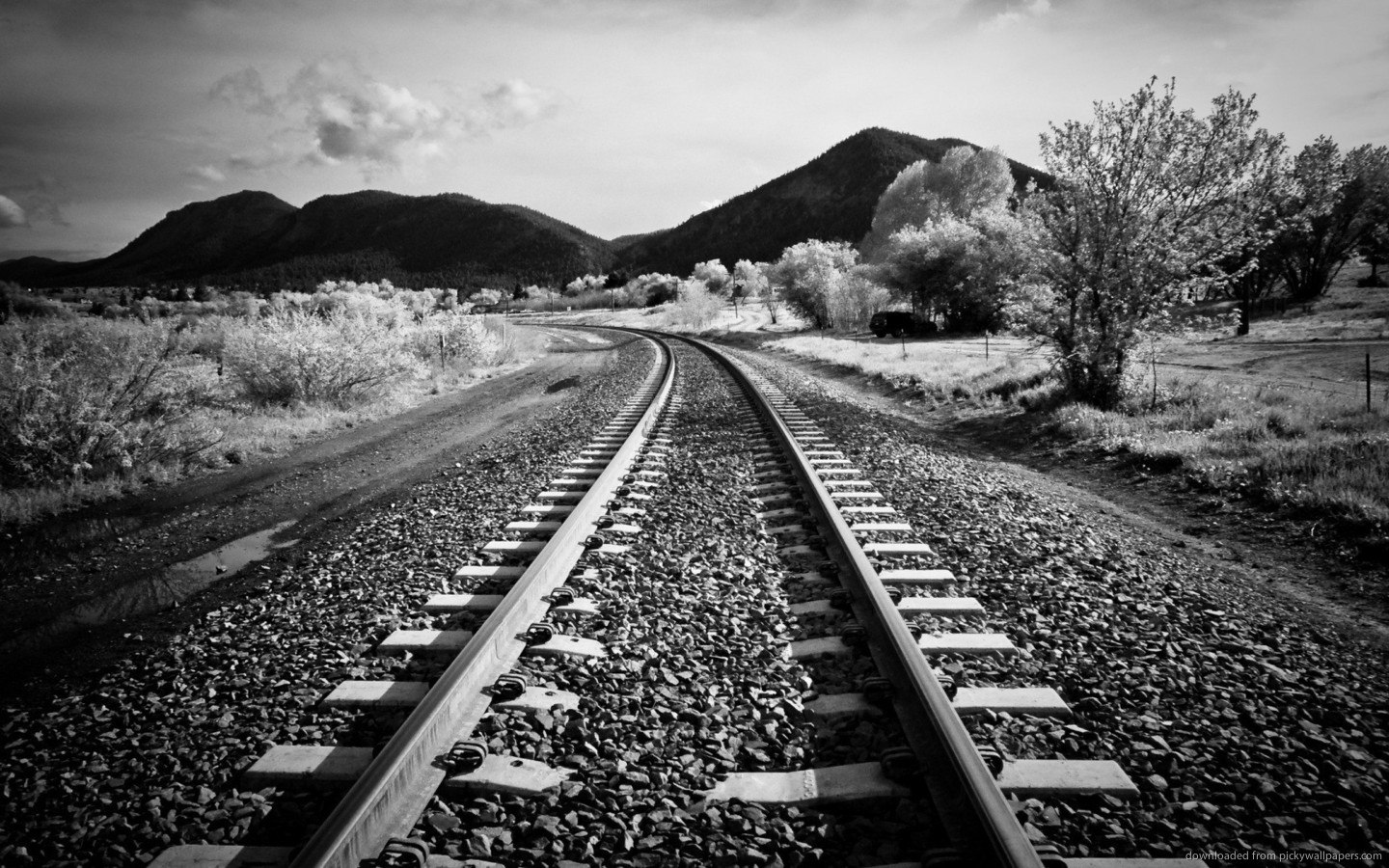
Why were railroads so important during the Industrial Revolution and Imperialism?
Commodore Matthew Perry’s visits to Japan in 1853 and 1854 resulted in the
colonization of Japan by the United States
transfer of spheres of influence to China
introduction of Christianity to Japanese society
opening of trade and diplomatic relations with Japan
Emperor Meiji promoted what in Japan?
isolation and nationalism
capitalism and democracy
revolution and absolutism
reform and modernization
How did countries utilize militarism to influence the public?
The military established martial law in public towns.
The government would glorify the military and build up their weapons.
The military would participate in community service.
People would teach military level standards in grade school.
Which of the following created a level of global competition that lead to world tension?
Nationalism
Imperialism
Militarism
Extremism
Which of the following was NOT a weapon of WW1?
Chemical Gases
Planes
Tanks
Atomic Bomb
Germany, Austria-Hungary and the Ottoman Empire made up which alliance.
Central Powers
Allied Powers
Eastern Powers
Axis Powers
Great Britain, France, Russia and eventually the U.S. made up which alliance?
Axis Powers
Central Powers
Western Powers
Allied Powers
What is the acronym for the causes that started World War I in Europe?
TAME
MAIN
AIM
PLAN

A union of two or more groups
Militarism
Alliance
Imperialism
Nationalism
A policy of extending a country's power and influence through diplomacy or military force.
Militarism
Alliance
Imperialism
Nationalism

pride in one's country
Militarism
Alliance
Imperialism
Nationalism

a type of combat in which opposing troops fight from trenches facing each other. The middle ground between opposing trenches is known as no man's land
Neutrality
Propaganda
Rationing
Trench Warfare
What impact did World War 1 have on the economy of Europe?

Trench Warfare is what?
to prepare for war
A form of warfare where soldiers fight from trees.
Britain, France, Russia, Italy and the United States
A form of warfare in which opposing armies fight each other from trenches dug in the battlefield.

Reparations are what?
As part of the Treaty of Versailles, Germany was ordered to pay fines to the Allies to repay the costs of the war.
American citizens were lending money to the government to pay for the war.
Law passed by Congress in 1917 that required all men from ages 21 to 30 to register for the military draft
British passenger liner sunk in 1915 that helped sway American opinion of the war.

Because of the worldwide economic depression following World War I, Germany _____.

One of the main reasons for massive inflation in Germany following World War I was ____

What was the main reason why the Great Depression was felt so financially in Europe, even before the actual Stock Market Crash of 1929?
A period of very low economic activity combine with very high unemployment. In other words, very little money circulating and no jobs. What is the term?
The Great Depression can best be described as:
A period of global economic insecurity several years following World War I, resulting in widespread unemployment, inflation, and food insecurity across the world.
The forcing of Germany to replay billions of dollars in reparations to the war's victors.
A group of policies and programs designed to help people by deficit spending which would stimulate economic activity.
The reintroduction of private trade, allowing farmers to depress the prices of their own products on a small scale.
World War 2 started in
1918
1929
1939
1940
The German army invaded which country first in WW2?
France
Switzerland
Austria
Poland
Which was a major cause of the rise dictators in Europe after WW1?
economic prosperity
Treaty of Versailles
redrawing of European borders
German win of WWI
Japan's goal in WW2 was to take over what?
North America
Soviet Union
Eastern Asia
Western Asia
Germany invaded Poland

Which was not an Allied Power in WW2?
Which is not an Axis power in WW2?
What event took the Japanese out of the WW2?
Which 3 countries made up the Axis Powers in WW2?
The time period when Nazi Germany sent millions of Jewish people to die in concentration camps
Imperialism
Fascism
Holocaust
Pearl Harbor
Which are the correct date for the start and end of World War 2?
1914-1918
1948-1949
1939-1945
1980-1985
What did the two cold war countries “fight” each other over?
political, economic, and military influence
the best technology
having the most superior weapons
all of the above
Which of the following was NOT a main principle of the UN?
To save future generations from war.
To prevent economic recessions.
To reaffirm human rights.
To establish equal rights for all nations.
The current political boundaries of African nations have been most influenced by
the topographic features of the continent
the patterns of European colonialism
traditional African language groups
the location of ancient African tribal kingdoms
In Africa, a major result of World War II was
an increase in feelings of nationalism
a general decline in the standard of living
an increase in colonization by European nations
a rapid decline in population

Which claim is best supported by the evidence included in these maps?
Egypt and Ethiopia are no longer part of Africa.
By 1980, most African countries had become independent.
By 1950, most of Africa was controlled by Russia or the United States.
The Union of South Africa was renamed Namibia.

The Allies in WW2 consisted of......
Japan, Germany, and America
America, France, and Australia
America, U.S.S.R, and Britain
Germany, China, Japan, and Hawaii

