wayground logo

Free Printable Worksheets

NEW

Font size

S
M
L
XL
Worksheets

The Civil War

Total questions: 55

Worksheet time: 34mins

Name
Class
Date
1.

One of the advantages for the Union during the war was...

a)

they were determined to win to gain their independence

b)

they had the nation's best military leaders

c)

they were fighting the war on their home soil

d)

they had a larger population with more soldiers

2.

An advantage for the Confederacy during the Civil War was..

a)

they were determined to win for their freedom

b)

they were fighting the war on foreign soil

c)

they had a large population of free men

d)

they had little to no factories

3.

One disadvantage for the Union during the war was...

a)

they had a large population

b)

they had little to no factories

c)

they were determined to win for their independence

d)

they were fighting the war on foreign soil

4.

One disadvantage for the Confederacy during the war was...

a)

they had a large population

b)

they had little to no factories

c)

they were fighting for their independence

d)

they were fighting the war on foreign soil

5.

The Battle of Gettysburg is considered the…

a)

The start of the civil war

b)

the major causes for the Civil War

c)

the last major battle of the war

d)

the turning point of the war

6.

The States that Seceded before the Civil War…

a)

Dissolved their bonds with the US and created their own country

b)

Remained with the Union during the war despite supporting slavery

c)

Asked England for protection in return for becoming colonies again

d)

Granted citizenship to enslaved African Americans

7.

Which of the following laws allowed the people to vote on the issue of slavery within their state?

a)

Kansas-Nebraska Act

b)

Missouri Compromise

c)

Fugitive Slave Law

d)

Compromise of 1850

8.

Which of the following was a Confederate strategy for winning at the start of the war?

a)

Controlling the Mississippi River

b)

Capturing the Capitol at Richmond

c)

keep fighting until the North gives up

d)

Draft Slaves into the army

9.

After Lincoln is elected, the South secedes because

a)

Many saw him as an abolitionist

b)

The South gained control of the Senate

c)

they though Lincoln cheated

d)

Lincoln received less than a majority of the people's vote

10.

Which of the following is a true statement about the Dred Scott Case?

a)

Dred Scott was granted his freedom by the Supreme Court.

b)

The Supreme Court promised to end slavery 5 years after the case was over.

c)

The Surpeme Court outlawed slavery in the Northern States only.

d)

The Supreme Court declared that slaves are property and can be taken anywhere in the US.

11.

Which of the following documents freed slaves in the Confederate states ONLY?

a)

Emancipation Proclamation

b)

Gettysburg Address

c)

Fugitive Slave Act

d)

The Constitution

12.

Which of the following groups provided schooling, help finding jobs, medical services etc. to freed African Americans after the Civil War?

a)

The Republican Party

b)

The Anti-Slavery Group

c)

Society of Friends

d)

The Freedmen's Bureau

13.

Which of the following was method used by Southerners to stop African Americans from voting?

a)

Poll Tax

b)

Literacy Tests

c)

Terror and Violence

d)

All of the Above

14.

Which Reconstruction Amendment outlawed slavery everywhere in the US, for good?

a)

13

b)

14

c)

15

d)

16

15.

What was Lincoln's goal in fighting the Civil War at the start of the war?

a)

To end slavery

b)

to free the slaves in the border states

c)

to gain independence for the US

d)

to reunite the country

16.
If a Freedman was unemployed, they may be arrested and required to perform forced labor-True or False
a)
True
b)
False
17.
With the 15th Amendment, African Americans were allowed the right of suffrage-True or False
a)
True
b)
False
18.
Southern whites passed laws restricting the rights of African Americans called--
a)
Black codes
b)
Slave Laws
c)
Confederate Rights
d)
Merica Laws
19.
The white terrorist group that attacked Blacks and white republicans to restore Democratic control in the South was the--
a)
Kappa Kappa Kappa
b)
Redeemers
c)
Pure Race Fraternity 
d)
Ku Klux Klan
20.
How did the 14th amendment overrule the Dred Scott decision?
a)
It abolished slavery
b)
It said slaves could vote
c)
It protected African Americans as equal citizens
d)
It said that African Americans could move north
21.
Overall, Reconstruction--
a)
brought changes to the Constitution that were difficult to encorce
b)
was a complete success
c)
was a complete failure
d)
was fully embraced by the South
22.
What literary work did Harriet Beecher Stowe write that brought attention to the brutal conditions of slavery?
a)
Uncle Tom's Cabin
b)
Gone With the Wind
c)
Up From Slavery
d)
North and South
23.
In the 1800's, what law required Northerners to help return runaway slaves?
a)
Missouri Compromise
b)
Kansas-Nebraska Act
c)
Dredd Scott Decision
d)
Fugitive Slave Law
24.
The abolitionists worked to
a)
give women the right to vote.
b)
grow as much cotton as possible.
c)
make slavery popular in every state.
d)
put an end to slavery.
25.
Who was the Confederate general?
a)
Robert E. Lee
b)
Ulysses S. Grant
c)
Abraham Lincoln
d)
George Washington
26.
What is another meaning for popular sovereignty?
a)
"Power of the people"
b)
"Power of the government"
c)
"Power of the President"
d)
"Power of the Upper Class"
27.
What is the system called that limits the power of the 3 branches?
a)
System of overule
b)
System of balances and checks
c)
System of checks and balances
d)
System of overview
28.
What is the purpose of the Legislative Branch?
a)
Make laws
b)
Enforce laws
c)
Interpret laws
d)
Ignore laws
29.
What is the purpose of the Executive Branch?
a)
Make laws
b)
Enforce laws
c)
Interpret laws
d)
Deny laws
30.
What is the purpose of the Judicial Branch?
a)
Make laws
b)
Enforce laws
c)
Interpret laws
d)
Accept laws
31.
How many Articles are in the Constitution?
a)
4
b)
7
c)
12
d)
26
32.
How many Amendments to the Constitution are there?
a)
12
b)
20
c)
27
d)
32
33.
What were the supporters of the Constitution called?
a)
Federalists
b)
Antifederalists
34.
Which of these is NOT a freedom of the 1st Amendment:
a)
Religion
b)
Speech
c)
Life
d)
Petition
35.
What is the right of the 2nd Amendment?
a)
Right to bear arms
b)
Right of the Press
c)
Right to land ownership
d)
Right to buy weapons
36.
Fill in the blank: We the People of the United States, in Order to form a more perfect Union, establish ___________
a)
Freedom
b)
Liberty 
c)
Justice
d)
Democracy
37.
Federalist wanted a:
a)
Strong Central Government
b)
Strong State Government
38.
Anti federalists wanted a: 
a)
Strong Central Government
b)
Strong State Government
39.
The Sons of Liberty were:
a)
the children of our Founding Fathers.
b)
a professional dance team.
c)
Patriots who protested taxes.
d)
the writers of the Declaration of the Independence.
40.
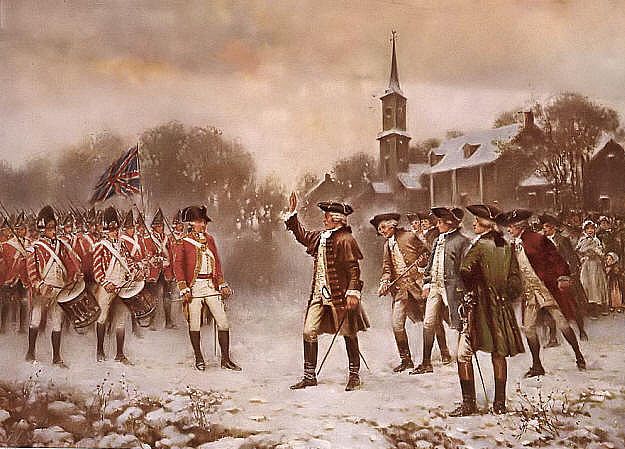
What is another name for British soldiers?
a)
Redcoats
b)
Patriots
c)
Minutemen
d)
Continental Soldiers
41.
What did we call colonists who did NOT want independence from England?
a)
Minutemen
b)
Traitors
c)
Militia
d)
Loyalists
42.
"No ________ without representation"
a)
voting
b)
taxation
c)
rights
d)
liberty poles
43.
What was the purpose of the Boston Tea Party?
a)
to punish merchants for selling imported tea.
b)
to see who could throw a barrel further.
c)
to frame the Native Americans.
d)
to protest taxes
44.
Who won the American Revolution?
a)
The British
b)
The American Colonists
45.
What country joined the colonists to help them win the war?
a)
Germany
b)
France
c)
Netherlands
d)
Africa
46.
There were many reasons why the American Revolution took place between Britain and the colonies. Some of the colonists were unhappy with "no taxation without representation". What does that mean?
a)
The colonists should not be taxed unless they were represented in Parliament. 
b)
The colonists should not be taxed because they could not vote for the King.
c)
The colonists should not be taxed unless the taxes were used in the colonies. 
d)
The colonists should not be taxed because no one should be taxed. 
47.
After the Boston Tea Party, King George passed a set of laws that included the Quartering Act. The name of these laws were 
a)
the Tea Act.
b)
the Stamp Act.
c)
the Intolerable Acts.
d)
Treaty of Paris.
48.
In 1754, war broke out between Britain and France. In Europe it was known as the Seven Years War. When the fighting started in North America it was called the
a)
French and Indian War. 
b)
Revolutionary War.
c)
Civil War.
d)
Mexican War.
49.
Why is July 4, 1776 an important date in U.S. history?
a)
Common Sense was published.
b)
The Olive Branch Petition sent to King George III.
c)
The American Revolution ends.
d)
The Declaration of Independence is signed.
50.
According to the Declaration of Independence, what truth was "self-evident"?
a)
All men are created equal
b)
Rights are given by good kings
c)
Government exists to protect us from ourselves
d)
Only a democracy can protect our rights
51.
According to the Declaration of Independence, where does government get its power?
a)
From the King
b)
From the Supreme Court
c)
From God
d)
From the people
52.
What are our natural rights according to Jefferson?  (He got the idea from John Locke, but he changed the last right.)
a)
Freedom of speech, religion, and press
b)
Life, liberty, and property
c)
Life, liberty, and the pursuit of happiness
d)
Voting, rebelling, and health
53.
The List of Grievances were the part of the Declaration that
a)
detailed the colonists' complaints with King George.
b)
listed a man's natural rights.
c)
introduced the Declaration.
d)
concluded the Declaration, declaring America a free country.
54.
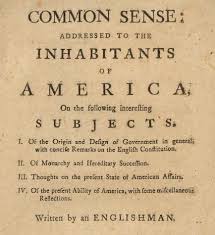
Who wrote a pamphlet called "Common Sense"?
a)
George Washington
b)
Thomas Paine
c)
Thomas Jefferson
d)
Patrick Henry
55.

Your last day of school is

a)

June 22

b)

June 23

c)

June 26

d)

June 25