wayground logo

Free Printable Worksheets

Font size

S
M
L
XL
Worksheets

Geography Exam Review

Total questions: 116

Worksheet time: 1hrs 19mins

Name
Class
Date
1.
What does a compass rose show?
a)
Key
b)
Distance
c)
Directions
d)
States
2.
What does a map’s scale compare?
a)
direction on a map with direction on Earth
b)
distance on a map with distance on Earth
c)
location on a map with location on a globe
d)
distortion on a map with distortion on a globe
3.
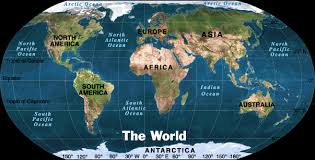
the northern-most ocean in the world
a)
Arctic Ocean
b)
Atlantic Ocean
c)
Pacific Ocean
d)
Indian Ocean
4.

Ocean found to the East of the Canada

a)

Pacific

b)

Indian

c)

Atlantic

d)

Australian

5.
Which continent do we live on?
a)
North America
b)
South America
c)
Europe 
d)
Asia 
6.

What is the capital of Canada

a)

Toronto

b)

Ottawa

c)

Vancouver

d)

Montreal

7.
What is the capital of Prince Edward Island?
a)
St. John's
b)
Halifax
c)
Fredericton
d)
Charlottetown
8.
What is the capital of New Brunswick?
a)
St. John's
b)
Halifax
c)
Fredericton
d)
Charlottetown
9.
What is the capital of Ontario?
a)
Toronto
b)
Winnipeg
c)
Regina
d)
Quebec
10.
What is the capital of Saskatchewan?
a)
Toronto
b)
Winnipeg
c)
Regina
d)
Quebec
11.
What is the capital of British Columbia?
a)
Whitehorse
b)
Victoria
c)
Edmonton
d)
Yellowknife
12.
What is the capital of the Northwest Territories?
a)
Whitehorse
b)
Victoria
c)
Edmonton
d)
Yellowknife
13.

What is the capital of Nunavut?

a)

Whitehorse

b)

Iqaluit

c)

Edmonton

d)

Yellowknife

14.
Which physical feature is a huge region rich in minerals, trees, and water but is not good for farming?
a)
The Hudson Bay
b)
The St. Lawrence River
c)
The Canadian Shield
d)
The Rocky Mountains
15.
How has climate affected where Canadians live?
a)
Few people live in the northern regions of Canada because of the cold climate.
b)
Few people live along the border of Canada and the U.S. because of the cold climate.
c)
Most people tend to migrate and live in the northern provinces of Canada.
d)
Most people tend to migrate toward Great Bear Lake and Great Slave Lake.
16.
Where do the majority of Canadians live?
a)
near the western border with Alaska
b)
near the northern border along the Arctic Ocean
c)
near the southern border with the U.S.
d)
near the eastern border along the Atlantic Ocean
17.
Which number on the map shows The Great Lakes?
a)
1
b)
2
c)
3
d)
4
18.
The name of the body of water surrounded by the Canadian Shield is
a)
St. Lawrence Seaway
b)
Atlantic Ocean
c)
Arctic Ocean
d)
Hudson Bay
19.
Northern Canada is extremely cold due to its location close to:
a)
Quebec
b)
Ottawa
c)
Arctic Circle
d)
Potash
20.
Which Canadian province has the largest population?
a)
Quebec
b)
Alberta
c)
Ontario
d)
British Columbia
21.

The largest landform region in Canada is the ...

a)

Canadian Shield

b)

Great Lakes - St. Lawrence Lowlands

c)

Interior Plains

22.

This is the smallest region with more industries and most of the population.

a)

Interior Plains

b)

Canadian Shield

c)

Great Lakes - St. Lawrence Lowlands

23.
This area contains prairies and farms
a)
St. Lawrence Lowlands
b)
Western Mountains
c)
Interior Plains
24.

This area has fertile valleys and low mountains rich in forests and mineral resources and fish.

a)

Western Cordillera

b)

Interior Plains

c)

Appalachian Region

25.
This area is a wilderness of rocks, lakes and swamps.
a)
Canadian Shield
b)
St. Lawrence Lowlands
c)
Interior Plains
26.

which of the following helps you identify what symbols mean on a map?

a)

legend

b)

scale

c)

map

d)

title

27.
The two main factors that determine the climate of a region are _____________ and ______________.
a)
altitude and pressure
b)
pressure and temperature
c)
temperature and precipitation
d)
altitude and pressure
28.
Increased carbon dioxide may cause global warming by trapping more ____________ in the atmosphere.
a)
water
b)
gases
c)
heat
d)
water vapor
29.
During cold periods called _____________________, large parts of Earth's surface was covered with sheets of ice.
a)
glaciers
b)
Ice Ages
30.

Possible human solutions for limiting global warming and climate change are...

a)

being more energy-efficient

b)

using renewable sources of energy

c)

removing carbon from fossil fuel emissions

d)

all of the above

31.

What is the direct cause of rising sea levels?

a)

Melting Sea Ice

b)

Melting Land Ice

c)

Climate Change

32.

Occurrence of which of the following events has been altered due to climate change ?

a)

droughts

b)

flooding

c)

melting of polar ice caps

d)

all of the above

33.

The main human activity that releases greenhouse gases is

a)

using public transportation and there by reduce the affects of greenhouse gases.

b)

burning fossil fuels

c)

texting on cellphones

d)

eating meat

34.

Which of the following is contributing to an INCREASE in carbon dioxide in the atmosphere?

a)

deforestation

b)

photosynthesis

c)

oceans

d)

all of the above

e)

the loss of animal species

35.
Which of the following is NOT evidence of global warming?
a)
Sea level rising
b)
Loss of Arctic Sea Ice
c)
Less Water Vapor in the Air
d)
More extreme weather events
36.
Global Warming does not affect humans, only plants and animals
a)
True
b)
False
37.
Changes in temperature are expected to be greatest
a)
near the equator
b)
near the poles
c)
between the equator and the North Pole
d)
between the equator and the South Pole
38.

What type of glacier forms in a mountainous area?

a)

Alpine

b)

continental

c)

till

d)

moraine

39.

A gigantic mass of moving ice

a)

glacial drift

b)

stratified drift

c)

till

d)

glacier

40.

What type of glacier covers huge areas of land?

a)

alpine

b)

continental

c)

till

d)

moraine

41.

What are sharp pyramid shaped peaks formed by alpine glaciers called?

a)

U-shaped valleys

b)

cirques

c)

aretes

d)

horns

42.

which type of moraine forms along each side of a glacier?

a)

medial moraine

b)

lateral moraine

c)

ground moraine

d)

terminal moraine

43.
A glacier is __________
a)
series of frozen lakes that line up parallel to one another 
b)
series of frozen seas that rest in the interior of continents 
c)
o  large body of ice that does not move across the earth's surface 
d)
large body of ice and snow that shows evidence of movement 
44.
Glaciers form when _____.
a)
less snow falls than melts 
b)
more snow falls than melts 
c)
less rain falls than freezes 
d)
more rain falls than freezes 
45.
Icebergs form when a glacier flows into a body of water and cracks apart. This process is known as _____.
a)
drifting
b)
cracking
c)
calving
d)
crevassing
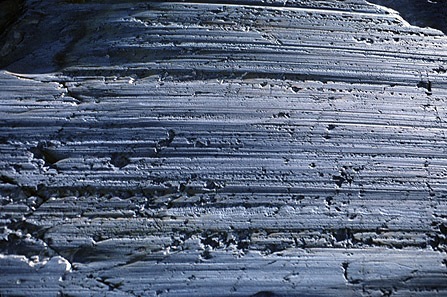
46.
_____ are parallel scratch marks on bedrock
a)
Plucking
b)
Abrasion
c)
Straitions
d)
Till
47.
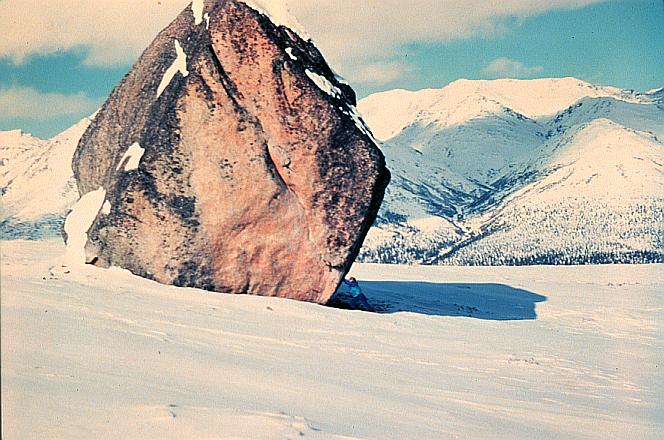
_____ are enormous boulders transported and deposited by glaciers, often far from their source region.
a)
Till
b)
Erratics
c)
Moraines
d)
Fjords
48.
A _____ is a meandering narrow ridge formed when water, flowing in a tunnel underneath a melting glacier, deposited sediment
a)
erratic
b)
moraine
c)
esker
d)
fjords
49.
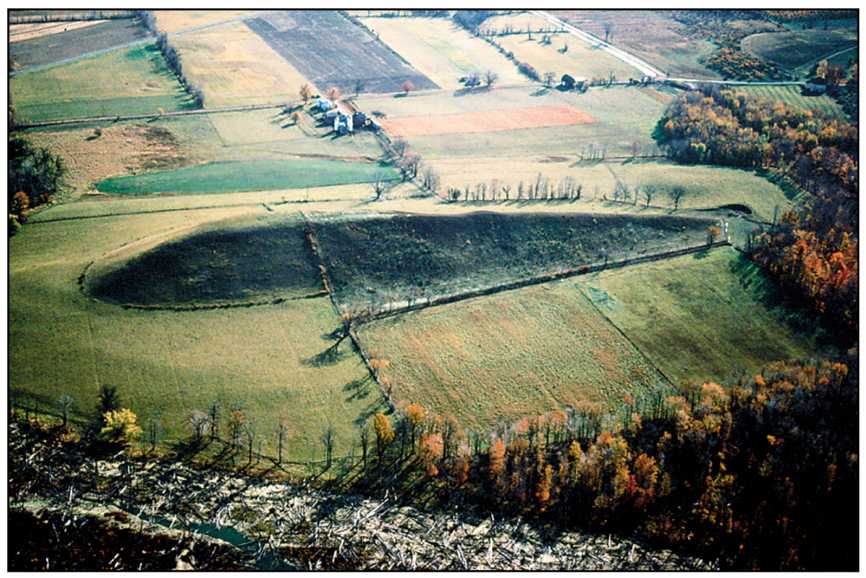
A _____ is a tear-drop-shaped hill created by ice flow over and around till deposit.
a)
drumlin
b)
esker
c)
moraine
d)
erratic
50.
Glaciers only form near Earth’s poles.
a)
True
b)
False
51.
A German scientist Alfred Wegener was the first to hypothesize that ...........
a)
Continents were once joined
b)
The sea floor is spreading
c)
Continents are moving
d)
The Earth's magnetic pole flips
52.
Pangaea was an ancient supercontinent made up of...
a)
America, Greenland, and Europe.
b)
Antarctica, India, and America.
c)
all of Earth’s continents.
d)
South Africa, India, Australia, and South America.
53.
Peer scientists reviewing Wegener’s hypothesis of continental drift rejected his notion because
a)
His evidence was too few to make a valid conclusion 
b)
He did not explain how continents move and what moves them
c)
His evidence was not clear in showing  how continents were joined
d)
He lied by including false evidence
54.
The Himalayan mountains have some of the highest peaks like Mt. Everest, on which type of convergent boundary are they located?
a)
Oceanic/Continental
b)
Oceanic/Oceanic
c)
Continental/Continental
d)
None of the above
55.
The mechanism that moves continents is based on heat energy moving by
a)
Radiation in the core
b)
Conduction in the lithosphere
c)
Convection in the Asthenosphere
d)
None of these options is true
56.

The San Andreas fault in California is one example of a...

a)

Divergent boundary

b)

Convergent boundary

c)

Transform boundary

d)

All of the above

57.

What type of event will occur at this boundary?

a)

Earthquake

b)

Volcano Eruption

c)

Tornado

d)

Mountain Building

58.

A divergent boundary occurs when plates ....

a)

Pull apart

b)

Come together

c)

Slide past each other

d)

subducting

59.

Mountains are created when....

a)

Two continental plates collide

b)

Two oceanic plates pull apart

c)

An Oceanic plate subducts under a Continental Plate

d)

Two continental plates pull apart

60.

The Great Rift Valley in Africa and the Mid-Ocean Ridge were all created by this boundary

a)

Divergent

b)

Convergent

c)

Reform

d)

Transform

61.

The tectonic plates float on the

a)

lithosphere

b)

lower mantle

c)

outer core

d)

asthenosphere

62.

What occurs when two plates come together and the denser one is forced under back into the mantle?

a)

reduction

b)

conduction

c)

subduction

d)

convection

63.

The youngest rocks on the seafloor are most likely found...

a)

closest to a mid-ocean ridge

b)

farthest from a mid-ocean ridge

c)

near the coastlines

d)

closest to a deep sea trench

64.

What do volcanic island arcs indicate about the plate tectonics in the region?

a)

a converging plate boundary

b)

a diverging plate boundary

c)

a transform plate boundary

d)

new seafloor being created

65.
_________ are vibrations that travel through Earth carrying the energy released during an earthquake.
a)
Seismic Waves
b)
Rumbles
c)
Plate Tectonics
d)
Convection Currents
66.
The process by which molten material adds new oceanic crust to the ocean floor is called ___________.
a)
Divergent boundary
b)
Sea-floor spreading
c)
Convergent boundary
d)
Renovating 
67.
_____________ is when two plates move toward each other.
a)
Convergent boundary
b)
Allegiant boundary
c)
Transform boundary
d)
Sliding boundary
68.
Which type of crust is more dense?
a)
oceanic
b)
continental
c)
divergent
d)
pizza
69.
A rock formed from fragments of other rocks is a(n)
a)
Metamorphic Rock
b)
Sedimentary Rock
c)
Extrusive Rock
d)
Igneous Rock
70.
The three groups of rocks are classified by
a)
How they form
b)
Color
c)
Grain size
d)
Chemical Composition
71.
Fossils are only found in
a)
Sedimentary rocks
b)
Foliated Metamorphic rocks
c)
Igneous Rocks
d)
Nonfoliated Metamorphic rocks
72.
The process by which igneous rocks are formed...
a)
heat and pressure
b)
melting and cooling
c)
weathering and erosion
73.
The process by which metamorphic rocks are formed...
a)
heat and pressure
b)
erosion and deposition
c)
melting and cooling
74.
Rock that forms when pressure and temperature change existing rock.
a)
Igneous Rock
b)
Sedimentary Rock
c)
Metamorphic Rock
d)
Rock Cycle
75.
_______ rock forms from magma/lava
a)
Metamorphic
b)
Sedimentary
c)
Igneous
76.
This rock was formed by smaller pieces of rock that settled at the bottom of a lake millions of years ago. What type of rock is this?
a)
Sedimentary
b)
Igneous
c)
Metamorphic
77.
This rock started as molten magma. What type of rock is this?
a)
Sedimentary
b)
Igneous
c)
Metamorphic
78.
This rock was another type of rock that was heated and compressed over time. What type of rock is this?
a)
Sedimentary
b)
Igneous
c)
Metamorphic
79.
Sediment goes through _________________ to become sedimentary rock.
a)
heat and pressure
b)
compacting and cementing
c)
weathering and erosion
d)
melting and cooling
80.

what is the rock cycle.

a)

molten rock that is stored underground.

b)

rock material that forms where rocks are broken down into smaller pieces.

c)

a process that changes one type of rock into another type of rock.

81.
Which of the following best describes a refugee?
a)
One who is fleeing to save their life
b)
One who has been banished from their country
c)
One who is a criminal
d)
One who is leaving their family behind 
82.
Which term best describes people from other countries who enter the United States to start new lives?
a)
consumers
b)
emigrants
c)
immigrants
d)
refugees
83.
A factor that leaves one with no choice but to leave one's current home (especially parental home), country, region, organization, or religion.
a)
environmental
b)
distribution
c)
pull factor
d)
push factor
84.
The lure of another home, country, region, organization, or religion. 
a)
migration
b)
routes
c)
push factor
d)
pull factor
85.
Which from the following is NOT a push factor?
a)
Political instability
b)
Natural hazards
c)
Job opportunities
d)
Disease
86.
What is population density?
a)
The number of people living across Europe.
b)
The number of plants occupying an area.
c)
The number of people living in an area.
d)
The number of insects in an ecosystem.
87.
What does birth rate mean?
a)
The number of babies born per 1000 of the population.
b)
The number of babies that live in a country.
c)
The number of babies born per 100 of the population.
d)
The number of babies born per 1000 of the population per year.
88.
What is a population pyramid?
a)
A type of graph showing the number of males and females in different age groups.
b)
A type of graph showing the number of males in different age groups.
c)
A type of graph showing the number of females  in different age groups.
d)
A type of graph showing the number of males and females in only one age group.
89.
Even if a country has equal birthrates and death rates it can still experience
population growth due to
a)
Migration 
b)
Doubling Time 
c)
Long life expectancy 
d)
High standard of living 
90.
Moving to a different country because a war is taking place and you feel unsafe is a 
a)
Push
b)
Pull 
91.
Moving to a different country for economic opportunities is a 
a)
Push 
b)
Pull 
92.
The scientific study of populations 
a)
Demography
b)
Population studies 
c)
Geography
d)
Ecology 
93.
Difference between birth and death rates 
a)
Mortality 
b)
Fertility 
c)
Doubling time 
d)
Natural Increase
94.
Pattern of human settlement 
a)
Population density 
b)
Natural Increase 
c)
Population Movement 
d)
Population Distribution 
95.

Based on the data above, which statement best describes the trend in Thailand´s population between

1980 and 2015?

a)

It has continued to grow at a rapid rate during the last 35 years

b)

It has slowed over time, from rapid growth to very little growth over the last 35 years

c)

It has shown no change in the last 35 years

96.

Education of women worldwide has lowered birthrates partly because

a)

educated women need to bear many children to ensure that some will survive

b)

educated women may focus on their careers more than raising large families

c)

educated women contribute less to their family income

d)

all of the above

97.

The basic facilities of a country or region, such as roads, bridges, and sewers.

a)

Age Structure

b)

Demographic Transition

c)

Migration

d)

Infrastructure

98.

Which of the following is NOT a strategy that would reduce population size?

a)

Economic incentives for families for having fewer children.

b)

Legal punishments for people who have too many children.

c)

Limiting education of women

d)

Public advertising showing families with fewer children having a better life.

99.
Life expectancy is lowest in:
a)
East Asia.
b)
North America.
c)
Africa.
d)
Western Europe.
100.
In recent years, the human population has 
a)
increased exponentially
b)
decreased exponentially
c)
decreased slowly
d)
increased slowy
101.
What event in the mid-1700's significantly changed human population growth?
a)
Industrial Revolution
b)
development of agriculture
c)
bubonic plaque
d)
human settlement began
102.
What can cause a country to have a low literacy rate? 
a)
Uneducated Parents 
b)
Lack of learning materials
c)
Lack of resources (poverty) 
d)
all of these
103.
Being able to read allows people to 
a)
often get lower paying jobs, afford clothing, and afford healthcare. 
b)
get better jobs and earn more, afford housing, food, clothing, and health care for their families.
c)
think.
d)
earn less money. 
104.
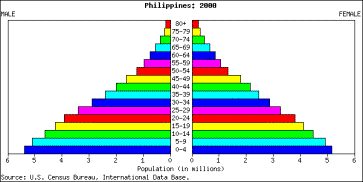
According to the population pyramid of this country, its population is most likely...
a)
growing slowly.
b)
growing rapidly.
c)
decreasing.
d)
not changing.
105.
a)

Growing/Increasing Population

b)

Stationary Population

c)

Declining Population

106.
According the population pyramid Canada's population is _______________ 
a)
growing
b)
getting smaller
c)
staying the same 
107.

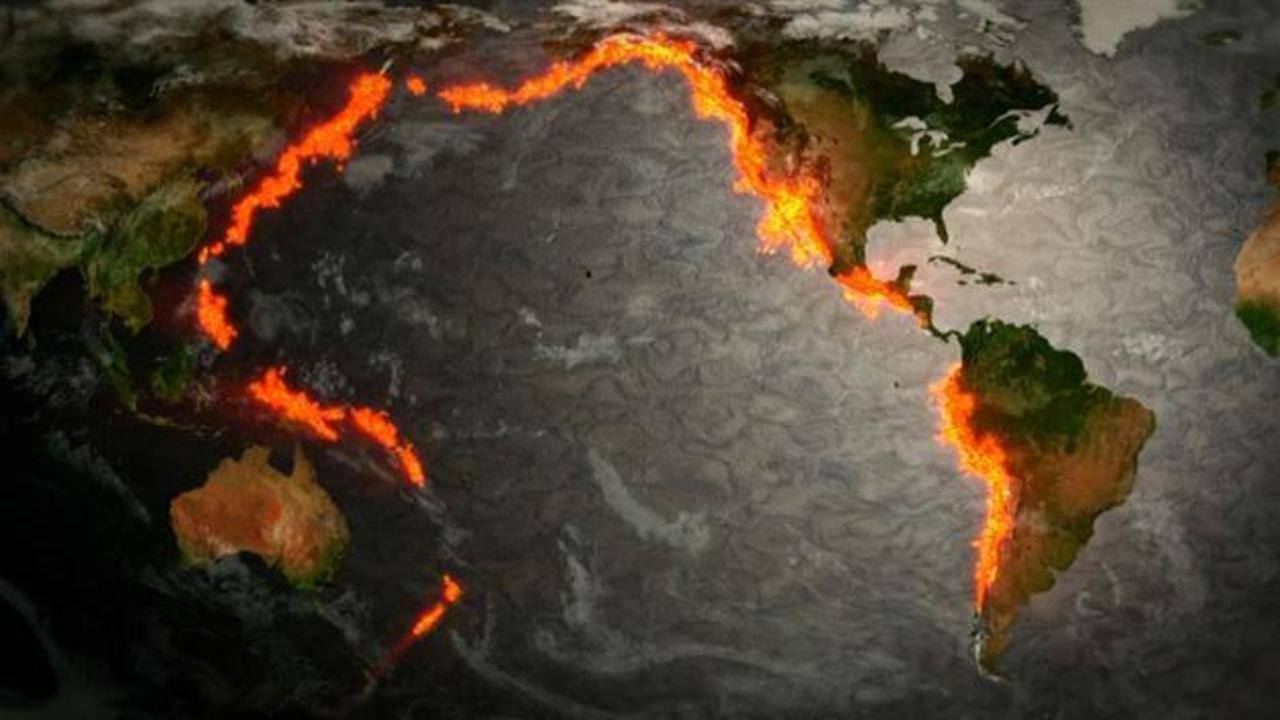
Which continents does the ring of fire span across?

a)

Africa, Europe, North america, South America.

b)

Africa, Asia, Europe

c)

North America, South America, Australasia, Asia.

108.

What are tectonic plates?

a)

Pieces of earth's crust

b)

The rocky core of the earth

c)

The new biome in 1.14

d)

The base of the volcano

109.
Which ocean in the world is also known as the "Ring of Fire"
a)
Atlantic
b)
Indian
c)
Arctic
d)
Pacific
110.
Volcanic eruptions can also cause tsunamis.
a)
True
b)
False
111.
Most tsunamis occur here.
a)
Atlantic Ocean
b)
Indian Ocean
c)
Arctic Ocean
d)
Pacific Ocean
112.

What process occurs where an oceanic and continental plate collide?

a)

subduction

b)

convergent

c)

diversion

d)

transform

113.
Who is the person credited with developing the theory of continental drift?
a)
Harry Hess
b)
Galileo
c)
Alfred Wegener
d)
Newton
114.
Can volcanic eruptions effect climate?
a)
yes 
b)
no
115.
What are the two types of crust
a)
continental and oceanic
b)
ocean and upper
c)
lower and upper
d)
pizza and subway
116.
Earthquakes and volcanoes are most likely found in which locations?
a)
At plate boundaries
b)
in oceans
c)
in the middle of continents
d)
in the middle of plates