
 Worksheets
SBI3C - Exam
Total questions: 160
Worksheet time: 2hrs 41mins
Name
Class
Date
1.

Which of the following terms refers to the spherical-shaped bacteria?
a)
Bacilli
b)
Cocci
c)
Spirochetes
d)
Flagella
2.

During which process do two bacterial cells join together to transfer genetic material?
a)
Transduction
b)
Binary Fission
c)
Conjugation
d)
Asexual Reproduction
3.

Which of the following statements about viruses is incorrect?
a)
They are not grouped with any living organism.
b)
They are inactive outside a living organism
c)
They are made of tiny cells
d)
They can reproduce, but not without a host cell
4.

Which of the following processes does not increase bacterial genetic diversity?
a)
Transductions
b)
Conjugation
c)
Binary fission
d)
Transformation
5.

Which of the following describes a bacteriophage?
a)
A virus that only infects plants
b)
A virus that only infects birds
c)
A species of bacteria that infects plants
d)
A virus that only infects bacteria
6.

What feature of eukaryotic cells makes them different from prokaryotic cells.
a)
They contain DNA
b)
They possess ribosomes
c)
Their organelles are bound by membranes
d)
They are surrounded by cell membranes
7.

Which group of organsims is sometimes called a "stuff drawer" for items that don't seem to belong anywhere else?
a)
The domain Archaea
b)
The kingdom Bacteria
c)
The kingdom Fungi
d)
The kingdom Protista
8.

Which of the following is an example of a multicellular protest?
a)
Kelp
b)
Zooflagellate
c)
Plasmodial slime mold
d)
Plasmodium
9.

Which of the following structures is not used by protists for movement?
a)
Oral groove
b)
Flagella
c)
Cilia
d)
Pseudopodia
10.

Which term describes asexual reproduction in bacteria?
a)
Transduction
b)
Conjugation
c)
Transformation
d)
Binary fission
11.

Which of the following statements about viruses is incorrect?
a)
A virus infects a host cell and causes the cell to burst
b)
A virus takes over the host cell's biological processes and produces viral DNA and proteins.
c)
A virus may insert its DNA into the host cell's chromosome
d)
A virus combines with the host cell to form an ebndospore
12.

Which of the following describes a type of bacteria that obtains its carbon from carbon dioxide rather than organic molecules?
a)
Photoautotrophs
b)
Heterotrophs
c)
Chemoheterotrophs
d)
Photoheterotrophs
13.
The organ system that physically & chemically breaks down food
a)
endocrine
b)
nervous
c)
digestive
d)
excretory
14.
The piece of technology that can see inside the digestive tract using a camera on a tube
a)
X-ray
b)
CT scan
c)
MRI
d)
endoscope
15.
This is needed to see soft tissue such as the digestive tract using an Xray
a)
Xrays never show soft tissue
b)
calcium or magnesium
c)
barium or bismuth
d)
magnets
16.
The maintenance of a ‘steady state’ in the body
a)
homeostasis
b)
peristalsis
c)
egestion
d)
mastication
17.
Resting body temperature (in degrees Celcius) is normally between
a)
7.35 and 7.45
b)
50-100
c)
16-20
d)
36.2-37.2
18.
The 4 steps of food processing, in order, are
a)
absorption, ingestion, digestion, egestion
b)
ingestion, digestion, absorption, egestion
c)
egestion, digestion, absorption, ingestion
d)
ingestion, aborption, digestion, egestion
19.
The region at the back of the mouth where the oral cavity, nasal cavity, and esophagus meet
a)
duodenum
b)
salivary glands
c)
pharynx
d)
trachea
20.
Teeth involved in tearing meat
a)
incisors
b)
canines
c)
premolars
d)
molars
21.
Herbivores have pronounced (large)
a)
incisors
b)
canines
c)
premolarsémolars
d)
wisdom teeth
22.
Chemical digestion begins in the _____ and ends in the _____
a)
mouth....rectum
b)
stomach...small intestine
c)
mouth....small intestine
d)
stomach.....large intestine
23.
The enzyme active in the mouth is
a)
amylase
b)
pepsin
c)
trypsin
d)
bolus
24.
Which is not a function of the saliva
a)
begin chemical digestion of amylose (starch)
b)
forma bolus and lubricate food passing down esopagus
c)
allow for taste
d)
none of the above (all are important functions of saliva)
25.
The rhythmic contractions that move food along the alimentary canal
a)
mastication
b)
homeostasis
c)
churn
d)
peristalsis
26.
Contents of the stomach are held in at the top by the _____ sphincter and at the bottom by the _____ sphincter
a)
cardiac......pyloric
b)
pyloric.....cardiac
c)
iliocaecal.....esophogeal
d)
sphincters are not a part of the stomach
27.
The primary function of the stomach is _____ and the secondary function is _____
a)
aborption.....mixing churning
b)
digestion.....aborption
c)
absorption....digestion
d)
the stomach only has one function
28.
when the mucus lining of the stomach is damaged & pepsin begins breaking down the lining
a)
peristalsis
b)
ulcer
c)
gall stones
d)
cirrhosis
29.
The bacteria involved in making gastric ulcers is _____ ; the bacteria that make vit B & K is _____
a)
H. pylori.....E. coli
b)
E. coli....H. pylori
c)
E. coli for both
d)
H. pylori for both
30.
The accessory organ that is approx. 1.5 kg and made of lobes
a)
gall bladder
b)
liver
c)
pancreas
d)
salivary glands
31.
Bile is produced by the ____ and stored in the _______
a)
liver.....gall bladder
b)
gall bladder.....liver
c)
liver....duodenum
d)
liver....pancreas
32.
Which does the liver NOT store
a)
bile
b)
carbohydrates
c)
vitamins A, B12, and D
d)
amino acids
33.
Which function is not a function of the liver
a)
chemical digestion
b)
produce bile
c)
store carbs, vitamins, and amino acids
d)
detoxify harmful substances
34.
The process of physically breaking large fat molecules down into smaller molecules
a)
peristalsis
b)
emulsification
c)
churn
d)
mastication
35.
These are created when bile salt deposits are held together by cholesterol
a)
gall stones
b)
kidney stones
c)
ball stones
d)
bolus
36.
Yellowing of skin & tissues due to collection of bile pigments in blood
a)
cirrhosis
b)
gall stones
c)
jaundice
d)
ulcer
37.
lubricated food leaving the mouth is called a ______ and once it leaves the stomach it is called ______.
a)
bolus.....chyme
b)
chyme.....bolus
c)
bolus...stool
d)
chyme.....stool
38.
The purposes of the large intestine are
a)
absorb moisture and minerals & produce vit B & K
b)
break down lipids and absorb nutrients
c)
neutralize the acidic chyme
d)
all the above
39.
Feces is made up of all but the following
a)
cellulose (roughage)
b)
bacteria
c)
water
d)
blood cells
40.
Roughage acts to do which function(s)
a)
scrape lining of the intestines and absorb moisture
b)
prevent constipation
c)
keep stools moist
d)
all the above
41.
Which is known as the "bad" fat?
a)
unsaturated
b)
saturated
c)
steroid
42.
Water is a...
a)
polar molecule
b)
non-polar molecule
43.
What is the pH level of a base?
a)
7-14
b)
0-7
c)
14-21
d)
50-100
44.
What is the pH level of an acid?
a)
7-14
b)
14-21
c)
0-7
d)
0-50
45.
Only has 1 simple sugar molecule...
a)
polysaccharide
b)
monosaccharide
c)
disacchairde
d)
lipid
46.
Poly means...
a)
two
b)
one
c)
many
47.
________ are used for energy in animals.
a)
nucleic acids
b)
fat
c)
carbohydatres
d)
proteins
48.
What elements are present in carbohydrates?
a)
carbon, hydrogen, oxygen
b)
carbon, nitrogen, oxygen
c)
carbon, oxygen only
d)
carbon and hydrogen only
49.
Two carbon rings bonded together
a)
disaccharide
b)
polysaccharide
c)
monosaccharide
d)
amino acid
50.
This organic molecule is the main component of biological membranes.....
a)
carbohydrates
b)
lipids
c)
proteins
d)
nucleic acids
51.
Enzymes, hemoglobin and maltase are all considered to be which organic molecule?
a)
carbohydrates
b)
proteins
c)
nucleic acids
d)
lipids
52.
What reactant drives photosynthesis? (makes it go)
a)
carbon dioxide
b)
oxygen
c)
water
d)
sunlight
53.

Identify the biomolecule that stores energy in plants
a)
monosaccharide
b)
disaccharide
c)
polysaccharide
d)
glycogen
54.
Triglycerides are made of
a)
monosaccharides
b)
amino acids
c)
glycerol and 3 fatty acids
d)
nucleotides
55.
Which is used for long term energy storage in humans?
a)
lipids
b)
proteins
c)
carbohydrates
d)
nucleic acids
56.
Enzymes are capable of increasing the rate of a chemical reaction within a living cell. Enzymes accomplish this through which of the following means?
a)
reducing the number of products
b)
reducing the activation energy
c)
increasing the temperature of the cell
d)
increasing the concentration of reactants
57.
Which of the following elements is included in every biomolecule
a)
carbon
b)
fluorine
c)
calcuium
d)
sodium
58.
Fatty acids such as butter and oils and phospholipids are examples of ____________.
a)
Carbohydrates
b)
Lipids
c)
Proteins
d)
Nucleic Acids
59.
______ are made of monomers of monosaccharides
a)
Carbohydrates
b)
Lipids
c)
Proteins
d)
Nucleic Acids
60.
A substance with a pH of 4 is considered a(n)
a)
base
b)
neutral
c)
acid
61.
What are the four macromolecules?
a)
proteins, nucleic acids, carbohydrates, and lipids
b)
monosaccharides, lipids, polysaccaharides, and proteins
c)
RNA, DNA, proteins, and carbohydrates
d)
proteins, DNA, RNA, and steroids
62.
What do cells use for energy storage and as a source of energy?
a)
carbohydrates
b)
cytoplasm
c)
proteins
63.
Which best describes the purpose for food?
a)
to kill bacteria
b)
to prevent disease
c)
to eliminate waste material
d)
to provide fuel for cell processes.
64.
Which best describes how organisms obtain energy from food?
a)
food reacts with water to release energy
b)
food reacts with oxygen to release energy
c)
food reacts with sunlight to release energy
d)
food reacts with carbon dioxide to release energy
65.
Which molecule provided by plants accounts for the energy in a herbivore's diet?
a)
glucose
b)
protein
c)
salt
d)
fat
66.
What is a Cataylst?
a)
A substance that speeds up a rate of chemical reaction.
b)
Molecules that make enzymes work harder and faster
c)
reaction of an enzyme
d)
A substance that slows down a rate of chemical reaction.
67.
What affects Enzyme activity?
a)
Nothing
b)
Temperature, Environment, Diet
c)
Temperature,Activators, Ph levels, Inhibitors
d)
Cataylst and Substrate
68.
What can destroy an Enzyme?
a)
Poison
b)
Extreme Tempatures
c)
High Acidity
d)
All of the Above
69.
Enzymes will make a reaction go _______ and use ______ energy.
a)
faster, less
b)
faster, more
c)
slower, less
d)
slower, more
70.
Which macromolecule stores energy, insulates us, and makes up the cell membrane?
a)
lipids
b)
proteins
c)
carbohydrates
d)
nucleic acids
71.
This is one job proteins do NOT have in the body
a)
storing genetic information
b)
structure
c)
speed up chemical reactions
d)
transport things through cell membrane
72.
Starch and cellulose are complex carbohydrates found in
a)
Plants
b)
Animals
73.

Genotype refers to the ...
a)
physical expression of the genes
b)
the possible combination of alleles in a gene
c)
whether an allele is dominant or recessive
d)
how an organism will appear
74.

An offspring will receive how many alleles from each parent to determine a specific trait?
a)
one
b)
two
c)
three
d)
five
75.
Which of the following is a phenotype?
a)
BB
b)
Bb
c)
bb
d)
Blue eyes
76.
What is a phenotype
a)
The genetic make up (code)
b)
The physical trait
77.
the passing of genetic traits from parent to offspring.
a)
heredity
b)
trait
c)
gene
d)
allele
78.
having two of the same genes for the trait (sometimes called purebred).
a)
homozygous
b)
hetrozygous
c)
protein
d)
chromosome
79.
having two different genes for a trait (sometimes called hybrid).
a)
protein
b)
homozygous
c)
heterozygous
d)
genotype
80.
Two brown eyed parents (Bb) have a baby. What is the chance the baby is blue eyed?
a)
0 %
b)
25%
c)
50%
d)
75%
81.
An allele whose trait only shows up when no dominant allele is present.
a)
hidden allele
b)
dominant allele
c)
recessive allele
d)
present allele
82.
Snapdragon flowers come in red, pink and white. What type of inheritance is this?
a)
Complete Dominance
b)
Incomplete Dominance
c)
Codominance
d)
Polygenic Inheritance
83.
Incomplete dominance means that the traits are
a)
expressed equally
b)
dominant
c)
recessive
d)
blended
84.
One form of a gene is called_______________
a)
a DNA
b)
a Phenotype
c)
a trait
d)
an allele
85.
Which of the following genotypes is a purebred?
a)
Bb
b)
Gg
c)
bb
d)
Dd
86.

If green is dominant over purple, then what is the genotype for this individual?
a)
Purple
b)
Green
c)
GG
d)
gg
87.

Brown fur color is dominant over black fur color. Which of the following is the actual genotype of ALL of the offspring in the next generation of this cross for fur color?
AA x aa
AA x aa
a)
AA
b)
Aa
c)
aa
d)
brown fur
88.

Which is the correct phenotype for this organism?
a)
BB
b)
blue
c)
green
d)
bb
89.
Dominant alleles are-
a)
capital
b)
lowercase
c)
both
d)
neither
90.
Recessive alleles are-
a)
capital
b)
lowercase
c)
both
d)
neither
91.
Tt is-
a)
homozygous dominant
b)
homozygous recessive
c)
heterozygous
d)
none of these
92.
Genotype refers to the ...
a)
physical expression of the genes
b)
the possible combination of alleles in a gene
c)
whether an allele is dominant or recessive
d)
how an organism will appear
93.

Term for an organism that display two dominant phenotypes at the same time
a)
codominance
b)
incomplete dominance
c)
multiple alleles
d)
linked genes
94.
Which of the following is homozygous dominant?
a)
Yy
b)
Y
c)
yy
d)
YY
95.
An allele whose trait only shows up when no dominant allele is present.
a)
hidden allele
b)
dominant allele
c)
recessive allele
d)
present allele
96.

______ are examples of carbohydrates
a)
glucose & fructose
b)
guanine & cytosine
c)
glycine & glutamine
d)
samose & deanose
97.
___________ are some functions of lipids.
a)
storing energy and cell membrane structure
b)
providing actin & providing myosin
c)
cellulose structure and digestive assistance
d)
storing & transferring genetic info
98.

________ are the main components of fats and oils.
a)
lipids
b)
amino acids
c)
nucleic acids
d)
carbohydrates
99.
These organic molecules are used for quick energy.
a)
Carbohydrates
b)
Lipids
c)
Proteins
d)
Nucleic Acids
100.
Sugars (glucose) and starch are examples of this organic molecule:
a)
Carbohydrates
b)
Lipids
c)
Proteins
d)
Nucleic Acids
101.
Fatty acids such as butter and oils and phospholipids are examples of this organic molecule:
a)
Carbohydrates
b)
Lipids
c)
Proteins
d)
Nucleic Acids
102.
Sugars usually end in....
a)
-ose
b)
-ace
c)
-ats
d)
-ids
103.
Amino acids are the monomers of
a)
Carbohydrates
b)
Lipids
c)
Proteins
d)
Nucleic Acids
104.
Made of monomers of monosaccharides
a)
Carbohydrates
b)
Lipids
c)
Proteins
d)
Nucleic Acids
105.
Enzymes are considered to be
a)
Lipids
b)
Carbohydrate
c)
Protein
d)
Nucleic Acid
106.
A substance with a pH of 4 is considered a(n)
a)
base
b)
neutral
c)
acid
107.
These are called the "quick energy" foods
a)
carbohydrates/sugars
b)
protein
c)
fats/lipids
d)
nucleic acids
108.
Which property makes water molecules stick to other water molecules?
a)
adhesion
b)
cohesion
c)
capillary action
d)
polarity
109.
What is a substance called if it speeds up a chemical reaction?
a)
reusable
b)
catalyst
c)
specific
d)
fragile
110.
Which is the stronger acid?
a)
pH 1
b)
pH 4
c)
pH 8
d)
pH 5
111.
On the pH scale higher numbers indicate
a)
acids
b)
bases
112.
What 3 letters do enzymes typically end in?
a)
-ose
b)
-ase
c)
-ese
d)
-tic
113.
What are the four macromolecules?
a)
proteins, nucleic acids, carbohydrates, and lipids
b)
monosaccharides, lipids, polysaccaharides, and proteins
c)
RNA, DNA, proteins, and carbohydrates
d)
proteins, DNA, RNA, and steroids
114.
A large molecule made up of multiple monomers
a)
Polymer
b)
Polysaccharide
c)
Macromolecules
d)
Protein
115.
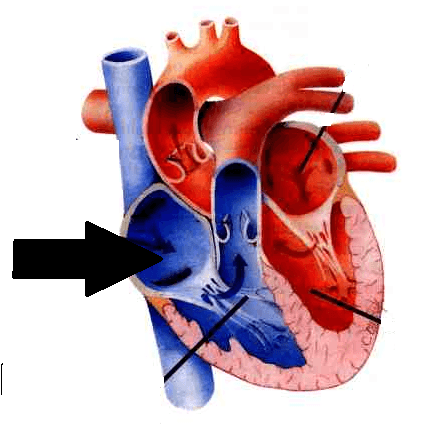
Identify
a)
Left atrium
b)
Right atrium
c)
Left ventricle
d)
Right ventricle
116.
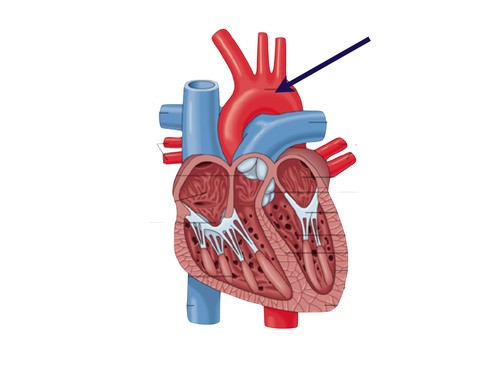
Identify
a)
Pulmonary veins
b)
Pulmonary artery
c)
Aorta
d)
Vena cava
117.
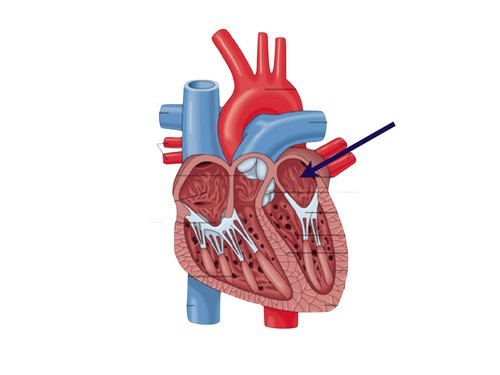
Identify
a)
Left atrium
b)
Right atrium
c)
Left ventricle
d)
Right ventricle
118.
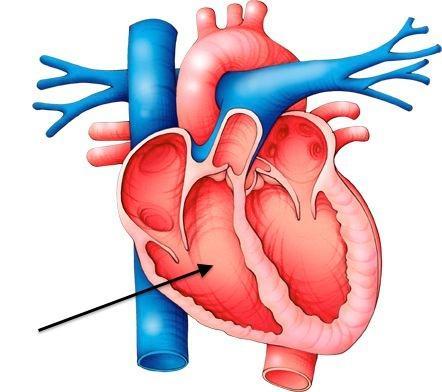
Identify
a)
Left atrium
b)
Right atrium
c)
Left ventricle
d)
Right ventricle
119.
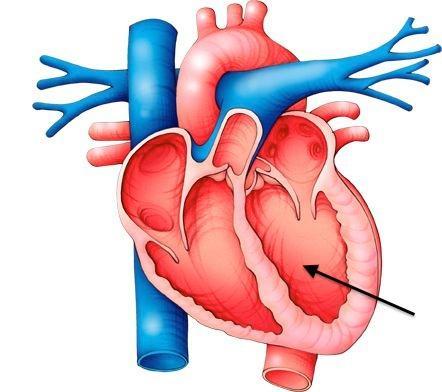
Identify
a)
Left atrium
b)
Right atrium
c)
Left ventricle
d)
Right ventricle
120.
The heart has ___ chambers.
a)
1
b)
2
c)
3
d)
4
121.
This chamber of the heart RECEIVES blood returning from the body
a)
Right Atrium
b)
Right Ventricle
c)
Left Atrium
d)
Left Ventricle
122.
Which chambers of the heart are the thickest and strongest?
a)
Atria
b)
Ventricles
c)
Valves
d)
Aorta
123.

True or False: There are four chambers in the heart.
a)
True
b)
False
124.
The aorta is the largest artery in the body. The blood leaving the aorta is full of?
a)
Oxygen
b)
Carbon Dioxide
c)
White blood Cells
d)
Potassium
125.
Thin-walled vessels that allow for the exchange of O2 , CO2, nutrients and wastes between blood cells or air sacs in the lungs
a)
Arteries
b)
Veins
c)
Capillaries
126.

What does Deoxygenated mean?
a)
Oxygen-rich
b)
Blood flow
c)
Oxygen-poor
d)
Water Flow
127.

A flap of tissue that prevents blood from flowing backward
a)
Aorta
b)
Atrium
c)
Septum
d)
Valve
128.
A flap of tissue that prevents blood from flowing backward
a)
Aorta
b)
Atrium
c)
Septum
d)
Valve
129.
Compared to arteries, veins
a)
have a pleated endothelium.
b)
have thinner walls.
c)
have more smooth muscle in their tunica media.
d)
hold their shape better when cut.
130.
Carry blood away from heart; mostly oxygen-rich
a)
Arteries
b)
Veins
c)
Capillaries
131.
Which type of blood vessel has the thickest layer of smooth muscle in its walls?
a)
Arteries
b)
Veins
c)
Capillaries
d)
Ventricles
132.
What is pulmonary circulation?
a)
Blood travelling to and from the lungs
b)
Blood travelling to and from the body
c)
A blood clot in the lungs
d)
The vessel that brings blood to the lungs
133.
Blood circulation from the heart to the rest of the body is called
a)
Full body
b)
Systemic
c)
pulmonary
d)
heart to lung
134.
Which is the correct definition of the Circulatory system?
a)
The system fights disease so the body stays healthy.
b)
The system that circulates blood and oxygen through the body, consisting of the heart,blood vessels,and blood.
c)
Breaks down food into smaller pieces and absorbs those nutrients into the body.
d)
Provides shape and structure for the body.
135.
What function does the heart do?
a)
Protects organs and produces red blood cells.
b)
Generates heat.
c)
Breaks down food into nutrients.
d)
The heart is a pump, which moves the blood. The arteries and veins are the pipes where the blood flows.
136.
What is the main function of the artery?
a)
It controls your brain and your thought process.
b)
They carry oxygen- poor blood BACK to the heart.
c)
Arteries carry oxygen- rich blood AWAY from the heart.
d)
It receives information (senses) and sends messages to the body about how to react to things.
137.
Which is NOT a function of the circulatory system?
a)
deliver O2 and nutrients to cells
b)
remove CO2 and wastes from cells
c)
break down carbohydrates into glucose
d)
transport other materials through body
138.
Structure(s) that keep the blood flowing in one direction.
a)
Valve(s)
b)
Septum(s)
c)
Neuron(s)
d)
Bronchiole(s)
139.
arteries, veins, and capillaries are three types of __________
a)
heart valves
b)
blood vessels
c)
cells
d)
veins
140.
What is an upper, thin-walled chamber through which blood is pumped to the ventricles?
a)
Valves
b)
Veins
c)
Ventricles
d)
Atrium
141.

What do Red-Blood cells do?
a)
Carry oxygen from the lungs to the body cells and transport carbon dioxide from the cells back to the lungs
b)
keeps blood flowing in one direction to the heart and prevent blood from flowing backwards
c)
Collects blood from the capillaries and drain it into the veins
d)
Bring nutriients to the cells and carries away waste materials.
142.

What does blood do?
a)
Carries Water to cells
b)
Carries Oxygen to cells
c)
Carries Food to cells
d)
All of the above
143.
Inhale!!!!
Your lungs are ___________ air
Your lungs are ___________ air
a)
taking in
b)
letting out
144.
EXHALE!!!
My lungs are __________________ air.
My lungs are __________________ air.
a)
taking in
b)
letting out
145.
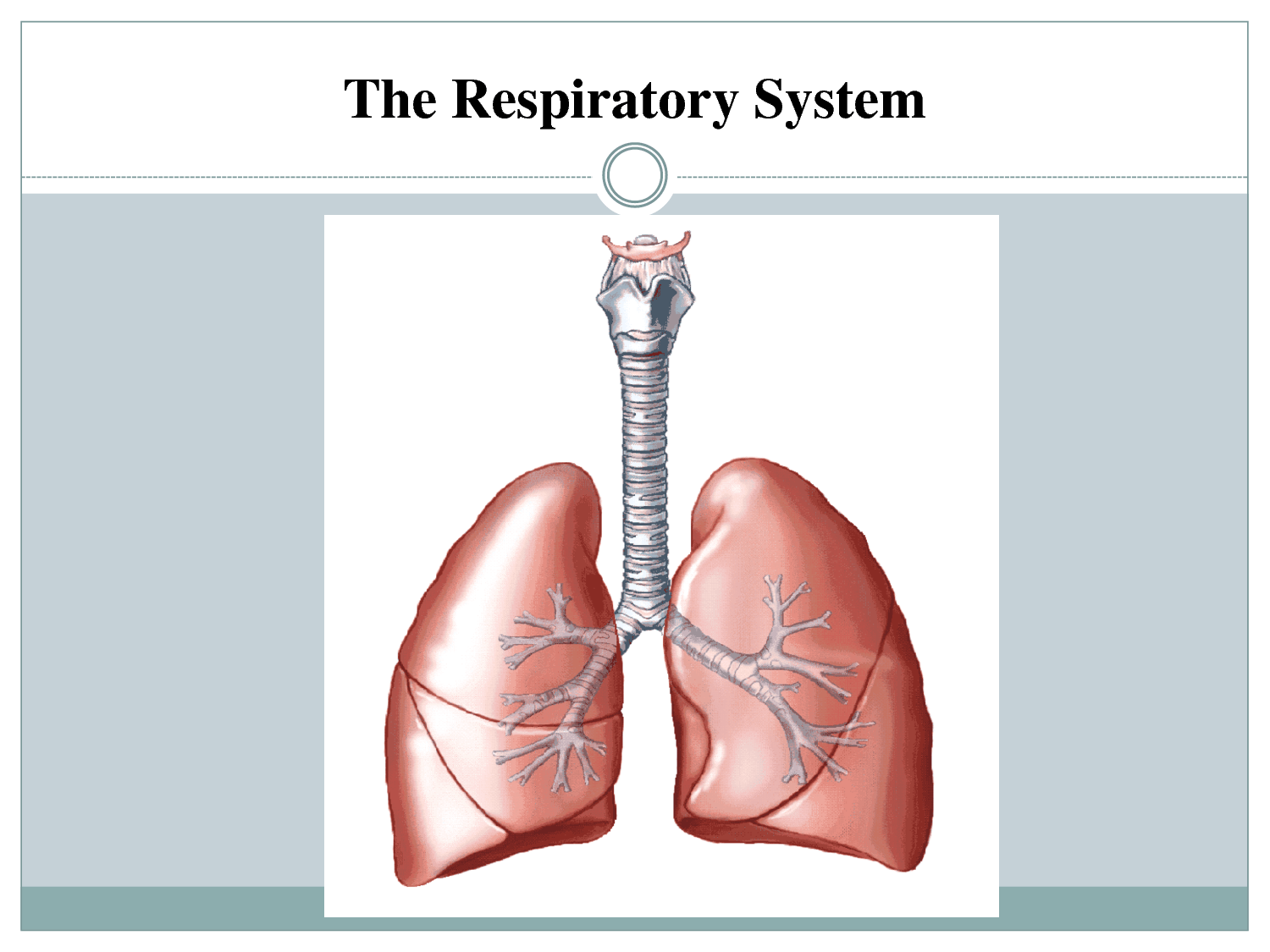
What is the main function of the respiratory system?
a)
to provide oxygen and remove carbon dioxide from the body
b)
to bring oxygen to the body
c)
to break down food and absorb nutrients
d)
to remove oxygen from the body and deliver carbon dioxide
146.
What are the main organs of gas exchange in the respiratory system?
a)
diapragm
b)
lungs
c)
trachea
d)
bronchi
147.
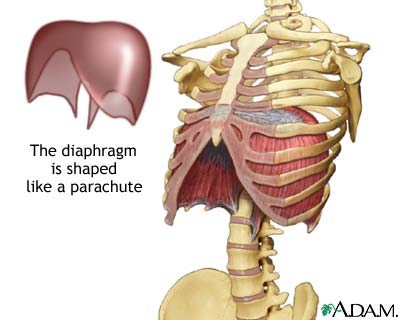
What is function of the dome-shaped diaphragm?
a)
This is where gas exchange happens.
b)
Air passes through the diaphragm on the way to the lungs.
c)
It attaches to the lungs to help in breathing.
d)
It is under the lungs and keeps them from falling down to your stomach.
148.
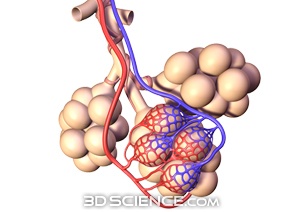
When you breathe, your lungs take in ___ and remove ___.
a)
air/oxygen
b)
oxygen/carbon dioxide
c)
carbon dioxide/waste
d)
waste/air
149.
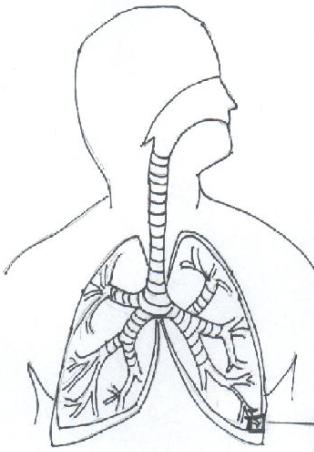
What is the function of the bronchi?
a)
Transport air from nose to lungs
b)
Transport air from trachea to lungs
c)
Transport air from lungs to alveoli
d)
Transport air from alveoli to blood
150.
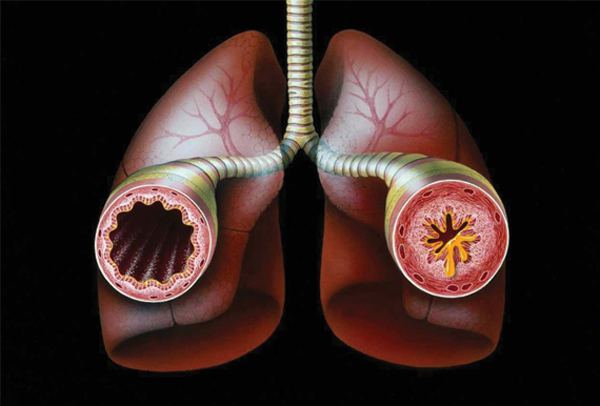
A disorder of the lungs called ____ causes the bronchi to become restricted (get smaller) so air can't get to the lungs.
a)
asthma
b)
cold
c)
influenza
d)
bronchitis
151.
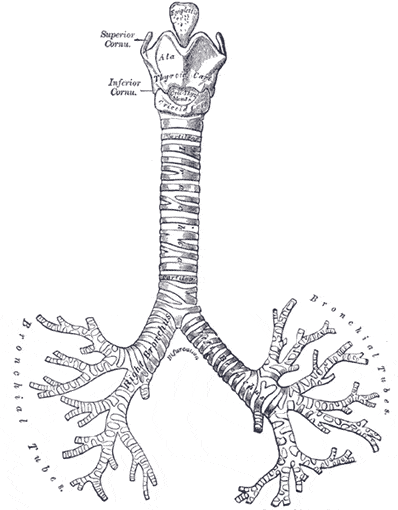
The two main branches from the trachea (one to each lung)
a)
bronchi
b)
alveoli
c)
capillaries
d)
bronchioles
152.
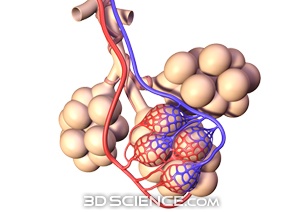
The air sacs that are covered with capillaries where gas exchange takes place
a)
bronchi
b)
lungs
c)
oxygen
d)
alveoli
153.

Within the lungs, the exchange of oxygen and carbon dioxide occurs between the ___ and the capillaries.
a)
trachea
b)
bronchi
c)
alveoli
d)
diaphragm
154.
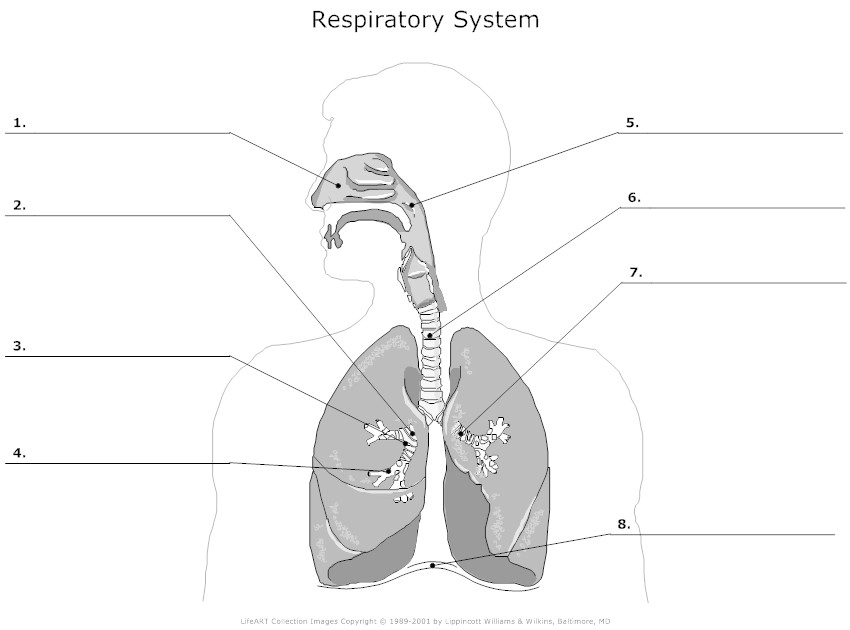
Name the organ label # 6.
a)
alveoli
b)
bronchi
c)
trachea
d)
lungs
155.
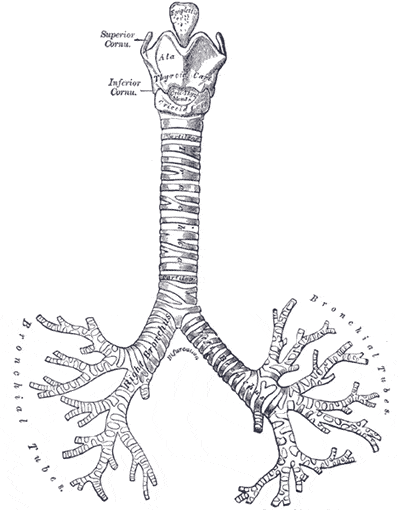
What is tube that is also known as your wind pipe?
a)
esophogus
b)
bronchi
c)
trachea
d)
alveoli
156.
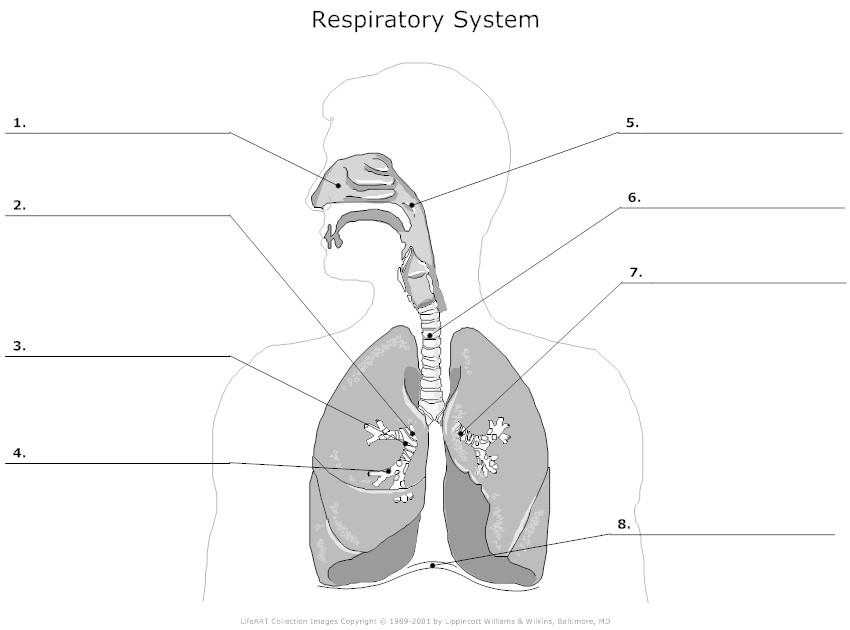
Name the structure labeled 8
a)
lungs
b)
trachea
c)
diaphragm
d)
alveoli
157.
The passageway that is shared by both the digestive and respiratory system is the....
a)
larynx
b)
pharynx
c)
trachea
d)
nose
158.
Flap of skin that covers the opening to the windpipe during swallowing
a)
Stomach
b)
Trachea
c)
Pancreas
d)
Epiglottis
159.
The Pharynx is the muscle that moves the lungs
a)
True
b)
False
160.
Klinefelter’s syndrome results in sex genes that look like:
a)
XXY
b)
YYX
c)
XO
d)
YY
100 %

