Wayground logo

Free Printable Worksheets

Font size

S
M
L
XL
Worksheets

Natural Selection

Total questions: 20

Worksheet time: 11mins

Name
Class
Date
1.

What are the most studied animals in the Galapagos?

a)

Finches

b)

Tortoises

c)

Turtles

d)

Lizards

2.
What is the advantage of having different shaped beaks?
a)
To look different from other species.
b)
To be able to eat the food readily available in the environment.
c)
To protect itself against predators.
d)
To protect itself against prey.
3.
Why are advantageous traits more likely to be passed onto offspring?
a)
Because they are more likely to survive and reproduce.
b)
Because they come from dominant alleles.
c)
Because they come from recessive alleles.
d)
Because the trait is an acquired phenotype.
4.
Mutations are a change in what?
a)
DNA
b)
tRNA
c)
genotype
d)
phenotype
5.

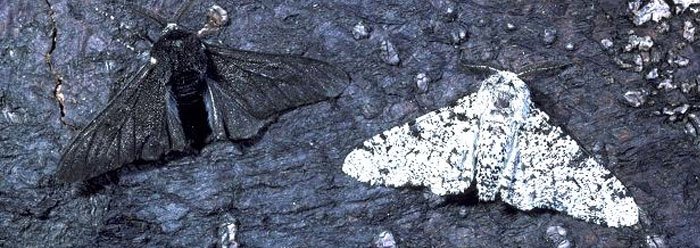
According to natural selection, light colored tree trunks would favor

a)

light colored moths

b)

dark colored moths

c)

red colored moths

d)

red and light colored moths

6.

A physical trait favored by an environmental change can be called an

a)

adaptation

b)

extinction

c)

possibility

d)

mutation

7.

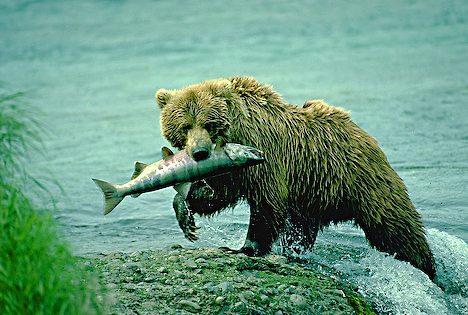
A grizzly bear survives because he is well-adapted to his environment. When he reproduces he passes on those traits to his offspring. this process is called

a)

Natural Selection

b)

Selective Breeding

c)

Random mutations

d)

Variations in a species

8.

Why might it be helpful for a species to have a lot of variations?

a)

They can't be seen by predators

b)

If the environment changes, they might be better able to adapt

c)

It is helpful in asexual reproduction

d)

They don't recognize each other

9.

Which beak is probably best suited to crack open nuts?

a)

1

b)

2

c)

3

d)

4

10.
The trees these moths used to live on were white, but have been covered in soot from coal factories. Which moth will be more successful in this environment?
a)
Dark moth
b)
Light moth
c)
Both will be equally successful
d)
Neither will be successful
11.
What was the name of the scientist who had the theory of evolution?
a)
Lamarck
b)
Einstein
c)
Washington
d)
Darwin
12.
Why did the population of peppered moths in England change from light to dark after the Industrial Revolution?
a)
Light moths were easy to see against sooty trees and were eaten
b)
Light moths were killed by soot
c)
The birds that ate the dark moths were killed by soot
d)
Dark moths were produced by industrial processes
13.
Natural selection is when ____________ decides who survives and who doesn't
a)
nature
b)
humans
c)
animals
d)
years
14.
Organisms with the most beneficial traits will survive.  This is commonly known as ___.
a)
theory of evolution
b)
variations
c)
survival of the fittest
d)
ecosystems
15.

The cooling lava in the desert where pocket mice live changed the light & sandy environment to a dark & rocky environment.

a)

True

b)

False

16.
Why did the MCr1 gene mutation become prevalent in the rock pocket mouse populations?
a)
The mutation produced dark colored mice who were better able to survive and reproduce in basalt environments.
b)
The mutation produced light colored mice who were better able to survive and reproduce in basalt environments.
17.

Which of the following is TRUE about the sandy desert environment? Read carefully.

a)

Most mice have sandy, light-colored coat to match the environment where they live.

b)

Most mice have dark colored fur to match the environment where they live like their ancestors.

c)

Most mice contrast with their environment.

d)

Most mice are heterozygous for fur color and therefore display both phenotypes.

18.

The environment does not play a role in natural selection.

a)

True

b)

False

19.

Why do beaks of the same bird species look different?

a)

The birds chose to mutate to survive

b)

Humans bred them to make the changes

c)

The birds adapted over time through natural selection

d)

Through non-random variation

20.
Blending in with surroundings
a)
hibernation
b)
Natural Selection
c)
camouflage
d)
variation