Wayground logo

Free Printable Worksheets

Font size

S
M
L
XL
Worksheets

TEST 1: NUTRITION

Total questions: 30

Worksheet time: 3600secs

Name
Class
Date
1.
Fruits and vegetables account for________________________ per day.
a)
2 servings
b)
3 servings
c)
4 servings
d)
5 servings
2.
What is the body’s preferred source of energy?
a)
Proteins
b)
Fats
c)
Carbohydrates
d)
Minerals
3.
Fats help satisfy hunger longer than other nutrients because they take longer to digest.
a)
True
b)
False
4.
Which is not a fat soluble vitamin?
a)
A
b)
D
c)
E
d)
C
5.
What are the units of heat that measure the energy used by the body and the energy that foods supply to the body?
a)
Hunger
b)
Appetite
c)
Nutrients
d)
Calories
6.
Which of the following is NOT a good source of protein?
a)
Fish
b)
Pasta
c)
Eggs
d)
Meat
7.
How much of your daily calorie intake should be made up of fat?
a)
10-25%
b)
50-65%
c)
40-55%
d)
20-35%
8.
How many calories are in 1 gram of carbohydrates?
a)
4
b)
9
c)
7
d)
3
9.
How many calories are in 1 gram of fat?
a)
4
b)
9
c)
7
d)
3
10.

Having an excess amount of body fat.

a)

Body Moderation

b)

Body Composition

c)

Obesity

11.

The most important meal of the day?

a)

Lunch

b)

Dinner

c)

Breakfast

12.

An example of healthy living would be to

a)

eat healthy foods and exercise

b)

lay on the couch all day and watch TV

c)

eat only snacks and fried food

13.

MyPlate says...

a)

To only eat from one food group

b)

To eat a variety of foods from different food groups

c)

Only eat from 2 food groups per meal

14.

A healthy lifestyle can be described as

a)

Exercise to the point of exhaustion

b)

Eating anything you like and exercising 3 times a week

c)

Eating a balanced diet and exercise regularly

15.

Which two foods would provide the best sources of carbohydrates, calcium, fibre (roughage) and vitamin C?

a)

fish and eggs

b)

green beans and cereal

c)

meat and milk

d)

yoghurt and cheese

16.

The element nitrogen is needed to form

a)

fat

b)

protein.

c)

starch

d)

sugar

17.

What are the basic units from which glycogen is synthesised?

a)

amino acids

b)

fatty acids

c)

glucose

d)

glycerol

18.

Why is it important to understand how to read a food label?

a)

to be sure you don't buy something past the "sell by" date

b)

so you will never eat anything that has sugar in it

c)

so you're aware of the nutritional value of foods you eat

d)

so you can tell your family and friends what to not eat

19.

Excessive sodium intake has been shown to raise blood pressure.

a)

True

b)

False

20.
You need to drink only two glasses of water every day.
a)
True
b)
False
21.
Practicing good nutrition means that you can eat one type of food every day as long as the food is healthy.
a)
True
b)
False
22.
You get all the water you need by drinking one soft drink each day.
a)
True
b)
False
23.
A chemical compound made up of one or more simple sugar e.g. bread, rice, pasta
a)
Protein
b)
Water
c)
Fat
d)
Carbohydrates
24.
Nutrients that build and repair tissues and cells e.g. meat, milk, eggs.
a)
Fat
b)
Minerals
c)
Vitamins
d)
Protein
25.
Energy storage nutrients that help the body store some vitamins e.g. oils, butter, margarine
a)
Fats
b)
Carbohydrates
c)
Minerals
d)
Vitamins
26.

Which carbohydrates are broken down by the body easily?

a)

Complex

b)

Simple

27.
A simple carbohydrate that only has one sugar is know as what?
a)
disaccharides
b)
monosaccharides.
28.
Which of these foods is an unsaturated fat?
a)
Olive Oil
b)
Cocunut Oil
c)
Butter
d)
Palm Oil
29.
Protein is made of what?
a)
Carbon
b)
Hydrogen
c)
Nitrogen
d)
Amino Acids
30.
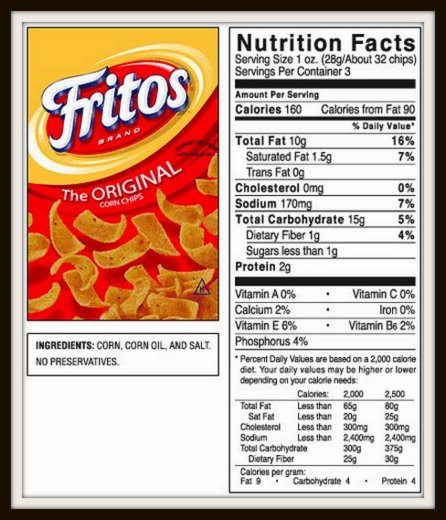
Main ingredient is?  
a)
corn
b)
corn oil 
c)
salt
d)
frito