
 Worksheets
GB1 Lecture 1 and 2 Reviewer
Total questions: 20
Worksheet time: 14mins
The control in an experiment
makes the experiment less valid.
is an additional copy for statistical purposes.
reduces the experimental errors and inaccuracy
allows a standard of comparison for the experimental group.
Why do scientists communicate their results in written reports?
to make scientific models
to promote it as a theory
for others to repeat the experiment
to present to a plenary
Students in a science class placed ice cubes in a cup. They were studying variables that affected how long it takes the ice to melt. Select the variable that would most likely NOT affect the time it takes the ice to melt.
Temperature of the room
Number of students
Size of ice cube
Size of cup
Sam wished to investigate how fertilizer run-off affects the growth of algae in freshwater lakes and streams. He set his experiment up in this way. He placed 900 ml of water into each of five 1000 ml glass beakers. To each beaker he added 5 ml of water from an aquarium which contained a large concentration of algae. The beakers were placed under a grow light which was timed to provide 12 hours of light each day. Liquid fertilizer was added to the beakers in the following amounts: Beaker A - 8 ml fertilizer, Beaker B - 6 ml fertilizer, Beaker C - 4 ml fertilizer, Beaker D - 2 ml fertilizer, and Beaker E - no fertilizer. Each week a random sample from each of the beakers was examined under a microscope to get a count of the number of algal cells present.
Which of the following is NOT a constant variable in this experiment?
light exposure
number of algal cells
amount of aquarium water
size of the beakers
A forest fire destroys trees in a large area. The forest rangers use the burned area to study the effect of different types of grasses on soil erosion. They choose ten plots of ground that are the same size. Each of these plots receives the same amount of sun. Each of these plots also has the same kind of soil and the same slope. The rangers plant each with a different type of grass. Measurements of soil erosion are made every week for the entire summer.
What is the dependent variable?
type of grass
amount of erosion
size of plots
type of soil in each plot

If a scientist is measuring the "growth of the plants" in the above experiment, which of the following would NOT be a good operational definition for the "growth of the plants"?
the number of leaves produced by each plant
the height of the plants
the color and general appearance of the plants
the weight of the plant in its pot of dirt


In which type of plant does water/food move through xylem and phloem?
seed plants
vascular plants
non-vascular
both vascular and non-vascular
For single-celled organisms, _____ is
mostly an increase in size.
Multicellular organisms go through a
process called __________, where cells
divide and differentiate into different
kinds of cells.
Evolve, respond to stimulus
Expansion, progress
Growth, development
Production, evolution
The combination of chemical reactions through
which an organism builds up or breaks down
materials as it carries out its life processes is called ...
absorption
metabolism
digestion
consumption
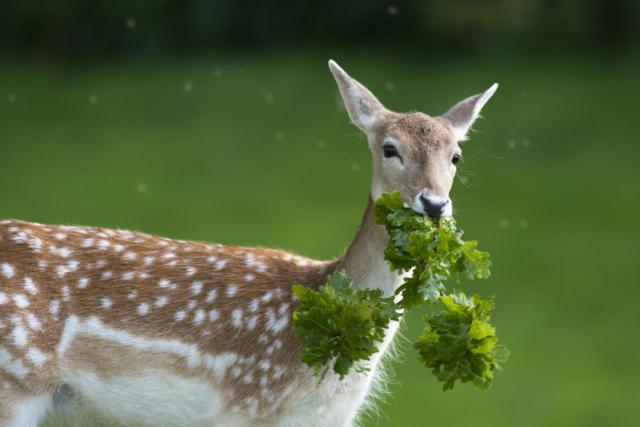
Which field of Boatny is related to the study below?
"Damage to leaf veins suppresses root foraging precision"
morphology
anatomy
plant ecology
physiology
Which field of Boatny is related to the study below?
"Long‐distance seed dispersal in plant populations"
plant geography
plant pathology
ethnobotany
physiology
Which field of Boatny is related to the study below?
"Climatic niche shift of an invasive shrub (Ulex europaeus): a global scale comparison in native and introduced regions"
plant geography
plant pathology
plant ecology
plant physiology

Which botanical field is depicted in the image?
agronomy
horticulture
plant breeding
plant ecology

