
 Worksheets
World History Beginning of Year Pre Assessment
Total questions: 115
Worksheet time: 1hrs 18mins
An economic policy that encourages increasing wealth through trade is called...
Command Economics
Socialism
Mercantilism
Free Market Economy
A government where the head of state has complete control of the government is called...
a Democracy
an Absolute Monarchy
a Republic
an Oligarchy
Which individual believed that a governments should be created to protect natural rights?
John Locke
Montesquieu
Thomas Hobbes
Jean-Jacques Rousseau
An economic policy or attitude of letting things take their own course, without interfering.
Socialism
Command Economy
Mercantilism
Laissez Faire
The heliocentric theory believes:
The sun is the center of our solar system
The earth is the center of our solar system
The solar system is at the center of the universe
The universe expands beyond the solar system
The geocentric theory believes:
The sun is the center of our solar system
The earth is the center of our solar system
The sun is the center of the univerese
The earth revolves around the moon
The Enlightenment influences which of the following?
Industrial Revolution
The Paleolithic Revolution
Agricultural Revolution
The American Revolution
Rights that every person is born with to under natural law, such as life, liberty and property.
Natural Rights
Privilages
Autonamy
Universal Rights
Which of the following was a cause of the Bubonic Plague?
Workers drank from a well that was contaminated with the disease.
From the east, rats were traveled along trade routes that carried the disease.
The Mongols brought the disease with them when they conquered new territories.
Mosquitos brought the disease across the African plains to Europe.
Which of the following definitions is not correct?
Sphere of influence - a country or area in which another country has power to affect developments although it has no formal authority
Direct Rule - The overthrowing of a government and instilling a Democracy to stay in power.
Indirect Rule - the overthrow of a government that allows local rulers to stay in power
Non-Aggression Pact - A pact made between Germany and the Soviet Union agreeing to go to war with each other.
Henry the VIII create this law passing the right of the king to be the head of the Church of England.
The Declaration of the Rights of Men
The Magna Carta
The Tennis Court Oath
The Act of Supremecy
A political theory advocating class warfare that leads to a society in which each person works and is paid according to their abilities and needs.
Theocracy
Socialism
Communism
Democracy
Policy of building up a strong military to prepare for war.
Alliance Systems
Militarism
Industrialism
Imperialism
Totalitarian governments are best characterized by all of the following EXCEPT:
a dictator who has absolute control
government control of newspapers, radio, and television
a secret police that uses terror tactics to maintain power
government protections of people's civil liberties
Which one of the following was not a part of the Triple Entente?
Great Britain
France
Russia
The Ottoman Empire
Vladimir Lenin started this revolution and founded the Soviet Union?
The French Revolution
The Bolshevik Revolution
The American Revolution
The Spanish Revolution
Which of the following was not a punishment received by Germany as a result of the Treaty of Versailles?
loss of all colonies
acceptance of blame for the war
payment of the war debt
militarization of the Rhineland
Totalitarian leaders like Hitler gained power after World War I by:
promising to maintain peace
appealing to nationalism
limiting military influence of the government
attracting foreign industrial investments
Which of the following is NOT a common characteristic that the Totalitarian States ruled by Hitler, Mussolini, and Stalin shared?
They all had totalitarian governments
Political opponents were killed off
All three nations wanted to expand their borders
Communist principles were used to govern their countries
In the Soviet Union, Stalin used his secret police, the KGB, to imprison or kill anyone who appeared to be a threat to his power. This is known as...
The Bolshevik Revolution
The Holocaust
The Great Purge
The Great Cleanse
The main reason Japan invaded Southeast Asia was to:
recruit more men for its military
acquire natural resources
open up Japan to Asian spice markets
prevent the US from entering WWII
What effect did technology have on the fighting that took place during World War I?
Smaller nations became part of larger empires
Research on transportation improvement slowed
A smaller number of refugees fled their home countries
An drastic increase in casulties and armies had to revert to trench warfare
What was the Holocaust?
a relocation camp for Japanese Americans after Pearl Harbor
a relocation camp for Muslims after the 9/11 terrorist attacks
the widespread and systematic killing of Jews by Nazis
the time period following WWII
What is the immediate effect of Japan's attack on Pearl Harbor on December 7th, 1942?
Germany invaded Poland.
Germany sent Mexico a secret telegram.
The declaration of war by the United States on Japan.
Germany declares war on the United States.
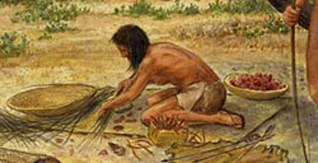
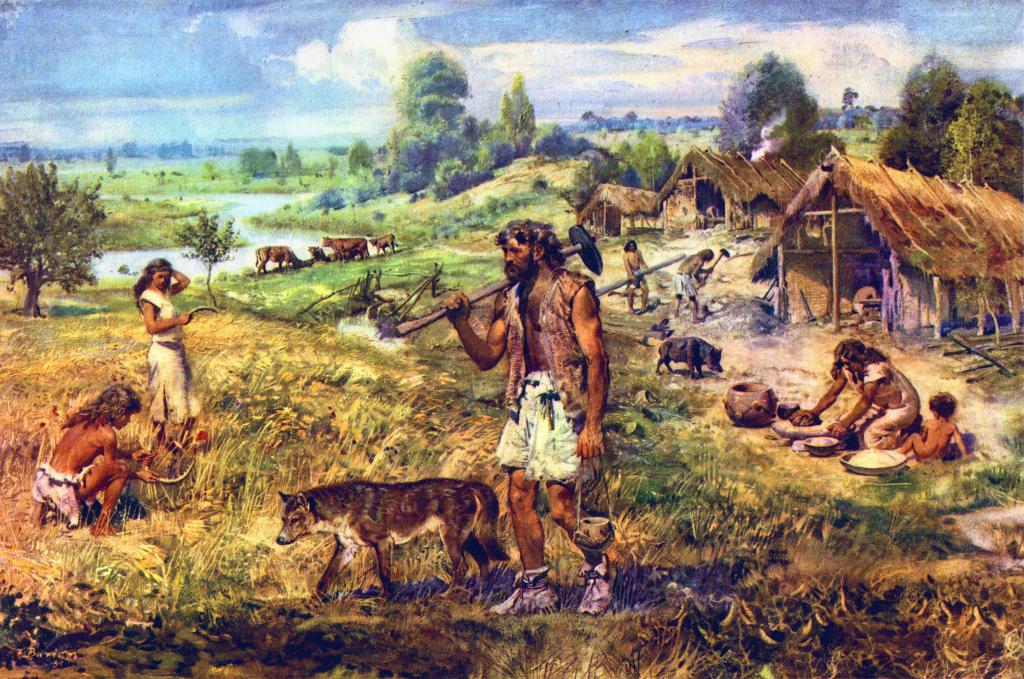
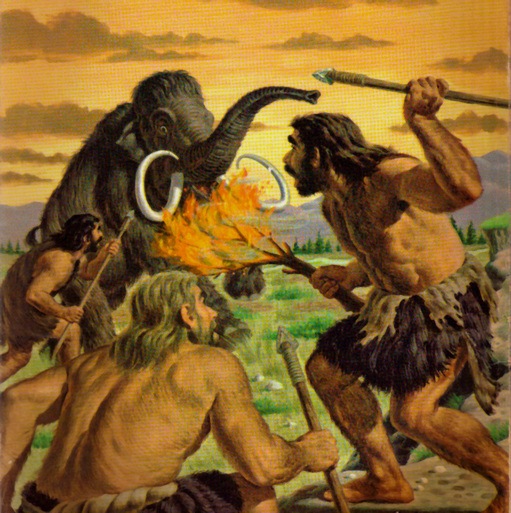

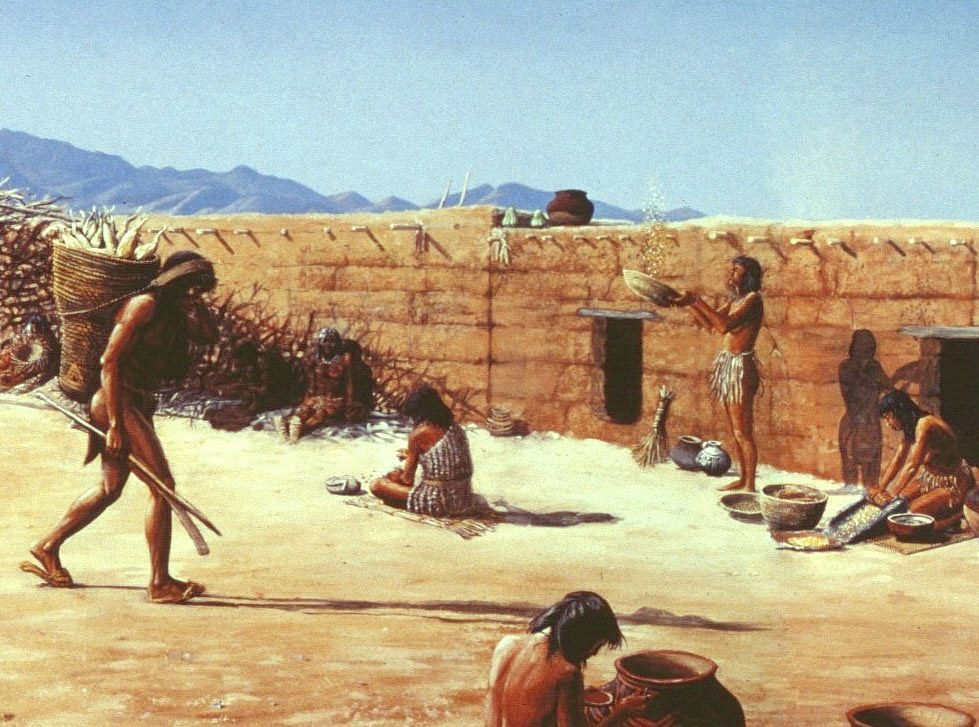
How did humans get food in the Neolithic Era?
Hunting and Gathering
Agriculture
Grocery Shopping
Scavenging
True or False, nomads move around from place to place in search of food?
True
False
Why was agriculture an important invention?
Humans could stay in one place and build permanent settlements
Food came from more reliable source
People could now work different jobs and invent new things
All of these are correct


- Nile River
- Hieroglyphics
- Pyramids
Sumer

- Tigris and Euphrates
- Cuneiform
- City-States
Sumer


(Also, the largest city-state by a wide margin)

In 431 BC, Athens and Sparta were fighting what war?
World War X
Trojan War
Peloponnesian War

Mesopotamia is known as "The land between 2 ____________."
rivers
farms
mountains
valleys
Which factor created favorable conditions for the Industrial Revolution in Great Britain?
a low rural population in Central England
The presence of large oil reserves in the North Sea
Large deposits of iron and coal in England
an abundance of grain and livestock in southern Scotland.
The ideas found in the "Declaration of the Rights of Man in 1789 have their origin in which era?
Middle Ages
Reformation
Enlightenment
Modern Age
Which of the following is a similarity between the work of scientists and philosophers associated with the Scientific Revolution and those associated with the Enlightenment?
Heavy reliance on the work of medieval thinkers.
Extensive support from the Roman Catholic Church.
Focus on examinations of the natural laws that govern the universe.
Belief that only absolute monarchies could improve economic conditions.
In an economy that is based on laissez-faire principles, which of the following is true?
Private ownership is prohibited.
The state establishes production quotas.
Prices are based on supply and demand.
Custom determines the distribution of goods.
Dissatisfaction withe Divinely Ordained Rulers--->___?___ ----->Social and Economic Reorganization.
Nationalism
Democracy
Revolution
Magna Carta
Which of the following helped Napoleon Bonaparte consolidate power following the French Revolution?
The establishment of the French Parliament.
The lower classes gaining more political control.
The Catholic Church emerging as a powerful force.
The creation of the predecessor to the European Union.
Which of the following Enlightenment ideas found more support during the French Revolution than the American Revolution?
Public office should be held by those with talent and not by those with money.
Equal rights for all meant equal rights for men and women according to natural law.
A monarchy based on enlightened absolutism was the most sound basis for a government.
The financial privileges of the wealthy should be redistributed among other members of society.
Reasoning; Natural Law; Scientific Thinking
The above words were the philosophical base for which of the following?
Roman Empire
Reformation
Age of Exploration
Enlightenment
-John Locke
-Montesquieu
-Voltaire
The major ideas set forth by these philosophers are associated with which period of European history?
The Crusades
The Enlightenment
The Northern Renaissance
The Protestant Reformation
in 1543, Nicolaus Copernicus set the scientific revolution in motion by proving that traditional church doctrine was flawed on the subject of the--
age of the earth.
measurement of time.
origins of human life.
structure of the solar system.
Renaissance Beliefs -->Technological Innovation-->___?___
Which of the following belongs in the space above?
Reformation
Scientific Revolution
Enlightenment
Nationalism
One result of both the French Revolution and the American Revolution was--
the increased involvement of religious leaders in political affairs.
the restoration of civil rights to all marginalized groups.
the increased political influence of the middle class.
the restoration of the previous monarchies.
What was a major reason for France's numerous wars with European nations between 1792 and 1799?
The international community's outrage of France's violent and bloody revolution.
The desire to spread the French Revolution to the rest of Europe.
The need to keep the French public distracted from domestic economic problems.
The restoration of the Bourbons to the French monarchy.

Effects of British Imperialism in India
two-party system
exploitation of resources
labor unions
universal education

Based on information in the graphic organizer, which of the following factors contributed to both revolutions?
cultural diversity
economic injustice
geographical similarity
agricultural overproduction

The greatest influence on these political ideas came from the--
Justinian Code
writings of John Locke
philosophy of Machiavelli
theories of Jean-Jaques Rousseau

What best completes the graphic organizer above?
Effects of Congress of Vienna
Origins of the French Revolution
Roots of European Imperialist Policies
Causes of Latin American Independence Movements

Which of the following best completes the above diagram?
Results of Cultural Revolution
Causes of the Agricultural Revolution
Results of the Scientific Revolution
Causes of the Industrial Revolution
A primary reason European languages are spoken in Africa today is that--
African and European alliances were formed during World War I.
European territories in Africa were redistributed at the Congress of Vienna.
British forces won the Boer War against the Dutch and Afrikaners.
European explorers and merchants established colonies throughout the continent.

Which practice developed among European countries as a result of the factors shown in the graphic organizer?
Feudalism
Imperialism
Isolationism
Totalitarianism

Which of the following best completes the flow chart?
demand for raw materials
demand for slave labor
exploration of North America
improved military weapons
The list below is of three historical events:
-France gained control over Algeria
-Great Britain gained control over North America
-Portugal gained control over Angola.
What do the events in the list have in common?
These are all events that immediately preceded a political revolution.
These are all examples of imperialism in various regions of the world.
These are all events that led to the formation of important international alliances.
These are all examples of totalitarian regimes attempting to extend their influence.

The speaker of this quote would most likely favor--
democratic socialism
a command economy
laissez-faire economics
a mixed-market economy

Which of the following is the best title for the graphic organizer?
Effects of the Columbian Exchange
Origins of the Scientific Revolution
Major Events of the Scientific Revolution
Innovations of the Protestant Reformation

