
 Worksheets
spring 22 midterm review challenge
Total questions: 111
Worksheet time: 2hrs 32mins
Who was Louis XIV?
This man promoted Westernization campaigns to make his country more European
This man demonstrated absolutism by building Versailles as a way of distracting the French nobility
This man believed that humans were naturally good and would not need a large government to rule over them.
This man did not believe that the average person was intelligent enough to participate in government, which led him to believe that an enlightened monarchy was best.
Who was Peter the Great?
This man promoted Westernization campaigns to make his country more European
This man demonstrated absolutism by building the city Versailles as a way of distracting the French nobility
This man didn't believe that the average person was intelligent enough to participate in government, which led him to believe that enlightened monarchy was best
This man thought that humans were naturally greedy and chaotic and would need a large government to control them

During the Age of Absolutism, European monarchs looked to
Develop better relations with muslim rulers
Centralize political power in their nations
Encourage the growth of political farms
Increase human rights for citizens
Louis XIV built this massive, ornate palace -- largely funded by the taxpayers of his country.
Windsor Castle
Versailles
St. Petersburg
Fontainebleau
Clergy: very wealthy: Did NOT have to pay taxes
1st Estate
2nd Estate
3rd Estate
Estate General
Nobles: Had land and wealth. Did NOT have to pay taxes
1st Estate
2nd Estate
3rd Estate
Estates General
Middle class, urban workers, rural peasants. Made up 98% of the population. Had to pay ALL the taxes
1st Estate
2nd Estate
3rd Estate
Estate System
The leader of the Reign of Terror. He and the Jacobins started the Reign of Terror.
Robespierre
King Louis XVI
Marie Antoinnette
Estates General
Monarch of France during the French Revolution. He was beheaded and charged with treason for trying to flee France.
King Louis XVI
King Louis XIV
Marie Antoinnette
Robespierre
The document that increased the rights of all French citizens
Declaration of the Rights of Man and the Citizen
Declaration of Independence
Tennis Court Oath
Constitution
The political prison, symbol of tyranny during the French Revolution
The Bastille
The Tennis Court
Versailles Palace
Paris
The symbol of terror during the French Revolution, used to execute traitors to the revolution.
Guillotine
Robespierre
The Jacobins
The Bastille
Third Estate members vowed to never give up until a constitution was written.
Tennis Court Oath
Estates General
Estates System
Guillotine
The wife of Louis XVI
Marie Anntoinnette
Robespierre
The Bastille
Lady Gaga


Haiti was the first area in the Caribbean to gain independence.
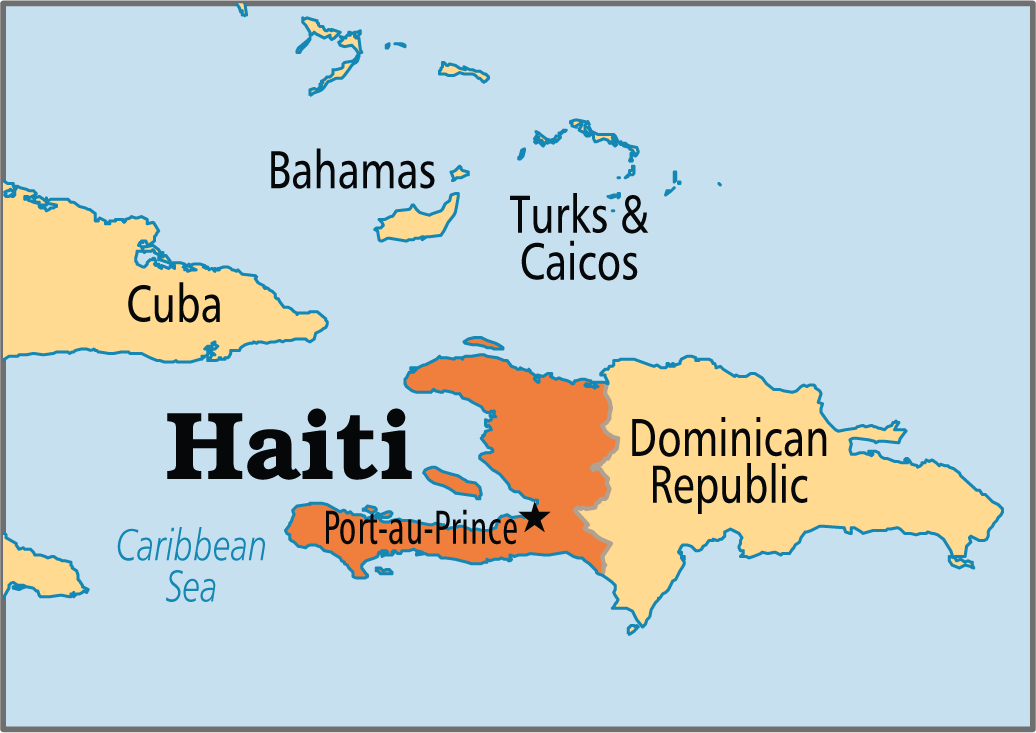
What was the original name of Haiti?
Turks
St. Domingue
Brazil
Cuba
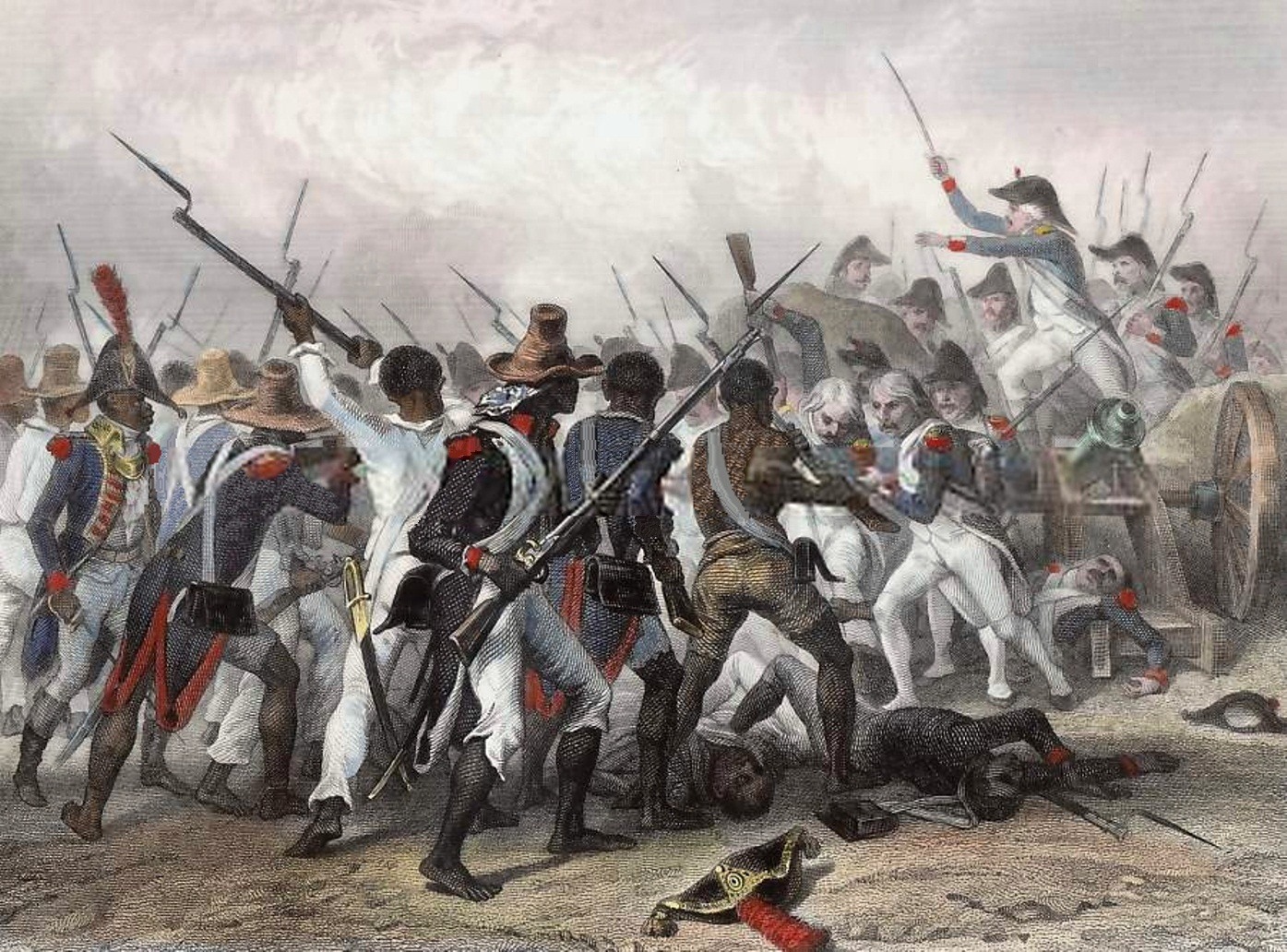
Groups of people who are similar (ex.- language, customs and institutions) that want to be an independent nation state or country.
Liberalism
Conservatism
Socialism
Nationalism
The desire to have a more Democratic government; Likewise, the idea that people should be as free as possible from government restraint
Nationalism
Conservatism
Liberalism
Socialism
Which of the two following European countries united in 1870 and 1871 because of Nationalism?
Belgium
Germany
Greece
Italy
Germany united behind the idea of Blood and Iron. What did Blood and Iron mean? Likewise, which person supported this idea?
Otto von Bismarck
Death and Swords
Camilo Cavour
War and Industry
This person united the German people in 1871.
Bismarck
Hasselhof
Hitler
Garibaldi
This person started the movement for Mexican independence with his "Grito de Dolores."
Father Hidalgo
Benito Juarez
Emiliano Zapata
Father Hurtado
This man freed much of South America from the Sapnish
Simon Bolivar
Diego Maradona
Vasco de Gama
Pablo Escobar
At this meeting in 1885, the European powers divided up Africa on a map.
Berlin Conference
Munich Agreement
Hamburg Concession
Tennis Court Oath
The control and exploitation of a country by a more powerful country is known as what?
Imperialism
Socialism
Communism
Liberalism
Which was NOT one of Napoleon's foreign accomplishments?
he led a successful invasion of Russia
he conquered Spain and made his brother King of Spain
he created his "Grand Empire" which consisted of most of Europe
spread nationalism and Enlightenment ideas across European nations that he conquered
Napoleon's final defeat:
invasion of Russia
Battle of Waterloo
Battle of Trafalgar
Battle of the Nile
Which was NOT an impact of Napoleon's reign?
spread of nationalism and Enlightenment ideas
Latin American independence movements
unification movements in Europe- Italy & Germany
the outbreak of WWI
Definition Match: Shogun
A warlord which governed an area of land on behalf of the emperor
Dominant warlord who held political and martial power in Japan
The military government of Japan
A government based on a strict social hierarchy and land for service
Definition Match: Feudalism
A warlord which governed an area of land on behalf of the emperor
Dominant warlord who held political and martial power in Japan
The military government of Japan
A government based on a strict social hierarchy and land for service
During the Edo (Tokugawa) period, which position below held the most power on the social hierarchy?
Shogun
Daimyo
Emperor
Samurai

Wealthy land owner, also the head of a clan group
Bakufu
Samurai
Shogun
Daimyo
Which man completed the unification of Japan and set up a shogunate in Japan to maintain that control?
Toyotomi Hideyoshi
Ito Hirohito
Oda Nobunaga
Tokugawa Ieyasu
The Ming Dynasty followed the collapse of the Mongol ___________ dynasty.
Yuan
Song
Tang
Han
This was an educated person with a government position who came back into importance during the Ming Dynasty-
Mongol Ascendancy
tribute
Buddhism
scholar-official

The Ming emperors built what for themselves, families, members of the court, and government?
Forbidden City
a new capital city
new pleasure boats like the Sui
new weapons
The belief that it is best for a nation to protect its borders and stay away from other countries is-
nationalism
Confucianism
isolationism
capitalism
The Ming Dynasty believed the best way to deal with the constant threat of Mongol invasion was to-
create a strong navy to defend China's coast
negotiate a peace with their enemies to the North
rebuild and improve the Great Wall
invade Mongolia
What is one reason the Ming emperors did not expand China's economic influence across the Indian Ocean after the voyages of Zheng He?
Resources were needed to combat Japanese invaders.
Developing trade networks with Russia was more profitable.
Conquering European territories drained China's treasury.
Foreign goods were considered inferior to those produced in China.
The dynasty that was the result of the defeat of the Mongols and reuniting China.
Ming
Han
Yuan
Tang

What religion did the Ottoman Empire help spread throughout their empire?
Buddhism
Christianity
Shintoism
Islam
What city did the Ottoman Empire conquer in 1453 putting an end to the Byzantium Empire?
Rome
Constantinople
Athens
Vienna
One of the reasons for the wealth of the Ottoman Empire was
its control over the Eastern Mediteranian
the usage of trans-saharan trade routes
because they found the Americas first
strong diplomatic ties with the Genghis Khan
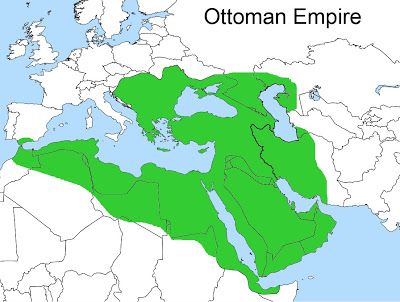
Which continents did the Ottoman Empire have some control over? Click all that apply.
Europe
Asia
Africa
North America
South America
Which technology, first developed by the Chinese, enabled the Ottoman Empire to expand militarily into western Asia, Europe, and northern Africa?
woodblock printing
wheelbarrow
gunpowder
magnetic compass
Which of the following was a way that Suleiman and other Sultans consolidated and maintained power with the many different religions in the Ottoman Empire?
Use of religious persecution (punishment)
Using the Millet System
Psychological warfare by the Janissaries
Using Viziers as secret police
Which of the following was a system in which the Ottomans took Christian boys, converted them to Islam, and had them work in the military and government?
Millet System
Sultan System
Vizier System
Devshirme System

Who was the founder of the Mughal Empire ?
Babur
Akbar
Humayun
Jahangir
The greatest mughal emperor was __________---
Jahangir
Akbar
Shah Alam
None
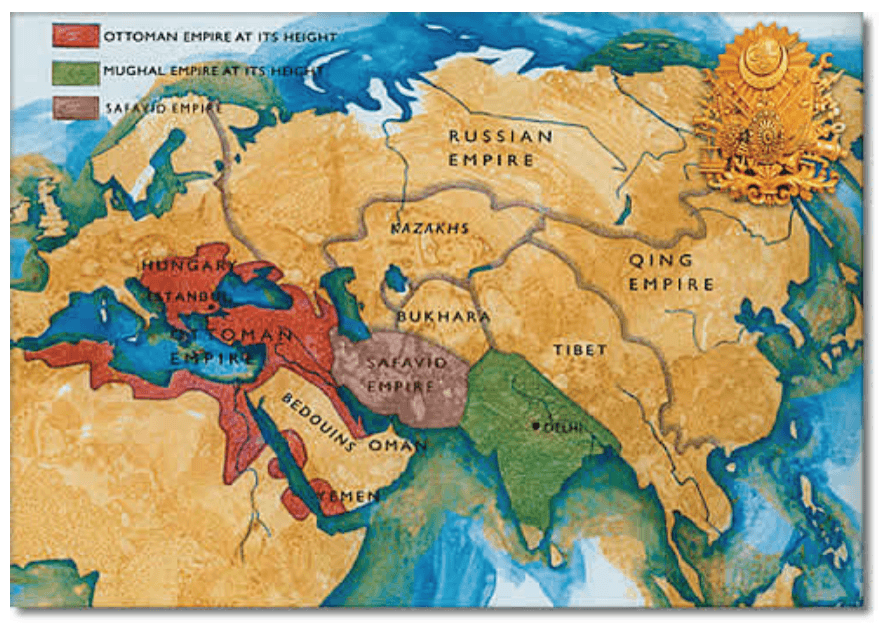

Countries want to use imperialism to gain colonies for all of the following reasons except
gain new resources
show their power
learn about other cultures
spreading their greatness
China and Britain fought a war over:
the Korean peninsula
conquests along the Nile River
opium production and distribution
the elimination of the samurai

John Locke
Natural Rights
Freedom of Speech
Freedom of Religion
Right to bear arms

Jean-Jacques Rousseau
Social Contract
Absolutism
Three branches of government
Influenced by Hobbes

Voltaire
Free Speech
Right to bear arms
Separation of Powers
Due process
LIfe, Liberty and Property
Locke
Diderot
Voltaire
Freedom of Speech
►an agreement between people and their government, in which people give up some things in return for the benefit of having government.
Social Contract
The Purge
Bill of Rights
Magna Carta

French Enlightenment philosopher who strongly believed in freedom of speech and religion
Voltaire
Denis Diderot
Mary Wollstonecraft
John Locke
The rights of life, liberty, and property are called:
Unalienable Rights
Essential Rights
Natural Rights
Original Rights
According to what you have learned, who said women should be treated as equal as men?
Hillary Clinton
Barbara Walters
Mary Wollstonecraft
Voltaire
How did the ideas of the Enlightenment philosophers most influence popular revolutions in France and in the United States?
by explaining that society could be improved through scientific discovery
by challenging the belief in the divine right of kings
by stressing the importance of military strength
by examining other countries as models of self-government
. . . reason, which is that law teaches all mankind, who would but consult it, that being all equal and independent, no one ought to harm another in his life, health, liberty, or possessions.
John Locke, Two Treatises on Civil Government, 1689
Which concept of the Enlightenment would the passage most likely support?
Truth can be discovered through reasoning and logic.
Humankind can and should improve over time.
People have a right to equality and freedom.
What is natural is also reasonable.

