
 Worksheets
Fall Final Quizizz Review 2024
Total questions: 110
Worksheet time: 2hrs 48mins
What geographic location did early civilizations settle around?
mountains
plains
rivers
deserts
Why did early people settle?
they got tired of walking
the ice age caused animals to die off, meaning less hunting
they wanted to settle around mountains to stay away from invaders
fertile soil near rivers meant good farming, causing a food surplus
Curved strip of land that runs from the Mediterranean Sea to the Persian Gulf that had fertile soil (hint: another term for the region of Mesopotamia)
Gift of the Nile
Silt
China's Sorrow
4. What is the mandate of heaven?
The idea that people should follow what the gods say
The idea that it doesn't matter how you are, you would still go to heaven
The idea that the emperor, the son of heaven, has the support of the gods (as long as he rules correctly.)
The idea that the emperor can take his belonging when he goes to heaven
A government run by religious officials
Theocracy
Democracy
Oligarchy
Monarchy
Which of the following best describes the mergence of social classes in early civilizations?
People were ranked based on their prowess in war
People were ranked based of their family size
People were ranked according to their jobs and economic standing
People were ranked based on their religious beliefs
This characteristic was used to document records.
Advanced cities
Specialized workers
Advanced Technology
Record Keeping
Compex institutions
The Aztecs this type of irrigation system in which they built floating gardens to help them grow more crops. This was called
Terraces
Canals
Chinampas
Dams
The Code of Hammurabi and the Ten Commandments were significant to their societies because they established
democratic governments
official religions
guidelines/rules for behavior
economic systems
How were religions practiced in Mesopotamia and Ancient Egypt similar to Hinduism?
All were polytheistic, meaning they worshiped many gods
All three believed that a pharaoh, or god-king, would rule society
All three were monotheistic, meaning they worshipped only one god
All three were considered Abrahamic Religions
How were religions practiced in Mesopotamia and Ancient Egypt similar to Hinduism?
All were polytheistic, meaning they worshiped many gods
All three believed that a pharaoh, or god-king, would rule society
All three were monotheistic, meaning they worshipped only one god
All three were considered Abrahamic Religions

--Code of Hammurabi
Which statement is best supported by this excerpt from Hammurabi's code of laws?
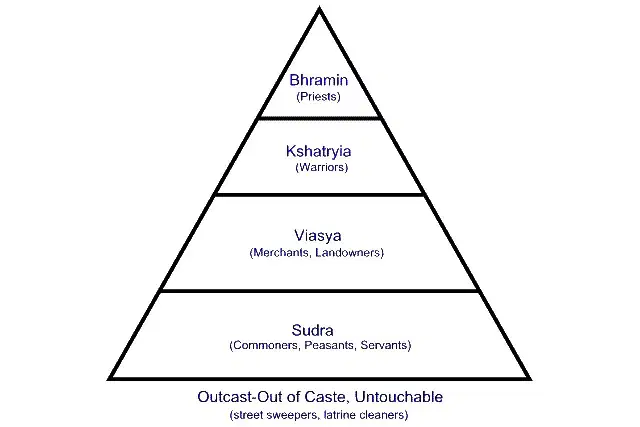
What concept is illustrated in the diagram?
The Mandate of Heaven
The Caste System
Confucian teachings on superior-inferior relationships.
Reincarnation

Trade routes from East Asia to West Europe/Africa became known as the----
The Trans-Siberian Road
The Silk Road
The Royal Road
The Trans-Indian Road

In China, the development of civil service examinations and a belief in filial piety reflect the influence of-
Shinto
Jainism
Confucianism
Buddhism
required test first to determine who should become a government official to make sure employees are qualified for their position; first used under the Han Dynasty
Meritocracy
Civil Service Exam
Bureaucracy
Legalism


What was it called?
How would someone from Athens describe Sparta after visiting it?
“The Spartans are so strict. Their military is what dominates their society.”
“It’s interesting how both the rich and poor can be rulers in Sparta."
"This society has so many personal freedoms, unlike in Athens.”
“Sparta is exactly like Athens."

". . . for the administration is in the hands of the many and not of the few . . . an Athenian citizen does not neglect the state because he takes care of his own household.... We alone regard a man who takes no interest in public affairs not as a harmless but as a useless character...."
–Pericles, 431 B.C.
Which type of political system does this quotation suggest that people of ancient Athens valued?
democracy
monarchy
oligarchy
aristocracy
An important factor that prevented the ancient Greek city-states from uniting to form a single nation was the __.
lack of a common language
large desert regions
cold, hostile climate
mountainous topography (terrain) of the region
In a comparison of the ancient cities of Athens and Sparta, Sparta placed more emphasis on ___.
education
military service
family order
human rights
What was one impact of Alexander the Great's conquest?
formation of the Christian church
decrease importance of Silk Roads
increased support of Mayan leaders
expansion of Hellenistic Culture
What was one impact of Alexander the Great's conquest?
formation of the Christian church
decrease importance of Silk Roads
increased support of Mayan leaders
expansion of Hellenistic Culture
How did cultural diffusion occur along the trade routes?
Exchange of goods, ideas, and customs between different cultures
By isolating cultures from each other
Through the imposition of one culture over another
By preventing any interaction between different cultures
What is the purpose of the Five Pillars of Islam?
emphasize the importance of Rome as a holy city
provide codes of ethics and behavior for Muslims
Establish a legal code to protect the rights of citizens
Promote polytheism
Base your answers to the following two questions on the passage below and on your
knowledge of social studies.
. . . The power of God can be felt in a moment from one end of the world to the other: the royal power acts simultaneously throughout the kingdom. It holds the whole kingdom in position just as God holds the whole world. If God were to withdraw his hand, the entire world would return to nothing: if authority ceases in the kingdom, all lapses into confusion. . . "
. — Bishop Jacques-Benigne Bossuet
This passage describes the idea of
totalitarianism
constitutional monarchy
Marxism
divine right to rule
The Age of Pericles in Athens, Pax Romana, and the Renaissance both experienced a golden age with
advancements in democracy
territorial expansion
achievements in art, culture, mathematics, science, and astronomy
the end of foreign domination
Between 800-1600 CE many West African kingdom, such as Mali, became very wealthy. What allowed for this wealth?
taxation of goods brought by Indian merchants
control of the Trans-Saharan Trade Network in gold and salt
creation of colonies on the Mediterranean coast
impact of Buddhism spreading through cultural diffusion
The famous Athenian, Socrates, was known for
serving bravely in combat at the Battle of Marathon
leading Athens during a Golden Age
Being a philosopher that promoted questioning
being crowned the king of Thebes
What allowed for Christianity to spread throughout the Roman Empire?
emperors forcing their subjects to convert
the road network that connected the empire along with the common language of Latin
the promise of riches and prosperity for those who converted
the Huns promoting Christianity
What term describes someone who moves from place to place, usually following food supply or animals?
Cattle herder
Rancher
Nomad
City-goer
What enabled the Mongols to easily defeat their enemies and become the world's largest empire?
Skilled horseback riders
Superior weaponry (bows, arrows, swords, canons)
Superior military strategies-luring the enemy
All of the above
A major effect of the decline of the Roman Empire was that Western Europe
came under the control of the Muslims
was absorbed by the Byzantine Empire
returned to a republican form of government
entered a period of chaos and disorder

What is a "triumvirate?"
three people with equal power
two people with equal power
a nickname for the Roman army
the Carthaginian general who invaded Italy

Christianity spread throughout the Mediterranean region because....
People could travel safely on Roman roads.
Christianity was adopted as Rome's official religion.
Many people spoke Latin and Greek, so it was easy to communicate.
All of the above
One contribution of ancient Roman Culture was developed of
the concept of zero
the process of making silk
republican form of government
the printing press
Justinian law code
Hagia Sophia
Theodora and the role of woman
Rise of Orthodox church
Helped create an identity of the Islamic Empire
Helped create an identity of the mongol empire
Helped create an identity of the Byzantine Empire
what did the byzantines identify as
roman and christian
greek and jewish
roman and muslim
green and christian
importance of location of Constantinople
made it LESS vulnerable
made it MORE vulnerable
no impact...
what was the iconoclast controversy?
fight over which god to follow
agreement when to hold math
fight over use of IDOLS or religious images
what was justinians code
law code based off of roman law codes.
who was genghis khan
Genghis Khan was a legendary mongolian leader
what are some achievements of islam?
mali empire significance

What was the collection of Roman laws and legal principles called in the Byzantine Empire?
Eastern Orthodox
Patriarch Principle
Feudalism
Justinian Code
One reason the Justinian Code was significant was that it
became the foundation of the modern legal systems of many Western countries
established the basis for the development of the Code of Hammurabi
incorporated laws from all over Asia and Europe
led to the protection of inalienable rights in Roman territories
The split of the Christian church into two churches was known as the:
Crusades
Renaissance
Great Schism
Eastern Split
Feudalism influenced places like Europe and Japan because it
provided social and political stability
fostered the growth of religion
eliminated warfare
encouraged education and innovation
In Europe's Charlemagne's achievements included
spreading Christianity and reviving education in palace schools
expanding his empire to India and China
codifying the 95 Theses and promoting predestination
creating a constitutional monarchy under the Magna Carta
What caused the Dark Ages to begin?
The Crusades
The Fall of Rome
The Black Death
The Mongol Invasion
What was manorialism?
The knights code of honor
The economic system of feudalism
The social structure of feudalism
The jobs done by groups of Christian monks
Feudalism developed because of the _________.
Need for protection and no central government.
Need for trade routes and networks.
need for a military to protect from the Muslims.
need for more land to be distributed.
What was the most important result of the Crusades?
The Crusades resulted in many new religions to emerge.
The Crusades resulted in the Holy Roman Empire's permanent possession of Jerusalem.
The Crusades caused the Holy Roman Empire to isolate themselves from the rest of the world.
The Crusades led to trade and new kinds of knowledge.
What was the impact of the Black Death?
The Black Death had no significant impact on society or the economy.
The Black Death led to an increase in population and economic prosperity.
The Black Death resulted in improved healthcare and sanitation practices.
The Black Death caused a decline in population, labor shortages, economic disruption, and social changes.
What is the rebirth on learning and culture called?
Rebirth and Science
Scientific Method
Renaissance
Italy
What is humanism?
Focus on human rights
the creationism
the theory of evolution
focus on human achievement
What do we call a man (or woman) who excels in many aspects of life (academic, cultural, artistic, religious)?
Renaissance Man
Classical Man
Jack of all Trades
The Enlightened Man
Humanism was inspired by what types of writings?
Classical (Greek/Roman)
Egyptian
Babylonian
Chinese
How did humanism contribute to the Renaissance?
Humanism shifted the medieval teaching focusing on God and church to focusing on mankind.
Humanism focused heavily on using art to express the views of mankind toward the divine.
Humanism changed the interest of mankind from themselves to what they can do to appease God's wrath.
Humanism resulted in the migration of artists to Northern Europe to freely paint what they wanted.
This individual made significant improvements to the printing press.
Johann Gutenburg
Thomas More
John Van Eyck
Martin Luther
How did the printing press contribute to the Renaissance?
It spread Renaissance and humanism ideas from through Europe more rapidly.
It enabled scholars to translate ancient texts like the Bible to English.
It helped educate peasants eliminating the extreme poverty experienced by peasants.
It allowed the Roman Catholic Church to culturally dominate Western thought.
Niccolo Machiavelli in The Prince advocated that a ruler should
obtain power from a social contract with the people
place the needs of subjects first
apply Christian teachings to all decisions
employ absolute power to maintain order
________ is an payment to forgive sins and gain entry to heaven faster (Sold by the Catholic Church to make money)
Catholic Certificate
Heavenly permission
Favored Slip
Indulgence

Catholic Monk who saw problems & corruption with the Catholic Church. Wrote 95 Theses (arguments) and nailed them to the church door in Germany
John Huss
Martin Luther
John Calvin
Martin Charles
What does vernacular mean?
The language of the people
A type of book
A group of people named Vern
A dictionary in the Renaissance
What is the Treaty of Tordesillas?
a treaty that ended the colonization of the Americas
a treaty that divided the New World between Spain and Portugal
a treaty that established the British, French, and Dutch Empires in the Americas
a treaty that granted independence to Latin American nations
"No free man shall be
arrested or imprisoned or . .
. in any way victimized . . .
except by the lawful
judgement of his peers or by
the law of the land."
According to the excerpts above, how did the Magna Carta inspire the U.S. Bill of Rights?
Promoted an oligarchy
Protected the people's rights
Created an absolute monarchy
Included the idea of Divine Right to RUle
"Europe is waking out of a long, deep sleep... time was when learning was only found in the religious orders...learning has passed to secular princes and peers."
The quotation above BEST describes
transition from the Middle Ages to the Renaissance
the decline of the Roman Empire and the beginning of the Dark Ages
the Crusades successful conquests in the Middle Ages
the rise of Christianity in the Americas and East Asia
How did the Plague arrive in Italy?
on trade ships
on the Silk Road
on the trans-Saharan trade route
on camels
Similar to European feudalism, the purpose of the encomienda system in Spanish colonial America was to
obtain labor and taxes from the native peoples in the Spanish colonies
spread influence of the Protestant Reformation
improve life expectancy of the local populations in Latin America
control the overpopulation of the Spanish
What was the Columbian Exchange?
The war between Columbia and Germany
Another name for the westward expansion
A period of globalization for plants, animals, technology, diseases, and culture during the 15th and 16th centuries.
An award winning movie made in 1982
how did the Columbian Exchange affect society?
increased the population, improved education, but also negatively impacted Native Americans through disease and the invasion from Europeans
it improved the economy
it killed about 70% of the world population
it helped America in the "Race to Space" against Russia
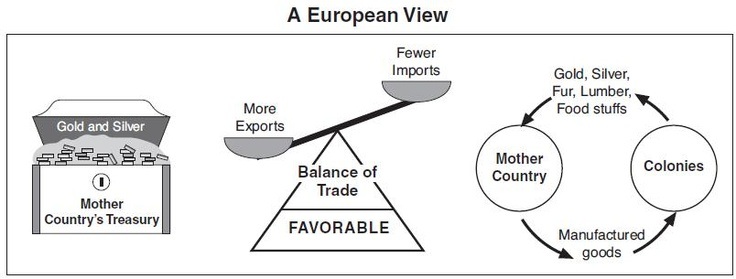
What is mercantilism?
A system where a mother countries gains money and power from natural resources that come from its colonies.
where colonies trade gold and silver with each other.
Wars that start over money.
Plantation colonies trading slaves for money.
Trade routes between Africa, the Americas, and Europe, in which ships carried cash crops, manufactured goods, and enslaved people were known as
Middle Passage
Columbian Exchange
Triangular Trade
During the Age of Absolutism, European monarchs looked to
Develop better relations with muslim rulers
Centralize political power in their nations
Encourage the growth of political farms
Increase human rights for citizens
Who was Louis XIV?
This man promoted Westernization campaigns to make his country more European
This man demonstrated absolutism by building Versailles as a way of distracting the French nobility
This man believed that humans were naturally good and would not need a large government to rule over them.
This man did not believe that the average person was intelligent enough to participate in government, which led him to believe that an enlightened monarchy was best.
Who brought forth the Ottoman Empire's Golden Age?
Mehmed the Conqueror
Osman I
Suleiman the Magnificent
The Tokugawa Shogunate of Japan was mistrusting and concerned about all foreigners (merchants, missionaries, etc.) were a threat to traditional Japanese culture. This most likely lead to the adoption of a policy of...
Isolationism
Expansionism
Mercantilism
Abandonment
Which of these changes occurred during the Renaissance?
The Church was all-powerful.
The Church’s power declined.
Factories began using electricity.
Women gained equal rights with men.
How did Alexander the Great's actions of promoting cultural diffusion allow progress and innovation?
Athenian leaders gained knowledge from defeating the Persians and the Spartans
Scholars stole ideas from China and Rome through Spartan and Persian conquests
The Greeks isolated themselves from other cultures which forced scholars to learn independently
Mathematicians & scientists like Archimedes developed the concept of Pi as well as laws for levers and pulleys
Which of the following is true when examining causes of the "Fall of the Roman Empire"?
Trade was flowing smoothly and the Senate stabilized the government
People enjoyed working in government and converted to Christianity
Rome had a financial deficit from buying luxury goods and overcrowded cities
Roman prevented the spread of epidemics by building a wall
Who was the first Roman emperor?
Tiberius
Julius Caesar
Augustus
Titus
The Byzantine Empire chose Constantinople as its capital due to its advantageous position in trade routes.
True
False
The split of the Christian church into two churches was known as the:
Crusades
Renaissance
Great Schism
Eastern Split
What was the Counter Reformation?
Pope's decision to go to war
Protestants moving to new lands
Printing Bible in other languages
Catholic Church response to the Reformation
What was an important effect of the invention of the printing press?
It increased the literacy rate and use of vernacular in Europe
It led to the increased use of Latin
It led to more people converting to Catholicism
It led to the Kings and Popes having more power over the people

