wayground logo

Free Printable Worksheets

Font size

S
M
L
XL
Worksheets

APUSH Unit 6

Total questions: 110

Worksheet time: 4hrs 32mins

Name
Class
Date
1.

What was a city government marked by corruption, bribery, and kickbacks (common during the Gilded Age) called?

a)

credit mobilier

b)

corrected democracy

c)

exchequer

d)

political machine

2.

In the late 19th Century, the ideas of Social Darwinism were used primarily to _______________.

a)

explain the differences in income between the rich and the poor

b)

urge Congress to end immigration

c)

encourage the passage of compulsory education laws

d)

support the growth of new political parties

3.
The government's ending of the Pullman strike demonstrated what?
a)
That the government cared about the concerns of the unions
b)
That the government was frustrated with big businessmen
c)
That the government cared more about big businesses rather than the workers
d)
That the government wanted to take on a stronger role in regulating businesses
4.
Who created this cartoon depicting the corruption of Boss Tweed?
a)
Jacob Riis
b)
Thomas Nast
c)
Jane Addams
d)
Thomas Durant
5.
The most notorious of the political machines was --------------------in New York City.
a)
Hull House
b)
Pendergast Hall
c)
Daly Machine
d)
Tammany Hall
6.

The scandal involving millions of dollars of government tax money & bribing of government officials was called

a)

Belknap Scandal

b)

Whiskey Ring

c)

Vanderbilt Scandal

d)

Fisk & Gould Gold Scandal

7.
What was the spoils system?
a)
A way of keeping fresh fruit from spoiling
b)
A way of dividing up the money that was made from scandals
c)
A way that the President used to appoint people to office as political favors
d)
 A system that was instituted to keep the government from creating waste
8.
Which of the following describes the Pendleton Act?
a)
It created a required examination for all government jobs
b)
It made the government purchase a certain amount of silver each month
c)
It divided the South into five military districts
d)
It limited the amount of immigrants that could enter the US
9.
The only president to be elected to 2 non-consecutive terms.
a)
Harrison
b)
Cleveland
c)
McKinley
d)
Grant
10.

Big Business, westward expansion, bad working conditions, political machines, and immigration were issues of what time period in the U.S

a)

Gilded Age

b)

Progressive Era

c)

Building an Empire

d)

Civil Rights and the 60's

11.
Who wrote a thesis about how the frontier prevents class warfare?
a)
Frederick Turner
b)
Harriet Beecher Stowe
c)
Booker T. Washington
d)
Alexis de Toqueville
12.
What brought people to Alaska, & helped end the Panic of 1893?
a)
Klondike Gold Rush
b)
California Gold Rush
c)
Rocky Mountain Gold Rush
d)
Georgia Gold Rush
13.
What congressional law promoted westward settlement by offering 160 acres of land?
a)
Homestead Act
b)
Dawes Severalty Act
c)
Oklahoma Land Rush Act
d)
Morrill Land Grant Act
14.
What ended the Indian Wars? 300 Native Americans killed, including women & children
a)
Sand Creek
b)
Wounded Knee
c)
Dakota War
d)
Black Hills War
15.
What congressional law tried to "Americanize" Native Americans through assimilation?
a)
Morrill Act
b)
Pacific Railways Act
c)
Dawes Severalty Act
d)
Homestead Act
16.
What congressional law set aside land for agricultural colleges?
a)
Morrill Land Grant Act of 1862
b)
Agricultural Expansion Act
c)
Pacific Railways Act of 1862
d)
Homestead Act of 1862
17.
Commonly known as Custer's Last Stand; 7th Cavalry is destroyed by the Sioux
a)
Sand Creek Massacre
b)
Battle of Little Big Horn
c)
Wounded Knee Massacre
d)
Red Cloud's War
18.
What territory was opened up to white settlement in 1889, causing a rush of 50,000 people?
a)
Kansas
b)
Oklahoma
c)
Nebraska
d)
Missouri
19.
Joseph Glidden invented this, which helped close the frontier
a)
reaper
b)
barbed wire
c)
steel plow
d)
combine
20.
White settlers rushed to this region of S. Dakota when gold was found; Sioux lived there
a)
Black Hills
b)
Standing Rock
c)
Rosebud
d)
Pine Ridge
21.
Colorado militia destroyed a peaceful village of Cheyenne & Arapaho; up to 163 died
a)
Sand Creek Massacre
b)
Fetterman Massacre
c)
Wounded Knee
d)
Battle of Little Big Horn
22.
What book detailed the injustices made to Native Americans during U.S. expansion?
a)
A Century of Dishonor
b)
An Indigenous People's History of the U.S.
c)
Bury My Heart at Wounded Knee
d)
Blood and Thunder
23.
Native American religious movement; believed it would reunite the living with the spirits of the dead & unite Indian peoples
a)
Ghost Dance
b)
Pow Wows
c)
Vision Quest
d)
Peyote
24.
Soddies were homes built on the Great Plains from what materials?
a)
grass & soil
b)
wood
c)
brick
d)
cement
25.
Transportation of cattle to railroad stations to transport them East; Southern Texas to Kansas
a)
The Long Drive
b)
The Grange
c)
Comstock Drive
d)
Texas-Kansas Trail
26.
Congressional law that promoted the construction of the Transcontinental Railroad
a)
Pacific Railways Act
b)
Desert Land Act
c)
Morrill Land Grant Act
d)
Timber Act
27.
Large farms established in the late 1800's; known for large-scale operations & the cultivation of wheat
a)
Bonanza farms
b)
Subsistence farms
c)
Extensive farms
d)
Terrace farms
28.
U.S. government policy of removing American Indians from the Great Plains and relocating them to inferior lands
a)
reservation policy
b)
assimilation policy
c)
removal policy
d)
termination policy
29.
New way of making steel that increased its quality & made it more efficient to produce
a)
Siemans-Martin Process
b)
Crucible Process
c)
Bessemer Process
d)
Cementation Process
30.
When companies that produce a similar product are merged together
a)
horizontal integration
b)
Taylorism/Scientific Management
c)
Time-Study Analysis
d)
vertical integration
31.
When a company controls all the raw materials, processing, and transportation systems of a product
a)
time-study analysis
b)
vertical integration
c)
horizontal integration
d)
Taylorism/Scientific Management
32.
Complete control over an industry's production, wages, & prices
a)
vertical integration
b)
monopoly
c)
Bessemer Process
d)
capitalism
33.
Entity that runs several companies as one large corporation; Standard Oil
a)
monopoly
b)
Bessemer Process
c)
time-study analysis
d)
trust
34.
1st permanent labor union; used strikes as a major tactic
a)
American Legion
b)
Knights of Labor
c)
American Federation of Labor
d)
Knights of Columbus
35.
1st labor union in the U.S.; focused on arbitration
a)
Knights of Labor
b)
Knights of Columbus
c)
American Federation of Labor
d)
American Legion
36.
Theory that success in business was governed by natural law; "Only the strongest will survive"
a)
Gospel of Wealth
b)
Social Darwinism
c)
Socialism
d)
Origin of the Species
37.
Argued that those with great material possessions had an equally great obligation to society
a)
Conspicuous Consumption
b)
Gospel of Wealth
c)
Social Darwinism
d)
Socialism
38.
American capitalist of the Gilded Age whose contributions benefited society
a)
Captain of Industry
b)
Robber Baron
c)
Gospel of Wealth
d)
Socialist
39.
Overt favoritism toward white citizens born in the U.S.
a)
Melting Pot
b)
nativism
c)
assimilation
d)
immigration
40.
Preached salvation through service to the poor
a)
American Missionary Sense
b)
American Exceptionalism
c)
Social Darwinism
d)
Social Gospel Movement
41.
Group that spearheaded the effort to ban alcohol
a)
Hull House
b)
Women's Christian Temperance Union
c)
Social Gospel Movement
d)
Gospel of Wealth
42.
What prevented patronage by making gov't employees pass a performance exam?
a)
Pendleton Civil Service Act
b)
Sherman Anti-Trust Act
c)
Interstate Commerce Commission
d)
Munn v. Illinois
43.
What congressional law allowed the federal gov't to regulate railroads that crossed state lines?
a)
Interstate Railroad Act
b)
Interstate Highway Act
c)
Interstate Commerce Act
d)
Sherman Anti-Trust Act
44.
Court case where states won the right to regulate railroads for the public benefit
a)
Wabash v. Illinois
b)
Munn v. Illinois
c)
Northern Securities v. U.S.
d)
Dred Scott v Sandford
45.
Monetary system desired by the Populists; backed by silver & gold
a)
Platinum Standard
b)
Silver Standard
c)
Bimetallism
d)
Gold Standard
46.
What state laws were passed to help farmers regulate railroad rates?
a)
Granger Laws
b)
Shipping Laws
c)
Temperance Laws
d)
Blue Laws
47.
Trust built by John D. Rockefeller; Controlled 90% of the industry
a)
Standard Oil Company
b)
U.S. Steel 
c)
Union Pacific Railroad Company
d)
Shell Oil Company
48.
What strike crippled the nation & ended when President Hayes sent in federal troops?
a)
Great Railroad Strike
b)
Homestead Strike
c)
Haymarket Riot
d)
Coal Strike
49.
Charles Giteau shot him & proclaimed, "I am a Stalwart of the Stalwarts!"
a)
James Garfield
b)
Chester Arthur
c)
Grover Cleveland
d)
Benjamin Harrison
50.
He sought economic independence to gain equality; Tuskegee Institute
a)
Booker T. Washington
b)
W.E.B. DuBois
c)
George Washington Carver
d)
Frederick Douglass
51.
What labor protest rally in Chicago turned violent, killed 8, & led to the conviction of radicals?
a)
Haymarket Riot
b)
Homestead Strike
c)
Great Railroad Strike
d)
Coal Miner's Strike of 1902
52.
Congressional law that outlawed monopolies
a)
Sherman Anti-Trust Act
b)
Clayton Anti-Trust Act
c)
Interstate Commerce Act
d)
Morgan Anti-Trust Act
53.
The Pennsylvania state militia were sent to end what labor conflict at Carnegie's steel mill?
a)
Haymarket Riot
b)
Homestead Strike
c)
Penn Railroad Strike
d)
Coal Miner Strike
54.
What political party's platform included the 16th & 17th Amendments, & the coinage of silver?
a)
Bull Moose Party
b)
Populist Party
c)
Green Party
d)
Libertarian Party
55.
He famously said, "You shall not crucify mankind upon a cross of gold."; ran for president in 1896
a)
William Jennings Bryan
b)
William McKinley
c)
Grover Cleveland
d)
Clarence Darrow
56.
President Cleveland sent troops in to stop this nationwide railroad strike in 1894
a)
Great Railroad Strike
b)
Pullman Strike
c)
Central Pacific Strike
d)
Transcontinental Railroad Strike
57.
What was the 1st immigrant group banned by Congress in 1882?
a)
Chinese
b)
Japanese
c)
Irish
d)
Germans
58.
NY immigration station; required European immigrants to pass exams before entering the U.S.
a)
Ellis Island
b)
Angel Island
c)
Liberty Island
d)
Long Island
59.
British sociologist; coined "survival of the fittest"; believed in Social Darwinism
a)
Herbert Spencer
b)
Russell Conwell
c)
Horatio Alger
d)
Jay Gould
60.
Company or group of people acting as a single entity; sell stock to the public
a)
corporation
b)
factory
c)
partnership
d)
cartel
61.
Company created to buy & keep the shares of other companies, which it then controls
a)
holding company
b)
trust
c)
corporation
d)
interlocking directorate
62.
Baptist minister; best known for Acres of Diamonds, arguing that "it is your duty to get rich"
a)
Russell Conwell
b)
Walter Rauschenbush
c)
Richard Olney
d)
William Graham Sumner
63.
"New immigrants" came from where?
a)
Eastern & Southern Europe
b)
Northern & Western Europe
c)
Southern Asia
d)
China & Japan
64.
What does Trust-busting mean?
a)
end discrimination
b)
stop monopolies (restore competition)
c)
label ingredients on food and drugs
d)
election for political offices 
65.

What was the major difference between the first two major Labor Unions, the Knights of Labor and the American Federation of Labor?

a)

The Knights of Labor only allowed skilled workers to join

b)

The Knights of Labor did not allow immigrants to join

c)

The AFL only allowed skilled workers to join

d)

The AFL did not allow immigrants to join
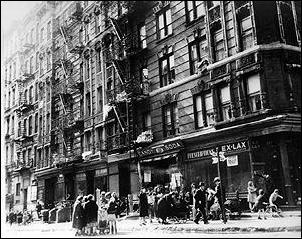
66.

Which of these best describes life in a tenement?

a)

Very crowded

b)

Lots of sickness & disease

c)

No windows, heat, or plumbing

d)

All of these describe tenement life

67.

This is the term for the process of adjusting to the culture and government of the United States.

a)

Assimilation

b)

Nativism

c)

Americanism

d)

MexiCAN

68.
Congressional action taken in 1890, during the Gilded Age, that made "contracts, conspiracies, and combinations" that restrained free trade illegal.  This was done to stop the abusive practices of organized trusts in oil, sugar, tobacco...
a)
Sherman Antitrust Act
b)
Celler-Kefauver Act
c)
Clayton Antitrust Act
d)
Interstate Commerce Act
69.
The Farmer's Alliance and the Grange, both founded during the Gilded Age, stood for additional government regulation of trade and creating the conditions for more political power and economic well being for farmers (as compared to industrialists).  What 1890s group was founded, supporting these ideas, and attacking the Gold Standard?
a)
Progressives
b)
Free Soil Party
c)
IWW
d)
Populists
70.

Congressional action taken in 1887 to stop the unfair practices of railroad companies in which large Corporations were given low shipping prices to ship through the railroad while small farmers who had no other shipping options were charged high prices.

a)

Sherman Antitrust Act

b)

Celler-Kefauver Act

c)

Clayton Antitrust Act

d)

Interstate Commerce Act

71.
In 1889, during the Gilded Age, a Settlement House called Hull House was opened in Chicago.  It was designed to help working class women, many recent immigrants, move out of poverty and dependence on others.  It sought to address some of the excesses of industry and business.  Who founded Hull House?
a)
Margaret Sanger
b)
Jane Addams
c)
Elizabeth Cady Stanton
d)
Susan B. Anthony
72.

Who was the most influential African American during this time, encouraging African Americans to GRADUALLY move up in society?

a)

Malcolm X

b)

Booker T. Washington

c)

George Washington Carver

d)

Martin Luther King Jr.

73.

The term Suffrage means:

a)

The right to work in factories

b)

The right to live in America

c)

The right to vote

d)

The right not to vote

74.

The painting "American Progress" by John Gast is an example of

a)

Enlightenment

b)

Annexation

c)

Manifest Destiny

d)

Cession

75.

Who of the following represented the American notion that through hard work, even a poor immigrant could become tremendously successful?

a)

Andrew Carnegie

b)

John D. Rockefeller

c)

Jay Cooke

d)

Thomas Edison

76.
The steel industry owed much to the inventive genius of
a)
Jay Gould
b)
Henry Bessemer
c)
J.P. Morgan
d)
Thomas Edison
77.

What was the effect of the Transcontinental Railroad?

a)

Became a more efficient form of transportation for settlers and goods.

b)

Created a new trade market between the eastern and western United States boosting the economy.

c)

Polluted the air and the natural environment

d)

All of the above

78.

How did the passage of the Dawes Act impact Native Americans?

a)

It started a series of Indian Wars with massive casualties on the Great Plains

b)

Attempted to assimilate them into mainstream culture by allocating lands to individual Indians and dissolving tribes.

c)

Retention of original tribal territory occurred through a peace treaty with the U.S. Army.

d)

It supported their existing cultural tribal traditions and customs

79.

Why were scabs unpopular with striking workers during the late 1800s?

a)

They were socialists.

b)

They were federal troops.

c)

They were part of management.

d)

They were workers used to break strikes.

80.

Millionaire tycoon who made his riches in the railroad industry

a)

Andrew Carnegie

b)

J.D. Rockefeller

c)

J.P. Morgan

d)

Cornelius Vanderbilt

81.

Millionaire tycoon who made his riches in the finance industry

a)

Andrew Carnegie

b)

J.D. Rockefeller

c)

J.P. Morgan

d)

Cornelius Vanderbilt

82.

Eager settlers who claimed the best land in Oklahoma in 1889 after government owned land was opened to be settled by the public.

a)

nomadic

b)

transcontinental

c)

sooners

d)

vaqueros

83.

The US had a "God given right" to take all the land from the Atlantic to the Pacific oceans. This was called......

a)

Lewis and Clark expedition

b)

Erie Canal

c)

Trail of Tears

d)

Manifest Destiny

84.
The first major farmers' organization was the
a)
National Grange
b)
Populists
c)
Greenback Labor Party
d)
Farmers' alliance
85.
During the age of industrialization, the South
a)
was not targeted by northern industrialists who sought to introduce factories into the region
b)
received preferential treatment from the railroads
c)
turned away from agriculture
d)
remained overwhelmingly rural and agricultural
86.
Which of the following pairs of immigrant groups were most prominent in the construction of the first transcontinental railroad?
a)
Chinese & Irish
b)
Irish & Japanese
c)
Chinese & Japanese
d)
Chinese & Italians 
87.
When a company controls all the raw materials, processing, and transportation systems of a product
a)
time-study analysis
b)
vertical integration
c)
horizontal integration
d)
Taylorism/Scientific Management
88.

When companies that produce a similar product are merged together to form one huge company.

a)

horizontal integration

b)

Taylorism/Scientific Management

c)

Time-Study Analysis

d)

vertical integration

89.

Which Supreme Court decision upheld Jim Crow laws?

a)

Boynton v. Virginia

b)

Dred Scott v. Sandford

c)

Plessy v. Ferguson

d)

Miranda v. Arizona

90.
Process where a labor union and management of a business negotiate a contract or working terms is
a)
stockholder
b)
strike
c)
union
d)
collective bargaining
91.
All of the following were problems in the factories EXCEPT...
a)
poor safety conditions
b)
child labor
c)
good working conditions
d)
low pay
92.

Due to the Triangle Shirtwaist Fire...

a)

the government created laws to help with worker safety.

b)

the government did nothing.

c)

businesses created safer working conditions when the government refused to do so.

d)

businesses continued having poor working conditions.

93.

A system in which businesses operate under minimal government regulation

a)

Time zone

b)

Patent

c)

Mass Production

d)

Laissez Faire

94.
Black Codes are 
a)
a coded language African Americans used  
b)
laws that told people what they could wear 
c)
Laws that restricted African American rights 
d)
Curfew laws for African Americans 
95.
 After Reconstruction, blacks were not allowed to sit in the same areas at the theater as whites. They had to sit in the back part of the theater, while whites sat at the front of the theater. This is an example of:
a)
desegregation 
b)
integration
c)
segregation
d)
reconstruction
96.

A business leader who uses dishonest method to get rich?

a)

Shareholder

b)

Labor leader

c)

Entrepreneur

d)

Robber Baron

97.

Job opportunities in cities.

a)

Push Factor during the Gilded Age.

b)

Pull Factor during the Gilded Age.

98.

Religious persecution in Europe (Judaism and Catholicism)

a)

Push Factor during the Gilded Age.

b)

Pull Factor during the Gilded Age.

99.

Reuniting with family in cities.

a)

Push Factor during the Gilded Age.

b)

Pull Factor during the Gilded Age.

100.

"The American Dream," The opportunity for a fresh start and to make a name for yourself.

a)

Push Factor during the Gilded Age.

b)

Pull Factor during the Gilded Age.

101.

What effect did the mechanization of the American farm in the latter part of the nineteenth century have on the nation?

a)

It brought about a decrease in the nation’s literacy rate

b)

It caused crowded farms and unsanitary conditions

c)

It led to an increase in crop production at a lower cost to consumers making it hard for small family farms to compete with bonanzas.

d)

It increased the acreage of farmland that was unsuitable for farming

102.

The U.S. Supreme Court in the case of Plessy vs Ferguson, established...

a)

Separate but equal.

b)

Separate is not equal.

c)

Chinese Exclusion Act is constitutional.

d)

Voting rights for African American males.

103.

Exodusters who chose to move west in hopes of escaping discrimination and owning land were:

a)

European Immigrants

b)

Asian Immigrants

c)

Mexican Americans

d)

African Americans

104.

Congressional Act enabling President Andrew Jackson to give land east of the Mississippi (Oklahoma) to Native Americans who voluntarily left tribal lands in the Southeast. In addition, Native Americans were promised they'd be able to live on their new land under the protection of the American Government forever.

a)

Indian Removal Act 1830

b)

Civillization ACt

c)

Manifest Destiny Act

d)

Indian Territory Act

105.
I just moved to America, but I'm too poor to travel to the West. Instead, I will start a family here in the city. People don't like me because I wasn't born in the United States.
a)
Asian Immigrants
b)
European Immigrants
c)
Mexican Americans
d)
African Americans
106.
I just moved to America in search of gold. Instead, I took a job working on the Transcontinental Railroad. I am paid less than white workers, even though I am a hard worker.
a)
African American
b)
European Immigrant
c)
Mexican American
d)
Asian Immigrant
107.
What technology revolutionized farming in the west? 
a)
Steel plows, mechanical reapers, and windmills
b)
Morse code
c)
Internet
d)
Hydroelectricity
108.

The Transcontinental Railroad reduced the time it took to travel across the United States from 6 months to _______

a)

6 weeks

b)

6 days

c)

3 weeks

d)

3 days

109.

Government welfare program that helped African American citizens with the transition from slavery to freedom after the abolishment of slavery. Provided education, job training, government jobs, etc.

a)

Freedman's Bureau

b)

Black Codes

c)

Jim Crow Laws

d)

Ku Klux Klan

110.

The significance of the Haymarket Square incident in 1886 was that

a)

union won their demand for an eight hour day

b)

the American socialist movement received a good boost

c)

the use of Pinkerton guards as strikebreakers was outlawed

d)

it led to federal intervention in labor union matters.