wayground logo

Free Printable Worksheets

NEW

Font size

S
M
L
XL
Worksheets

Earth and Sun/Coordinates

Total questions: 20

Worksheet time: 14mins

Name
Class
Date
1.

What causes the seasons to change?

a)

The Earth's distance from the Sun

b)

The waming and cooling of Earth's core

c)

The Earth's tilt in relation to the Sun

d)

The Earth rotation on its axis.

2.

What happens when it's spring in the Southern Hemisphere?

a)

It's fall in the Northern Hemisphere

b)

It's summer in the Northern Hemisphere

c)

It's winter in the Northern Hemisphere

d)

It's spring in the Northern Hemisphere

3.

What happens when the area in which you live tilts away from the sun?

a)

It's summer in your area

b)

It's spring in your area

c)

It's fall in your area

d)

It's winter in your area

4.

How are winters in the Northern Hemisphere different from winters in the Southern Hemisphere?

a)

Winter days are short in the Northern Hemisphere, and long in the Southern Hemisphere

b)

Northern Hemisphere winters are cold, Southern Hemisphere winters are hot

c)

In the Northern Hemisphere, winter lasts from December to March; In the South, it lasts from June to September

d)

In the Northern Hemisphere winter lasts from June to September. In the South it lasts from December to March.

5.
If you live in the Northern Hemisphere, on which day of the year will your hometown receive the most daylight?
a)
September 21
b)
December 21
c)
March 21
d)
June 21
6.

Where and when would you find almost 24 hours of daylight?

a)

In South America during spring

b)

In the Arctic Circle during summer

c)

In Jamaica during winter

d)

In the Antarctic Cirlce during winter

7.
Imaginary line through the center of the earth (from the north pole to south pole)
a)
axis
b)
orbit
c)
pole
d)
tilt
8.

Which of these is MOST responsible for the Earth having more hours of daylight in the summer than in the winter?

a)

Earth's shape

b)

Earth's revolution

c)

Earth's orbit

d)

Earth's tilt

9.
Examine the diagram/picture.  What type of celestial movement does the diagram illustrate?
a)
Earth's orbit
b)
Earth's rotation
c)
Earth's ascension
d)
Earth's revolution
10.
Earth has seasons because…?
a)
The temperature of the sun changes.
b)
Earth rotates on its axis.
c)
Earth's axis is tilted as it moves around the sun.
d)
The distance between Earth and the sun changes.
11.

On which of the following days the day and night are of equal duration throughout the world?

a)

28th March and 21st September

b)

21st March and 23rd September

c)

21st June and 23rd December

d)

23rd March and 22nd December

12.
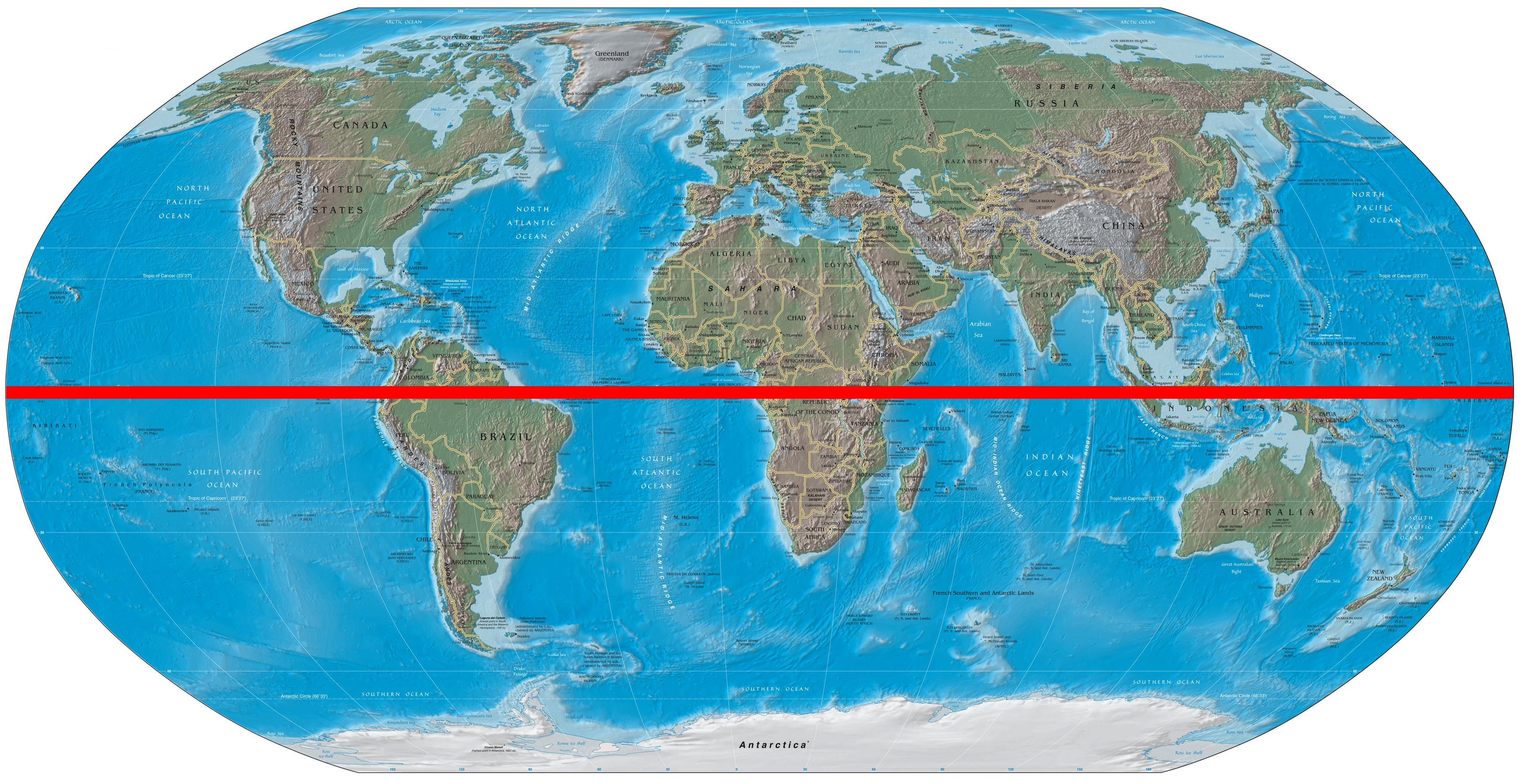
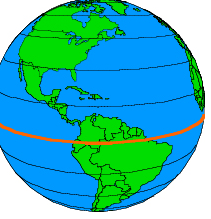
What is the name of this line at 0 degrees latitude?
a)
Prime Meridian
b)
Equator
c)
North Pole
d)
South Pole
13.
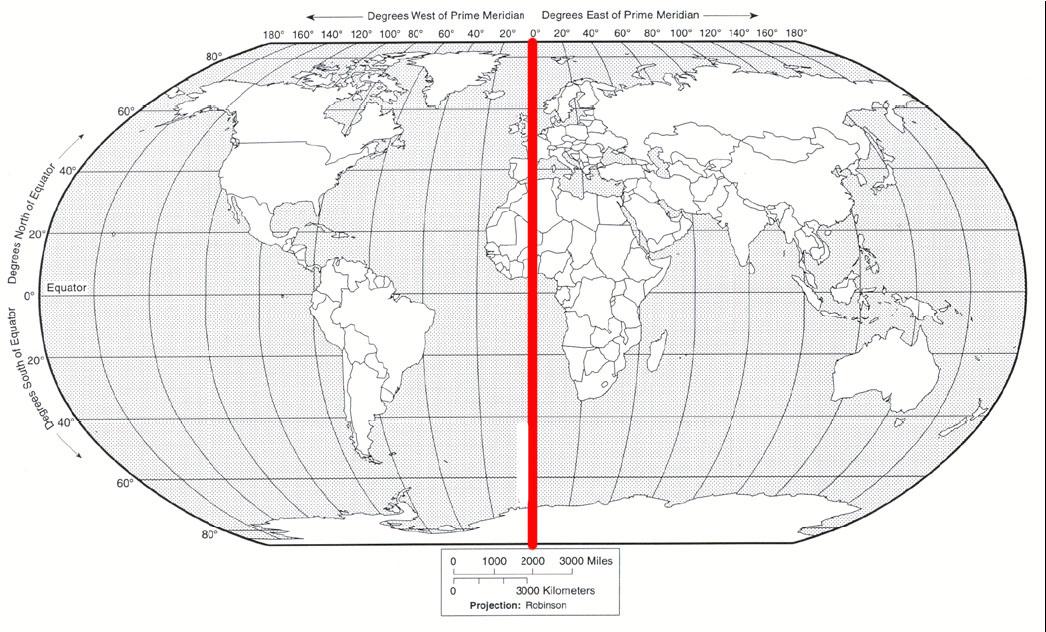
What is the name of the line at zero degrees longitude?
a)
Equator
b)
Prime Meridian
c)
North Pole
d)
South Pole
14.
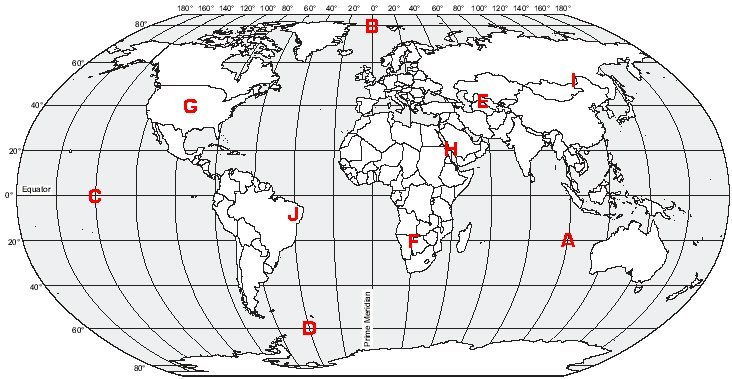
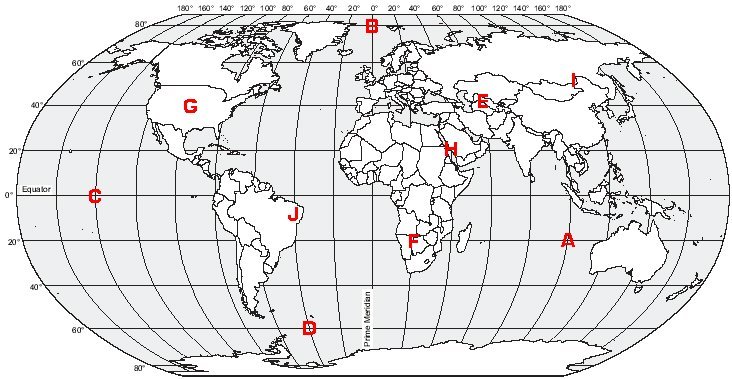
What is the approximate location of letter B?
a)
80oN, 0o
b)
0o, 80oW
c)
80oS, 0o
d)
0o, 80oE
15.
What is the approximate location of G?
a)
100oW, 40oN
b)
40oN, 100oW
c)
40oS, 100oW
d)
40oN, 100oE
16.
Which of the following letter is at approximately 60 degrees S, 40 degrees W? 
a)
A
b)
D
c)
E
d)
H
17.
Which letter would you find at 15oS, 60oW?
a)
A
b)
C
c)
L
d)
H
18.
a)
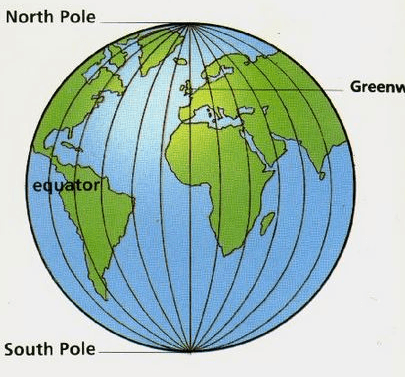
The map show the lines of longitude.
b)
The map shows the lines of latitude.
19.
a)
The map shows lines of longitude.
b)
The map shows lines of latitude.
20.
To locate a place on the earth, you need to look at...
a)
where the lines of latitude and longitude meet
b)
the lines of latitude only
c)
the lines of longitude only
d)
the compass rose